Clone’s Protoclone V1 Mirrors Human Muscles with 1,000 Myofibers, 500 Sensors

ProtoClone Unveils Muscle Mimicry
Clone Robotics disrupts biomimetic engineering by launching ProtoClone V1, a bipedal android that replicates human anatomy through 1,000 synthetic Myofibers and 500 integrated sensors. This prototype, demonstrated in suspended footage showing fluid limb extensions and torso twists, marks a pivotal shift toward robots that move indistinguishably from people. Engineers at the U.S.-Poland firm emphasize its full-body design—complete with polymer bones mimicking 206 human ones—as a foundation for seamless household integration. The reveal, timed for early commercialization, signals Clone's push to redefine domestic assistance, outpacing rigid-jointed predecessors with lifelike responsiveness.
Myofibers Drive Fluid Power
ProtoClone V1's standout innovation lies in its 1,000 Myofibers, proprietary pneumatic strands that contract under pressure to deliver over 200 degrees of freedom. Unlike motor-driven rivals, these muscle analogs enable nuanced gestures like grasping fragile objects or navigating cluttered kitchens without jerky motions. Paired with a 500-watt pump sustaining 40 SLPM flow at 100 psi, the system powers sweeping arm reaches and subtle finger curls observed in demos. A water-based cooling mechanism, evoking human sweat, prevents thermal buildup during prolonged activity, ensuring sustained performance in real-world scenarios.
Sensors Fuel Nervous Precision
At the core of ProtoClone's human-mirroring prowess, 500 sensors form a synthetic nervous network, including four depth cameras in the skull, 320 pressure points for tactile feedback, and 70 inertial units tracking every joint. This array processes visual cues and force data in real time, allowing the robot to adapt mid-motion—such as steadying a wobbling tray or dodging sudden obstacles. Transitioning soon to hydraulics promises even sharper reflexes, addressing current pneumatic delays in balance corrections. Such breakthroughs position ProtoClone as a learning machine, capable of imitating human tasks through mere observation.
Specs Power Humanoid Agility
Standing at 180 cm tall by 60 cm wide and 40 cm deep, ProtoClone V1 achieves a 3 km/h walking pace via its bipedal, musculoskeletal frame with pneumatic actuators. Its lithium-ion battery endures 3-5 years under typical loads, supporting vision-inertial navigation for indoor environments without GPS reliance. Four cameras pair with pressure, IMU, temperature, and humidity sensors for comprehensive awareness, while a ROS-based OS with Python and C++ APIs enables custom programming. Safety integrates emergency stops, sensor-driven obstacle evasion, and a soft polymer skin that cushions collisions, ideal for handling household tools or small packages.
Explore Humanoids

Related Articles
Related Comparisons
Compare ProtoClone with similar robots

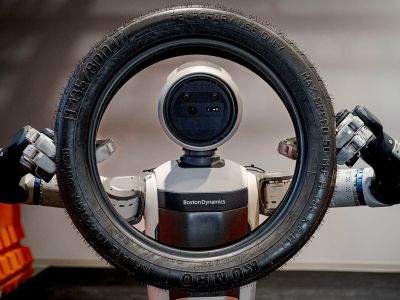
Optimus vs Atlas (Electric Atlas, 2025)
In-depth comparison of Optimus and Atlas (Electric Atlas, 2025), covering hardware capabilities, teleoperation, and enterprise readiness.
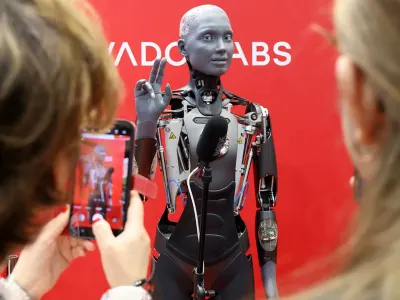

Ameca vs Moya
Which humanoid robot is better? Ameca vs Moya compared for dexterity, AI capabilities, and price.
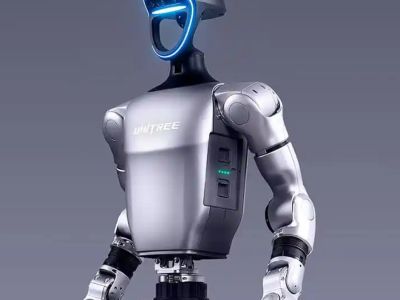
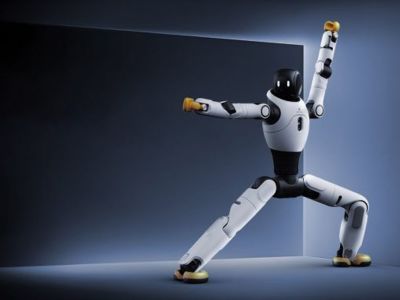
Unitree G1 vs AgiBot X2-N
Compare Unitree G1 vs AgiBot X2 for humanoid mobility, dexterity, autonomy, and payload capacity.
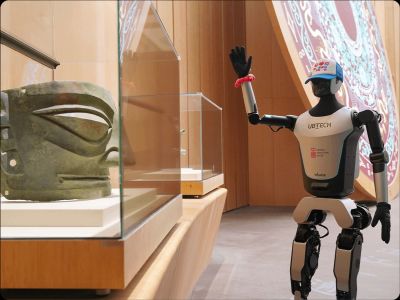
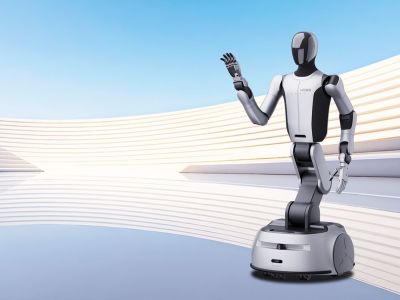
Walker C vs Cruzr S2
In-depth comparison of Walker C and Cruzr S2, covering hardware capabilities, teleoperation, and enterprise readiness.
Learn More About This Robot
Discover detailed specifications, reviews, and comparisons for ProtoClone.
View Robot Details →