Seegrid’s Lift CR1 AMR pushes vertical material handling higher in manufacturing
Robot Details
Lift CR1 AMR • SeegridPublished
June 7, 2026
Reading Time
3 min read
Author
Origin Of Bots Editorial Team
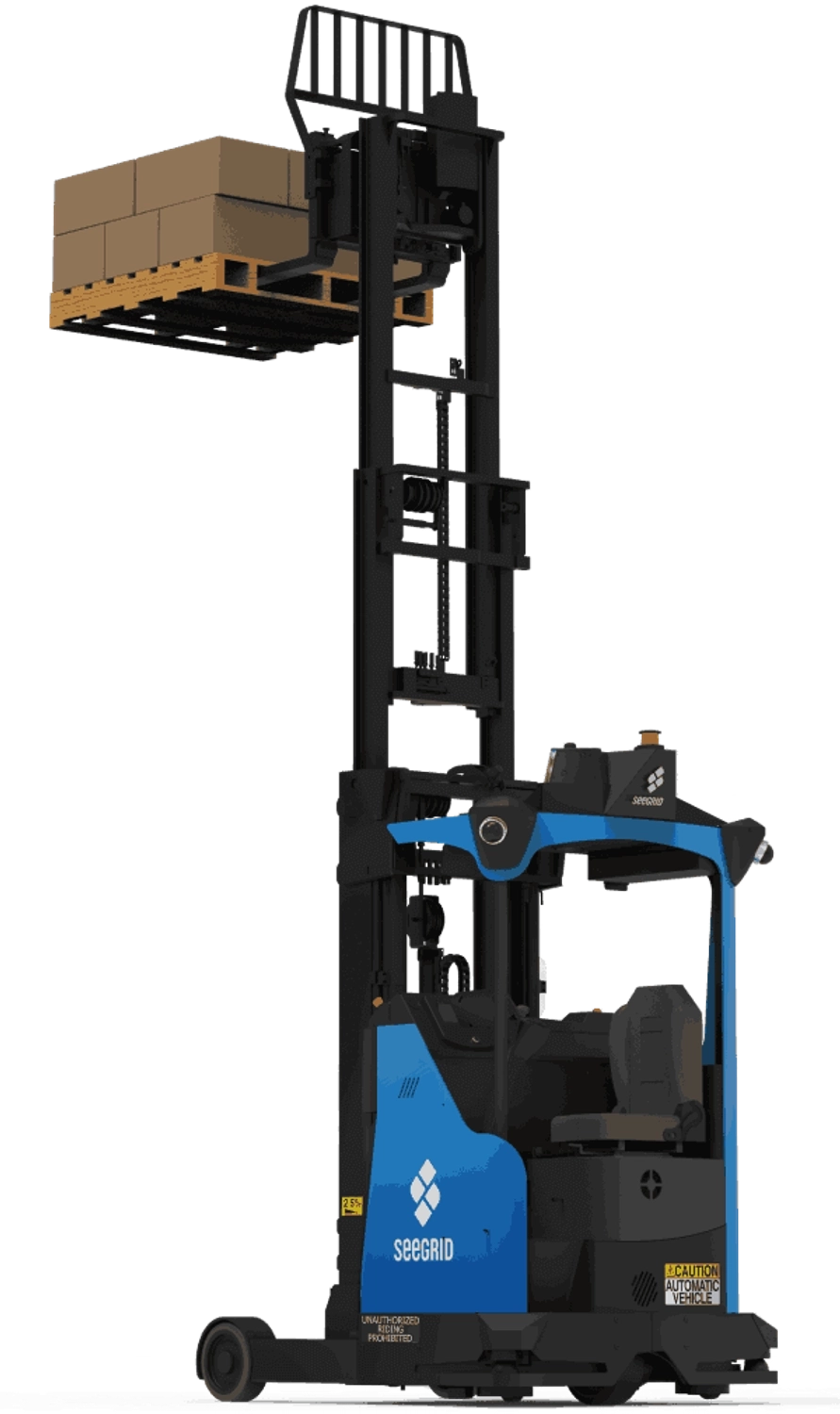
Vertical Flow
Manufacturing plants keep pushing for safer, more repeatable movement of heavy pallets between process steps, and Seegrid’s Lift CR1 AMR is aimed directly at that problem. Seegrid has recently presented the Lift CR1 as an autonomous lift truck for demanding vertical material handling, with a 15-foot lift height, up to 4,000 pounds of load capacity, and speeds up to 5 mph. The company’s public materials and demo content frame it as a machine for structured industrial environments where throughput and safety matter as much as lift capability.
Why It Matters
What sets the Lift CR1 apart is not just reach, but the way it combines payload handling, route planning, and safety systems for repetitive industrial workflows. In the company’s materials, the robot’s value proposition centers on repeatability, cycle time, payload capacity, and integrated protection for people and infrastructure, which are the core constraints in pallet movement on production floors. Its positioning also fits a broader manufacturing trend: automation that can work beside people without turning every line into a fully fenced-off cell. The CR1’s importance is that it extends autonomous handling into higher, heavier material moves without changing the logic of a structured plant. The Lift CR1 is about moving heavy pallets higher without changing the plant’s choreography.
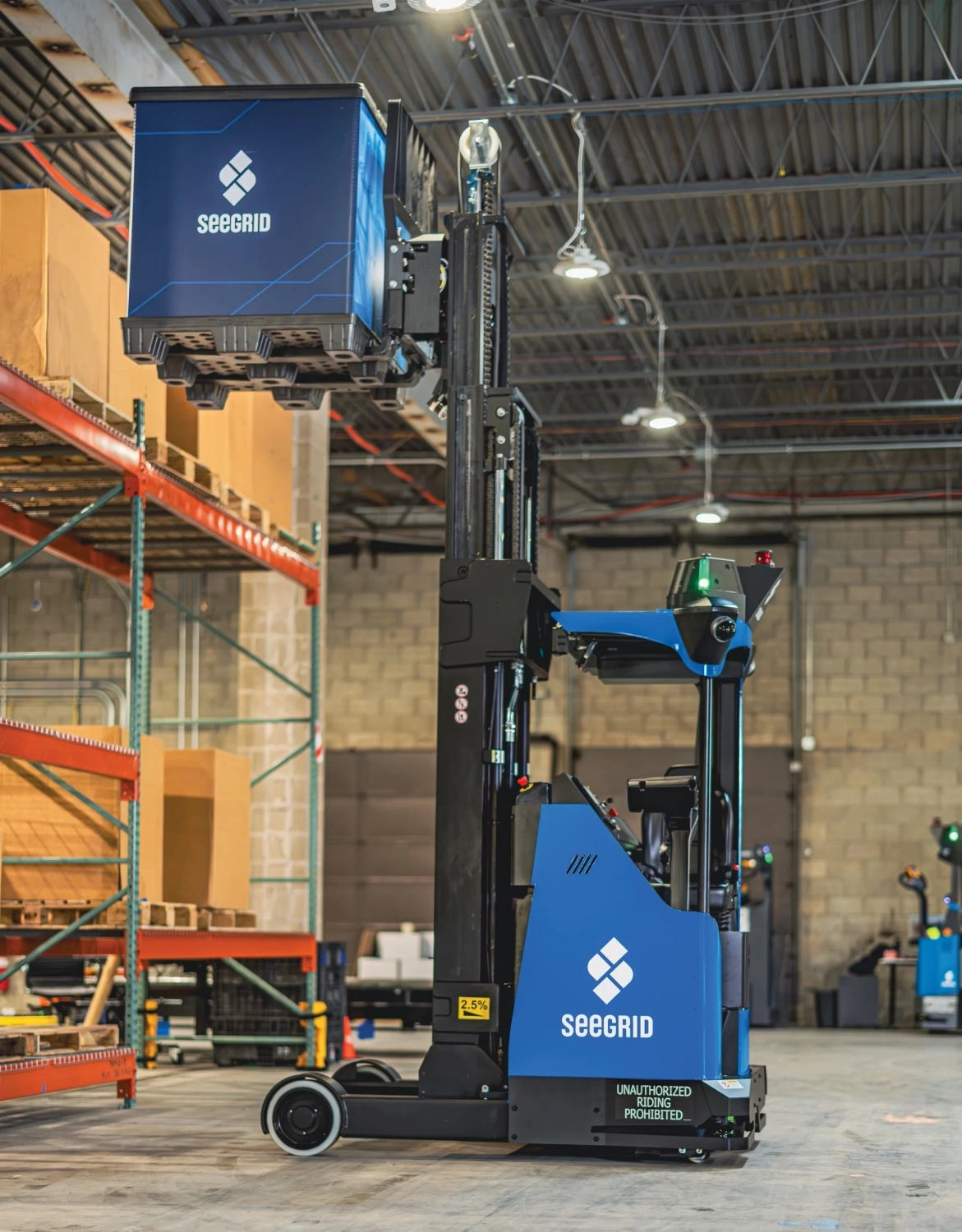
How It Works
Input → Processing → Output is the simplest way to understand the system: task instructions enter the Seegrid Supervisor software, proprietary SLAM and onboard sensing help plan the route, and the vehicle then executes motion and lift actions while checking for obstructions and drop-zone conditions. In practical terms, that means the robot is designed to navigate, align, lift, and place pallets with minimal floor infrastructure while continuously validating its surroundings. The result is a material-handling loop intended to be more repeatable than manual forklift movement in the same lane.
Pallet Flow
A realistic deployment scenario is pallet staging between a production line and a high-bay storage or buffer area, where the same load must be moved dozens of times a shift without variation. In that setting, the CR1’s lift height and autonomous navigation are most useful when pallets must be stacked, destacked, or transferred at a fixed point in the process rather than handled ad hoc. The value comes from taking one of the most repetitive jobs in manufacturing and making its timing and placement more consistent.
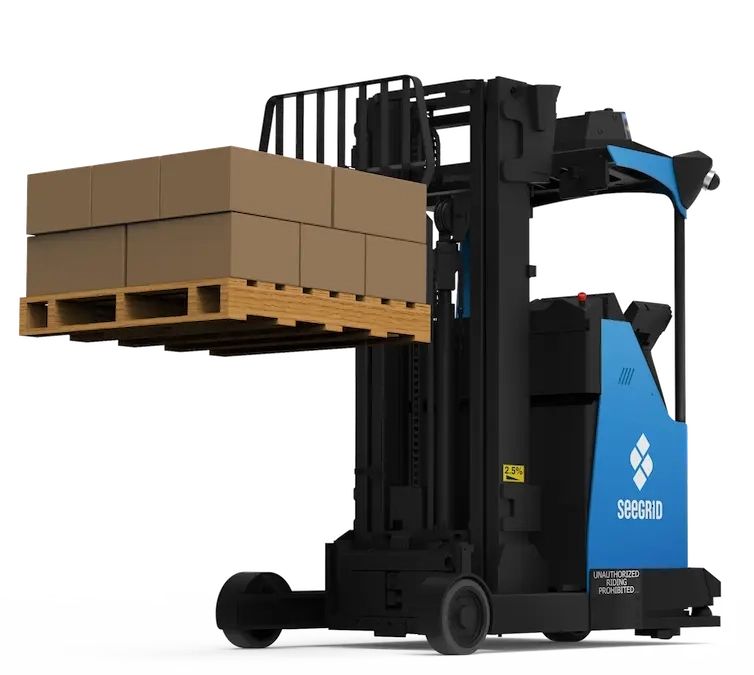
Capability Set
Seegrid’s published specifications position the CR1 as a heavy-duty industrial mover with a 15-foot lift height, 4,000-pound capacity, and 5.0 mph forward speed, which together indicate a machine built for fast pallet cycling rather than slow niche handling. The company also describes LiDAR, 2D obstacle detection, primary and secondary obstruction detection, and drop-zone scanning, which are the kinds of sensing layers that support safer operation in mixed-traffic facilities. Its use of industrial lithium batteries with a reported 5 to 8 year lifecycle suggests an emphasis on fleet uptime and lower replacement frequency over long deployment windows.
Rivals Edge Check
| Robot | Key Advantage | Where Lift CR1 AMR Wins | Target Use |
|---|---|---|---|
| KUKA KMP 1500P | High-capacity platform transport in tightly managed factory flows | Higher lift capability for vertical pallet handling and stacking | Heavy material transport |
| KUKA KMP 600-S diffDrive | Compact maneuverability for constrained industrial layouts | Better suited to pallet lift workflows, not just mobile transport | Factory intralogistics |
| ABB Flexley Mover P603 | Flexible autonomous movement for plant logistics | Stronger fit for taller, heavier pallet movement | Production-line supply |
| MiR1350 | Heavy payload AMR for warehouse and manufacturing transport | Adds reported lift-focused vertical handling rather than transport alone | Pallet transport |
Industry Direction
The CR1 signals that industrial robotics is moving beyond simple transport toward more task-complete automation, where a mobile robot is expected to move, lift, verify, and place within one coordinated workflow. It also reflects a broader manufacturing shift toward systems that can be deployed near people while still preserving the predictability demanded by structured production. That matters because the next competitive frontier is less about whether an AMR can drive itself and more about whether it can replace multiple manual steps without disturbing line rhythm.
Explore Humanoids
Related Articles
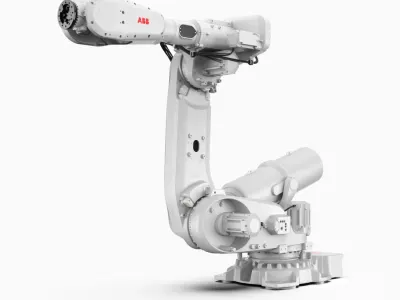
ABB IRB 6750S Boosts Spot Welds 14% in 15 Seconds at Automatica 2025
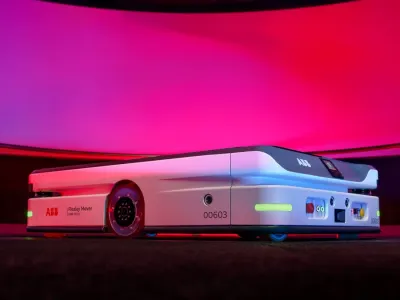
ABB’s Flexley Mover P603 targets heavy intralogistics with compact AI navigation
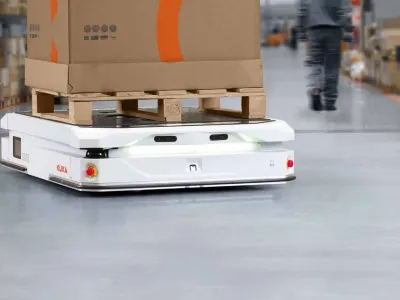
KUKA’s KMP 1500P pushes heavy-load autonomy deeper into factory logistics
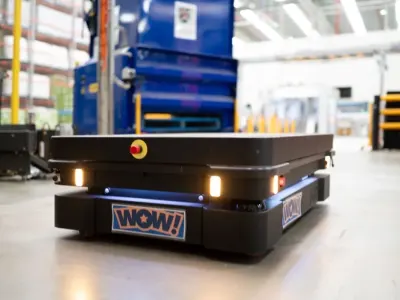
Mobile Industrial Robots’ MiR1350 sharpens the case for heavy-load autonomy in manufacturing
Related Comparisons
Compare Lift CR1 AMR with similar robots
Learn More About This Robot
Discover detailed specifications, reviews, and comparisons for Lift CR1 AMR.
View Robot Details →