Shanghai Startup Archon Shows One AI Brain Doing Household Chores on Three Different Humanoids
Category
humanoidPublished
October 12, 2026
Reading Time
5 min read
Author
Origin Of Bots Editorial Team
Chores Without a Script
A Shanghai startup called Archon Robotics has released its first public demonstration of what it calls Whole-Body Intelligence. In the video, published on October 12, humanoid robots clear tables, load dishwashers, tidy fridges and climb steps, all running autonomously at normal speed, according to the company.
The interesting part is not any single chore but who is doing them. The robots come from three different manufacturers, and Archon says the same approach to artificial intelligence drives them all. If that holds up, it hints at a future where one software brain can be installed on many robot bodies, much like an app on different phones.
A Brain Split in Two
Archon's system has two main layers. The first, called S1, works out what the task is and what to do next, taking in information such as camera images and instructions. It is the part that decides that the plate goes in the dishwasher and the milk goes back in the fridge.
The second layer, S0, handles the body itself: balancing, coordinating arms, legs and torso, and making precise movements. Archon compares it to the cerebellum, the part of the human brain that keeps us steady and coordinated without conscious thought. Linking the two is what lets a robot bend, reach and walk while carrying something.
Learning From People First
To teach the system, Archon starts with people. It records large amounts of human whole-body movement, collected in several Chinese cities, and uses it for pretraining, the first broad stage of learning in which a model absorbs general patterns of how bodies move to get things done.
Then comes post-training on real robots, where demonstrations performed with the machines themselves fine-tune the model to their particular joints and limits. The company says recorded data passes automated checks, human spot checks and review of anything flagged before it is used, an effort to keep sloppy examples from teaching bad habits.

The Art of Fixing a Mistake
One of the more telling parts of the video shows robots fumbling and then recovering. Archon trains on corrective data gathered with a method called DAgger, in which a human steps in when the robot goes wrong and shows it how to get back on track, so the model learns recovery as well as success.
That matters in real homes, where nothing is ever placed exactly where it was during training. A robot that freezes after dropping a cup is useless; one that picks it up and carries on is far closer to helpful. Recovery, rather than flawless first attempts, is often what separates a demo from a dependable machine.
One Model, Many Bodies
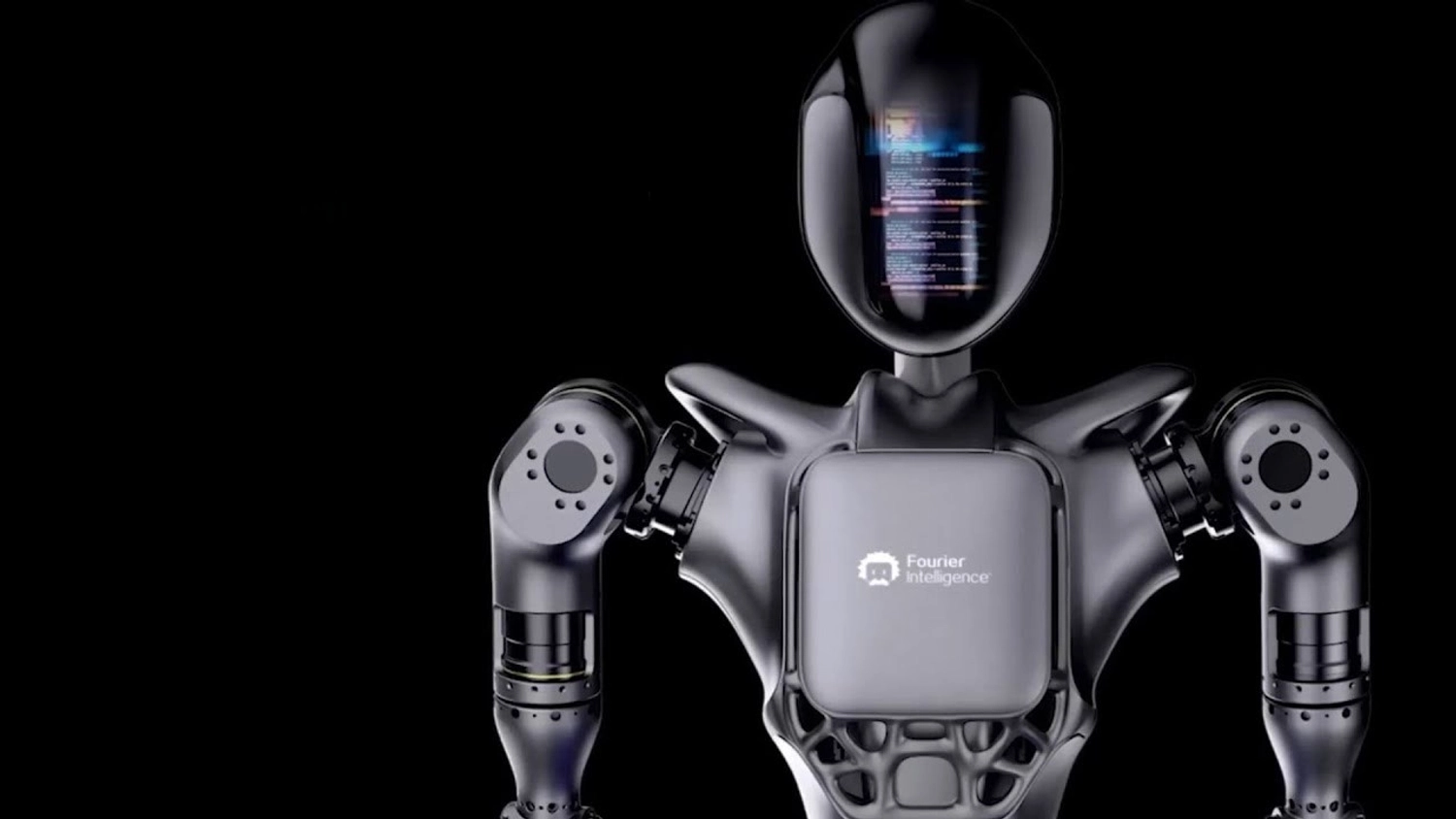
The footage features an AgiBot A3, Booster T2 robots and modified Unitree G1 humanoids, all built by different Chinese companies. One scene shows three G1s and two T2s sharing the same kitchen and dining area. Archon's stated goal is a hardware-agnostic foundation model, meaning a general AI brain not tied to any one robot.
That is a big ambition. Each humanoid has different proportions, motors and sensors, so a skill learned on one usually transfers poorly to another. Archon has not said whether every robot in the video runs identical model weights, the learned numbers inside the AI, or whether each body gets its own tuned version.

The Researchers Behind Archon
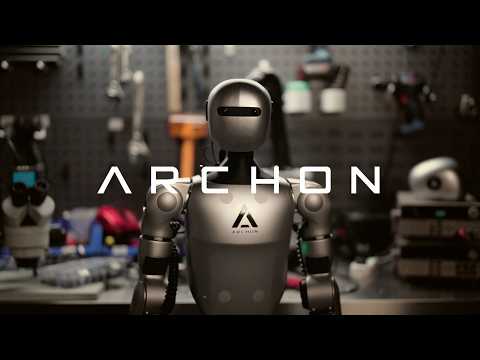
Archon was founded by Hongyang Li, a University of Hong Kong professor who serves as founder and chief robot officer, alongside co-founder and head of AI Li Chen. Both are linked to UniAD, a well-known self-driving research project. Co-founder and CEO Tianyu Li previously worked on Huawei's ADS 4.0 driving system.
The company has reportedly raised a seed round worth hundreds of millions of yuan from investors including ZhenFund, Gaorong Capital, IDG Capital and 5Y Capital. It has also said it intends to release an open-source humanoid foundation model by the end of 2026, which would let outside researchers test its claims directly.
What the Video Does Not Show
The demonstration is an introduction, not a scorecard. Archon has not published success rates, how often humans had to intervene, or how much training data it used. And while the full chore sequences are described as autonomous, the segments explaining motion control and corrective data involve teleoperation, meaning a human remotely steering the robot.
Robots sharing a room also does not prove they are cooperating on a shared task. The video focuses on the two-layer S1 and S0 design, while a technical blog Archon published in July described a four-layer framework that also covers task planning and motion generation, and it is unclear how the two descriptions fit together.
The Open Questions Ahead
The real test will come if Archon follows through on its open-source promise. Once other labs can download the model and run it on their own robots, claims about cross-platform chores will be measured by people with no stake in the result, which is how the field separates impressive videos from durable progress.
For now, Archon joins a crowded race to build the general-purpose brain that humanoid makers can license instead of building their own. Its debut is polished and its founders are credible, but the numbers that matter most, how often it works and how often it fails, have yet to be shown.