UniX AI Unveils Martian Humanoid Redefining Service Robotics

Game-Changing Arrival in Robotics Market
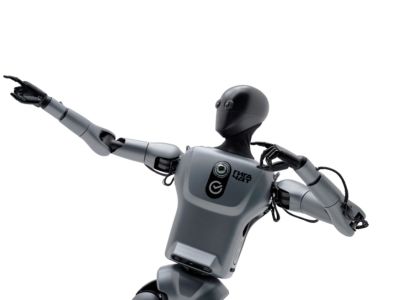
UniX AI has introduced the Martian, a sophisticated bipedal humanoid robot engineered to transform how organizations approach automation across logistics, manufacturing, and household environments. This general-purpose platform combines 16 degrees of freedom with adaptive AI capabilities, positioning itself as a versatile solution for enterprises seeking to deploy autonomous systems without extensive customization. The timing proves significant as industries worldwide grapple with labor shortages and operational inefficiencies. Priced competitively within the professional robotics segment, the Martian addresses a critical gap between research-grade systems and practical commercial deployment, making advanced robotics accessible to mid-sized organizations previously priced out of the automation revolution.
Precision Engineering Meets Adaptive Intelligence
What distinguishes the Martian from conventional bipedal platforms is its integrated approach to sensory processing and motion control. The robot harnesses a sophisticated sensor ecosystem—combining RGB and depth cameras, LiDAR mapping, ultrasonic detection, inertial measurement units, gyroscopic stabilization, force-feedback systems, and thermal monitoring—to construct real-time environmental models. This multi-layered perception enables the Martian to navigate cluttered spaces autonomously while maintaining stability during complex manipulation tasks. High-torque actuators deliver smooth, powerful motion sequences that rival biological movement patterns, while its collaborative architecture allows seamless human-robot interaction without specialized safety infrastructure.
Architecture Built for Scalability
The engineering breakthrough underlying the Martian centers on its modular hardware design paired with flexible software integration. Rather than locking users into proprietary ecosystems, UniX AI constructed the platform around ROS2 compatibility, Python and C++ development frameworks, and comprehensive API access for customization. This openness accelerates deployment timelines significantly—developers can prototype solutions in weeks rather than months. The bipedal locomotion system, refined through iterative testing, achieves stable walking across varied terrain while maintaining precise object manipulation through coordinated limb control. Over-the-air update capabilities ensure the robot evolves with emerging operational demands without requiring physical interventions.
From Warehouses to Living Spaces
The Martian's versatility extends across surprisingly diverse operational contexts. Logistics networks leverage its 30-kilogram payload capacity for inventory management and package sorting in confined warehouse sections where wheeled alternatives struggle. Manufacturing facilities deploy the platform for assembly line support and quality inspection tasks requiring dexterous manipulation. Healthcare and hospitality sectors explore household assistance applications, where the robot's humanoid form facilitates intuitive interaction with elderly individuals or guests. Research institutions utilize its programmable architecture for experimentation with bipedal locomotion algorithms and human-robot collaboration protocols, creating a feedback loop that continuously improves the broader platform.
Performance Metrics That Matter
Standing 160 centimeters tall with a 50-kilogram mass, the Martian achieves a maximum velocity of 10.8 kilometers per hour through optimized bipedal gait mechanics. Its 9000-milliampere-hour battery system sustains four-hour operational sessions on a single charge, with overall battery longevity spanning three to five years under typical deployment conditions. The comprehensive sensor array enables autonomous navigation through indoor SLAM and visual simultaneous localization and mapping protocols, while LiDAR mapping constructs persistent environmental representations. Collaborative safety features—including force limiting, real-time collision detection, emergency stop protocols, and dedicated collaborative modes—allow the robot to work alongside human operators without isolation barriers or additional protective equipment.
Where Martian Stands Competitively
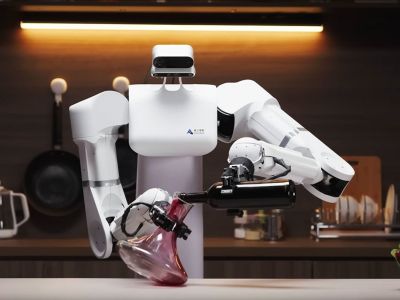
Positioned against established competitors like Q5, Green, Astribot S1, and KUAVO-MY, the Martian demonstrates particular strength in software flexibility and sensor comprehensiveness. Its ROS2 foundation grants developers advantages over platforms locked into proprietary stacks, while the integrated thermal and force-sensing capabilities exceed what most competitors offer at comparable price points. The 16-DOF architecture balances dexterity against computational overhead more efficiently than higher-degree-of-freedom alternatives. However, competitors like Astribot S1 may edge ahead in pure manipulation speed for repetitive tasks, while KUAVO-MY variants offer superior leg articulation for outdoor terrain navigation. The Martian's genuine competitive advantage lies in its ecosystem approach—providing researchers and integrators genuine customization pathways rather than constrained deployment scenarios.


Reshaping Automation Economics
The Martian's market entrance signals a maturation inflection point within service robotics, where affordability finally intersects with genuine capability. Organizations can now justify automation investments for operations previously deemed too specialized or variable for robotic solutions. This democratization effect ripples across supply chains, manufacturing networks, and service industries—creating competitive pressure on established players while enabling smaller enterprises to access previously exclusive technologies. As UniX AI continues iterating on the platform and expanding the third-party developer ecosystem, the Martian trajectory suggests humanoid robotics is transitioning from specialized research territory into mainstream operational infrastructure, fundamentally reshaping how organizations approach labor challenges over the next three to five years.
Learn More About This Robot
Discover detailed specifications, reviews, and comparisons for Martian.
View Robot Details →