Lynx
by Deep Robotics
ChinaReleased: 2024 (Global rollout 2025)
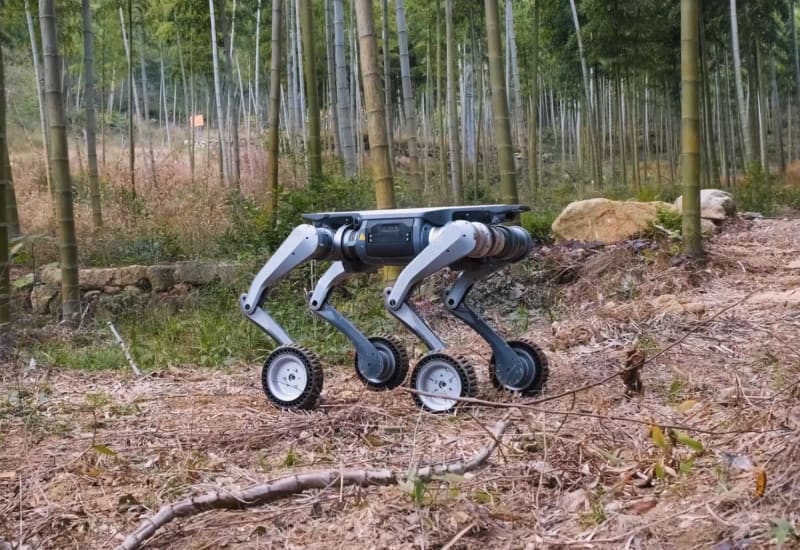
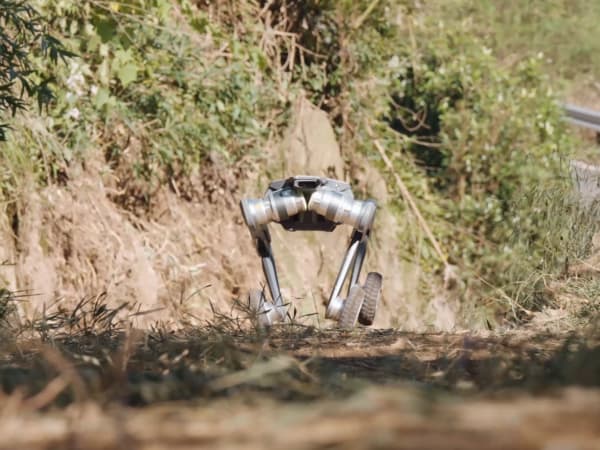
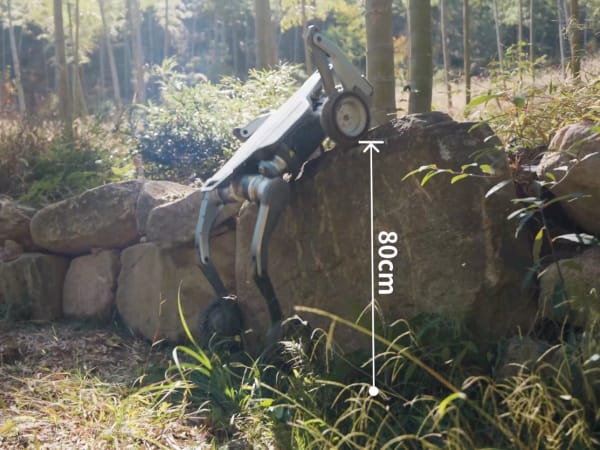
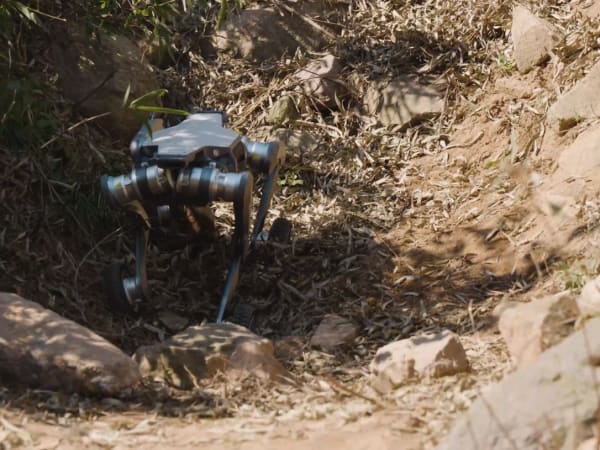
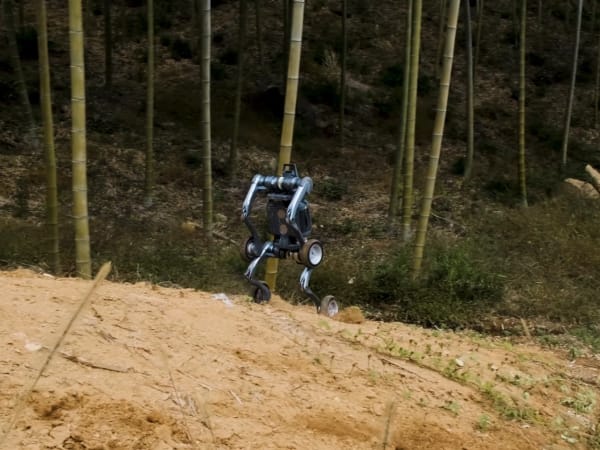
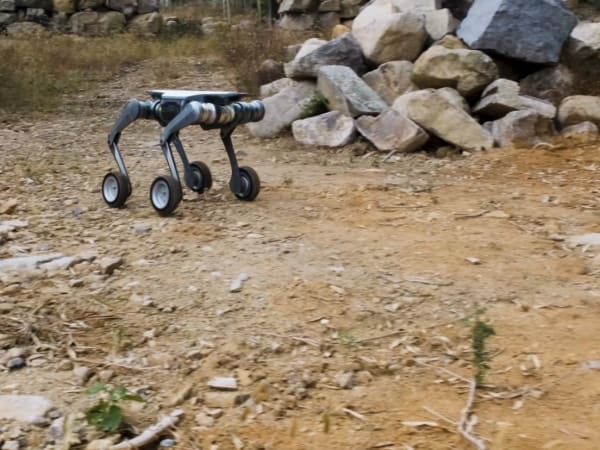
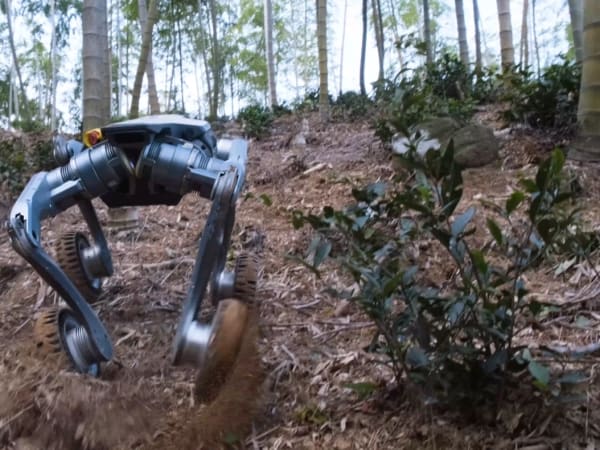
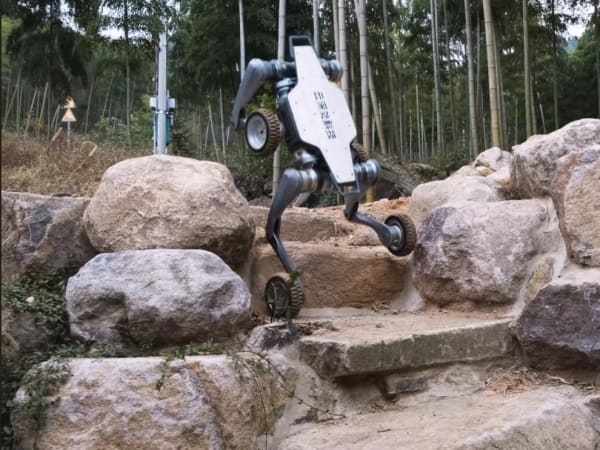
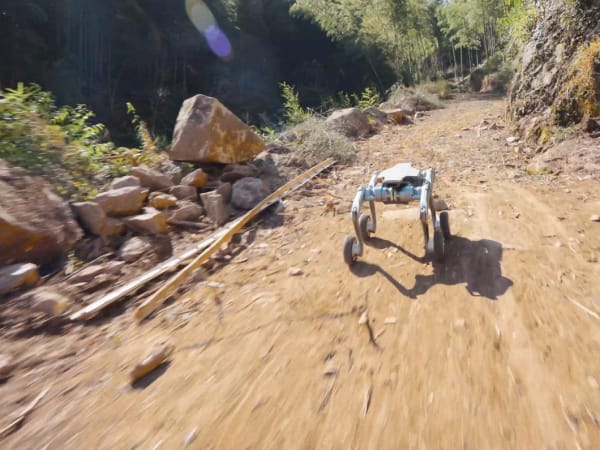
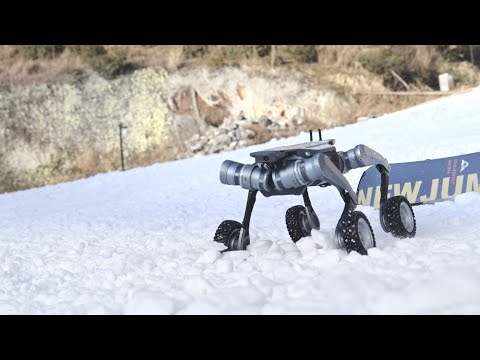
The Lynx is a compact wheel-leg hybrid quadruped robot designed for exceptional terrain adaptability and embodied AI capabilities, targeting industrial, research, defense, and field operations. It features ultra-wide joint movement ranges, enabling seamless switching between configurations like front-elbow rear-knee for tight spaces and full-elbow for stair climbing, navigating corridors as narrow as 50 cm. Key capabilities include omnidirectional obstacle avoidance, 360° point-cloud mapping via dual 96-line LiDARs, high-speed mobility up to 5 m/s (lab-tested, 2 m/s operational), slope handling up to 45°, continuous stair climbing to 25 cm, and single-step overcoming up to 80 cm. With IP66 protection, operation from -20°C to 55°C, hot-swappable batteries for 3 hours unloaded endurance (15 km range) or 2.5 hours loaded (12 km), and modular expansion ports, it supports payloads up to 15 kg (max load 50 kg). Powered by dual octa-core processors, wide-angle cameras, and OTA updates, Lynx excels in challenging environments like tunnels, pipelines, and off-road terrains, replacing humans in high-risk tasks while ensuring efficiency, safety, and scalability.
What Can Lynx Do?
Core operational tasks and activities demonstrated or performed by Lynx.
Real-World Applications of Lynx
Industries, working environments, and deployment suitability for Lynx.
Lynx Capabilities
Inherent physical, perceptual, and cognitive abilities built into Lynx.
Image Gallery
Below images are from Deep Robotics's official sources
Review Videos
Watch expert reviews and demonstrations of this robot dog

Full Specifications
Other Notable Features
Wheel-leg hybrid design, hot-swappable batteries, OTA upgrades, modular expansion ports, front/rear bidirectional lighting
More Robots from Deep Robotics
Explore other robots and developments from this manufacturer
Robo Horse
By: Deep Robotics
Launched: 2026
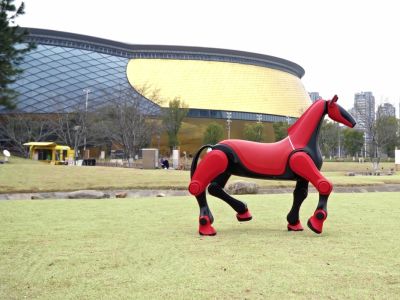
The Robo Horse is a quadruped entertainment and companion robot created by Deep Robotics as a special edition celebrating the Year of the Horse. Based on the Lynx M20 industrial platform, it combines advanced robotics with cultural creativity, featuring horse-inspired design and movement patterns including prancing, pawing, and rearing motions. While primarily designed for entertainment and educational purposes, the robot demonstrates the versatility of quadruped platforms. It can carry human passengers despite its compact size, making it suitable for interactive attractions, educational demonstrations, and public engagement events. The robot showcases how industrial robotic technology can be adapted for creative and social applications beyond traditional industrial inspection and rescue operations.

DR02
By: Deep Robotics
Launched: 2025
The DR02 is a full-size humanoid robot designed for industrial and outdoor applications, featuring an IP66 rating for dust and water resistance. Standing 175 cm tall and weighing 65 kg, it operates in extreme environments from -20°C to 55°C, enabling all-weather, all-scenario continuous operation. It has a modular quick-detach design for arms and legs, facilitating rapid maintenance and reducing downtime. Equipped with advanced sensors including LiDAR, depth and wide-angle cameras, and powered by a high-performance NVIDIA Jetson AGX Orin platform delivering 275 TOPS, the DR02 supports real-time perception, navigation, and intelligent decision-making. It can walk at 1.5 m/s, climb slopes up to 20 degrees, and carry payloads up to 20 kg, making it suitable for logistics, inspection, security, and industrial tasks in harsh environments.

DR01
By: Deep Robotics
Launched: 2024
The DR01 is an advanced humanoid robot standing 1.7 meters tall and weighing 80 kg, designed for high mobility and adaptive intelligence. It features AI-driven autonomous learning capabilities that allow it to acquire new skills and adapt to changing environments. The robot can walk at speeds over 1.6 m/s, navigate obstacles such as 18 cm steps and 25° slopes, and maintain balance on uneven or slippery terrain. Equipped with proprietary lightweight J60 and high-torque J100 joints, it delivers flexible and strong movements. Its fusion perception system integrates internal and environmental sensors for real-time adaptive control, making it suitable for industrial automation, research, and complex task execution in dynamic settings.

X20
By: Deep Robotics
Launched: 2021
The Deep Robotics X20 is an industrial-grade quadruped robot dog designed for autonomous patrol inspection in extreme conditions, such as underground cable tunnels, toxic environments, and disaster zones. It features strong environmental adaptability with IP66 dust and water resistance, enabling operation in heavy rain, sand, dust storms, low temperatures, and hail. Key capabilities include navigating complex terrains like 30° slopes, 20cm obstacles, stairs, grass, sand, snow, gravel, and standing water; maximum speed of 4 m/s; payload capacity up to 20kg (with some sources noting 85kg for rescue variants); 2-4 hours endurance and 15km mileage; precise perception for navigation, dynamic obstacle avoidance, terrain recognition, and human-robot interaction. Targeted markets include electric power inspection for intelligent data acquisition and danger warning, post-disaster rescue for scouting, gas sensing, and material transport, as well as industrial applications requiring unmanned operations in hazardous areas to enhance safety and efficiency.
Frequently Asked Questions
Get answers to common questions about this robot