DJI Neo 2 Debuts Omnidirectional Sensing Under 250 Grams
Pocket-Sized Powerhouse Arrives
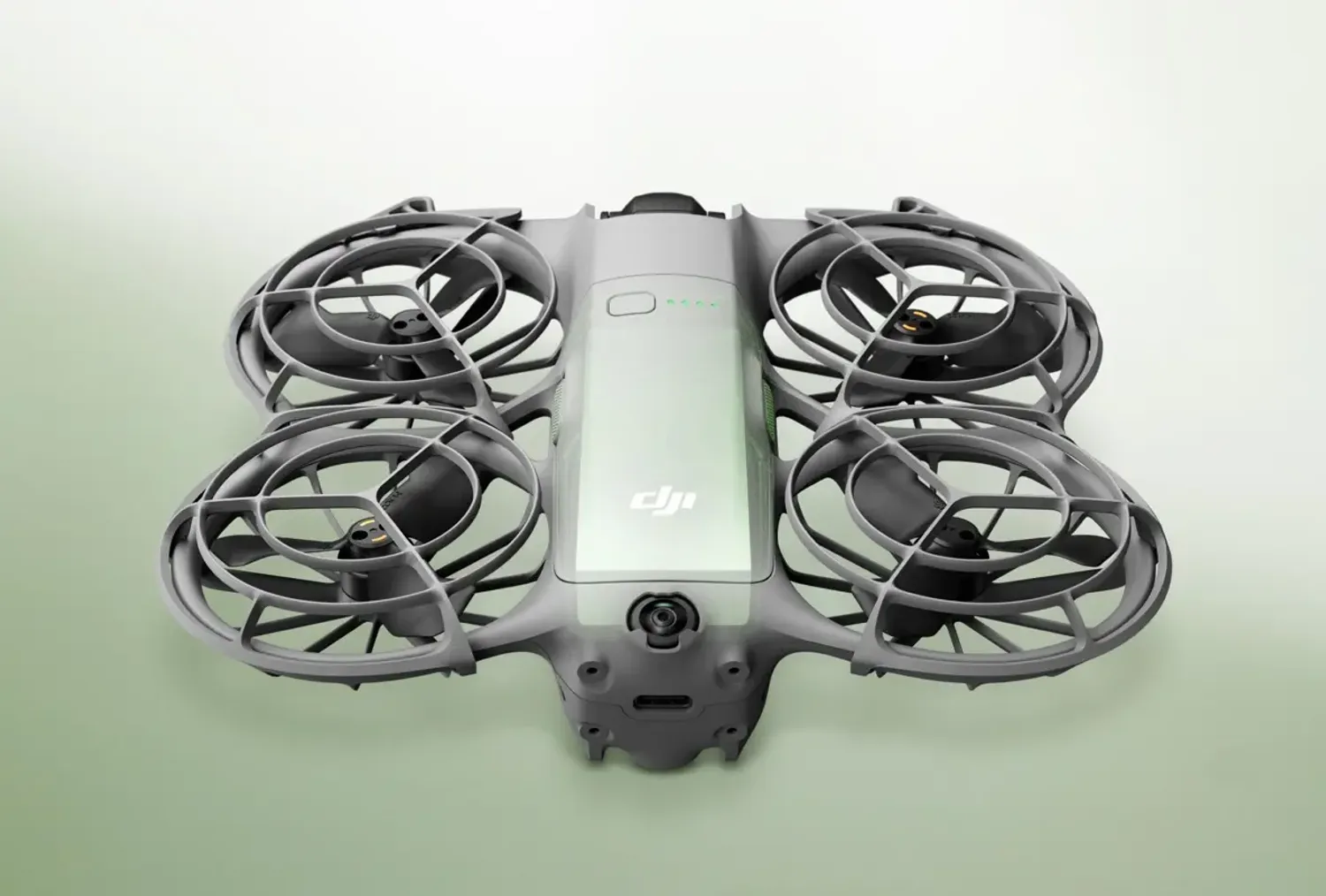
DJI has unveiled the Neo 2, a revolutionary compact drone that redefines what entry-level aerial capture can achieve. Launching in November 2025, this 151-gram quadrotor introduces omnidirectional obstacle sensing to DJI's most portable platform, fundamentally shifting accessibility for casual creators and travel enthusiasts. Priced from £239 for the base model, the Neo 2 represents a watershed moment where sophisticated autonomous flight technology becomes genuinely pocketable. The timing matters: as social media content demands escalate and creator economics democratize, DJI has engineered a device that fits literal pocket dimensions while delivering professional-grade stabilization and tracking capabilities previously reserved for substantially larger systems.
Gesture Commands Redefine Control
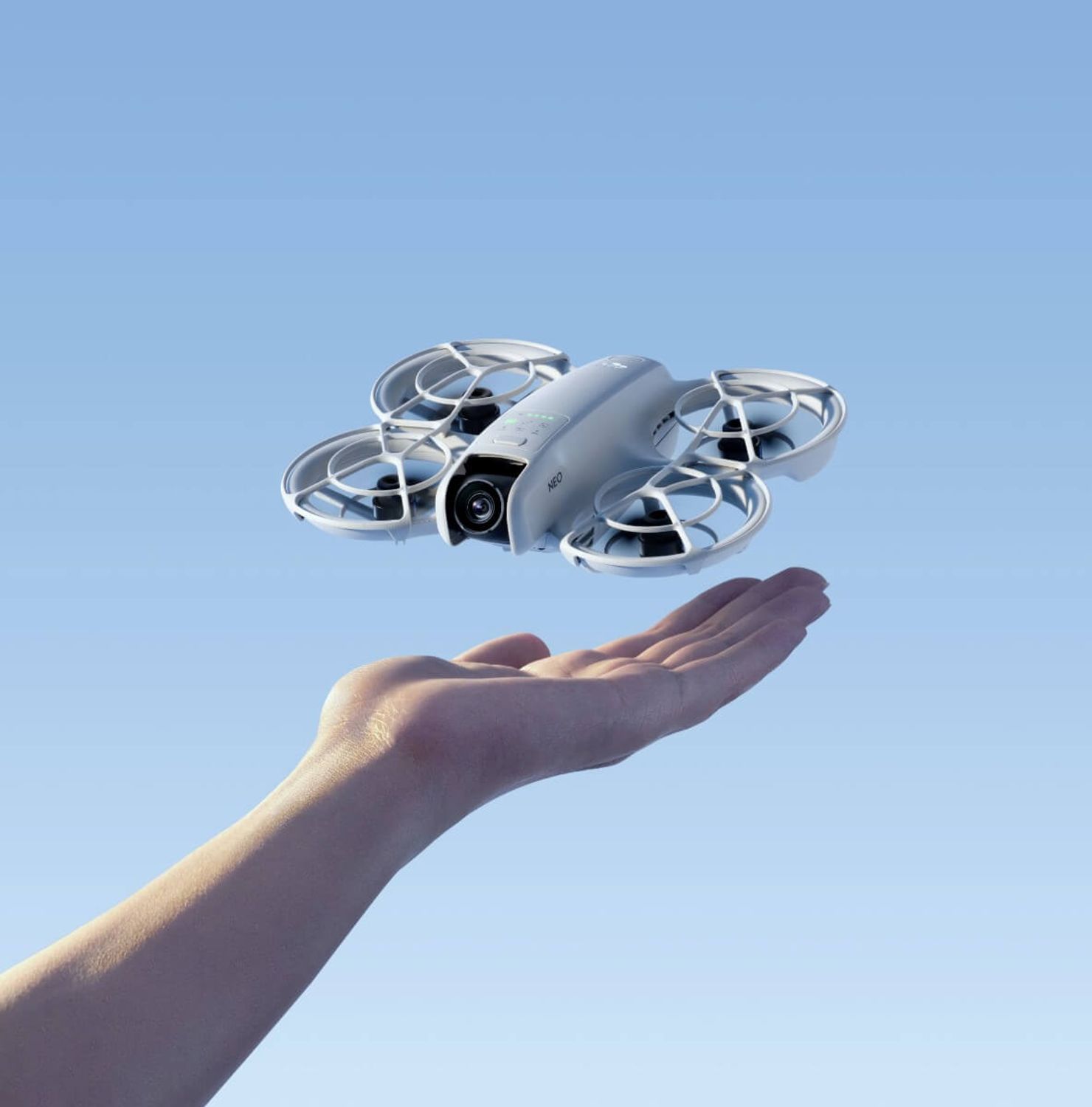
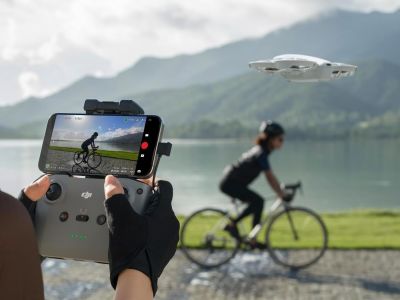
The Neo 2 shatters conventional drone operation paradigms through its multimodal control architecture. Beyond traditional remote controllers, users command the aircraft through palm gestures, voice instructions, and smartphone taps—eliminating the friction that typically deters casual pilots. The innovative palm takeoff and return-to-palm landing feature transforms the drone into an extension of the user's body rather than a device requiring operational overhead. Enhanced ActiveTrack technology now supports eight-directional pursuit patterns, including diagonal vectors that enable cinematically fluid subject following. When paired with DJI's RC-N3 remote controller, transmission extends to 10 kilometers, fundamentally expanding operational range compared to smartphone-only alternatives.
4K100 Slow-Motion Breakthrough
Engineering advancement accelerates dramatically with the Neo 2's video architecture. The drone captures 4K footage at an unprecedented 100 frames per second—delivering cinematic slow-motion capabilities that previously required prosumer-tier equipment. A 12-megapixel, 1/2-inch CMOS sensor paired with a newly designed 2-axis gimbal provides stabilization across tilt and roll axes, eliminating jitter that plagued earlier compact drones. The 49-gigabyte internal storage eliminates SD card dependency, while QuickTransfer technology achieves 80 megabytes-per-second Wi-Fi speeds for rapid file offloading. Vertical 2.7K recording specifically addresses social media platforms, acknowledging that modern content creation increasingly prioritizes portrait orientation.
Creator Workflows Transformed
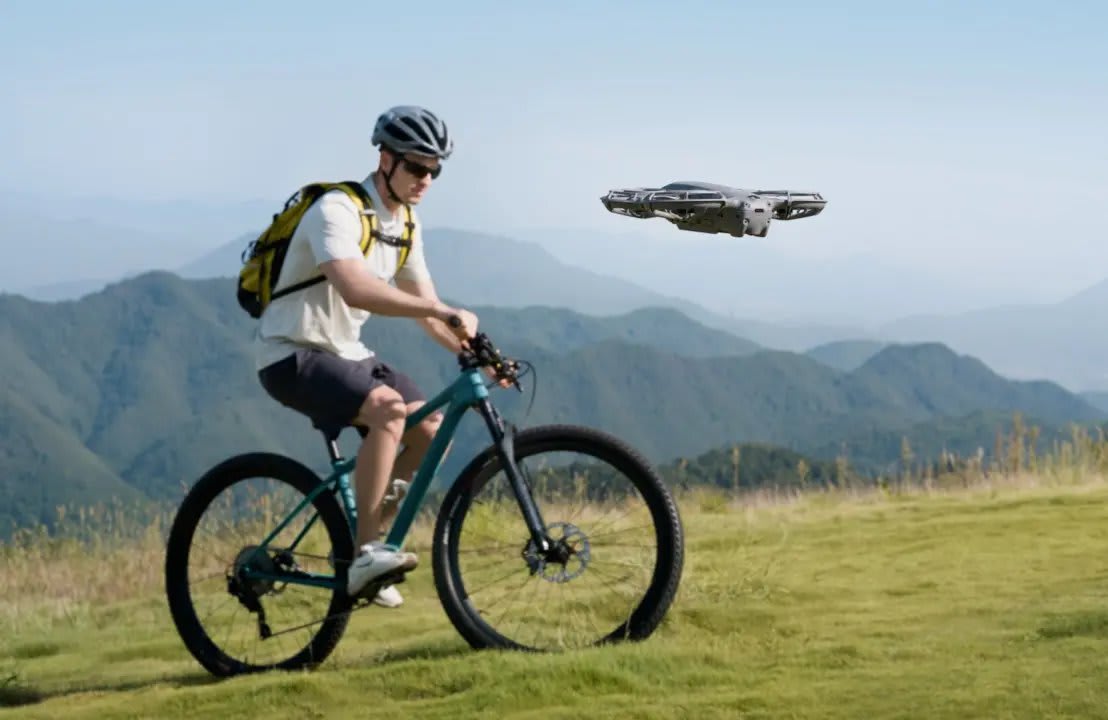
Practical applications span travel documentation, social media content production, and real-time event coverage. Travel vloggers can now capture stabilized footage during movement without tripod infrastructure, while fitness enthusiasts benefit from cycling-specific tracking modes that maintain subject framing through dynamic environments. The SelfieShot feature automates composition, enabling creators to concentrate on performance rather than camera positioning. Event photographers leverage the drone's rapid deployment for establishing shots and crowd perspectives. Real estate professionals utilize the compact form factor for property walkthroughs in confined spaces, while casual users simply document everyday moments with cinema-quality output.
Precision Engineering Specifications
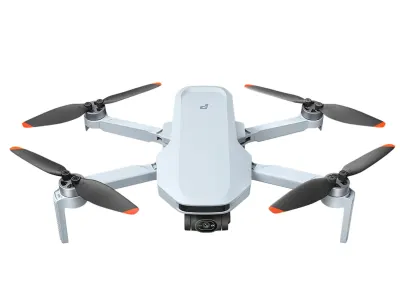
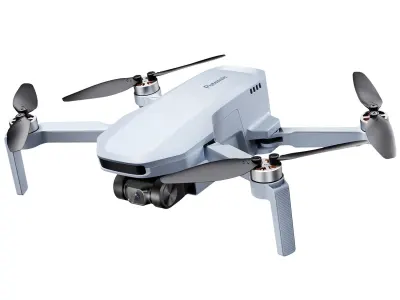
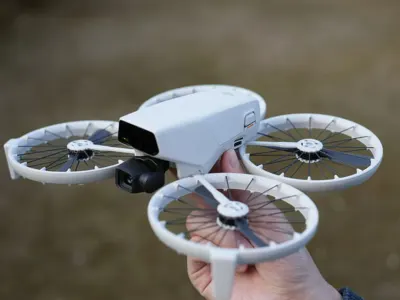
Technical specifications reveal meticulous optimization. The folded dimensions measure 13.0 by 9.0 by 5.0 centimeters, achieving remarkable compactness while housing sophisticated internals. Weight registers at 135 grams, maintaining regulatory registration-free status in most jurisdictions. Maximum velocity reaches 16 meters per second in sport and manual modes, delivering responsive flight dynamics. Battery longevity extends to 2-3 years under typical usage patterns, ensuring durability across seasons. The sensor suite encompasses a 1/2-inch CMOS camera, vision positioning sensors, ultrasonic sensors, and an inertial measurement unit coordinating movement precision. Navigation integrates GPS, GLONASS, vision positioning systems, visual odometry, and inertial navigation, creating redundant localization architecture. Safety mechanisms include obstacle avoidance through vision sensors, palm-based emergency landing, geofencing parameters, automatic low-battery return-to-home sequences, and comprehensive propeller guards.
Competitive Positioning Emerges
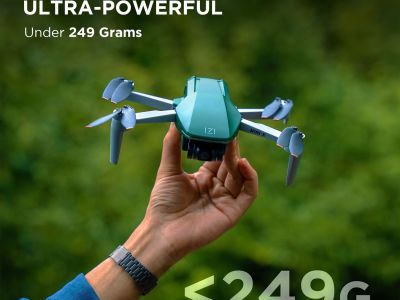
Against comparable platforms, the Neo 2 occupies a distinctive niche. The Autel Evo Lite+ emphasizes larger sensor capabilities but sacrifices portability through substantially greater weight. Skydio's R10 and X2D systems excel in autonomous navigation sophistication yet command premium pricing that excludes casual users. The IZI Mini X Nano Fly More Combo offers budget accessibility but lacks the Neo 2's tracking velocity and video frame-rate capabilities. The Neo 2's primary strength resides in balancing creation sophistication with genuine portability—no competitor achieves simultaneous 4K100 recording, omnidirectional sensing, and sub-200-gram deployment. Weaknesses emerge in payload expansion limitations and maximum flight duration, where heavier competitors sustain 25-30 minute endurance. For creators prioritizing mobility and video quality over extended flight time or modular expandability, the Neo 2 establishes unmatched value positioning.
Market Disruption Accelerates
The Neo 2 signals industry-wide trajectory shifts toward intelligent miniaturization. As drone technology matures, manufacturers increasingly recognize that capability density matters more than raw specifications. This release suggests future consumer robotics will prioritize seamless human-machine interaction through gesture recognition and autonomous tracking rather than manual piloting complexity. Pricing under £400 democratizes 4K video capture, directly challenging smartphone cinematography workflows. Industry implications extend beyond drones: if DJI successfully embeds professional-grade stabilization in 151-gram platforms, competitors face mounting pressure to deliver equivalent performance in smaller form factors. The Neo 2 represents not merely a product iteration but a philosophical reorientation—proving that advanced robotics can serve casual audiences without compromising technical sophistication or demanding specialized training.
Explore Humanoids
Sources
Related Articles
IZI Mini X Nano 4K Drone Revolutionizes Compact Aerial Imaging
IZI Sky Pro 4K Drone Revolutionizes Aerial Imaging
DJI FlyCart 30 Revolutionizes Heavy-Duty Drone Delivery
DJI FlyCart 100 Revolutionizes Heavy-Lift Drone Delivery
Related Comparisons
Compare DJI Neo 2 with similar robots
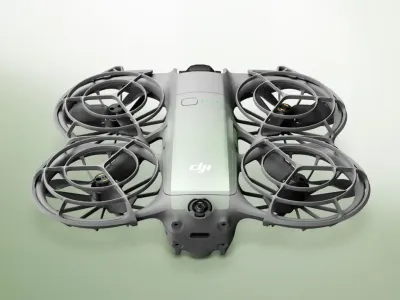
DJI Avata 360 vs DJI Neo 2
DJI Avata 360 vs DJI Neo 2: 8K 360° video, flight time, speed, range, safety and price compared to help you choose between FPV and selfie flying.
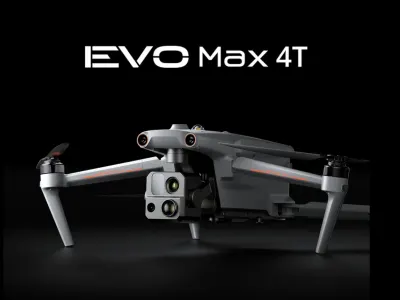
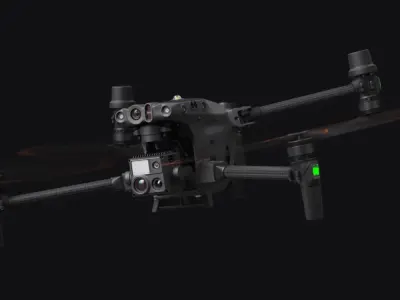
EVO Max 4T vs DJI Matrice 30 series
Which camera drone is better? EVO Max 4T vs DJI Matrice 30 series compared for image quality, battery life, and value.
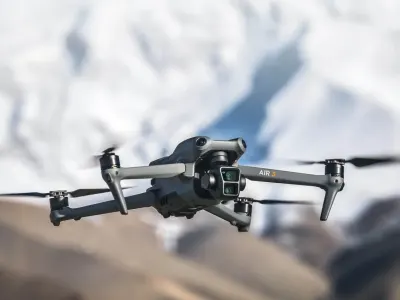
DJI Air 3 vs DJI Air 3S
Compare DJI Air 3 vs DJI Air 3S for camera quality, low-light sensors, obstacle avoidance, battery life, and pro videography outcomes.
DJI FlyCart 30 vs DJI FlyCart 100
Compare DJI FlyCart 30 and FlyCart 100. Detailed analysis of sensors, navigation, battery lifespan, safety, and payload handling.
Learn More About This Robot
Discover detailed specifications, reviews, and comparisons for DJI Neo 2.
View Robot Details →