Seegrid’s Lift RS1 AMR targets the repetitive middle of manufacturing material flow
Robot Details
Lift RS1 AMR • SeegridPublished
June 7, 2026
Reading Time
3 min read
Author
Origin Of Bots Editorial Team
Factory Flow Pressure
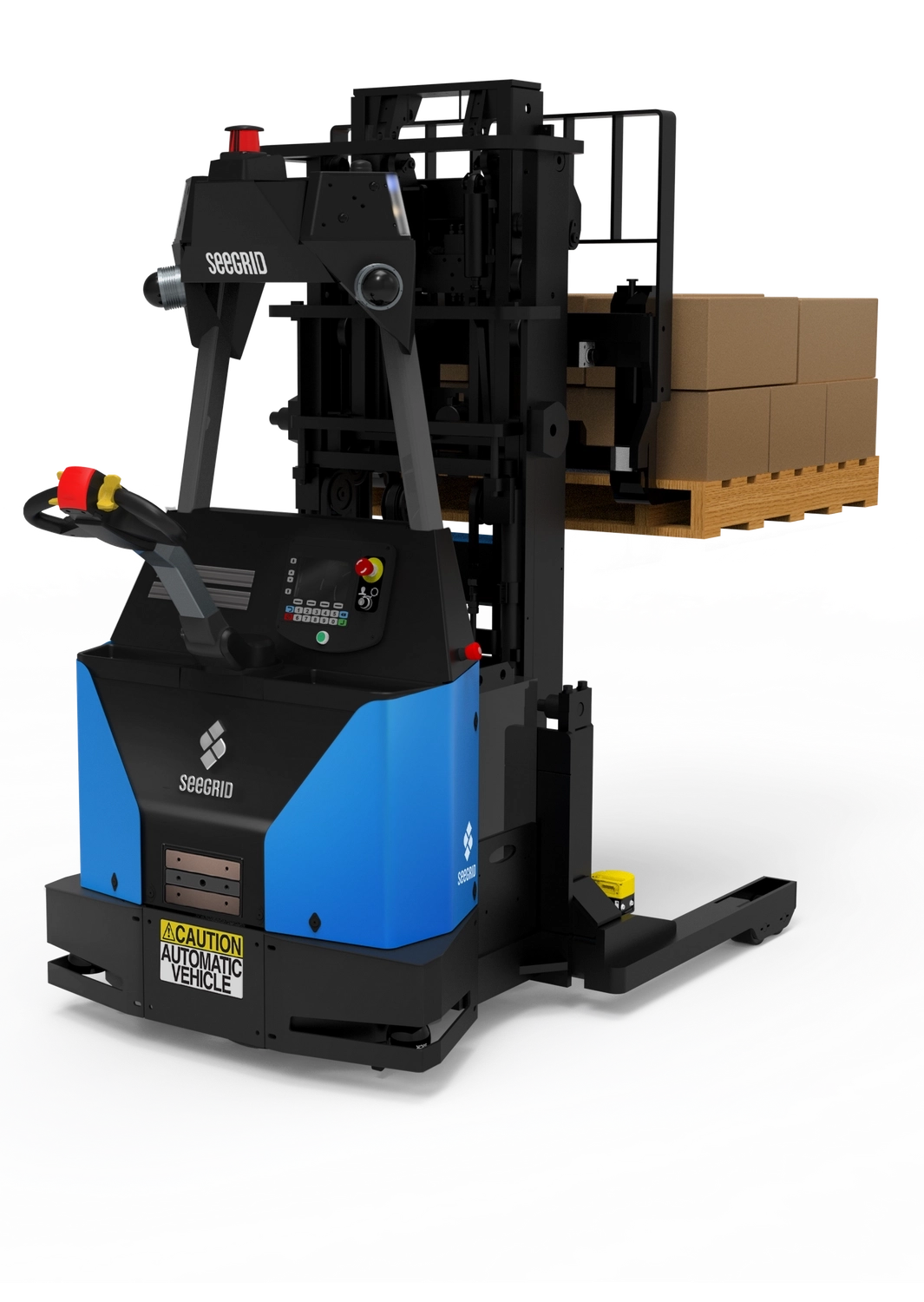
Manufacturing plants are under pressure to move pallets, racks, and parts with more repeatability and less exposure to manual lift-truck risk. Seegrid has now positioned the Lift RS1 AMR around that problem with an autonomous lift truck designed for low-lift payload workflows, and its materials describe the system as handling pick, transport, and place operations across live facilities.
Why It Stands Out
The Lift RS1 matters because its value proposition is not raw speed, but controlled repetition: it is built for structured routes, steady payload movement, and integrated safety coverage in environments where missed placements or near misses can slow an entire line. Seegrid also frames the robot as infrastructure-free, which lowers the operational burden of fixed guides while keeping it focused on repeatable movement rather than flexible, unstructured work. The result is a system aimed at throughput, payload handling, and safer handoffs between production zones. RS1 is best understood as a workflow stabilizer, not a general-purpose mobile robot.
How It Moves
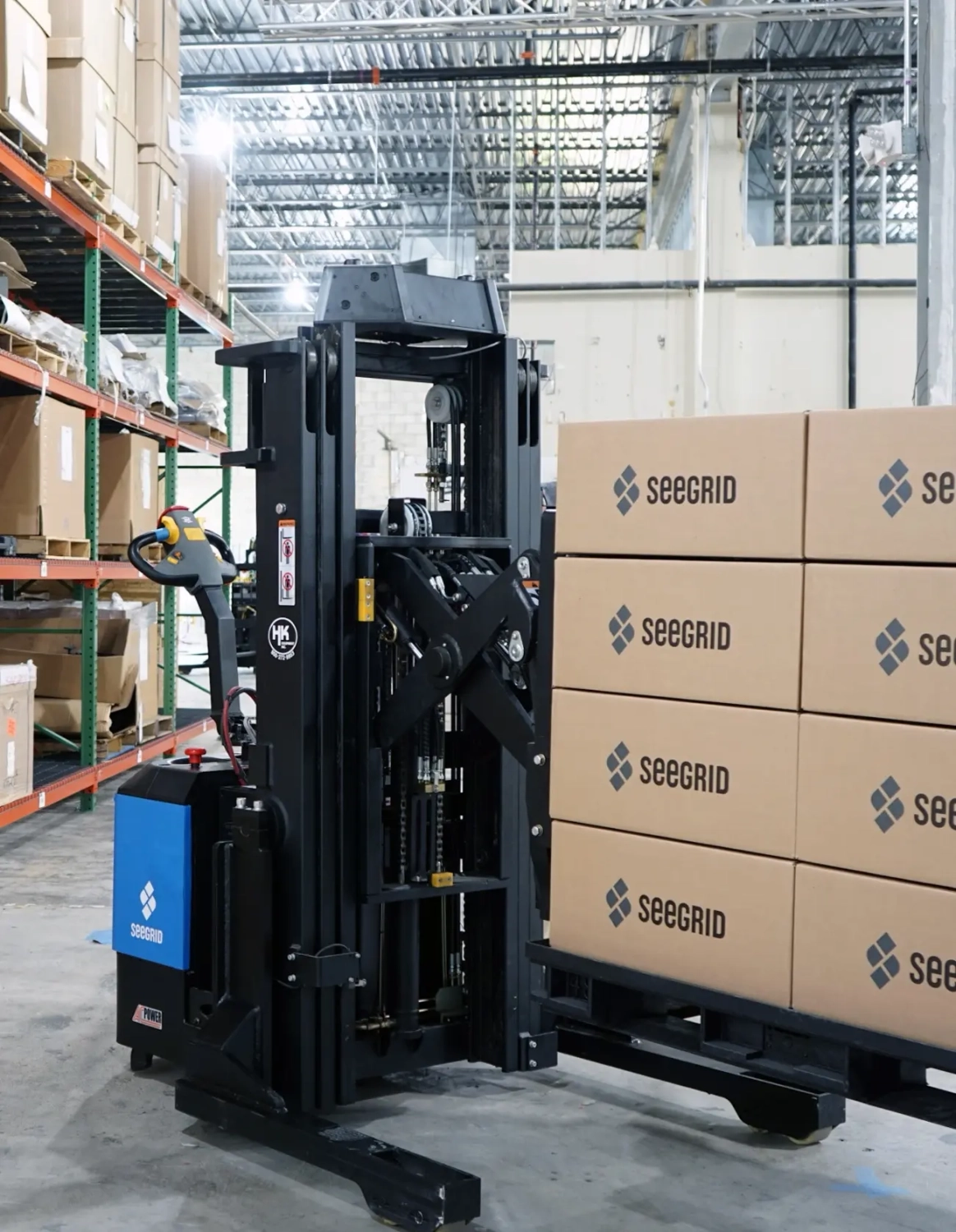
The system flow is straightforward: task program input, then motion planning, then high-precision actuation, followed by quality validation feedback from its sensing stack. Seegrid’s published materials and walkthrough indicate that the RS1 uses 3D computer vision, 3D lidar, 2D lidar, and obstruction detection to localize pallets, verify tine placement, and confirm drop-zone conditions before placing a load. In practice, that means the robot is designed to see the route, confirm the load, and complete the transfer with minimal ambiguity.
End-Cap Staging
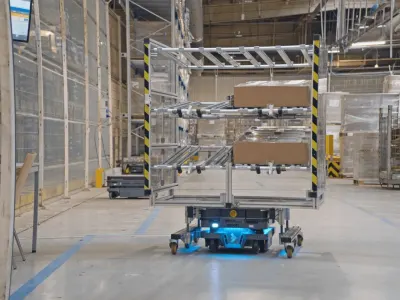
One realistic deployment is end-cap placement and lane staging inside a manufacturing or warehouse-to-line material flow, where pallets must arrive at a specific point in the correct orientation and at the right moment. Seegrid’s own walkthrough shows the RS1 performing precision lane staging and end-cap placement, which fits the industrial category’s demand for repeatability and cycle consistency rather than open-ended navigation. In that setting, the robot is most useful when the same move must be executed many times a shift without drifting from the process plan.
Reported Capability Set
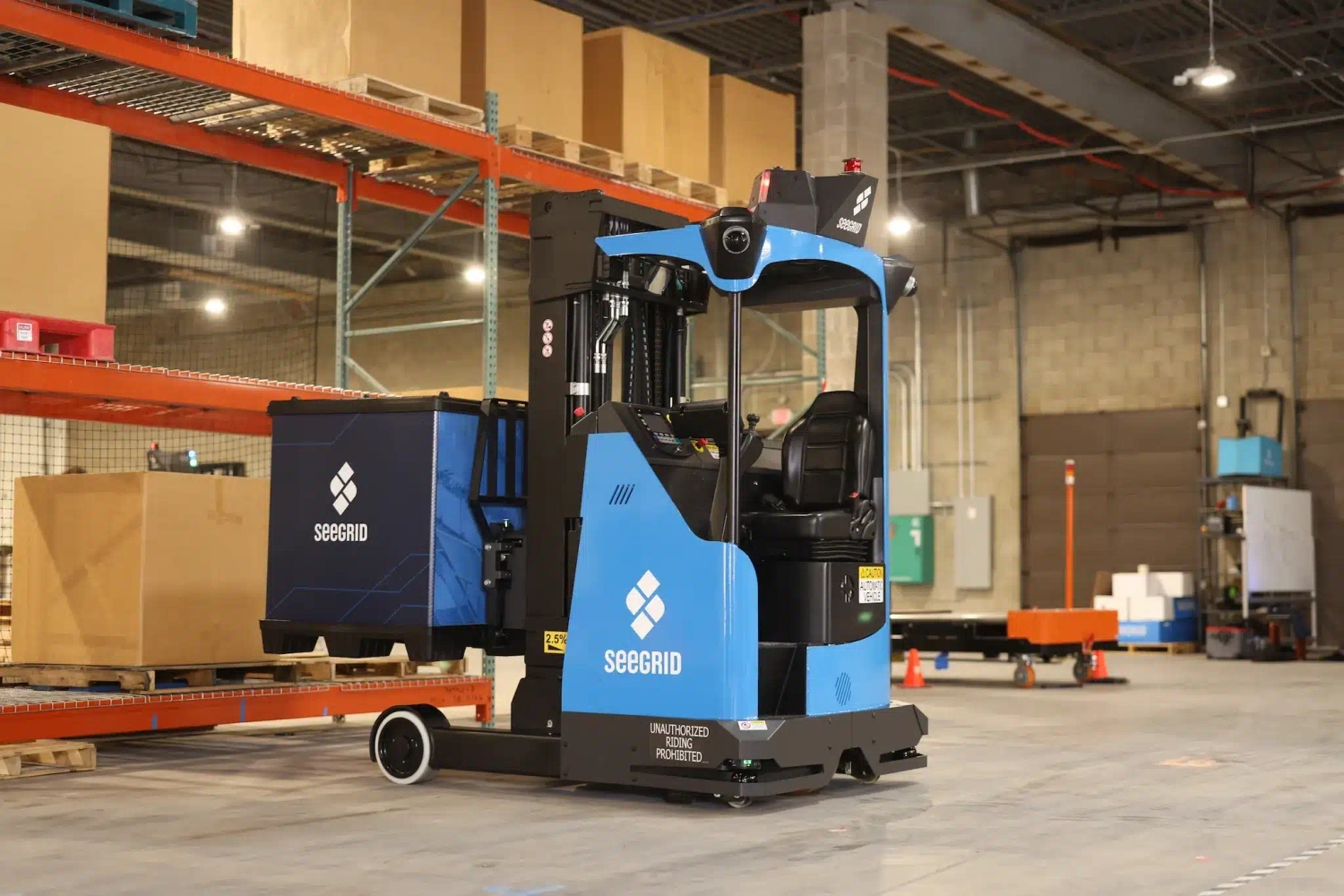
Seegrid’s RS1 materials describe a 6-foot lift height, a 3,500-pound load capacity, and forward speeds up to 5 mph, giving the robot the ability to move standard pallets through low-lift handling tasks at production pace. The company also says the platform uses 360° Smart Path sensors, layered obstruction detection, 2D SLAM, and 3D SLAM-style infrastructure-free navigation with vision and laser data, all of which support safe operation in active facilities. Its listed payload scope includes standard pallets, Gitterboxes, and custom industrial racks, with a five-year battery life claim suggesting long service intervals for a fleet asset.
Rivals Edge Check
| Robot | Key Advantage | Where Lift RS1 AMR Wins | Target Use |
|---|---|---|---|
| Lift CR1 AMR | Higher lift height and heavier load handling for more demanding transfer jobs. | RS1 is better aligned to lower-lift, lower-complexity workflows that prioritize repeatable transport. | Heavier pallet movement and elevated handling. |
| KUKA KMP 1500P | Flexible omnidirectional transport for factory-side payload movement. | RS1’s lift-and-place focus is more purpose-built for pallet staging and vertical handling. | Material transport in production environments. |
| KUKA KMP 600-S diffDrive | Compact differential-drive mobility for controlled industrial movement. | RS1 brings autonomous lift-truck functionality rather than only floor-level transport. | Compact internal logistics. |
| ABB Flexley Mover P603 | Payload transport designed for space-efficient factory automation. | RS1 is stronger when the task requires autonomous lifting and placement, not just movement. | Factory logistics and line feeding. |
Automation’s Narrower Path
The broader industrial signal is that AMRs are becoming less about general mobility and more about process-specific reliability inside fixed production flows. Seegrid’s emphasis on infrastructure-free navigation, safety coverage, and standardized load handling reflects a market where factories want automation that integrates with existing lines rather than forcing a full plant redesign. At the same time, the category is moving toward a practical middle ground in which robots handle the repetitive transfer work while people stay closer to exception handling, inspection, and higher-variance tasks.
Explore Humanoids
Sources
Related Articles
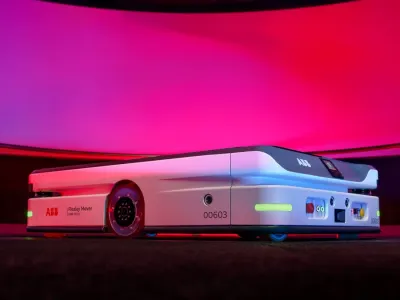
ABB’s Flexley Mover P603 targets heavy intralogistics with compact AI navigation
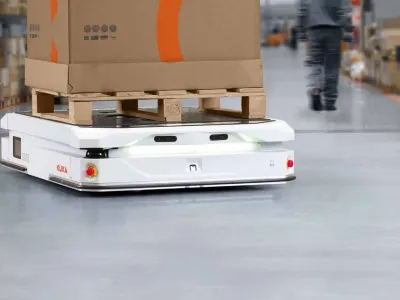
KUKA’s KMP 1500P pushes heavy-load autonomy deeper into factory logistics
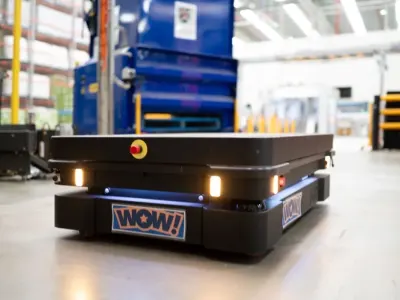
Mobile Industrial Robots’ MiR1350 sharpens the case for heavy-load autonomy in manufacturing
Seegrid’s Lift CR1 AMR pushes vertical material handling higher in manufacturing
Related Comparisons
Compare Lift RS1 AMR with similar robots
Learn More About This Robot
Discover detailed specifications, reviews, and comparisons for Lift RS1 AMR.
View Robot Details →