The Dreame L40s Ultra AE positions itself as a cost-effective robot vacuum in the mid-range market, priced at USD 700-900, targeting residential users seeking advanced features without premium costs. It stands out with AI-enhanced SLAM navigation using LiDAR, RGB camera, and 3D structured light, alongside Dreame OS for firmware updates and app control. Key differentiators include its sensor suite for precise mapping in mixed floor environments and suitability for pet owners and families, offering cliff detection and anti-collision safety.
The iRobot Roomba Max 705 occupies the premium segment at USD 1100-1200, emphasizing integration with smart home ecosystems for high-end residential cleaning in large homes and pet-owning households. It differentiates through ClearView Pro LiDAR and PrecisionVision AI camera for SLAM-based navigation, plus dirt detection sensors for targeted cleaning. Its proprietary iRobot OS and broad voice control compatibility with Alexa, Siri, and Google Assistant provide a mature app ecosystem focused on reliability.
Detailed Analysis
Cleaning Performance (Real-World Use)
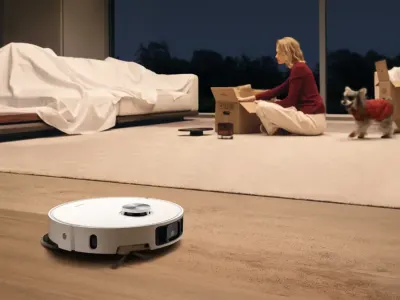
Dreame L40s Ultra AE leverages LiDAR, RGB camera, and 3D structured light for effective debris pickup in residential settings, performing well on mixed floors as shown in tests where similar L40s models collected 64.4g of debris. iRobot Roomba Max 705 benefits from dirt detection sensors and 13,000 Pa suction, excelling in pet hair and targeted cleaning on carpets and hard floors. Real-world results indicate Dreame edges in overall debris removal volume while Roomba offers consistent detection-driven performance.
Navigation & Mapping Accuracy
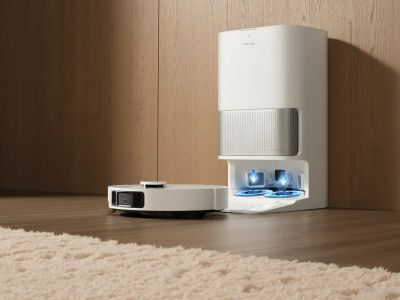
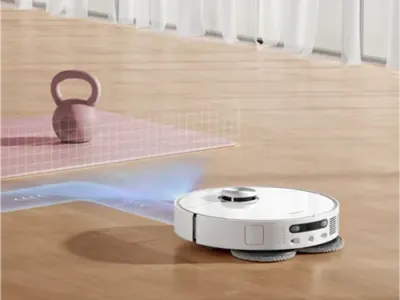
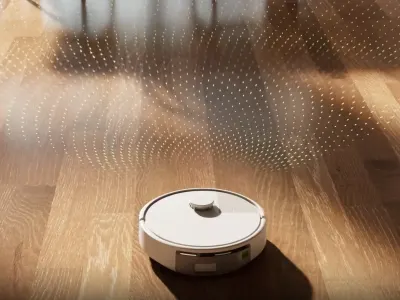
Dreame L40s Ultra AE uses AI-enhanced SLAM with RGB camera and 3D structured light alongside LiDAR for precise obstacle avoidance and mapping in complex homes. iRobot Roomba Max 705 employs ClearView Pro LiDAR and PrecisionVision AI camera for SLAM navigation, enhanced by bump and cliff sensors. Both achieve reliable pathing at 0.3 m/s, though Dreame's multi-sensor fusion may handle dynamic environments better for families.
Battery Life & Runtime
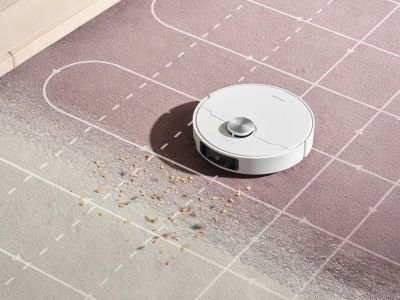
Both models feature lithium-ion batteries with 2-3 year lifespans, but iRobot Roomba Max 705 provides longer runtime at 210 minutes compared to Dreame's typical performance around 160-194 minutes in similar models. Charging takes 4 hours for both, supporting extended sessions in large areas. Roomba's edge suits bigger homes, while Dreame suffices for standard residential use.
Smart Features & App Experience
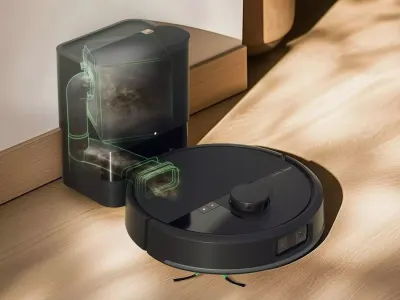
Dreame L40s Ultra AE offers smartphone app control, voice integration, and Dreame OS with AI navigation updates, enabling autonomous operation and custom mapping. iRobot Roomba Max 705 integrates via Roomba Home App with broader voice support for Alexa, Siri, and Google Assistant, plus a mature ecosystem for scheduling. Roomba's app provides more polished multi-device compatibility, while Dreame focuses on AI-driven autonomy.
Design, Build & Maintenance
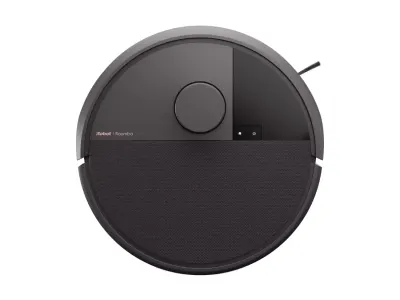
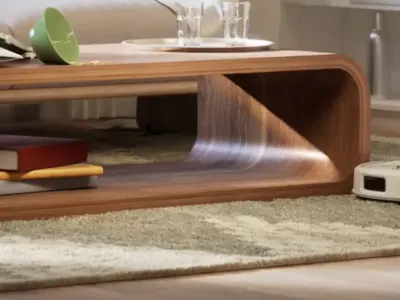
Dreame L40s Ultra AE measures 35 x 35 x 9.7 cm at 4.1 kg with fixed brush options like TriCut for reduced tangles, aiding pet hair maintenance. iRobot Roomba Max 705 is slightly taller at 35.6 × 35.1 × 10.4 cm but lighter at 3.4 kg, with app-based child lock. Both emphasize easy upkeep, though Dreame's lower profile improves under-furniture access.
Use-Case Suitability
Dreame L40s Ultra AE fits pet owners, families, and mixed-floor homes with its sensor array and app updates for versatile cleaning. iRobot Roomba Max 705 targets premium large homes and smart ecosystems, leveraging dirt detection for thorough passes. Selection depends on home layout and integration needs.
Pricing & Value
Dreame L40s Ultra AE at USD 700-900 delivers strong sensor tech and navigation at lower cost, offering better value for budget-conscious buyers. iRobot Roomba Max 705 commands USD 1100-1200 for its ecosystem and runtime advantages. Dreame provides higher affordability without major performance trade-offs.
Which is better for homes with pets?
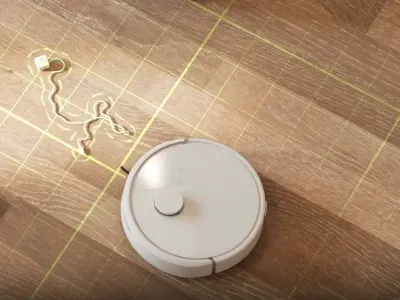
Dreame L40s Ultra AE suits pet owners via TriCut brush options and multi-sensor avoidance for hair and obstacles. iRobot Roomba Max 705 excels with dirt detection and PrecisionVision for pet messes in large spaces. For pet-focused cleaning, Dreame L40s Ultra AE is recommended due to its lower price and tangle-resistant design.
Which is better for large homes?
iRobot Roomba Max 705's 210-minute runtime and LiDAR-AI navigation cover expansive areas efficiently. Dreame L40s Ultra AE manages standard homes well but may require more recharges in very large layouts. For large homes, iRobot Roomba Max 705 is the better choice for extended coverage.
Analysis Score Summary
Total Score
12
Dreame L40s Ultra AE
VS
Based on Detailed Analysis
Total Score
6
iRobot Roomba Max 705
📊 Win: 2 points | Trade-off: 1 point each
Scores are summed across every insight: a clear winner earns 2 points, while balanced trade-offs give each robot 1 point. The total reflects how often each robot outperforms the other (or shares the spotlight) throughout the detailed analysis sections.
Technical Specifications
Head-to-head performance data and metrics
| Specification | Model ADreame L40s Ultra AE | Model BiRobot Roomba Max 705 |
|---|---|---|
Functional Utility & Use Cases4 Comparative Metrics | ||
Control Method | Smartphone app, voice control, autonomous operation | Roomba Home App, voice control (Alexa, Siri, Google Assistant), autonomous operation |
Use Cases | Residential homes, pet owners, families, mixed floor environments | Premium residential cleaning, pet-owning households, large homes, smart home ecosystems |
Multi Robot Coord | No multi-robot coordination | No multi-robot coordination features |
Pet Friendly | Yes, designed with hair-cutting brush and anti-tangle features for pet hair | Yes, designed for pet hair handling with anti-tangle brushes and strong suction |
Manipulation & Load Capacity1 Comparative Metrics | ||
Payload Type | Dust, debris, and liquid mopping solution | Dust, debris, and liquid mopping solution |
Kinematic Architecture & Dexterity3 Comparative Metrics | ||
Material | ABS plastic, rubber, metal accents | High-grade plastic with rubber components on brushes and wheels |
Mobility Type | Wheeled with brush roll and suction | Wheeled robot with brush roll and suction system |
Hardware Interface | Charging contacts, no USB port | Charging contacts, USB-C port for service only |
Functional Utility & Use Cases
4 Comparative Metrics
Manipulation & Load Capacity
1 Comparative Metrics
Kinematic Architecture & Dexterity
3 Comparative Metrics
Related Comparisons
Discover similar robot matchups to expand your knowledge and find the perfect solution
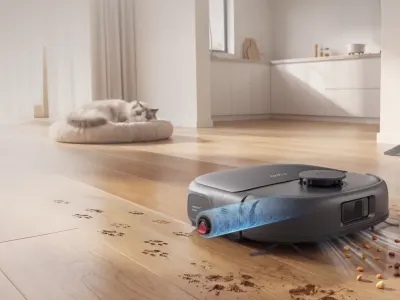
Dreame L40s Ultra AE vs Eufy C28
In-depth comparison of Dreame L40s Ultra AE and Eufy C28, covering cleaning results, app experience, and ownership costs.
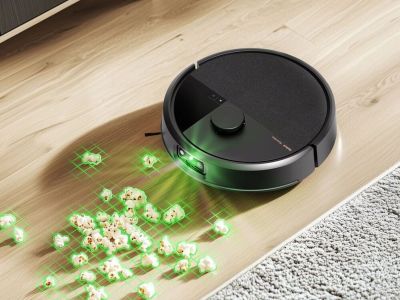
Roborock Saros 10R vs iRobot Roomba Max 705
Roborock Saros 10R or iRobot Roomba Max 705? Compare for pet hair handling, low-furniture navigation, maintenance ease, and value in daily cleaning.
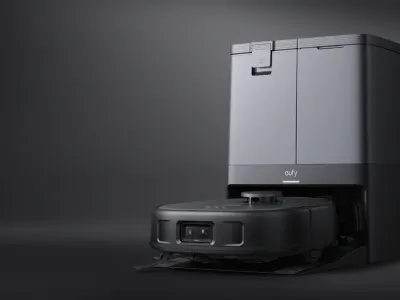
iRobot Roomba Max 705 vs X10 Pro Omni
Compare iRobot Roomba Max 705 vs Eufy X10 Pro Omni for cleaning performance, pet hair handling, navigation accuracy, and large home suitability.
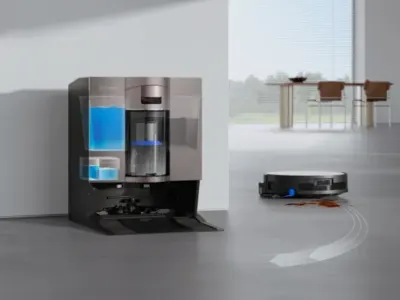
Dreame L40s Ultra AE vs DEEBOT X11 OmniCyclone
Dreame L40s Ultra AE or DEEBOT X11 OmniCyclone? Compare for pet hair handling, navigation in large homes, battery runtime, and maintenance ease.
Disclaimer
All content, comparisons, and verdicts on this website are based on our research, testing, and opinion. While we strive for accuracy, we do not guarantee the completeness, reliability, or suitability of any information. Performance, specifications, and results may vary depending on usage and conditions. This website and its authors are not responsible for any decisions, actions, or outcomes based on the information provided. Always verify product details with the manufacturer before making purchase or operational decisions.