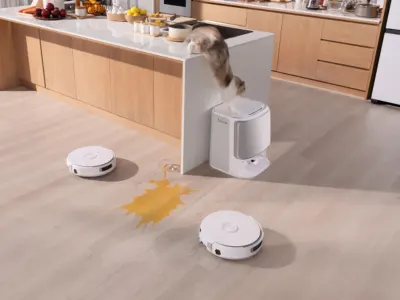
The Narwal Flow by Narwal is presented here as a flagship home vacuum cleaner aimed at residential users who prioritize advanced obstacle avoidance and integrated mop systems; it is compared because both models occupy a similar premium price band and target mixed-floor, pet-friendly homes (Use Cases, Price).
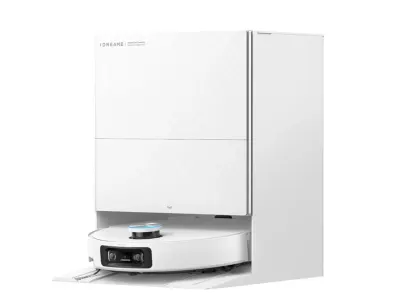
The Dreame X50 Ultra by Dreame is included as a direct competitor in the same premium segment, positioned for users seeking robust mapping, versatile navigation and voice-assistant integrations; its inclusion allows side-by-side evaluation of navigation, sensors and software differences (Use Cases, Price).
Detailed Analysis
Design & Build Quality
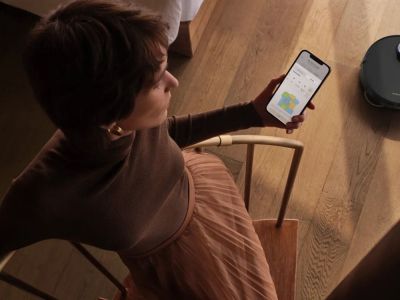
Both robots share compact circular footprints near 35 cm but differ slightly in height and specific dimensions: Narwal Flow measures 35.1 x 36.4 x 9.5 cm while the Dreame X50 Ultra is approximately 35.0 x 35.0 x 8.9 cm (Dimensions). Both weigh about 4.5 kg (Weight). The Narwal emphasizes mop integration and auto-mop-lift mechanisms for carpet protection, while the Dreame focuses on a low-profile design and an accessory set that supports mopping and vacuuming workflows (Use Cases, Safety).
Mobility & Navigation
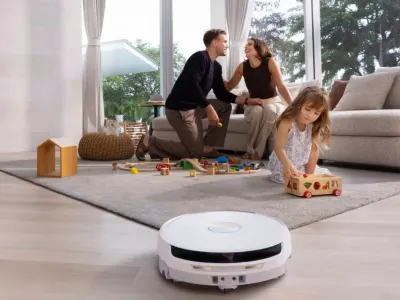
Both robots travel at similar nominal speed (0.3 m/s) but use different navigation stacks: Narwal Flow uses embedded LiDAR with a Twin-AI Dodge system for 3D mapping and advanced obstacle avoidance, while the Dreame X50 Ultra combines LiDAR with AI RGB and 3D structured light using a VersaLift DToF system and SLAM-based 360° mapping (Speed, Navigation). The Dreame system explicitly advertises 360° smart mapping and broader ecosystem mapping features, whereas Narwal highlights its AI-powered dodge and mop-lift for mixed-floor mobility (Navigation).
Sensors & Perception
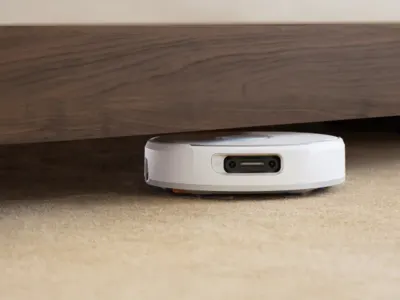
Narwal Flow carries dual RGB cameras, LED, structured light, LiDAR, cliff sensors and bump sensors to build a layered perception stack, whereas the Dreame X50 Ultra lists a single RGB camera, 3D structured light, LiDAR, ultrasonic, cliff and bump sensors (Sensors). Both include cliff detection for fall prevention, but Narwal emphasizes dual RGB cameras for increased object recognition coverage while Dreame supplements vision with ultrasonic sensing for close-range detection (Sensors).
AI Capabilities
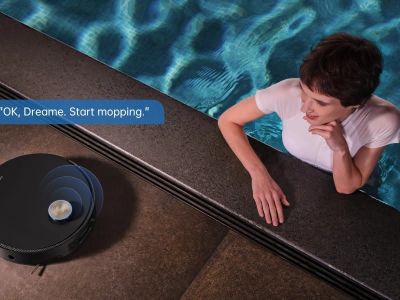
Narwal Flow's software is described as proprietary with AI navigation and a Twin-AI Dodge feature aimed at advanced 3D obstacle avoidance, while Dreame runs Dreame OS with AI navigation and supports firmware updates via app (Software). Control options differ: Narwal supports voice via a "Hey Nawa" assistant plus its app, and Dreame supports smartphone app control and voice assistants including Alexa, Google Home and Siri for broader voice-integrations (Control).
Battery & Power Efficiency
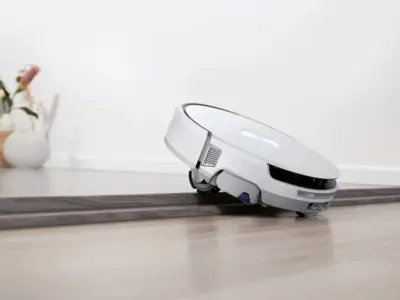
Both robots report similar battery expectations and operational guidance: Narwal Flow lists an estimated 2–3 year typical lifespan for its lithium-ion battery and Dreame lists 2–3 years for battery longevity (Battery). Nominal operational battery characteristics are comparable though Dreame public materials commonly reference a 6400 mAh pack in this line; both manufacturers position runtime to suit whole-home cleaning cycles (Battery).
Use-Case Suitability
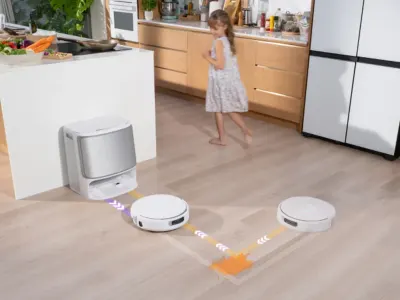
Both models are targeted at residential and pet-friendly homes with mixed flooring and mopping needs (Use Cases). Narwal emphasizes mop safety features like auto mop lifting on carpets and advanced obstacle avoidance for cluttered homes, while Dreame highlights allergy-sensitive households, broader voice-assistant support and mapping efficiency for multi-room coverage (Use Cases, Safety, Control).
Software Ecosystem
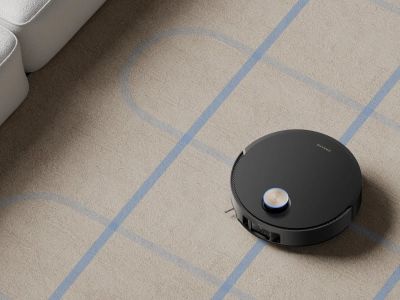
Narwal uses proprietary Narwal software with AI navigation and cleaning algorithms plus scheduling via the Narwal app and voice via "Hey Nawa", while Dreame operates on Dreame OS with app-based firmware updates and broader voice assistant compatibility (Software, Control). The Dreame offering lists integrations with Alexa, Google Home and Siri; Narwal centers control through its own assistant and app experience (Control, Software).
Safety Features
Both robots include cliff sensors and bump sensors to prevent falls and collisions (Safety). Narwal explicitly lists obstacle avoidance and auto mop lifting on carpets to prevent damage, while Dreame adds child lock and a shock absorption system as part of its safety provisions (Safety).
Pricing & Value
Price ranges overlap in the premium bracket: Narwal Flow is listed at $1000–$1500 while Dreame X50 Ultra is listed at $1200–$1500 (Price). This overlapping range positions both for buyers seeking advanced robotics features rather than entry-level cost savings (Price).
Analysis Score Summary
Total Score
13
Narwal Flow
VS
Based on Detailed Analysis
Total Score
5
Dreame X50 Ultra
📊 Win: 2 points | Trade-off: 1 point each
Scores are summed across every insight: a clear winner earns 2 points, while balanced trade-offs give each robot 1 point. The total reflects how often each robot outperforms the other (or shares the spotlight) throughout the detailed analysis sections.
Technical Specifications
Head-to-head performance data and metrics
| Specification | Model ANarwal Flow | Model BDreame X50 Ultra |
|---|---|---|
Functional Utility & Use Cases4 Comparative Metrics | ||
Control Method | Voice commands via “Hey Nawa” assistant, app control, scheduling via Narwal app | Smartphone app, voice control (Alexa, Google Home, Siri), autonomous operation |
Use Cases | Residential homes, pet owners, mixed flooring | Residential, pet-friendly homes, allergy-sensitive environments |
Multi Robot Coord | No | No |
Pet Friendly | Yes, designed to handle pet hair with anti-tangle brushes and strong suction | Yes; anti-tangle brushes and strong suction designed for pet hair |
Manipulation & Load Capacity2 Comparative Metrics | ||
Payload Type | Dust, debris, and liquid mopping solution | - |
Modular Attachments | None | - |
Kinematic Architecture & Dexterity3 Comparative Metrics | ||
Material | ABS plastic, rubber brushes | ABS plastic, rubber, metal accents |
Mobility Type | Omni-directional wheels with climbing ability up to 1.6 inches (40 mm) threshold height | Wheeled with brush roll and suction, retractable legs for obstacle clearance |
Hardware Interface | Charging contacts on base station; no user-accessible hardware ports | Charging contacts, USB-C port on dock station for service |
Functional Utility & Use Cases
4 Comparative Metrics
Manipulation & Load Capacity
2 Comparative Metrics
Kinematic Architecture & Dexterity
3 Comparative Metrics
Related Comparisons
Discover similar robot matchups to expand your knowledge and find the perfect solution
Dreame X50 Ultra vs Roborock S8 MaxV Ultra
Compare Dreame X50 Ultra vs Roborock S8 MaxV Ultra for cleaning performance, navigation accuracy, battery life, and daily usability.
Dreame X50 Ultra vs Ecovacs Deebot X8 Pro Omni
Head-to-head: Dreame X50 Ultra vs Ecovacs X8 OMNI compared on cleaning performance, navigation accuracy, battery runtime, and pet hair handling.
Dreame X50 Ultra vs Dreame X60 Ultra
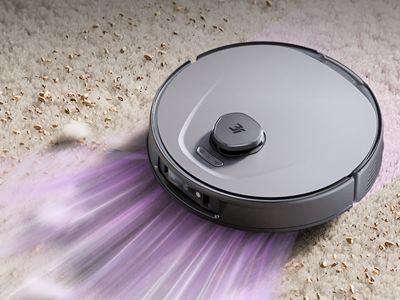
Head-to-head: Dreame X50 Ultra vs Dreame X60 Ultra compared on cleaning performance, navigation accuracy, battery runtime, and pet hair handling.
3i P10 Ultra vs Dreame X50 Ultra
Compare 3i P10 Ultra vs Dreame X50 Ultra for cleaning performance, pet hair handling, navigation accuracy, and long-term maintenance value.
Disclaimer
All content, comparisons, and verdicts on this website are based on our research, testing, and opinion. While we strive for accuracy, we do not guarantee the completeness, reliability, or suitability of any information. Performance, specifications, and results may vary depending on usage and conditions. This website and its authors are not responsible for any decisions, actions, or outcomes based on the information provided. Always verify product details with the manufacturer before making purchase or operational decisions.