Star1 by Robot Era positions itself in the humanoid robotics market through its focus on native general-purpose embodied intelligence, incubated by Tsinghua University and backed by significant funding. It differentiates with high-speed mobility reaching 6 m/s (21.6 km/h), enabling applications in rugged outdoor environments like security patrols and emergency response. The robot's end-to-end neural network approach for mobility and manipulation, combined with 55 degrees of freedom and robust joint torque, supports industrial tasks such as 3C assembly and automotive logistics.
Phoenix by Sanctuary AI targets commercial deployment in industrial and service sectors, leveraging its seventh-generation advancements and partnerships like Microsoft Azure for AI training. It stands out with the proprietary Carbon AI control system, mimicking human brain subsystems for memory, sight, sound, and touch to enable human-like task execution. Key differentiators include best-in-class hand dexterity with over 20 DOF hydraulic actuation and tactile sensing, suited for precise manipulation in automation, healthcare, and research.
Detailed Analysis
Design & Build Quality
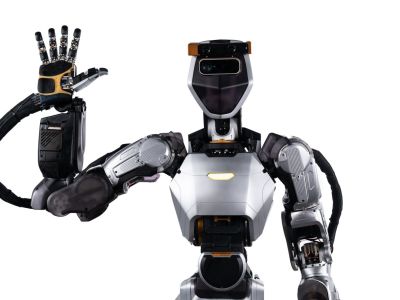
Star1 measures 171 x 55 x 50 cm and weighs 65 kg, featuring 55 degrees of freedom and 400 N·m joint torque for robust manipulation. Phoenix is slightly shorter at 170 x 55 x 60 cm but heavier at 70 kg, with advanced hydraulic hands offering 20+ DOF for superior dexterity compared to electric actuators in competitors. Both employ similar builds for humanoid form factors, though Star1 emphasizes high-speed structural integrity for dynamic tasks while Phoenix prioritizes precision grip strength.
Mobility & Navigation
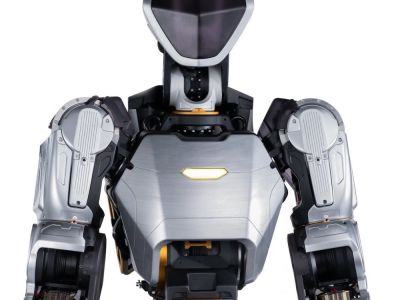
Star1 achieves a top speed of 6 m/s (21.6 km/h), supporting agile movement across terrains via LiDAR, SLAM, and visual odometry. Phoenix maxes at 5 km/h (1.34 m/s) walking speed, also using LiDAR, SLAM, and visual odometry for navigation. Star1's higher velocity suits fast logistics and outdoor use, whereas Phoenix focuses on stable, deliberate mobility in structured industrial settings.
Sensors & Perception
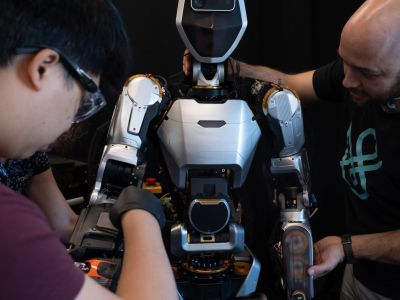
Star1 integrates RGB cameras, depth cameras, stereo cameras, tactile sensors, IMU, gyroscope, and force sensors for comprehensive environmental awareness. Phoenix includes RGB cameras, embedded micro cameras, tactile sensors with haptic feedback, IMU, gyroscope, force sensors in hands and arms, plus temperature sensors. Phoenix's haptic and temperature sensing enhances fine manipulation, while Star1's broader camera suite aids high-speed perception.
AI Capabilities
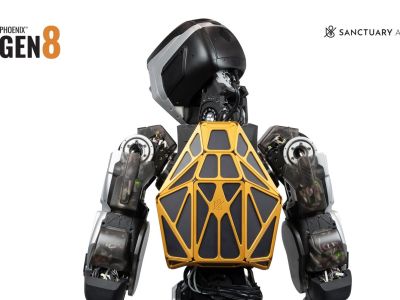
Star1 uses AI automation with end-to-end neural networks for mobility and manipulation, supported by a Linux-based ROS-compatible system. Phoenix employs the Carbon AI control system with Large Behavior Models for human-like cognition, trained on Azure and enabling rapid task learning in under 24 hours. Both offer remote control options, but Phoenix's architecture emphasizes generalization across physical tasks.
Battery & Power Efficiency
Both robots claim a 5-year battery lifespan, though real-world tests suggest Phoenix operates approximately 4 hours per charge in active use. Star1's design supports extended outdoor operations without specified charge limits in provided data. This parity positions them for long-term deployments, pending validation of endurance claims.
Use-Case Suitability
Star1 excels in 3C assembly, automotive logistics, inspection, customer service, and warehousing, with potential for security and emergency response. Phoenix targets industrial automation, data capture, customer service, healthcare assistance, logistics handling, and R&D. Overlapping in service and logistics, Star1 leans toward speed-demanding tasks while Phoenix suits dexterity-focused applications.
Software Ecosystem
Star1 runs on Linux-based software that is ROS compatible with a proprietary SDK for development. Phoenix uses Linux-based ROS-compatible software integrated with its proprietary AI framework and Carbon system. Both ecosystems support secondary development, with Phoenix benefiting from Azure cloud training partnerships.
Safety Features
Star1 includes emergency stop, obstacle detection, and collision avoidance. Phoenix features emergency stop, collision avoidance, and proximity sensors. These measures ensure safe operation in human-shared spaces for both robots.
Analysis Score Summary
Total Score
7
Star1
VS
Based on Detailed Analysis
Total Score
9
Phoenix
📊 Win: 2 points | Trade-off: 1 point each
Scores are summed across every insight: a clear winner earns 2 points, while balanced trade-offs give each robot 1 point. The total reflects how often each robot outperforms the other (or shares the spotlight) throughout the detailed analysis sections.
Capabilities & Operational Tasks
Head-to-head comparison of what Star1 and Phoenix can do, their applications, and capabilities.
What Can Star1 & Phoenix Do?
20Core operational tasks, activities, and physical manipulation duties evaluated side-by-side.
| Task & Description | Model AStar115 supported | Model BPhoenix18 supported |
|---|---|---|
| Assembly | High | High |
| Autonomous task execution | High | High |
| Carrying and transport | High | High |
| Collaborative work | High | High |
| Human interaction | High | High |
| Inspection | — | High |
| Loading and unloading | — | High |
| Machine operation | — | High |
| Machine tending | High | High |
| Material handling | High | High |
| Move objects | High | High |
| Navigation | High | High |
| Obstacle traversal | High | — |
| Packaging | — | High |
| Patrolling | Moderate | — |
| Pick and place | High | High |
| Quality control | — | High |
| Repetitive physical tasks | High | High |
| Sorting | High | High |
| Tool use | High | High |
Technical Specifications
Head-to-head performance data and metrics
| Specification | Model AStar1 | Model BPhoenix |
|---|---|---|
Functional Utility & Use Cases4 Comparative Metrics | ||
Control Method | AI automation, remote control | AI automation, manual override |
Use Cases | High-speed bipedal running over pavement and outdoor trails, parcel carrying, factory patrol, physical manipulation | Industrial automation, data capture, customer service, healthcare assistance, logistics handling, research and development |
Multi Robot Coord | Yes, swarm capabilities | Supports multi-robot coordination and fleet management |
Pet Friendly | Not Applicable | No |
Manipulation & Load Capacity4 Comparative Metrics | ||
Carrying Capacity | 20 kg total dual-arm (~7 kg nominal per arm) | 12.5 kg per arm (Estimated) |
Deadlift Capacity | 25 kg | 25 kg maximum (two-hand payload) |
Payload Type | 20 kg total dual-arm payload (~7 kg nominal per arm) | Tools, goods, industrial parts |
Modular Attachments | Optional grippers, sensor modules | Grippers, sensor pods, tool mounts |
Kinematic Architecture & Dexterity4 Comparative Metrics | ||
Degrees of Freedom | 55 DoF (Height: 171 cm, Weight: 65 kg) | 75 DOF including head, arms, hands, legs, torso |
Material | Aluminum frame, composite, soft skin elements | Aluminum frame, composite panels, soft materials in hands |
Mobility Type | Legged (Bipedal locomotion & high-speed running up to 3.6 m/s / 13 km/h) | Bipedal legged |
Hardware Interface | USB-C, Ethernet, GPIO | USB-C, Ethernet, GPIO |
Functional Utility & Use Cases
4 Comparative Metrics
Manipulation & Load Capacity
4 Comparative Metrics
Kinematic Architecture & Dexterity
4 Comparative Metrics
Related Comparisons
Discover similar robot matchups to expand your knowledge and find the perfect solution
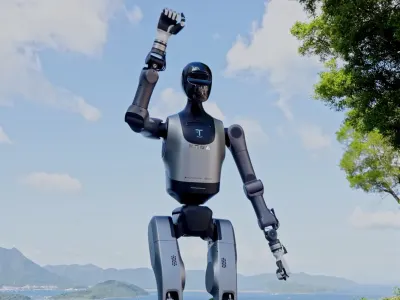
Phoenix vs Walker Tienkung
Compare Phoenix and Walker Tienkung. Detailed analysis of navigation, sensors, and speed.
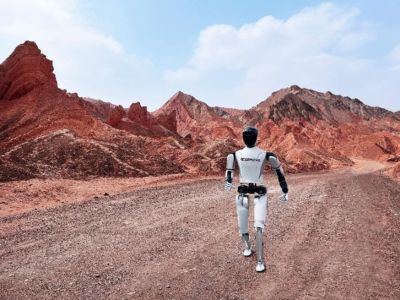
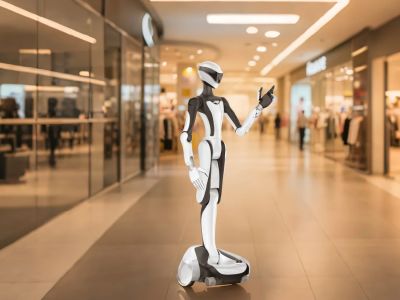
Star1 vs Q5
Head-to-head: Star1 vs Q5. Explore differences in speed, sensors, battery, navigation, and use-case suitability.
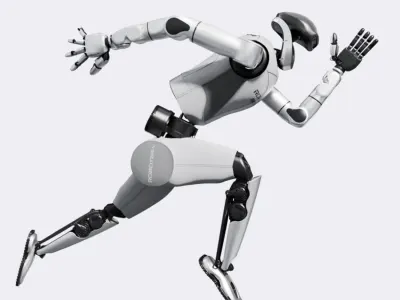
L7 vs VR-H3
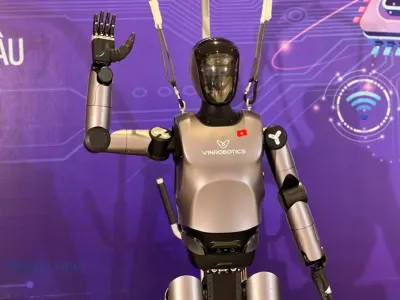
Compare L7 by Robot Era vs VR-H3 by VinRobotics for humanoid mobility, dexterity, autonomy, and payload capacity in industrial applications.
Q5 vs ELIXIS W
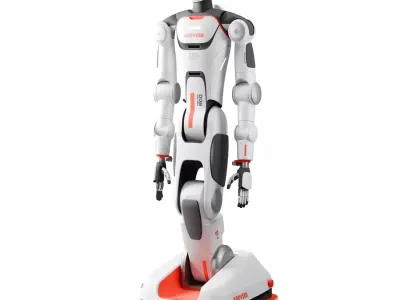
Compare Q5 by Robot Era and ELIXIS W by Addverb Technologies. Detailed analysis of sensors, navigation, battery, and price.
Disclaimer
All content, comparisons, and verdicts on this website are based on our research, testing, and opinion. While we strive for accuracy, we do not guarantee the completeness, reliability, or suitability of any information. Performance, specifications, and results may vary depending on usage and conditions. This website and its authors are not responsible for any decisions, actions, or outcomes based on the information provided. Always verify product details with the manufacturer before making purchase or operational decisions.