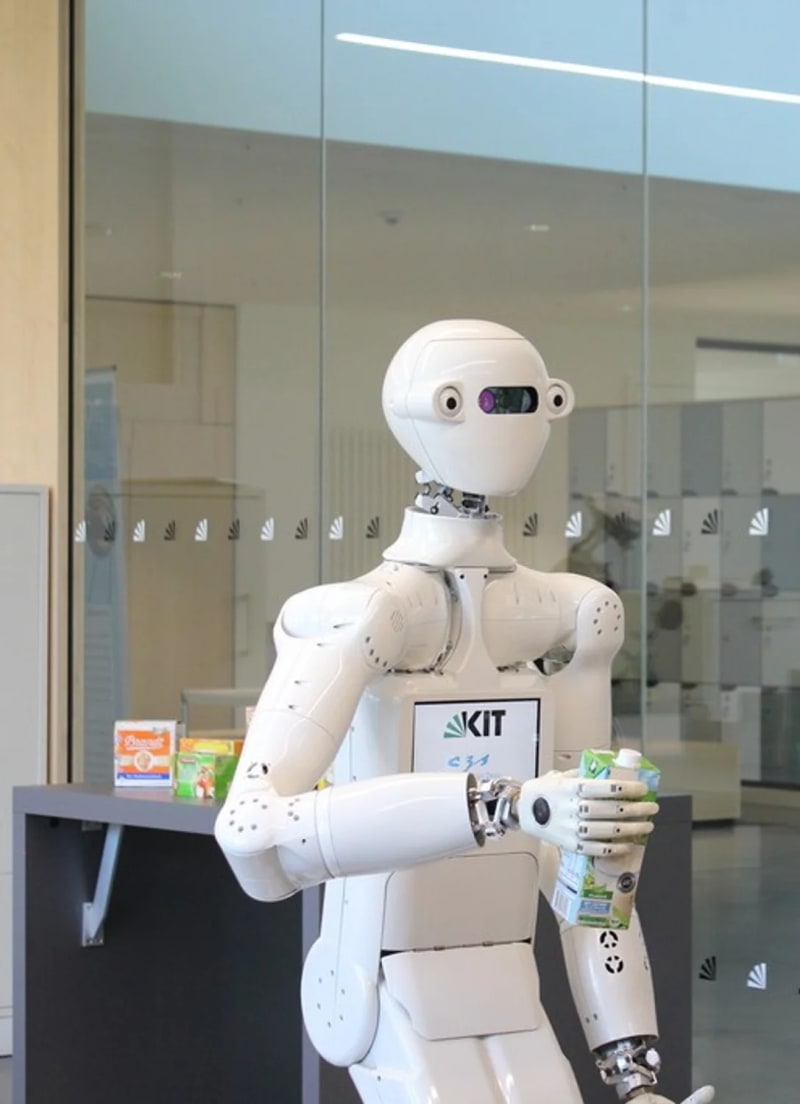
ARMAR-7
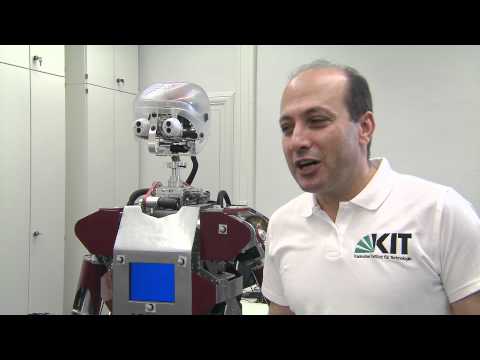
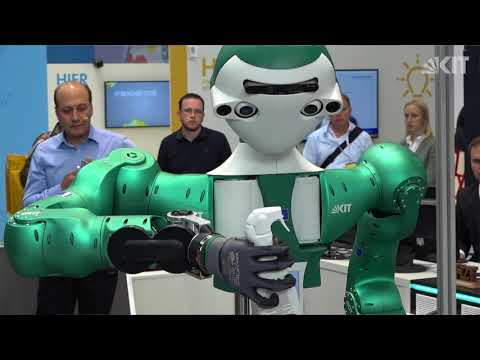
ARMAR-7 is the latest humanoid robot from KIT's ARMAR family, engineered for assistance in human environments like households and care facilities. Featuring dual torque-controlled 8-DoF arms, underactuated five-finger humanoid hands, a head with stereo vision, a torso, and a holonomic mobile platform, it stands at anthropomorphic dimensions for seamless interaction. With 32 controllable degrees of freedom driven by EtherCAT, it integrates torque sensors in joints, force-torque sensors in wrists, and absolute encoders for precise manipulation. ARMAR-7 excels in tasks such as opening doors, loading dishwashers, handing over objects, and recognizing speech commands like "Bring me the milk." It learns from human demonstrations via imitation learning, processes visual data for object recognition, interprets gestures and intentions, and employs cognitive architecture for contextual understanding, error recovery, and autonomous adaptation in daily activities.
Quick Overview & Key Facts
ARMAR-7 is a humanoid system developed by Karlsruhe Institute of Technology (KIT) in Germany and launched in 2024. Starting price is estimated at Research prototype, not commercially available. It is currently ranked #284 in most-viewed humanoid robots on Origin of Bots. It supports Tools, packages, people interaction. Operating battery runtime is rated at 4 hours (Continuous operational use). Primary applications include Elderly assistance, household chores, object manipulation, human-robot collaboration in care facilities. Featured in editorial articles including “Humanoid Robot ARMAR-7 Masters Learning from Human Demonstration”.
What Can ARMAR-7 Do?
Core operational tasks and activities demonstrated or performed by ARMAR-7.
Real-World Applications of ARMAR-7
Industries, working environments, and deployment suitability for ARMAR-7.
ARMAR-7 Capabilities
Inherent physical, perceptual, and cognitive abilities built into ARMAR-7.
Download Media Cards
Story CardExport high-resolution story cards summarizing ARMAR-7's operational tasks, real-world applications, and capabilities.
Image Gallery
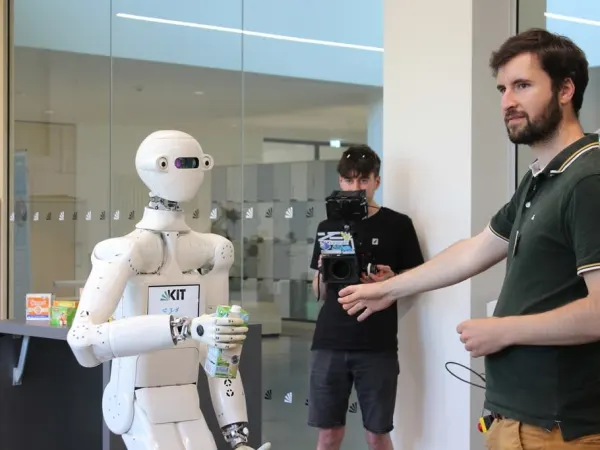
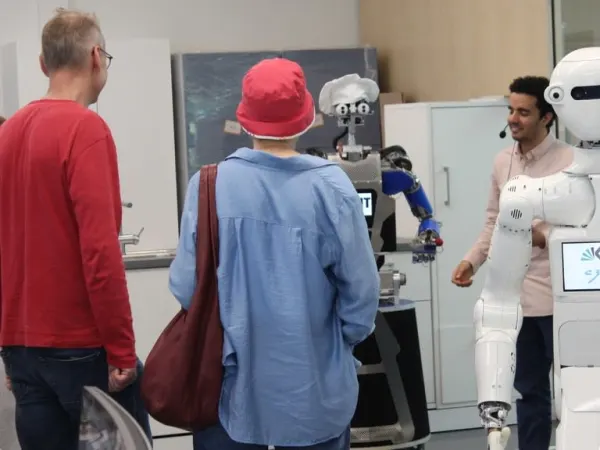
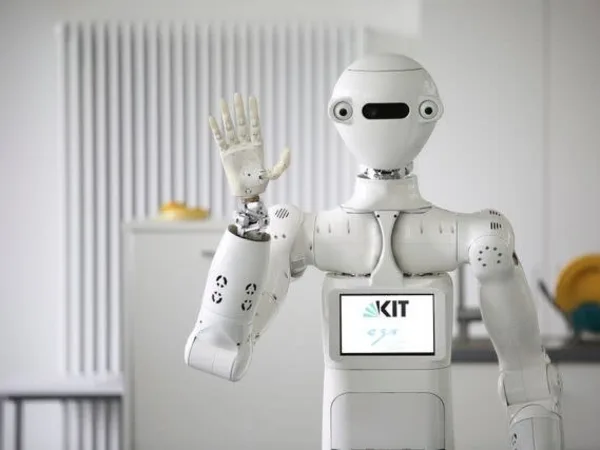
Below images are from Karlsruhe Institute of Technology (KIT)'s official sources

Review Videos
Watch expert reviews and demonstrations of this robot
Robot Specifications
Latest News About ARMAR-7
Stay updated with the latest articles and developments
More Humanoid Robots
Discover more robots in the same category

Robots From Other Categories
Discover complementary robots from different categories that work well together
Frequently Asked Questions
Get answers to common questions about this robot
Q1. What is ARMAR-7, and what problem is it designed to solve?
ARMAR-7 is a humanoid robot developed by the Karlsruhe Institute of Technology (KIT) featuring torque-controlled arms, underactuated hands, head, torso, and a holonomic mobile platform. It is designed to assist humans in daily household tasks through sensorimotor skills and learning from demonstrations.
Q2. What are the main capabilities and key features of ARMAR-7?
ARMAR-7 processes speech commands, recognizes objects via cameras, and executes movements like grasping items. It learns from human demonstrations, adapts to new scenarios, interprets gestures, and employs a cognitive architecture for contextual task understanding.
Q3. Who is ARMAR-7 built for, and which industries can benefit from it?
ARMAR-7 targets research in human-robot interaction and assistance scenarios. KIT focuses on applications in household environments and care settings, where it supports tasks like object manipulation and collaboration with humans.
Q4. Is ARMAR-7 a commercial product or still a research prototype?
ARMAR-7 remains a research prototype developed by KIT's High Performance Humanoid Technologies lab. It demonstrates advanced capabilities in lab settings but is not positioned as a commercial offering.
Q5. Is ARMAR-7 currently available for purchase, and when is it expected to ship?
As of 2026, ARMAR-7 is not available for purchase, functioning as a research platform at KIT. No commercial shipping timelines have been announced by the developers.
Q6. How does ARMAR-7 actually work in real-world environments?
ARMAR-7 integrates vision, voice input, and motion planning to locate objects, recall positions, and perform actions like fetching items. It uses learning from human demonstrations and error recovery within controlled household-like demos.
Q7. When was ARMAR-7 announced or officially launched?
ARMAR-7, the latest in KIT's ARMAR family, was presented in demonstrations around 2025, including at events like Automatica. It builds on prior models without a specified commercial launch date.
Q8. How is ARMAR-7 different from other robots in the same category?
Unlike legged humanoids, ARMAR-7 employs a holonomic wheeled platform for mobility, paired with torque-controlled arms and hands optimized for manipulation. Its cognitive system emphasizes learning from demonstrations and natural interaction.
Q9. Does ARMAR-7 require additional development or customization after purchase?
As a research prototype, ARMAR-7 involves ongoing development at KIT for specific tasks. Any adaptation would require expertise in its control subsystems and cognitive architecture, not suited for direct post-purchase use.
Q10. What is the future roadmap or planned upgrades for ARMAR-7?
KIT aims to advance ARMAR-7's abilities in learning, adaptation, and human collaboration for household assistance. Plans include refining cognitive functions and sensor integration, as outlined in ongoing research projects.
Rating and Reviews
Share your experience and help others decide!
Loading...
User Reviews
No user reviews. Be the first one to review!
User Comments (No Login needed)
Share your thoughts, experiences, or questions about this robot.
Comments are reviewed before posting.