Engineered Arts
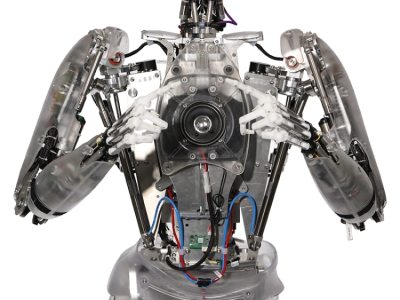
Engineered Arts is a British company in Falmouth, Cornwall, that builds humanoid entertainment robots, best known for Ameca, one of the world's most expressive robot faces. It was founded in October 2004 by Will Jackson, who began by building interactive exhibits for science museums, and in 2005 created its first humanoid, RoboThespian, for the Eden Project. More than 50 RoboThespians are permanently installed around the world, at places such as NASA's Kennedy Space Center and science museums. The company also makes Mesmer, a range of hyper-realistic humanoids with faces created from 3D scans of real people, and built Ai-Da, the artist robot, on its RoboThespian platform in 2019. Ameca, which made its public debut at CES in January 2022, is a humanoid research platform focused on natural facial expression and conversation. Engineered Arts develops its own software, including the Tritium operating system and Tinman telepresence software, and focuses on robot hardware and software for entertainment, education and research.
💡Notable Achievement: Creator of Ameca, recognized globally as the most lifelike expressive humanoid, featuring 17 articulated facial actuators and GPT-4 multimodal speech integration.
What Does Engineered Arts Do?
Engineered Arts is a British robotics company specializing in expressive, lifelike humanoid systems. By pairing facial mechanical engineering with multimodal artificial intelligence, systems like Ameca, Mesmer, and RoboThespian deliver engaging human-robot interaction across science museums, media venues, and public entertainment centers worldwide.
“The world's benchmark in expressive humanoid robotics and lifelike human-robot interaction.”
Hyper-Realistic Facial Actuation
Sub-dermal micro-actuator arrays that faithfully reproduce micro-expressions, sneers, smiles, and eye glances.
Tritium Cloud Robotics OS
Proprietary browser-based operating system providing cloud control, animation authoring, and remote telepresence.
Multimodal LLM Conversational Integration
Low-latency streaming of large language models for spontaneous, unscripted verbal dialogue and real-time vision tracking.
What Can Engineered Arts Robots Actually Do?
Cross-portfolio operational capabilities, manipulation tasks, and environmental competencies
Nuanced human facial micro-expressions, natural conversational dialogue, and expressive upper-torso gesturing.
Articulated Human Facial Mimicry
17 silent motor linkages in the face driving fluid human micro-expressions and ocular tracking.
Unscripted Multimodal Dialogue
Real-time visual grounding and natural speech interaction powered by integrated GPT-4 models.
Theatrical & Museum Performance
Entertaining crowds, giving scripted or spontaneous tours, and delivering keynote addresses.
Engineered Arts Robots
Showing 3 Humanoid Robots of 3 total models
Mesmer
By: Engineered Arts
Launched: 2017
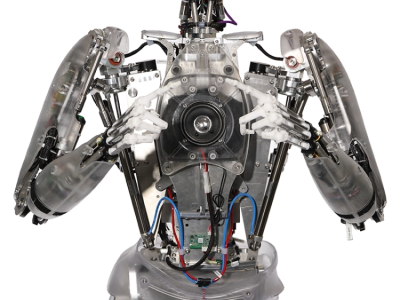
Mesmer by Engineering Arts is an advanced animatronic humanoid robot system designed for entertainment, exhibitions, and interactive experiences, featuring lifelike facial expressions, micro-movements, and natural gestures powered by silent, precision motors with individual torque and acceleration control. It includes a modular hardware kit with sensors like cameras, depth sensors, LiDAR, and microphones, integrated with TinMan telepresence software for remote cloud-based control, monitoring, and updates. Users employ intuitive drag-and-drop animation tools on 3D models to create realistic behaviors without coding expertise, supported by photogrammetry rigs for high-fidelity facial replication using soft, durable silicone skin. The 5-axis articulated neck mimics human vertebrae for fluid head movements, full eye tracking with realistic blinks, and embedded cameras enable face tracking and environmental interaction. Emphasizing human safety, non-invasive hardware access protects artificial skin, making Mesmer ideal for creating personalized robotic characters in research, attractions, and telepresence applications with seamless internet connectivity and end-to-end encryption.
Ai-Da
By: Engineered Arts
Launched: 2019
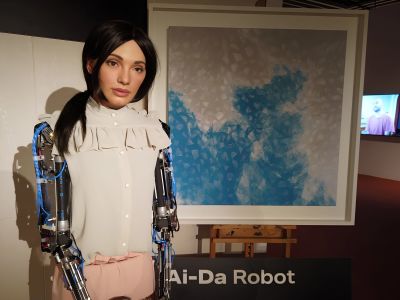
Ai-Da is the world's first ultra-realistic humanoid robot artist, engineered for creative expression through drawing, painting, and performance art. Featuring cameras in her eyes for visual input, advanced AI algorithms process images into coordinates for precise robotic arm movements, enabling pencil sketches, palette-based paintings, and even font design. Her lifelike silicone face supports expressive gestures, fostering human-like interactions that provoke discourse on AI's role in creativity and identity. Collaborating with human teams, Ai-Da embodies trans-humanism, blending machine precision with artistic intuition in exhibitions at venues like the Design Museum and Venice Biennale. With bionic hands and dynamic head movements, she challenges traditional artistry, reflecting technology's integration into society through poetry, sculptures, and architectural concepts for human-robot coexistence.

Ameca
By: Engineered Arts
Launched: 2021
Ameca is a stationary, upper-body humanoid robot platform built by Engineered Arts, revealed in late 2021 and shown publicly at CES 2022. It is designed for human-robot interaction research and public engagement, with a highly expressive face (27 of its 61 degrees of freedom), 8 MP cameras in its eyes, ear microphones and a chest speaker. Ameca has no legs, runs on mains power, and is driven by Engineered Arts' Tritium robotOS, which supports AI dialogue integrations such as GPT-based models or human telepresence.
Engineered Arts Software & AI Ecosystem
Developer platforms, fleet management portals, autonomy intelligence, and enterprise integrations
Tritium Cloud OS
Web-Native Robot Animation & Fleet Software
Browser-accessible control platform providing inverse kinematics, 3D visual choreography, and real-time remote voice teleoperation.
Engineered Arts AI Bridge
Low-Latency Multimodal Speech-to-Motion Gateway
Streaming middleware translating incoming audio and vision feeds directly into LLM tokens and coordinated lip-sync joint trajectories.
Engineered Arts Timeline & Milestones
Evolutionary history, landmark prototypes, major acquisitions, and commercial roadmap
Engineered Arts founded
Will Jackson founds Engineered Arts in Falmouth, Cornwall, initially building interactive exhibits for science museums.
Source: en.wikipedia.org
RoboThespian created for the Eden Project
Engineered Arts builds its first humanoid, RoboThespian Mark 1, for the Mechanical Theatre at the Eden Project.
Source: en.wikipedia.org
Refocuses on robot hardware and software
After completing the Copernicus Science Centre installation, Engineered Arts focuses solely on robot hardware and software.
Source: en.wikipedia.org
Ai-Da artist robot built
Engineered Arts builds Ai-Da, a robot artist named after Ada Lovelace, on its RoboThespian platform.
Source: en.wikipedia.org
Ameca debuts at CES 2022
Engineered Arts gives Ameca, its expressive humanoid research platform, its first public demonstration at CES in Las Vegas.
Source: en.wikipedia.org
Engineered Arts Competitors by Category
Direct industry rivals grouped by specific robotics domain
What Makes Engineered Arts Different?
Editorial AnalysisOrigin of Bots objective strategic assessment, engineering moats, and commercial hurdles
Key Strengths & Moats
- ✓Industry benchmark in facial aesthetics and human engagement; avoids the eerie 'uncanny valley'.
- ✓Profitable, bootstrapped commercial operations with over 15 years of continuous production history.
- ✓Tritium software enables non-technical museum staff to operate and choreograph robots via any web browser.
Core Strategic Focus
Integrating bipedal dynamic walking locomotion platforms while expanding AI conversational presence in global venues.
Road Ahead & Challenges
- •Explicit focus on entertainment and social interaction means the platform does not target heavy industrial manufacturing tasks.
- •Bipedal locomotion hardware is still an active research undertaking compared to its stationary and wheeled platforms.
Engineered Arts vs Key Competitors
Strategic capability matrix across platform categories, commercial readiness, and target markets
Facial Aesthetic Philosophy
- Engineered Arts (Ameca)
- Neutral-Grey Articulated Humanoid
- Hanson Robotics (Sophia)
- Biomimetic Fleshed Frubber Skin
- Promobot (Robo-C)
- Hyper-Realistic Synthetic Human Mimic
- SoftBank (Pepper)
- Stylized Minimalist Plastic Head
Primary AI Pipeline
- Engineered Arts (Ameca)
- Low-Latency GPT-4 Multimodal
- Hanson Robotics (Sophia)
- OpenCog + Decentralized LLMs
- Promobot (Robo-C)
- Proprietary Promobot Voice NLP
- SoftBank (Pepper)
- NAOqi Dialog State Engines
Operating Platform
- Engineered Arts (Ameca)
- Tritium Cloud (Web-Native)
- Hanson Robotics (Sophia)
- Custom Embedded Linux
- Promobot (Robo-C)
- Promobot Enterprise Cloud
- SoftBank (Pepper)
- NAOqi Desktop Environment
Primary Revenue Model
- Engineered Arts (Ameca)
- Commercial Sales & High-Tier Event Rentals
- Hanson Robotics (Sophia)
- Media Appearances & Licensing
- Promobot (Robo-C)
- Commercial Service Kiosk Sales
- SoftBank (Pepper)
- Enterprise Hardware Leases
| Strategic Dimension | Engineered Arts (Ameca) | Hanson Robotics (Sophia) | Promobot (Robo-C) | SoftBank (Pepper) |
|---|---|---|---|---|
| Facial Aesthetic Philosophy | Neutral-Grey Articulated Humanoid | Biomimetic Fleshed Frubber Skin | Hyper-Realistic Synthetic Human Mimic | Stylized Minimalist Plastic Head |
| Primary AI Pipeline | Low-Latency GPT-4 Multimodal | OpenCog + Decentralized LLMs | Proprietary Promobot Voice NLP | NAOqi Dialog State Engines |
| Operating Platform | Tritium Cloud (Web-Native) | Custom Embedded Linux | Promobot Enterprise Cloud | NAOqi Desktop Environment |
| Primary Revenue Model | Commercial Sales & High-Tier Event Rentals | Media Appearances & Licensing | Commercial Service Kiosk Sales | Enterprise Hardware Leases |
Corporate Ecosystem & Ownership Structure
Parent company relationships, historical acquisitions, and global operating facilities
Engineered Arts Limited
British engineering corporation based in Cornwall, United Kingdom.
Ownership & Acquisition History
British engineering corporation based in Cornwall, United Kingdom.
Global Facilities & Operating Hubs
Engineered Arts Headquarters
HQFalmouth, Cornwall, United Kingdom
Articles & Industry News
Showing 2 recent articles and news updates about Engineered Arts

Robot Comparisons
Showing 1 in-depth comparison featuring Engineered Arts — Explore all comparisons →

Frequently Asked Questions
8 AnswersVerified answers, company specifications, and deployment details about Engineered Arts
What is Engineered Arts?
Engineered Arts is a British robotics company in Falmouth, Cornwall, founded in 2004, that builds humanoid entertainment robots, best known for the expressive Ameca.
Who founded Engineered Arts?
Engineered Arts was founded in October 2004 by Will Jackson, who had built interactive exhibits for science museums such as London's Science Museum.
What is the Ameca robot?
Ameca is Engineered Arts' humanoid research platform, known for highly realistic facial expressions and conversation. It made its first public demonstration at CES in Las Vegas in January 2022.
What is RoboThespian?
RoboThespian is Engineered Arts' first humanoid, created in 2005 for the Eden Project. More than 50 are permanently installed worldwide, including at NASA's Kennedy Space Center and science museums.
What is the Mesmer robot?
Mesmer is Engineered Arts' range of hyper-realistic humanoids with faces created from 3D scans of real people. Custom Mesmer robots have included a figure of India's former president Dr A.P.J. Abdul Kalam.
Did Engineered Arts build Ai-Da?
Yes. Engineered Arts built Ai-Da, the artist robot named after Ada Lovelace, on its RoboThespian platform in 2019, as a custom project.
What software do Engineered Arts robots use?
Engineered Arts develops its own software, including the Tritium operating system and Tinman telepresence software, rather than using standard robotics platforms.
How much does Ameca cost?
Engineered Arts has not published a fixed price for Ameca. Pricing depends on the configuration and use, such as research, exhibitions or entertainment, so buyers need to contact the company.
Verified Data & Editorial Assurance
Compiled from verified corporate filings, official Engineered Arts datasheets, and robotics engineering registries. Information has been verified against official manufacturer documentation. For commercial procurement or proprietary integrations, contact the manufacturer directly.