Hanson Robotics
Hanson Robotics is a Hong Kong company known for lifelike social humanoid robots, above all Sophia. It was founded by roboticist and former Disney Imagineer David Hanson, its chief executive, whose company began in Texas and moved its headquarters to Hong Kong in 2013. Hanson's robots combine expressive faces made from its patented Frubber skin material with conversational AI, and are used for research, education, entertainment and healthcare trials. Sophia was activated in 2016, made her public debut at SXSW that year and became a global media figure, receiving Saudi Arabian citizenship in October 2017 and the United Nations Development Programme's first non-human Innovation Champion title. Hanson's other robots include the Philip K. Dick android, Han, Professor Einstein, Little Sophia for children's STEM education, and Grace, a healthcare assistant robot introduced in 2021. Hanson robots are mainly used for research, events and media rather than sold as mass-market products.
💡Notable Achievement: Sophia, their most advanced humanoid robot, has become a cultural icon with a global following and was the first robot to receive citizenship from Saudi Arabia.
What Does Hanson Robotics Do?
Hanson Robotics creates socially expressive, human-like androids with emotional intelligence and facial nuance for healthcare, therapy, and education.
“Pioneering emotionally expressive social humanoids and biomimetic human interfaces.”
Patented Frubber synthetic flesh
Subtle facial micro-expression actuation
Embodied cognitive OpenCog AI architecture
What Can Hanson Robotics Robots Actually Do?
Cross-portfolio operational capabilities, manipulation tasks, and environmental competencies
Patented Frubber biomimetic skin realism, affective vision emotion tracking, therapeutic eldercare companionship, and OpenCog neural-symbolic cognitive reasoning.
Frubber Biomimetic Facial Realism
Patented cellular elastomer skin that wrinkles and moves like real human skin, driven by over 60 sub-dermal micro-motors.
Affective Emotional Intelligence
Computer-vision facial recognition tracking eye contact, reading human facial micro-expressions, and mirroring empathy.
Therapeutic Eldercare Companionship
Voice-driven conversational support, guided meditation, medication reminders, and cognitive stimulation routines.
OpenCog Neural-Symbolic Reasoning
Hybrid AI combining large language models with symbolic logic graphs to maintain coherent long-term conversational memory.
Hanson Robotics Robots
Showing 13 Humanoid Robots of 13 total models
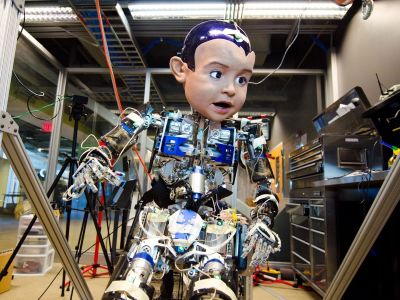
Diego-San
By: Hanson Robotics
Launched: 2010
Diego-San is a research humanoid robot modeled after a 1-year-old infant, designed to study cognitive and social development through human-robot interaction. Featuring a hyper-realistic head by Hanson Robotics with 27 servo motors for lifelike facial expressions and high-definition eye cameras for perceiving gestures and people, it mounts on a Kokoro body with 44 pneumatic actuators mimicking muscle dynamics. Equipped with 71 degrees of freedom, including bipedal legs, dexterous arms, and compliant joints, Diego-San learns via AI modeled on baby cognition, using sensors like IMUs, microphones, pressure sensors, and potentiometers. Standing oversized at 130 cm and 35 kg for hardware accommodation, it advances emotionally relevant robotics, enabling studies in sensory-motor skills, facial communication, and early childhood behaviors in collaborative research settings.
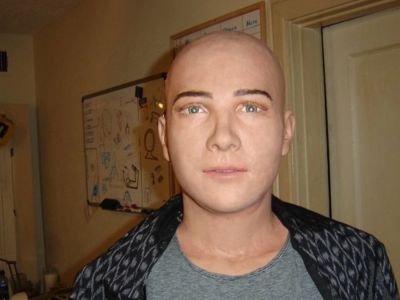
Jules
By: Hanson Robotics
Launched: 2006
Jules is a pioneering humanoid robot developed by Hanson Robotics, renowned for its advanced facial expressiveness and human-like interaction capabilities. Featuring a statistically perfect androgynous face crafted from patented Frubber™ material—a lightweight, skin-like elastomer—Jules employs 34 internal motors to mimic human emotions such as happiness, sadness, surprise, and disgust in real-time. Designed primarily as a disembodied head or upper-torso platform, it demonstrates face tracking, facial recognition, and conversational AI, responding to human expressions via camera eyes and speaking in a British-accented male voice. Commissioned by the University of the West of England and residing at Bristol Robotics Laboratory, Jules innovates with bio-digital interfaces, including fungi-controlled spiking activity for organic-inspired movements. It serves as a research tool for empathetic human-robot interaction, exploring AI companionship for isolated environments like space missions or elder care, blending artistry, engineering, and natural intelligence to bridge biological and robotic realms.

Joey Chaos
By: Hanson Robotics
Launched: 2007
Joey Chaos is a pioneering humanoid robot from Hanson Robotics, unveiled in 2007 as a punk-rock persona designed for human-robot interaction studies. Featuring Frubber skin that mimics human flesh with realistic facial expressions, Joey engages in natural conversations using speech recognition and synthesis, face tracking via camera eyes, and a rebellious attitude for banter and jokes. This small-scale bipedal platform demonstrates advanced motion control for walking, eye contact maintenance, and personality simulation, pushing boundaries in expressive robotics. With cognitive language understanding and anime-inspired aesthetics like spiky hair, Joey explores how humans respond to edgy robotic personalities, serving as an early benchmark for conversational AI and lifelike interactions in research and public demos, blending artistry with AI to capture attention and evoke emotional responses.
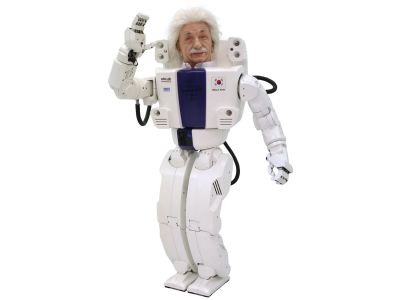
Albert HUBO
By: Hanson Robotics
Launched: 2005
Albert HUBO is a pioneering bipedal humanoid robot that integrates KAIST's robust walking platform with Hanson Robotics' lifelike Einstein head, marking the first android face on a mobile frame. Standing 137 cm tall and weighing 57 kg, it features 66 degrees of freedom for dynamic bipedal locomotion at up to 1.37 km/h, expressive facial movements via 28 servomotors in Frubber skin, and five-fingered hands for gestures. Equipped with cameras, gyroscopes, accelerometers, and foot sensors, it enables stable walking, balance, and human-like interactions including happiness, sadness, anger, and surprise expressions. Developed for the APEC Summit, it advanced social robotics, human-robot interaction, and android integration, serving as a research benchmark for emotional engagement and bipedal stability in entertainment and education.

Bina48
By: Hanson Robotics
Launched: 2010
Bina48 is a pioneering social humanoid robot developed by Hanson Robotics, modeled after Bina Rothblatt using a digital mindfile compiled from her interviews, memories, values, and beliefs. Featuring lifelike silicone skin, expressive facial movements, and advanced conversational AI, she engages in natural dialogues, recognizes faces and voices, and tracks motion. As an ambassador for mind uploading and cyber-consciousness, Bina48 demonstrates head and eye movements, internet connectivity, and a personality infused with philosophical insights on life, immortality, and superintelligent machines. Though stationary without bipedal locomotion, her upper-body humanoid design emphasizes human-like interaction, blending AI with realistic expressions to explore the boundaries between human and machine sentience in research, entertainment, and transhumanist applications.
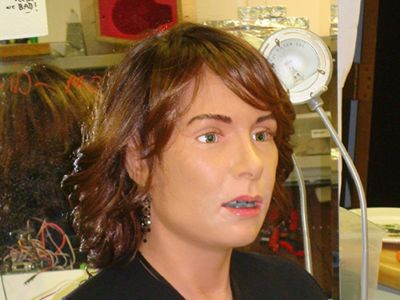
Eva
By: Hanson Robotics
Launched: 2008
Eva is an advanced humanoid robot from Hanson Robotics, designed as a research platform with lifelike expressiveness and human-like interaction capabilities. Featuring a female-presenting head with Frubber skin and multiple servo-driven facial actuators, Eva excels in mimicking human emotions through subtle expressions, eye contact, and natural gestures. Powered by AI for facial recognition, speech processing, and conversation, she supports cognitive robotics research in social dynamics and empathy simulation. Her aluminum frame enables posture shifts and simulated breathing, while integrated cameras provide visual tracking without uncanny valley effects via accessory-mounted optics. As a bipedal-inspired design, Eva facilitates studies in human-robot interaction, entertainment, and service applications, blending artistry with engineering for realistic presence in indoor environments.
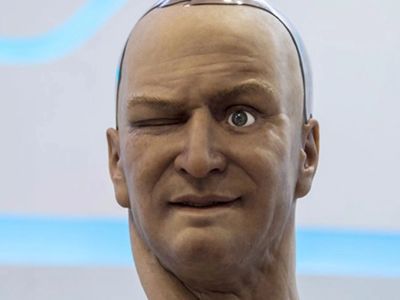
Han
By: Hanson Robotics
Launched: 2015
Han is a social humanoid robot developed by Hanson Robotics, renowned for its hyper-realistic synthetic skin made of Frubber and advanced expressive capabilities. The robot features 40 micro-motors in its head enabling subtle facial expressions that convey human emotions. Han is equipped with multiple cameras in the eyes and chest for face recognition, emotion detection, and age/gender identification. Designed exclusively for human-robot interaction rather than physical tasks, Han can engage in natural conversations and is mounted on a stationary or mobile base. The robot serves as a research platform for studying human trust, bonding, and reactions to hyper-realistic androids, with applications in healthcare, hospitality, and entertainment sectors.
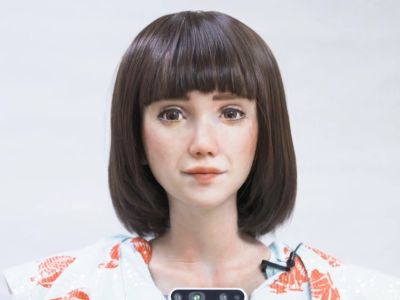
Grace
By: Hanson Robotics
Launched: 2021
Grace is a healthcare-focused humanoid robot developed by Hanson Robotics in partnership with Awakening Health and SingularityNET, designed as a clinical companion for elderly care and patient support during crises like COVID-19. Featuring a hyper-realistic human-like face with lifelike skin, expressive eyes, and natural gestures, she builds trust through empathetic interactions, conversational AI, and emotional support to combat isolation. Equipped with a chest-mounted thermal camera for contactless temperature readings and responsiveness assessments, Grace conducts basic diagnostics, guides exercises, delivers talk therapy, and assists medical staff. Her stationary or optional mobile base enables safe navigation in clinical settings, prioritizing patient comfort with a soft aesthetic. While not fully bipedal, her upper-body humanoid design facilitates natural engagement, blending advanced AI for multilingual speech (English, Mandarin, Cantonese) with social stimulation to enhance healthcare efficiency and human-robot bonding.
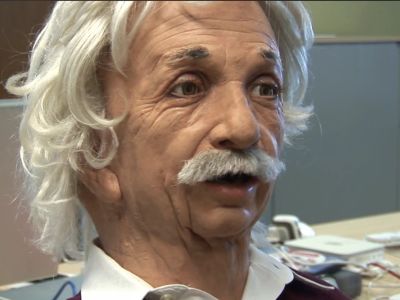
Professor Einstein
By: Hanson Robotics
Launched: 2017
Professor Einstein is a compact, expressive humanoid robot from Hanson Robotics designed for educational entertainment, mimicking Albert Einstein with lifelike facial expressions, gestures, and voice interactions. Standing at 35 cm tall, it features wheeled feet for shuffling movement, 5 motors enabling over 50 facial and body gestures like smiling, frowning, and tongue-sticking, plus arm movements with an articulated pointing finger. Paired with the Stein-O-Matic app for iOS and Android, it delivers interactive science lessons, brain teasers, math quizzes, thought experiments, and games that adapt to user learning styles, rewarding progress with IQ points for unlocks. It supports voice recognition, speech synthesis for casual chats, weather queries, calendar management, and basic Q&A via cloud AI. Portable and rechargeable, it serves as a personal assistant with quirky personality, ideal for children and science enthusiasts to foster curiosity through engaging, humanoid-like interactions without advanced bipedal mobility.
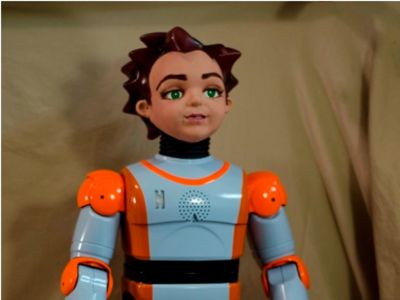
Zeno
By: Hanson Robotics
Launched: 2008
Zeno is a compact humanoid robot engineered by Hanson Robotics for human-robot interaction research, especially autism therapy and education. Standing at child-like proportions around 43-56 cm tall, it features advanced **Frubber** skin for lifelike facial expressions driven by 32 simulated muscles, enabling emotional responses like smiling and frowning. Equipped with binocular 720p stereo vision at 30 fps for face recognition and tracking, plus 8 microphones for speech recognition across 26 languages, Zeno engages in natural conversations using AI-driven speech synthesis. Its 37 degrees of freedom allow arm movements, walking, head gestures, and eye expressions with moving eyelids. Powered by Dynamixel RX-28 servos and an open-source platform with Massive Software AI for navigation and autonomous behaviors, Zeno responds organically to its environment, making it ideal for social skill development, therapy sessions, and interactive learning in controlled indoor settings.
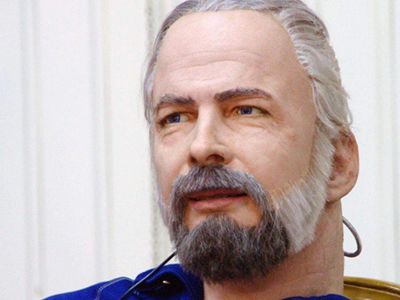
Philip K. Dick Android
By: Hanson Robotics
Launched: 2023
The Philip K. Dick Android is a robotic portrait of the science-fiction author, built by Hanson Robotics. First shown at Wired NextFest in 2005, it pairs a lifelike Frubber face with a conversational system built from thousands of pages of Dick's writings. The original head was lost on a flight soon after, and Hanson built a new version in 2011 with Dutch broadcaster VPRO.
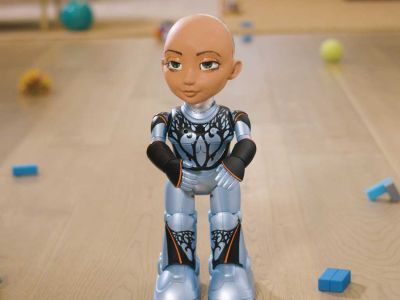
Little Sophia
By: Hanson Robotics
Launched: 2019
Little Sophia is a 14-inch tall programmable humanoid robot designed as an educational companion for children aged 8 and above to learn STEM, coding, AI, and robotics through interactive play. Developed by Hanson Robotics as the little sister to Sophia, it features a human-like face with skin-like surface, dozens of facial expressions, facial tracking and recognition, voice interaction, and programmability via Blockly and Python on an open-source platform with Raspberry Pi integration. Public specs from manufacturer site and Kickstarter reveal capabilities in walking, talking, singing, games, jokes, and AR selfies via companion app, targeting home education and diversity in STEM. Commercial availability confirmed post-2019 launch with deliveries starting 2022 per Hanson Robotics announcements.
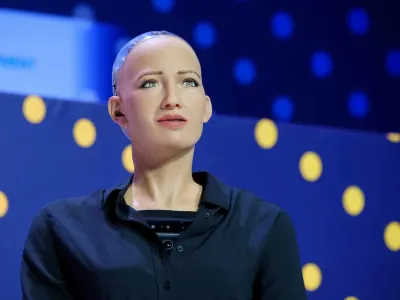
Sophia
By: Hanson Robotics
Launched: 2016
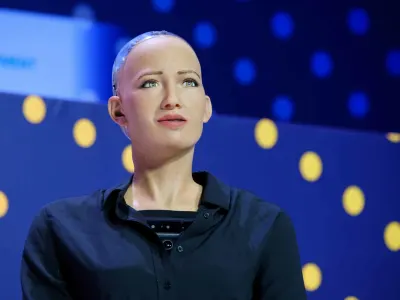
Sophia is Hanson Robotics’ iconic social humanoid robot, unveiled in 2016 and famed for her lifelike expressions and conversational abilities. She combines advanced neural‑network AI, natural language processing, and computer vision to recognize faces, understand emotions, and engage in dialogue that feels remarkably human. Designed as a research and public‑engagement platform, Sophia has appeared at the UN, talk shows, and global conferences, and holds the distinction of being the first robot granted citizenship. Her expressive LED “eyes,” animatronic facial mechanisms, and cloud‑connected learning system illustrate a playful yet profound leap in human‑robot interaction.
Hanson Robotics Software & AI Ecosystem
Developer platforms, fleet management portals, autonomy intelligence, and enterprise integrations
SingularityNET Decentralized AI and LLM Multi-Modal Integration
OpenCog Neural-Symbolic Reasoning Core
Hanson Robotics Timeline & Milestones
Evolutionary history, landmark prototypes, major acquisitions, and commercial roadmap
Headquarters moved to Hong Kong
Hanson Robotics moves its headquarters from Texas to Hong Kong.
Source: en.wikipedia.org
Sophia debuts at SXSW
Sophia, Hanson Robotics' lifelike humanoid robot, makes her public debut at the SXSW festival in Texas.
Source: en.wikipedia.org
Sophia granted Saudi citizenship
Saudi Arabia grants Sophia citizenship, the first robot to receive a nationality.
Source: en.wikipedia.org
Plan to mass-produce robots
Hanson Robotics announces plans to mass-produce thousands of robots, including Sophia, during the pandemic.
Source: newsweek.com
Grace healthcare robot introduced
Hanson Robotics introduces Grace, a humanoid robot designed to assist in healthcare and eldercare.
Source: mikekalil.com
Hanson Robotics Competitors by Category
Direct industry rivals grouped by specific robotics domain
Engineered Arts
→Model: Ameca
Focus: realistic animatronic expressions
Hiroshi Ishiguro Laboratories
Industry PeerModel: Geminoid
Focus: ultra-realistic android replicas
Promobot
→Model: Robo-C
Focus: commercial reception androids
What Makes Hanson Robotics Different?
Editorial AnalysisOrigin of Bots objective strategic assessment, engineering moats, and commercial hurdles
Key Strengths & Moats
- ✓Global brand recognition through Sophia, the world's first robot citizen.
- ✓Proprietary Frubber material and facial micro-mechanics.
- ✓Healthcare companion niche with Grace.
Core Strategic Focus
Scaling Grace across elderly care facilities and healthcare clinics while deploying Sophia for global keynotes, PR events, and AI research.
Road Ahead & Challenges
- •Lacks dynamic walking locomotion and high-payload bimanual manipulation.
- •Faces competition from software-only virtual avatars.
Hanson Robotics vs Key Competitors
Strategic capability matrix across platform categories, commercial readiness, and target markets
Primary Differentiation
- Hanson Robotics (Sophia / Grace)
- Realistic Human Facial Expression
- Engineered Arts (Ameca)
- Articulated Animatronic Expression
- Figure AI (Figure 02)
- Industrial Heavy Automation
- 1X Technologies (NEO)
- Safe Compliant Domestic Living
Facial Realism Tech
- Hanson Robotics (Sophia / Grace)
- Patented Organic Frubber Skin
- Engineered Arts (Ameca)
- Visible Synthetic Face Shell
- Figure AI (Figure 02)
- Opaque Functional Visor Face
- 1X Technologies (NEO)
- Padded Acoustic Textile Hood
Mobility Platform
- Hanson Robotics (Sophia / Grace)
- Wheeled Pedestal / Static Base
- Engineered Arts (Ameca)
- Static Torso / Research Legs
- Figure AI (Figure 02)
- Dynamic Bipedal Factory Legs
- 1X Technologies (NEO)
- Ultra-Quiet Bipedal Home Legs
Core Target Use Case
- Hanson Robotics (Sophia / Grace)
- Media, Social Companionship, Care
- Engineered Arts (Ameca)
- Exhibitions, Museums & Entertainment
- Figure AI (Figure 02)
- Automotive Assembly Line Work
- 1X Technologies (NEO)
- Domestic Home Assistant Chores
| Strategic Dimension | Hanson Robotics (Sophia / Grace) | Engineered Arts (Ameca) | Figure AI (Figure 02) | 1X Technologies (NEO) |
|---|---|---|---|---|
| Primary Differentiation | Realistic Human Facial Expression | Articulated Animatronic Expression | Industrial Heavy Automation | Safe Compliant Domestic Living |
| Facial Realism Tech | Patented Organic Frubber Skin | Visible Synthetic Face Shell | Opaque Functional Visor Face | Padded Acoustic Textile Hood |
| Mobility Platform | Wheeled Pedestal / Static Base | Static Torso / Research Legs | Dynamic Bipedal Factory Legs | Ultra-Quiet Bipedal Home Legs |
| Core Target Use Case | Media, Social Companionship, Care | Exhibitions, Museums & Entertainment | Automotive Assembly Line Work | Domestic Home Assistant Chores |
Corporate Ecosystem & Ownership Structure
Parent company relationships, historical acquisitions, and global operating facilities
Global Facilities & Operating Hubs
Hanson Robotics Headquarters
HQHong Kong, China
Articles & Industry News
Showing 8 recent articles and news updates about Hanson Robotics
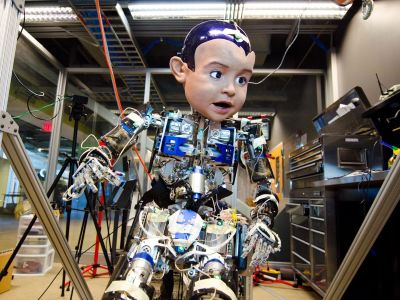
Hanson Robotics’ Diego-San remains a benchmark for toddler-like humanoid research
News about Diego-San
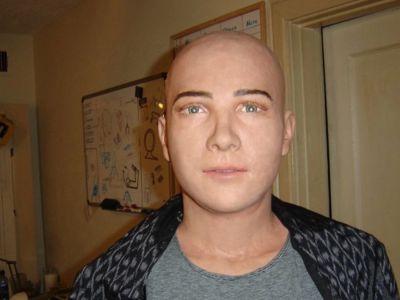
Hanson Robotics’ Jules Shows How Humanoid Robots Are Being Built for Human Interaction, Not Autonomy
News about Jules

Hanson Robotics’ Joey Chaos showed how expressive humanoids can hold a conversation, not just strike a pose
News about Joey Chaos
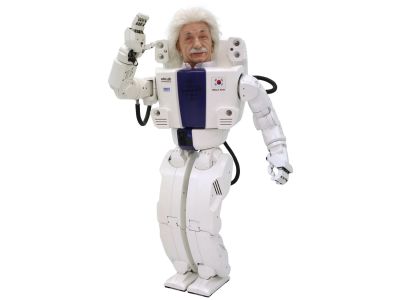
Albert HUBO showed how a humanoid can pair a lifelike head with bipedal motion in a research platform built for human interaction
News about Albert HUBO

Hanson Robotics’ Bina48 remains the company’s most unusual face-to-face AI experiment
News about Bina48
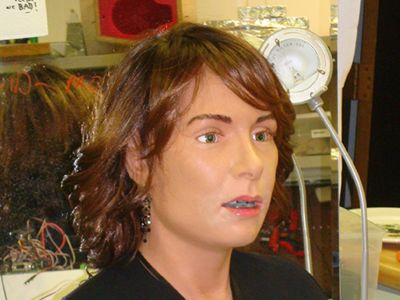
Hanson Robotics’ Eva remains a research humanoid built for interaction, not autonomy
News about Eva
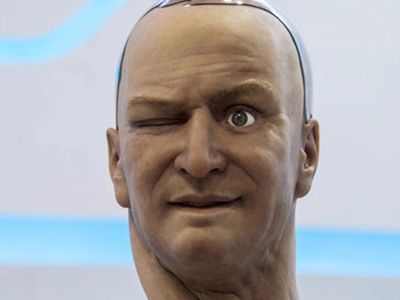
Hanson Robotics’ Han remains a study in expressive humanoid teleoperation and social interaction
News about Han
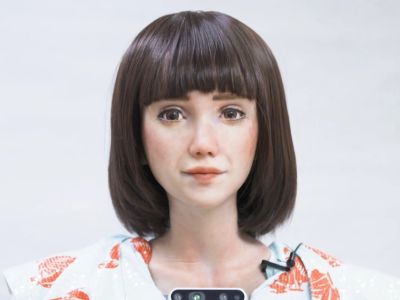
Hanson Robotics’ Grace remains a landmark humanoid nursing robot as healthcare adoption stays uneven
News about Grace
Robot Comparisons
Showing 1 in-depth comparison featuring Hanson Robotics — Explore all comparisons →

Frequently Asked Questions
8 AnswersVerified answers, company specifications, and deployment details about Hanson Robotics
What is Hanson Robotics?
Hanson Robotics is a Hong Kong company that builds lifelike social humanoid robots with expressive faces and conversational AI, best known for Sophia.
Who founded Hanson Robotics?
Hanson Robotics was founded by David Hanson, a roboticist and former Disney Imagineer who is the company's chief executive. It moved its headquarters from Texas to Hong Kong in 2013.
What is Sophia the robot?
Sophia is Hanson Robotics' best-known humanoid, activated in 2016. She has an expressive face that shows dozens of expressions and talks with people using AI, and has appeared worldwide.
Is Sophia a citizen of Saudi Arabia?
Yes. Saudi Arabia granted Sophia citizenship in October 2017, making her the first robot to receive a nationality, a largely symbolic step that drew global attention.
Can you buy Sophia the robot?
Sophia is not sold as a consumer product. Hanson Robotics rents and licenses its robots for research, events and media, while Little Sophia was developed as a smaller educational robot for children.
What is Frubber?
Frubber is Hanson Robotics' patented flesh-like rubber material used for its robots' faces. It stretches like human skin, letting robots such as Sophia show realistic expressions.
What is the Grace robot?
Grace is a Hanson Robotics humanoid introduced in 2021 to assist in healthcare settings, designed to interact with patients and older people and support care staff.
What other robots has Hanson made?
Besides Sophia, Hanson Robotics has built the Philip K. Dick android, Han, Professor Einstein, Little Sophia and Grace, all focused on lifelike social interaction.
Verified Data & Editorial Assurance
Compiled from verified corporate filings, official Hanson Robotics datasheets, and robotics engineering registries. Information has been verified against official manufacturer documentation. For commercial procurement or proprietary integrations, contact the manufacturer directly.