Hanson Robotics’ Bina48 remains the company’s most unusual face-to-face AI experiment
Robot Details
Bina48 • Hanson RoboticsPublished
May 25, 2026
Reading Time
3 min read
Author
Origin Of Bots Editorial Team

From lab to conversation
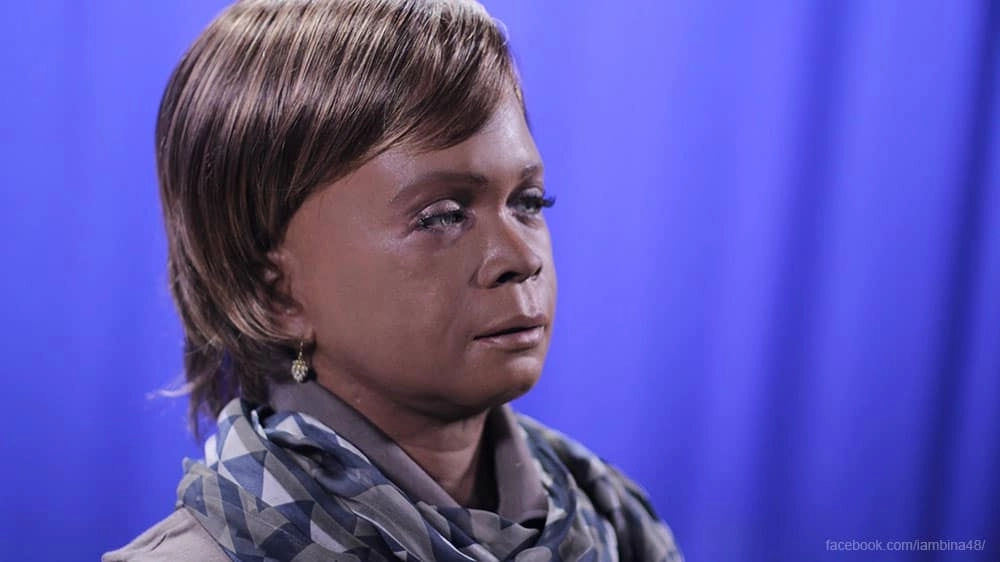
Bina48, built by Hanson Robotics and unveiled in 2010, was designed as a humanoid bust that could hold conversations, surface memories, and test how far social robots can carry a humanlike exchange. In the years since, it has become less a mass-market product than a long-running demonstration of Hanson’s broader bet: that lifelike robots can be used to probe mind uploading, identity, and human-machine interaction.
Why it still matters
Bina48 stands out because it was built around a real person’s memories and personality cues, not just a scripted customer-service persona, which gives it a different role from many companion robots. Its upper-body form also matters: without legs and mobility, the machine is optimized for direct social interaction, not navigation, making it a cleaner test of conversation, facial expression, and presence. That focus helps explain why Bina48 has shown up in philosophical demos and media coverage more than in practical deployments. Bina48 is less a product pitch than a controlled experiment in human likeness.

How it works
The system flow is straightforward: human speech and face input go in, Hanson’s proprietary conversational software and AI layer process the exchange, and the robot responds through facial motion, voice, and gesture. The design also depends on sensors such as cameras and microphones to support recognition and interaction, but the machine does not use a navigation system because it is a stationary upper-body robot. In practice, that makes Bina48 an Input → Processing → Output platform for social dialogue rather than movement.
A social demo case
The clearest deployment scenario is a public-facing mind-uploading or identity demonstration, where Bina48 can be used to explore what it means to capture a person’s memories, beliefs, and conversational style in robotic form. That setting plays to its strengths: close-range interaction, face-to-face questioning, and a visual presence that makes abstract AI arguments easier to discuss. It is a better fit for museums, academic events, and research presentations than for tasks that require autonomy or physical work.
What the build enables
Reported specifications place Bina48 at about 165 x 50 x 40 cm and roughly 30 kg, which fits its role as a bust-style social robot rather than a mobile humanoid. Its sensor set is described as including RGB cameras, stereo cameras, face-recognition cameras, voice-recognition microphones, an IMU, and motion-tracking sensors, all of which support direct interaction and expressive response. The robot is also described as using force limiting, collision detection, and an emergency stop, features that align with a machine meant to stand near people during demonstrations.
Rivals Edge Check
| Robot | Key Advantage | Where Bina48 Wins | Target Use |
|---|---|---|---|
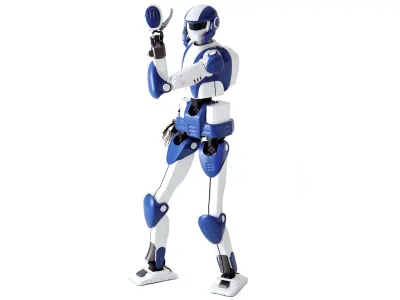
| HRP-4 | Full-body humanoid motion research and balance control | More focused on identity, conversation, and social framing | Research demos and motion studies |
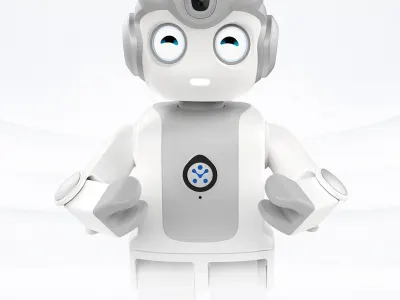
| Alpha Mini | Compact interactive companion design | Deeper tie to mindfile and philosophical conversation demos | Education and social interaction |
| Eva | Service-oriented humanoid interaction | More distinctive story around memory, personhood, and AI identity | Public engagement and research displays |
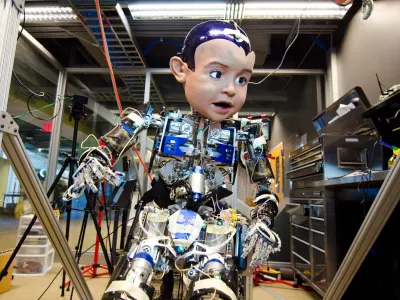
| Zeno | Child-sized social robot for approachable interaction | More humanlike bust presentation and higher-emotion experimental framing | Social experiments and education |
Industry direction shifts
Bina48 also reflects a broader shift in humanoids toward teleoperation-first and interaction-first designs, where realism and responsiveness matter more than preloaded motion libraries. For the industry, that is a reminder that near-term value may come from robots that can convincingly stand in for a human presence in controlled environments, even if they are far from general-purpose autonomy. In that sense, Bina48’s legacy is less about scale and more about setting a template for what social humanoids are for.
Explore Humanoids
Related Articles
Waseda’s AIREC pushes humanoid care robots toward teleoperation-first nursing tasks
Hanson Robotics’ Grace remains a landmark humanoid nursing robot as healthcare adoption stays uneven

Hanson Robotics’ Han remains a study in expressive humanoid teleoperation and social interaction
Hanson Robotics’ Eva remains a research humanoid built for interaction, not autonomy
Related Comparisons
Compare Bina48 with similar robots
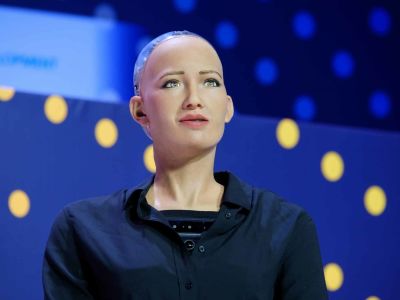

Sophia vs Aria - Robot Girlfriend
Head-to-head: Sophia vs Aria - Robot Girlfriend compared on bipedal balance, AI learning, and real-world deployment.

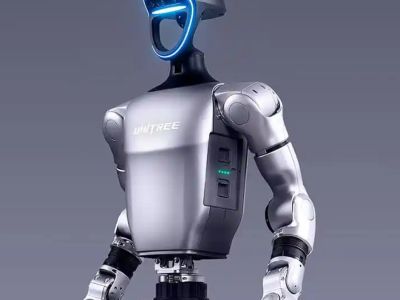
Optimus vs Unitree G1
Compare Optimus vs Unitree G1 for humanoid mobility, dexterity, autonomy, and payload capacity.
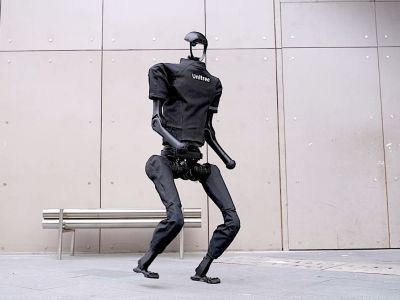
Unitree G1 vs Unitree H1
Head-to-head: Unitree G1 vs Unitree H1 compared on bipedal balance, AI learning, and real-world deployment.
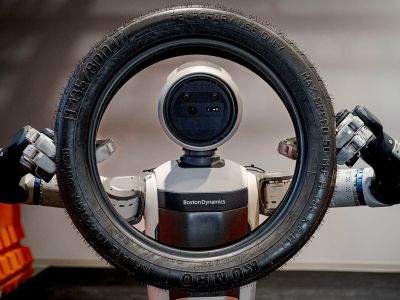
Optimus vs Atlas (Electric Atlas, 2025)
In-depth comparison of Optimus and Atlas (Electric Atlas, 2025), covering hardware capabilities, teleoperation, and enterprise readiness.
Learn More About This Robot
Discover detailed specifications, reviews, and comparisons for Bina48.
View Robot Details →