Unitree G1 is positioned as a lower-cost humanoid platform for research, education, and light industrial work, which makes it a useful benchmark against newer high-end humanoids. It stands out with a wider configuration range, from 23 to 43 degrees of freedom, and with force-position hybrid control for object handling. Its published carrying and deadlift figures suggest it is optimized for practical manipulation tasks rather than full-scale service deployment. Compared with Unitree H2, the G1 is the more accessible and better-documented platform for buyers that want modularity and a clearer price-to-capability tradeoff.
Unitree H2 is being compared because it represents a higher-priced humanoid positioned for service, collaboration, and research use cases. Its estimated price range is substantially above the G1, which suggests a more premium deployment class even though fewer technical details are disclosed. The H2 is described with a taller, heavier frame and a payload profile that targets stronger handling capacity in normal and peak modes. Compared with Unitree G1, the H2 appears to be the more expensive and less transparently specified option, aimed at buyers prioritizing service-oriented presence and broader collaborative deployment.
Detailed Analysis
Which humanoid robot is better for bipedal mobility and balance?
Unitree G1 is the more clearly specified bipedal platform, with a 132 cm height, 35 kg mass, and a walking speed of 2 m/s. Those figures indicate a compact robot that is easier to manage in constrained indoor environments and research labs. Unitree H2 is estimated at 180 cm and 70 kg, with speed listed as under 2 m/s, which suggests a larger and heavier body that may improve presence but can reduce agility in tight spaces. For buyers prioritizing documented locomotion data and compact maneuvering, Unitree G1 is the stronger reference point.
Which robot is more capable for complex manipulation tasks?
Unitree G1 has the stronger manipulation specification set, with force-position hybrid control, dexterous hands, 2 kg per arm in the base model, and 3 kg per arm in EDU configurations. Its degree-of-freedom range up to 43 also indicates more articulated upper-body options for task execution. Unitree H2 lists 7 kg normal carrying capacity and 21 kg peak capacity, but it does not disclose hand architecture, arm load details, or joint count in the provided data. For precision work and configuration flexibility, Unitree G1 is the more defensible choice; for higher nominal load handling, Unitree H2 may be more relevant if the payload figures are validated.

Which robot offers better autonomous learning capabilities?
Unitree G1 has a clearer AI and learning profile, including imitation learning, reinforcement learning, OTA updates, and SDK support on a custom OS. The platform is explicitly framed around embodied intelligence and robot world-model development, which makes it more suitable for iterative research workflows. Unitree H2 is described as semi-autonomous and uses ROS and Linux, but no learning pipeline or training-oriented feature set is specified in the provided data. For research teams focused on learning-driven behavior development, Unitree G1 is the more complete option; for integration into ROS-based environments, Unitree H2 may be easier to align with existing software stacks.

How do payload and lifting capacities compare?
Unitree G1 is specified at 2 kg per arm in the base configuration and 3 kg per arm in EDU configurations, with a deadlift capacity of 70 kg. That combination suggests a robot designed for fine manipulation and occasional heavier lifts within controlled conditions. Unitree H2 is listed with 7 kg normal carrying capacity and 21 kg peak capacity, but no deadlift value is provided. If the task centers on arm-based handling and benchmarked lifting, Unitree G1 is more fully documented; if the requirement is higher nominal payload, Unitree H2 presents the larger stated capacity.
Which humanoid robot has better battery runtime and efficiency?
Unitree G1 includes a disclosed runtime context through its smart lithium-ion battery lifecycle estimate of about 5 years, but not a specific per-charge operating duration in the provided data. It also uses an 8-core CPU and OTA updates, which may support efficient maintenance and iterative software improvement. Unitree H2 does not disclose battery specifications, so runtime and energy efficiency cannot be directly compared from the available information. Based on disclosure quality alone, Unitree G1 gives enterprise buyers a clearer basis for lifecycle planning.

Which humanoid robot fits industrial manufacturing workflows better?
Unitree G1 is more explicitly aligned with R&D, palletization, handling, assembly, welding, education, and demonstration, which maps directly to structured industrial workflows. Its teleoperated and semi-autonomous profile makes it practical for supervised tasks where repeatability and manipulation matter more than social presence. Unitree H2 is positioned more broadly for service and collaboration, with research also included, but its industrial task list is less specific in the provided data. For manufacturing environments, Unitree G1 is the more directly matched platform; for service-facing deployments, Unitree H2 may be the better strategic fit.
How do sensor suites and vision systems differ?
Unitree G1 has a well-defined sensor stack that includes an Intel RealSense D435 depth camera, LIVOX MID-360 3D LiDAR, IMU, gyroscope, dual encoders per joint, a 4-microphone array, and a temperature sensor. That breadth supports navigation, balance monitoring, and interaction sensing with higher implementation clarity. Unitree H2 only lists a camera and general balance-and-movement sensors, which indicates a much less specific hardware disclosure. For teams that need a documented perception and control stack, Unitree G1 provides the stronger technical baseline.
Analysis Score Summary
Total Score
7
Unitree G1
VS
Based on Detailed Analysis
Total Score
7
Unitree H2
📊 Win: 2 points | Trade-off: 1 point each
Scores are summed across every insight: a clear winner earns 2 points, while balanced trade-offs give each robot 1 point. The total reflects how often each robot outperforms the other (or shares the spotlight) throughout the detailed analysis sections.
Capabilities & Operational Tasks
Head-to-head comparison of what Unitree G1 and Unitree H2 can do, their applications, and capabilities.
What Can Unitree G1 & Unitree H2 Do?
16Core operational tasks, activities, and physical manipulation duties evaluated side-by-side.
| Task & Description | Model AUnitree G114 supported | Model BUnitree H215 supported |
|---|---|---|
| Assembly | — | High |
| Autonomous task execution | High | High |
| Carrying and transport | High | High |
| Collaborative work | High | High |
| Human interaction | High | — |
| Loading and unloading | High | High |
| Machine operation | High | High |
| Machine tending | — | High |
| Material handling | High | High |
| Move objects | High | High |
| Navigation | High | High |
| Obstacle traversal | High | High |
| Pick and place | High | High |
| Repetitive physical tasks | High | High |
| Sorting | High | High |
| Tool use | High | High |
Technical Specifications
Head-to-head performance data and metrics
| Specification | Model AUnitree G1 | Model BUnitree H2 |
|---|---|---|
Functional Utility & Use Cases4 Comparative Metrics | ||
Control Method | Remote control, AI automation | AI, remote control |
Use Cases | High-speed bipedal running, 360° ground recovery, dynamic balancing, small tool handling, light pick-and-place, soldering demos | Service, collaboration, research |
Multi Robot Coord | Yes (via network) | Possible with software updates |
Pet Friendly | Not Applicable / No | Yes (with precautions) |
Manipulation & Load Capacity4 Comparative Metrics | ||
Carrying Capacity | 2 kg per hand/arm | About 7 kg rated, about 15 kg peak (arm payload) |
Deadlift Capacity | 3 kg | Not specified |
Payload Type | About 2 kg arm payload (base); about 3 kg (EDU) | Tools, packages |
Modular Attachments | Supports optional dexterous hands and payload extensions | Grippers, robotic hands |
Kinematic Architecture & Dexterity4 Comparative Metrics | ||
Degrees of Freedom | 23–43 DoF (depending on hand and waist options) | 31 DoF (6 per leg, 7 per arm, 3 waist, 2 head) |
Material | Aluminum, composite, plastic | Metal, plastic |
Mobility Type | Legged (Dynamic bipedal locomotion >2.0 m/s, 360° leg flexibility, ground recovery) | Legged |
Hardware Interface | USB-C, GPIO (assumed), Ethernet port | USB, GPIO |
Functional Utility & Use Cases
4 Comparative Metrics
Manipulation & Load Capacity
4 Comparative Metrics
Kinematic Architecture & Dexterity
4 Comparative Metrics
Frequently Asked Questions
Which humanoid robot can handle higher arm payloads for enterprise manipulation tasks?
Unitree H2 lists 7 kg normal carrying capacity and 21 kg peak capacity, while Unitree G1 lists 2 kg per arm in the base model and 3 kg per arm in EDU configurations.
Which humanoid robot is more suitable for teleoperated research and supervised deployment?
Unitree G1 is the better-documented teleoperated research platform because Unitree G1 includes SDK support, OTA updates, and explicit semi-autonomous operation.
Which humanoid robot is more stable or faster for indoor walking tasks?
Unitree G1 is specified at 2 m/s and includes obstacle detection and collision avoidance, while Unitree H2 is listed as under 2 m/s with less detailed locomotion data.
Which humanoid robot has better dexterity for object manipulation and hand control?
Unitree G1 has better disclosed dexterity because Unitree G1 includes force-position hybrid control, dexterous hands, and up to 43 degrees of freedom.
Which humanoid robot is more ready for manufacturing and assembly workflows?
Unitree G1 is more deployment-ready for manufacturing because Unitree G1 explicitly lists palletization, handling, assembly, and welding among its use cases.
Which humanoid robot is better suited for service and collaboration environments?
Unitree H2 is positioned more directly for service and collaboration because Unitree H2 is marketed around service, collaboration, and research use cases.
Related Comparisons
Discover similar robot matchups to expand your knowledge and find the perfect solution

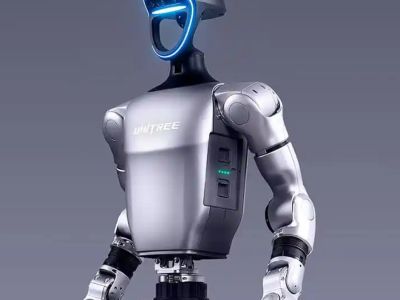
Optimus vs Unitree G1
Compare Optimus vs Unitree G1 for humanoid mobility, dexterity, autonomy, and payload capacity.
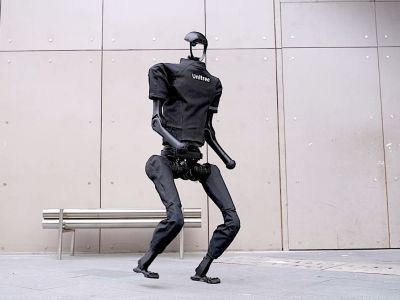
Unitree G1 vs Unitree H1
Head-to-head: Unitree G1 vs Unitree H1 compared on bipedal balance, AI learning, and real-world deployment.
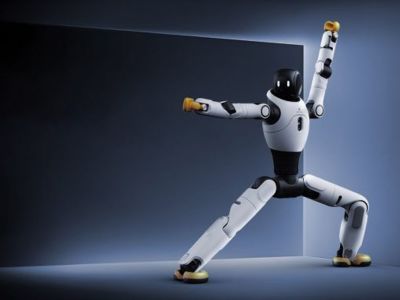
Unitree G1 vs AgiBot X2-N
Compare Unitree G1 vs AgiBot X2 for humanoid mobility, dexterity, autonomy, and payload capacity.
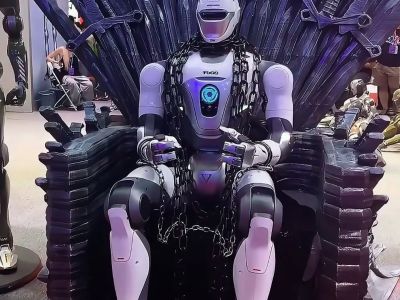
Unitree H2 vs T800
Which robot wins? Unitree H2 vs T800 compared across navigation, battery, sensors, mobility, and price.
Disclaimer
All content, comparisons, and verdicts on this website are based on our research, testing, and opinion. While we strive for accuracy, we do not guarantee the completeness, reliability, or suitability of any information. Performance, specifications, and results may vary depending on usage and conditions. This website and its authors are not responsible for any decisions, actions, or outcomes based on the information provided. Always verify product details with the manufacturer before making purchase or operational decisions.