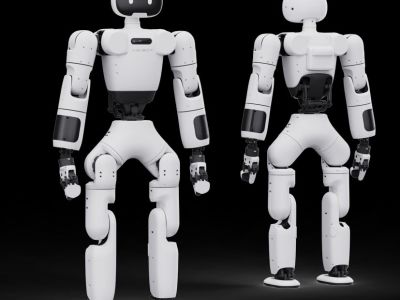
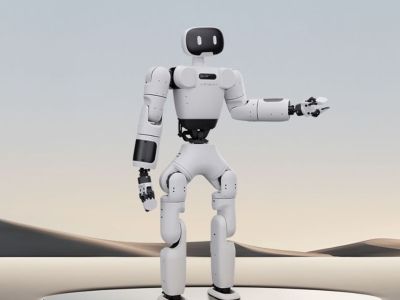
The AgiBot X1 represents an entry-level humanoid platform designed for rapid deployment in light manufacturing and educational environments. Priced between $15,000–$25,000, it targets organizations seeking affordable automation without extensive infrastructure investment. The X1 prioritizes accessibility and software flexibility through ROS2 compatibility, making it suitable for research institutions and small-scale industrial applications that require collaborative, teleoperated, or semi-autonomous operation.
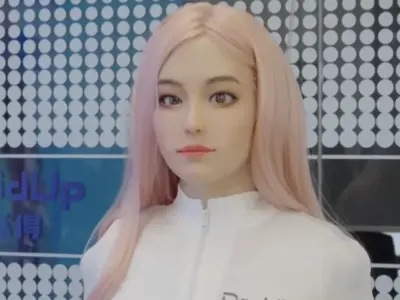
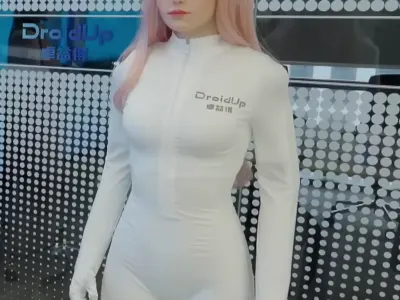
Moya by DroidUp occupies the premium segment at $173,000, engineered specifically for extended human interaction in care, tutoring, and customer service roles. With 40+ degrees of freedom including micro-expressions and optimized bipedal stability, Moya demonstrates advanced social robotics capabilities. The platform targets enterprise deployments in healthcare and commercial settings where human-like presence and autonomous decision-making directly impact user experience and operational continuity.
Detailed Analysis
Bipedal Mobility & Balance Performance
Moya achieves 3 km/h (0.83 m/s) with optimized stable social walking, while AgiBot X1 operates at 1 m/s, both designed for indoor navigation. Moya's 5.5-foot human-like profile and 40+ DoF architecture provide enhanced balance and natural movement patterns critical for public-facing roles. AgiBot X1's lighter 33 kg frame enables rapid repositioning in confined industrial spaces, though its mobility specifications prioritize task-oriented movement over social presence. Neither robot is designed for outdoor or unstructured terrain navigation.

Dexterity & Manipulation Capabilities Comparison
AgiBot X1 delivers 0.5 kg carrying capacity per arm with 0.5 kg deadlift maximum, suitable for lightweight assembly tasks and object inspection. Moya substantially outperforms with 2 kg per-arm carrying capacity and 10 kg maximum deadlift, enabling broader manipulation tasks and object handling in care or logistics contexts. Moya's 40+ DoF design, including hand articulation for micro-expressions, supports complex fine-motor tasks and expressive gesturing. The specification gap reflects fundamental design differences: AgiBot X1 targets precision-light-work, while Moya prioritizes versatile interaction and moderate-load handling.
AI, Autonomy & Learning Capabilities
Both platforms support multiple autonomy levels, though implementation details differ. AgiBot X1 explicitly offers fully autonomous, semi-autonomous, and teleoperated modes with ROS2, Python, and C++ support, enabling custom algorithm development. Moya provides highly autonomous operation with teleoperation support through a proprietary OS and ROS2-compatible Python APIs. Based on search results, emerging AI models like OpenAI's o1 'Strawberry' and 1X's world-model approach suggest next-generation robots will emphasize multi-step reasoning and real-world learning from trajectory data. Neither specification explicitly details on-board learning capabilities or integration with large foundational models, indicating this remains a competitive frontier.

Payload & Lifting Capacity for Industrial Tasks
AgiBot X1 supports 0.5 kg per arm and 0.5 kg deadlift, positioning it for inspection, light assembly, and educational demonstrations. Moya lifts up to 10 kg maximum with 2 kg per-arm carrying capacity, enabling meaningful logistics, packaging, and healthcare assistance tasks. For industrial manufacturing contexts requiring part handling, Moya provides 20x greater deadlift capacity. Organizations prioritizing lightweight precision work favor AgiBot X1; those requiring object transport and material handling require Moya's specifications.
Battery Runtime & Power Efficiency Trade-offs
Both platforms provide estimated 3+ year battery runtime, though Moya specifies 3–5 years, suggesting larger onboard energy storage. Neither specification includes charge duration, power consumption rates, or real-world duty-cycle data. Moya's heavier weight (32 kg vs 33 kg) and significantly higher DoF count imply greater power draw, potentially offsetting longer stated runtime. For continuous-operation deployments, both systems appear equivalent on specification alone; actual field data and utilization patterns would determine practical runtime.
Real-World Use Cases: Industrial vs General Purpose
AgiBot X1 targets light assembly, inspection, interactive tasks, education, social assistance, and automation—roles emphasizing adaptability and rapid reconfiguration. Moya specializes in elder care companionship, educational tutoring, commercial customer service, and healthcare assistance, reflecting heavy emphasis on sustained human interaction. AgiBot X1 suits manufacturing environments with structured, repeatable tasks; Moya suits care facilities and customer-facing commercial spaces. The use-case split reveals AgiBot X1 as a general-purpose platform and Moya as a social-robotics specialist.
Which humanoid robot is better for industrial manufacturing?
AgiBot X1 offers accessibility and software customization through ROS2 integration, enabling rapid deployment in small-scale manufacturing and research. Moya's 10 kg deadlift and 2 kg per-arm capacity support heavier assembly and material handling tasks unsuitable for AgiBot X1's 0.5 kg limits. For precision electronics or light-component assembly, AgiBot X1's affordability and flexibility advantage. For production environments requiring material transport and moderate-load handling, Moya's payload capacity and autonomous decision-making better serve manufacturing workflows. Organizations with capital constraints and light-assembly needs should prioritize AgiBot X1; those requiring load-bearing and extended autonomous operation justify Moya's premium investment.

Which robot offers superior autonomous learning capabilities?
Neither robot specification explicitly details on-board learning, transfer learning, or integration with foundation models—a critical gap in current marketing data. AgiBot X1's ROS2 and Python ecosystem enable custom algorithm development and community-contributed learning frameworks. Moya's proprietary OS with ROS2 compatibility suggests closed learning pipelines. Industry developments (AgiBot World dataset, 1X world models, OpenAI integration in Figure 02 and Phoenix) indicate autonomous learning and real-world trajectory adaptation are rapidly evolving capabilities not yet differentiated in these specifications. Recommendation: Request proprietary technical documentation or conduct live demonstrations to evaluate on-device learning performance and integration with emerging foundational AI models.
Human-Robot Interaction & Social Presence
Moya explicitly incorporates 40+ DoF including head micro-expressions, optimized for social walking and human engagement in care and service roles. AgiBot X1 prioritizes functional collaboration without emphasis on social presence. Moya's design supports natural eye contact, facial expression, and gesture—critical for elder care and customer-service contexts. AgiBot X1 suits task-focused environments where interaction is instrumental rather than relational. For deployments prioritizing comfort, trust, and sustained human engagement, Moya's social engineering provides measurable advantage.
Sensor Suite & Vision Systems Comparison
Both robots feature RGB cameras, stereo cameras, IMU, gyroscope, force sensors, and temperature sensors. Moya's stereo-camera setup and 40+ DoF suggest enhanced depth perception and spatial awareness for complex environments. AgiBot X1's RGB and standard sensors support visual recognition and basic spatial mapping. Neither specification includes LiDAR, 3D mapping capabilities, or sensor fusion details. For applications requiring obstacle detection and scene understanding, Moya's stereo architecture provides marginal advantage; AgiBot X1's sensor suite suffices for structured, monitored environments.
Analysis Score Summary
Total Score
7
AgiBot X1
VS
Based on Detailed Analysis
Total Score
13
Moya
📊 Win: 2 points | Trade-off: 1 point each
Scores are summed across every insight: a clear winner earns 2 points, while balanced trade-offs give each robot 1 point. The total reflects how often each robot outperforms the other (or shares the spotlight) throughout the detailed analysis sections.
Capabilities & Operational Tasks
Head-to-head comparison of what AgiBot X1 and Moya can do, their applications, and capabilities.
What Can AgiBot X1 & Moya Do?
7Core operational tasks, activities, and physical manipulation duties evaluated side-by-side.
| Task & Description | Model AAgiBot X17 supported | Model BMoya4 supported |
|---|---|---|
| Autonomous task execution | High | High |
| Carrying and transport | High | — |
| Collaborative work | High | High |
| Human interaction | High | High |
| Move objects | High | — |
| Navigation | High | High |
| Pick and place | High | — |
Technical Specifications
Head-to-head performance data and metrics
| Specification | Model AAgiBot X1 | Model BMoya |
|---|---|---|
Functional Utility & Use Cases4 Comparative Metrics | ||
Control Method | Autonomous, teleoperation, learned behaviors | autonomous, teleoperation, learned behaviors |
Use Cases | Light assembly, inspection, interactive tasks, education, social assistance, automation | elder care companionship, educational tutoring, commercial customer service, healthcare assistance |
Multi Robot Coord | Yes, swarm capabilities (Estimated) | Yes |
Pet Friendly | Yes, with safety protocols | Yes, with safety protocols |
Manipulation & Load Capacity4 Comparative Metrics | ||
Carrying Capacity | 0.5 kg per arm | 2 kg per arm |
Deadlift Capacity | 0.5 kg | 10 kg maximum |
Payload Type | Tools, small packages, precision instruments | people interaction, precision instruments, packages |
Modular Attachments | Tool changers, end-effector options | tool changers, end-effector options |
Kinematic Architecture & Dexterity4 Comparative Metrics | ||
Degrees of Freedom | - | 40+ DOF (including head micro-expressions) |
Material | Aluminum, composite, plastic | aluminum frame, soft skin composites |
Mobility Type | Legged (bipedal walking) | Legged (Biomimetic Bipedal walking). |
Hardware Interface | USB-C, GPIO, CAN bus, serial | USB, CAN bus, GPIO |
Functional Utility & Use Cases
4 Comparative Metrics
Manipulation & Load Capacity
4 Comparative Metrics
Kinematic Architecture & Dexterity
4 Comparative Metrics
Frequently Asked Questions
What is the maximum lifting capacity difference between AgiBot X1 and Moya?
AgiBot X1 deadlifts 0.5 kg maximum with 0.5 kg per-arm carrying capacity. Moya deadlifts 10 kg maximum with 2 kg per-arm capacity—20x greater deadlift and 4x greater carrying capacity, enabling material handling and object transport tasks.
Does Moya support full teleoperation like AgiBot X1?
Yes. Moya provides highly autonomous operation with teleoperation support. AgiBot X1 explicitly offers fully autonomous, semi-autonomous, and teleoperated modes. Both support remote control; Moya emphasizes autonomous-first operation, while AgiBot X1 treats teleoperation as a primary operating mode.
Which robot walks faster and more stably for social environments?
Moya achieves 3 km/h (0.83 m/s) with optimized stable social walking designed for human environments. AgiBot X1 operates at 1 m/s with less emphasis on social stability. Moya's architecture prioritizes natural walking patterns; AgiBot X1 prioritizes task-oriented mobility.
Can AgiBot X1 and Moya perform fine-motor manipulation tasks?
AgiBot X1 supports light assembly and inspection with 0.5 kg capacity. Moya, with 40+ DoF including hand articulation for micro-expressions and 2 kg per-arm capacity, handles complex fine-motor tasks and expressive gesturing unsuitable for AgiBot X1.
Is AgiBot X1 or Moya better suited for elder care deployment?
Moya is purpose-built for elder care with 40+ DoF, micro-expressions, and optimized social walking. Its design emphasizes sustained human interaction and presence. AgiBot X1 can assist but lacks social robotics specialization required for care environments.
Which robot provides better software customization for research?
AgiBot X1 offers superior customization through ROS2, Python, and C++ with proprietary API access, enabling rapid algorithm development. Moya uses proprietary OS with ROS2 compatibility, suggesting limited customization compared to AgiBot X1's open-ecosystem approach.
Related Comparisons
Discover similar robot matchups to expand your knowledge and find the perfect solution
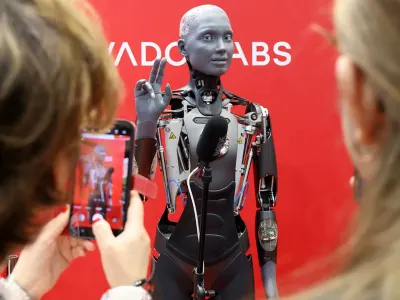
Ameca vs Moya
Which humanoid robot is better? Ameca vs Moya compared for dexterity, AI capabilities, and price.
AgiBot X1 vs RAISE A1
Compare AgiBot X1 vs RAISE A1 for humanoid mobility, dexterity, autonomy, and payload capacity across manufacturing and logistics applications.

Elf-Xuan 2.0 vs Moya
In-depth comparison of Elf-Xuan 2.0 and Moya, covering hardware capabilities, teleoperation, and enterprise readiness.

Aria - Robot Girlfriend vs Moya
In-depth comparison of Aria - Robot Girlfriend and Moya, covering hardware capabilities, teleoperation, and enterprise readiness for companionship and service applications.
Disclaimer
All content, comparisons, and verdicts on this website are based on our research, testing, and opinion. While we strive for accuracy, we do not guarantee the completeness, reliability, or suitability of any information. Performance, specifications, and results may vary depending on usage and conditions. This website and its authors are not responsible for any decisions, actions, or outcomes based on the information provided. Always verify product details with the manufacturer before making purchase or operational decisions.