The AgiBot X1 represents a compact, lightweight humanoid platform designed for collaborative environments and educational deployment. With a height of 130 cm and weight of 33 kg, the X1 prioritizes accessibility and ease of integration into existing workflows. Its architecture emphasizes interactive capabilities and semi-autonomous operation, making it suitable for scenarios requiring human-robot collaboration and adaptability across multiple task domains.
The RAISE A1 is a larger, industrial-grade humanoid engineered for demanding manipulation and material handling tasks. Standing 175 cm tall and weighing 55 kg, the RAISE A1 delivers substantially higher payload capacity and locomotion speed compared to its lighter counterpart. This platform targets manufacturing, logistics, and repetitive industrial operations where autonomous task execution and significant lifting capacity are critical requirements.
Detailed Analysis
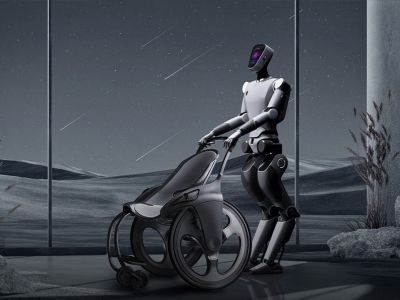
Bipedal Mobility and Walking Speed Comparison
The RAISE A1 significantly outperforms the AgiBot X1 in locomotion capability, achieving 7 km/h walking speed compared to the X1's 1 m/s (3.6 km/h). This fivefold speed advantage positions the RAISE A1 for warehouse automation, facility traversal, and time-sensitive logistics operations. The AgiBot X1's lower speed reflects its design philosophy prioritizing stability and safety in collaborative human-proximity environments. For stationary assembly or inspection tasks, this speed differential carries minimal practical impact.
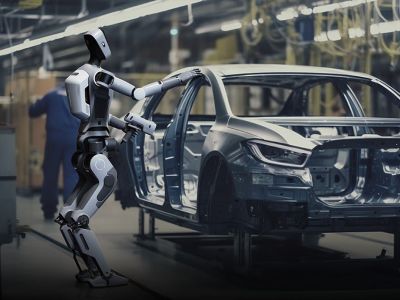
Dexterity and Arm Manipulation Capabilities
The RAISE A1 provides superior manipulation performance with 5 kg carrying capacity per arm versus the AgiBot X1's 0.5 kg limitation. This tenfold difference directly enables industrial pick-and-place operations, assembly line integration, and material handling that the X1 cannot support. The AgiBot X1's reduced dexterity reflects its focus on lighter interactive tasks, inspection workflows, and educational demonstrations. For precision assembly requiring fine-motor control, both platforms offer comparable sensor integration through force/torque feedback systems.

Lifting Power and Deadlift Capacity Specifications
The RAISE A1 demonstrates industrial-class lifting capability with 80 kg deadlift capacity, while the AgiBot X1 is rated for only 0.5 kg. This 160-fold difference fundamentally separates these platforms across application domains. The RAISE A1 addresses material handling, heavy component repositioning, and logistics automation. The AgiBot X1's deadlift specification aligns with light assembly, small component handling, and educational robotics where payload demands remain minimal.
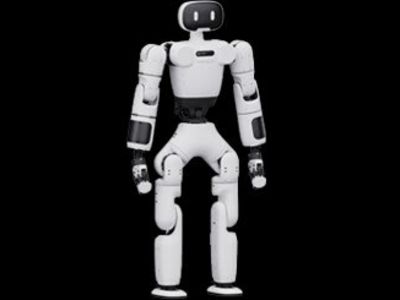
AI, Autonomy, and Machine Learning Integration
Both platforms support autonomous operation enhanced by reinforcement learning capabilities, as evidenced by AgiBot's open-source training datasets and GO-2 foundation model. The RAISE A1 explicitly enables teleoperation with full autonomous modes, while the AgiBot X1 offers semi-autonomous and teleoperated configurations alongside full autonomy. The search results indicate AgiBot's broader ecosystem includes 1M+ real-world trajectory datasets and Genie Sim 3.0, suggesting sophisticated learning infrastructure applicable to both models. For deployment, the RAISE A1's teleoperation capability provides additional operational flexibility in uncertain industrial environments.

Sensor Suite and Environmental Perception Systems
The RAISE A1 includes a more comprehensive sensor array featuring RGB-D camera, LiDAR, microphone array, IMU, gyroscope, force/torque sensors, and proximity sensors. The AgiBot X1 incorporates RGB camera, IMU, gyroscope, force sensors, and temperature sensor. The RAISE A1's LiDAR enables advanced mapping and navigation in complex industrial spaces, while the microphone array supports multi-modal interaction. The AgiBot X1's temperature sensing reflects its collaborative design focus. For vision-based task recognition, both platforms provide adequate perception; the RAISE A1's additional sensors reduce reliance on teleoperation.
Battery Runtime and Power Efficiency Considerations
Both platforms offer extended battery runtime specifications of 3-5 years (RAISE A1) and 3 years (AgiBot X1), though these estimates likely reflect standby capacity rather than continuous operation duration. The RAISE A1's higher weight (55 kg vs 33 kg) and 7 km/h mobility speed suggest greater energy consumption during active operation, potentially reducing actual runtime below rated specifications. The AgiBot X1's lower mass and reduced speed enable more conservative power budgeting. Neither specification provides discharge rate data; enterprise buyers should request validated runtime under typical operational loads.
Which humanoid robot performs better for industrial manufacturing?
The RAISE A1 is purpose-built for industrial manufacturing environments, offering 5 kg per-arm carrying capacity, 80 kg deadlift capability, and 7 km/h mobility across warehouse and assembly floor conditions. The AgiBot X1's 0.5 kg payload and 0.5 kg deadlift capacity restrict it to inspection, light quality control, and educational demonstrations rather than active production integration. For pick-and-place assembly, part sorting, and material handling—core manufacturing requirements—the RAISE A1 delivers the necessary physical capabilities. The RAISE A1 is the clear choice for manufacturing deployment requiring sustained material manipulation.
Which platform offers superior autonomous learning and adaptation?
Both platforms leverage AgiBot's advanced AI ecosystem, including the GO-2 foundation model, 1M+ trajectory datasets, and Genie Sim 3.0 simulation environment documented in the search results. The RAISE A1's additional sensor modalities (LiDAR, microphone array, RGB-D) provide richer environmental data for learning algorithms to process compared to the AgiBot X1's simpler sensor suite. The RAISE A1's teleoperation capability enables human demonstration collection in complex scenarios, accelerating reinforcement learning processes. For autonomous adaptation in novel industrial environments, the RAISE A1's enhanced perception and demonstration infrastructure provides measurable advantages over the AgiBot X1.

Real-World Deployment Readiness for Logistics Operations
The RAISE A1's specifications align directly with logistics automation: 7 km/h walking speed enables efficient floor traversal, 5 kg per-arm capacity supports package handling, and 80 kg deadlift capacity addresses pallet-adjacent tasks. The AgiBot X1's 1 m/s speed and 0.5 kg payload make it unsuitable for active logistics workflows but viable for warehouse inspection, inventory documentation, and human-robot collaborative picking operations. For autonomous logistics deployment requiring sustained material movement, the RAISE A1 provides the necessary physical performance envelope. The AgiBot X1 serves complementary inspection and documentation roles rather than primary material handling.
Software Integration and Teleoperation Framework Comparison
The AgiBot X1 supports ROS2, Python, and C++ with proprietary APIs enabling integration into existing robotics infrastructure. The RAISE A1 features proprietary OS with ROS2 integration, Python, and C++ support, indicating similar software accessibility. The RAISE A1's explicit teleoperation capability provides operational control during uncertain conditions, while the AgiBot X1 offers semi-autonomous and teleoperated modes with less emphasis on direct control interfaces. Both platforms benefit from AgiBot's open-source training infrastructure, reducing software development overhead. For teams requiring maximum flexibility, the RAISE A1's integrated teleoperation framework provides additional deployment options.
Safety Features for Collaborative Human-Robot Environments
Both platforms implement force limiting, collision detection, and emergency stop mechanisms. The AgiBot X1 explicitly includes collaborative mode, reflecting its primary use case of close human interaction. The RAISE A1 features real-time proximity detection and collision avoidance, supporting safer operation in dynamic industrial settings with variable human presence. The AgiBot X1's explicit collaborative mode certification likely indicates higher safety assurance for direct human contact scenarios. The RAISE A1's proximity detection enables autonomous obstacle avoidance without constant human supervision. For coworking spaces requiring sustained human-robot proximity, the AgiBot X1's collaborative design carries advantages; for autonomous warehouse operation, the RAISE A1's proximity systems prove sufficient.
Analysis Score Summary
Total Score
7
AgiBot X1
VS
Based on Detailed Analysis
Total Score
15
RAISE A1
📊 Win: 2 points | Trade-off: 1 point each
Scores are summed across every insight: a clear winner earns 2 points, while balanced trade-offs give each robot 1 point. The total reflects how often each robot outperforms the other (or shares the spotlight) throughout the detailed analysis sections.
Capabilities & Operational Tasks
Head-to-head comparison of what AgiBot X1 and RAISE A1 can do, their applications, and capabilities.
What Can AgiBot X1 & RAISE A1 Do?
18Core operational tasks, activities, and physical manipulation duties evaluated side-by-side.
| Task & Description | Model AAgiBot X17 supported | Model BRAISE A117 supported |
|---|---|---|
| Assembly | — | High |
| Autonomous task execution | High | High |
| Carrying and transport | High | High |
| Collaborative work | High | High |
| Human interaction | High | — |
| Inspection | — | High |
| Loading and unloading | — | High |
| Machine operation | — | High |
| Machine tending | — | High |
| Material handling | — | High |
| Move objects | High | High |
| Navigation | High | High |
| Packaging | — | High |
| Pick and place | High | High |
| Quality control | — | High |
| Repetitive physical tasks | — | High |
| Sorting | — | High |
| Tool use | — | High |
Technical Specifications
Head-to-head performance data and metrics
| Specification | Model AAgiBot X1 | Model BRAISE A1 |
|---|---|---|
Functional Utility & Use Cases4 Comparative Metrics | ||
Control Method | Autonomous, teleoperation, learned behaviors | Autonomous, teleoperation, learned behaviors |
Use Cases | Light assembly, inspection, interactive tasks, education, social assistance, automation | Pick-and-place operations, sorting, precision assembly, material handling, repetitive industrial tasks, service robotics |
Multi Robot Coord | Yes, swarm capabilities (Estimated) | Multi-robot coordination capable (Estimated) |
Pet Friendly | Yes, with safety protocols | Yes, with safety protocols |
Manipulation & Load Capacity4 Comparative Metrics | ||
Carrying Capacity | 0.5 kg per arm | 5 kg per arm |
Deadlift Capacity | 0.5 kg | 80 kg |
Payload Type | Tools, small packages, precision instruments | Tools, packages, precision instruments, human interaction |
Modular Attachments | Tool changers, end-effector options | Tool changer interface, end-effector options |
Kinematic Architecture & Dexterity3 Comparative Metrics | ||
Material | Aluminum, composite, plastic | Aluminum frame, composite joints, lightweight structural materials |
Mobility Type | Legged (bipedal walking) | Legged (bipedal walking) |
Hardware Interface | USB-C, GPIO, CAN bus, serial | USB, CAN bus, GPIO, serial communication |
Functional Utility & Use Cases
4 Comparative Metrics
Manipulation & Load Capacity
4 Comparative Metrics
Kinematic Architecture & Dexterity
3 Comparative Metrics
Frequently Asked Questions
What is the maximum payload capacity difference between AgiBot X1 and RAISE A1?
RAISE A1 carries 5 kg per arm versus AgiBot X1's 0.5 kg per arm, and lifts 80 kg deadlift compared to AgiBot X1's 0.5 kg deadlift. This makes RAISE A1 suitable for industrial material handling; AgiBot X1 for light assembly only.
Can both AgiBot X1 and RAISE A1 operate autonomously without teleoperation?
Yes, both support fully autonomous operation. RAISE A1 emphasizes teleoperation capability as a fallback, while AgiBot X1 offers semi-autonomous modes. Both leverage AgiBot's GO-2 foundation model and reinforcement learning infrastructure for autonomous task execution.
How much faster is RAISE A1 compared to AgiBot X1 in walking speed?
RAISE A1 achieves 7 km/h walking speed versus AgiBot X1's 1 m/s (3.6 km/h), representing approximately 1.9x speed advantage. RAISE A1 enables warehouse traversal and logistics automation; AgiBot X1 prioritizes collaborative safety.
Which robot has more advanced hand and arm dexterity capabilities?
RAISE A1 provides superior dexterity with 5 kg carrying capacity per arm and force/torque sensing. AgiBot X1 offers comparable sensor integration but is limited to 0.5 kg per arm, restricting it to inspection and light assembly tasks.
Is AgiBot X1 ready for immediate warehouse automation deployment?
No, AgiBot X1's 0.5 kg payload and 1 m/s speed make it unsuitable for active logistics. It serves inspection and documentation roles. RAISE A1 is engineered for warehouse automation with industrial-grade payload and locomotion specifications.
What sensor advantages does RAISE A1 provide over AgiBot X1?
RAISE A1 includes LiDAR, RGB-D camera, microphone array, and proximity sensors versus AgiBot X1's RGB camera and basic IMU/gyroscope. LiDAR enables autonomous navigation; microphone array supports multi-modal interaction in industrial settings.
Related Comparisons
Discover similar robot matchups to expand your knowledge and find the perfect solution
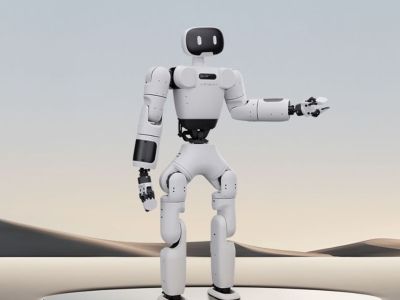

AgiBot X1 vs Moya
In-depth comparison of AgiBot X1 and Moya, covering hardware capabilities, teleoperation, autonomy levels, and enterprise readiness for industrial and social robotics deployment.
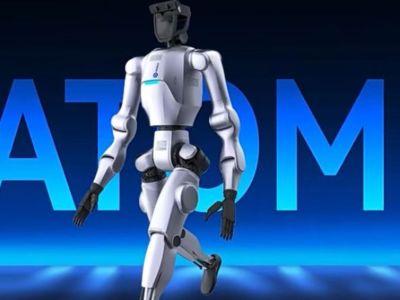
Atom vs RAISE A1
Compare Atom and RAISE A1. Detailed analysis of navigation, battery, sensors.
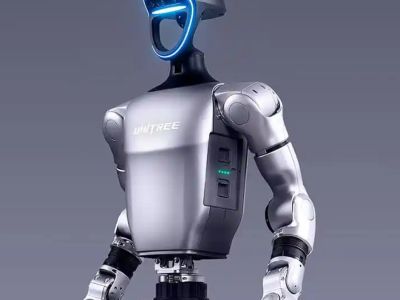
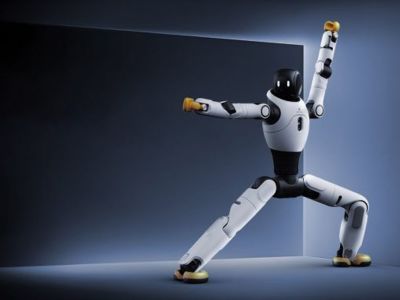
Unitree G1 vs AgiBot X2-N
Compare Unitree G1 vs AgiBot X2 for humanoid mobility, dexterity, autonomy, and payload capacity.

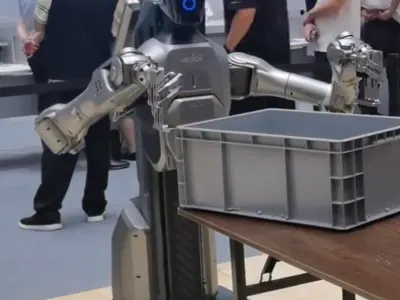
AgiBot G2 vs Cruzr Y1
Compare AgiBot G2 vs Cruzr Y1 for humanoid mobility, dexterity, autonomy, and payload capacity.
Disclaimer
All content, comparisons, and verdicts on this website are based on our research, testing, and opinion. While we strive for accuracy, we do not guarantee the completeness, reliability, or suitability of any information. Performance, specifications, and results may vary depending on usage and conditions. This website and its authors are not responsible for any decisions, actions, or outcomes based on the information provided. Always verify product details with the manufacturer before making purchase or operational decisions.