The AgiBot A2 Ultra positions itself as a versatile humanoid robot for customer service, logistics, manufacturing, research, and entertainment applications. Its compact dimensions of 169 x 75 x 30 cm and 69 kg weight enable deployment in constrained environments. Key differentiators include advanced sensors like LiDAR, RGB-D, and fisheye cameras, alongside ROS2-compatible software supporting Python and C++ integration. Estimated pricing at $150,000-$200,000 targets enterprise buyers seeking semi-autonomous or teleoperated solutions with 3 kg payload capacity.
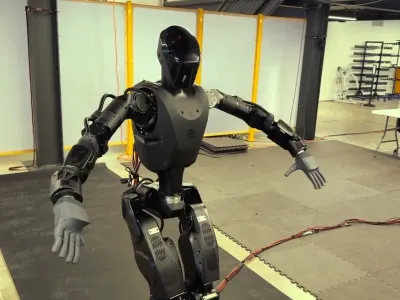
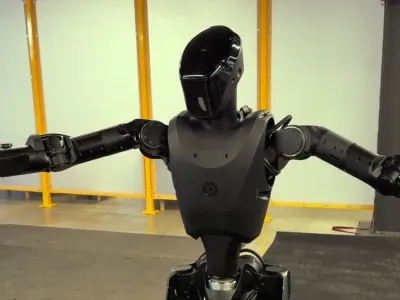
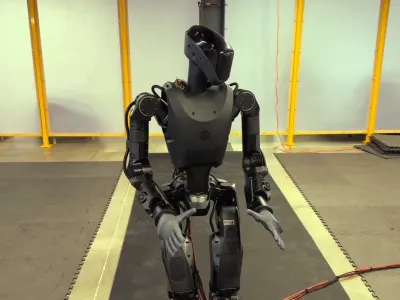
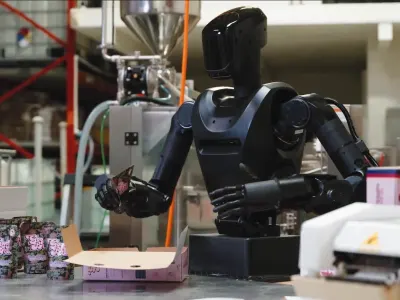
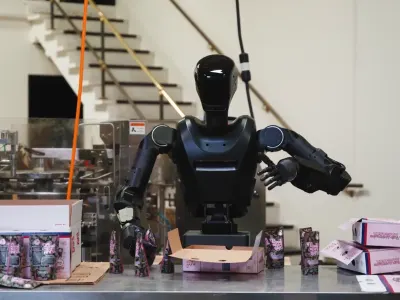
The Phantom MK1 by Foundation targets defense logistics, reconnaissance, urban warfare support, beverage manufacturing, and CBRN operations, emphasizing rugged performance. At 175 x 50 x 40 cm and 80 kg, it offers superior speed of 1.7 m/s and 20 kg carrying/deadlift capacity. Standout features include an onboard NVIDIA Jetson Orin with 2000+ TOPS compute and multi-camera vision suite with 3D infrared. Priced at $100,000-$150,000, it provides semi-autonomous teleoperation suited for high-risk environments.
Detailed Analysis
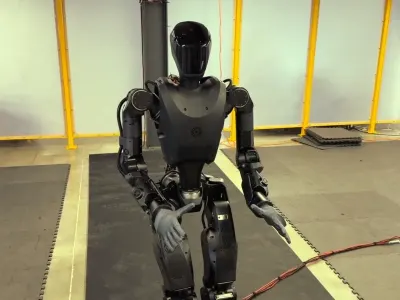
Bipedal Mobility & Balance
Phantom MK1 demonstrates superior walking speed at 1.7 m/s compared to AgiBot A2 Ultra's 0.8 m/s, enabling faster traversal in dynamic settings. AgiBot A2 Ultra's lighter 69 kg frame and IMU/gyroscope sensors support balanced operation in service environments, while Phantom's 80 kg build with joint torque encoders aids stability in rough terrain. Both rely on force sensors for gait adjustment, but Phantom's upper-body focused 19 DoF prioritizes load-bearing mobility. Field reports note Phantom's occasional stability issues in testing, contrasting AgiBot's proven multi-unit deployments.
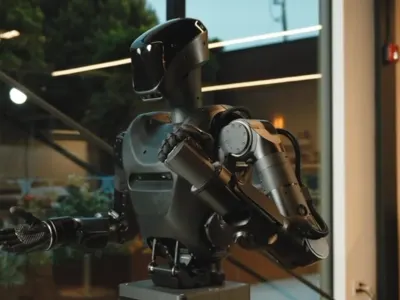
Dexterity & Manipulation (Focus on hands/arms)
AgiBot A2 Ultra likely achieves higher dexterity with up to 40-49 DoF from series data, enabling precision tasks via visual fingertip sensors. Phantom MK1's 19 DoF upper-body architecture supports 20 kg handling for weapons or tools in defense scenarios. AgiBot excels in delicate manipulations like threading needles, while Phantom prioritizes robust gripping with back-drivable actuators. Both use force limiting for safe interaction, but AgiBot's multimodal AI enhances fine motor control.
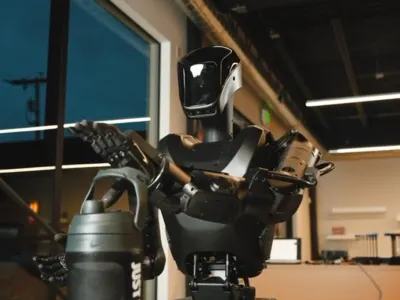
AI, Autonomy & Learning Capabilities
Both robots operate at semi-autonomous or teleoperated levels without full autonomy. Phantom MK1 leverages NVIDIA Jetson Orin and proprietary NPU cluster at 2000+ TOPS for real-time processing in combat zones. AgiBot A2 Ultra employs 200 TOPS compute with WorkGPT for 96% multimodal accuracy in service tasks. Software ecosystems include ROS2, Python APIs, and LLMs on Phantom, versus AgiBot's proprietary OS and APIs. Neither specifies advanced learning, relying on teleoperation for complex decisions.
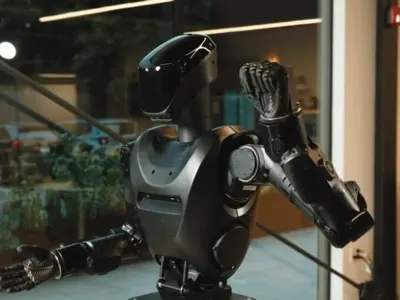
Payload & Lifting Capacity
Phantom MK1 offers 20 kg carrying and deadlift capacity, far exceeding AgiBot A2 Ultra's 3 kg limits. This enables Phantom to handle defense logistics or manufacturing loads like rifles or glassware. AgiBot suits light tasks in customer service or research. Higher capacities correlate with Phantom's heavier build and torque encoders.
Battery Runtime & Power Efficiency
Both claim extended warranties—AgiBot A2 Ultra at 3-5 years and Phantom MK1 at 5 years enterprise warranty—though runtime details vary. AgiBot series uses swappable packs for ~2 hours operational time in industrial variants. Phantom's upgrades target larger batteries for prolonged missions. Efficiency depends on load; Phantom's higher TOPS compute may demand more power.
Real-World Use Cases (Industrial vs General Purpose)
AgiBot A2 Ultra targets broad applications including customer service, logistics, manufacturing, research, and entertainment, with 5,000+ units shipped. Phantom MK1 focuses on defense logistics, reconnaissance, urban warfare, and specialized manufacturing like beverages or CBRN zones. AgiBot demonstrates scale in factories like BYD, while Phantom undergoes Ukraine/Pentagon testing. General-purpose favors AgiBot; high-risk industrial suits Phantom.
Sensor Suite & Vision Systems
AgiBot A2 Ultra integrates LiDAR, RGB-D camera, fisheye, IMU, gyroscope, and force sensors for comprehensive environmental mapping. Phantom MK1 features multi-camera optical suite, IMU, joint torque encoders, and 3D infrared on lower body for tactical vision. AgiBot emphasizes multimodal input for service interactions; Phantom prioritizes low-light and reconnaissance.
Which humanoid robot is better for industrial manufacturing?
Phantom MK1 outperforms AgiBot A2 Ultra in manufacturing with 20 kg payload versus 3 kg, plus rugged design for beverage/glass handling. AgiBot offers broader deployment scale and dexterity for light assembly. Phantom suits heavy-duty tasks; for high-volume light industrial work, AgiBot provides proven reliability. Phantom MK1 is recommended for demanding industrial manufacturing.
Which robot offers better payload for logistics tasks?
Phantom MK1's 20 kg carrying capacity doubles typical needs, ideal for defense logistics over AgiBot A2 Ultra's 3 kg limit. AgiBot fits light logistics in service settings. Speed advantage (1.7 m/s) aids Phantom in dynamic warehouses. Phantom MK1 is recommended for logistics requiring higher payloads.
Analysis Score Summary
Total Score
8
AgiBot A2 Ultra
VS
Based on Detailed Analysis
Total Score
10
Phantom MK1
📊 Win: 2 points | Trade-off: 1 point each
Scores are summed across every insight: a clear winner earns 2 points, while balanced trade-offs give each robot 1 point. The total reflects how often each robot outperforms the other (or shares the spotlight) throughout the detailed analysis sections.
Capabilities & Operational Tasks
Head-to-head comparison of what AgiBot A2 Ultra and Phantom MK1 can do, their applications, and capabilities.
What Can AgiBot A2 Ultra & Phantom MK1 Do?
18Core operational tasks, activities, and physical manipulation duties evaluated side-by-side.
| Task & Description | Model AAgiBot A2 Ultra17 supported | Model BPhantom MK15 supported |
|---|---|---|
| Assembly | High | — |
| Autonomous task execution | High | High |
| Carrying and transport | High | High |
| Collaborative work | High | High |
| Inspection | High | — |
| Loading and unloading | High | — |
| Machine operation | High | — |
| Machine tending | High | — |
| Material handling | High | — |
| Move objects | High | — |
| Navigation | High | High |
| Obstacle traversal | — | High |
| Packaging | High | — |
| Pick and place | High | — |
| Quality control | High | — |
| Repetitive physical tasks | High | — |
| Sorting | High | — |
| Tool use | High | — |
Technical Specifications
Head-to-head performance data and metrics
| Specification | Model AAgiBot A2 Ultra | Model BPhantom MK1 |
|---|---|---|
Functional Utility & Use Cases4 Comparative Metrics | ||
Control Method | Autonomous, learned behaviors, teleoperation | Teleoperation, autonomous, learned behaviors, natural language commands |
Use Cases | Customer service, logistics, manufacturing, research, entertainment | Defense Logistics, Reconnaissance, Urban Warfare Support, Beverage/Glass Manufacturing, and CBRN zone operations |
Multi Robot Coord | Yes, swarm and multi-robot coordination | Supported (Fleet Swarm Intelligence). |
Pet Friendly | Yes, with safety protocols | Yes, with safety protocols |
Manipulation & Load Capacity4 Comparative Metrics | ||
Carrying Capacity | 3 kg | 20 kg |
Deadlift Capacity | 3 kg | 20 kg |
Payload Type | Tools, packages, precision instruments, people interaction | Tools, packages, precision instruments, people interaction |
Modular Attachments | Tool changers, end-effector options | Tool changers, end-effector options |
Kinematic Architecture & Dexterity4 Comparative Metrics | ||
Degrees of Freedom | - | 19 (Upper Body Focused Architecture) |
Material | Aluminum, composite, soft materials | Aluminum frame, composite, soft skin elements |
Mobility Type | Legged (bipedal walking) | Legged (bipedal walking) |
Hardware Interface | USB, GPIO, CAN bus, serial | USB, CAN bus, Ethernet |
Functional Utility & Use Cases
4 Comparative Metrics
Manipulation & Load Capacity
4 Comparative Metrics
Kinematic Architecture & Dexterity
4 Comparative Metrics
Frequently Asked Questions
What is the payload and deadlift capacity of AgiBot A2 Ultra versus Phantom MK1?
AgiBot A2 Ultra has 3 kg carrying and deadlift capacity. Phantom MK1 provides 20 kg for both, enabling heavier logistics tasks.
What autonomy levels do AgiBot A2 Ultra and Phantom MK1 support?
Both AgiBot A2 Ultra and Phantom MK1 are semi-autonomous with teleoperation capabilities, lacking full independence.
How do walking speeds and stability compare in AgiBot A2 Ultra vs Phantom MK1?
Phantom MK1 reaches 1.7 m/s; AgiBot A2 Ultra at 0.8 m/s. Phantom uses torque encoders for balance in rough terrain.
What dexterity features define AgiBot A2 Ultra and Phantom MK1 hand capabilities?
AgiBot A2 Ultra offers 40+ DoF for precision like needle threading. Phantom MK1 has 19 upper-body DoF for robust 20 kg handling.
Which robot is suitable for customer service and entertainment deployments?
AgiBot A2 Ultra targets customer service and entertainment with multimodal AI and proven scale deployments.
Is Phantom MK1 ready for defense logistics and reconnaissance use cases?
Phantom MK1 supports defense logistics and reconnaissance, with Ukraine/Pentagon testing and weapon-handling capabilities.
Related Comparisons
Discover similar robot matchups to expand your knowledge and find the perfect solution
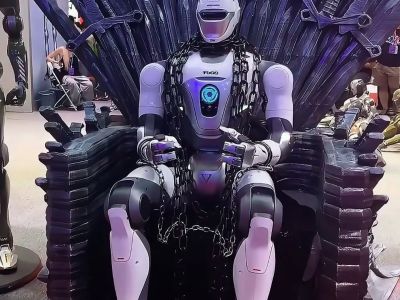
T800 vs Phantom MK1
Compare T800 by EngineAI vs Phantom MK1 by Foundation for humanoid mobility, dexterity, autonomy, payload, and industrial vs defense use cases.

Optimus vs Phantom MK1
Optimus or Phantom MK1? See which humanoid robot performs better for manufacturing, logistics, defense, dexterity, autonomy, and payload in enterprise deployments.

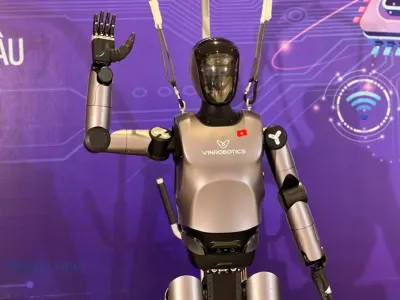
AgiBot A2 Ultra vs VR-H3
Which humanoid robot is better? AgiBot A2 Ultra vs VR-H3 compared for dexterity, AI autonomy, payload capacity, and industrial deployment readiness.
VR-H3 vs Phantom MK1
Head-to-head: VR-H3 vs Phantom MK1 compared on bipedal balance, AI learning, payload strength, and real-world deployment for enterprise robotics.
Disclaimer
All content, comparisons, and verdicts on this website are based on our research, testing, and opinion. While we strive for accuracy, we do not guarantee the completeness, reliability, or suitability of any information. Performance, specifications, and results may vary depending on usage and conditions. This website and its authors are not responsible for any decisions, actions, or outcomes based on the information provided. Always verify product details with the manufacturer before making purchase or operational decisions.