The VR-H3 by VinRobotics targets early commercial pilots and research institutions with a price range of USD 150,000–300,000. Positioned for factory assistance, hazardous environments, and human-robot collaboration, it features a reinforced 85 kg chassis, 178 cm height, and 31–40 controllable DoF for versatile motion. Key differentiators include highly autonomous Physical AI integration, 5.4 km/h speed, and sensors like RGB, stereo, depth cameras, IMU, gyroscope, and force sensors.
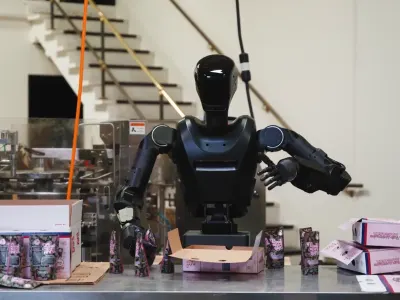
The Phantom MK1 by Foundation offers commercial lease and purchase tiers at USD 100,000–150,000, focusing on defense logistics, reconnaissance, and manufacturing. With a 175 cm height, 80 kg weight, and 19 DoF upper-body architecture, it emphasizes semi-autonomous teleoperation backed by an NVIDIA Jetson Orin compute unit exceeding 2000 TOPS. Differentiators include 20 kg carrying and deadlift capacities, 6.1 km/h speed, and specialized sensors like multi-camera vision and 3D infrared.
Detailed Analysis
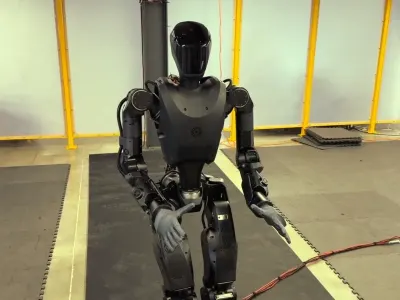
Bipedal Mobility & Balance
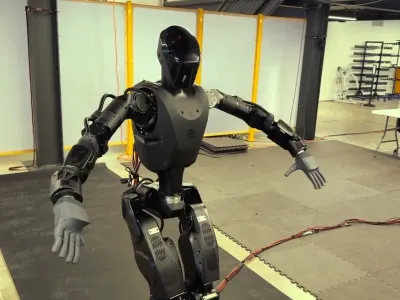
VR-H3 by VinRobotics achieves 5.4 km/h walking speed with IMU, gyroscope, and force sensors supporting stable navigation in industrial settings. Phantom MK1 by Foundation reaches 6.1 km/h, aided by IMU, joint torque encoders, and lower-body 3D infrared for enhanced balance in dynamic environments like urban warfare. Both robots prioritize lower-body stability, but Phantom MK1's faster speed suits rapid traversal while VR-H3 emphasizes fluid, human-like kinematics. Sensor differences influence terrain adaptability, with Phantom MK1's infrared aiding low-light operations.
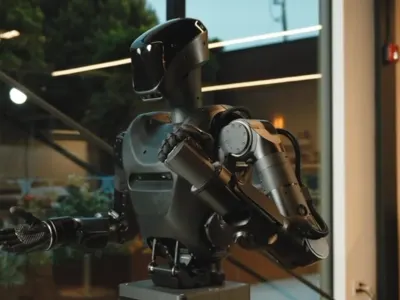
Dexterity & Manipulation (Focus on hands/arms)
VR-H3 features 31–40 DoF with 3 kg per arm carrying capacity, enabling precise manipulation via force sensors for collaborative tasks. Phantom MK1, with 19 upper-body focused DoF, supports 20 kg carrying through torque encoders for heavier object handling. VR-H3 suits fine dexterity in factories, while Phantom MK1 excels in robust gripping for logistics. DoF count favors VR-H3 for complex motions, but Phantom MK1's arm strength prioritizes payload over intricacy.
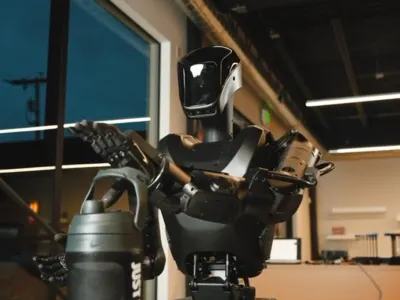
AI, Autonomy & Learning Capabilities
VR-H3 integrates highly autonomous Physical AI for independent task execution in structured environments. Phantom MK1 operates semi-autonomously with teleoperation, leveraging proprietary NPU cluster over 2000 TOPS and LLMs for decision-making. VR-H3 reduces human oversight in research, while Phantom MK1's compute enables real-time learning in unpredictable scenarios. Autonomy levels reflect use case priorities: full independence versus supervised versatility.
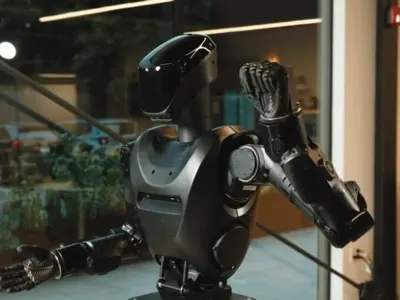
Payload & Lifting Capacity
VR-H3 deadlifts 15 kg statically with 3 kg per arm carrying limit, optimized for lightweight industrial assistance. Phantom MK1 handles 20 kg carrying and deadlift, suiting defense logistics demands. Phantom MK1 outperforms in raw strength for heavier loads, while VR-H3 focuses on sustained manipulation. Capacity differences align with industrial versus tactical applications.
Battery Runtime & Power Efficiency
Both robots offer 3-5 year battery warranties, with VR-H3 using swappable units for extended operation in pilots. Phantom MK1 provides enterprise-grade 5-year coverage, supporting prolonged deployments. No runtime hours specified, but designs emphasize longevity over daily cycles. Shared durability suits long-term enterprise use.
Real-World Use Cases (Industrial vs General Purpose)
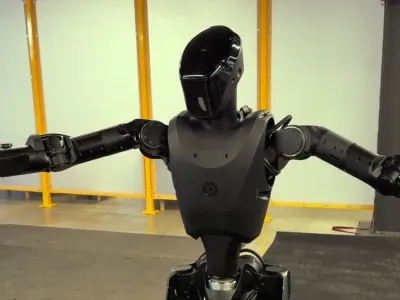
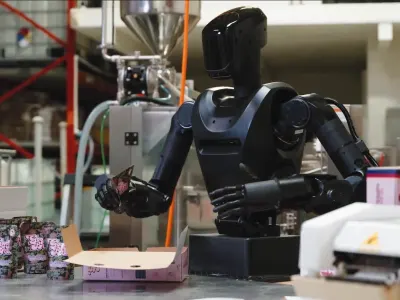
VR-H3 targets factory assistance, hazardous tasks, and collaboration via ROS2 and Python APIs. Phantom MK1 addresses defense logistics, reconnaissance, manufacturing, and CBRN operations with ROS2-compatible proprietary OS. VR-H3 fits controlled industrial settings; Phantom MK1 extends to high-risk, versatile scenarios. Software overlap enables cross-domain adaptation.
Sensor Suite & Vision Systems
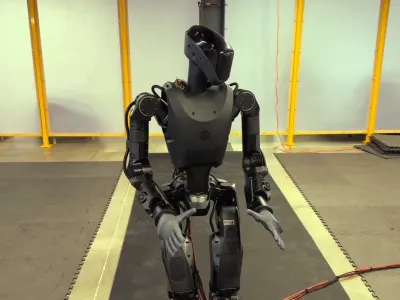
VR-H3 employs RGB, stereo, depth cameras, IMU, gyroscope, and force sensors for perception in factories. Phantom MK1 uses multi-camera optical suite, IMU, torque encoders, and 3D infrared for reconnaissance. Phantom MK1's infrared enhances low-body navigation; VR-H3's depth excels in manipulation. Suites match intended environments.
Which humanoid robot is better for industrial manufacturing?
VR-H3 by VinRobotics offers higher DoF (31–40), highly autonomous AI, and factory-optimized sensors for precise collaboration. Phantom MK1 by Foundation provides superior payload (20 kg) and speed but relies on teleoperation. VR-H3 suits autonomous industrial tasks; select it for manufacturing requiring dexterity over raw strength.
Which robot offers better autonomous learning capabilities?
VR-H3 by VinRobotics delivers highly autonomous Physical AI for independent operation without teleop. Phantom MK1 by Foundation uses semi-autonomous modes with powerful 2000+ TOPS compute and LLMs. VR-H3 excels in unsupervised learning; choose it for applications minimizing human input.
Analysis Score Summary
Total Score
5
VR-H3
VS
Based on Detailed Analysis
Total Score
13
Phantom MK1
📊 Win: 2 points | Trade-off: 1 point each
Scores are summed across every insight: a clear winner earns 2 points, while balanced trade-offs give each robot 1 point. The total reflects how often each robot outperforms the other (or shares the spotlight) throughout the detailed analysis sections.
Capabilities & Operational Tasks
Head-to-head comparison of what VR-H3 and Phantom MK1 can do, their applications, and capabilities.
What Can VR-H3 & Phantom MK1 Do?
11Core operational tasks, activities, and physical manipulation duties evaluated side-by-side.
| Task & Description | Model AVR-H310 supported | Model BPhantom MK15 supported |
|---|---|---|
| Assembly | High | — |
| Autonomous task execution | High | High |
| Carrying and transport | High | High |
| Collaborative work | High | High |
| Machine tending | High | — |
| Material handling | High | — |
| Move objects | High | — |
| Navigation | High | High |
| Obstacle traversal | — | High |
| Pick and place | High | — |
| Repetitive physical tasks | High | — |
Technical Specifications
Head-to-head performance data and metrics
| Specification | Model AVR-H3 | Model BPhantom MK1 |
|---|---|---|
Functional Utility & Use Cases4 Comparative Metrics | ||
Control Method | Teleoperation, autonomous, learned behaviors | Teleoperation, autonomous, learned behaviors, natural language commands |
Use Cases | Factory assistance, hazardous environment tasks, human-robot collaboration | Defense Logistics, Reconnaissance, Urban Warfare Support, Beverage/Glass Manufacturing, and CBRN zone operations |
Multi Robot Coord | Yes | Supported (Fleet Swarm Intelligence). |
Pet Friendly | Yes, with safety protocols | Yes, with safety protocols |
Manipulation & Load Capacity4 Comparative Metrics | ||
Carrying Capacity | 3 kg per arm | 20 kg |
Deadlift Capacity | 15 kg (Static) | 20 kg |
Payload Type | Tools, packages, precision instruments, people interaction | Tools, packages, precision instruments, people interaction |
Modular Attachments | Tool changers, end-effector options | Tool changers, end-effector options |
Kinematic Architecture & Dexterity4 Comparative Metrics | ||
Degrees of Freedom | 31–40 controllable Degrees of Freedom (DOF) | 19 (Upper Body Focused Architecture) |
Material | Aluminum, composite, plastic | Aluminum frame, composite, soft skin elements |
Mobility Type | Legged (bipedal walking) | Legged (bipedal walking) |
Hardware Interface | USB, CAN bus, Ethernet | USB, CAN bus, Ethernet |
Functional Utility & Use Cases
4 Comparative Metrics
Manipulation & Load Capacity
4 Comparative Metrics
Kinematic Architecture & Dexterity
4 Comparative Metrics
Frequently Asked Questions
What is the payload and deadlift capacity of VR-H3 by VinRobotics versus Phantom MK1 by Foundation?
VR-H3 by VinRobotics carries 3 kg per arm and deadlifts 15 kg. Phantom MK1 by Foundation carries 20 kg and deadlifts 20 kg.
What autonomy level does Phantom MK1 by Foundation provide compared to VR-H3 by VinRobotics?
Phantom MK1 by Foundation is semi-autonomous with teleoperation. VR-H3 by VinRobotics is highly autonomous with Physical AI integration.
How do walking speeds and stability compare between VR-H3 by VinRobotics and Phantom MK1 by Foundation?
VR-H3 by VinRobotics walks at 5.4 km/h (1.5 m/s). Phantom MK1 by Foundation reaches 6.1 km/h (1.7 m/s) with 3D infrared stability.
What dexterity and DoF capabilities define VR-H3 by VinRobotics and Phantom MK1 by Foundation?
VR-H3 by VinRobotics has 31–40 DoF for versatile manipulation. Phantom MK1 by Foundation focuses on 19 upper-body DoF for strength.
Which robot is suited for factory assistance and human-robot collaboration tasks?
VR-H3 by VinRobotics targets factory assistance and collaboration with force sensors and collaborative safety modes.
What use cases make Phantom MK1 by Foundation ready for defense and hazardous operations?
Phantom MK1 by Foundation supports defense logistics, reconnaissance, urban warfare, and CBRN zones with teleoperation and robust sensors.
Related Comparisons
Discover similar robot matchups to expand your knowledge and find the perfect solution
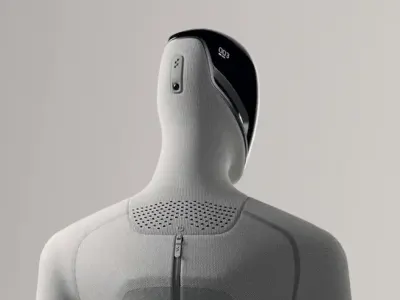
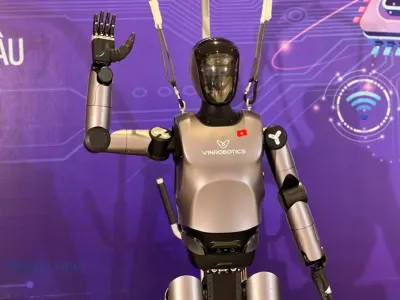
Figure 03 vs VR-H3
Which humanoid robot is better? Figure 03 vs VR-H3 compared for dexterity, AI capabilities, and price.

T800 vs Phantom MK1
Compare T800 by EngineAI vs Phantom MK1 by Foundation for humanoid mobility, dexterity, autonomy, payload, and industrial vs defense use cases.

Optimus vs Phantom MK1
Optimus or Phantom MK1? See which humanoid robot performs better for manufacturing, logistics, defense, dexterity, autonomy, and payload in enterprise deployments.

AgiBot A2 Ultra vs Phantom MK1
Which humanoid robot is better? AgiBot A2 Ultra vs Phantom MK1 compared for dexterity, AI capabilities, payload, and defense use cases.
Disclaimer
All content, comparisons, and verdicts on this website are based on our research, testing, and opinion. While we strive for accuracy, we do not guarantee the completeness, reliability, or suitability of any information. Performance, specifications, and results may vary depending on usage and conditions. This website and its authors are not responsible for any decisions, actions, or outcomes based on the information provided. Always verify product details with the manufacturer before making purchase or operational decisions.