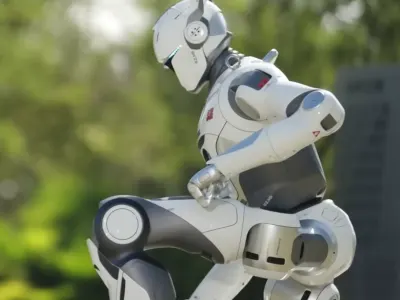
The T800 by EngineAI positions as a cost-effective, high-strength humanoid for industrial deployment, priced from USD 25,000 to 80,000. It differentiates through superior speed of 10 km/h, 41 degrees of freedom, and deadlift capacity of 100 kg, enabling dynamic tasks like robot boxing and heavy logistics. Its full sensor suite including LiDAR and force sensors supports autonomous navigation in unstructured environments.
The Phantom MK1 by Foundation targets defense and specialized operations, with pricing at USD 100,000–150,000 under commercial tiers. It stands out with advanced compute via NVIDIA Jetson Orin delivering 2000+ TOPS and a multi-camera vision suite optimized for reconnaissance. Semi-autonomous design with teleoperation suits high-stakes scenarios like urban warfare support and CBRN operations.
Detailed Analysis
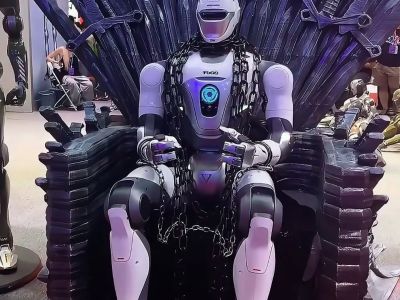
Bipedal Mobility & Balance
T800 achieves 10 km/h speed with 41 DoF enabling dynamic balance for running and martial arts maneuvers. Phantom MK1 reaches 6.1 km/h with 19 DoF upper-body focus and 3D infrared for lower-body stability. T800's higher DoF and speed suit fast industrial navigation, while Phantom MK1 prioritizes precise control in tactical settings. Both maintain balance via IMU and gyroscopes, but T800 demonstrates superior agility in demos.
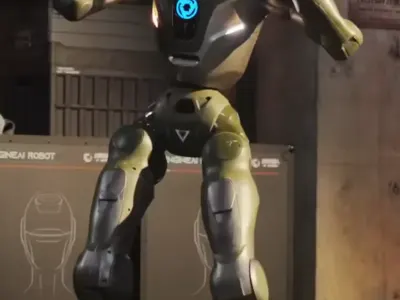
Dexterity & Manipulation Capabilities
T800's 41 DoF include advanced hands for 100 kg deadlift and 20 kg carry, supporting precise grasping in heavy-duty tasks. Phantom MK1's 19 DoF emphasize upper body with joint torque encoders for manipulation, limited to 20 kg deadlift. T800 excels in forceful manipulation like lifting, while Phantom MK1 focuses on controlled handling in defense logistics. Both use force sensors for feedback.
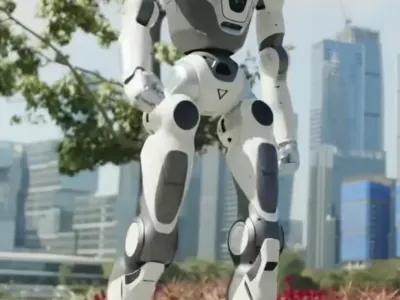
AI, Autonomy & Learning Capabilities
T800 offers full autonomy with perception and decision systems for industrial scenarios, using proprietary neural networks. Phantom MK1 is semi-autonomous with teleoperation, powered by 2000+ TOPS NVIDIA Jetson Orin and LLMs. T800 handles independent task execution, whereas Phantom MK1 relies on human oversight for complex decisions. Compute differences highlight T800's edge in standalone operation.
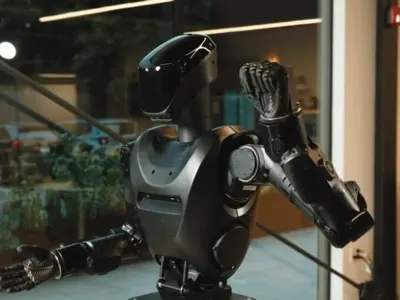
Payload & Lifting Capacity
Both robots share 20 kg carrying capacity, but T800 deadlifts 100 kg versus Phantom MK1's 20 kg. T800's reinforced frame supports heavy industrial loads like logistics automation. Phantom MK1 matches carry weight but limits deadlift for defense tasks. This gap positions T800 for strength-intensive applications.
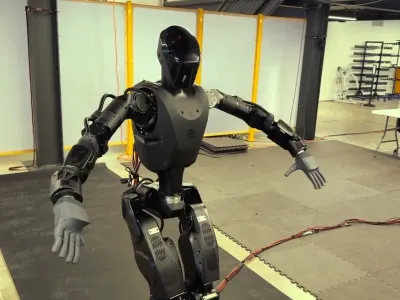
Battery Runtime & Power Efficiency
T800 provides 4-year battery warranty with solid-state tech for extended industrial shifts. Phantom MK1 offers 5-year enterprise warranty, emphasizing reliability in prolonged operations. Both support multi-hour runtime, but warranties reflect differing deployment priorities. T800 focuses on high-intensity cycles, Phantom MK1 on long-term endurance.
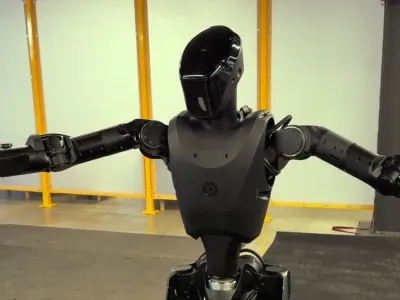
Real-World Use Cases Industrial vs General Purpose
T800 targets heavy-duty industry, retail, and logistics with autonomous execution. Phantom MK1 serves defense logistics, reconnaissance, and manufacturing like beverage handling. T800 suits dynamic factories, Phantom MK1 specialized hazardous zones. Overlap exists in automation, but domains diverge sharply.
Sensor Suite & Vision Systems?
T800 integrates RGB/stereo cameras, LiDAR, ultrasonic, IMU, and force sensors for 360° awareness. Phantom MK1 uses multi-camera optical suite, IMU, torque encoders, and 3D infrared. T800's broader array aids industrial perception, Phantom MK1's vision optimizes tactical navigation.
Which robot is better for industrial manufacturing?
T800 outperforms Phantom MK1 in industrial manufacturing with 100 kg deadlift, 10 km/h speed, and full autonomy for heavy tasks. Phantom MK1's 20 kg limit and teleoperation hinder standalone factory use. T800 is the better choice for manufacturing due to strength and independence.
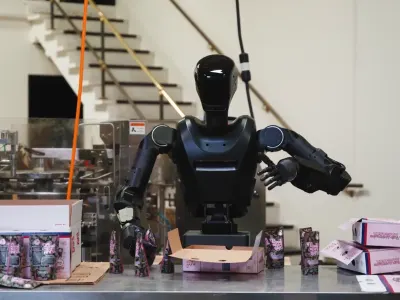
Which robot offers better autonomous capabilities?
T800 provides higher autonomy for navigation and tasks without teleoperation, unlike semi-autonomous Phantom MK1. T800's perception systems enable independent industrial operation. Phantom MK1 requires human input for defense scenarios. T800 is preferable for fully autonomous needs.
Analysis Score Summary
Total Score
14
T800
VS
Based on Detailed Analysis
Total Score
4
Phantom MK1
📊 Win: 2 points | Trade-off: 1 point each
Scores are summed across every insight: a clear winner earns 2 points, while balanced trade-offs give each robot 1 point. The total reflects how often each robot outperforms the other (or shares the spotlight) throughout the detailed analysis sections.
Capabilities & Operational Tasks
Head-to-head comparison of what T800 and Phantom MK1 can do, their applications, and capabilities.
What Can T800 & Phantom MK1 Do?
6Core operational tasks, activities, and physical manipulation duties evaluated side-by-side.
| Task & Description | Model AT8006 supported | Model BPhantom MK15 supported |
|---|---|---|
| Autonomous task execution | High | High |
| Carrying and transport | High | High |
| Collaborative work | High | High |
| Navigation | High | High |
| Obstacle traversal | High | High |
| Repetitive physical tasks | High | — |
Technical Specifications
Head-to-head performance data and metrics
| Specification | Model AT800 | Model BPhantom MK1 |
|---|---|---|
Functional Utility & Use Cases4 Comparative Metrics | ||
Control Method | Autonomous, learned behaviors, teleoperation | Teleoperation, autonomous, learned behaviors, natural language commands |
Use Cases | Heavy-duty industrial tasks, robot boxing, retail assistance, human-robot interaction, logistics automation | Defense Logistics, Reconnaissance, Urban Warfare Support, Beverage/Glass Manufacturing, and CBRN zone operations |
Multi Robot Coord | Yes (swarm capable) | Supported (Fleet Swarm Intelligence). |
Pet Friendly | Yes, with safety protocols | Yes, with safety protocols |
Manipulation & Load Capacity4 Comparative Metrics | ||
Carrying Capacity | 20 Kg | 20 kg |
Deadlift Capacity | 100 Kg | 20 kg |
Payload Type | Tools, packages, precision instruments, people interaction | Tools, packages, precision instruments, people interaction |
Modular Attachments | Tool changers, end-effector options | Tool changers, end-effector options |
Kinematic Architecture & Dexterity4 Comparative Metrics | ||
Degrees of Freedom | 41 | 19 (Upper Body Focused Architecture) |
Material | Aluminum alloy, composite, soft materials | Aluminum frame, composite, soft skin elements |
Mobility Type | Legged (bipedal walking) | Legged (bipedal walking) |
Hardware Interface | USB, GPIO, CAN bus, serial | USB, CAN bus, Ethernet |
Functional Utility & Use Cases
4 Comparative Metrics
Manipulation & Load Capacity
4 Comparative Metrics
Kinematic Architecture & Dexterity
4 Comparative Metrics
Frequently Asked Questions
What is the deadlift capacity of T800 by EngineAI versus Phantom MK1 by Foundation?
T800 by EngineAI deadlifts 100 kg, while Phantom MK1 by Foundation is limited to 20 kg.
Does Phantom MK1 by Foundation support full autonomy or require teleoperation?
Phantom MK1 by Foundation is semi-autonomous with teleoperation, unlike fully autonomous T800 by EngineAI.
How do walking speeds of T800 by EngineAI and Phantom MK1 by Foundation compare?
T800 by EngineAI reaches 10 km/h, faster than Phantom MK1 by Foundation's 6.1 km/h.
What dexterity features define hands on T800 by EngineAI and Phantom MK1 by Foundation?
T800 by EngineAI uses 41 DoF for heavy manipulation; Phantom MK1 by Foundation's 19 DoF focus upper body torque control.
What industrial use cases suit T800 by EngineAI humanoid robot?
T800 by EngineAI fits heavy-duty tasks, logistics automation, and robot boxing in industrial settings.
Is Phantom MK1 by Foundation ready for defense reconnaissance deployments?
Phantom MK1 by Foundation supports reconnaissance, urban warfare, and CBRN operations with teleoperation.
Related Comparisons
Discover similar robot matchups to expand your knowledge and find the perfect solution

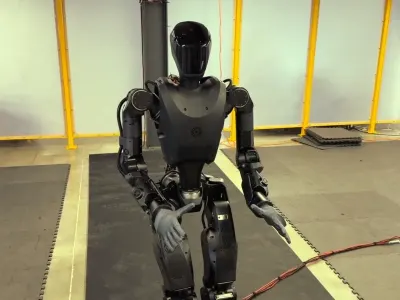
Optimus vs Phantom MK1
Optimus or Phantom MK1? See which humanoid robot performs better for manufacturing, logistics, defense, dexterity, autonomy, and payload in enterprise deployments.
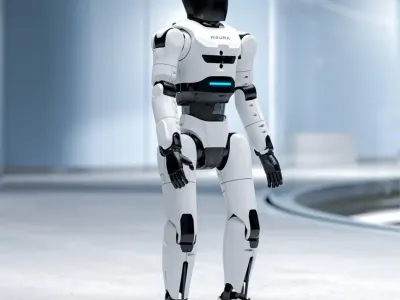
T800 vs 4NE-1 Mini
T800 or 4NE-1 Mini? See which humanoid robot performs better for manufacturing, logistics, and research with comparisons on dexterity, autonomy, and payload.
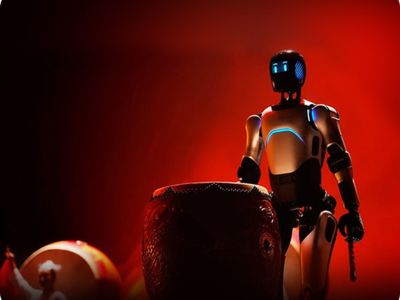
AgiBot A2 Ultra vs Phantom MK1
Which humanoid robot is better? AgiBot A2 Ultra vs Phantom MK1 compared for dexterity, AI capabilities, payload, and defense use cases.
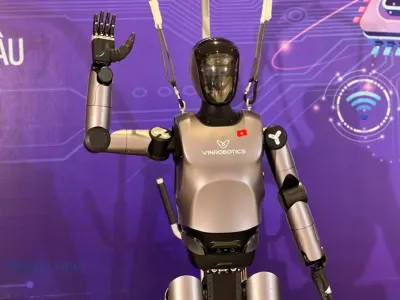
VR-H3 vs Phantom MK1
Head-to-head: VR-H3 vs Phantom MK1 compared on bipedal balance, AI learning, payload strength, and real-world deployment for enterprise robotics.
Disclaimer
All content, comparisons, and verdicts on this website are based on our research, testing, and opinion. While we strive for accuracy, we do not guarantee the completeness, reliability, or suitability of any information. Performance, specifications, and results may vary depending on usage and conditions. This website and its authors are not responsible for any decisions, actions, or outcomes based on the information provided. Always verify product details with the manufacturer before making purchase or operational decisions.