Robots Capable of Obstacle traversal
Browse every robot and robotic system verified for obstacle traversal operations across industrial, commercial, and research deployments.
AgiBot
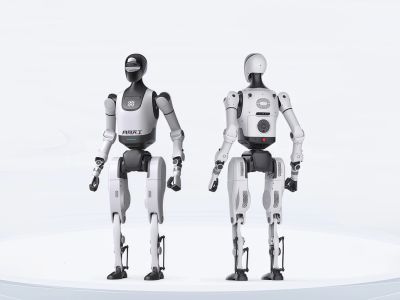
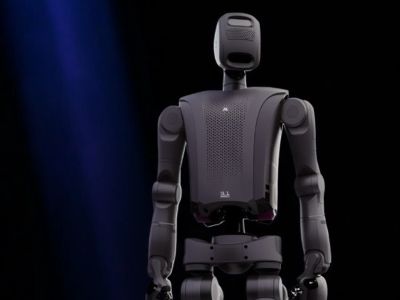
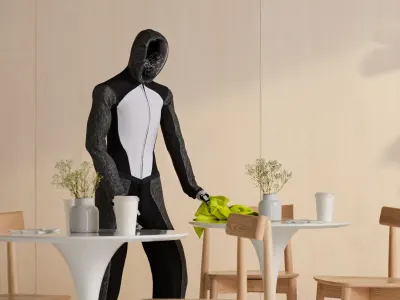
AgiBot X2
The AgiBot X2 is a versatile general-purpose humanoid robot designed to combine advanced motion intelligence, interaction intelligence, and task intelligence. It features a flexible material exterior and is equipped with proprietary components such as Xyber-Edge for precise motion control, Xyber-DCU for decision-making, and Xyber-BMS for intelligent power management. The robot demonstrates remarkable agility, capable of walking, running, turning, and performing complex movements like dancing, riding scooters, balance boards, and bicycles. It also excels in multimodal interaction, responding to human emotions through facial and voice recognition with lifelike expressions and body language. The X2 is intended for real-world applications requiring dynamic mobility and interactive capabilities.

AgiBot
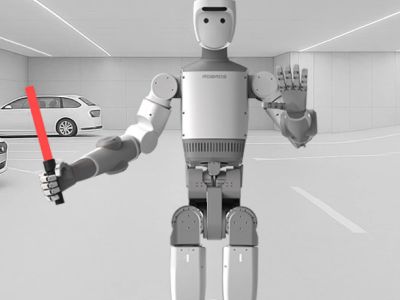
AgiBot X2-N
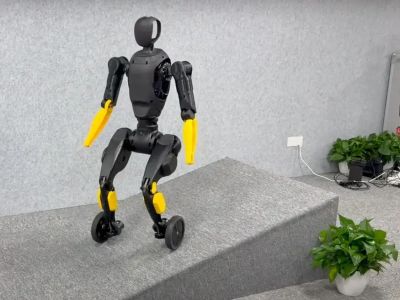
The AgiBot X2-N is a cutting-edge humanoid robot designed for versatile mobility in complex environments. It features a unique hybrid locomotion system, seamlessly transitioning between bipedal walking and wheeled movement using integrated foot wheels. This allows the robot to efficiently traverse flat surfaces, climb stairs, handle slopes, and navigate tight spaces. The X2-N operates without relying on cameras or external sensors, instead using advanced proprioceptive feedback from joint torque, pressure sensors, and internal gyros for real-time terrain adaptation. Its design emphasizes fluid motion, efficiency, and adaptability, making it suitable for logistics, search-and-rescue, and industrial automation. The robot can carry cargo, adjust its gait autonomously, and perform in dynamic, unpredictable settings.

ROBROS
IGRIS-C
The IGRIS-C is a compact humanoid robot from ROBROS, standing at 154 cm tall and weighing 56 kg, designed for human-robot collaboration in service environments like cafes and retail spaces. Featuring 31 degrees of freedom in the body and 11 DOF in tendon-driven 5-finger hands, it excels in dexterous manipulation and bipedal locomotion. Powered by reinforcement learning for agile walking, running, jumping, backflips, and cartwheels, and imitation learning for precise object handling, it adapts to unstructured indoor settings. Equipped with stereo cameras, RealSense depth sensors, IMU for balance, and NVIDIA Jetson Orin NX plus Intel Core i7 computing, it supports teleoperation, autonomous tasks, and data collection for AI training. With a 17000mAh 48V battery, torque-based control at 150Nm max torque, and 7 DOF arms plus 3 DOF waist and 2 DOF neck, IGRIS-C offers robust performance in narrow, complex spaces, emphasizing safe, lifelike interactions and developer-friendly research capabilities.

1X Technologies
NEO Beta
NEO Beta is a home-focused humanoid standing 1.65 m tall and weighing 30 kg, engineered to blend seamlessly into domestic life. It walks at up to 4 km/h and sprints at 12 km/h, handling payloads of up to 20 kg. Powered by tendon-driven actuators and advanced AI, it performs chores, fetches items, and interacts via voice and touchscreen. Its modular design, soft exterior, and cloud-connected learning enable continuous feature updates and personalized behavior adaptations.

Honda
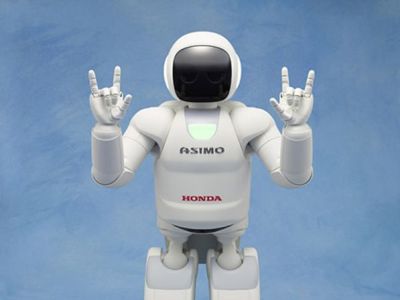
ASIMO 2.0
ASIMO 2.0 is Honda’s advanced humanoid robot, designed to showcase the future of human-robot interaction. With a sleek design and impressive mobility, it can walk, run, climb stairs, and even perform tasks like opening doors and carrying objects. Its enhanced sensors and AI let it recognize people, respond to voice commands, and interact autonomously in real-time environments. ASIMO 2.0 was intended as a research platform and public ambassador, embodying over a decade of robotics innovation. It demonstrates Honda’s commitment to robotics as a tool for improving lives, especially in public service, research, and caregiving scenarios.

Agility Robotics
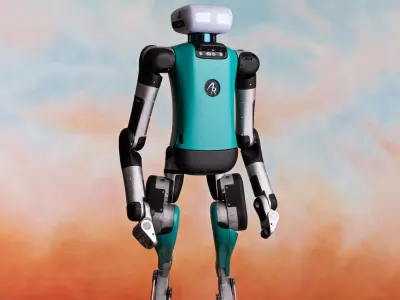
Digit
Digit, developed by Agility Robotics, is a groundbreaking humanoid robot designed to work alongside humans in environments built for people. Standing 5'9" tall and weighing 143 pounds, Digit walks upright on two legs with bird-like agility, allowing it to navigate stairs, tight corridors, and uneven ground. Its lightweight arms with four degrees of freedom enable it to lift and move packages up to 35 pounds, making it ideal for repetitive logistics tasks like tote retrieval and warehouse stacking. Digit is powered by onboard computers, uses LiDAR and depth cameras for navigation, and connects to the Agility Arc cloud platform for autonomous task coordination and fleet management. With a modular design, it can be customized for a wide range of industrial applications. Digit isn’t just a robot—it’s a step toward blending robotics into everyday human workflows, tackling labor shortages while enhancing efficiency and safety in real-world workplaces.

EIR Technology
SkyWalker 2
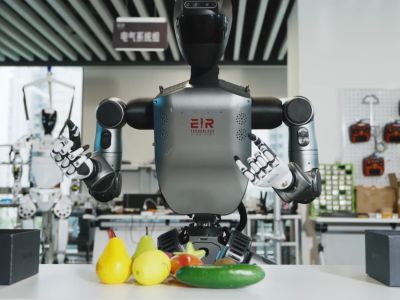
SkyWalker 2 is a full-size humanoid robot from EIR Technology designed for agile bipedal locomotion and real-world task execution in industrial and service settings. Standing at human height and built with lightweight aluminum and composite structures, it combines high joint count, compliant actuation, and a bionic waist for stable, human-like motion. Its 5‑finger anthropomorphic hands support dexterous manipulation of tools, components, and packages in environments such as manufacturing, inspection, elder care, and intelligent services. With on-board perception using RGB‑D vision and multi-sensor fusion, SkyWalker 2 can navigate cluttered spaces, interact safely with humans, and perform repetitive workflows. Connectivity to edge and cloud compute, including large language model integration, enables natural-language tasking, teleoperation, and continuous learning, making SkyWalker 2 suitable both as a production robot and as a research and development platform.

PAL Robotics
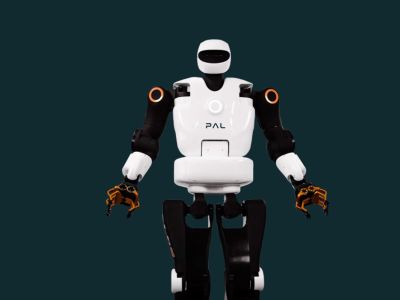
Talos
TALOS is a high-performance bipedal humanoid robot engineered for advanced research in Industry 4.0, AI, machine learning, and locomotion. Standing at 175 cm with human-like proportions, it features 32 degrees of freedom, including 6-DoF legs for dynamic walking on uneven terrain and stairs, 7-DoF arms capable of lifting 6 kg payloads per arm at full extension, and torque-controlled grippers for dexterous manipulation. Equipped with full torque sensor feedback in all joints, 4x 6-axis force/torque sensors at ankles and wrists, RGB-D cameras, high-rate IMU, and dual Intel Core i7 processors, TALOS excels in multi-contact motions, power tool operation like drilling and riveting, human-robot interaction, and perception tasks. ROS/ROS2 integration enables real-time control at 2 kHz, supporting torque-based walking, navigation, and bi-manual dexterity in industrial and research environments.

Booster Robotics
T1 Humanoid
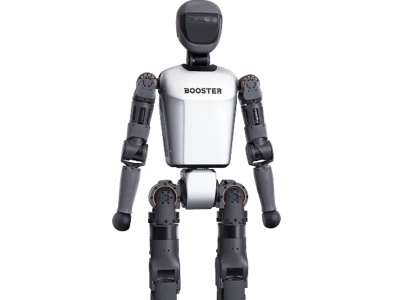
The T1 Humanoid robot by Booster Robotics is a versatile, open-source platform designed for developers and researchers. It features 23 degrees of freedom, allowing for dynamic movements and precise posture control. Equipped with advanced AI capabilities, including an NVIDIA Jetson AGX Orin GPU, it supports omnidirectional walking and complex manipulation tasks. The robot is suitable for various applications, including robotics research, education, and industrial automation.

PAL Robotics
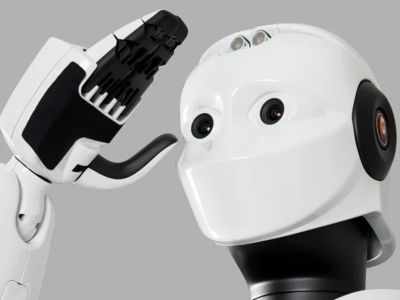
REEM-C
The REEM-C is a full-size bipedal humanoid robot designed for advanced research in robotics, featuring 68 degrees of freedom for human-like mobility and manipulation. Standing at 165 cm tall, it excels in dynamic walking, stair climbing, and autonomous navigation using ROS-based software. Equipped with dual Intel Core i7 processors, stereo cameras, force/torque sensors in ankles, IMUs, and microphone arrays, it supports visual recognition, speech interaction, and whole-body control algorithms. Each arm offers 7 DOF with 1 kg hand payload (stretched) or up to 10 kg total lift capacity, complemented by 19-DOF hands for dexterous grasping. Powered by a 48V 1225 Wh lithium-ion battery, it operates 3 hours walking or 6 hours standby. Customizable and modular, REEM-C enables studies in human-robot interaction, AI, balancing via ZMP control, and complex tasks like dancing or object handling in indoor environments.

Boston Dynamics
Atlas (Electric Atlas, 2025)
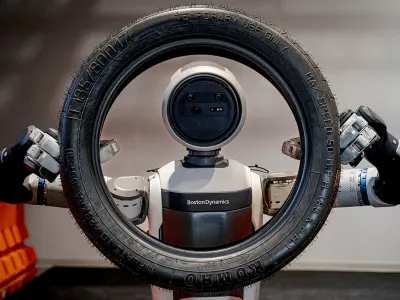
Atlas (Electric Atlas, 2025) is Boston Dynamics' fifth-generation humanoid robot, fully electric and designed for real-world industrial and research applications. It features advanced all-electric actuators that provide superior strength and a broader range of motion than previous models, including 360-degree rotation at key joints. Atlas integrates sophisticated sensor arrays such as LiDAR, stereo and RGB cameras, and depth sensors, enabling real-time perception and environmental awareness. Its software leverages AI, machine learning, and large behavior models for autonomous whole-body manipulation and locomotion, allowing it to perform complex tasks like packing, sorting, and adapting dynamically to unexpected physical challenges. The robot is built with lightweight titanium and aluminum 3D printed parts for optimal strength-to-weight ratio and supports integration with Boston Dynamics’ fleet management software, Orbit.

Robot Era
Star1
Star1 by Robot Era is a versatile humanoid robot designed to blend advanced AI with practical utility. Engineered for both commercial and domestic environments, Star1 excels in logistics, customer service, and interactive companionship. Its human-like dexterity and perception allow seamless collaboration in warehouses, retail, and hospitality. With adaptive learning capabilities, it continually improves its efficiency. Its sleek design and intuitive controls make Star1 a standout in China’s growing robotics market, delivering both reliability and cutting-edge technology to a wide range of industries.

ROBROS
IGRIS-A
The IGRIS-A is a compact service-oriented humanoid robot from ROBROS, standing at approximately 154 cm tall with 29 articulated joints in the body and an advanced 11-joint tendon-driven hand for dexterous manipulation. It excels in human-robot collaboration for customer-facing environments like cafes, leveraging reinforcement learning for stable bipedal walking and imitation learning for precise object handling that mimics human motions. Powered by NVIDIA Jetson Orin AI hardware, it features a dual battery system, 30:1 gear ratio for smooth torque control, and fast motion planning up to three times quicker than prior models. Adaptive hands grip varied objects dynamically, while stereo cameras, RealSense depth sensors, and IMU enable navigation and balance in unstructured spaces. Designed for lifelike interactions, it supports remote teleoperation, data collection for AI training, and tasks like serving, product handling, and hospitality assistance, prioritizing safe, efficient partnership with humans.

Kepler Robotics
K2 Bumblebee
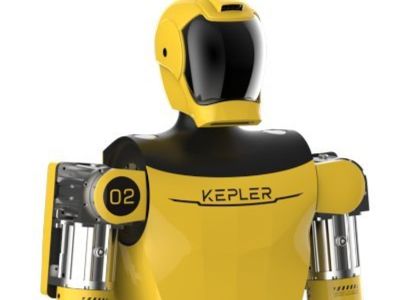
The K2 Bumblebee is a next-generation bipedal humanoid robot from Kepler Robotics, standing 175 cm tall and weighing 75 kg, engineered for industrial applications like manufacturing, logistics, and retail. Featuring 52 degrees of freedom for human-like articulation, it boasts over 80 integrated sensors including tactile sensors in every finger, infrared binocular 3D cameras, and SLAM capabilities for real-time object recognition, gesture detection, and scene understanding. Powered by Kepler's proprietary Nebula AI platform with 100 TOPS onboard compute, it executes autonomous task sequences with millimeter-level precision using planetary roller screw actuators. Capable of 15 kg per arm payloads (30 kg dual-arm), up to 8 hours runtime on a 1-hour charge, and near-zero static power consumption, the K2 demonstrates straight-knee walking gaits for agile navigation on uneven terrain, stairs, and factory floors. Its hybrid architecture enables reinforcement learning for adaptive behaviors, making it ideal for sorti

Booster Robotics
K1 Humanoid
The K1 Humanoid robot is designed for education, research, and exhibitions. It features a compact body with 22 dynamically controlled joints, enabling precise motion control. The robot is equipped with a 3D depth camera, 9-axis IMU, microphone array, and touch sensors. It supports AI-based vision and voice command processing, obstacle avoidance, and real-time autonomous navigation. The K1 is programmable via ROS and Python.

Unitree Robotics
Unitree H1
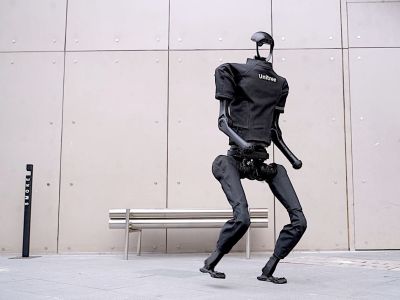
The Unitree H1 is a full-size universal humanoid robot standing about 180 cm tall and weighing approximately 47 kg. It features advanced powertrain technology enabling high agility, speed, and load capacity, with a peak torque density of 189 N.m/kg. The robot can achieve speeds exceeding 3.3 m/s, with potential mobility over 5 m/s. It is equipped with 360° depth sensing through integrated 3D LiDAR and depth cameras, allowing precise environmental perception and autonomous navigation in complex terrains. Designed for industrial, research, and interactive applications, the H1 combines robust construction with flexible bipedal locomotion and human-like articulated arms. Its battery is quickly replaceable, supporting extended operational endurance.

Unitree Robotics
Unitree R1
The Unitree R1 is a developer‑focused humanoid robot standing 121 cm tall and weighing 25 kg. It offers 26 degrees of freedom enabling dynamic motions such as running, cartwheels, handstands, and spin‑kicks. Outfitted with binocular vision, a 4‑mic array, stereo speakers, and an 8‑core CPU/GPU, it supports voice and image recognition via onboard AI. A removable quick‑swap battery delivers about one hour of operation, and OTA firmware updates plus an open SDK make it ideal for research, education, entertainment, and prototyping. Offered at an unprecedented sub‑$6K entry price, it aims to democratize humanoid robotics.

Unitree Robotics
Unitree H2
The Unitree H2 is a full-sized humanoid robot designed for versatility and dexterity. It stands at 180 cm tall and weighs 70 kg. The robot features a 31-DOF architecture, including a 3-DOF waist and 2-DOF neck, allowing for fluid movements like dance and kung-fu. It can carry a payload of 7 kg normally and up to 21 kg briefly. The H2 is equipped with advanced robotic hands for precise object manipulation.

Deep Robotics
DR02
The DR02 is a full-size humanoid robot designed for industrial and outdoor applications, featuring an IP66 rating for dust and water resistance. Standing 175 cm tall and weighing 65 kg, it operates in extreme environments from -20°C to 55°C, enabling all-weather, all-scenario continuous operation. It has a modular quick-detach design for arms and legs, facilitating rapid maintenance and reducing downtime. Equipped with advanced sensors including LiDAR, depth and wide-angle cameras, and powered by a high-performance NVIDIA Jetson AGX Orin platform delivering 275 TOPS, the DR02 supports real-time perception, navigation, and intelligent decision-making. It can walk at 1.5 m/s, climb slopes up to 20 degrees, and carry payloads up to 20 kg, making it suitable for logistics, inspection, security, and industrial tasks in harsh environments.

AiMOGA Robotics
Mornine
Mornine is a highly advanced humanoid robot developed by AiMOGA Robotics, designed for real-world autonomous operation in dynamic environments such as automotive dealerships and public service venues. It features bipedal locomotion, high-precision autonomous navigation with ±5 cm accuracy, and dynamic obstacle avoidance. Mornine integrates AI-powered 3D vision, reinforcement learning, and multi-language interaction (11 languages) to perform complex tasks like opening car doors autonomously, greeting customers, and delivering presentations. Its design emphasizes human-robot collaboration, safety, and adaptability, making it suitable for retail, logistics, healthcare, and entertainment applications. The robot is fully CE certified for hardware and software safety and cybersecurity, setting a global benchmark in humanoid robotics.

Deep Robotics
DR01
The DR01 is an advanced humanoid robot standing 1.7 meters tall and weighing 80 kg, designed for high mobility and adaptive intelligence. It features AI-driven autonomous learning capabilities that allow it to acquire new skills and adapt to changing environments. The robot can walk at speeds over 1.6 m/s, navigate obstacles such as 18 cm steps and 25° slopes, and maintain balance on uneven or slippery terrain. Equipped with proprietary lightweight J60 and high-torque J100 joints, it delivers flexible and strong movements. Its fusion perception system integrates internal and environmental sensors for real-time adaptive control, making it suitable for industrial automation, research, and complex task execution in dynamic settings.

Guangzhou Auto Group
GoMate
GoMate is a third-generation humanoid robot developed by Guangzhou Auto Group, featuring a unique variable wheel-foot design that allows it to switch between four-wheel and two-wheel mobility modes. Standing 1.4 meters tall in four-wheel mode and 1.75 meters in two-wheel mode, it offers enhanced stability, adaptability, and energy efficiency with over 80% energy savings compared to similar robots. Equipped with 38 degrees of freedom, dexterous hands, and advanced AI-driven autonomous navigation using pure-vision algorithms and FIGS-SLAM, GoMate achieves centimeter-level positioning accuracy and obstacle avoidance up to 100 meters. Its all-solid-state battery supports up to six hours of continuous operation, making it suitable for complex indoor and outdoor tasks in industries like security, healthcare, logistics, and education.

LimX Dynamics
Oli
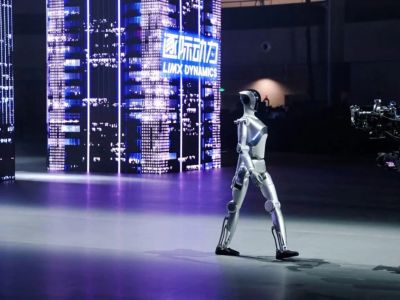
LimX Oli is a full-size humanoid robot built for embodied AI research and real-world applications. Standing about 1.65 m tall and weighing 55 kg, it features 31 degrees of freedom, allowing smooth, human-like motion for walking, bending, and handling objects. Oli’s modular design supports interchangeable grippers, LiDAR, depth cameras, and IMU sensors, making it adaptable for various tasks. With an open SDK and cloud-based software updates, developers can customize control algorithms and integrate AI models for advanced operation. Designed for both research and industry, Oli can perform object manipulation, payload carrying, and tool operations, making it suitable for logistics, manufacturing, and service robotics while advancing human-robot collaboration and embodied intelligence studies.

Leju Robotics
KUAVO-MY
KUAVO-MY is a full-size humanoid robot developed by Leju Robotics for research, industrial experimentation, and advanced service applications. The bipedal platform focuses on dynamic locomotion, whole-body motion control, and intelligent task execution. KUAVO-MY integrates high-precision joint actuators, real-time balance control, and multimodal perception systems to enable stable walking, manipulation, and human-environment interaction. Designed primarily for laboratories, enterprises, and innovation centers, the robot supports autonomous behaviors, teleoperation, and learning-based control through modern robotics software frameworks, making it suitable for robotics research, industrial testing, and intelligent service deployment.

UBTECH Robotics
Walker X
Walker X by UBTECH Robotics is a next-generation bipedal humanoid engineered for agile, autonomous service and research applications. With 41 degrees of freedom and advanced self-balancing locomotion, Walker X walks steadily across varied indoor surfaces while perceiving its environment through multi-modal sensors. It supports autonomous navigation with U-SLAM and visual intelligence, enabling precise human-robot interaction, object manipulation, and dynamic decision making. Powered by a lithium iron phosphate rechargeable battery with removable packs, Walker X delivers hands-on research value and real-world capability. Its combination of robust hardware and intelligent control makes it a leading humanoid platform for enterprise and innovation.

Pudu Robotics
D9
The PUDU D9 is a full-sized bipedal humanoid robot designed to replicate adult human proportions with a height of 170 cm and weight of 65 kg. It features 42 degrees of freedom enabling fluid, human-like motion, including dual 7-DoF arms equipped with the PUDU DH11 dexterous hand offering 11 degrees of freedom for precise manipulation. The robot can walk at speeds up to 2 m/s, navigate stairs and slopes, and perform complex tasks requiring both strength and delicacy with a payload capacity exceeding 20 kg. Advanced sensors including RGB, RGBD cameras, tactile sensors, and IMU support real-time 3D semantic mapping and autonomous navigation. Powered by AI and reinforcement learning, the D9 adapts quickly to diverse commercial and research applications, making it suitable for service, industrial automation, and exploration in unstructured environments.

Orano And Capgemini
Hoxo Robot
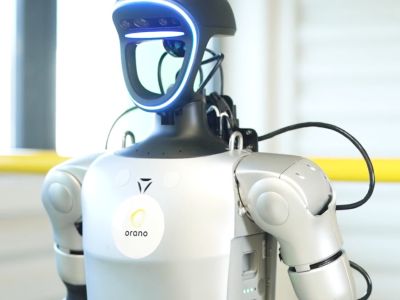
Hoxo is an intelligent humanoid robot designed specifically for the nuclear industry, combining advanced AI, real-time perception, and autonomous navigation to operate safely alongside human teams in hazardous environments. It replicates human movements and performs technical gestures with precision, enhancing safety by reducing human exposure to risky zones. Hoxo integrates robotics, computer vision, digital twins, and AI to deliver scalable robotic assistance, redefining human-machine collaboration in sensitive industrial settings. Its deployment at Orano’s Melox site marks a pioneering step in using humanoid robots as “Non-Human Workers” in high-stakes sectors.

Unitree Robotics
Unitree G1
The Unitree G1 is a game-changer in affordable humanoid robotics. With 23 degrees of freedom and cutting-edge AI, it mimics human motion with surprising fluidity. This compact robot is equipped for dynamic environments—ideal for research labs, educational institutions, and light industrial automation. Whether it’s performing tasks, interacting with people, or exploring tight spaces, the G1 delivers high performance in a sleek, legged package. It's a prime tool for those developing next-gen human-robot collaboration solutions.

Matrix Robotics
Matrix 3
MATRIX-3 is a next-generation humanoid robot that integrates biomimetic design with advanced AI for autonomous task execution in commercial, industrial, and domestic environments. The robot features a 3D woven bionic skin with distributed tactile sensors capable of detecting micro-forces as low as 0.1 newtons, enabling safe human-robot interaction and delicate object manipulation. Its 27-degree-of-freedom Lingxi Hand uses cable-driven actuation to perform complex tasks including tool operation and fabric handling. Full-body motion is powered by algorithms trained on human motion capture data, allowing natural gait patterns across uneven terrain. The cognitive core enables zero-shot generalization, allowing the robot to adapt to new tasks without extensive retraining.

Lumos Robotics
LUS2
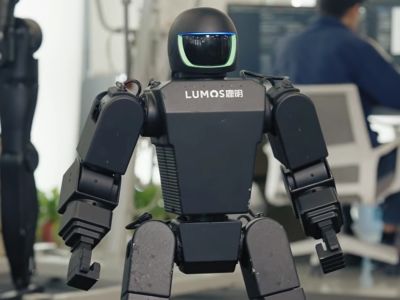
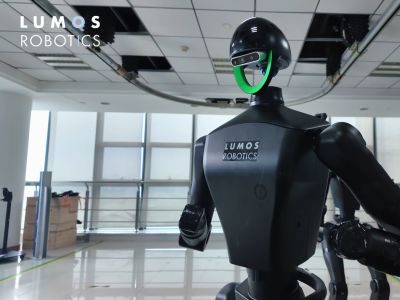
LUS2 is a full-size, highly biomimetic humanoid robot developed by Shenzhen-based Lumos Robotics, representing a major leap in motion control and artificial intelligence integration. It demonstrates real-time reflexes, extreme agility, and human-like movement through advanced proprioceptive sensing, neural motion planning, and large language model integration. LUS2 can transition from ground to upright in under one second, showcasing rapid adaptability and balance. Its modular architecture, robust actuators, and rich sensor suite enable precise manipulation and safe interaction, supporting deployment in complex environments including industrial facilities, healthcare settings, and search-and-rescue operations worldwide with scalable autonomy and reliability.

Zerith
Zerith Z1
The Zerith Z1 is a bipedal humanoid robot engineered for commercial service applications with 27 degrees of freedom and peak joint torque of 150Nm. Designed for stable navigation over irregular surfaces and complex terrain, the Z1 maintains balance under significant interference through proprietary AI-driven design and in-house developed EtherCAT communication modules. The robot demonstrates complex human-like arm movements and is envisioned for applications including robotic boxing and commercial service tasks in hospitality, education, and entertainment sectors.

NEURA Robotics
4NE‑1
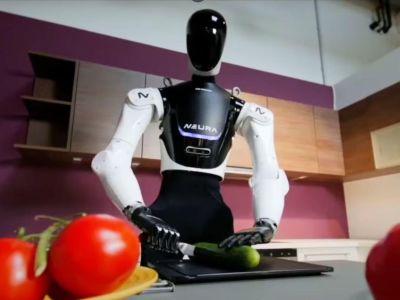
4NE‑1 is a next-generation humanoid robot built by Neura Robotics to seamlessly collaborate with humans in industrial and assistive roles. It features full-body sensor coverage, human-like bipedal mobility, AI-based perception, and modular limbs for flexible tasks. The robot uses Neura’s fusion of visual, auditory, and tactile inputs, allowing it to learn, adapt, and safely operate in dynamic environments. It’s engineered for long-term autonomous use and is intended to support workflows in manufacturing, logistics, caregiving, and research.

Zhejiang Humanoid Robot Innovation Center
NAVAI Navigator 2
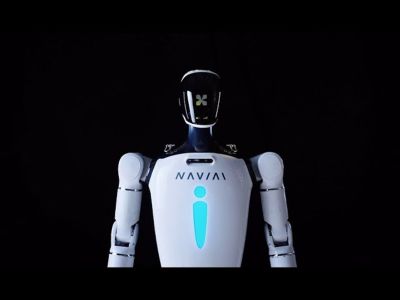
The NAVAI Navigator 2 is a next-generation humanoid robot developed by the Zhejiang Humanoid Robot Innovation Center for interactive and service-oriented tasks. Standing 1.65 meters tall with 41 degrees of freedom, it delivers smooth, human-like motion and precise manipulation. Powered by 275 TOPS of AI computing, it supports semantic navigation, real-time environment processing, and adaptive learning. Its multimodal perception system includes surround-view cameras, depth sensors, force-torque sensing, and touch feedback. Navigator 2 walks stably up to 6 km/h, operates for two hours continuously, and serves applications in healthcare, education, exhibitions, and customer service.

EngineAI
T800
The EngineAI T800 is a full-size humanoid robot built for heavy-duty industrial tasks and competitive combat scenarios. Standing 1.85 meters tall and weighing 85 kilograms, it features 41 high-degree-of-freedom joints, an aluminum alloy exoskeleton, and a solid-state battery for durability and extended operation. Designed for strength and agility, the T800 supports advanced manipulation, autonomous navigation, and integrated safety systems. It has been showcased in events such as the Robot Boxer free combat competition and is also deployed in retail settings for real-world human interaction, positioning it as a versatile platform for industrial and consumer applications.

Mentee Robotics
Menteebot (V3.0 Production Prototype)
Menteebot is a full-size humanoid platform designed for seamless transition from industrial labor to domestic service. Standing 1.75 meters tall, it is uniquely engineered around an "AI-First" philosophy, moving beyond traditional pre-programmed routines. It utilizes a breakthrough Real2Sim2Real pipeline, allowing users to "mentor" the robot through natural demonstrations. Once a task is demonstrated, the robot refines the skill in a high-fidelity simulation before executing it autonomously in the real world. Powered by dual NVIDIA Jetson Orin AGX units and an onboard Large Language Model (LLM), Menteebot can decompose complex verbal instructions into modular physical actions without teleoperation

UniX AI
Martian
The UniX AI Martian is a bipedal, general-purpose humanoid robot designed for versatile deployment in research, service, and industrial environments. Featuring a 16-DOF system, it delivers stable walking, precise object manipulation, and advanced balancing. Its high-torque actuators enable smooth, strong motion, while integrated sensors and AI-driven perception support autonomous navigation and task execution. The Martian is built for multi-scenario applications, including logistics, manufacturing, and household assistance, with modular hardware and robust software integration for adaptability and scalability.

Westwood Robotics
Themis V2
Themis V2 is a full-sized humanoid robot engineered for industrial, service, and research applications, standing 1.6 meters tall with 40 degrees of freedom for human-like agility. It features proprietary BEAR actuators that deliver compliant, back-drivable motion, enabling smooth walking at human speeds and running up to 10 km/h across uneven terrain. Equipped with 6-DoF arms and 7-DoF dexterous hands supporting 15 kg payloads, it excels in two-handed manipulation tasks like logistics handling, light assembly, and precise inspection. Onboard 200 TOPS AI processing powers real-time perception via stereo cameras and high-frequency IMU, facilitating autonomous navigation, balance recovery, and adaptive grasping without cloud dependency. Hot-swappable batteries ensure continuous operation, while ROS-based Humanoid OS integrates LLMs for intelligent task execution and safe human collaboration, positioning Themis V2 as a versatile platform for dynamic real-world deployment.

MagicLab
MagicBot Z1
The MagicBot Z1 is an advanced bipedal humanoid robot standing 1.4 meters tall and weighing 40 kilograms, designed for industrial, commercial, and companion applications. Featuring 24 to 50 degrees of freedom with high-torque smart joints exceeding 130 N·m, the Z1 demonstrates exceptional agility and balance recovery capabilities. Equipped with comprehensive sensor arrays including 3D LiDAR, depth cameras, and binocular fisheye vision, it navigates complex environments autonomously while maintaining real-time terrain adaptability. The robot achieves walking speeds up to 2.5 m/s and can climb obstacles up to 15 centimeters. With voice interaction capabilities, emotional intelligence through gesture recognition, and optional dexterous 11-DOF hands, the Z1 excels in human-like interaction and precision manipulation tasks across diverse operational scenarios.

Sunday Robotics
Memo
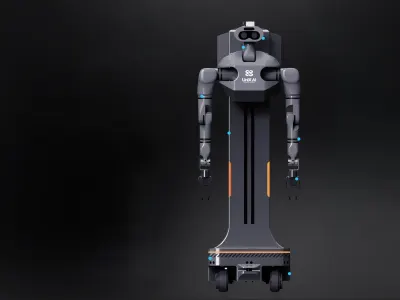
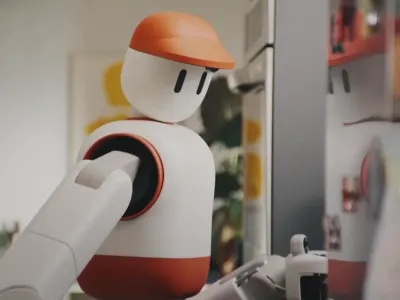
Memo is a home-focused humanoid-style robot developed by Sunday Robotics to autonomously perform domestic chores such as dishwashing, laundry folding, tidying, and espresso preparation. Standing 1.7 meters tall on a wheeled base, it features a torso with two multi-DoF arms and dual grippers, capable of reaching from floor level up to around 2.1 meters (7 feet). Designed for family environments, Memo emphasizes safety and stability through a low center of gravity, compliant control, and a soft silicone exterior. It learns from real household data via Sunday’s Skill Capture Glove, mastering long-horizon tasks in unstructured homes.

LimX Dynamics
Tron 2
The Tron 2 by LimX Dynamics is an advanced two-arm humanoid robot designed as an embodied AI platform for dynamic wheeled locomotion and manipulation. Standing approximately 157 cm tall, it excels in agile movements, real-time balance, and limb coordination through data-driven learning from its environment. Key features include fluid whole-body motion, object handling, and adaptation to complex terrains like stairs and uneven surfaces. Powered by high-torque actuators and AI algorithms, Tron 2 supports autonomous task execution, teleoperation, and reinforcement learning for versatile applications in research, logistics, and human-robot interaction. Its modular design allows foot swaps for walking or rolling, enhancing versatility in indoor and outdoor settings while prioritizing safety and energy efficiency.

Matrix Robotics
Matrix 1
Matrix 1 is a full-size bipedal humanoid robot standing 180 cm tall, engineered for versatile real-world tasks in manufacturing, logistics, and service environments. Featuring self-developed motors and actuators, it achieves human-like flexibility with wide joint ranges and a top walking speed of 7.6 km/h. The DexH13GEN2 or 3rd-generation hands provide 22 degrees of freedom (DOF) with tactile sensors and force-position hybrid control for precise manipulation of objects up to 10 kg per arm. Powered by an advanced AI stack with 4x improved reasoning over prior models, it supports imitation and reinforcement learning, natural language processing, and autonomous navigation via 8 RGB cameras, optional LiDAR, ultrasonic sensors, and IMUs. With 5-hour endurance, soft enclosures for safe human interaction, and capabilities like obstacle avoidance and dexterous gripping, Matrix 1 excels in unstructured spaces, collaborative assembly, sorting, and complex locomotion including stairs and uneven terrain.

UBTECH Robotics
Walker Tienkung
Walker Tienkung is a full-size, high-performance humanoid robot designed for research, education, and advanced proof-of-concept development. Standing at 172 cm, it features 42 degrees of freedom, enabling fluid, human-like motion and complex manipulation tasks. The robot supports high-speed locomotion up to 10 km/h, with advanced balancing and terrain adaptation for stairs, slopes, and uneven surfaces. Equipped with dexterous five-fingered hands, integrated AI, and multimodal sensors, Walker Tienkung excels in object manipulation, autonomous navigation, and interactive human-robot collaboration. Its open-source architecture and modular design make it ideal for scenario innovation, scientific research, and industrial automation.

MirrorMe Technology
Bolt
Bolt is a groundbreaking full-size humanoid robot engineered by MirrorMe Technology for exceptional bipedal speed and human-like athleticism. Standing at 175 cm and weighing 75 kg, it achieves a peak running speed of 10 m/s (36 km/h) in real-world outdoor tests, surpassing previous humanoid benchmarks like Boston Dynamics' models. Featuring redesigned high-power joints and an optimized power system, Bolt replicates natural human gait, dynamic balance, and sprinting posture for stability at extreme velocities. Designed as a technological platform, it integrates advanced motion control for research, athlete training as a "steel sparring partner," and potential applications in logistics or sports simulation. Its human proportions enable versatile bipedal locomotion on varied terrains, with focus on endurance, precision control, and repeated sprints, pushing boundaries in humanoid robotics toward human-level performance in perception, agility, and real-environment operation.

Westwood Robotics
Bruce
Bruce is a compact, kid-sized humanoid robot designed as an open-platform for advanced robotics research and education. Standing at 70cm tall and weighing just 4.8kg, it features a lightweight carbon fiber composite structure for durability and agility. With 16 degrees of freedom, including 5 DOF per leg and 3 DOF per arm, Bruce excels in dynamic bipedal locomotion such as walking, running, jumping, and even advanced maneuvers like single-leg hopping or yaw rotations. Powered by proprietary Koala BEAR proprioceptive actuators with liquid cooling, it delivers explosive power and real-time compliance for unstructured environments. Equipped with a high-frequency 6-DOF IMU, 4 contact sensors, and a 6TOPS onboard computer supporting deep learning frameworks, Bruce enables autonomous navigation, whole-body control, and sensor-based adaptation. Its modular, repairable design and open-source software/hardware foster rapid prototyping in locomotion, perception, and human-robot interaction, making it ideal for testing algorithms in real-world scenarios.

Fauna Robotics
Sprout
Sprout by Fauna Robotics is a compact, lightweight humanoid robot designed for safe human interaction and developer-friendly applications in research, education, and commercial development. Standing at 107 cm tall and weighing 22.7 kg, it features 29 degrees of freedom for full-body articulation, including 6 DoF arms with floor-to-countertop reach, 5 DoF compliant legs for low-impact bipedal locomotion, and a 2 DoF neck for expressive gaze. Equipped with NVIDIA Jetson AGX Orin compute, ZED 2i stereoscopic vision, time-of-flight sensors, IMU, microphone array, and a full-color 360-degree facial LED array with motorized eyebrows, Sprout enables out-of-the-box mapping, navigation, voice interaction, walking, kneeling, crawling, jumping, dancing, and fall recovery. Its soft deformable exterior, back-drivable motors, and dedicated safety subsystem ensure collaborative operation in shared human spaces, while swappable batteries provide 3-3.5 hours runtime and LEGO-compatible customization fosters modular innovation in manipulation, task planning, and human-robot interaction.

Borg Robotics
Borg 01
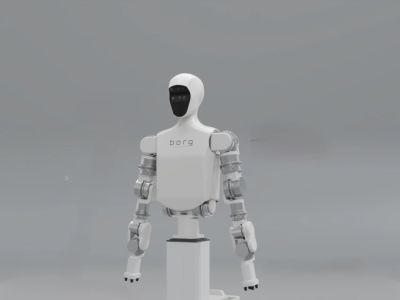
The Borg 01 is a modular humanoid robot from Detroit-based Borg Robotics, engineered for industrial and logistics tasks with a focus on adaptability and efficiency. Standing at 173 cm tall and weighing 62 kg, it autonomously switches between bipedal walking for narrow spaces and a wheeled base for faster, more efficient movement across factory floors and warehouses. Key features include quick-change end effectors like vacuum grippers, mechanical claws, dual grippers, and five-fingered hands, supporting payloads up to 12 kg for versatile manipulation. Powered by advanced AI neural networks, it adapts to new tasks and environments without infrastructure changes, integrating into existing workflows. With 23 degrees of freedom, in-house high-torque actuators, and up to 12 hours runtime in wheeled mode via swappable batteries, Borg 01 targets manufacturing labor shortages, offering seamless operation in crowded aisles alongside Borg's ecosystem of autonomous pallet jacks and forklifts.

Italian Institute of Technology (IIT)
iRonCub
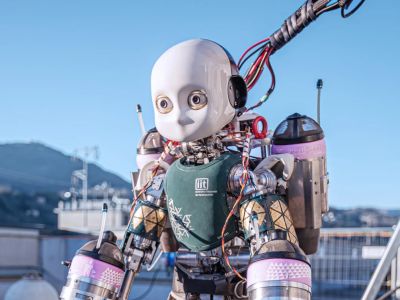
iRonCub is a groundbreaking jet-powered flying humanoid robot developed by IIT's AMI lab, transforming the iCub3 platform into the world's first humanoid capable of controlled flight. Equipped with four micro-jet engines—two on the arms and two on a backpack jetpack—it generates over 1000 Newtons of thrust to achieve stable hover up to 50 cm, managing extreme heat over 800°C via a titanium spine and heat-resistant covers. Advanced AI control systems, including neural networks and UKF pose estimation, enable human-like balance amid turbulent airflows, shifting center of mass, and limb movements. Onboard sensors like IMU and depth cameras support real-time flight dynamics, multibody aerodynamics, and non-stationary maneuvers. Designed for research in aerial humanoid robotics, it pioneers applications in search-and-rescue, hazardous inspections, and disaster response, blending bipedal morphology with unprecedented aerial agility.

TARS Robotics
TARS
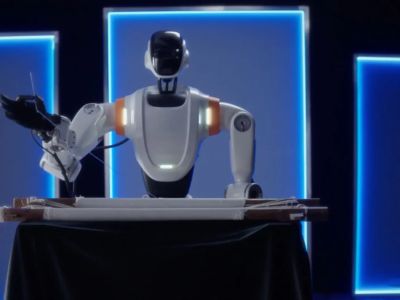
TARS is an advanced humanoid robot developed by Tars Robotics, a Chinese startup specializing in embodied AI for precision manufacturing. Standing at 167 cm with 35 degrees of freedom, it excels in bipedal locomotion and bi-manual dexterity, demonstrated by world-first achievements like hand embroidery and wire harness assembly requiring sub-millimeter precision and adaptive force control. Equipped with stereoscopic RGBD cameras, IMU for balance, and tactile sensors, TARS integrates the SenseHub platform and TARS 2.0 Zero AI World Engine for learning general physical skills from real-world data. Its electric servo actuators and harmonic gears enable stable manipulation of flexible materials, while 5G-A connectivity supports low-latency teleoperation. Designed for industrial automation, it bridges AI decision-making with physical execution, targeting logistics, manufacturing upgrades, and scalable production with human-safe collaboration.

Robot Era
L7
The Robot Era L7 is a cutting-edge bipedal humanoid robot standing 171 cm tall and weighing 65 kg. It features 55 degrees of freedom for whole-body dexterity, including a 12-DoF fully direct-driven dexterous hand. The L7 excels in both speed and manipulation, capable of running at 4 m/s (14.4 km/h) and carrying dual-arm payloads up to 20 kg. Equipped with binocular cameras, 3D LiDAR, and a microphone array, it offers 360° spatial perception and advanced environmental adaptation. Its applications range from industrial automation and logistics to entertainment and research, with capabilities such as hip-hop performance, bartending, sorting, assembly, and teleoperation. The robot integrates AI-powered control with a high-performance onboard computer for real-time responsiveness and complex task execution.

VinMotion
Motion 1
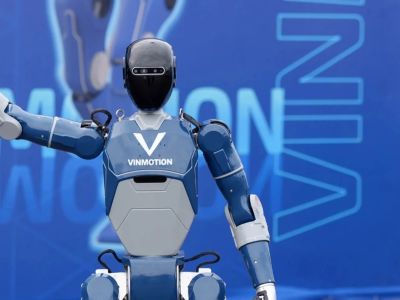
Motion 1 is VinMotion's pioneering bipedal humanoid robot, introduced as Vietnam's first fully functional model, showcasing advanced synchronization technology for fluid, human-like movements. Standing approximately 170 cm tall, it excels in dynamic bipedal locomotion, enabling natural walking, dancing, and agile maneuvers with precise gait control. Equipped with high-torque joints and multi-DOF arms, it performs complex tasks like object manipulation and coordinated performances. Key features include visual processing for obstacle avoidance, IMU-based balancing for stability on varied surfaces, and reinforcement learning for adaptive behaviors. Designed for entertainment, research, and light industrial applications, Motion 1 demonstrates impressive speed up to 2 m/s, robust carrying capacity, and seamless multi-robot synchronization, marking a milestone in affordable, high-performance humanoid robotics from Vietnam.

MagicLab
MagicBot Gen1
The MagicBot Gen1 is a full-size bipedal humanoid robot engineered for industrial, research, and service applications, standing at 174 cm tall with human-like proportions and 42 active degrees of freedom for fluid, lifelike movements. It features dexterous 11-DOF Magic-Hand grippers capable of precise manipulation, supporting up to 20 kg total payload for tasks like pick-and-place, assembly, and object handling. Advanced bipedal locomotion enables dynamic walking over 2 m/s, stair climbing, and recovery from falls or pushes, powered by high-torque joints exceeding 350 N·m. A 360-degree sensor suite including 3D LiDAR, depth cameras, and stereo vision drives autonomous navigation via visual SLAM and Magic-Mind AI for multi-scenario operation. With 4-5 hours runtime from a 1.35 kWh battery, Wi-Fi 6/5G connectivity, and MagicNet for multi-robot coordination, Gen1 excels in collaborative environments, integrating with MES systems for factory automation, commercial services, and R&D experimentation while ensuring safe human proximity through force limiting and collision detection.

VinMotion
Motion 2
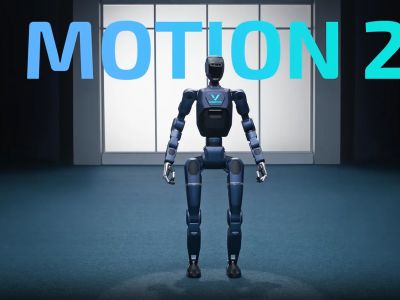
The Motion 2 is a second-generation full-size bipedal humanoid robot from VinMotion, engineered for industrial applications with advanced on-device AI via Qualcomm Dragonwing IQ10 processor. It excels in dynamic balance, enabling stable heavy lifting up to 40kg, self-recovery from falls, and complex motions like karate chops, backbends, and precise grasping with five-fingered hands. Featuring a natural human-like gait, faster walking speed, and greater agility than its predecessor, Motion 2 supports autonomous charging, battery swapping, and 24/7 operation. Designed for factories and warehouses, it integrates multi-language interaction, AI-driven motion planning, and human-in-the-loop supervision for safe, scalable deployment in logistics, material handling, visual inspections, and assembly tasks, pushing boundaries in physical AI and humanoid scalability

UniX AI
Panther
The Panther humanoid robot by UniX AI is a full-size, wheeled dual-arm platform engineered for complex commercial and industrial tasks, featuring 34 degrees of freedom for high flexibility in narrow spaces. It integrates 8-DoF bionic arms with 12 kg payload capacity each, adaptive intelligent grippers, and an 80 cm adaptive vertical lift for reaching from ground level to upper shelves. Powered by a 48V high-voltage drive system, it delivers precise force-controlled manipulation, omnidirectional four-wheel mobility for agile navigation, and expanded head motion for multi-modal perception. Designed for property security, retail, hospitality, logistics, and manufacturing, Panther excels in dexterous operations like object sorting, liquid pouring, and multi-step tasks. Onboard edge computing up to 2070 TOPS enables real-time AI processing with low latency, supporting fast learning via imitation and visuotactile fusion for rapid deployment in dynamic environments.

DroidUp
Walker II (02)
Walker II is a pioneering lightweight modular humanoid robot from DroidUp, standing at 1.7 meters tall and weighing just 30 kg, engineered with bio-inspired tendon-driven actuation and distributed motor coordination for human-like agility. It achieves a maximum walking speed of 3 m/s, navigates diverse terrains including stairs, gravel, and slopes, and clears 15 cm obstacles using dynamically adjustable joint stiffness for precise, energy-efficient motion—25% more efficient than competitors. The 28 DOF bipedal design supports stable balancing, modular customization for research, education, inspections, service tasks, and industrial applications. Integrated sensors enable real-time environmental adaptation, while its high-strength lightweight frame ensures endurance for prolonged operations, making it ideal for dynamic humanoid locomotion in challenging settings.

Foundation
Phantom MK1
The Phantom MK1 is a robust humanoid robot engineered for industrial, warehouse, and defense applications, standing at human scale with advanced manipulation capabilities. Featuring proprietary cycloidal actuators that deliver high torque up to 160 Nm while remaining back-drivable for safe human interaction, it excels in precise grasping and tool use with 19 upper body degrees of freedom and five-fingered hands. Its camera-first vision system, powered by large language models, enables natural language commands like "pick that up" to translate into fluid whole-body motions without bulky LiDAR. Capable of 1.7 m/s walking speed, 20 kg payload, and near-24/7 operation, the Phantom MK1 navigates human environments seamlessly, handling assembly, inspections, logistics, and reconnaissance. Bipedal design with active balance supports rough terrain and confined spaces, prioritizing reliability, speed, and adaptability over gimmicks for real-world productivity.

Noetix Robotics
N2 (Athlete)
The Noetix N2 (Athlete) is a child-sized bipedal humanoid robot optimized for agility and dynamic performance, standing 118 cm tall and weighing 30 kg with 18 degrees of freedom. It achieves top speeds of 12.6 km/h, performs continuous backflips, running, jumping, and dancing through a lightweight bionic structure that minimizes limb inertia by positioning heavy joints near the torso. Powered by NVIDIA Jetson edge AI computing up to 67 TOPS, it enables real-time 3D perception via dual structured-light depth cameras, object recognition, motion planning, and LLM-driven speech-visual interaction. Designed for safe household operation, the N2 supports anthropomorphic walking, gesture recognition, and autonomous decision-making. Its modular control and expressive movements make it ideal for education, elder care, home assistance, and social robotics, demonstrating advanced balance, aerial rotation, and human-like fluidity in indoor environments.

Kody Technolab
Skändä (Skanda)
Skändä is India's pioneering AI-powered humanoid robot developed by Kody Technolab, showcasing advanced bipedal locomotion and human-like interaction capabilities. Designed for versatility, it excels in engaging audiences through natural speech synthesis, query response, and cultural gestures like chanting phrases, as demonstrated at Vibrant Gujarat 2024 and Gujarat Police Expo. Equipped with AI for mimicking human actions, situational analysis, and real-time interaction, Skändä supports applications in public engagement, law enforcement assistance, and entertainment. Its bipedal design enables stable walking on flat surfaces, balanced arm movements for gesturing, and a expressive head unit for voice communication in multiple languages. With integrated sensors for environmental awareness and machine learning for adaptive behaviors, Skändä represents a leap in indigenous robotics, blending autonomy with teleoperation for safe human-robot collaboration in dynamic settings.

Tokyo Robotics
Torobo
Torobo is a torque-controlled humanoid robot designed for advanced AI and robotics research, emphasizing precision manipulation and safe human interaction. Standing 166 cm tall with dual 7-axis arms, a 3-axis waist, 3-axis neck, and 4-axis omnidirectional mobile base, it offers human-like range of motion for complex tasks like hammering, sawing, and table wiping. High-precision torque sensors in all arm and waist joints enable impedance control, force limiting, and collision detection, allowing delicate operations alongside heavy lifting up to 20 kg. Powered by ROS for trajectory planning and simulation in Gazebo or MuJoCo, Torobo supports modular sensor integration including cameras and LiDAR. Its robust build suits industrial, academic, and assistive applications, particularly Japan's aging population initiatives, with features like ZMP-based balance and real-time compliance for collaborative environments.

XPENG
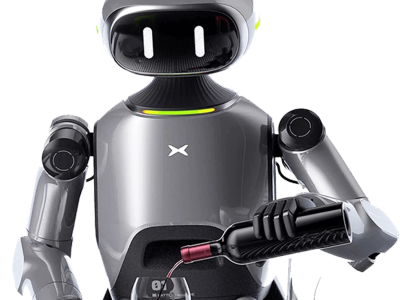
PX5
The XPENG PX5 is a pioneering humanoid robot prototype standing 1.5 meters tall, engineered for advanced bipedal locomotion and dexterous manipulation. Featuring 22 degrees of freedom, including 7-DOF arms with 0.05mm positioning accuracy and ultra-lightweight 430g hands with 11 DOF each, it employs a hybrid rigid-soft drive for versatile grasping up to 1kg grip force and 3kg arm payload. Tactile fingertip sensors enable precise object handling, while shock-resistant joints support stable walking on indoor/outdoor terrains, including grass, rocks, stairs, and obstacle crossing. Demonstrated capabilities include playing football, riding self-balancing scooters, and complex tasks like screwing or pouring. Designed for industrial and retail applications such as factory patrolling and product sales, PX5 integrates AI-driven navigation and balance for over 2 hours of continuous operation, paving the way for human-like robotics in dynamic environments.

X-Humanoid
Embodied Tien Kung 2.0 Pro
The Embodied Tien Kung 2.0 Pro is a full-size humanoid robot engineered for advanced bipedal locomotion and dexterous manipulation in dynamic environments. Standing at 170 cm with a lightweight 70-90 kg alloy frame, it achieves speeds up to 12 km/h while navigating stairs, slopes, sand, snow, and uneven terrain with exceptional stability. Powered by NVIDIA Jetson Orin and the Hui Si Kai Wu AI platform, it integrates LiDAR, cameras, and five-fingered hands for precise perception, task planning, and object handling. Key features include adaptive balancing under disturbances, voice/app controls, and open interfaces for research integration. Designed for AI development, industrial labs, logistics, rescue, and automation, it supports autonomous navigation, complex manipulation, and human-safe collaboration, embodying cutting-edge Chinese humanoid innovation for real-world robustness and versatility.

Digit Robotics
Xia Lan S02
The Xia Lan S02 by Digit Robotics is an advanced bipedal humanoid robot optimized for AI research, human-robot interaction, and dynamic motion control in human environments. Standing at full human height with over 40 degrees of freedom, it features fluid bipedal locomotion, precise arm manipulation, and expressive facial movements enabled by 29 active facial DOFs for natural expressions and lip synchronization. Equipped with high-definition cameras, microphone arrays, and real-time perception for visual SLAM navigation, obstacle avoidance, and object interaction, it supports autonomous gait adaptation on varied terrains like stairs and uneven surfaces. High-torque servo actuators with harmonic drives ensure balanced precision in tasks such as grasping, carrying payloads up to 20kg per arm, and multimodal communication via speech synthesis and emotional AI models. Ideal for research institutions, its modular design facilitates testing reinforcement learning, full-body coordination, and collaborative scenarios, bridging embodied AI with practical utility in unstructured settings.

Digit Robotics
XiaQi X02
The XiaQi humanoid robot from Digit Robotics is engineered for versatile industrial and service applications, including manufacturing, retail, and eldercare. Standing at human scale with bipedal locomotion, it navigates dynamic environments using advanced visual SLAM and obstacle avoidance. Equipped with over 40 degrees of freedom, XiaQi delivers fluid arm, leg, and torso movements for tasks like customer reception, object manipulation, and transit hub assistance. High-resolution cameras and microphone arrays enable face tracking, sound localization, and multimodal interaction powered by an in-house emotional intelligence model. Its robust design supports carrying capacities up to 20 kg per arm, with proprietary motion algorithms for stairs, uneven terrain, and autonomous path planning. Modular end-effectors and safety features like collision detection make it ideal for human-robot collaboration, blending utility with expressive gestures for engaging interactions in real-world settings.

LimX Dynamics
Luna
Luna is a high-performance, general-purpose humanoid robot developed by LimX Dynamics as a refined, performance-oriented evolution of the Oli platform. Standing 165 cm tall, Luna features a sleek, organic "lifestyle" aesthetic with a rounded head and curved silhouette, moving away from the rugged industrial look of its predecessors. It is engineered for social interaction, performance, and high-difficulty tasks, demonstrated by its ability to perform gymnastics-level "illusion turns" and catwalk walks. Luna integrates the COSA Operating System and LimX’s VideoGenMotion (VGM) framework, allowing it to imitate complex human movements directly from video inputs. It is designed for researchers and luxury service sectors requiring an agile, lifelike gait combined with advanced embodied AI reasoning

Kawada Robotics
HRP-4
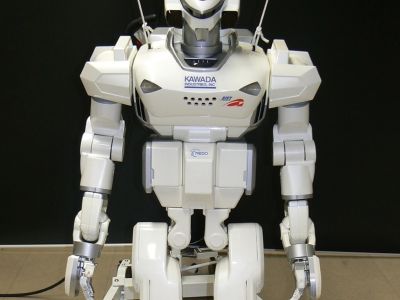
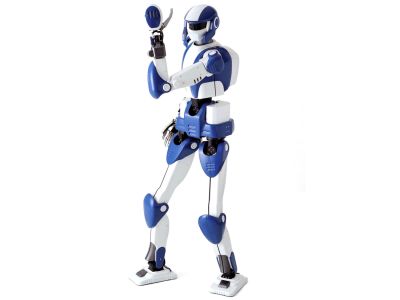
The HRP-4 is a lightweight, slim humanoid robotics platform developed for advanced research in human-robot collaboration and bipedal locomotion. Standing at 151 cm tall and weighing just 39 kg, it features 34 degrees of freedom, including 7 DOF per arm for precise object manipulation and 6 DOF per leg for stable walking. Equipped with low-power motors under 80W for enhanced safety around humans, it performs natural movements like waist twisting, one-footed balance, and dexterous five-fingered hand grasping. Cameras and microphones enable face recognition, object tracking, and voice command response. Designed as a successor to HRP-2 and HRP-3, HRP-4 supports indoor navigation in human environments, with flexible joints for athletic poses and tasks. Its compact, human-proportioned body facilitates safer interaction, object handling up to 0.5 kg per arm, and motion control software from AIST, accelerating humanoid R&D for practical applications like assistive work.

Kawada Robotics
HRP-3
The HRP-3 humanoid robot, developed by Kawada Industries in collaboration with AIST and Kawasaki Heavy Industries, represents a significant advancement in bipedal robotics for harsh environments. Standing at 160 cm tall and weighing 68 kg, it features 36-42 degrees of freedom, enabling complex manipulations and stable locomotion on slippery or uneven surfaces. Designed for disaster relief, construction, and industrial tasks, HRP-3 boasts dustproof and water-resistant construction, allowing operation under heavy rain or dust. Enhanced leg-arm coordination supports carrying heavy loads, while autonomous/remote hybrid control improves task efficiency. Equipped with stereo cameras, gyroscopes, accelerometers, and force sensors, it navigates challenging terrains, recovers from falls, and performs collaborative work with humans. Its robust hardware and advanced software make it a pioneer in practical humanoid applications beyond laboratories.

Digit Robotics
Starwalker P01
The Starwalker P01 by Digit Robotics is a pioneering dual-form humanoid robot featuring seamless switching between bipedal walking and wheeled modes for versatile navigation in commercial environments. Standing at human height with advanced bipedal locomotion, it achieves stable movement on stairs, uneven terrain, and tight spaces while wheeled mode extends runtime for long patrols. Equipped with 28+ degrees of freedom, dexterous arms, and a 5-finger gripper, it handles payloads up to 18kg per arm for tasks like tote manipulation, package sorting, and service interactions. Sensor fusion including LiDAR, depth cameras, IMU, and force sensors enables autonomous SLAM navigation, obstacle avoidance, and compliant grasping. Designed for logistics, warehouses, and human-collaborative settings, it offers multi-hour runtime, fall recovery, and modular end-effectors. Its human-like proportions and safety features promote safe proximity work, bridging industrial efficiency with service adaptability in dynamic real-world scenarios.

WestLake Robotics
Titan 01
The Titan 01 is an advanced bipedal humanoid robot from WestLake Robotics, featuring 29 self-developed integrated joints for exceptional agility and load capacity, with knee peak torque of 160 Nm and a torque-to-mass ratio of 123 Nm/kg. Powered by the proprietary GAE Avatar System, it excels in real-time human motion imitation, enabling seamless remote operation and autonomous decision-making without task-specific programming. Designed for dynamic gaits, dual-arm collaboration, dexterous manipulation, and human-robot interaction, it supports applications in education, retail, performance, public security, firefighting, and mining. Its open hardware middleware and MagTap technology facilitate AI model integration, offering cross-embodiment capabilities for versatile deployment across complex scenarios, balancing flexibility, stability, and intelligence in a human-like form.

Unitree Robotics
Unitree H1-2
The Unitree H1-2 is a full-size humanoid robot standing 178 cm tall with human-like proportions, optimized for advanced mobility, balance, and whole-body coordination. Featuring 27 degrees of freedom powered by high-torque M107 joint motors, it achieves walking speeds up to 2 m/s and potential mobility over 5 m/s, enabling agile navigation on complex terrains, stairs, and uneven surfaces. Equipped with 360° 3D LiDAR and depth cameras for precise environmental perception, it supports autonomous walking, running, jumping, and manipulation tasks like grasping objects with 5-finger hands. Each 7-DOF arm lifts up to 7 kg, while legs provide robust stability for dynamic motions including dancing and handshakes. Designed for research and development, the H1-2 integrates Intel Core i7 computing, swappable 864 Wh batteries for 2-hour runtime, and ROS-compatible software, making it ideal for AI training, human-robot interaction, and industrial prototyping in indoor-outdoor settings.

1X Technologies
NEO Home Robot
NEO Gamma is 1X Technologies’ latest home-focused humanoid, blending a sleek 3D-printed nylon-knit exterior with advanced AI for natural interaction. At 1.65 m tall, it walks with a realistic gait, squats to pick up objects, and even sits on chairs. Its custom language model enables fluid conversation and task learning, while “Emotive Ear Rings” provide intuitive visual feedback. Whether providing elderly care, handling daily chores, or offering companionship, NEO Gamma adapts to household routines with surprising dexterity and warmth.

Robot Era
Q5
The Robot Era Q5 is an advanced wheeled humanoid robot engineered for service, healthcare, and research applications, featuring 44 degrees of freedom for lifelike whole-body coordination and natural human interaction. Its bionic 7-axis arms extend up to 1.38 meters with 11-DOF "Fairy Hands" or XHAND Lite dexterous grippers, enabling precise manipulation of objects up to 10 kg per hand, such as item delivery, handoffs, and gestural communication. A slim waist and compact base facilitate agile navigation in confined indoor spaces like malls, hotels, and facilities, powered by LiDAR, stereo vision fusion, and SLAM for autonomous obstacle avoidance and route planning. Embedded ERA-42 embodied AI supports rapid learning from human motion data, voice dialogue, intention recognition, and teleoperation via app, VR, or gestures. Expressive motions, multi-sensor integration, and optional NVIDIA Jetson compute make Q5 ideal for customer engagement, guided tours, and collaborative tasks, bridging research and deployment with minimal programming needs.

Booster Robotics
K1 Professional Humanoid
The Booster K1 Professional Humanoid is a compact, research-grade bipedal robot standing 95 cm tall with 22 degrees of freedom, enabling dynamic walking, balancing, and whole-body manipulation. Powered by up to 200 TOPS NVIDIA Jetson AGX Orin compute, it supports advanced AI tasks like object recognition, voice interaction, and reinforcement learning via stereo depth cameras, 9-axis IMU, and 6-mic array. Designed for education, embodied AI development, and competitions, it offers full-force-controlled joints with 60N·m peak torque, ROS2 integration, Python SDK, and multimodal control modes including DAMP, PREP, WALK, and CUSTOM. Lightweight at 19.5 kg with aluminum alloy and engineering plastics construction, it provides smooth human-like motions, low-latency edge processing, and portable deployment in a suitcase, ideal for labs, classrooms, and prototyping interactive robotics applications.

Booster Robotics
T1 Standard Humanoid
The T1 Standard Humanoid by Booster Robotics is a compact, lightweight platform at 118 cm tall and 30 kg, engineered for researchers and developers in robotics labs, universities, and R&D. Featuring 23 degrees of freedom—6 per leg, 4 per arm, 1 waist, and 2 head—it enables natural bipedal walking, omnidirectional movement, torso rotation, arm gestures, and head tracking for complex behaviors like squatting, turning, and balancing. Powered by NVIDIA Jetson AGX Orin (200 TOPS AI) with Intel i7 CPU, it integrates RGBD depth cameras, 9-axis IMU, 6-mic array, and speakers for multimodal perception and interaction. Large joint ranges (e.g., hip pitch ±118°) and high-torque actuators (130 N·m peak) support agile motion in dynamic environments. ROS2-compatible with SDK for custom development, it excels in sports simulations, kung fu maneuvers, prone-to-stand transitions, and open-source projects, offering durability against falls and extensible arms for grippers or dexterous hands.

Booster Robotics
K1 Geek Humanoid
The Booster K1 Geek Humanoid is a compact, agile bipedal robot standing 95 cm tall, optimized for education, research, and competitive robotics like RoboCup KidSize. Featuring 22 degrees of freedom with full force control across 6 DOF legs, 4 DOF arms per side, and 2 DOF head, it delivers human-like walking at up to 1.4 km/h, dynamic balancing via 9-axis IMU, and precise manipulation. Equipped with NVIDIA Jetson processors (48-200 TOPS), stereo depth cameras for visual SLAM, 6-mic array for voice interaction, and ROS2-compatible software with Python/C++ SDKs, it supports no-code AI via Booster Agents, simulation in Isaac Sim and Booster GYM 2.0, and OTA updates. Its lightweight 19.5 kg aluminum alloy frame enables portability, while dual-encoder joints (60 Nm torque) allow hybrid torque/position control for tasks from locomotion to gesture-based interaction, making it ideal for developers exploring embodied AI without complex assembly.

Booster Robotics
T1 Basic Humanoid
The T1 Basic Humanoid by Booster Robotics is a lightweight, open-source bipedal robot optimized for developers and researchers, standing at 118 cm tall and weighing 30 kg. Featuring 23 degrees of freedom across legs (12 total), arms (8 total), waist (1), and head (2), it excels in omnidirectional walking, dynamic balance recovery, and basic manipulation tasks. Powered by NVIDIA Jetson AGX Orin with 200 TOPS AI performance, it supports ROS2 for custom development, including advanced motion control with large joint ranges like hip pitch ±118° and max torque of 130 N·m. Equipped with RGBD depth camera, 9-axis IMU, and 6-mic array, it enables multimodal interactions such as object recognition and speech processing. Durable design withstands falls, ideal for education, R&D, competitions like RoboCup, and prototyping agile humanoid behaviors in indoor environments.

Fudan University
Guanghua No. 1
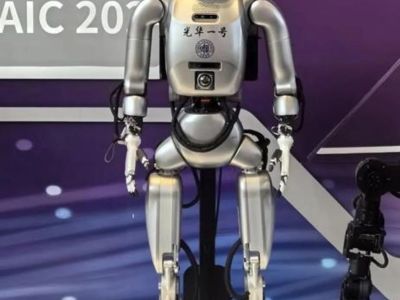
Guanghua No. 1 is an advanced emotional humanoid robot engineered by Fudan University for elderly care and healthcare companionship. Standing at human height with 45 intelligent joints and a hierarchical generative brain model, it achieves fluid bipedal walking, arm swinging, and upright posture while manipulating objects delicately. A facial screen displays four core emotions—happiness, anger, sadness, and joy—powered by brain-inspired algorithms mimicking dopamine rewards and multilevel incentives for human-like perception and response. Designed to interpret human expressions, it provides empathetic, personalized assistance like helping seniors out of bed or to the restroom. Multilingual support in six languages enhances global applicability, addressing aging populations through emotional intelligence beyond mechanical tasks, fostering family-like warmth in interactions.

ROBOTIS
AI Sapiens K0
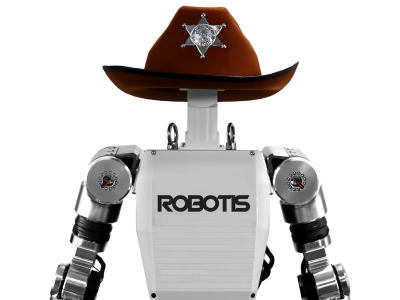
The AI Sapiens K0 by ROBOTIS is an open-source humanoid platform optimized for physical AI research, standing 1.3 meters tall with 23 degrees of freedom for full-body dynamic motion. Powered by advanced DYNAMIXEL-Q quasi-direct drive actuators like QM-060 and QM-080, it excels in bipedal locomotion, precise manipulation, and real-world interaction, bridging simulation-to-reality gaps via imitation and reinforcement learning. Each arm supports up to 3 kg payloads, enabling tasks like object grasping and handling in contact-rich environments. Its lightweight 34 kg frame enhances safety for human-robot collaboration, while fully open hardware and software stacks—including simulation tools and training artifacts—empower researchers, educators, and developers to customize, train policies, and deploy adaptive behaviors for locomotion, manipulation, and human-robot interaction in research settings.

Toyota
CUE7
CUE7 is Toyota's advanced research humanoid robot designed to demonstrate precision motion, perception, and AI-driven athletic performance through basketball tasks. Standing 7 feet 2 inches tall and weighing 163 pounds, the robot represents a complete redesign philosophy emphasizing embodied AI over pre-programmed instructions. CUE7 integrates reinforcement learning with model predictive control, enabling dynamic movements including dribbling, shooting, and natural posture transitions. The platform combines real-time visual recognition, distance calculation, and trajectory optimization to execute complex athletic maneuvers with high repeatability. Its lightweight construction, dual-wheel inverted base, and human motion-trained behaviors create surprisingly natural movement patterns that mirror human athletes rather than mechanical systems.

Futuring Robot
Futuring F2
The Futuring F2 is a cutting-edge bipedal humanoid robot engineered for versatile industrial and collaborative applications. Standing at human scale, it features 28 degrees of freedom for fluid, human-like movements, including dexterous 5-fingered hands capable of precise manipulation. Powered by a 2.25 kWh torso-mounted battery, it delivers up to 5 hours of continuous operation at speeds reaching 1.2 m/s. Advanced AI integration includes onboard vision-language models for real-time perception via six RGB cameras, enabling autonomous navigation, object recognition, and speech-to-speech interaction powered by custom LLMs. With integrated cabling, matte-black durable exterior, and 20 kg payload capacity, the F2 excels in warehouses, manufacturing, and logistics, performing tasks like picking, assembly, and human handoff. Its electric actuators ensure quiet, reliable performance in human environments, bridging the gap between automation and seamless collaboration.

Honor
Honor D1 (Lightning)
The Honor D1, nicknamed "Lightning," is a high-performance bipedal humanoid robot optimized for dynamic locomotion and autonomous navigation. Standing 169 cm tall and weighing approximately 45 kg, this platform represents Honor's transition from smartphone manufacturing into embodied AI systems. The robot features elongated leg geometry (90-95 cm) engineered to mimic elite human running stride efficiency, enabling speeds exceeding 25 km/h. Equipped with dual LiDAR, satellite positioning, and onboard AI processing, D1 demonstrates autonomous perception and real-time environmental adaptation. The platform achieved international recognition by completing a 21.1 km half-marathon in 50:26, surpassing the human world record. Advanced thermal management via liquid cooling (4 L/min flow rate) enables sustained high-performance operation. D1 combines aerodynamic mecha design with collaborative safety features, supporting voice interaction, gesture recognition, and human-robot harmony through dance and agile movement capabilities.

Honor
Honor A1
The Honor Humanoid is a pioneering consumer-grade bipedal robot unveiled at MWC 2026, leveraging Honor's mobile AI expertise for embodied intelligence. Standing at human-like proportions, it features a sleek matte black body with a glass-style face panel and expressive horizontal light bar for emotional interactions. Capable of smooth handshakes, waving, and dynamic backflips, it excels in agile bipedal locomotion across varied terrains. Designed for shopping assistance, workplace inspections, and supportive companionship, the robot recognizes users via advanced vision systems, understands needs through YOYO AI, and provides personalized physical help. Its multi-DOF arms enable precise manipulation, while integrated sensors support real-time navigation and collision avoidance. Balancing human-like gestures with robust autonomy, it bridges smartphones and robotics, fostering intuitive human-robot collaboration in daily scenarios.

UBTECH Robotics
Walker C1
Walker C1 is a full-size bipedal humanoid service robot from UBTECH Robotics designed for public-facing interaction, autonomous mobility, and expressive whole-body motion. It combines human-like proportions, stable walking, and spoken communication to operate safely around people in indoor environments such as hospitality, exhibitions, visitor centers, and commercial venues. The platform emphasizes navigation, route following, and obstacle avoidance over heavy-duty manipulation. With a lightweight yet tall frame, multiple degrees of freedom, and integrated vision sensing, Walker C1 is positioned as a demonstration of embodied AI and service robotics. Its design supports natural gestures, approachable interaction, and controlled mobility in crowded spaces where reliability and social presence matter. | (Inferred · Medium confidence · Based on user-provided and third-party references)

Unitree Robotics
Unitree H2 Plus
Unitree H2 Plus is a full-size bipedal humanoid designed for industrial-grade motion, human-like interaction, and developer-oriented research. It combines a 182 cm class standing height, 31 degrees of freedom, and high-torque joints with an expressive bionic head, making it suitable for locomotion, manipulation, and demo-grade social presence. The platform emphasizes dynamic balance, OTA-evolving motion control, and AI computing up to Jetson AGX Thor class performance. With a quick-release battery and around 3 hours of runtime, it is aimed at tasks that require agile walking, upper-body dexterity, and repeatable whole-body motions in controlled environments.

VinRobotics
Dyno
Dyno is VinRobotics’ humanoid robot platform developed for industrial, security, and service tasks, with a focus on human-like mobility and manipulation in structured and semi-structured environments. Publicly shown in a third-generation configuration, it uses 31 smart motors, stands about 1.78 m tall, and weighs around 75 kg. The robot is designed to walk in crowded spaces, perform greeting and guidance gestures, and handle light objects with both arms. VinRobotics positions Dyno as an assistant for factories, hazardous sites, campuses, and household-support scenarios, with development centered on autonomy, environmental awareness, and multilingual interaction. Current demonstrations indicate teleoperated operation is still part of its development pathway.

Lumos Robotics
NIX
NIX is a compact bipedal humanoid robot designed for expressive motion, research, entertainment, and light interaction tasks. It is listed at 89 cm tall with 21 degrees of freedom, a 331 Wh quick-release battery, and up to 2 hours of runtime, making it a small but capable platform for walking, fast running, dances, and in the higher-end configuration, getting up, push-ups, and pull-ups. The robot’s design emphasizes biomimetic movement, voice interaction through a 4-microphone array, and optional vision hardware such as an RGB camera on the flagship model. With Ethernet and wireless connectivity, plus optional 4G/5G support, NIX appears targeted at developers, enthusiasts, and demo environments needing an agile humanoid form factor.

UBTECH Robotics
U1 Series
U1 Series is a full-size, hyper-realistic humanoid platform positioned for human-centered interaction, embodied AI research, and service-oriented deployments. It combines an emotional growth-based large model, locally encrypted memory storage, and multi-dimensional appearance customization to support personalized interaction and long-term engagement. As a humanoid robot, it is expected to emphasize bipedal mobility, expressive motion, and a human-like form factor for social presence and task execution.

XPENG
Next‑Gen IRON
Next‑Gen IRON is XPENG’s second-generation full-size humanoid robot, designed to operate in human-centered environments with lifelike motion and high dexterity. It features a human-like spine, bionic muscles, flexible synthetic skin, and a 3D curved head display, giving it a more natural appearance and expressive interaction than earlier industrial robots. The robot is powered by XPENG’s in-house AI stack, including multiple Turing AI chips and a vision-language-action model, enabling conversation, walking, and task-oriented behavior. Its dexterous hand design and advanced perception make it suitable for reception, guidance, inspection, and service scenarios.

Leju Robotics
KUAVO 5
KUAVO 5 is a full-sized modular humanoid robot from Leju Robotics designed for industrial, service, and research use. It emphasizes practical deployment through interchangeable locomotion and end-effector options, including bipedal walking and a wheel-leg variant for smoother indoor mobility. Reported specifications place it around 173 cm tall and 63.5 kg, with a one-hour walking endurance and rapid recharge. The platform is built for dexterous manipulation, multi-terrain movement, and remote or autonomous operation, making it suitable for logistics, factory handling, demonstration, and human-facing service tasks. Its modular architecture and embodied-AI orientation suggest a focus on flexibility, maintainability, and scenario-specific customization rather than a single fixed task.

Raydiculous
TP-01
TP-01 (TangPa) is a compact humanoid robot designed for attention-grabbing public interaction, entertainment, and branded experiences. It uses a distinctive big-head, big-feet form factor with a macaron-style color palette and a 19-inch display for visual storytelling. The robot emphasizes expressiveness through a 6-DOF neck, voice interaction, and multimodal emotion sensing, while its 16 total degrees of freedom support coordinated humanoid motion and dance-style performance. TP-01 is positioned as a fleet-ready platform with swarm control, remote operation, quick-swap battery support, and an accessory ecosystem for themed customization and content delivery.

Zoomlion Tech
Zoomlion Z01
Zoomlion Z01 is a humanoid robot introduced by Zoomlion Heavy Industry as part of its embodied-AI and industrial robotics efforts. It has been shown in public demonstrations at KOMATEK 2026 and prior event appearances, where it performed coordinated motions such as Tai Chi and dance, indicating emphasis on balance, whole-body control, and human-robot interaction. Zoomlion states that Z01 is intended for industrial collaboration, intelligent tour guidance, scientific research, and education applications. Public reporting confirms the robot as a humanoid exhibit, but detailed engineering specifications have not been officially published, so many technical values below are estimated from comparable industrial humanoids and should be treated as provisional.

Figure AI
Figure 03
Figure 03 is a general-purpose humanoid robot designed specifically for home environments, capable of performing household tasks such as laundry, cleaning, and dishwashing autonomously. It features advanced tactile fingertip sensors that detect forces as small as three grams, enabling delicate manipulation of fragile and irregular objects. The robot is equipped with a palm camera and soft textiles covering to enhance safety and maneuverability in tight spaces. It uses the Helix AI system for pixel-to-action learning, allowing it to adapt to unpredictable, ever-changing home layouts. Figure 03 is lighter and smaller than its predecessor, with improved battery safety and wireless charging capabilities, making it a practical assistant for everyday living.

X-Humanoid
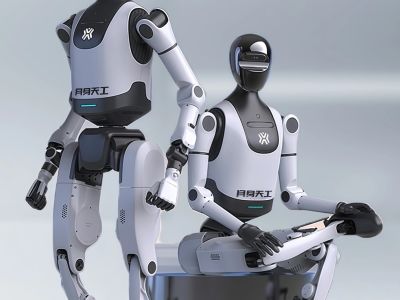
Tiangong
Tiangong is China's pioneering full-sized electric humanoid, blending agility with resilience. Standing 1.63 m tall, it sprints up to 6 km/h, nimbly climbs stairs and tackles uneven terrain thanks to its state-of-the-art perception system. Backed by a high-efficiency battery pack and a modular open-source architecture, Tiangong excels in scenarios from warehouse logistics to disaster response. With its intuitive AI-driven motion control and robust aluminum-composite frame, this robot invites developers worldwide to push the boundaries of human-robot collaboration.

X-Humanoid
Embodied Tien Kung 2.0 Plus
The Embodied Tien Kung 2.0 Plus is an advanced full-size humanoid robot engineered for industrial-grade stability, high-speed bipedal locomotion, and dexterous manipulation. Standing at 170 cm, it achieves speeds up to 12 km/h while navigating stairs, slopes, sand, snow, and uneven terrain with adaptive balancing and impact resistance. Powered by the Wise KaiWu AI platform and NVIDIA Jetson Orin, it supports fully autonomous tasks like parts sorting, grasping, and multi-language interaction. Featuring 20+ degrees of freedom, five-fingered hands, LiDAR, and RGB-D cameras, it excels in perception-driven navigation and bimanual coordination. Dual swappable batteries enable extended runtime for research, logistics, rescue, and service applications. Its modular design allows sensor and end-effector customization, with satellite connectivity for remote operations in challenging environments, bridging embodied AI with real-world deployment.[1][2][3]

X-Humanoid
Embodied Tien Kung 2.0 Lite
The Embodied Tien Kung 2.0 Lite by Beijing Innovation Center of Humanoid Robotics is an advanced humanoid robot designed for complex task automation. This bipedal platform incorporates cutting-edge motion control, dexterous manipulation, and intelligent autonomous capabilities. It combines state-of-the-art sensors, real-time balance control, and sophisticated software systems for versatile real-world applications in research, industry, and service environments.

X-Humanoid
Titan Yi 2.0
Titan Yi 2.0 is an advanced bipedal humanoid robot engineered for research, industrial collaboration, and human-robot interaction. Standing at human scale with human-like proportions, it excels in dynamic locomotion including walking, stair climbing, and uneven terrain navigation. Its high-DOF arms and dexterous 5-finger hands enable precise manipulation of tools, objects up to 10kg per arm, and collaborative tasks. Powered by modular AI compute with ROS2 integration, it supports visual SLAM navigation, reinforcement learning for gait adaptation, and real-time balancing via IMU and force sensors. Key features include swappable lithium-ion batteries for extended runtime, IP54 ingress protection for versatile environments, and safety systems like collision detection and emergency stops. Ideal for labs, manufacturing, and logistics, Titan Yi 2.0 pushes boundaries in embodied AI with smooth, intuitive movements mimicking human agility.

X-Humanoid
Embodied Tien Kung 3.0
Embodied Tien Kung 3.0 is a full-size humanoid robot engineered for industrial deployment, featuring high-torque integrated joints delivering up to 400 N·m peak torque for overcoming 1-meter obstacles and maintaining stability on uneven terrain. With 43 degrees of freedom, it executes dynamic maneuvers like running, stair climbing, jumping, kneeling, and precise millimeter-level operations in confined spaces. Powered by the Wise KaiWu embodied AI platform, it integrates perception, decision-making, and execution for autonomous operation, whole-body tactile sensing, and multi-robot coordination. Open interfaces support ROS2, MQTT, TCP/IP, and tool expansions, enabling adaptation to manufacturing, logistics, and services. Human-like proportions and advanced balance control ensure safe human collaboration with fluid, high-load manipulations

Donut Robotics
Cinnamon 1
Cinnamon 1 is a next-generation mass-produced bipedal humanoid robot developed by Donut Robotics, designed for noisy industrial environments like construction sites and factories. It features autonomous AI powered by a Vision-Language-Action (VLA) system, enabling it to interpret visual, linguistic, and contextual cues to perform tasks independently. A standout capability is its world-first "Silent Gesture Control," allowing operators to command the robot via hand gestures instead of voice, ensuring functionality in high-decibel settings. Built on an OEM platform with custom AI integration, Cinnamon 1 aims to replace human labor in security, light manufacturing, and customer service roles, with domestic Japanese production planned for future iterations.

Noble Machines
Moby 3
Moby 3 is an industrial humanoid robot engineered by Noble Machines to automate hazardous, physically demanding tasks across construction, logistics, manufacturing, and energy sectors. Built around a "whole-body AI" architecture, Moby learns new tasks through natural language instructions, demonstrations, and gesture-based training, eliminating traditional programming. Its rugged form factor features strong aluminum and composite limbs capable of navigating stairs, scaffolding, and cluttered workspaces while lifting up to 27 kg. The robot integrates 34 degrees of freedom with dexterous multi-fingered hands for manipulating industrial tools. Powered by an NVIDIA Jetson Orin edge AI stack, Moby coordinates locomotion, manipulation, and balance in real time, adapting to terrain changes and shifting payloads. Designed for "4D jobs"—dull, dirty, dangerous, and declining—Moby prioritizes practical strength and environmental mobility over human-like aesthetics, enabling autonomous and teleoperated modes for five-hour shifts.

AKIN Robotics
AKINCI-5
AKINCI-5 is Turkey’s first industrial humanoid robot, engineered by AKIN Robotics under AKINSOFT to operate in demanding environments like factories, warehouses, and mining sites. Built on years of iteration from prototypes AKINCI-2 and AKINCI-P, it features AI-supported walking, dynamic balance, and human-like interaction capabilities. The robot showcases remarkably fluid and balanced locomotion, a critical engineering milestone for bipedal systems. Currently in testing and demonstration phases, AKINCI-5 targets manufacturing, logistics, and heavy industry applications. Its design emphasizes robustness, adaptability, and autonomous navigation, positioning it as a competitive entry in the global humanoid robotics race for industrial automation.

Orbit Robotics
HELIOS
HELIOS is a groundbreaking four-armed humanoid robot prototype developed by Orbit Robotics in Switzerland, specifically engineered for space research and operations in microgravity environments. Unlike traditional bipedal humanoids, HELIOS replaces legs with two additional arms, utilizing four coordinated arms to navigate space station interiors, stabilize its body, and perform precise tasks in tight orbital spaces. The robot features a height of 160 centimeters, a top speed of 2 kilometers per hour, and a runtime of approximately 3 hours per charge. Its structure combines aluminum alloys and carbon fiber with electric actuators, a tendon-driven system, and rolling contact joints to minimize moving mass and enhance agility. Designed to reduce astronaut maintenance workload, HELIOS handles routine operational tasks like cargo sorting and satellite servicing, freeing crews to focus on scientific research. Currently in the prototype stage, it is not available for purchase.

Galaxea Dynamics
Kengo
Kengo is Galaxea Dynamics' first self-developed bipedal humanoid robot, unveiled in June 2026 as a strategic expansion from its wheeled R1 mobile-manipulator line. Standing approximately 1.4 meters tall, Kengo features a curved head display and three color schemes, designed for durability and industrial deployment. The robot delivers over 130 N·m of single-joint torque, enabling high-dynamic bipedal motion, autonomous balance, and terrain adaptation. Its control architecture pairs a motion cerebellum with Galaxea's embodied-AI brain, supporting whole-body coordination and sophisticated movement. Kengo integrates one primary sensor type for perceptual foundation and offers eight distinct capabilities including flip kicks, stair walking, and goods sorting. Future versions plan to utilize the G0.5 embodied foundation model for enhanced semantic understanding and task planning, targeting real-world performance in factories, commercial spaces, and home environments.

Persona AI
Persona Humanoid
Persona Humanoid is an industrial-grade bipedal robot engineered for heavy-duty applications in shipyards, construction sites, and manufacturing facilities. Built on a modular platform, it performs skilled physical tasks including welding, grinding, inspection, and material handling with extreme dexterity. The robot operates autonomously in complex, uneven environments, adapting to dynamic conditions while supporting human workers. Powered by advanced embodied AI and trained on extensive datasets, it features robust navigation, force-sensitive manipulation, and long runtime for multi-shift operations. Designed for safety and endurance, Persona Humanoid integrates seamlessly into industrial workflows, offering a transformative solution for repetitive, high-value labor where precision and reliability are critical.

Faraday Future
FF Master
The FF Master is an athletic, human-scale embodied AI humanoid robot designed for adaptive interaction, educational support, and assistance in indoor environments. Standing compact at 131 cm, it features 25 to 30 degrees of freedom (excluding hands) and a peak torque of 120 N·m, enabling dynamic motion for walking, climbing stairs, and navigating uneven terrain. Powered by a swappable 500 Wh battery, it offers approximately 2 hours of runtime per charge with a rapid 1.5-hour charging time. The robot integrates expressive AI with visual SLAM navigation, Wi-Fi/Bluetooth connectivity, and a magnesium-aluminum-polyurethane composite body. Tailored for family fun to professional development, the FF Master supports teleoperation and learned behaviors, making it a versatile companion for research, entertainment, and interactive learning.

Tesla
Optimus Gen 3
Tesla Optimus Gen 3 is a general-purpose humanoid robot designed for both industrial and future home applications, featuring advanced bipedal locomotion and unprecedented hand dexterity. While the main body retains the Gen 2 chassis (173 cm tall, 57 kg), the "Gen 3" designation specifically refers to the upgraded 22-degree-of-freedom hands powered by 50 actuators, a 4.5x increase over previous versions. This robot excels in factory tasks such as sorting battery cells, moving items between bins, and handling fragile objects like eggs without damage. Powered by a 2.3 kWh battery and Tesla's adapted Full Self-Driving AI, it achieves walking speeds of 5–8 km/h and can carry payloads up to 20 kg per arm or deadlift 68 kg. With a runtime of 10–12 hours, Optimus Gen 3 represents a critical step toward mass-producing affordable, autonomous humanoids for repetitive and dangerous tasks.

Menlo Research
Asimov v1
The Asimov v1 is Menlo Research’s first open-source humanoid robot, designed as a DIY kit for developers, researchers, and educators. Standing 1.2 meters tall and weighing 35 kg, it features 25 actuated joints plus 2 passive toe joints for bipedal locomotion. Powered by 120 N·m electric actuators, it supports zero-shot simulation-to-real transfer via MuJoCo. The robot includes a 2MP monocular camera, 4-channel microphone array, embedded speakers, and dual processors (Radxa CM5 for control, Raspberry Pi 5 for networking). Its open hardware (CERN-OHL-S-2.0) and software (GPL-2.0) enable full customization, making it a cost-effective alternative to proprietary humanoid platforms.

UBTECH Robotics
UWORLD U1 Pro
The UWORLD U1 Pro is UBTECH Robotics' flagship full-size, hyper-bionic humanoid designed primarily for emotional companionship, social assistance, and customer-facing roles rather than heavy industrial labor. Standing at 168 cm (female) or 183 cm (male), it features 88 degrees of freedom, realistic silicone skin with detailed hair and facial features, and an emotion-aware AI capable of recognizing over 20 human emotional states. The Pro model offers superior locomotion and manipulation compared to the Lite version, enabling smoother walking and better object handling in homes, commercial spaces, and exhibitions. With a battery life of 2–4 hours and Wi-Fi connectivity, it serves as a home companion, educational assistant, reception greeter, or elder care supporter, emphasizing natural conversation and interactive presence over third-party programming or complex terrain navigation.

UBTECH Robotics
UWORLD U1 Ultra
The UWORLD U1 Ultra is UBTECH Robotics’ flagship hyper-bionic humanoid, designed for premium companionship, hospitality, and research. It features biomimetic silicone skin, an emotion-driven AI capable of recognizing over 20 emotional states with 500ms response latency, and 88 degrees of freedom for fluid, human-like motion. The robot stands 168 cm (female) or 183 cm (male) tall, weighs 35.2 kg or 42 kg respectively, and excels in autonomous walking, dancing, and expressive gestures. Targeted at high-end applications, it prioritizes emotional connection over heavy labor, with a runtime of 2–4 hours and Wi-Fi connectivity for home companions, educational assistants, and elderly care support.