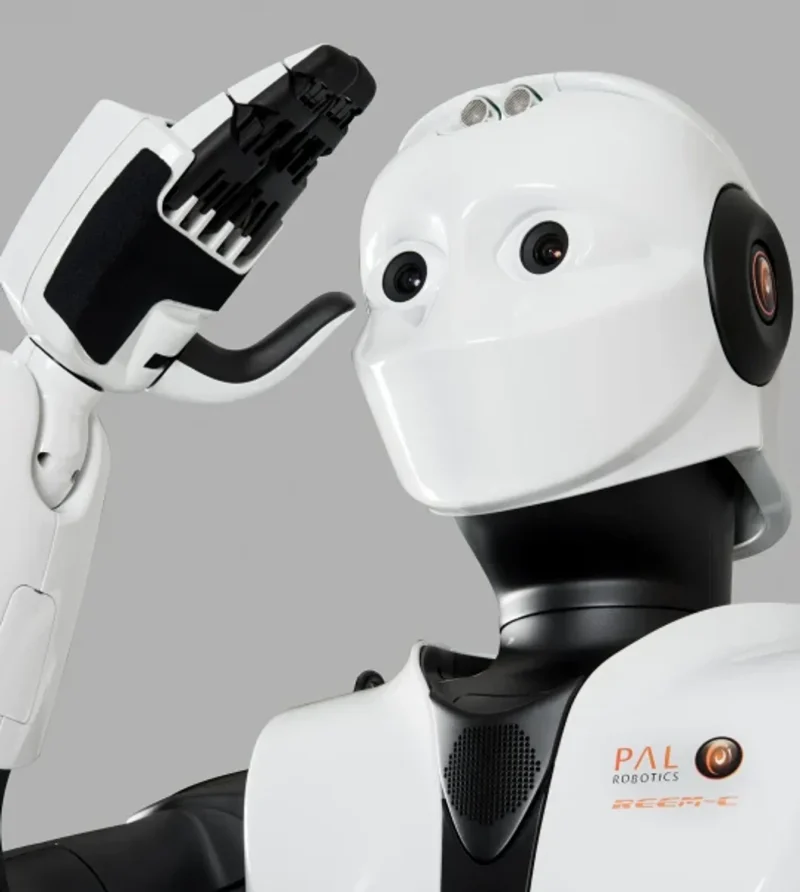
REEM-C
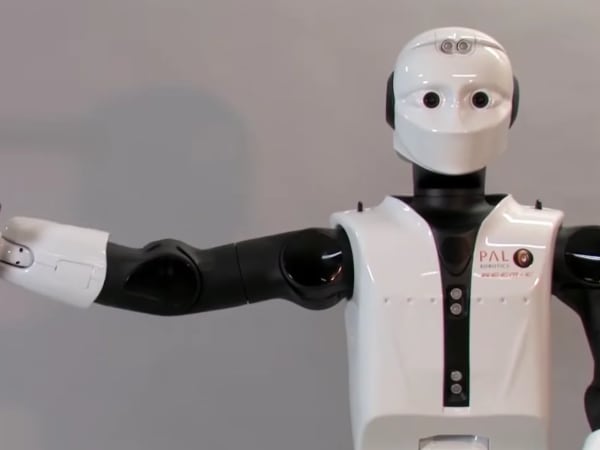
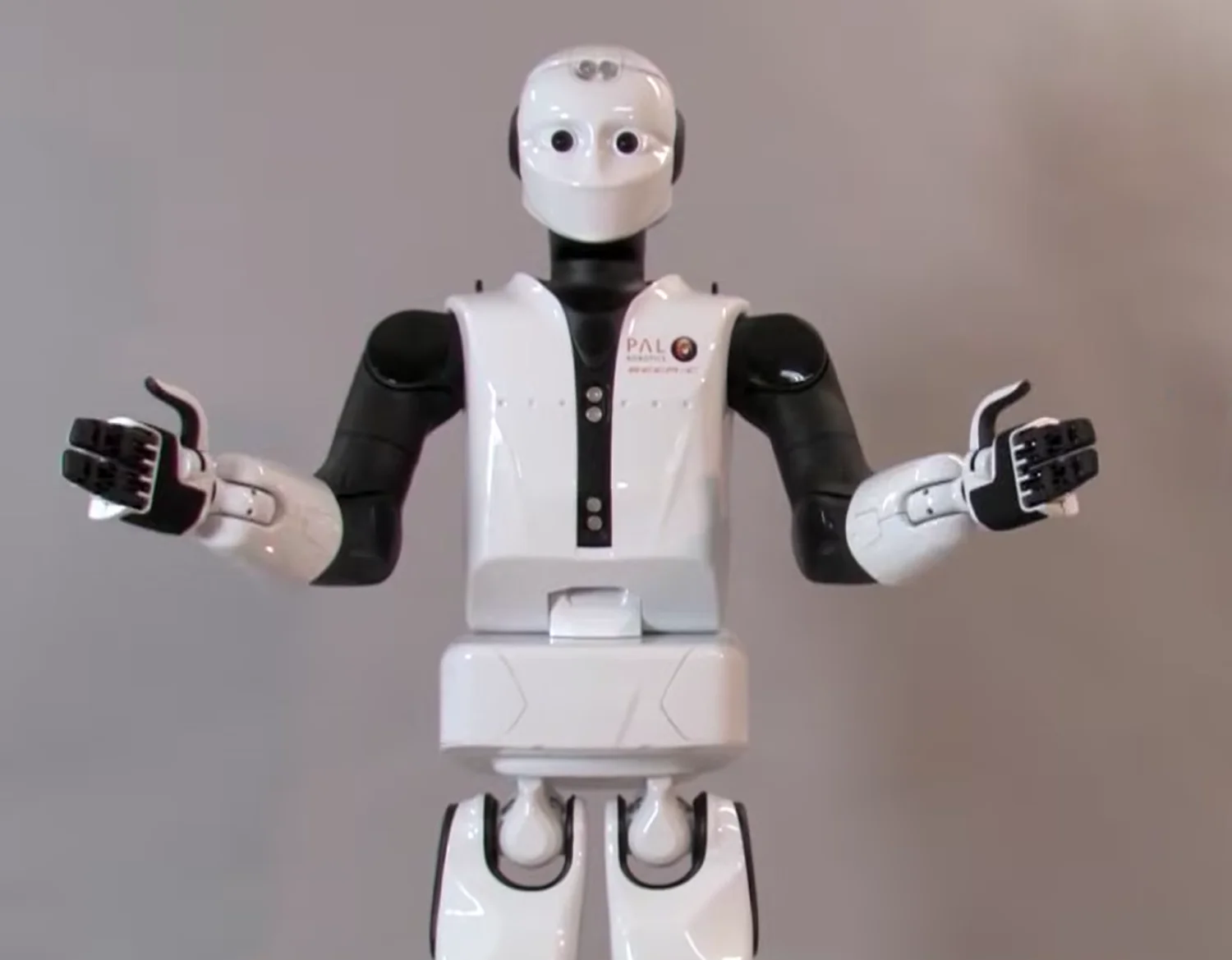
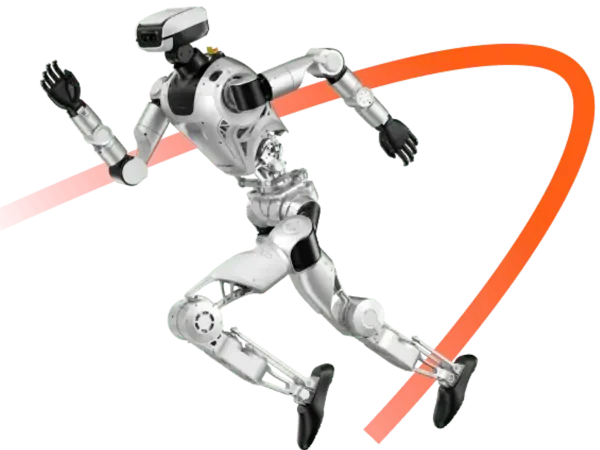
The REEM-C is a full-size bipedal humanoid robot designed for advanced research in robotics, featuring 68 degrees of freedom for human-like mobility and manipulation. Standing at 165 cm tall, it excels in dynamic walking, stair climbing, and autonomous navigation using ROS-based software. Equipped with dual Intel Core i7 processors, stereo cameras, force/torque sensors in ankles, IMUs, and microphone arrays, it supports visual recognition, speech interaction, and whole-body control algorithms. Each arm offers 7 DOF with 1 kg hand payload (stretched) or up to 10 kg total lift capacity, complemented by 19-DOF hands for dexterous grasping. Powered by a 48V 1225 Wh lithium-ion battery, it operates 3 hours walking or 6 hours standby. Customizable and modular, REEM-C enables studies in human-robot interaction, AI, balancing via ZMP control, and complex tasks like dancing or object handling in indoor environments.
Quick Overview & Key Facts
REEM-C is a humanoid system developed by PAL Robotics in Spain and launched in 2013. Starting price is estimated at USD 100,000 (Research humanoid platform). It is currently ranked #285 in most-viewed humanoid robots on Origin of Bots. It supports Tools, packages, precision instruments, people interaction. Operating battery runtime is rated at 3 hours (walking). Primary applications include Navigation research, AI development, grasping tasks, speech interaction, walking stability studies. Featured in editorial articles including “PAL Robotics Boosts REEM-C Balance with Renishaw Encoders”.
What Can REEM-C Do?
Core operational tasks and activities demonstrated or performed by REEM-C.
Real-World Applications of REEM-C
Industries, working environments, and deployment suitability for REEM-C.
REEM-C Capabilities
Inherent physical, perceptual, and cognitive abilities built into REEM-C.
Download Media Cards
Story CardExport high-resolution story cards summarizing REEM-C's operational tasks, real-world applications, and capabilities.
Image Gallery
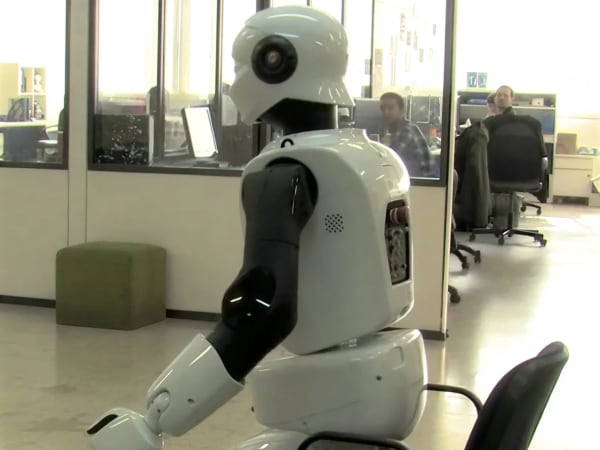
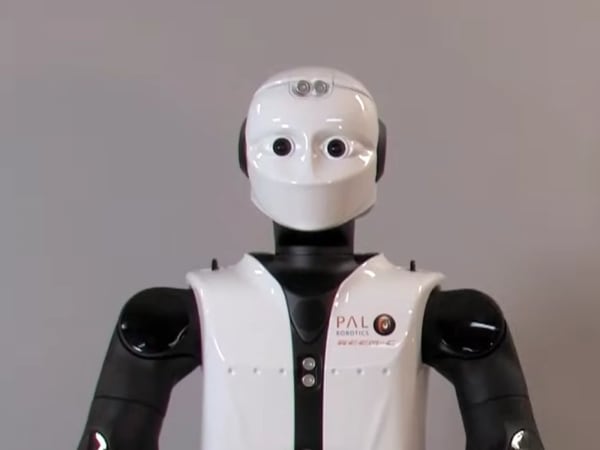
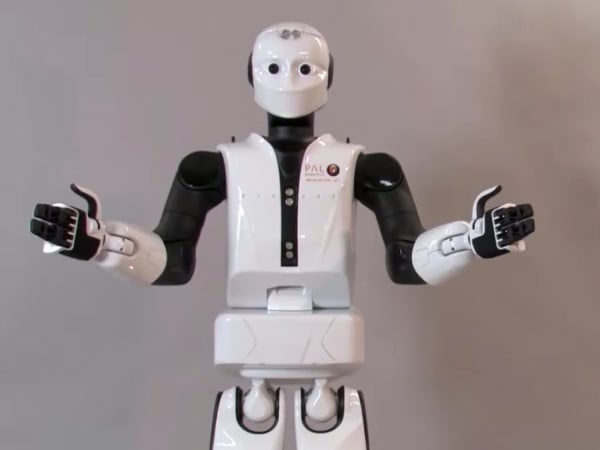
Below images are from PAL Robotics's official sources
Review Videos
Watch expert reviews and demonstrations of this robot

Robot Specifications
Latest News About REEM-C
Stay updated with the latest articles and developments
More Robots from PAL Robotics
Explore other robots from this manufacturer

More Humanoid Robots
Discover more robots in the same category

Frequently Asked Questions
Get answers to common questions about this robot
Q1. What is REEM-C, and what problem is it designed to solve?
REEM-C is an adult-sized humanoid robot developed by PAL Robotics in Spain, standing 165 centimeters tall and weighing 80 kilograms. It is designed as a research platform to address challenges in bipedal locomotion, autonomous navigation, artificial intelligence, perception systems, and human-robot interaction. The robot enables researchers and institutions to study how humanoid systems can perform complex tasks in real-world environments.
Q2. What are the main capabilities and key features of REEM-C?
REEM-C features 68 degrees of freedom, dual Intel i7 processors, stereo and rear cameras, force-torque sensors in ankles and wrists, laser range sensors on feet, four microphones, four sonar sensors, and an inertial measurement unit. It can walk bipedally at speeds up to 1.5 kilometers per hour, navigate autonomously indoors, climb stairs, lift payloads of up to 10 kilograms with both arms, and perform grasping and manipulation tasks. The robot includes pre-developed software for walking, perception, manipulation, navigation, and human-robot interaction.
Q3. Who is REEM-C built for, and which industries can benefit from it?
REEM-C is primarily designed for universities, research centers, and laboratories developing robotics technologies. Target applications include academic research in AI, bipedal locomotion, perception systems, and human-robot interaction, as well as service robotics development. Educational institutions use the platform to teach advanced robotics concepts and test new algorithms in mobility, perception, and communication.
Q4. Is REEM-C a commercial product or still a research prototype?
REEM-C is a commercial humanoid robot offered by PAL Robotics as a research platform. It is not a prototype but a fully functional system with modular hardware and versatile software architecture designed for customization and adaptation to different research requirements.
Q5. Is REEM-C currently available for purchase, and when is it expected to ship?
REEM-C is available as an ongoing commercial offering from PAL Robotics. Interested parties can request quotes and information directly from the manufacturer. Availability and delivery timelines depend on distributor fulfillment and customization requirements for individual orders.
Q6. How does REEM-C actually work in real-world environments?
REEM-C operates using 22 brushless DC motors and 14 brushed DC motors distributed across its joints. It runs on the Robot Operating System (ROS) internally and uses ros_control and OROCOS middleware for control. The robot navigates using laser range sensors and stereo vision, maintains balance through force-torque sensors and inertial measurement units, and executes tasks through whole-body control algorithms. A 48V lithium-ion battery provides approximately three hours of operation during walking and six hours during idle periods.
Q7. When was REEM-C announced or officially launched?
REEM-C was introduced in 2013 as PAL Robotics' latest commercial humanoid robot offering. The platform has remained in ongoing development and deployment since its initial release, with continuous refinement of software and capabilities.
Q8. How is REEM-C different from other robots in the same category?
REEM-C distinguishes itself through its modular hardware design, extensive sensor suite including dual force-torque sensors and multiple vision systems, and integration with ROS and advanced control frameworks. Its human-like proportions and size make it suitable for studying human-robot interaction in environments designed for human workers. The platform includes pre-developed software for multiple capabilities, reducing development time compared to building systems from scratch.
Q9. Does REEM-C require additional development or customization after purchase?
REEM-C is designed with a modular and upgradeable architecture that allows customization for specific research applications. Optional expansions include additional force-torque sensors in wrists, laser sensors on feet, and supplementary inertial measurement units. The robot's software is programmable for high-level tasks, and a Gazebo simulation environment is freely available for development and testing before deployment on the physical platform.
Q10. What is the future roadmap or planned upgrades for REEM-C?
PAL Robotics has not publicly announced specific roadmap details or planned upgrades for REEM-C as of early 2026. The company continues to support the platform through software updates and maintains technical support for research institutions. Interested users are encouraged to contact PAL Robotics directly for information about potential enhancements or future development directions.
User Comments (No Login needed)
Share your thoughts, experiences, or questions about this robot.
Comments are reviewed before posting.