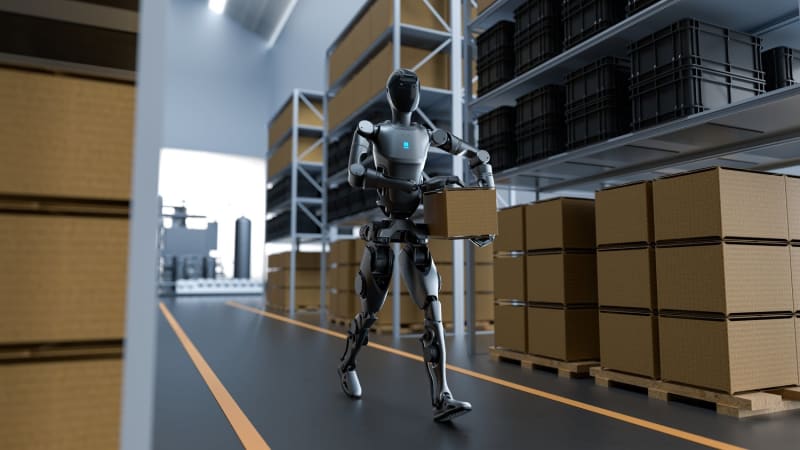
D9
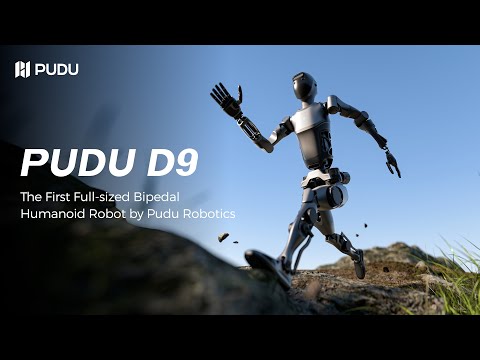
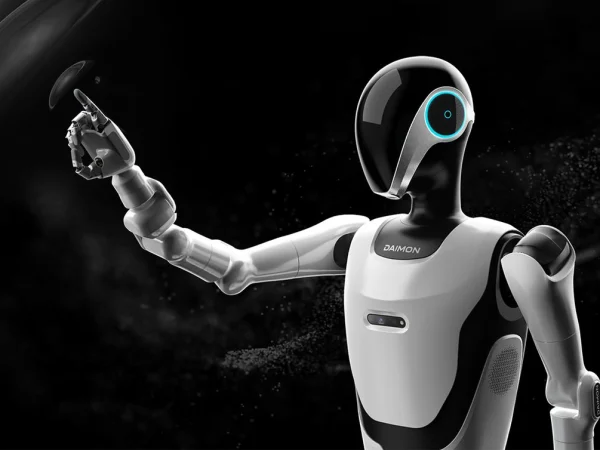
The PUDU D9 is a full-sized bipedal humanoid robot designed to replicate adult human proportions with a height of 170 cm and weight of 65 kg. It features 42 degrees of freedom enabling fluid, human-like motion, including dual 7-DoF arms equipped with the PUDU DH11 dexterous hand offering 11 degrees of freedom for precise manipulation. The robot can walk at speeds up to 2 m/s, navigate stairs and slopes, and perform complex tasks requiring both strength and delicacy with a payload capacity exceeding 20 kg. Advanced sensors including RGB, RGBD cameras, tactile sensors, and IMU support real-time 3D semantic mapping and autonomous navigation. Powered by AI and reinforcement learning, the D9 adapts quickly to diverse commercial and research applications, making it suitable for service, industrial automation, and exploration in unstructured environments.
Quick Overview & Key Facts
D9 is a humanoid system developed by Pudu Robotics in China and launched in 2025. Starting price is estimated at $150,000 - $250,000 (Estimated). It is currently ranked #118 in most-viewed humanoid robots on Origin of Bots. It supports Tools, packages, precision instruments, human interaction. Operating battery runtime is rated at 4 hours (Estimated based on similar humanoid robots). Primary applications include Industrial automation, service robotics, research and development, healthcare assistance, warehouse logistics. Featured in editorial articles including “Pudu D9 Humanoid Flexes 352Nm Torque, 20kg Payload”.
What Can D9 Do?
Core operational tasks and activities demonstrated or performed by D9.
Real-World Applications of D9
Industries, working environments, and deployment suitability for D9.
D9 Capabilities
Inherent physical, perceptual, and cognitive abilities built into D9.
Download Media Cards
Story CardExport high-resolution story cards summarizing D9's operational tasks, real-world applications, and capabilities.
Image Gallery
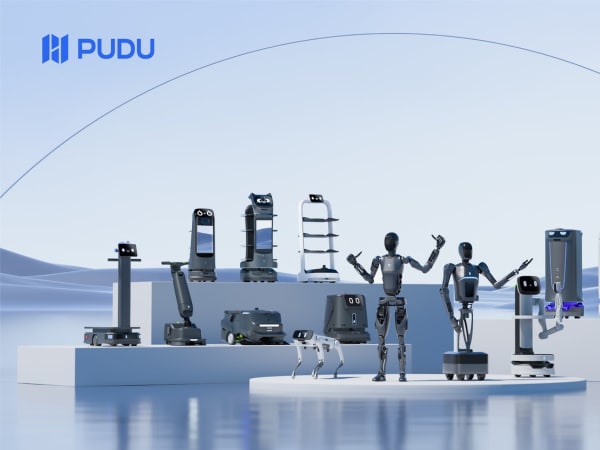
Below images are from Pudu Robotics's official sources


Review Videos
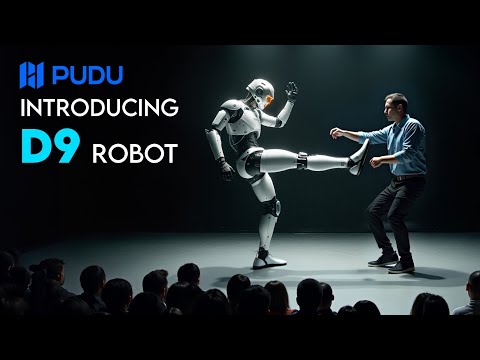
Watch expert reviews and demonstrations of this robot


Robot Specifications
ConfirmedValues marked Confirmed were checked against the manufacturer's official data; select the badge to open the source.
Latest News About D9
Stay updated with the latest articles and developments

Compare This Robot With Others
See how D9 stacks up against other leading robotics models in detailed side-by-side technical comparisons.

More Robots from Pudu Robotics
Explore other robots from this manufacturer
D7
Manufactured by Pudu Robotics
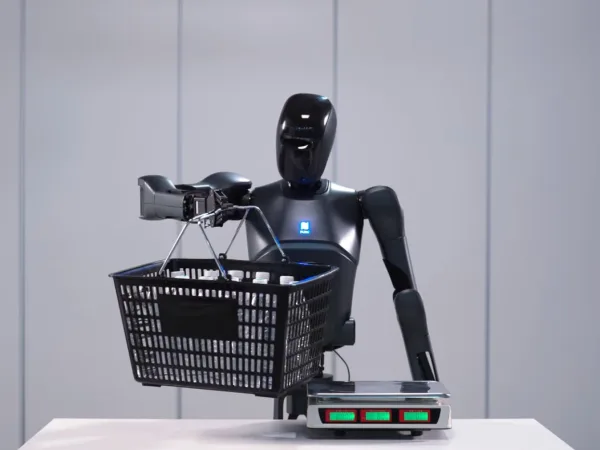
PUDU D7 by Pudu Robotics is a next-generation semi-humanoid service robot that blends advanced mobility with high precision manipulation. Featuring an omnidirectional chassis and a human-like upper body with articulated arms, D7 navigates diverse indoor environments with agility and balance. Its 30 degrees of freedom, expandable to 50 with specialized hands, support complex tasks like elevator control, item transport, and sorting. Powered by a high-capacity lithium-ion battery, D7 delivers over eight hours of continuous operation. Embedded AI enables autonomous planning, perception, and adaptive execution, making it ideal for service, industrial, and commercial automation.
More Humanoid Robots
Discover more robots in the same category
Robots From Other Categories
Discover complementary robots from different categories that work well together
Frequently Asked Questions
Get answers to common questions about this robot
Q1. What are D9's primary capabilities?
The PUDU D9 excels at bipedal locomotion, dexterous manipulation, autonomous navigation, and multimodal human-robot interaction. It performs repetitive and delicate operations in commercial settings, including object manipulation, stair climbing, slope navigation, and real-time environmental mapping with advanced AI-driven task adaptation.
Q2. How to operate D9?
The D9 operates through advanced AI models and reinforcement learning algorithms that enable natural human-robot interaction via multimodal sensory input including visual, tactile, force, and auditory feedback. Users can command the robot through voice, gesture, or direct control interfaces integrated with its semantic navigation system for autonomous task execution.
Q3. What is the maximum carrying capacity of D9?
The PUDU D9 has a maximum payload capacity of 20 kg (44 lbs) across its dual 7-degree-of-freedom arms combined. The PUDU DH11 dexterous hand can achieve a maximum lifting load of 40 kg, though this represents the hand's individual capability rather than the robot's overall payload capacity.
Q4. How long can D9 operate on a single charge?
Battery capacity and charging time specifications are not publicly disclosed. Based on typical commercial humanoid robots of similar size and computational power (275 TOPS), estimated operational time ranges from 4-8 hours depending on task intensity and environmental conditions, though official specifications should be confirmed with Pudu Robotics.
Q5. What safety features does D9 have?
The D9 incorporates advanced stability control and can recover from being kicked off balance, similar to Boston Dynamics robots. Its low-noise lightweight gait control minimizes disruption in human environments, and its comprehensive sensor suite enables real-time obstacle detection and autonomous route planning to prevent collisions.
Q6. How to maintain D9?
Specific maintenance protocols are not detailed in available documentation. Standard maintenance for humanoid robots typically includes regular inspection of joints and actuators, sensor calibration, battery health monitoring, and software updates. Contact Pudu Robotics directly for detailed maintenance schedules and authorized service procedures.
Q7. What surfaces can D9 navigate?
The D9 navigates flat surfaces, stairs, slopes, and complex urban terrains with its advanced lightweight gait control. Its bipedal design and 42 degrees of freedom enable adaptation to diverse environments, though specific surface friction coefficients and maximum slope angles are not specified in available documentation.
Q8. How does D9 handle obstacles?
The D9 uses a sophisticated visual semantic navigation system with high-precision sensors for real-time 3D mapping and autonomous route planning. This enables dynamic obstacle avoidance and adaptive path recalculation, allowing the robot to navigate around unexpected barriers while maintaining operational efficiency.
Q9. What is D9's maximum speed?
The PUDU D9 walks at a maximum speed of 2 meters per second (4.5 mph), which matches a human's brisk walk or slow jog. This speed is optimized for safe operation in human-populated commercial environments while maintaining stability and control.
Q10. What are common use cases for D9?
Primary applications include research and development in robotics and AI, industrial automation tasks, service and assistance in retail and hospitality, healthcare support, warehouse operations, cleaning services, and exploration of unstructured environments requiring human-like dexterity and mobility.
Q11. How to reset D9?
Specific reset procedures are not documented in available resources. Standard reset protocols for humanoid robots typically involve power cycling, factory reset through the control interface, or emergency stop activation. Consult Pudu Robotics' official documentation or support team for precise reset procedures and troubleshooting guidelines.
Q12. How to control D9?
The D9 supports multiple control modalities including autonomous operation via AI algorithms, voice commands, gesture recognition, and direct manual control interfaces. Its advanced reinforcement learning capabilities enable rapid task adaptation, allowing operators to program complex behaviors through demonstration or direct instruction.
Q13. How to connect D9 to Wi-Fi?
Detailed connectivity specifications are not provided in available documentation. The D9 likely supports standard wireless protocols for remote monitoring and control. Contact Pudu Robotics for specific Wi-Fi setup procedures, network requirements, security protocols, and remote operation capabilities.
Q14. What is D9's warranty?
Warranty information is not specified in available public documentation. As a prototype-stage commercial product currently accepting inquiries, warranty terms likely vary based on purchase agreements and deployment scenarios. Contact Pudu Robotics directly for warranty coverage, duration, and service terms.
Q15. How to update D9's software?
Software update procedures are not detailed in available resources. Updates likely occur through Pudu's proprietary software platform or cloud-based management system. For specific update protocols, compatibility information, and feature enhancements, consult Pudu Robotics' official support documentation or contact their technical team directly.
Rating and Reviews
Share your experience and help others decide!
Loading...
User Reviews
No user reviews. Be the first one to review!
User Comments (No Login needed)
Share your thoughts, experiences, or questions about this robot.
Comments are reviewed before posting.