
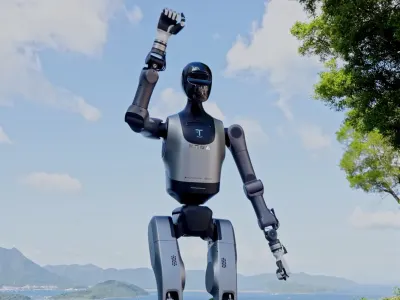
The D9 by Pudu Robotics is a full-sized bipedal humanoid robot positioned for industrial automation, service robotics, research, healthcare, and warehouse logistics. Standing at 170 cm tall and weighing 65 kg, it features 42 degrees of freedom, a maximum walking speed of 2 m/s, and advanced visual semantic SLAM for navigation. Key differentiators include RGBD cameras, 12 tactile sensing areas with 1018 pixels, 275 TOPS computing power, and reinforcement learning for learned behaviors, enabling dexterous manipulation up to 20 kg payload.
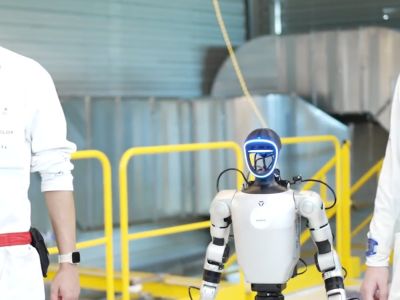
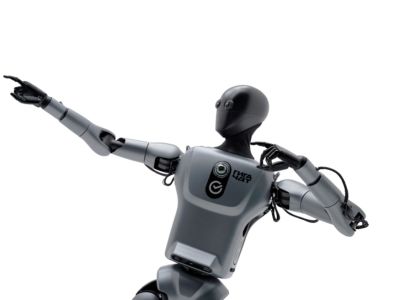
The Hoxo Robot by Orano and Capgemini targets nuclear plant inspection, hazardous zone monitoring, and human-robot collaboration in industrial settings. With dimensions of 170 x 50 x 40 cm and weighing 80 kg, it offers a max walking speed of 1 m/s and 4-year battery life. It stands out with specialized sensors like stereo cameras, LiDAR, ultrasonic sensors, and gyroscope, alongside indoor SLAM navigation tailored for technical gesture execution in high-risk environments.
Detailed Analysis
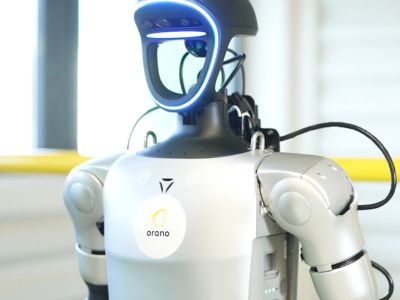
Design & Build Quality
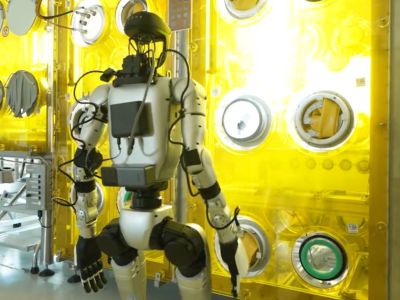
D9 measures 170 x 50 x 40 cm and weighs 65 kg, featuring 42 degrees of freedom for human-like movement and dexterous PUDU DH11 hands with 11 degrees of freedom and maximum joint torque of 352 N·m. Hoxo Robot matches dimensions at 170 x 50 x 40 cm but is heavier at 80 kg. Both employ humanoid proportions suited for industrial tasks, though D9's lighter build and higher degrees of freedom support greater agility.
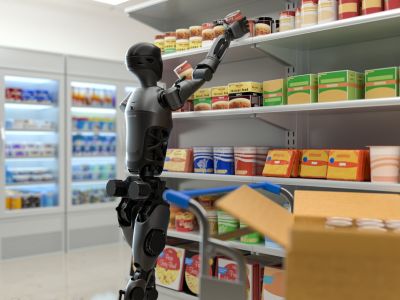
Mobility & Navigation
D9 achieves a maximum walking speed of 2 m/s using visual semantic SLAM, LiDAR mapping, and real-time 3D mapping for obstacle navigation and terrain adaptation. Hoxo Robot reaches 1 m/s (3.6 km/h) with indoor SLAM, visual SLAM, and LiDAR mapping focused on structured environments. D9's higher speed and semantic capabilities provide an edge in dynamic settings like warehouses.
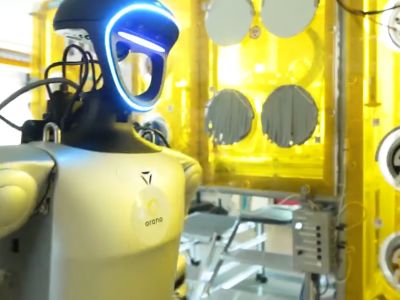
Sensors & Perception
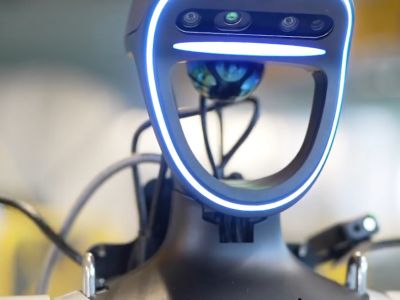
D9 integrates RGB cameras, RGBD cameras, tactile sensors across 12 areas with 1018 pixels, IMU, force sensors, and auditory sensors for comprehensive perception. Hoxo Robot uses RGB cameras, stereo cameras, LiDAR, ultrasonic sensors, IMU, gyroscope, and force sensors. D9's tactile density and RGBD enable finer manipulation, while Hoxo's stereo and ultrasonic suit precise indoor localization.
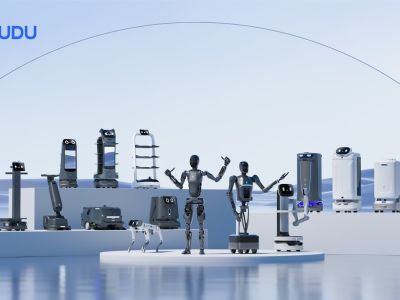
AI Capabilities
Both robots support autonomous control, teleoperation, and learned behaviors, with D9 emphasizing reinforcement learning algorithms that improve from human demonstrations. D9 delivers 275 TOPS computing power for embodied intelligence tasks. Hoxo relies on proprietary AI modules without specified compute metrics, aligning AI for hazardous monitoring and gesture execution.
Battery & Power Efficiency
D9 offers a 3-5 year battery lifespan, while Hoxo provides 4 years. Specific capacity details for D9 include 15 Ah (0.72 kWh), supporting extended operations in service applications. Both designs prioritize long-duration performance for industrial use without frequent recharging.
Use-Case Suitability
D9 suits broad applications in industrial automation, healthcare assistance, warehouse logistics, and research with capabilities for stair navigation and 20 kg payload handling. Hoxo excels in nuclear inspections, hazardous monitoring, and technical gestures in controlled industrial zones. D9's versatility contrasts with Hoxo's specialization in high-risk, collaborative environments.
Software Ecosystem
Both utilize ROS2-based operating systems with proprietary AI software and APIs; D9 adds general programming integration, while Hoxo specifies Python and C++ APIs. This shared foundation enables custom development for automation tasks. Compatibility supports deployment across industrial and service sectors.
Safety Features
D9 and Hoxo both incorporate force limiting, collision detection, emergency stop, and collaborative modes for human-robot interaction. These features ensure safe operation in shared workspaces. Identical safety protocols align with industrial standards.
Analysis Score Summary
Total Score
10
D9
VS
Based on Detailed Analysis
Total Score
6
Hoxo Robot
📊 Win: 2 points | Trade-off: 1 point each
Scores are summed across every insight: a clear winner earns 2 points, while balanced trade-offs give each robot 1 point. The total reflects how often each robot outperforms the other (or shares the spotlight) throughout the detailed analysis sections.
Capabilities & Operational Tasks
Head-to-head comparison of what D9 and Hoxo Robot can do, their applications, and capabilities.
What Can D9 & Hoxo Robot Do?
18Core operational tasks, activities, and physical manipulation duties evaluated side-by-side.
| Task & Description | Model AD913 supported | Model BHoxo Robot12 supported |
|---|---|---|
| Autonomous task execution | High | High |
| Carrying and transport | High | High |
| Cleaning | High | — |
| Collaborative work | High | High |
| Human interaction | High | — |
| Inspection | — | High |
| Loading and unloading | High | — |
| Machine operation | — | High |
| Machine tending | — | High |
| Maintenance | — | High |
| Material handling | High | — |
| Move objects | High | High |
| Navigation | High | High |
| Obstacle traversal | High | High |
| Pick and place | High | High |
| Repetitive physical tasks | High | — |
| Sorting | High | — |
| Tool use | — | High |
Technical Specifications
Head-to-head performance data and metrics
| Specification | Model AD9 | Model BHoxo Robot |
|---|---|---|
Functional Utility & Use Cases4 Comparative Metrics | ||
Control Method | Autonomous, teleoperation, learned behaviors via reinforcement learning | Autonomous, teleoperation, learned behaviors |
Use Cases | Industrial automation, service robotics, research and development, healthcare assistance, warehouse logistics | Nuclear plant inspection, technical gesture execution, hazardous zone monitoring, human-robot collaboration in industrial settings |
Multi Robot Coord | Yes, supports multi-robot coordination (Estimated) | Supports multi-robot coordination |
Pet Friendly | Yes, with safety protocols | Yes, with safety protocols |
Manipulation & Load Capacity4 Comparative Metrics | ||
Carrying Capacity | 10 kg per arm (20 kg maximum payload) | 5 kg per arm |
Deadlift Capacity | 20 kg maximum | 10 kg |
Payload Type | Tools, packages, precision instruments, human interaction | Tools, packages, precision instruments, human interaction |
Modular Attachments | Tool changers, end-effector options including different hands and grippers | Tool changers, interchangeable end-effectors |
Kinematic Architecture & Dexterity4 Comparative Metrics | ||
Degrees of Freedom | 42 DoF | 28 |
Material | Aluminum frame, composite and plastic coverings, soft materials in hand areas | Aluminum frame, composite panels, soft polymer coverings |
Mobility Type | Legged (bipedal walking) | Legged (bipedal walking) |
Hardware Interface | USB, GPIO, CAN bus, serial ports | USB, GPIO, CAN bus, serial ports |
Functional Utility & Use Cases
4 Comparative Metrics
Manipulation & Load Capacity
4 Comparative Metrics
Kinematic Architecture & Dexterity
4 Comparative Metrics
Related Comparisons
Discover similar robot matchups to expand your knowledge and find the perfect solution

AgiBot G2 vs D7
Compare AgiBot G2 and D7. Detailed analysis of navigation, battery, and sensors.
D7 vs Walker Tienkung
Compare D7 and Walker Tienkung. Detailed analysis of sensors, navigation, mobility, and battery life.

D7 vs Agibot A2 Lite
D7 or Agibot A2 Lite? Compare specs, navigation, battery, sensors, and real-world performance.
D7 vs Green
Compare D7 and Green humanoid robots by Pudu Robotics and Sberbank on AI, mobility, sensors, and software features.
Disclaimer
All content, comparisons, and verdicts on this website are based on our research, testing, and opinion. While we strive for accuracy, we do not guarantee the completeness, reliability, or suitability of any information. Performance, specifications, and results may vary depending on usage and conditions. This website and its authors are not responsible for any decisions, actions, or outcomes based on the information provided. Always verify product details with the manufacturer before making purchase or operational decisions.