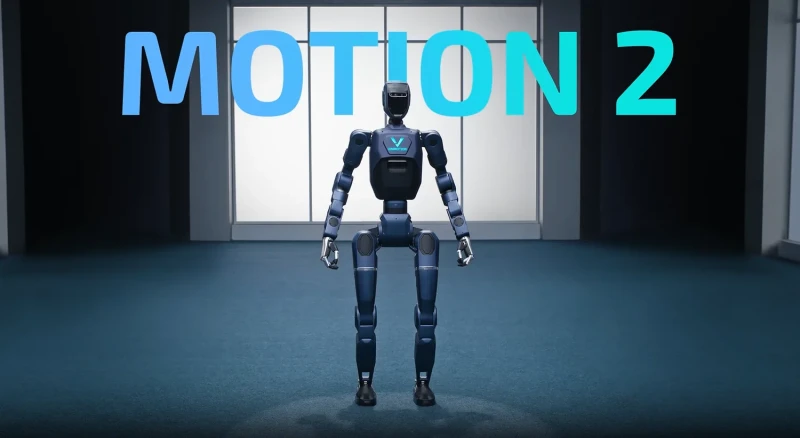
Motion 2
AI ChatLast updated:
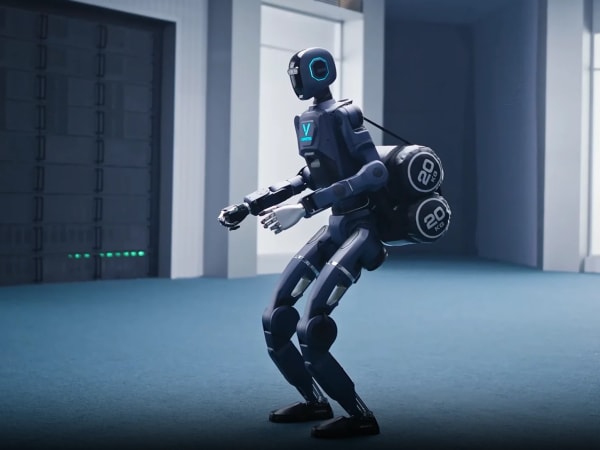
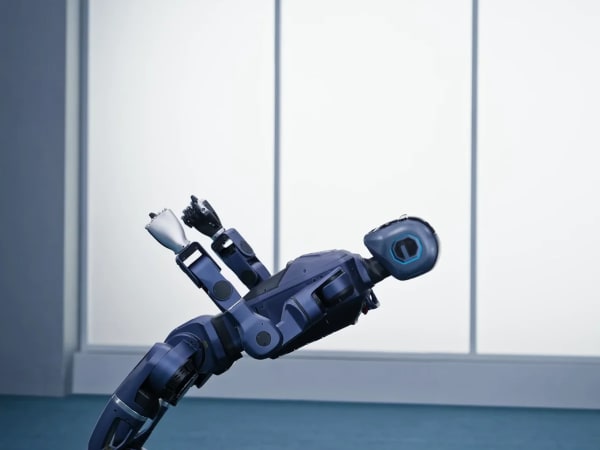
The Motion 2 is a second-generation full-size bipedal humanoid robot from VinMotion, engineered for industrial applications with advanced on-device AI via Qualcomm Dragonwing IQ10 processor. It excels in dynamic balance, enabling stable heavy lifting up to 40kg, self-recovery from falls, and complex motions like karate chops, backbends, and precise grasping with five-fingered hands. Featuring a natural human-like gait, faster walking speed, and greater agility than its predecessor, Motion 2 supports autonomous charging, battery swapping, and 24/7 operation. Designed for factories and warehouses, it integrates multi-language interaction, AI-driven motion planning, and human-in-the-loop supervision for safe, scalable deployment in logistics, material handling, visual inspections, and assembly tasks, pushing boundaries in physical AI and humanoid scalability
Quick Overview & Key Facts
Motion 2 is a humanoid robot made by VinMotion in Vietnam, launched in 2026 and built for heavy material transport (40kg capacity), high-precision assembly, and visual quality inspections. Its estimated price is USD 75,000 – 100,000 (Targeted commercial pricing for 2026). Featured in “Vietnam's Motion 2 Robot Conquers CES With Autonomous Battery Swapping”.
- Dimensions
- 165 x 60 x 40 cm (Approximate height: 5'5")
- Weight
- 75 kg (Standard configuration)
- Mobility
- Legged (bipedal walking)
- Top speed
- 4.0 km/h (1.1 m/s) with refined human-like walking gait.
- Handles
- Tools, packages, precision instruments, people interaction
- Battery runtime
- 8 hours on full charge
- Charging time
- 4 hours
- Operating environment
- Indoor, both
What Can Motion 2 Do?
Core operational tasks and activities demonstrated or performed by Motion 2.
Real-World Applications of Motion 2
Industries, working environments, and deployment suitability for Motion 2.
Motion 2 Capabilities
Inherent physical, perceptual, and cognitive abilities built into Motion 2.
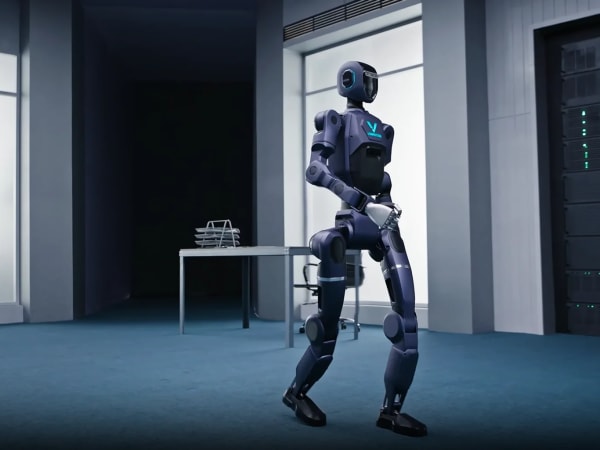
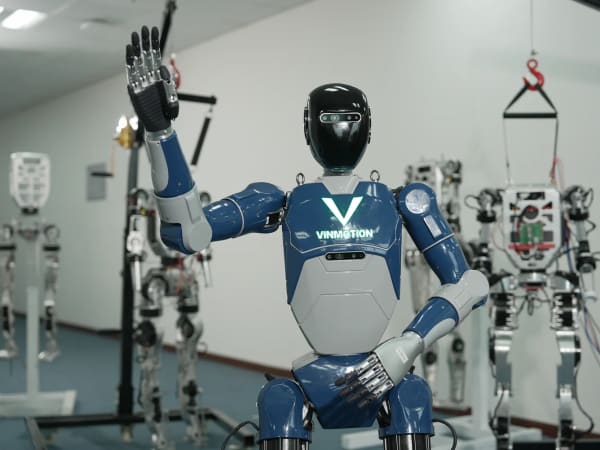
Image Gallery
Below images are from VinMotion's official sources
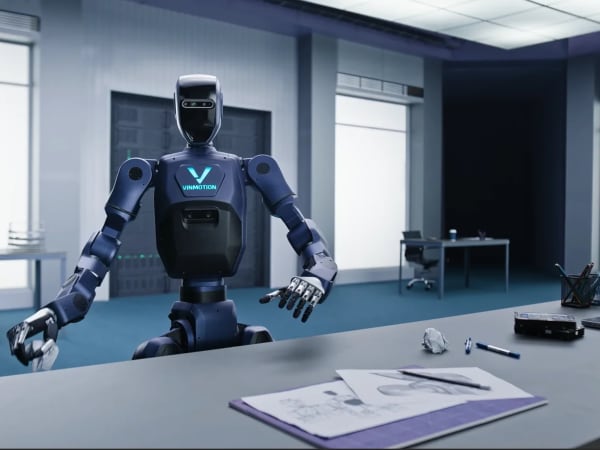
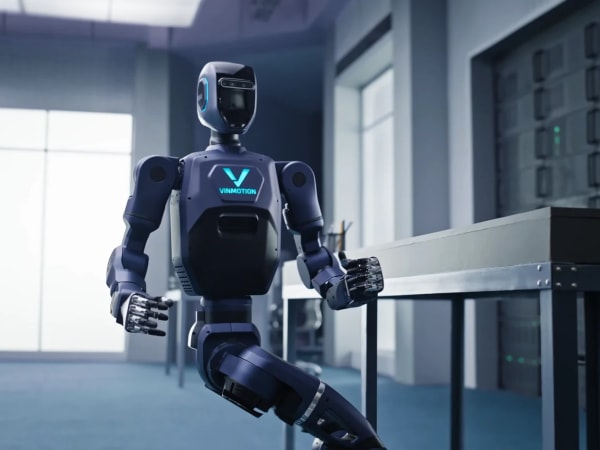
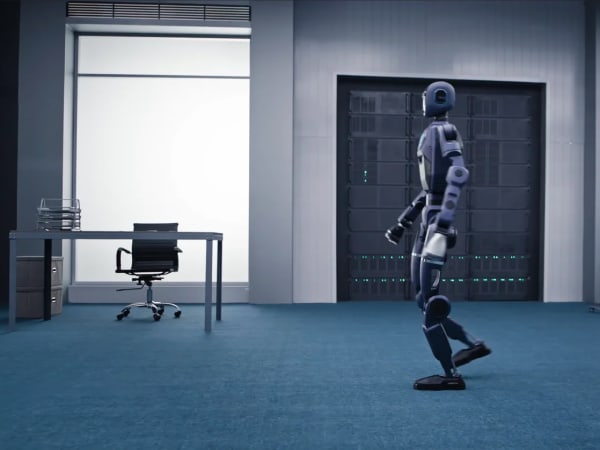
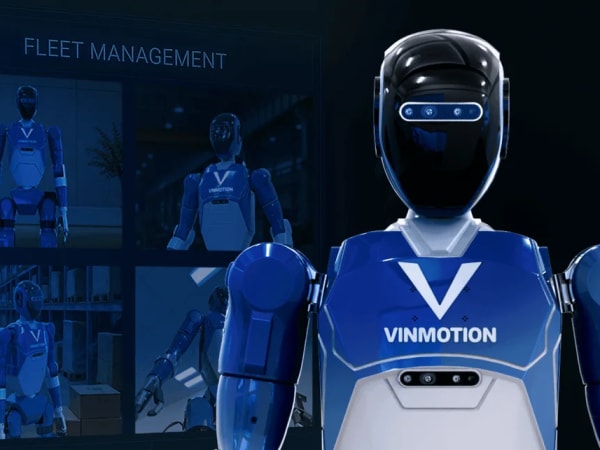
Review Videos
Watch expert reviews and demonstrations of this robot


Robot Specifications
Values without a Confirmed badge are compiled from public sources and may not be manufacturer-verified.
Not yet published by VinMotion: warranty terms, safety certifications, EMC compliance, IP rating, noise level, expected lifespan, maintenance schedule, firmware version and 7 more.
Latest News About Motion 2
Stay updated with the latest articles and developments

Motion 2 vs Motion 1, Bolt, Moby 3 and Galbot ET 1
Motion 2 overlaps with these alternatives on Industrial automation and Logistics. Motion 2 leads this group on runtime but trails on max speed and weight.
Industries and capabilities are tags, not scores: a tick means the robot is listed for it. Green marks the best figure in a row (highest max speed and runtime; lowest weight). Ranges are not ranked.
| Spec | Motion 2VinMotion | Motion 1VinMotion | BoltMirrorMe Technology | Moby 3Noble Machines | Galbot ET 1Galbot Robotics |
|---|---|---|---|---|---|
| Industries | |||||
| Industrial automation | Yes | Yes | No | Yes | Yes |
| Logistics | Yes | Yes | No | No | Yes |
| Manufacturing | Yes | Yes | No | Yes | Yes |
| Material handling | Yes | No | No | No | Yes |
| Capabilities | |||||
| Grasping | Yes | Yes | No | Yes | Yes |
| Object manipulation | Yes | Yes | No | Yes | Yes |
| Running | Yes | No | Yes | No | Yes |
| Spatial awareness | Yes | Yes | Yes | Yes | No |
| Max Speed | 1.11 m/s | 2 m/s | 10 m/s | 0.8 m/s | 1.11 m/s |
| Runtime | 8 h | 6 h | 3–5 h | 5 h | 3.5–4.5 h |
| Weight | 75 kg | 70 kg | 75 kg | 57 kg | 65 kg |
| Released | 2026 | 2025 | 2026 | 2026 | 2026 |
Notes such as conditions or alternate figures are left out and values are shown in common units; open each page for the full specs. Browse all Humanoid Robots
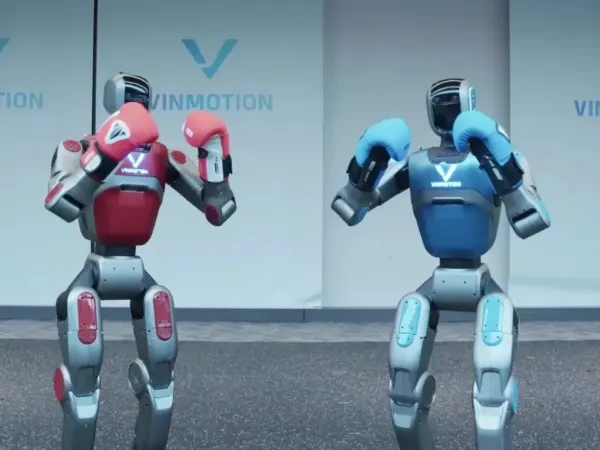
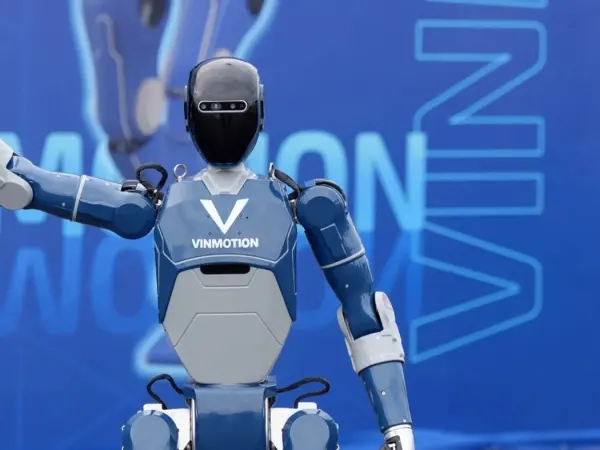
More Robots from VinMotion
Explore other robots from this manufacturer
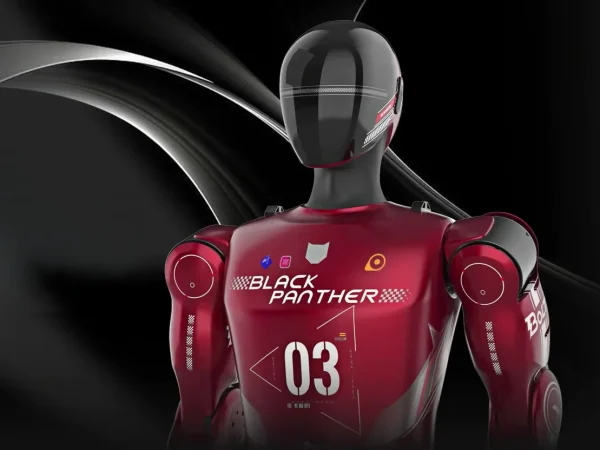
More Humanoid Robots
Discover more robots in the same category

Robots From Other Categories
Discover complementary robots from different categories that work well together
Frequently Asked Questions
Get answers to common questions about this robot
Q1. What is Motion 2, and what problem is it designed to solve?
Motion 2 is a second-generation humanoid robot developed by VinMotion, a subsidiary of Vietnamese conglomerate Vingroup. It is engineered to address labor shortages and repetitive task automation in industrial environments, particularly in material handling, logistics, and factory operations where human workers face physical strain or safety risks.
Q2. What are the main capabilities and key features of Motion 2?
Motion 2 features advanced dynamic balance control, heavy-load lifting capacity, self-recovery after falls, autonomous charging with battery swapping, and on-device AI motion planning. The robot demonstrates humanlike walking gait, five-fingered manipulation, and can execute complex motions including bending and load-bearing tasks without reliance on cloud connectivity.
Q3. Who is Motion 2 built for, and which industries can benefit from it?
Motion 2 targets industrial and commercial sectors including manufacturing, logistics, warehousing, and factory automation. The robot is designed for organizations seeking to integrate autonomous systems into existing workflows for material transport, visual inspections, basic assembly support, and repetitive industrial tasks.
Q4. Is Motion 2 a commercial product or still a research prototype?
Motion 2 represents a transition toward commercial deployment. The robot has progressed beyond early prototypes and is undergoing testing in industrial logistics scenarios. According to the manufacturer, it is designed with industrial-grade form factor and infrastructure for real-world deployment, though it remains in active field testing phases.
Q5. Is Motion 2 currently available for purchase, and when is it expected to ship?
As of early 2026, Motion 2 is not yet available for general commercial purchase. The robot is in active testing and early deployment phases. VinMotion has announced plans to expand availability through industrial partnerships and commercial deployments, with broader market availability targeted for subsequent phases.
Q6. How does Motion 2 actually work in real-world environments?
Motion 2 operates using a human-in-the-loop AI integration model where robots are deployed with real-time guidance from human operators. The system uses the Qualcomm Dragonwing IQ10 processor for on-device physical reasoning, enabling real-time adaptation to load changes and terrain variations. The robot learns and improves performance over time through operator feedback.
Q7. When was Motion 2 announced or officially launched?
Motion 2 was unveiled at CES 2026 in January. The robot represents a significant advancement over Motion 1, which was introduced in mid-2025. VinMotion has been developing the platform since its emergence as a robotics division in 2025 with initial funding of $39 million.
Q8. How is Motion 2 different from other robots in the same category?
Motion 2 distinguishes itself through integrated on-device AI for physical reasoning without cloud dependency, autonomous charging and battery-swapping capabilities, and demonstrated heavy-load manipulation. The robot features a refined mechanical design with reduced exposed wiring compared to earlier prototypes, positioning it as more industrial-ready than research-focused alternatives.
Q9. Does Motion 2 require additional development or customization after purchase?
VinMotion positions Motion 2 within a broader infrastructure ecosystem called "Humanoid of Things," which includes software modules, deployment tools, and operator interfaces. Organizations deploying Motion 2 would integrate it into their existing systems through this infrastructure, with customization dependent on specific industrial applications and workflow requirements.
Q10. What is the future roadmap or planned upgrades for Motion 2?
VinMotion has announced plans to open a California office in 2026 to accelerate development and deployment. The company is actively hiring AI researchers specializing in large language models, speech recognition, and motion control. The stated goal is to scale from early industrial deployments toward broader commercial adoption across diverse industries.
Rating and Reviews
Share your experience and help others decide!
Loading...
User Reviews
No user reviews. Be the first one to review!
User Comments (No Login needed)
Share your thoughts, experiences, or questions about this robot.
Comments appear after moderator review.