Robots with Grasping
Discover robots engineered with advanced grasping for complex real-world operations.
AgiBot
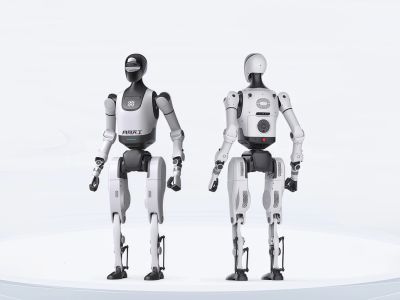
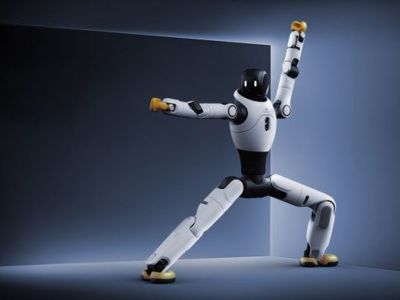
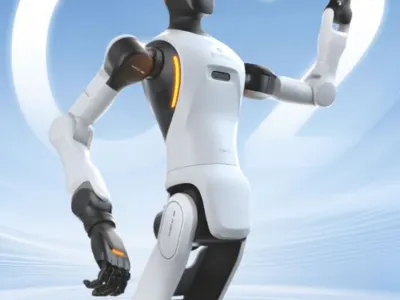
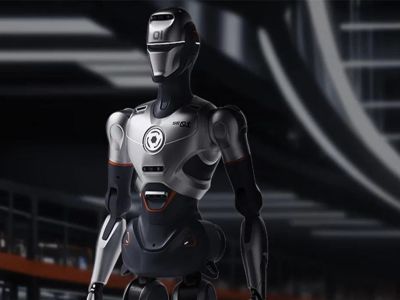
AgiBot X2
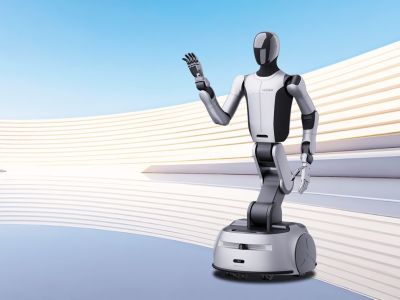
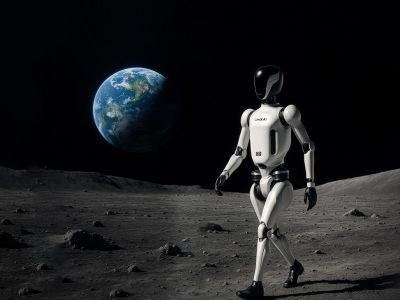
The AgiBot X2 is a versatile general-purpose humanoid robot designed to combine advanced motion intelligence, interaction intelligence, and task intelligence. It features a flexible material exterior and is equipped with proprietary components such as Xyber-Edge for precise motion control, Xyber-DCU for decision-making, and Xyber-BMS for intelligent power management. The robot demonstrates remarkable agility, capable of walking, running, turning, and performing complex movements like dancing, riding scooters, balance boards, and bicycles. It also excels in multimodal interaction, responding to human emotions through facial and voice recognition with lifelike expressions and body language. The X2 is intended for real-world applications requiring dynamic mobility and interactive capabilities.

AgiBot
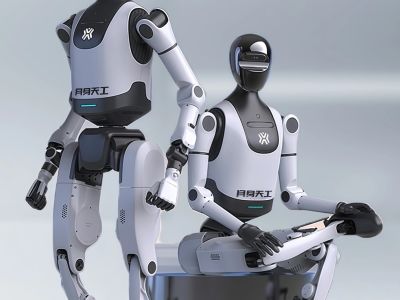
AgiBot X1
The AgiBot X1 is a compact, full-stack open-source humanoid robot designed for modularity, flexibility, and safety. Standing at 130 cm tall and weighing 33 kg, it features 34 active degrees of freedom for smooth and precise motion, making it suitable for light operational tasks in industrial, research, and household environments. Powered by AI and reinforcement learning, the robot supports advanced locomotion and manipulation, with a single arm capable of handling up to 0.5 kg. Its open-source framework and modular architecture enable extensive customization, supporting applications in automation, education, social interaction, and healthcare assistance. The AgiBot X1 is equipped with USB-C connectivity, REF-CLI software tools, and real-time monitoring, making it a scalable platform for developers and businesses seeking adaptable humanoid robotics solutions.

AgiBot
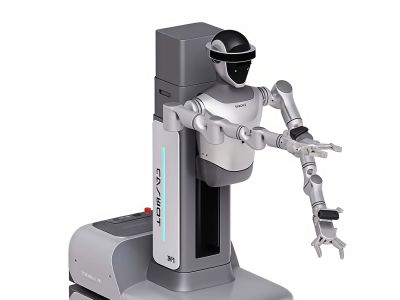
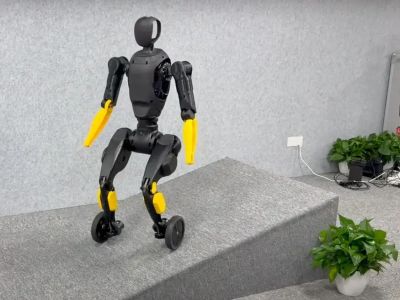
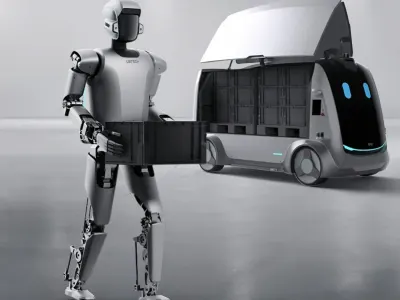
AgiBot X2-N
The AgiBot X2-N is a cutting-edge humanoid robot designed for versatile mobility in complex environments. It features a unique hybrid locomotion system, seamlessly transitioning between bipedal walking and wheeled movement using integrated foot wheels. This allows the robot to efficiently traverse flat surfaces, climb stairs, handle slopes, and navigate tight spaces. The X2-N operates without relying on cameras or external sensors, instead using advanced proprioceptive feedback from joint torque, pressure sensors, and internal gyros for real-time terrain adaptation. Its design emphasizes fluid motion, efficiency, and adaptability, making it suitable for logistics, search-and-rescue, and industrial automation. The robot can carry cargo, adjust its gait autonomously, and perform in dynamic, unpredictable settings.

ROBROS
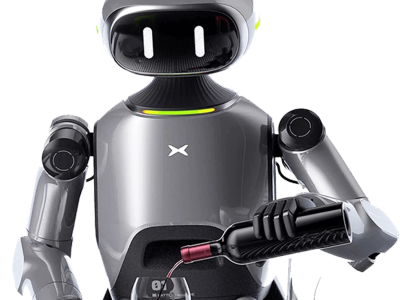
IGRIS-C
The IGRIS-C is a compact humanoid robot from ROBROS, standing at 154 cm tall and weighing 56 kg, designed for human-robot collaboration in service environments like cafes and retail spaces. Featuring 31 degrees of freedom in the body and 11 DOF in tendon-driven 5-finger hands, it excels in dexterous manipulation and bipedal locomotion. Powered by reinforcement learning for agile walking, running, jumping, backflips, and cartwheels, and imitation learning for precise object handling, it adapts to unstructured indoor settings. Equipped with stereo cameras, RealSense depth sensors, IMU for balance, and NVIDIA Jetson Orin NX plus Intel Core i7 computing, it supports teleoperation, autonomous tasks, and data collection for AI training. With a 17000mAh 48V battery, torque-based control at 150Nm max torque, and 7 DOF arms plus 3 DOF waist and 2 DOF neck, IGRIS-C offers robust performance in narrow, complex spaces, emphasizing safe, lifelike interactions and developer-friendly research capabilities.

AgiBot
RAISE A1
The RAISE A1 is a first-generation general-purpose humanoid robot engineered for real-world industrial and commercial applications. Standing 175 cm tall with an athletic human-like build, it combines advanced bipedal locomotion with 49+ degrees of freedom for fluid, natural movements. Equipped with dexterous five-finger hands capable of precise manipulation and 5 kg per-arm lifting capacity, the robot integrates proprietary AI systems including WorkGPT and EI-Brain architecture for autonomous task execution. With LiDAR and RGB-D vision sensors, it navigates complex environments safely alongside human workers, performing repetitive precision tasks in manufacturing, logistics, and service sectors.

1X Technologies
NEO Beta
NEO Beta is a home-focused humanoid standing 1.65 m tall and weighing 30 kg, engineered to blend seamlessly into domestic life. It walks at up to 4 km/h and sprints at 12 km/h, handling payloads of up to 20 kg. Powered by tendon-driven actuators and advanced AI, it performs chores, fetches items, and interacts via voice and touchscreen. Its modular design, soft exterior, and cloud-connected learning enable continuous feature updates and personalized behavior adaptations.

Mirsee Robotics
MH1
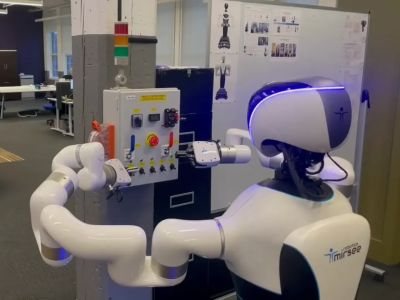
The MH1 is a third-generation humanoid robot from Mirsee Robotics, designed for remote teleoperation in environments where human presence is hazardous or impractical. It features bipedal locomotion, advanced manipulation, and continuous operation with wireless charging. MH1 is engineered for precision tasks, offering reliable performance in repetitive or labor-intensive scenarios. Its design emphasizes safety, durability, and seamless integration with existing infrastructure, making it suitable for industrial maintenance, inspection, and collaborative applications. The robot supports immersive teleoperation via virtual reality, enabling skilled operators to perform complex manual tasks remotely with high dexterity and situational awareness.

Honda
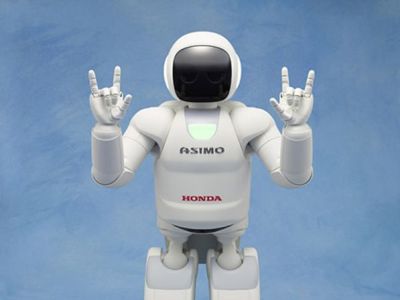
ASIMO 2.0
ASIMO 2.0 is Honda’s advanced humanoid robot, designed to showcase the future of human-robot interaction. With a sleek design and impressive mobility, it can walk, run, climb stairs, and even perform tasks like opening doors and carrying objects. Its enhanced sensors and AI let it recognize people, respond to voice commands, and interact autonomously in real-time environments. ASIMO 2.0 was intended as a research platform and public ambassador, embodying over a decade of robotics innovation. It demonstrates Honda’s commitment to robotics as a tool for improving lives, especially in public service, research, and caregiving scenarios.

Mirsee Robotics
MH2
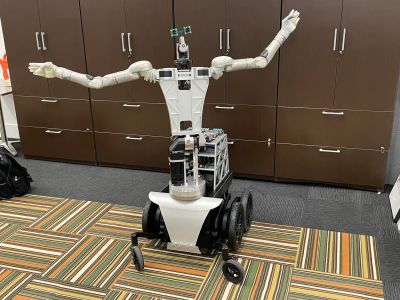
MH2 is a bipedal humanoid robot designed for skilled labor augmentation in hazardous, remote, and labor-intensive environments. It features 24 degrees of freedom enabling human-like dexterity and mobility, with a long arm reach and high payload capacity suitable for precise manipulation and carrying tasks. The robot supports remote teleoperation exclusively, allowing operators to perform complex tasks safely from a distance. MH2 offers continuous operation with an 8 to 10-hour runtime supported by hot-swappable batteries and wireless charging. Its omni-directional mobile base and advanced sensors enable reliable navigation and interaction in indoor and controlled outdoor environments. MH2 is built to enhance productivity, safety, and economic efficiency in industrial, infrastructure, and service sectors.

HUMANOID
HMND 01 Alpha Wheeled
The HMND 01 Alpha Wheeled is a modular, industrial-grade humanoid robot designed for logistics, manufacturing, and retail automation. Standing 220 cm tall, it features a humanoid torso, arms, and head mounted on a wheeled mobile base, enabling agile navigation in confined spaces. With 29 degrees of freedom, advanced AI-powered perception, and whole-body control algorithms, the robot performs complex manipulation tasks at or above human speeds. Its modular design allows for rapid adaptation to various industrial workflows, supporting interchangeable end-effectors and protective garments. The HMND 01 Alpha Wheeled excels in goods handling, picking, packing, and part manipulation, offering safe human-robot collaboration and extended runtime for demanding environments.

Clone
ProtoClone
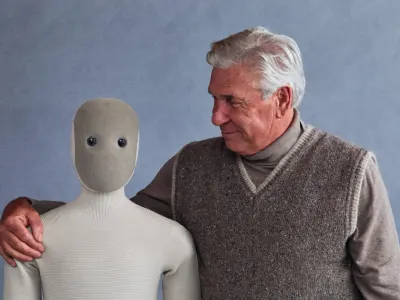
Protoclone is a highly advanced bipedal musculoskeletal android developed by Clone Robotics, designed to closely mimic human anatomy and movement. It features a polymer skeleton with 206 bones, over 1,000 artificial muscle fibers called Myofibers, and more than 200 degrees of freedom, enabling fluid, human-like motions. Equipped with 500 sensors including cameras, pressure, and inertial sensors, it integrates synthetic skeletal, muscular, vascular, and nervous systems. Currently powered by a 500-watt electric pump and pneumatic actuators, it is planned to transition to hydraulics for enhanced performance. Protoclone targets household and commercial applications such as cooking, cleaning, and other domestic tasks, representing a milestone in biomimetic robotics with a focus on natural movement and interaction.

Generative Bionics
GENE.01
The GENE.01 by Generative Bionics is a cutting-edge bipedal humanoid robot designed for safe human collaboration, featuring distributed tactile skin with force and proximity sensors for intuitive physical interactions. Powered by AMD processors, it employs Physical AI derived from IIT's iCub, ergoCub, and iRonCub platforms, enabling learning from real environments and adaptation to industrial tasks. With human-like proportions and Italian design aesthetics, it supports bipedal locomotion on uneven terrain, dexterous manipulation via multi-fingered hands, and advanced balancing for dynamic stability. Key capabilities include natural voice interaction, wide-field vision, and modular end-effectors for manufacturing, logistics, healthcare, and hazardous operations. Emphasizing safety through force-limiting and collision avoidance, GENE.01 amplifies human potential in shared workspaces, handling repetitive or high-risk duties with precision and reliability.

Agility Robotics
Digit
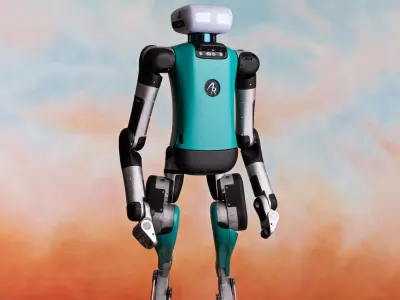
Digit, developed by Agility Robotics, is a groundbreaking humanoid robot designed to work alongside humans in environments built for people. Standing 5'9" tall and weighing 143 pounds, Digit walks upright on two legs with bird-like agility, allowing it to navigate stairs, tight corridors, and uneven ground. Its lightweight arms with four degrees of freedom enable it to lift and move packages up to 35 pounds, making it ideal for repetitive logistics tasks like tote retrieval and warehouse stacking. Digit is powered by onboard computers, uses LiDAR and depth cameras for navigation, and connects to the Agility Arc cloud platform for autonomous task coordination and fleet management. With a modular design, it can be customized for a wide range of industrial applications. Digit isn’t just a robot—it’s a step toward blending robotics into everyday human workflows, tackling labor shortages while enhancing efficiency and safety in real-world workplaces.

Apptronik
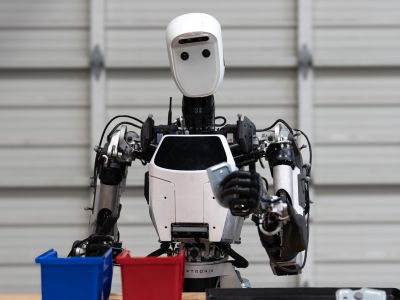
Apollo
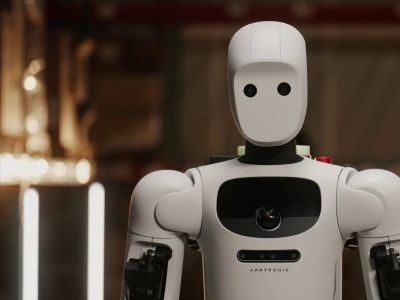
Apollo is a next-gen humanoid robot built for real-world work. Standing nearly as tall as a human, Apollo is engineered to perform physical tasks in logistics, manufacturing, and services. With a sleek design, modular build, and the ability to safely interact with humans, Apollo brings a sci-fi vision to life. It’s not just a concept — it’s a practical, strong, and intelligent workforce assistant that can lift 25 kg, move with grace, and even be remotely operated or AI-powered. Apollo is where robotics meets reality.

UBTECH Robotics
Cruzr S2
The Cruzr S2 by UBTECH Robotics is an advanced humanoid robot designed for complex task automation. This wheeled platform incorporates cutting-edge motion control, dexterous manipulation, and intelligent autonomous capabilities. It combines state-of-the-art sensors, real-time balance control, and sophisticated software systems for versatile real-world applications in research, industry, and service environments.

Fourier Intelligence
GR-3
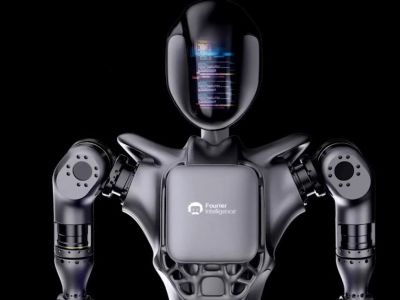
The GR-3 is a full-size humanoid robot standing 165 cm tall, designed as a care-centric companion for homes, healthcare facilities, and public spaces. Weighing 71 kg with 55 degrees of freedom, it combines advanced bipedal locomotion with dexterous 12-DOF hands for complex manipulation tasks. The robot features Fourier's proprietary Full-Perception Multimodal Interaction System integrating vision, audio, and tactile sensing for emotionally aware responses. Its hybrid control architecture merges fast reflexive actions with large language model reasoning, enabling natural human-robot interaction. The GR-3 excels in assisted living, eldercare, and interactive companionship scenarios through its expressive animated interface and whole-body teleoperation capabilities.

UBTECH Robotics
Walker S1
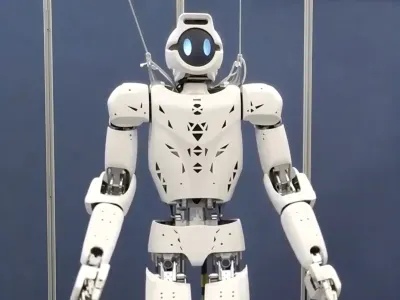
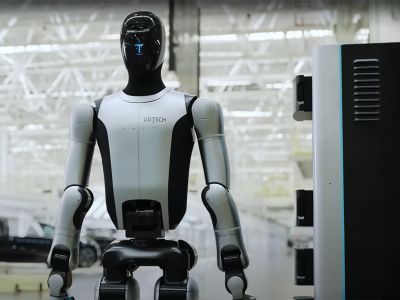
The Walker S1 by UBTECH Robotics is an advanced humanoid robot designed for complex task automation. This bipedal platform incorporates cutting-edge motion control, dexterous manipulation, and intelligent autonomous capabilities. It combines state-of-the-art sensors, real-time balance control, and sophisticated software systems for versatile real-world applications in research, industry, and service environments.

EngineAI
SE01
SE01 is EngineAI’s full-size humanoid robot featuring 32 degrees of freedom and a bio-inspired neural-network gait enabling human-like walking, running, and squatting motions. It uses a lightweight aerospace-grade aluminum frame combined with 360° LiDAR and Intel RealSense depth cameras for precise 3D perception and obstacle avoidance. The robot runs on a quick-swap 10,000 mAh lithium-ion battery providing about 2 hours of operation. Its modular software supports OTA updates and reinforcement learning, making it a versatile platform for research, industrial automation, and human–robot interaction.

Boston Dynamics
Atlas
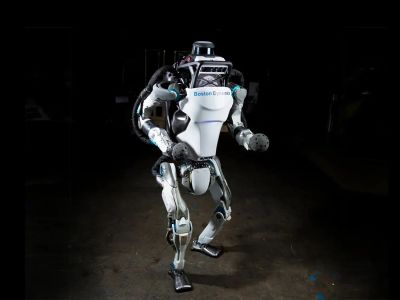
Atlas is the world’s most dynamic humanoid robot, engineered to push the limits of whole-body mobility and manipulation. Its advanced control system and high-density lithium-ion battery enable it to walk, jump, backflip, and interact with complex environments. Equipped with stereo vision, LiDAR, force sensing, and inertial measurements, Atlas navigates uneven terrain and maintains balance under disturbances. The fully electric version offers broader motion and commercial deployment pathways, marking a new era in humanoid robotics.

Figure AI
Figure 02
Figure 02 is the second-generation humanoid robot from Figure AI, designed to operate in human-centric environments with full-body mobility and AI-driven interaction. It features integrated wiring, onboard battery, and a vision-language model supported by six RGB cameras. Equipped with dual high-performance GPU modules, Figure 02 is capable of real-time perception, decision-making, and execution. It also has sophisticated five-fingered hands with 16 degrees of freedom, enabling it to manipulate tools and carry objects up to 25 kg. Its applications span across industrial, logistics, and manufacturing sectors.

PAL Robotics
Talos
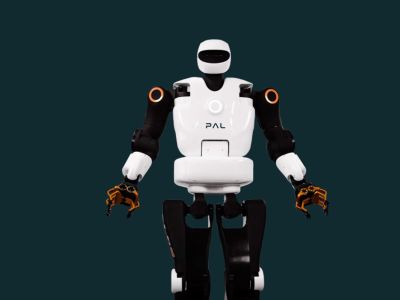
TALOS is a high-performance bipedal humanoid robot engineered for advanced research in Industry 4.0, AI, machine learning, and locomotion. Standing at 175 cm with human-like proportions, it features 32 degrees of freedom, including 6-DoF legs for dynamic walking on uneven terrain and stairs, 7-DoF arms capable of lifting 6 kg payloads per arm at full extension, and torque-controlled grippers for dexterous manipulation. Equipped with full torque sensor feedback in all joints, 4x 6-axis force/torque sensors at ankles and wrists, RGB-D cameras, high-rate IMU, and dual Intel Core i7 processors, TALOS excels in multi-contact motions, power tool operation like drilling and riveting, human-robot interaction, and perception tasks. ROS/ROS2 integration enables real-time control at 2 kHz, supporting torque-based walking, navigation, and bi-manual dexterity in industrial and research environments.

EngineAI
SA01
Meet the SA01 by EngineAI—a sleek, open-source humanoid robot built for the future of research and education. Debuting at CES 2025, this agile biped can run, jump, and even stay upright when nudged. With its high-strength aluminum alloy frame and just 40kg of weight, it's both durable and portable. Whether you're a robotics lab, university, or developer, the SA01 offers a powerful, customizable platform to explore embodied intelligence and AI-driven motion.

Booster Robotics
T1 Humanoid
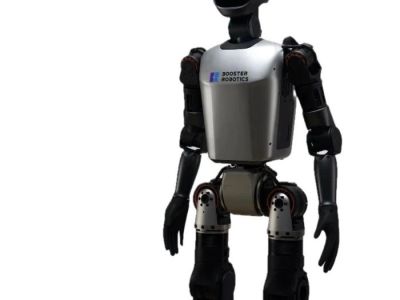
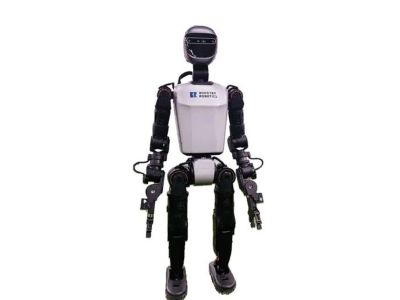
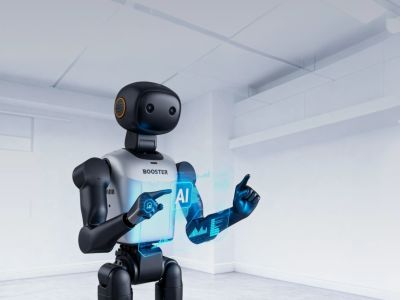
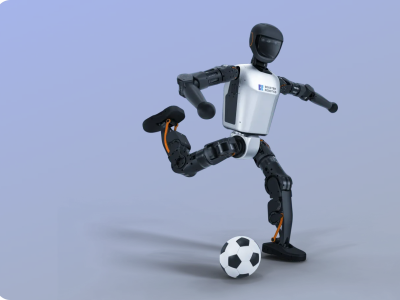
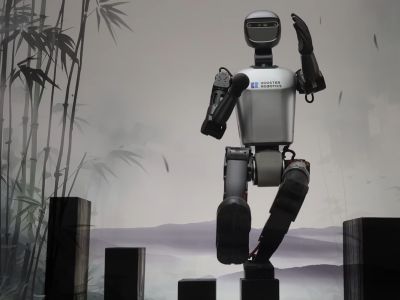
The T1 Humanoid robot by Booster Robotics is a versatile, open-source platform designed for developers and researchers. It features 23 degrees of freedom, allowing for dynamic movements and precise posture control. Equipped with advanced AI capabilities, including an NVIDIA Jetson AGX Orin GPU, it supports omnidirectional walking and complex manipulation tasks. The robot is suitable for various applications, including robotics research, education, and industrial automation.

Clone Robotics
Alpha
Alpha by Clone Robotics is a versatile humanoid robot engineered to excel in service, security, and light industrial roles. With human-like dexterity and AI-driven decision making, Alpha can interact smoothly in dynamic environments such as retail stores, warehouses, and office buildings. Its robust design supports tasks from delivery and inspection to customer assistance, offering scalable automation with high safety standards. Alpha’s adaptive learning and modular attachments make it a practical solution for industries seeking efficient, intelligent robotic partners.

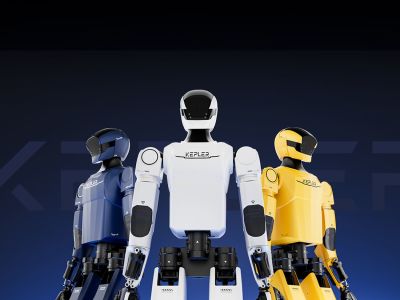
Kepler Robotics
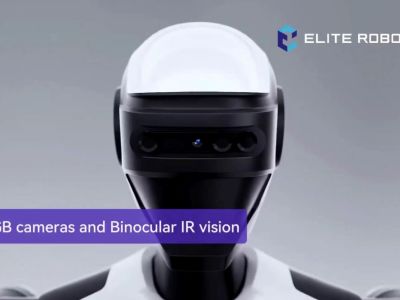
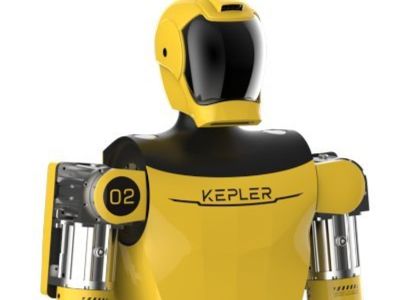
Forerunner K2
The Forerunner K2 by Kepler Robotics is a fifth-generation general-purpose humanoid robot designed for industrial and collaborative applications. Standing at 175 cm tall and weighing 75 kg, it features 52 degrees of freedom for fluid, human-like movements, including a rotating/tilting head and rigid arms/legs with planetary roller screw actuators delivering up to 8,200 N peak force. Its dexterous rope-driven hands offer 11 DOF each, with 96 tactile contact points per fingertip for precise grasping up to 15 kg per hand and 25 kg total payload. Equipped with infrared binocular 3D cameras, over 80 sensors for tension/pressure/torque, and a 100 TOPS Nebula AI system, the K2 excels in visual SLAM navigation, autonomous task execution via imitation/reinforcement learning, and real-time environmental adaptation. With 8-hour runtime on a 2.33 kWh battery, improved gait stability, and cloud integration, it supports dual-arm handling in manufacturing, logistics, inspection, and high-risk operations, enabling seamless human-robot collaboration.

Sanctuary AI
Phoenix
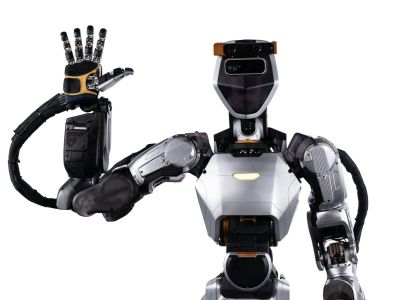
Phoenix is Sanctuary AI’s groundbreaking humanoid robot designed to revolutionize human-robot collaboration. With human-like dexterity, advanced perception, and robust AI, Phoenix can operate in complex environments including manufacturing floors, healthcare facilities, and service industries. It can perform delicate tasks, heavy lifting, and interact naturally with humans. Its design aims to reduce human workload in hazardous or repetitive tasks while ensuring safety and precision. Phoenix’s learning capabilities allow it to adapt to new environments, making it a versatile asset for future-forward workplaces.

Stardust Intelligence
Astribot S1
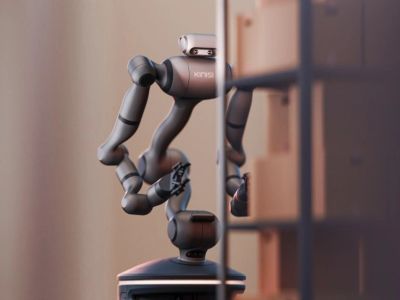
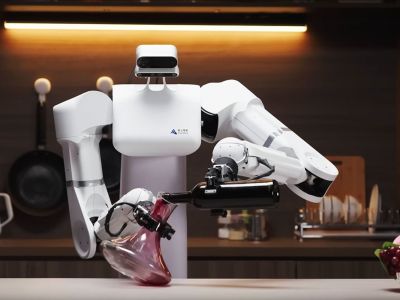
The Astribot S1 is a groundbreaking humanoid robot engineered by Stardust Intelligence to emulate human dexterity and intelligence. With a top speed of 10 m/s and 7 degrees of freedom per arm, it performs tasks ranging from cooking and cleaning to playing musical instruments and practicing martial arts. Its advanced AI enables imitation learning, allowing it to adapt to new tasks and environments. Designed for versatility, the S1 is poised to revolutionize industries such as home assistance, manufacturing, and research, offering a glimpse into the future of human-robot collaboration.

Addverb Technologies
Addverb Humanoid
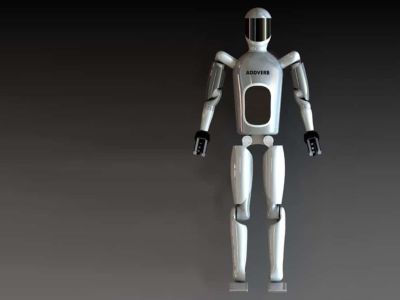
Addverb's upcoming humanoid robot is a marvel of engineering, designed to tackle the "3D" jobs—Dull, Dirty, and Dangerous. Equipped with advanced AI, dual-arm capabilities, and energy-efficient actuators, it can perform complex tasks across various terrains. Its applications span industries like warehousing, defense, healthcare, and disaster relief, making it a versatile asset in modern operations.

Kawasaki
Kaleido 8.0
The Kaleido 8.0 is an advanced humanoid robot developed by Kawasaki Heavy Industries as part of its Robust Humanoid Platform program. As the eighth generation in the Kaleido series, it focuses on real-world task execution through stable bipedal locomotion, force-sensitive joints, and real-time balance correction. The robot is designed for collaborative work with humans, enabling coordinated object handling and adaptive movement in dynamic environments.

PAL Robotics
ARI
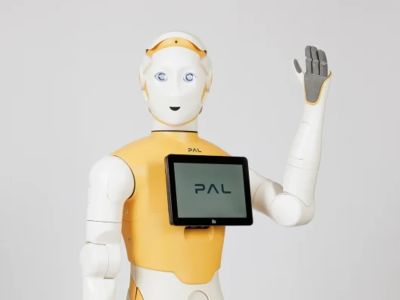
ARI is a wheeled humanoid social robot designed for advanced human-robot interaction, featuring expressive multimodal behaviors through animated LCD eyes, LED lighting, head and arm gestures, and a 10.1-inch touchscreen torso for multimedia display and user interfaces. Standing at 165 cm tall with a lightweight 60 kg frame, it supports perception tasks like face recognition, skeleton tracking, speech synthesis/recognition, and 3D gaze estimation. Equipped with ROS Noetic for seamless integration, ARI navigates indoor environments using Visual SLAM, RGBD cameras, and optional LIDAR, enabling autonomous mapping and obstacle avoidance. Its dual arms offer up to 5 DOF each for gesturing and light manipulation (0.5 kg payload per arm), complemented by a differential drive base for mobility up to 1.5 m/s on flat surfaces. Ideal for research, healthcare, retail, and education, ARI facilitates cognitive AI development with NVIDIA GPU processing, fostering engaging social cues like turn-taking and emotional expression in collaborative settings.

UBTECH Robotics
Walker S2
Walker S2 is a full‑size bipedal humanoid robot designed for industrial and commercial environments. It features 52 degrees of freedom, high‑torque brushless motors, and dexterous five‑fingered hands. Powered by a dual‑battery hot‑swap system, it can autonomously exchange depleted packs at charging stations and resume tasks within minutes. Its AI stack combines vision‑based SLAM, real‑time path planning, and swarm coordination for reliable navigation and task sharing across multiple units. Walker S2 excels at material handling, assembly, inspection, and customer service roles in factories, warehouses, hotels, and retail spaces.

PAL Robotics
Kangaroo
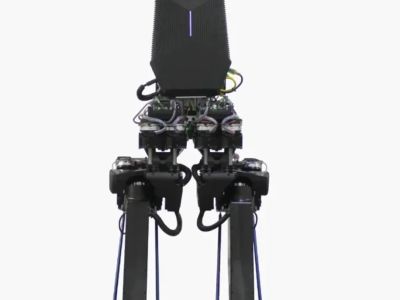
Kangaroo is an advanced bipedal humanoid robot from PAL Robotics, engineered for cutting-edge research in dynamic legged locomotion and manipulation. Featuring a lightweight structure with low moving inertia, it excels in agile motions like jumping, running, squatting, and walking on varied terrains. Equipped with custom linear actuators using closed kinematic chains, it delivers high torque, speed, and force feedback via integrated sensors for precise control. The anthropomorphic design includes 6 DoF per leg, up to 7 DoF per arm, and a human-like torso for natural movements. Optimized for biomechanics studies, it supports ROS2 integration, high-frequency control loops up to 2 kHz, and simulators like Isaac Lab and Gazebo. With options for RGB-D cameras, AI kits, and force/torque sensing, Kangaroo enables exploration of reinforcement learning, trajectory optimization, and human-robot interaction in research settings.

PAL Robotics
REEM-C
The REEM-C is a full-size bipedal humanoid robot designed for advanced research in robotics, featuring 68 degrees of freedom for human-like mobility and manipulation. Standing at 165 cm tall, it excels in dynamic walking, stair climbing, and autonomous navigation using ROS-based software. Equipped with dual Intel Core i7 processors, stereo cameras, force/torque sensors in ankles, IMUs, and microphone arrays, it supports visual recognition, speech interaction, and whole-body control algorithms. Each arm offers 7 DOF with 1 kg hand payload (stretched) or up to 10 kg total lift capacity, complemented by 19-DOF hands for dexterous grasping. Powered by a 48V 1225 Wh lithium-ion battery, it operates 3 hours walking or 6 hours standby. Customizable and modular, REEM-C enables studies in human-robot interaction, AI, balancing via ZMP control, and complex tasks like dancing or object handling in indoor environments.

Tesla
Optimus
The Optimus by Tesla is an advanced humanoid robot designed for complex task automation. This bipedal platform incorporates cutting-edge motion control, dexterous manipulation, and intelligent autonomous capabilities. It combines state-of-the-art sensors, real-time balance control, and sophisticated software systems for versatile real-world applications in research, industry, and service environments.

AgiBot
AgiBot Q1
The AgiBot Q1 is a compact, backpack-sized bipedal humanoid robot standing at 80 cm tall, designed for personal use, research, and education. Featuring miniaturized high-performance Quasi-Direct Drive (QDD) joints smaller than an egg, it delivers full-body force control and dynamic responsiveness rivaling larger models. With open-source hardware, SDK, and HDK, users can 3D-print custom shells like Cyber-Maid designs and program motions via a zero-code block-based platform. Powered by the Agi-Soul AI platform, it supports voice interaction, English tutoring, dance coaching, and gesture-based tasks. Bipedal locomotion enables natural walking, balancing, and human-like interactions in home or lab settings. Crash-resistant due to its 1/8 scale size, it bridges sim-to-real gaps, lowers iteration costs, and serves as an interactive desktop companion or graduation tool for creators, emphasizing accessibility and high dexterity in a portable form.

Addverb Technologies
ELIXIS
ELIXIS is Addverb Technologies' advanced bipedal humanoid robot designed for industrial assistance, featuring 41 degrees of freedom for human-like dexterity and mobility. With dual arms each supporting 5 kg payloads, it excels in complex manipulation tasks like picking, sorting, and assembly in warehouses and factories. Equipped with 4x stereo depth cameras, 1x 3D LiDAR, and 2x 9-axis IMUs, ELIXIS enables precise visual SLAM navigation and real-time environmental perception for autonomous operation on varied terrains. Its high-speed planetary BLDC actuators allow walking speeds up to 1 m/s, while optional foot pressure sensors and functional LEDs enhance stability and interaction. The curved face display and HMI screen facilitate intuitive human-robot collaboration, powered by GPU-enabled compute for AI-driven decision-making in dull, dirty, and dangerous jobs across logistics, manufacturing, and defense.

Boston Dynamics
Atlas (Electric Atlas, 2025)
Atlas (Electric Atlas, 2025) is Boston Dynamics' fifth-generation humanoid robot, fully electric and designed for real-world industrial and research applications. It features advanced all-electric actuators that provide superior strength and a broader range of motion than previous models, including 360-degree rotation at key joints. Atlas integrates sophisticated sensor arrays such as LiDAR, stereo and RGB cameras, and depth sensors, enabling real-time perception and environmental awareness. Its software leverages AI, machine learning, and large behavior models for autonomous whole-body manipulation and locomotion, allowing it to perform complex tasks like packing, sorting, and adapting dynamically to unexpected physical challenges. The robot is built with lightweight titanium and aluminum 3D printed parts for optimal strength-to-weight ratio and supports integration with Boston Dynamics’ fleet management software, Orbit.

Hexagon AB
AEON
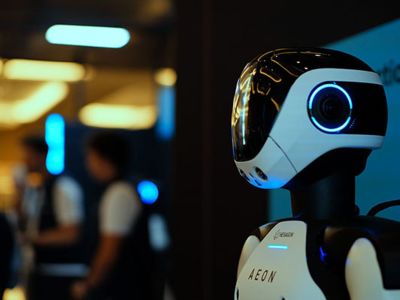
AEON is a state-of-the-art humanoid robot developed by Hexagon AB, designed specifically for industrial environments to address labor shortages and enhance operational efficiency. Standing approximately 5 feet 4 inches tall and weighing around 132 pounds, AEON combines advanced locomotion with dexterous manipulation enabled by 34 degrees of freedom and five-fingered hands. It integrates Hexagon’s proprietary precision measurement technologies and a sophisticated sensor fusion system to achieve sub-millimeter accuracy in tasks such as part inspection, material logistics, and digital twin creation. AEON’s AI-driven mission control and spatial intelligence allow it to navigate complex environments, perform high-accuracy tasks, and adapt in real time. Its unique battery-swapping mechanism supports continuous operation without downtime, making it suitable for demanding industrial applications including aerospace, automotive, and construction sectors. AEON is currently piloted by leading manufacturers like Pilatus and Schaeffler.

NEURA Robotics
MiPA
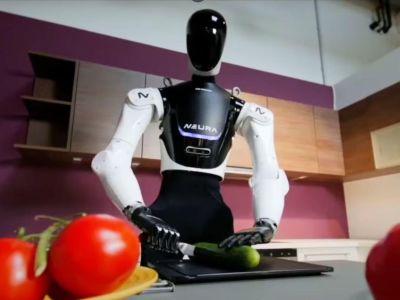
MiPA by NEURA Robotics is an AI-powered personal assistant robot designed for home, care, and workplace environments. It features advanced sensors including force-torque, LiDAR, cameras, and ultrasonic sensors, enabling safe, touchless human detection and real-time obstacle avoidance. MiPA supports multi-language voice commands, gesture control, and customizable touch interfaces. Its modular design allows for flexible expansion with add-ons tailored to specific tasks such as light logistics, item transport, and care assistance. Optimized primarily for indoor use, MiPA adapts to dynamic environments and learns new tasks autonomously, making it suitable for both personal and commercial applications.

Robot Era
Star1
Star1 by Robot Era is a versatile humanoid robot designed to blend advanced AI with practical utility. Engineered for both commercial and domestic environments, Star1 excels in logistics, customer service, and interactive companionship. Its human-like dexterity and perception allow seamless collaboration in warehouses, retail, and hospitality. With adaptive learning capabilities, it continually improves its efficiency. Its sleek design and intuitive controls make Star1 a standout in China’s growing robotics market, delivering both reliability and cutting-edge technology to a wide range of industries.

LG Electronics
CloiD
LG CLOiD is an AI-powered humanoid robot designed for household automation, featuring a wheeled base for stable indoor navigation, adjustable torso, and dual articulated arms with 7 degrees of freedom each for precise manipulation. Equipped with a head unit serving as an AI hub, it integrates cameras, sensors, display, speakers, and voice-based generative AI to enable natural human interaction via speech, gestures, and facial expressions. Core technologies include Vision Language Model (VLM) for interpreting images into language and Vision Language Action (VLA) for converting visuals into physical tasks like folding laundry, loading dishwashers, organizing refrigerators, and assisting with cooking. It learns user patterns through LG ThinQ platform connectivity, proactively handling chores to create a zero-labor home environment. With 5-finger hands for dexterous gripping, low center of gravity for safety around families, and self-driving tech from LG vacuums, CLOiD adapts to kitchens, laundry rooms, and living spaces, reducing daily effort while providing emotional comfort.

Kenan Robotics
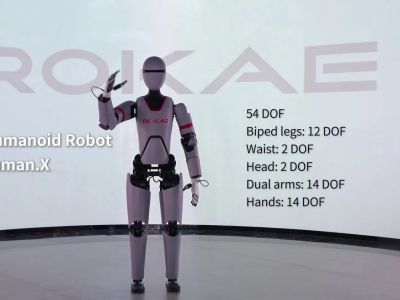
X-Man F1
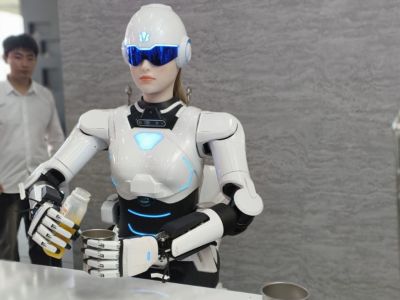
The X-Man F1 is a bipedal humanoid service robot developed by Kenan Robotics, designed to perform human-like mobility and dexterous service tasks in hospitality, healthcare, and entertainment environments. It features fluid, naturalistic gestures and can autonomously execute complex tasks such as preparing beverages, delivering presentations, and interacting with people using multimodal AI and large language models. The robot operates as part of a modular ecosystem, collaborating with specialized robots like the M104 logistics unit and T10 delivery robot to extend its capabilities. Its design emphasizes practical task execution over hype, aiming to integrate seamlessly into real-world service scenarios.

Haier
Hiva Haiwa
The Hiva Humanoid by Haier is a wheeled-base domestic assistant robot standing 165 cm tall and weighing 70 kg, engineered for smart home integration and household chores. With 44 degrees of freedom, it achieves human-like dexterity to reach objects up to 2 meters high, performing tasks like cleaning floors, cooking, ironing clothes, folding laundry, operating washing machines, and managing appliances. Its dexterous hands grip tools and fabrics precisely, while the wheeled mobility ensures smooth navigation in indoor environments. Currently remote-operated for AI training, it connects seamlessly to Haier's smart home ecosystem via wireless networks, enabling coordinated control of IoT devices. Designed as a "housework terminator," Hiva combines advanced manipulation, adaptive task execution, and future autonomy potential, transforming daily living by handling repetitive chores efficiently and safely within human-scale spaces.

Dobot Corp Ltd
Atom
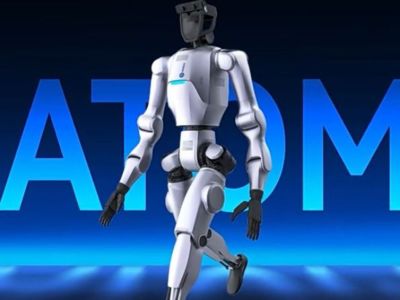
Meet Atom, Dobot's groundbreaking humanoid robot that seamlessly blends precision engineering with intelligent adaptability. Standing at 1.53 meters, Atom boasts 28 degrees of freedom and achieves an impressive ±0.05mm precision, making it adept at delicate tasks. Its innovative straight-knee walking mechanism reduces energy consumption by 42%, enhancing operational efficiency. Powered by Dobot's proprietary ROM-1 AI system and edge computing capabilities, Atom can autonomously adapt to unstructured environments, making it suitable for tasks ranging from industrial automation to customer service. Whether it's preparing meals, delivering documents, or collaborating on assembly lines, Atom is poised to redefine human-robot interaction.

EngineAI
PM01
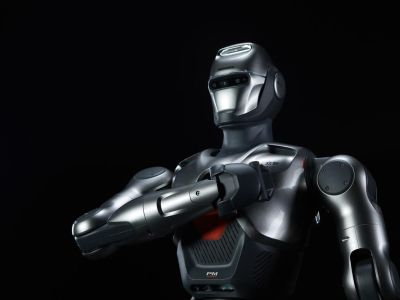
The PM01 by EngineAI is a compact, open-source humanoid robot designed for research and development. Standing at 1.38 meters and weighing 40 kg, it features 24 degrees of freedom and a 320-degree waist rotation, enabling dynamic and fluid movements. Equipped with dual processors (Intel N97 and NVIDIA Jetson Orin), it supports advanced AI applications. Its modular design allows for hardware expansion, making it adaptable for various robotics challenges.

Fourier Intelligence
GR-2
The GR-2 by Fourier Intelligence is a cutting-edge humanoid robot designed to revolutionize human-robot interaction. Standing at 175 cm and weighing 63 kg, it boasts 53 degrees of freedom and 12-DoF dexterous hands equipped with tactile sensors. Powered by seven distinct FSA 2.0 actuators, each joint delivers up to 380 Nm of torque, enabling GR-2 to perform complex tasks with precision. Its swappable battery offers up to 2 hours of runtime, and the robot supports various programming methods, including VR remote control and lead-through programming. GR-2 is ideal for applications in healthcare, research, and industrial automation.

Daimon Robotics
Daimon One
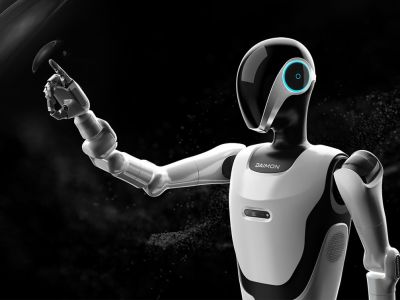
The Daimon One Humanoid is an advanced humanoid robot designed for complex manipulation and interaction tasks. It features a biomimetic robotic hand with 11 degrees of freedom and integrated millimeter-thick vision-based tactile sensors that provide high-resolution real-time feedback on force, deformation, texture, and slippage. This enables precise and adaptive grip control, allowing the robot to handle delicate objects and perform intricate assembly tasks. The robot supports teleoperation via an exoskeleton system and incorporates AI for learning and adaptability. Its design emphasizes embodied intelligence, combining tactile perception with agile operation for versatile use in industrial, research, and service environments.

ROBROS
IGRIS-A
The IGRIS-A is a compact service-oriented humanoid robot from ROBROS, standing at approximately 154 cm tall with 29 articulated joints in the body and an advanced 11-joint tendon-driven hand for dexterous manipulation. It excels in human-robot collaboration for customer-facing environments like cafes, leveraging reinforcement learning for stable bipedal walking and imitation learning for precise object handling that mimics human motions. Powered by NVIDIA Jetson Orin AI hardware, it features a dual battery system, 30:1 gear ratio for smooth torque control, and fast motion planning up to three times quicker than prior models. Adaptive hands grip varied objects dynamically, while stereo cameras, RealSense depth sensors, and IMU enable navigation and balance in unstructured spaces. Designed for lifelike interactions, it supports remote teleoperation, data collection for AI training, and tasks like serving, product handling, and hospitality assistance, prioritizing safe, efficient partnership with humans.

Kepler Robotics
K2 Bumblebee
The K2 Bumblebee is a next-generation bipedal humanoid robot from Kepler Robotics, standing 175 cm tall and weighing 75 kg, engineered for industrial applications like manufacturing, logistics, and retail. Featuring 52 degrees of freedom for human-like articulation, it boasts over 80 integrated sensors including tactile sensors in every finger, infrared binocular 3D cameras, and SLAM capabilities for real-time object recognition, gesture detection, and scene understanding. Powered by Kepler's proprietary Nebula AI platform with 100 TOPS onboard compute, it executes autonomous task sequences with millimeter-level precision using planetary roller screw actuators. Capable of 15 kg per arm payloads (30 kg dual-arm), up to 8 hours runtime on a 1-hour charge, and near-zero static power consumption, the K2 demonstrates straight-knee walking gaits for agile navigation on uneven terrain, stairs, and factory floors. Its hybrid architecture enables reinforcement learning for adaptive behaviors, making it ideal for sorti

Ant Group
Robbyant R1 (Humanoid Robot Chef)
The Robbyant R1 a Humanoid Robot Chef, part of the R1 series, is designed to perform various tasks such as cooking, serving as a tour guide, sorting medicine, and providing medical consultations. It is equipped with advanced AI capabilities, allowing it to adapt to different environments and tasks. Demonstrations include cooking shrimp and assisting in pharmacies.

Booster Robotics
K1 Humanoid
The K1 Humanoid robot is designed for education, research, and exhibitions. It features a compact body with 22 dynamically controlled joints, enabling precise motion control. The robot is equipped with a 3D depth camera, 9-axis IMU, microphone array, and touch sensors. It supports AI-based vision and voice command processing, obstacle avoidance, and real-time autonomous navigation. The K1 is programmable via ROS and Python.

Unitree Robotics
Unitree H1
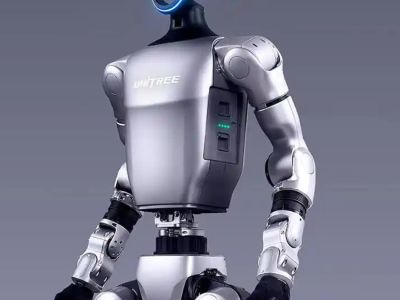
The Unitree H1 is a full-size universal humanoid robot standing about 180 cm tall and weighing approximately 47 kg. It features advanced powertrain technology enabling high agility, speed, and load capacity, with a peak torque density of 189 N.m/kg. The robot can achieve speeds exceeding 3.3 m/s, with potential mobility over 5 m/s. It is equipped with 360° depth sensing through integrated 3D LiDAR and depth cameras, allowing precise environmental perception and autonomous navigation in complex terrains. Designed for industrial, research, and interactive applications, the H1 combines robust construction with flexible bipedal locomotion and human-like articulated arms. Its battery is quickly replaceable, supporting extended operational endurance.

Unitree Robotics
Unitree R1
The Unitree R1 is a developer‑focused humanoid robot standing 121 cm tall and weighing 25 kg. It offers 26 degrees of freedom enabling dynamic motions such as running, cartwheels, handstands, and spin‑kicks. Outfitted with binocular vision, a 4‑mic array, stereo speakers, and an 8‑core CPU/GPU, it supports voice and image recognition via onboard AI. A removable quick‑swap battery delivers about one hour of operation, and OTA firmware updates plus an open SDK make it ideal for research, education, entertainment, and prototyping. Offered at an unprecedented sub‑$6K entry price, it aims to democratize humanoid robotics.

Unitree Robotics
Unitree H2
The Unitree H2 is a full-sized humanoid robot designed for versatility and dexterity. It stands at 180 cm tall and weighs 70 kg. The robot features a 31-DOF architecture, including a 3-DOF waist and 2-DOF neck, allowing for fluid movements like dance and kung-fu. It can carry a payload of 7 kg normally and up to 21 kg briefly. The H2 is equipped with advanced robotic hands for precise object manipulation.

Realbotix
F-Series Robot
The F-Series Robot by Realbotix is a full-bodied humanoid robot designed for advanced human interaction. It features a motorized base and advanced torso mechanics with four additional motors, allowing for realistic human-like movements such as twisting, side-to-side, and forward-to-backward motions. The robot includes a driveable base, enabling it to move within its environment. It also offers 15 facial movements and customizable faces and bodies. The robot is equipped with AI capabilities for personalized interactions and can integrate with various AI platforms.

Galbot Robotics
Galbot G1
Galbot G1 is a cutting-edge humanoid robot designed for commercial and home service applications, featuring advanced embodied artificial general intelligence. It combines high mobility with dexterous dual-arm manipulation, enabling complex tasks such as object grasping with a 95–97% success rate across diverse materials and configurations. The robot is capable of multi-tasking in dynamic environments, interacting with humans, and adapting to various service scenarios. Its AI-driven platform supports continuous learning and real-world deployment in retail, tourism, healthcare, and industrial settings, aiming to set new benchmarks for general-purpose robotics.

Deep Robotics
DR02
The DR02 is a full-size humanoid robot designed for industrial and outdoor applications, featuring an IP66 rating for dust and water resistance. Standing 175 cm tall and weighing 65 kg, it operates in extreme environments from -20°C to 55°C, enabling all-weather, all-scenario continuous operation. It has a modular quick-detach design for arms and legs, facilitating rapid maintenance and reducing downtime. Equipped with advanced sensors including LiDAR, depth and wide-angle cameras, and powered by a high-performance NVIDIA Jetson AGX Orin platform delivering 275 TOPS, the DR02 supports real-time perception, navigation, and intelligent decision-making. It can walk at 1.5 m/s, climb slopes up to 20 degrees, and carry payloads up to 20 kg, making it suitable for logistics, inspection, security, and industrial tasks in harsh environments.

AiMOGA Robotics
Mornine
Mornine is a highly advanced humanoid robot developed by AiMOGA Robotics, designed for real-world autonomous operation in dynamic environments such as automotive dealerships and public service venues. It features bipedal locomotion, high-precision autonomous navigation with ±5 cm accuracy, and dynamic obstacle avoidance. Mornine integrates AI-powered 3D vision, reinforcement learning, and multi-language interaction (11 languages) to perform complex tasks like opening car doors autonomously, greeting customers, and delivering presentations. Its design emphasizes human-robot collaboration, safety, and adaptability, making it suitable for retail, logistics, healthcare, and entertainment applications. The robot is fully CE certified for hardware and software safety and cybersecurity, setting a global benchmark in humanoid robotics.

Rainbow Robotics
RB-Y1
The RB-Y1 is a semi-humanoid robot featuring dual 7-DOF arms and a single 6-DOF leg mounted on a wheeled mobile platform. It offers 24 degrees of freedom, enabling versatile and precise movement. The robot is designed for complex tasks in dynamic environments, with capabilities for high-speed operation and sharp turning. It supports master-slave teaching and includes self-collision prevention features, making it suitable for integration with AI solutions.

Deep Robotics
DR01
The DR01 is an advanced humanoid robot standing 1.7 meters tall and weighing 80 kg, designed for high mobility and adaptive intelligence. It features AI-driven autonomous learning capabilities that allow it to acquire new skills and adapt to changing environments. The robot can walk at speeds over 1.6 m/s, navigate obstacles such as 18 cm steps and 25° slopes, and maintain balance on uneven or slippery terrain. Equipped with proprietary lightweight J60 and high-torque J100 joints, it delivers flexible and strong movements. Its fusion perception system integrates internal and environmental sensors for real-time adaptive control, making it suitable for industrial automation, research, and complex task execution in dynamic settings.

PNDbotics
Adam-U
Adam-U is an advanced humanoid robot platform designed primarily for data acquisition and manipulation training. It features 31 degrees of freedom, including a 2-DOF head, 6-DOF dexterous hands, and a 3-DOF waist with a braking system for stability and flexibility. Adam-U integrates high-precision motion capture technology and tactile dexterous hands, enabling precise human-like manipulation and real-time data collection. Its biomimetic structure enhances usability for reinforcement and imitation learning, making it ideal for research institutions and industrial R&D. The robot supports a comprehensive ecosystem from hardware to software, facilitating AI development, human-robot interaction, and complex manipulation tasks on a stationary platform.

Guangzhou Auto Group
GoMate
GoMate is a third-generation humanoid robot developed by Guangzhou Auto Group, featuring a unique variable wheel-foot design that allows it to switch between four-wheel and two-wheel mobility modes. Standing 1.4 meters tall in four-wheel mode and 1.75 meters in two-wheel mode, it offers enhanced stability, adaptability, and energy efficiency with over 80% energy savings compared to similar robots. Equipped with 38 degrees of freedom, dexterous hands, and advanced AI-driven autonomous navigation using pure-vision algorithms and FIGS-SLAM, GoMate achieves centimeter-level positioning accuracy and obstacle avoidance up to 100 meters. Its all-solid-state battery supports up to six hours of continuous operation, making it suitable for complex indoor and outdoor tasks in industries like security, healthcare, logistics, and education.

Kawada Robotics
NEXTAGE Fillie
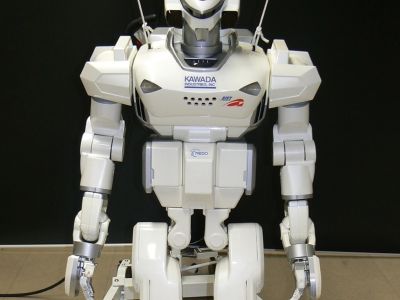
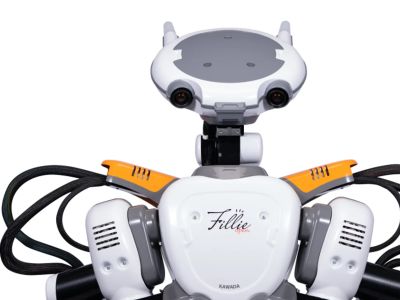
The NEXTAGE Fillie is a compact collaborative humanoid robot designed for safe human-robot interaction in industrial and research settings. Featuring a humanoid form with dual arms, it excels in assembly tasks, object manipulation, and environment recognition using integrated stereo cameras on the head and optional hand cameras. With 15 degrees of freedom across arms, neck, and waist, it offers precise movements with 1.5kg payload per arm and 0.03mm repeatability. Its smaller, lighter design compared to predecessors enables quicker motions while maintaining curved arm shapes to prevent pinching. Equipped with LED status indicators on "feelers" for visibility, Fillie supports image-based navigation and versatile end-effectors for tasks like reception, inspection, and logistics. Ideal for manufacturing side-by-side with humans, it emphasizes likeable aesthetics, cost-performance, and expandability for R&D or production automation.

Diligent Robotics
Moxi
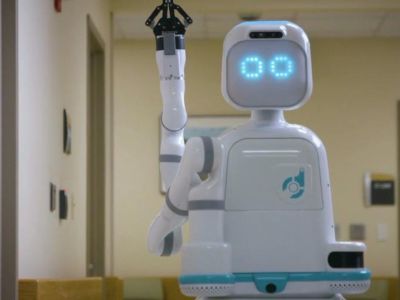
Moxi is a humanoid robot designed specifically for hospital environments to assist clinical staff by automating non-patient-facing tasks. It features a robotic arm with a gripper capable of picking up and delivering medical supplies, lab samples, medications, and personal belongings. Moxi autonomously navigates hospital hallways using advanced sensors and AI, avoiding obstacles and interacting safely with people. It supports workflow automation, reducing nurses’ time spent on menial tasks and improving operational efficiency. Moxi’s social intelligence includes LED eyes for communication and voice lines to alert staff, making it a collaborative and friendly teammate in healthcare settings. Its software is adaptable to evolving hospital needs, enabling dynamic task additions.

CASBOT
CASBOT 01
CASBOT 01 is a full-size bipedal humanoid robot standing 179 cm tall and weighing 60 kg, engineered for dynamic whole-body tasks in complex environments. Featuring 52 degrees of freedom and 550 TOPS computing power, it excels in walking, running, jumping, and precise manipulations like assembling furniture, organizing clothes, changing light bulbs, and handling screws. Its bionic five-finger dexterous hands, each weighing 800g with 13 DOF and 1N fingertip force control, enable grasping, pinching, and rotating with high precision. Advanced joints provide peak torque density of 207 Nm/kg, supported by force control, vibration suppression, and inertia matching for stable operation. The head integrates RGBD cameras, LiDAR, IMUs for visual-auditory interactions, powered by end-to-end multimodal AI models for adaptive task generalization. Designed with high-strength materials for impact resistance, it targets industrial manufacturing, smart homes, aviation, and rescue scenarios, promoting human-machine harmony through robust mobility and intelligence.

AgiBot
AgiBot G2
The AgiBot G2 is an industrial-grade wheeled humanoid robot designed for precision manipulation, human-robot interaction, and versatile deployment in manufacturing, logistics, and service environments. Featuring 26 active degrees of freedom with 7-DOF force-controlled arms per side, it supports 5kg arm payloads and sub-millimeter accuracy through torque sensors. Omnidirectional chassis mobility reaches 1.5m/s, complemented by 360° perception via 3D LiDAR, multiple RGB-D and stereo cameras. Powered by dual hot-swappable batteries offering 4 hours runtime, it integrates NVIDIA Jetson T5000 compute (2070 TFLOPS FP4) for on-device AI, enabling real-time embodied intelligence with GO-1 and GE-1 models for complex task execution, voice interaction, and predictive planning. IP42-rated for indoor use, it excels in assembly, guided tours, and collaborative operations, bridging traditional automation gaps with intuitive teleoperation and rapid learning capabilities.

Richtech Robotics
Dex
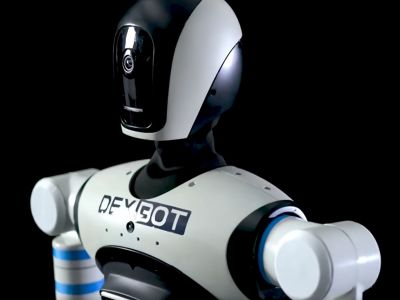
Dex is a next-generation industrial humanoid robot designed for real-world work environments, combining advanced AI with robust bipedal locomotion. It features multi-camera vision systems for precise task execution, including depth and arm-mounted cameras, enabling it to perform complex manipulation and navigation tasks. Dex is optimized for industrial applications such as manufacturing, logistics, and service roles, with capabilities for autonomous operation, teleoperation, and learned behaviors. Its humanoid design allows it to interact safely and effectively alongside humans, with integrated safety features and collaborative modes. Powered by Nvidia Jetson Thor, Dex leverages AI for enhanced perception, decision-making, and adaptability in dynamic environments.

Toyota
Punyo
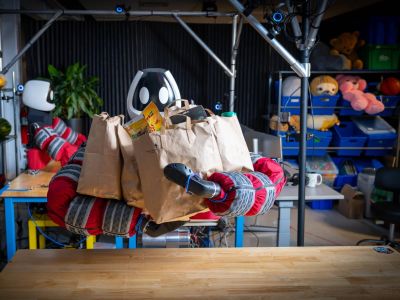
Punyo is a soft humanoid robot developed by Toyota Research Institute for whole-body manipulation research, emphasizing safe human-robot interaction in assistive scenarios like aging in place. Its upper body features compliant materials covering hands, arms, and chest, integrated with tactile sensors and air-filled bladders for adaptive stiffness and force sensing during contact-rich tasks. Underneath lies a rigid structure with two precise robot arms, torso frame, and waist actuator, enabling hybrid precision and compliance. Punyo's "paws"—inflatable latex bubbles with internal cameras detecting dot pattern deformations—facilitate gripperless grasping of bulky objects by hugging to the torso or slinging onto shoulders. Trained via teleoperation, diffusion policy learning from demonstrations, and example-guided reinforcement learning, it handles groceries, furniture, dishwashers, and doors. With a wheeled base for mobility, ROS2 support, and focus on household chores, Punyo prioritizes safety, dexterity, and natural movements over rigid manipulation.

Mirsee Robotics
MH3
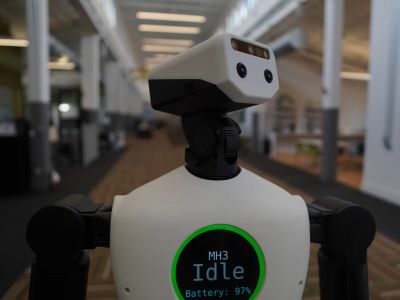
MH3 is a third-generation humanoid robot designed by Mirsee Robotics to augment skilled labor through precise dual-arm manipulation and advanced mobility. It features teleoperation via immersive VR with haptic feedback, enabling operators to perform complex manual tasks remotely in hazardous or labor-intensive environments. MH3 supports up to 27 kg combined arm force, integrates omni-directional mobility for maneuvering in confined spaces, and emphasizes safe human-robot collaboration with force limiting and collision detection. Its design targets industrial, manufacturing, and service sectors, enhancing productivity and reducing physical strain while operating continuously with wireless charging and a 10-hour runtime.

LimX Dynamics
Oli
LimX Oli is a full-size humanoid robot built for embodied AI research and real-world applications. Standing about 1.65 m tall and weighing 55 kg, it features 31 degrees of freedom, allowing smooth, human-like motion for walking, bending, and handling objects. Oli’s modular design supports interchangeable grippers, LiDAR, depth cameras, and IMU sensors, making it adaptable for various tasks. With an open SDK and cloud-based software updates, developers can customize control algorithms and integrate AI models for advanced operation. Designed for both research and industry, Oli can perform object manipulation, payload carrying, and tool operations, making it suitable for logistics, manufacturing, and service robotics while advancing human-robot collaboration and embodied intelligence studies.

Enchanted Tools
Mirokaï
Mirokai is a next-generation humanoid robot designed for natural human-robot interaction and social logistics. It features advanced AI with multi-large language model integration for fluid, context-aware conversations and GDPR-compliant face tracking. The robot uses high-speed, torque-controlled actuators for precise and fast manipulation, achieving a 97% grasping success rate. It moves on a patented omnidirectional ball-based mobile platform, enabling smooth navigation in human environments like hotels, airports, and restaurants. Mirokai’s expressive animated face uses a projector and 3D engine for dynamic facial expressions, enhancing emotional connection. It is designed to assist with repetitive tasks, carry loads, and interact safely and intuitively with people.

Reflex Robotics
Reflex Humanoid
The Reflex Humanoid by Reflex Robotics is a wheeled mobile manipulator designed for warehouse and logistics tasks, featuring a human-like torso with dual arms offering over twice human strength for lifting more than 25 lbs per arm and 50+ lbs collectively. Its innovative "spine" mechanism adjusts height dynamically from ground level to high shelves, paired with a compact wheeled base under 2 ft x 2 ft for zero-degree turns and tight space navigation. Equipped with a head housing multiple RGB sensors and a 180-degree articulated neck for enhanced vision, it supports teleoperation from up to 3,000 miles via Wi-Fi with low-latency control likened to a video game interface. Boasting 16+ hours of battery life, rapid 60-minute deployment, and swappable three-finger grippers with suction, the robot excels in repetitive tasks like palletizing, tote picking, box closing, and beverage packaging. It learns from human demonstrations to progress toward autonomy, prioritizing stability, affordability, and scalability over bipedal complexity.

Leju Robotics
KUAVO-MY
KUAVO-MY is a full-size humanoid robot developed by Leju Robotics for research, industrial experimentation, and advanced service applications. The bipedal platform focuses on dynamic locomotion, whole-body motion control, and intelligent task execution. KUAVO-MY integrates high-precision joint actuators, real-time balance control, and multimodal perception systems to enable stable walking, manipulation, and human-environment interaction. Designed primarily for laboratories, enterprises, and innovation centers, the robot supports autonomous behaviors, teleoperation, and learning-based control through modern robotics software frameworks, making it suitable for robotics research, industrial testing, and intelligent service deployment.

Macco Robotics
Kime v5
Kime v5 is a charismatic, humanoid barista and waiter robot that mixes the charm of a seasoned bartender with the precision of industrial automation. Standing two meters tall, its dual articulating arms pour beer in under 8 seconds and craft cocktails in 30 seconds flat, all while engaging customers in their preferred language. With an antimicrobial exterior and “plug‑and‑play” integration into existing bar equipment, Kime v5 transforms hospitality with speed, hygiene, and theatrical flair.

UBTECH Robotics
Walker X
Walker X by UBTECH Robotics is a next-generation bipedal humanoid engineered for agile, autonomous service and research applications. With 41 degrees of freedom and advanced self-balancing locomotion, Walker X walks steadily across varied indoor surfaces while perceiving its environment through multi-modal sensors. It supports autonomous navigation with U-SLAM and visual intelligence, enabling precise human-robot interaction, object manipulation, and dynamic decision making. Powered by a lithium iron phosphate rechargeable battery with removable packs, Walker X delivers hands-on research value and real-world capability. Its combination of robust hardware and intelligent control makes it a leading humanoid platform for enterprise and innovation.

Pudu Robotics
D9
The PUDU D9 is a full-sized bipedal humanoid robot designed to replicate adult human proportions with a height of 170 cm and weight of 65 kg. It features 42 degrees of freedom enabling fluid, human-like motion, including dual 7-DoF arms equipped with the PUDU DH11 dexterous hand offering 11 degrees of freedom for precise manipulation. The robot can walk at speeds up to 2 m/s, navigate stairs and slopes, and perform complex tasks requiring both strength and delicacy with a payload capacity exceeding 20 kg. Advanced sensors including RGB, RGBD cameras, tactile sensors, and IMU support real-time 3D semantic mapping and autonomous navigation. Powered by AI and reinforcement learning, the D9 adapts quickly to diverse commercial and research applications, making it suitable for service, industrial automation, and exploration in unstructured environments.

Holiday Robotics
Friday
Friday is a highly dexterous wheeled humanoid robot from Holiday Robotics, engineered for real-world industrial manipulation, logistics, and human-robot interaction. Standing at human scale with 63 degrees of freedom, it features advanced 20-DoF tactile hands capable of detecting forces as low as 0.05N at 1900Hz refresh rates, enabling precise grasping of delicate objects and safe collaboration with people. Powered by a high-speed wheeled base reaching 1.9m/s, it prioritizes stability, energy efficiency, and 24/7 operation via hot-swappable batteries over bipedal complexity. Integrated sensors support autonomous navigation, obstacle avoidance, and low-latency control (0.2s perception-to-action), with sim-to-real learning for tasks like assembly and retail assistance. Certified safe for human proximity, Friday bridges research and commercial deployment in factories, warehouses, and service environments, offering cloud connectivity, teleoperation fallback, and modular integration for scalable automation.

RoboForce
TITAN
Titan by RoboForce is a rugged, AI-powered industrial mobile manipulator engineered to automate challenging tasks in demanding outdoor and industrial environments. Built with modular hardware, dual arms, and a robust wheeled or tracked base, Titan delivers precision to within 1 mm and supports heavy payloads up to 40 kg. Its advanced Domain Intelligence enables autonomous navigation, spatial understanding, and adaptive task execution across sectors like solar, mining, manufacturing, and logistics. With an 8-hour runtime and a scalable design, Titan combines durability, versatility, and cutting-edge AI to elevate industrial automation beyond traditional fixed systems.

Pudu Robotics
D7
PUDU D7 by Pudu Robotics is a next-generation semi-humanoid service robot that blends advanced mobility with high precision manipulation. Featuring an omnidirectional chassis and a human-like upper body with articulated arms, D7 navigates diverse indoor environments with agility and balance. Its 30 degrees of freedom, expandable to 50 with specialized hands, support complex tasks like elevator control, item transport, and sorting. Powered by a high-capacity lithium-ion battery, D7 delivers over eight hours of continuous operation. Embedded AI enables autonomous planning, perception, and adaptive execution, making it ideal for service, industrial, and commercial automation.

Cartwheel Robotics
Yogi
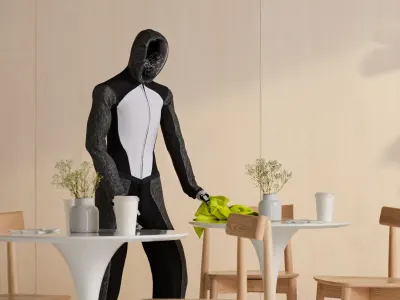
Yogi by Cartwheel Robotics is a mid-size bipedal humanoid robot designed for safe, autonomous interaction in human environments. It combines advanced locomotion, expressive motion, and AI-driven perception to navigate indoor spaces, communicate naturally, and assist with tasks requiring physical engagement. Yogi’s design emphasizes safety with soft exteriors and responsive control systems. Its capabilities include dynamic walking balance, autonomous path planning, and gesture recognition. Yogi supports research, service automation, and human-robot collaboration, blending mobility, manipulation, and interactive intelligence for real-world robotics applications.

Orano And Capgemini
Hoxo Robot
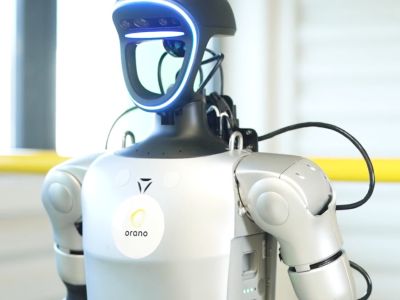
Hoxo is an intelligent humanoid robot designed specifically for the nuclear industry, combining advanced AI, real-time perception, and autonomous navigation to operate safely alongside human teams in hazardous environments. It replicates human movements and performs technical gestures with precision, enhancing safety by reducing human exposure to risky zones. Hoxo integrates robotics, computer vision, digital twins, and AI to deliver scalable robotic assistance, redefining human-machine collaboration in sensitive industrial settings. Its deployment at Orano’s Melox site marks a pioneering step in using humanoid robots as “Non-Human Workers” in high-stakes sectors.

Unitree Robotics
Unitree G1
The Unitree G1 is a game-changer in affordable humanoid robotics. With 23 degrees of freedom and cutting-edge AI, it mimics human motion with surprising fluidity. This compact robot is equipped for dynamic environments—ideal for research labs, educational institutions, and light industrial automation. Whether it’s performing tasks, interacting with people, or exploring tight spaces, the G1 delivers high performance in a sleek, legged package. It's a prime tool for those developing next-gen human-robot collaboration solutions.

Matrix Robotics
Matrix 3
MATRIX-3 is a next-generation humanoid robot that integrates biomimetic design with advanced AI for autonomous task execution in commercial, industrial, and domestic environments. The robot features a 3D woven bionic skin with distributed tactile sensors capable of detecting micro-forces as low as 0.1 newtons, enabling safe human-robot interaction and delicate object manipulation. Its 27-degree-of-freedom Lingxi Hand uses cable-driven actuation to perform complex tasks including tool operation and fabric handling. Full-body motion is powered by algorithms trained on human motion capture data, allowing natural gait patterns across uneven terrain. The cognitive core enables zero-shot generalization, allowing the robot to adapt to new tasks without extensive retraining.

AgiBot
AgiBot A2
The AgiBot A2 is a humanoid robot that blends advanced AI with human-like dexterity. Standing at 1.75 meters and weighing 55 kg, it boasts 49+ degrees of freedom, enabling agile and precise movements. Equipped with a 200 TOPS AI computing system, it processes data in real-time, making it adept at tasks ranging from industrial automation to customer service. Its sensor suite includes a microphone array, LiDAR, and RGB-D cameras, allowing it to perceive and interact with its environment effectively. The A2's modular design and advanced capabilities make it a versatile solution for various applications.

Lumos Robotics
LUS2
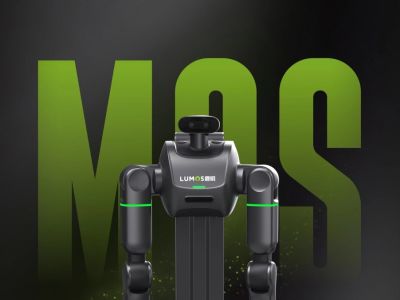
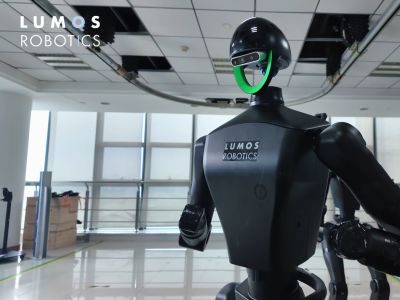
LUS2 is a full-size, highly biomimetic humanoid robot developed by Shenzhen-based Lumos Robotics, representing a major leap in motion control and artificial intelligence integration. It demonstrates real-time reflexes, extreme agility, and human-like movement through advanced proprioceptive sensing, neural motion planning, and large language model integration. LUS2 can transition from ground to upright in under one second, showcasing rapid adaptability and balance. Its modular architecture, robust actuators, and rich sensor suite enable precise manipulation and safe interaction, supporting deployment in complex environments including industrial facilities, healthcare settings, and search-and-rescue operations worldwide with scalable autonomy and reliability.

WIRobotics
ALLEX
ALLEX is a cutting-edge humanoid robot developed by WIRobotics in South Korea, designed for versatile real-world applications including household assistance, elder care, manufacturing, and medical support. Standing approximately 170 cm tall and weighing around 60 kg, ALLEX features 15 degrees of freedom in its arms, enabling delicate and precise movements with a fingertip force of 40 Newtons. It incorporates advanced force sensing without tactile sensors, gravity compensation to reduce mechanical stress, and a modular design allowing users to deploy full-body, arm-only, or hand-only configurations. ALLEX aims to safely and naturally interact with humans, performing tasks such as folding clothes, pouring drinks, and lifting loads up to 30 kg. Its lightweight yet strong design and AI-driven responsiveness position it as a significant step toward affordable, widely available humanoid robots by 2030.

Zerith
Zerith H1
The Zerith H1 is a humanoid robot engineered for hotel housekeeping and service operations. It features a height adjustable body mounted on flexible universal wheels, enabling smooth navigation through narrow corridors and complex room layouts. The robot works across multiple vertical planes, allowing it to stoop to pick items from floors, restock toiletries, organize shoes, and clean bathrooms precisely. Powered by advanced AI with multi sensor fusion, H1 autonomously handles repetitive, labor intensive chores, improving efficiency, safety, and consistency while reducing human workload and integrating seamlessly into dynamic hospitality workflows for modern hotels worldwide operations.

NEURA Robotics
4NE‑1
4NE‑1 is a next-generation humanoid robot built by Neura Robotics to seamlessly collaborate with humans in industrial and assistive roles. It features full-body sensor coverage, human-like bipedal mobility, AI-based perception, and modular limbs for flexible tasks. The robot uses Neura’s fusion of visual, auditory, and tactile inputs, allowing it to learn, adapt, and safely operate in dynamic environments. It’s engineered for long-term autonomous use and is intended to support workflows in manufacturing, logistics, caregiving, and research.

AEI Robot
ALICE 4
ALICE 4 is a next-generation humanoid robot developed by AEI Robot for seamless operation in human environments. Standing 160 cm tall and weighing 45 kg, it features 41 degrees of freedom and proprietary gearless linear actuators that enable smooth, precise, and quiet motion. Powered by an onboard NVIDIA Jetson Orin NX, ALICE 4 supports real-time vision, object detection, and natural language interaction. It offers multimodal perception, force-based impedance control for safe human interaction, and VR-based teleoperation for rapid skill learning. Its modular architecture and rich sensor suite make it suitable for complex pick-and-place tasks, research.

AI² Robotics
AlphaBot 2
AlphaBot 2 is a next-generation general-purpose humanoid robot developed by Shenzhen-based AI² Robotics, unveiled in April 2025. Powered by the proprietary AlphaBrain embodied AI platform featuring the GOVLA (Global & Omni-body Vision-Language-Action) model, it integrates unified vision, language, and action capabilities for autonomous task execution. The robot features a dual "Fast + Slow" system architecture combining real-time motion planning with deep reasoning engines. With 34-40+ degrees of freedom, an adaptive height range of 0-2.4 meters, and sophisticated force feedback systems, AlphaBot 2 excels in multi-step autonomous tasks including cooking, sterile filling, inspection, and complex manufacturing workflows. Its 360° vision system, extended arm reach of 2.4 meters, and continuous learning capabilities enable seamless adaptation to diverse industrial and service environments without manual reprogramming.

X Square Robot
Quanta X2
The Quanta X2 is a next-generation wheeled humanoid robot from X Square Robot, engineered for versatile applications in service, household, logistics, and light industrial environments. Standing at 172 cm tall with 62 degrees of freedom, it features a robust upper body with force-controlled arms, 20-DOF dexterous five-finger hands per arm, and a 756 mm arm reach, enabling bimanual manipulation, precise grasping, and subtle pressure sensing for tasks like cleaning, serving, and package handling. Powered by the WALL-A embodied AI foundation model, it integrates vision-language-action capabilities for real-time perception, speech understanding, gesture expression, and autonomous task execution without scripted routines. Its wheeled base supports 1 m/s speeds for efficient navigation in close-quarters settings up to 2 meters, with modular tool attachments like rotating clamps, brushes, and mops for 360-degree cleaning. Designed as a "one brain, many uses" platform, Quanta X2 excels in dynamic human environments, demonstrating lifelike motions, emotional gestures, and adaptability across hotels, retail, warehouses, homes, and research labs, redefining embodied intelligence.

Agile Robots
Agile ONE
Agile ONE is a full-size industrial humanoid robot standing 174 cm tall, engineered for factory floor deployment alongside human workers. It combines world-leading dexterous hands featuring 21 articulation points per hand with advanced tactile and force-torque sensing in every joint, enabling both delicate assembly and firm grasping. The robot integrates a layered AI architecture trained on real-world industrial datasets, autonomous navigation via LiDAR and spatial recognition, and intuitive human-robot interaction through expressive facial displays and proximity sensing. Designed for material handling, machine tending, tool use, and precision manipulation tasks, Agile ONE represents a shift toward Physical AI—intelligence grounded in tactile feedback and real-world industrial application rather than raw lifting capacity.

Mentee Robotics
Menteebot (V3.0 Production Prototype)
Menteebot is a full-size humanoid platform designed for seamless transition from industrial labor to domestic service. Standing 1.75 meters tall, it is uniquely engineered around an "AI-First" philosophy, moving beyond traditional pre-programmed routines. It utilizes a breakthrough Real2Sim2Real pipeline, allowing users to "mentor" the robot through natural demonstrations. Once a task is demonstrated, the robot refines the skill in a high-fidelity simulation before executing it autonomously in the real world. Powered by dual NVIDIA Jetson Orin AGX units and an onboard Large Language Model (LLM), Menteebot can decompose complex verbal instructions into modular physical actions without teleoperation

Dex Force
W1 Pro
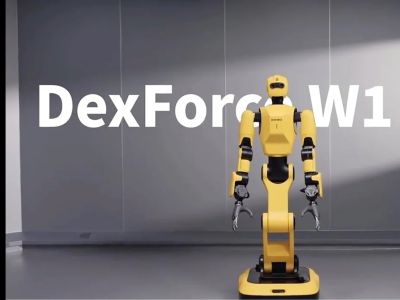
The W1 Pro is a wheeled humanoid robot from Dex Force, featuring a highly humanoid upper body with advanced arms and hands mounted on a stable mobile chassis for efficient navigation and manipulation. It excels in high-precision tasks with sub-millimeter accuracy, powered by Sim2Real technology and Visual Language Action (VLA) models that enable rapid skill transfer from simulation to real-world applications. Equipped with 34-40 degrees of freedom, binocular vision sensors, and automatic hand-eye calibration, it handles complex operations like parts assembly, factory inspections, and delicate interactions such as operating a coffee machine. Designed for multi-scenario versatility in industrial and service environments, the W1 Pro prioritizes endurance with up to 8 hours of runtime, low power consumption, and modular end effectors for adaptability. Its hybrid architecture trades bipedal complexity for reliability, focusing on sustained commercial utility in unstructured settings.

UniX AI
Martian
The UniX AI Martian is a bipedal, general-purpose humanoid robot designed for versatile deployment in research, service, and industrial environments. Featuring a 16-DOF system, it delivers stable walking, precise object manipulation, and advanced balancing. Its high-torque actuators enable smooth, strong motion, while integrated sensors and AI-driven perception support autonomous navigation and task execution. The Martian is built for multi-scenario applications, including logistics, manufacturing, and household assistance, with modular hardware and robust software integration for adaptability and scalability.

Duatic
Duatic Alpha
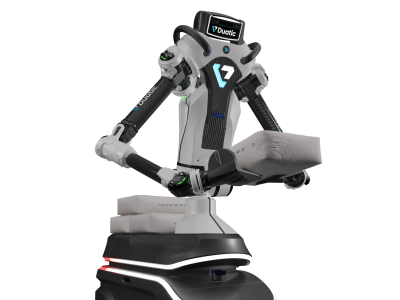
Duatic Alpha is a half-humanoid, vision-enabled robot built for industrial logistics and manufacturing. It combines advanced bipedal locomotion with dexterous dual arms for precise floor-to-shelf manipulation. The mobile base supports heavy payloads up to 200 kg, while each arm lifts 6 kg continuously and 12 kg in short bursts. Alpha uses hot-swappable batteries for near-continuous operation and integrates vision-based intelligent navigation for autonomous path planning and obstacle avoidance. Its modular architecture and advanced control systems make it suitable for complex pick-and-place, transport, and assembly tasks in dynamic industrial environments, improving efficiency, safety, and operational flexibility.

AgiBot
AgiBot A2 Ultra
The AgiBot A2 Ultra is a next-generation humanoid robot engineered for advanced service and industrial applications. Designed with human-like proportions and a futuristic aesthetic, it features a highly dexterous 49+ degree-of-freedom body, enabling agile movement and precise manipulation. Equipped with a 200 TOPS AI computing system, the A2 Ultra processes multimodal inputs—text, audio, and visual—with 96% accuracy, even in noisy environments. Its sensor suite includes LiDAR, RGB-D cameras, microphone arrays, and fingertip sensors, supporting safe navigation and delicate object handling. The robot excels in customer service, logistics, and research, offering modular hardware, cloud integration, and real-time autonomous task execution.

MagicLab
MagicBot Z1
The MagicBot Z1 is an advanced bipedal humanoid robot standing 1.4 meters tall and weighing 40 kilograms, designed for industrial, commercial, and companion applications. Featuring 24 to 50 degrees of freedom with high-torque smart joints exceeding 130 N·m, the Z1 demonstrates exceptional agility and balance recovery capabilities. Equipped with comprehensive sensor arrays including 3D LiDAR, depth cameras, and binocular fisheye vision, it navigates complex environments autonomously while maintaining real-time terrain adaptability. The robot achieves walking speeds up to 2.5 m/s and can climb obstacles up to 15 centimeters. With voice interaction capabilities, emotional intelligence through gesture recognition, and optional dexterous 11-DOF hands, the Z1 excels in human-like interaction and precision manipulation tasks across diverse operational scenarios.

HUMANOID
HMND 01 Alpha Bipedal
The HMND 01 Alpha Bipedal is a next-generation humanoid robot developed by HUMANOID, designed for industrial, logistics, and service automation. Standing at 179 cm tall, it features 29 degrees of freedom (excluding end-effectors), modular manipulation with options for 12-DOF five-finger hands or 1-DOF parallel grippers, and a payload capacity of 15 kg bimanual. The robot leverages a proprietary Vision-Language-Action (VLA) framework powered by NVIDIA compute, enabling advanced perception, reasoning, and skill execution. With a runtime of 3 hours, it supports agile bipedal locomotion, including walking, sidestepping, squat-walking, and hopping, and is optimized for dynamic environments such as warehouses, manufacturing floors, and service spaces. Its modular design allows for rapid adaptation and upgrades, making it suitable for research, proof-of-concept deployments, and real-world automation tasks.

Pollen Robotics
Reachy 2
Reachy 2 is an advanced open-source humanoid robot designed for research, education, and AI development. It features dual 7-DoF bio-inspired arms with human-like proportions, enabling precise manipulation and lifting up to 3 kg per arm. Equipped with multiple RGB-D cameras and a Time-of-Flight sensor, it provides stereo vision and depth perception. Reachy 2 supports immersive teleoperation with spatialized audio. Its modular architecture allows alternative grippers and mobile bases, making it adaptable for human-robot interaction, telepresence, and embodied AI research. The robot runs on ROS 2 with Python APIs, supports OTA updates, and enables flexible programming.

Sunday Robotics
Memo
Memo is a home-focused humanoid-style robot developed by Sunday Robotics to autonomously perform domestic chores such as dishwashing, laundry folding, tidying, and espresso preparation. Standing 1.7 meters tall on a wheeled base, it features a torso with two multi-DoF arms and dual grippers, capable of reaching from floor level up to around 2.1 meters (7 feet). Designed for family environments, Memo emphasizes safety and stability through a low center of gravity, compliant control, and a soft silicone exterior. It learns from real household data via Sunday’s Skill Capture Glove, mastering long-horizon tasks in unstructured homes.

PAL Robotics
TIAGo Pro
TIAGo Pro is a versatile humanoid mobile manipulator designed for advanced research and industrial applications, featuring bipedal-inspired human-like proportions with a compact, modular design. It integrates 7-DoF torque-controlled arms with Series Elastic Actuators and safety brakes for precise, compliant manipulation. The robot excels in human-robot interaction with expressive facial displays, RGB-D vision, and advanced speech recognition supporting over 20 languages. Its omnidirectional mecanum wheeled base enables agile indoor navigation with 360º LiDAR mapping and SLAM. TIAGo Pro supports ROS 2 for flexible programming and autonomous operation, making it ideal for manufacturing, healthcare, and service robotics where dexterity, safety, and collaboration are critical.

Midea
Miro U
Miro U is a cutting-edge humanoid robot designed by Midea for complex industrial automation tasks. It features a unique six-arm bionic mechanical design combined with a wheeled leg chassis, enabling multitasking and high-precision control in factory environments. The robot supports vertical lifting and 360-degree in-place rotation, allowing it to perform multi-dimensional operations efficiently. Miro U is intended to enhance production line flexibility and efficiency, particularly in high-end manufacturing such as washing machine assembly. It integrates fast end-effector switching for diverse tasks and is part of Midea’s broader AI-driven smart factory ecosystem, aiming to boost operational efficiency by up to 30%. The robot represents the third generation in Midea’s humanoid lineup, combining advanced robotics with AI for industrial applications.

LimX Dynamics
Tron 2
The Tron 2 by LimX Dynamics is an advanced two-arm humanoid robot designed as an embodied AI platform for dynamic wheeled locomotion and manipulation. Standing approximately 157 cm tall, it excels in agile movements, real-time balance, and limb coordination through data-driven learning from its environment. Key features include fluid whole-body motion, object handling, and adaptation to complex terrains like stairs and uneven surfaces. Powered by high-torque actuators and AI algorithms, Tron 2 supports autonomous task execution, teleoperation, and reinforcement learning for versatile applications in research, logistics, and human-robot interaction. Its modular design allows foot swaps for walking or rolling, enhancing versatility in indoor and outdoor settings while prioritizing safety and energy efficiency.

Matrix Robotics
Matrix 1
Matrix 1 is a full-size bipedal humanoid robot standing 180 cm tall, engineered for versatile real-world tasks in manufacturing, logistics, and service environments. Featuring self-developed motors and actuators, it achieves human-like flexibility with wide joint ranges and a top walking speed of 7.6 km/h. The DexH13GEN2 or 3rd-generation hands provide 22 degrees of freedom (DOF) with tactile sensors and force-position hybrid control for precise manipulation of objects up to 10 kg per arm. Powered by an advanced AI stack with 4x improved reasoning over prior models, it supports imitation and reinforcement learning, natural language processing, and autonomous navigation via 8 RGB cameras, optional LiDAR, ultrasonic sensors, and IMUs. With 5-hour endurance, soft enclosures for safe human interaction, and capabilities like obstacle avoidance and dexterous gripping, Matrix 1 excels in unstructured spaces, collaborative assembly, sorting, and complex locomotion including stairs and uneven terrain.

Karlsruhe Institute of Technology (KIT)
ARMAR-7
ARMAR-7 is the latest humanoid robot from KIT's ARMAR family, engineered for assistance in human environments like households and care facilities. Featuring dual torque-controlled 8-DoF arms, underactuated five-finger humanoid hands, a head with stereo vision, a torso, and a holonomic mobile platform, it stands at anthropomorphic dimensions for seamless interaction. With 32 controllable degrees of freedom driven by EtherCAT, it integrates torque sensors in joints, force-torque sensors in wrists, and absolute encoders for precise manipulation. ARMAR-7 excels in tasks such as opening doors, loading dishwashers, handing over objects, and recognizing speech commands like "Bring me the milk." It learns from human demonstrations via imitation learning, processes visual data for object recognition, interprets gestures and intentions, and employs cognitive architecture for contextual understanding, error recovery, and autonomous adaptation in daily activities.

VinRobotics
VR-M2
The VR-M2 humanoid robot from VinRobotics is a mid-range bipedal platform designed for industrial logistics, factory automation, and research applications. Standing approximately 165 cm tall with human-like proportions, it features 32-40 degrees of freedom powered by electric servo actuators and harmonic gear drives for stable, natural gait including walking at up to 4 km/h, stair navigation, and uneven terrain handling. Equipped with dual 1080p RGB-depth cameras, IMU, gyroscopes, and force sensors, it enables visual SLAM navigation and real-time perception-planning-action integration. Dual arms with 5-finger hands offer 10-14 DOF per hand for dexterous manipulation, carrying up to 3-10 kg per arm and deadlifting 40 kg total. Safe for human collaboration with collision detection and emergency stops, it supports semi-autonomous operation, multi-language voice interaction, fall recovery, and swappable batteries for 4-hour runtime. Built from aluminum and plastic composites, VR-M2 excels in harsh indoor environments, performing tasks like object handling, gesturing, and autonomous charging.

VinRobotics
VR-H3
The VR-H3 is VinRobotics' third-generation high-end humanoid robot prototype, engineered for stable bipedal locomotion using reinforcement learning-based control with bio-inspired gait design, domain randomization, and curriculum learning for natural movement on varied terrains. Standing approximately 178 cm tall and weighing 75-85 kg, it features 31 smart motors driving rotary joints that mimic human kinematics, enabling fluid walking, gesturing, and object manipulation in crowded or hazardous environments like factories. Each arm lifts up to 3 kg, with swappable batteries supporting continuous operation. Equipped for semi-autonomous tasks, it navigates via visual and inertial systems, performs human-like interactions such as waving and handshakes, and prioritizes upper-body stability during dynamic lower-body adaptation. Aimed at industrial assistance, research, and future full automation, VR-H3 advances humanoid scalability with open interfaces for upper-body customization and robust sim-to-real transfer.

VinRobotics
VR-H1
The VR-H1 is a third-generation bipedal humanoid robot from VinRobotics, engineered for industrial assistance in factories and hazardous environments. Standing at human height with human-like proportions, it features 31 smart motors enabling precise rotary joint movements for walking in crowded spaces, arm gestures like waving and handshaking, and object manipulation. Each arm lifts up to 3 kg, supporting tasks such as picking, assembly, and inspection. Equipped with dual swappable batteries for continuous operation, advanced AI vision for navigation and object recognition, and reinforcement learning-based locomotion for stable gait on uneven terrain. Its robust aluminum frame weighs 75 kg, balancing strength and agility for logistics, quality control, and collaborative human-robot workflows, with potential for full autonomy in dynamic settings.

Fauna Robotics
Sprout
Sprout by Fauna Robotics is a compact, lightweight humanoid robot designed for safe human interaction and developer-friendly applications in research, education, and commercial development. Standing at 107 cm tall and weighing 22.7 kg, it features 29 degrees of freedom for full-body articulation, including 6 DoF arms with floor-to-countertop reach, 5 DoF compliant legs for low-impact bipedal locomotion, and a 2 DoF neck for expressive gaze. Equipped with NVIDIA Jetson AGX Orin compute, ZED 2i stereoscopic vision, time-of-flight sensors, IMU, microphone array, and a full-color 360-degree facial LED array with motorized eyebrows, Sprout enables out-of-the-box mapping, navigation, voice interaction, walking, kneeling, crawling, jumping, dancing, and fall recovery. Its soft deformable exterior, back-drivable motors, and dedicated safety subsystem ensure collaborative operation in shared human spaces, while swappable batteries provide 3-3.5 hours runtime and LEGO-compatible customization fosters modular innovation in manipulation, task planning, and human-robot interaction.

Borg Robotics
Borg 01
The Borg 01 is a modular humanoid robot from Detroit-based Borg Robotics, engineered for industrial and logistics tasks with a focus on adaptability and efficiency. Standing at 173 cm tall and weighing 62 kg, it autonomously switches between bipedal walking for narrow spaces and a wheeled base for faster, more efficient movement across factory floors and warehouses. Key features include quick-change end effectors like vacuum grippers, mechanical claws, dual grippers, and five-fingered hands, supporting payloads up to 12 kg for versatile manipulation. Powered by advanced AI neural networks, it adapts to new tasks and environments without infrastructure changes, integrating into existing workflows. With 23 degrees of freedom, in-house high-torque actuators, and up to 12 hours runtime in wheeled mode via swappable batteries, Borg 01 targets manufacturing labor shortages, offering seamless operation in crowded aisles alongside Borg's ecosystem of autonomous pallet jacks and forklifts.

Phybot
Phybot C1
The Phybot C1 is an agile, embodied AI companion designed for interactive roles in homes, research labs, and hotels. Standing 128 cm tall and weighing 28–30 kg, it utilizes a "quasi-direct-drive" system with cycloidal-reduction actuators to achieve high torque density and stable locomotion. While the larger M1 model focuses on "superhuman" strength, the C1 specializes in sub-second autonomous reactions, recently demonstrated by its ability to play high-speed badminton fully autonomously without teleoperation. It features an HD visual projection module, advanced multimodal sensing for context awareness, and a skin-friendly exterior. Its balanced architecture makes it a premier developer platform for reinforcement learning and human-robot interaction

Phybot
Phybot M1
The Phybot M1 is a full-scale electric humanoid robot renowned for its exceptional power-to-weight ratio and dynamic agility, capable of executing human-like backflips and precise landings. Standing at 172 cm and weighing under 60 kg, it features high-torque joints up to 530 Nm and over 10 kW peak power, enabling superhuman strength for lifting 20 kg per arm and carrying 50 kg via backpack. Equipped with 32 degrees of freedom, Nvidia Jetson Orin and Intel Core i7 processors, 3D LiDAR, stereo cameras, and IMU, it excels in real-time perception, balance, and navigation across challenging terrains. Designed for industrial tasks like manufacturing and logistics, its proprietary control system supports end-to-end AI for self-correction, reinforcement learning, and robust bipedal locomotion at speeds over 2 m/s, redefining electric humanoid capabilities beyond hydraulic competitors.

APLUX
Ultra Magnus
Ultra Magnus is a cutting-edge bipedal humanoid robot developed by APLUX in collaboration with Ti5 Robot and Qualcomm, debuting at CES 2025. Powered by the Qualcomm QCS8550 processor, it enables on-device generative AI for real-time perception, decision-making, and interaction in complex environments. Key features include advanced motion control for human-like gait, visual perception for navigation and manipulation, and natural voice interaction via large language models. Designed for commercial applications, it excels in urban management, logistics, and human-robot collaboration with seamless embodied intelligence. The robot's fusion architecture operating system integrates edge AI for efficient task execution, such as object handling, path planning, and user intent recognition, making it versatile for indoor and outdoor settings with stable bipedal locomotion on varied terrain.

PaXini
TORA DoubleOne
The TORA DoubleOne is a next-generation lightweight humanoid robot designed for industrial, logistics, and service applications. It features a modular, fully foldable upper body that adapts to various operating heights. Powered by an NVIDIA Jetson AGX Orin, the robot utilizes PaXini's proprietary VTLA model (Vision-Tactile-Language-Action) for superior generalization and reasoning. It is compatible with both a dual-steer AGV chassis (Model P) for stability on industrial floors and a 4WD folding chassis (Model X) for tight spaces and diverse ground conditions.

PaXini
Tora One
The TORA One by PaXini is a wheeled humanoid robot engineered for precision tasks in industrial, healthcare, and service environments. Featuring an adjustable height from 1.46 to 1.86 meters and 47 degrees of freedom—including 21 in the body and 26 in its four-fingered bionic hands—it excels in dexterous manipulation with 1956 tactile sensors across 7824 channels for multidimensional touch perception. Equipped with five monocular cameras, two depth cameras, LiDAR, and laser SLAM for 360-degree navigation and 3D mapping, it achieves ±0.05 mm arm positioning accuracy and up to 8 kg load per arm. Its modular design supports wheeled chassis for mobility, voice interaction, and AI-driven learning, enabling autonomous operation in logistics, elderly care, and manufacturing. With 8-hour battery life and real-time visual-tactile fusion, TORA One bridges human-like dexterity with industrial reliability for seamless human-robot collaboration.

Sharpa
North
North is Sharpa's pioneering autonomous full-body humanoid robot, unveiled at CES 2026, designed for productivity in real-world environments through seamless integration of dexterous manipulation and whole-body control. Featuring SharpaWave hands with 22 active degrees of freedom, ultra-sensitive tactile feedback exceeding 1,000 pixels per fingertip, and sub-millimeter precision, North excels in contact-rich tasks like ping-pong rallies with 0.02-second reactions, ~2mm accurate photo capture, card dealing via multimodal vision-language reasoning, and 30+ step windmill assembly. Its human-like upper-body motion from neck to wrist, powered by proprietary neural networks, CraftNet VTLA model, and advanced kinematics ensures reliable long-horizon autonomy. Built for industrial versatility, North handles diverse scenarios with high success rates, bridging dexterity and mobility for tasks in manufacturing, logistics, and human-collaborative settings, redefining useful general-purpose robotics.

Blue Robin
P-73
The Blue Robin P-73 humanoid robot, developed by Blue Robin Inc., exemplifies advanced bipedal locomotion and dual-arm manipulation derived from over a decade of research at Seoul National University's DYROS Lab. Standing at 173 cm with human-like proportions and 32 degrees of freedom, it enables dynamic, stable walking through model-based and learning-based control, adapting to varied terrains. Equipped with stereo and depth cameras plus the modular Blue Robin Hand featuring 8 DOF, 4 fingers, and 10N grip force capable of lifting 10kg, it excels in dexterous object handling across 16 grasp types. The avatar system supports motion retargeting for teleoperation, while imitation learning facilitates robust manipulation of everyday items. Designed for research, industrial tasks, and care applications, P-73 integrates expressive movements, safe human interaction, and versatile navigation, bridging humanoid agility with practical autonomy in unstructured environments.

Robot Era
L7
The Robot Era L7 is a cutting-edge bipedal humanoid robot standing 171 cm tall and weighing 65 kg. It features 55 degrees of freedom for whole-body dexterity, including a 12-DoF fully direct-driven dexterous hand. The L7 excels in both speed and manipulation, capable of running at 4 m/s (14.4 km/h) and carrying dual-arm payloads up to 20 kg. Equipped with binocular cameras, 3D LiDAR, and a microphone array, it offers 360° spatial perception and advanced environmental adaptation. Its applications range from industrial automation and logistics to entertainment and research, with capabilities such as hip-hop performance, bartending, sorting, assembly, and teleoperation. The robot integrates AI-powered control with a high-performance onboard computer for real-time responsiveness and complex task execution.

VinMotion
Motion 1
Motion 1 is VinMotion's pioneering bipedal humanoid robot, introduced as Vietnam's first fully functional model, showcasing advanced synchronization technology for fluid, human-like movements. Standing approximately 170 cm tall, it excels in dynamic bipedal locomotion, enabling natural walking, dancing, and agile maneuvers with precise gait control. Equipped with high-torque joints and multi-DOF arms, it performs complex tasks like object manipulation and coordinated performances. Key features include visual processing for obstacle avoidance, IMU-based balancing for stability on varied surfaces, and reinforcement learning for adaptive behaviors. Designed for entertainment, research, and light industrial applications, Motion 1 demonstrates impressive speed up to 2 m/s, robust carrying capacity, and seamless multi-robot synchronization, marking a milestone in affordable, high-performance humanoid robotics from Vietnam.

MagicLab
MagicBot Gen1
The MagicBot Gen1 is a full-size bipedal humanoid robot engineered for industrial, research, and service applications, standing at 174 cm tall with human-like proportions and 42 active degrees of freedom for fluid, lifelike movements. It features dexterous 11-DOF Magic-Hand grippers capable of precise manipulation, supporting up to 20 kg total payload for tasks like pick-and-place, assembly, and object handling. Advanced bipedal locomotion enables dynamic walking over 2 m/s, stair climbing, and recovery from falls or pushes, powered by high-torque joints exceeding 350 N·m. A 360-degree sensor suite including 3D LiDAR, depth cameras, and stereo vision drives autonomous navigation via visual SLAM and Magic-Mind AI for multi-scenario operation. With 4-5 hours runtime from a 1.35 kWh battery, Wi-Fi 6/5G connectivity, and MagicNet for multi-robot coordination, Gen1 excels in collaborative environments, integrating with MES systems for factory automation, commercial services, and R&D experimentation while ensuring safe human proximity through force limiting and collision detection.

VinMotion
Motion 2
The Motion 2 is a second-generation full-size bipedal humanoid robot from VinMotion, engineered for industrial applications with advanced on-device AI via Qualcomm Dragonwing IQ10 processor. It excels in dynamic balance, enabling stable heavy lifting up to 40kg, self-recovery from falls, and complex motions like karate chops, backbends, and precise grasping with five-fingered hands. Featuring a natural human-like gait, faster walking speed, and greater agility than its predecessor, Motion 2 supports autonomous charging, battery swapping, and 24/7 operation. Designed for factories and warehouses, it integrates multi-language interaction, AI-driven motion planning, and human-in-the-loop supervision for safe, scalable deployment in logistics, material handling, visual inspections, and assembly tasks, pushing boundaries in physical AI and humanoid scalability

SwitchBot
Onero H1
The Onero H1 is SwitchBot's pioneering household humanoid robot, unveiled at CES 2026 as a cornerstone of Smart Home 2.0. Featuring 22 degrees of freedom in its actuated arms and dexterous hands, it excels in manipulation tasks like grasping objects, serving coffee, washing dishes, folding laundry, and organizing items. Powered by the on-device OmniSense Vision-Language-Action (VLA) model, it fuses visual perception from multiple Intel RealSense cameras, depth sensing, tactile feedback, and language understanding for adaptive, learning-based performance in dynamic home settings. Mounted on a wheeled base for efficient indoor navigation on flat surfaces, the robot avoids traditional bipedal complexity while delivering human-like arm precision comparable to advanced humanoids. It learns from real-world interactions and simulation data, evolving skills for chores like pushing doors or cleaning windows, integrating seamlessly into smart homes via WiFi and Bluetooth for versatile, autonomous assistance.

DroidUp
Walker II (02)
Walker II is a pioneering lightweight modular humanoid robot from DroidUp, standing at 1.7 meters tall and weighing just 30 kg, engineered with bio-inspired tendon-driven actuation and distributed motor coordination for human-like agility. It achieves a maximum walking speed of 3 m/s, navigates diverse terrains including stairs, gravel, and slopes, and clears 15 cm obstacles using dynamically adjustable joint stiffness for precise, energy-efficient motion—25% more efficient than competitors. The 28 DOF bipedal design supports stable balancing, modular customization for research, education, inspections, service tasks, and industrial applications. Integrated sensors enable real-time environmental adaptation, while its high-strength lightweight frame ensures endurance for prolonged operations, making it ideal for dynamic humanoid locomotion in challenging settings.

Noetix Robotics
Hobbs W1(Guidance Expert)
The Hobbs W1 (Guidance Expert) by Noetix Robotics is a compact wheeled humanoid service robot optimized for professional environments like reception, retail, education, and corporate spaces. Featuring a lifelike bionic head with expressive facial movements and an interactive chest screen, it delivers immersive human-like interactions through natural gestures, speech recognition, and emotion detection. Equipped with dual 5-DoF robotic arms and 6-DoF dexterous hands, it performs light manipulation tasks such as handing items, pressing buttons, and pick-and-place operations. Autonomous navigation enables mapping and movement in complex indoor spaces for guidance and support duties. Powered by onboard dual GPUs for AI processing, it supports low-latency dialogue and reinforcement learning, blending social engagement with functional utility to assist humans without replacing them, ideal for customer-facing roles requiring safety and reliability.

Kody Technolab
Skändä (Skanda)
Skändä is India's pioneering AI-powered humanoid robot developed by Kody Technolab, showcasing advanced bipedal locomotion and human-like interaction capabilities. Designed for versatility, it excels in engaging audiences through natural speech synthesis, query response, and cultural gestures like chanting phrases, as demonstrated at Vibrant Gujarat 2024 and Gujarat Police Expo. Equipped with AI for mimicking human actions, situational analysis, and real-time interaction, Skändä supports applications in public engagement, law enforcement assistance, and entertainment. Its bipedal design enables stable walking on flat surfaces, balanced arm movements for gesturing, and a expressive head unit for voice communication in multiple languages. With integrated sensors for environmental awareness and machine learning for adaptive behaviors, Skändä represents a leap in indigenous robotics, blending autonomy with teleoperation for safe human-robot collaboration in dynamic settings.

Noetix Robotics
E1
The Noetix E1 is a compact bipedal humanoid robot standing 1.36 meters tall, engineered for advanced embodied intelligence and dynamic human interaction. Featuring 21 degrees of freedom, including extended arms, waist flexibility, and modular expansions, it excels in agile locomotion at 1.2 m/s walking speed with 1-2 hours endurance. Powered by multi-modal AI, the E1 synchronizes speech synthesis, expressive facial animations, and fluid body gestures for low-latency multilingual communication and emotional engagement. Its 48V low-power system enables memory retention, personality customization, and immersive scenarios like education, research, and demonstrations. Versatile modular options, such as dexterous hands and advanced arms, support tasks from athletic jumps to artistic performances, including a record 1.25-meter standing long jump. Designed for accessibility, the E1 bridges research-grade capabilities with real-world adaptability in human-proportioned form.

Tokyo Robotics
Torobo
Torobo is a torque-controlled humanoid robot designed for advanced AI and robotics research, emphasizing precision manipulation and safe human interaction. Standing 166 cm tall with dual 7-axis arms, a 3-axis waist, 3-axis neck, and 4-axis omnidirectional mobile base, it offers human-like range of motion for complex tasks like hammering, sawing, and table wiping. High-precision torque sensors in all arm and waist joints enable impedance control, force limiting, and collision detection, allowing delicate operations alongside heavy lifting up to 20 kg. Powered by ROS for trajectory planning and simulation in Gazebo or MuJoCo, Torobo supports modular sensor integration including cameras and LiDAR. Its robust build suits industrial, academic, and assistive applications, particularly Japan's aging population initiatives, with features like ZMP-based balance and real-time compliance for collaborative environments.

XPENG
PX5
The XPENG PX5 is a pioneering humanoid robot prototype standing 1.5 meters tall, engineered for advanced bipedal locomotion and dexterous manipulation. Featuring 22 degrees of freedom, including 7-DOF arms with 0.05mm positioning accuracy and ultra-lightweight 430g hands with 11 DOF each, it employs a hybrid rigid-soft drive for versatile grasping up to 1kg grip force and 3kg arm payload. Tactile fingertip sensors enable precise object handling, while shock-resistant joints support stable walking on indoor/outdoor terrains, including grass, rocks, stairs, and obstacle crossing. Demonstrated capabilities include playing football, riding self-balancing scooters, and complex tasks like screwing or pouring. Designed for industrial and retail applications such as factory patrolling and product sales, PX5 integrates AI-driven navigation and balance for over 2 hours of continuous operation, paving the way for human-like robotics in dynamic environments.

CASIVISION
CASIVIBOT
CASIVIBOT is a compact, affordable service humanoid robot designed for commercial spaces including hospitals, offices, and retail environments. It features a dual-arm design with 2-finger gripping claws for natural object manipulation and leverages CasiVision's computer vision expertise for safe indoor navigation. The robot combines autonomy with safe human collaboration, capable of performing tasks like item delivery and guidance while maintaining zero-incident interactions with occupants. Its modular architecture supports future hardware upgrades and balances accessibility with professional-grade functionality.

X-Humanoid
Embodied Tien Kung 2.0 Pro
The Embodied Tien Kung 2.0 Pro is a full-size humanoid robot engineered for advanced bipedal locomotion and dexterous manipulation in dynamic environments. Standing at 170 cm with a lightweight 70-90 kg alloy frame, it achieves speeds up to 12 km/h while navigating stairs, slopes, sand, snow, and uneven terrain with exceptional stability. Powered by NVIDIA Jetson Orin and the Hui Si Kai Wu AI platform, it integrates LiDAR, cameras, and five-fingered hands for precise perception, task planning, and object handling. Key features include adaptive balancing under disturbances, voice/app controls, and open interfaces for research integration. Designed for AI development, industrial labs, logistics, rescue, and automation, it supports autonomous navigation, complex manipulation, and human-safe collaboration, embodying cutting-edge Chinese humanoid innovation for real-world robustness and versatility.

BOSHIAC
DexBot
DexBot is an industrial humanoid robot platform featuring hybrid bipedal and track-legged locomotion configurations. The bipedal version stands 175 cm tall and weighs 58 kg with 28 active joints excluding dexterous hands. Each arm features 7 joints with 15-20 degrees of freedom per hand, enabling highly dexterous manipulation. The system integrates the Huazi-Rixin AI large model for natural language interaction, task decomposition, and multimodal perception combining vision, force sensing, and speech. Designed for industrial automation and factory applications, DexBot exemplifies China's academic-industry partnership in humanoid robotics development

Digit Robotics
Xia Lan S02
The Xia Lan S02 by Digit Robotics is an advanced bipedal humanoid robot optimized for AI research, human-robot interaction, and dynamic motion control in human environments. Standing at full human height with over 40 degrees of freedom, it features fluid bipedal locomotion, precise arm manipulation, and expressive facial movements enabled by 29 active facial DOFs for natural expressions and lip synchronization. Equipped with high-definition cameras, microphone arrays, and real-time perception for visual SLAM navigation, obstacle avoidance, and object interaction, it supports autonomous gait adaptation on varied terrains like stairs and uneven surfaces. High-torque servo actuators with harmonic drives ensure balanced precision in tasks such as grasping, carrying payloads up to 20kg per arm, and multimodal communication via speech synthesis and emotional AI models. Ideal for research institutions, its modular design facilitates testing reinforcement learning, full-body coordination, and collaborative scenarios, bridging embodied AI with practical utility in unstructured settings.

Digit Robotics
XiaQi X02
The XiaQi humanoid robot from Digit Robotics is engineered for versatile industrial and service applications, including manufacturing, retail, and eldercare. Standing at human scale with bipedal locomotion, it navigates dynamic environments using advanced visual SLAM and obstacle avoidance. Equipped with over 40 degrees of freedom, XiaQi delivers fluid arm, leg, and torso movements for tasks like customer reception, object manipulation, and transit hub assistance. High-resolution cameras and microphone arrays enable face tracking, sound localization, and multimodal interaction powered by an in-house emotional intelligence model. Its robust design supports carrying capacities up to 20 kg per arm, with proprietary motion algorithms for stairs, uneven terrain, and autonomous path planning. Modular end-effectors and safety features like collision detection make it ideal for human-robot collaboration, blending utility with expressive gestures for engaging interactions in real-world settings.

iHub Robotics
Tara Gen 2
The Tara Gen 2 by iHub Robotics is an advanced humanoid robot designed for complex task automation. This bipedal platform incorporates cutting-edge motion control, dexterous manipulation, and intelligent autonomous capabilities. It combines state-of-the-art sensors, real-time balance control, and sophisticated software systems for versatile real-world applications in research, industry, and service environments.

1X Technologies
EVE
EVE is a versatile wheeled humanoid robot from 1X Technologies, engineered for safe collaboration in professional and domestic spaces. Standing at 188 cm tall with a human-like upper body, it features 25 degrees of freedom driven by proprietary Revo1 quasi-direct-drive motors and cable transmission for silent, low-friction operation. EVE achieves a top speed of 14.4 km/h, carries 15 kg payloads, and operates up to 6 hours on a 1.05 kWh lithium-ion battery. Equipped with high-resolution HDR cameras for panoramic vision, it employs the Redwood AI stack and 1X OS for embodied learning via imitation from teleoperation. Its soft exterior ensures safety during human interaction, while multi-terrain wheels enable navigation of elevators, doors, and complex environments. Ideal for logistics, security, manufacturing, and healthcare, EVE learns tasks autonomously, improving efficiency in shared spaces through vision-language models and shared autonomy.

Fourier Intelligence
GR-1
The Fourier GR-1 is a pioneering mass-produced humanoid robot engineered for practical applications in research, healthcare, and industry. Standing at human height with 44 degrees of freedom, it replicates human-like proportions and bipedal locomotion, enabling fluid walking at 5 km/h, running, stair climbing, and obstacle navigation via peak torque of 230 N·m. Equipped with six RGB cameras for pure vision perception using BEV and Transformer models, it generates real-time 3D occupancy grids for precise environmental understanding. GR-1 features dexterous hands with 11 DOF for grasping varied objects, powered by Fourier Smart Actuators (FSA) that integrate motor, driver, and encoder. Advanced AI with large language models supports natural conversations, emotional expressions via high-resolution displays, and task automation. Its lightweight 55 kg frame balances agility and 15-50 kg carrying capacity, ideal for human-robot collaboration in dynamic settings.

Kawada Robotics
HRP-4
The HRP-4 is a lightweight, slim humanoid robotics platform developed for advanced research in human-robot collaboration and bipedal locomotion. Standing at 151 cm tall and weighing just 39 kg, it features 34 degrees of freedom, including 7 DOF per arm for precise object manipulation and 6 DOF per leg for stable walking. Equipped with low-power motors under 80W for enhanced safety around humans, it performs natural movements like waist twisting, one-footed balance, and dexterous five-fingered hand grasping. Cameras and microphones enable face recognition, object tracking, and voice command response. Designed as a successor to HRP-2 and HRP-3, HRP-4 supports indoor navigation in human environments, with flexible joints for athletic poses and tasks. Its compact, human-proportioned body facilitates safer interaction, object handling up to 0.5 kg per arm, and motion control software from AIST, accelerating humanoid R&D for practical applications like assistive work.

Kawada Robotics
HRP-3
The HRP-3 humanoid robot, developed by Kawada Industries in collaboration with AIST and Kawasaki Heavy Industries, represents a significant advancement in bipedal robotics for harsh environments. Standing at 160 cm tall and weighing 68 kg, it features 36-42 degrees of freedom, enabling complex manipulations and stable locomotion on slippery or uneven surfaces. Designed for disaster relief, construction, and industrial tasks, HRP-3 boasts dustproof and water-resistant construction, allowing operation under heavy rain or dust. Enhanced leg-arm coordination supports carrying heavy loads, while autonomous/remote hybrid control improves task efficiency. Equipped with stereo cameras, gyroscopes, accelerometers, and force sensors, it navigates challenging terrains, recovers from falls, and performs collaborative work with humans. Its robust hardware and advanced software make it a pioneer in practical humanoid applications beyond laboratories.

AgiBot
Agibot A1
The Agibot A1 is a first-generation general-purpose humanoid robot standing 175 cm tall with human-like proportions and 49 degrees of freedom for fluid, natural movements in human environments. Featuring dexterous five-finger hands with 12 DOF each, it achieves a 7 km/h walking speed and can lift 5 kg per arm or bear up to 80 kg total. Powered by 200 TOPS onboard AI including WorkGPT and EI-Brain architecture, it excels in perception, manipulation, and autonomous task execution for manufacturing, logistics, and services. Advanced PowerFlow joints with quasi-direct-drive, high-torque planetary reducers, and liquid cooling enable precise operations like picking, sorting, and navigating complex spaces alongside humans. Equipped with RGB-D cameras, LiDAR, and proximity sensors, it supports safe collaboration, learning from experience, and adapting to dynamic settings with bipedal agility on uneven terrain.

Digit Robotics
Starwalker P01
The Starwalker P01 by Digit Robotics is a pioneering dual-form humanoid robot featuring seamless switching between bipedal walking and wheeled modes for versatile navigation in commercial environments. Standing at human height with advanced bipedal locomotion, it achieves stable movement on stairs, uneven terrain, and tight spaces while wheeled mode extends runtime for long patrols. Equipped with 28+ degrees of freedom, dexterous arms, and a 5-finger gripper, it handles payloads up to 18kg per arm for tasks like tote manipulation, package sorting, and service interactions. Sensor fusion including LiDAR, depth cameras, IMU, and force sensors enables autonomous SLAM navigation, obstacle avoidance, and compliant grasping. Designed for logistics, warehouses, and human-collaborative settings, it offers multi-hour runtime, fall recovery, and modular end-effectors. Its human-like proportions and safety features promote safe proximity work, bridging industrial efficiency with service adaptability in dynamic real-world scenarios.

Beyond Imagination
Beomni 1.0
Beomni 1.0 is a wheeled humanoid robot designed for versatile remote operation and AI-assisted tasks across industries like healthcare, manufacturing, agriculture, and eldercare. Featuring human-like upper body with articulated head, shoulders, waist, arms, and dexterous hands with opposable thumbs, it lifts up to 15.88 kg per arm for heavy loads while performing delicate actions like pinching salt or opening bottles. Four-wheel base enables traversal over mud, sand, snow, and rough terrain. Initially teleoperated via VR headset and gloves with low-latency stereo vision, haptic feedback, and 3D audio, its evolving AI brain learns from demonstrations to achieve semi-autonomy and full autonomy. Advanced sensors support object recognition, navigation, and multitasking, promoting safer, more productive human-robot collaboration without physical presence requirements.

Vulcan Robotics
Sourccey
Sourccey is Vulcan Robotics' open-source personal home humanoid robot designed for builders, tinkerers, and learners. Standing 1030 mm tall with a 414 mm footprint, it features omnidirectional mobility via 4 mecanum wheels for agile navigation in home environments. Equipped with dual 5 DOF arms plus grippers (6 revolute joints per arm), it excels in manipulation tasks taught through demonstration using Lerobot-Vulcan framework. Powered by Raspberry Pi 5 compute, 120-degree FOV vision at 720p 30fps, and a 12V 10Ah LiFePO4 battery offering up to 5000 cycles, Sourccey supports teleoperation via 7-inch touchscreen, desktop software, or Oculus Quest controllers with inverse kinematics. Fully serviceable with public STLs for 3D printing parts and individually addressable smart servos, it enables real-world AI training in robotics, object handling, and interactive tasks while promoting community contributions via GitHub repositories.

Unitree Robotics
Unitree H1-2
The Unitree H1-2 is a full-size humanoid robot standing 178 cm tall with human-like proportions, optimized for advanced mobility, balance, and whole-body coordination. Featuring 27 degrees of freedom powered by high-torque M107 joint motors, it achieves walking speeds up to 2 m/s and potential mobility over 5 m/s, enabling agile navigation on complex terrains, stairs, and uneven surfaces. Equipped with 360° 3D LiDAR and depth cameras for precise environmental perception, it supports autonomous walking, running, jumping, and manipulation tasks like grasping objects with 5-finger hands. Each 7-DOF arm lifts up to 7 kg, while legs provide robust stability for dynamic motions including dancing and handshakes. Designed for research and development, the H1-2 integrates Intel Core i7 computing, swappable 864 Wh batteries for 2-hour runtime, and ROS-compatible software, making it ideal for AI training, human-robot interaction, and industrial prototyping in indoor-outdoor settings.

Tangible Robots
Eggie
Eggie is a friendly wheeled humanoid robot from Tangible Robots, featuring an egg-shaped design with a smooth mobile base for efficient navigation and stability in home environments. Standing at 160 cm tall, it boasts dexterous five-fingered hands capable of contact-rich manipulation tasks like cleaning spills, folding laundry, watering plants, and handling fragile items. Powered by dual 1080p depth+RGB cameras and LLM cloud integration, Eggie excels in AI-driven interaction, education, and light service. Trained on real-world human data from sensor exoskeletons, it emphasizes compliance, whole-body control, and human-like dexterity. With 20 degrees of freedom, a 7-hour runtime, and low latency under 200ms, Eggie bridges industrial rigidity and domestic companionship, thriving in unpredictable settings through tactile feedback and expressive arms.

1X Technologies
NEO Home Robot
NEO Gamma is 1X Technologies’ latest home-focused humanoid, blending a sleek 3D-printed nylon-knit exterior with advanced AI for natural interaction. At 1.65 m tall, it walks with a realistic gait, squats to pick up objects, and even sits on chairs. Its custom language model enables fluid conversation and task learning, while “Emotive Ear Rings” provide intuitive visual feedback. Whether providing elderly care, handling daily chores, or offering companionship, NEO Gamma adapts to household routines with surprising dexterity and warmth.

Robot Era
Q5
The Robot Era Q5 is an advanced wheeled humanoid robot engineered for service, healthcare, and research applications, featuring 44 degrees of freedom for lifelike whole-body coordination and natural human interaction. Its bionic 7-axis arms extend up to 1.38 meters with 11-DOF "Fairy Hands" or XHAND Lite dexterous grippers, enabling precise manipulation of objects up to 10 kg per hand, such as item delivery, handoffs, and gestural communication. A slim waist and compact base facilitate agile navigation in confined indoor spaces like malls, hotels, and facilities, powered by LiDAR, stereo vision fusion, and SLAM for autonomous obstacle avoidance and route planning. Embedded ERA-42 embodied AI supports rapid learning from human motion data, voice dialogue, intention recognition, and teleoperation via app, VR, or gestures. Expressive motions, multi-sensor integration, and optional NVIDIA Jetson compute make Q5 ideal for customer engagement, guided tours, and collaborative tasks, bridging research and deployment with minimal programming needs.

Addverb Technologies
ELIXIS W
The ELIXIS W by Addverb Technologies is a wheeled humanoid robot engineered for intralogistics and warehouse operations, emphasizing human-robot collaboration over traditional bipedal designs. Featuring a wheeled base for efficient long-distance travel at speeds up to 1.5 m/s, it supports a 10 kg payload capacity, enabling robust handling of packages, tools, and materials in dynamic environments. Equipped with advanced sensors including stereo depth cameras and 3D LiDAR for precise visual SLAM navigation, it performs tasks like picking, sorting, assembly, and transport autonomously or collaboratively. Dual arms provide dexterous manipulation with human-like proportions, powered by NVIDIA Jetson compute for AI-driven perception, reinforcement learning controllers, and multimodal sensor fusion. Its curved face display and intuitive HMI enhance interaction, while two-layer safety systems ensure secure proximity work in manufacturing, logistics, and defense settings, reducing dull, dirty, and dangerous jobs.

Booster Robotics
K1 Professional Humanoid
The Booster K1 Professional Humanoid is a compact, research-grade bipedal robot standing 95 cm tall with 22 degrees of freedom, enabling dynamic walking, balancing, and whole-body manipulation. Powered by up to 200 TOPS NVIDIA Jetson AGX Orin compute, it supports advanced AI tasks like object recognition, voice interaction, and reinforcement learning via stereo depth cameras, 9-axis IMU, and 6-mic array. Designed for education, embodied AI development, and competitions, it offers full-force-controlled joints with 60N·m peak torque, ROS2 integration, Python SDK, and multimodal control modes including DAMP, PREP, WALK, and CUSTOM. Lightweight at 19.5 kg with aluminum alloy and engineering plastics construction, it provides smooth human-like motions, low-latency edge processing, and portable deployment in a suitcase, ideal for labs, classrooms, and prototyping interactive robotics applications.

Booster Robotics
K1 Geek Humanoid
The Booster K1 Geek Humanoid is a compact, agile bipedal robot standing 95 cm tall, optimized for education, research, and competitive robotics like RoboCup KidSize. Featuring 22 degrees of freedom with full force control across 6 DOF legs, 4 DOF arms per side, and 2 DOF head, it delivers human-like walking at up to 1.4 km/h, dynamic balancing via 9-axis IMU, and precise manipulation. Equipped with NVIDIA Jetson processors (48-200 TOPS), stereo depth cameras for visual SLAM, 6-mic array for voice interaction, and ROS2-compatible software with Python/C++ SDKs, it supports no-code AI via Booster Agents, simulation in Isaac Sim and Booster GYM 2.0, and OTA updates. Its lightweight 19.5 kg aluminum alloy frame enables portability, while dual-encoder joints (60 Nm torque) allow hybrid torque/position control for tasks from locomotion to gesture-based interaction, making it ideal for developers exploring embodied AI without complex assembly.

Booster Robotics
T1 Gripper Humanoid
The Booster T1 Gripper Humanoid is a compact, open-source humanoid robot designed for developers and researchers requiring both full-body bipedal locomotion and precision object manipulation. Standing 1.18 meters tall and weighing 30 kg, it combines agile mobility with 31 degrees of freedom across dual arms equipped with high-performance grippers, enabling complex tasks in manufacturing, logistics, and research environments. Powered by an Intel i7-1370P processor and NVIDIA Jetson AGX Orin GPU delivering 200 TOPS of AI performance, the T1 supports advanced perception, autonomous navigation, and dexterous manipulation. Its open-source architecture, ROS2 compatibility, and comprehensive SDK enable rapid prototyping and custom application development across industrial automation, competitive robotics, and academic research.

Booster Robotics
T1 Dexterous Humanoid
The T1 Dexterous Humanoid by Booster Robotics is a compact, high-performance bipedal robot optimized for research, AI development, and dynamic locomotion tasks. Standing at 118 cm tall and weighing 30 kg, it features 41 degrees of freedom in its dexterous hands configuration, enabling precise manipulation, expressive gestures, and human-like movements such as omnidirectional walking, stair navigation, fall recovery, and sports-like actions including kung fu. Powered by an NVIDIA Jetson AGX Orin with 200 TOPS AI compute and dual Intel i7 processors, it supports onboard perception via depth cameras, IMU, and microphone arrays for object recognition, speech interaction, and real-time control. ROS2-compatible with open SDKs, it excels in embodied AI, whole-body coordination, and VR teleoperation, offering up to 2 hours of walking autonomy on a swappable 10.5 Ah battery. Ideal for labs, competitions like RoboCup, and prototyping in manipulation-heavy applications.

Waseda University
AIREC
AIREC is a humanoid robot developed by Waseda University under Japan's JST Moonshot Program, specializing in elderly care and medical assistance. Standing 154 cm tall and weighing 150 kg, it features bipedal design with advanced AI for real-time human movement recognition, force adjustment, and adaptive behaviors. Key capabilities include patient repositioning to prevent bedsores, assisting with dressing like putting on socks, joint rehabilitation, biometric data acquisition (heart rate, blood pressure, body temperature), ultrasound examinations, and basic cooking motions. Powered by deep neural networks for predictive joint movements and embodied intelligence, AIREC integrates multimodal learning from human demonstrations, enabling natural physical interactions, emotional expression, and semi-autonomous caregiving tasks in nursing environments. Variants like Dry-AIREC emphasize safe, pain-free support for daily activities, bridging the gap in Japan's aging society.

RobotGym
Qijia Q1
The Qijia Q1 is a versatile eldercare humanoid robot from RobotGym, designed for daily assistance to semi-disabled and elderly users. It operates in dual modes: as a mobile assistant for feeding, cleaning, fetching items, and companionship, or as a wheelchair for seamless indoor-outdoor transfers with one-click switching via voice or touch. Featuring an omnidirectional chassis, it navigates door sills, carpets, and narrow passages with over 95% success rate, supports 15° climbing, and reaches 1.5 m/s speed. With 22 DOF, 1.1m arm reach, and 10kg payload, it handles rehabilitation, health monitoring, emotional support, and emergency responses. Hybrid AI-remote control ensures precise force-aware interactions, promoting independent living through multimodal sensing, obstacle avoidance, and safety mechanisms like real-time gravity adjustment and emergency stops.

German Aerospace Center (DLR)
GARMI
GARMI is a humanoid assistance robot engineered for elderly care, featuring a wheeled mobile base for efficient indoor navigation and upper-body humanoid design for natural human interaction. It supports activities of daily living such as fetching objects, serving meals, clearing dishes, and physical rehabilitation exercises with safe torque-controlled arms. Equipped with a multimodal head including screens and sensors, GARMI enables intuitive voice commands via ChatGPT integration for multilingual communication, internet searches, and telemedical support like ECG monitoring, blood pressure checks, and ultrasound assistance. Full-body torque control ensures collision-free operation, slowing or stopping upon detecting humans or obstacles. A digital twin simulates safe movements beforehand, while AI enhances precise grasping without spills. Deployed in test apartments, it manages full-day assistance from morning routines to emergency doctor bookings, bridging physical, audiovisual, and haptic interactions to su

Robot.com
R Top
The R Top from Robot.com is a stationary humanoid robot engineered for precision tasks on fixed surfaces such as tabletops and workbenches. Featuring dual 6-DOF arms with 9lbs payload capacity per arm, it excels in repetitive, delicate manipulation like package handling, kitchen assistance, and assembly work. Designed with human-safe principles and advanced AI integration via the RobotOS platform, R Top enhances productivity in logistics, hospitality, and service environments. Its configurable static base ensures stability for intricate operations, while seamless synchronization with mobile counterparts like R Noid enables ecosystem-wide efficiency. Emphasizing practical utility over spectacle, it incorporates precise grippers and sensors for safe human-robot collaboration, reducing worker fatigue on monotonous physical tasks and improving overall workflow safety.

Muks Robotics
Spaceo Pro
Spaceo Pro is India's first production-ready industrial humanoid robot engineered for heavy-duty automation across manufacturing, logistics, healthcare, and retail sectors. Standing up to 7 feet tall with a 200 kg payload capacity and 7-DOF precision arms, it combines human-like proportions with advanced robotic strength. Powered by FusionMax Omni-Modal AI, Spaceo Pro autonomously perceives environments through 4D LiDAR and depth cameras, understands multilingual voice commands, and executes complex pick-and-place, material handling, and navigation tasks with ±2mm accuracy. Its modular design, real-time offline AI processing, and collaborative safety features make it adaptable for dynamic industrial environments requiring both precision and adaptability.

Galbot Robotics
Galbot S1
The Galbot S1 is a heavy-duty wheeled humanoid robot engineered for demanding industrial environments, featuring an unprecedented 50 kg continuous dual-arm payload that surpasses most competitors, enabling heavy material handling and labor substitution in manufacturing. With omnidirectional wheeled mobility reaching 1.5 m/s, pure vision-based navigation, and 360-degree obstacle avoidance using three 40-line LiDARs, it operates autonomously alongside humans without safety caging. Key highlights include 8-hour runtime, autonomous dual-battery quick-swap for 24/7 operation, 1050 mm arm reach, and proprietary embodied AI trained via Sim2Real for dexterous manipulation under dust, vibration, and variable lighting. Deployed in CATL battery lines, the S1's tilted shoulder joints optimize force distribution, while its head/neck and 7-DOF arms per side support versatile tasks like assembly and logistics, redefining industrial humanoid capabilities with stability and precision.

ROBOTIS
AI Sapiens K0
The AI Sapiens K0 by ROBOTIS is an open-source humanoid platform optimized for physical AI research, standing 1.3 meters tall with 23 degrees of freedom for full-body dynamic motion. Powered by advanced DYNAMIXEL-Q quasi-direct drive actuators like QM-060 and QM-080, it excels in bipedal locomotion, precise manipulation, and real-world interaction, bridging simulation-to-reality gaps via imitation and reinforcement learning. Each arm supports up to 3 kg payloads, enabling tasks like object grasping and handling in contact-rich environments. Its lightweight 34 kg frame enhances safety for human-robot collaboration, while fully open hardware and software stacks—including simulation tools and training artifacts—empower researchers, educators, and developers to customize, train policies, and deploy adaptive behaviors for locomotion, manipulation, and human-robot interaction in research settings.

ROBOTIS
AI Worker
The ROBOTIS AI Worker is a semi-humanoid robot engineered for industrial automation, featuring a mobile swerve-drive base, dual 7-DOF arms, and high-DOF dexterous hands (16-20 DOF per hand) for bimanual manipulation. Powered by physical AI, it excels in learning complex tasks like wiring harness assembly, welding, and inspection through intuitive human demonstrations via teleoperation, imitation learning, and reinforcement learning. Equipped with NVIDIA Jetson AGX Orin for onboard AI inference, ROS 2 open-source stack, and sensors including RGB-D cameras, LiDAR, and force-torque sensors, it perceives dynamic environments in real-time. Designed for seamless factory integration, it boosts productivity, ensures millimeter precision, and addresses labor shortages with reliable 24/7 operation, modular design, and human-like dexterity in high-mix manufacturing workflows.

Toyota
CUE7
CUE7 is Toyota's advanced research humanoid robot designed to demonstrate precision motion, perception, and AI-driven athletic performance through basketball tasks. Standing 7 feet 2 inches tall and weighing 163 pounds, the robot represents a complete redesign philosophy emphasizing embodied AI over pre-programmed instructions. CUE7 integrates reinforcement learning with model predictive control, enabling dynamic movements including dribbling, shooting, and natural posture transitions. The platform combines real-time visual recognition, distance calculation, and trajectory optimization to execute complex athletic maneuvers with high repeatability. Its lightweight construction, dual-wheel inverted base, and human motion-trained behaviors create surprisingly natural movement patterns that mirror human athletes rather than mechanical systems.

Futuring Robot
Futuring F2
The Futuring F2 is a cutting-edge bipedal humanoid robot engineered for versatile industrial and collaborative applications. Standing at human scale, it features 28 degrees of freedom for fluid, human-like movements, including dexterous 5-fingered hands capable of precise manipulation. Powered by a 2.25 kWh torso-mounted battery, it delivers up to 5 hours of continuous operation at speeds reaching 1.2 m/s. Advanced AI integration includes onboard vision-language models for real-time perception via six RGB cameras, enabling autonomous navigation, object recognition, and speech-to-speech interaction powered by custom LLMs. With integrated cabling, matte-black durable exterior, and 20 kg payload capacity, the F2 excels in warehouses, manufacturing, and logistics, performing tasks like picking, assembly, and human handoff. Its electric actuators ensure quiet, reliable performance in human environments, bridging the gap between automation and seamless collaboration.

Futuring Robot
Futuring F1
The Futuring F1 humanoid robot from Futuring Robot advances practical bipedal mobility and human-like interaction for real-world applications. Standing around 155 cm tall with 26 degrees of freedom, it achieves a top speed of 4 km/h and can carry up to 6 kg per arm, making it suitable for dynamic environments like homes, labs, and service areas. Powered by an AI edge computing unit, likely NVIDIA-based, it integrates HD stereo vision, IMU sensors, and Linux-based ROS2 for seamless navigation and obstacle avoidance. Its 12-DOF hands with 2-finger grippers enable precise manipulation, while safe human collaboration features ensure reliable operation alongside people. With 3 hours of runtime per charge, the F1 excels in companion robotics, education, healthcare assistance, and public services, offering smooth gait patterns, adaptive behaviors, and potential LLM integration for intuitive task execution in unstructured settings.

ChangingTek Robotics
Universal Wheeled Humanoid Robot
The Universal Wheeled Humanoid Robot by ChangingTek Robotics combines upper-body humanoid dexterity with a versatile wheeled base for efficient mobility in industrial and service environments. Featuring adaptive manipulators like the X2 dexterous hand, it offers ambidextrous grasping with 50N grip force, independent finger control, and integrated vision for precise object recognition and handling. The wheeled chassis enables high-speed navigation up to 5 km/h indoors and outdoors, surpassing traditional bipedal limitations while maintaining human-like proportions for intuitive interaction. Equipped with force sensors, LiDAR SLAM, and ROS2-compatible software, it excels in tasks like assembly, logistics, and lab automation. Safety features include collision detection and force limiting, supporting collaborative human-robot workflows. Its modular design allows end-effector swaps, making it adaptable for aerospace precision work to heavy-duty manipulation, bridging mobility and manipulation seamlessly.

Geek+
Gino 1
Gino 1 is a warehouse-native humanoid robot developed by Geek+ to automate complex manual tasks in logistics environments. Standing 168 cm tall and weighing 63 kg, it features dual 7‑DOF force‑controlled arms with three‑finger dexterous hands, each hand offering 7 active degrees of freedom for adaptive grasping of boxes and irregular items. Powered by NVIDIA Jetson Thor with 2,070 TFLOPS and the Geek+ Brain embodied intelligence platform, Gino 1 combines multi‑eye vision, 3D LiDAR, and tactile sensing to perform picking, packing, tote moving, and inspection workflows autonomously. Its omnidirectional wheeled base enables navigation at up to 1.5 m/s, while a 50 Ah battery and 3 kW wireless ultra‑fast charging support continuous 8+ hour operation, making it suitable for scalable deployment in modern warehouses.

Robot.com
R Noid
R Noid is a production-ready service humanoid robot designed for real-world deployment in logistics, warehousing, hospitality, and light manufacturing environments. Standing 160 cm tall, it features dual 7-DOF arms with 5 kg payload capacity per arm, omni-directional mobility at human-scale speeds, and an expressive dual-screen display for communication and branding. Equipped with advanced perception systems and collaborative safety features, R Noid operates autonomously alongside human workers in dynamic indoor and outdoor environments. Its modular gripper interface, robust connectivity, and cloud-integrated task orchestration enable flexible deployment across warehouses, kitchens, retail spaces, and logistics operations where it handles repetitive material handling and service tasks safely and efficiently.

Sudo Robotics
Sudo R1
The Sudo R1 by Sudo Robotics is an advanced humanoid robot designed for complex task automation. This bipedal platform incorporates cutting-edge motion control, dexterous manipulation, and intelligent autonomous capabilities. It combines state-of-the-art sensors, real-time balance control, and sophisticated software systems for versatile real-world applications in research, industry, and service environments.

PsiBot
Psi V1
The Psi V1 Robot by PsiBot is an advanced wheeled humanoid platform blending mobility with sophisticated AI for autonomous task execution in dynamic environments. Standing at 175 cm tall and weighing 150 kg, it features 20 degrees of freedom in its core structure plus 11-DOF dexterous hands for precise manipulation. Equipped with 3 RGB-D cameras and 5 fisheye cameras for comprehensive perception, along with six-dimensional force sensors, it excels in object grasping, navigation, and multi-step reasoning. Powered by an Orin AGX 64GB edge computing unit delivering 275 TOPS, the robot supports hierarchical end-to-end AI, reinforcement learning, and APIs for research and industrial applications. Ideal for service robotics, warehouse tasks, and R&D, Psi V1 integrates with Psi H1 hands and Psi E1 exoskeletons, offering 5+ hours of runtime as a smart carrier for complex, reasoning-driven operations.

Kinetix AI
KaiBot
KaiBot by Kinetix AI is a full-size humanoid robot standing 173 cm tall, engineered for household services, light industrial tasks, and research with human-like dexterity and safety. Featuring 115 degrees of freedom—including 36 per hand (22 active, 14 compliant)—it excels in fine grasping, pinching, and compliant interactions mimicking human motion ranges like shoulder lift (-20° to 0°), torso flexion (-15° to 75°), and neck rotation (-15° to 50°). Covered in full-body tactile skin with 18,000 sensing points detecting 0.1N forces, it enables haptic-aware manipulation for safe close-range collaboration. Powered by a 1.7 kWh semi-solid-state battery, it supports 3-4 hours of dual-arm operation at up to 20 kg payload, reaching 5 km/h speeds. The KAI World Model with base-action-evaluation layers predicts environments via simulation-first training, integrating LLMs for intelligent, low-latency responses in dynamic settings.

Unitree Robotics
Unitree H2 Plus
Unitree H2 Plus is a full-size bipedal humanoid designed for industrial-grade motion, human-like interaction, and developer-oriented research. It combines a 182 cm class standing height, 31 degrees of freedom, and high-torque joints with an expressive bionic head, making it suitable for locomotion, manipulation, and demo-grade social presence. The platform emphasizes dynamic balance, OTA-evolving motion control, and AI computing up to Jetson AGX Thor class performance. With a quick-release battery and around 3 hours of runtime, it is aimed at tasks that require agile walking, upper-body dexterity, and repeatable whole-body motions in controlled environments.

VinRobotics
Dyno
Dyno is VinRobotics’ humanoid robot platform developed for industrial, security, and service tasks, with a focus on human-like mobility and manipulation in structured and semi-structured environments. Publicly shown in a third-generation configuration, it uses 31 smart motors, stands about 1.78 m tall, and weighs around 75 kg. The robot is designed to walk in crowded spaces, perform greeting and guidance gestures, and handle light objects with both arms. VinRobotics positions Dyno as an assistant for factories, hazardous sites, campuses, and household-support scenarios, with development centered on autonomy, environmental awareness, and multilingual interaction. Current demonstrations indicate teleoperated operation is still part of its development pathway.

UBTECH Robotics
U1 Series
U1 Series is a full-size, hyper-realistic humanoid platform positioned for human-centered interaction, embodied AI research, and service-oriented deployments. It combines an emotional growth-based large model, locally encrypted memory storage, and multi-dimensional appearance customization to support personalized interaction and long-term engagement. As a humanoid robot, it is expected to emphasize bipedal mobility, expressive motion, and a human-like form factor for social presence and task execution.

NEURA Robotics
4NE-1 Mini
The 4NE-1 Mini by NEURA Robotics is a compact, child-sized cognitive humanoid robot standing at 132 cm tall and weighing 36 kg, optimized for education, research, and interactive environments. Featuring 25 degrees of freedom for natural human-like movements, it supports bipedal locomotion, precise manipulation with 3 kg payload capacity per arm, and advanced multi-sensor fusion including computer vision cameras and human detection safety sensors. Powered by Neuraverse OS, it enables shared learning across robot networks, natural language interaction with multi-language voice recognition, and reinforcement learning for task adaptation. Its Studio F.A. Porsche design emphasizes aesthetic appeal and safety, with capabilities for skills marketplace integration allowing developers to download, publish, and monetize behaviors. Ideal for classrooms and labs, the Mini excels in demonstrations, collaborative experiments, and human-robot interaction while maintaining agility in confined spaces.

Techman Robot
TM Xplore 1
TM Xplore 1 is Techman Robot’s first humanoid platform, built around a wheeled mobile base rather than a bipedal gait. It combines a human-like upper body, articulated arms, five-finger hands, and AI-driven vision for industrial manipulation tasks such as inspection, sorting, assembly, and logistics. The design emphasizes stable mobility, efficient navigation, and safe collaboration with people in structured environments like factories and warehouses. Reported specifications indicate about 22 degrees of freedom, a height of 167 cm, and a top speed of 0.83 m/s. It is positioned as a flexible automation system that can “see, think, and act” using onboard edge AI computing and multimodal perception. | (Inferred · Medium confidence · Synthesized from available official and secondary sources)

Leju Robotics
KUAVO 5
KUAVO 5 is a full-sized modular humanoid robot from Leju Robotics designed for industrial, service, and research use. It emphasizes practical deployment through interchangeable locomotion and end-effector options, including bipedal walking and a wheel-leg variant for smoother indoor mobility. Reported specifications place it around 173 cm tall and 63.5 kg, with a one-hour walking endurance and rapid recharge. The platform is built for dexterous manipulation, multi-terrain movement, and remote or autonomous operation, making it suitable for logistics, factory handling, demonstration, and human-facing service tasks. Its modular architecture and embodied-AI orientation suggest a focus on flexibility, maintainability, and scenario-specific customization rather than a single fixed task.

Zoomlion Tech
Zoomlion Z01
Zoomlion Z01 is a humanoid robot introduced by Zoomlion Heavy Industry as part of its embodied-AI and industrial robotics efforts. It has been shown in public demonstrations at KOMATEK 2026 and prior event appearances, where it performed coordinated motions such as Tai Chi and dance, indicating emphasis on balance, whole-body control, and human-robot interaction. Zoomlion states that Z01 is intended for industrial collaboration, intelligent tour guidance, scientific research, and education applications. Public reporting confirms the robot as a humanoid exhibit, but detailed engineering specifications have not been officially published, so many technical values below are estimated from comparable industrial humanoids and should be treated as provisional.

Genesis AI
Eno
Eno is Genesis AI’s first general-purpose robot, designed as a bi-dexterous mobile manipulator rather than a classic legged humanoid. It combines a wheeled base, an adjustable torso, and highly dexterous arms and hands to perform multi-step tasks in factories, laboratories, logistics sites, and later service environments. Genesis says Eno is built around its GENE robotics foundation model, which is intended to give the robot memory, reasoning, and task adaptation across changing conditions. Public reporting indicates the robot emphasizes practical work over humanoid appearance, with an optional chest display for status and reasoning transparency, and hand hardware focused on manipulation, touch, and safety.

Figure AI
Figure 03
Figure 03 is a general-purpose humanoid robot designed specifically for home environments, capable of performing household tasks such as laundry, cleaning, and dishwashing autonomously. It features advanced tactile fingertip sensors that detect forces as small as three grams, enabling delicate manipulation of fragile and irregular objects. The robot is equipped with a palm camera and soft textiles covering to enhance safety and maneuverability in tight spaces. It uses the Helix AI system for pixel-to-action learning, allowing it to adapt to unpredictable, ever-changing home layouts. Figure 03 is lighter and smaller than its predecessor, with improved battery safety and wireless charging capabilities, making it a practical assistant for everyday living.

Faraday Future
FF Futurist
FF Futurist is Faraday Future’s full-size professional humanoid robot for embodied AI applications in workplaces, service settings, and interactive environments. It is designed to combine bipedal mobility, human-scale proportions, dexterous manipulation, and multi-sensor perception for tasks that require natural human-robot coexistence. The platform emphasizes professional use cases such as reception, logistics support, event hosting, inspection, and general assistance. Officially published specifications describe a 169 cm-tall robot with a 69 kg mass, 28 body degrees of freedom plus dexterous hands, up to 8 kg payload, and a maximum speed of 1.2 m/s. It is positioned as a premium humanoid platform with proactive motion control, perception-driven autonomy, and an ecosystem-oriented software stack.

X-Humanoid
Tiangong
Tiangong is China's pioneering full-sized electric humanoid, blending agility with resilience. Standing 1.63 m tall, it sprints up to 6 km/h, nimbly climbs stairs and tackles uneven terrain thanks to its state-of-the-art perception system. Backed by a high-efficiency battery pack and a modular open-source architecture, Tiangong excels in scenarios from warehouse logistics to disaster response. With its intuitive AI-driven motion control and robust aluminum-composite frame, this robot invites developers worldwide to push the boundaries of human-robot collaboration.

X-Humanoid
Embodied Tien Kung 2.0 Plus
The Embodied Tien Kung 2.0 Plus is an advanced full-size humanoid robot engineered for industrial-grade stability, high-speed bipedal locomotion, and dexterous manipulation. Standing at 170 cm, it achieves speeds up to 12 km/h while navigating stairs, slopes, sand, snow, and uneven terrain with adaptive balancing and impact resistance. Powered by the Wise KaiWu AI platform and NVIDIA Jetson Orin, it supports fully autonomous tasks like parts sorting, grasping, and multi-language interaction. Featuring 20+ degrees of freedom, five-fingered hands, LiDAR, and RGB-D cameras, it excels in perception-driven navigation and bimanual coordination. Dual swappable batteries enable extended runtime for research, logistics, rescue, and service applications. Its modular design allows sensor and end-effector customization, with satellite connectivity for remote operations in challenging environments, bridging embodied AI with real-world deployment.[1][2][3]

X-Humanoid
Embodied Tien Kung 3.0
Embodied Tien Kung 3.0 is a full-size humanoid robot engineered for industrial deployment, featuring high-torque integrated joints delivering up to 400 N·m peak torque for overcoming 1-meter obstacles and maintaining stability on uneven terrain. With 43 degrees of freedom, it executes dynamic maneuvers like running, stair climbing, jumping, kneeling, and precise millimeter-level operations in confined spaces. Powered by the Wise KaiWu embodied AI platform, it integrates perception, decision-making, and execution for autonomous operation, whole-body tactile sensing, and multi-robot coordination. Open interfaces support ROS2, MQTT, TCP/IP, and tool expansions, enabling adaptation to manufacturing, logistics, and services. Human-like proportions and advanced balance control ensure safe human collaboration with fluid, high-load manipulations

Donut Robotics
Cinnamon 1
Cinnamon 1 is a next-generation mass-produced bipedal humanoid robot developed by Donut Robotics, designed for noisy industrial environments like construction sites and factories. It features autonomous AI powered by a Vision-Language-Action (VLA) system, enabling it to interpret visual, linguistic, and contextual cues to perform tasks independently. A standout capability is its world-first "Silent Gesture Control," allowing operators to command the robot via hand gestures instead of voice, ensuring functionality in high-decibel settings. Built on an OEM platform with custom AI integration, Cinnamon 1 aims to replace human labor in security, light manufacturing, and customer service roles, with domestic Japanese production planned for future iterations.

Noble Machines
Moby 3
Moby 3 is an industrial humanoid robot engineered by Noble Machines to automate hazardous, physically demanding tasks across construction, logistics, manufacturing, and energy sectors. Built around a "whole-body AI" architecture, Moby learns new tasks through natural language instructions, demonstrations, and gesture-based training, eliminating traditional programming. Its rugged form factor features strong aluminum and composite limbs capable of navigating stairs, scaffolding, and cluttered workspaces while lifting up to 27 kg. The robot integrates 34 degrees of freedom with dexterous multi-fingered hands for manipulating industrial tools. Powered by an NVIDIA Jetson Orin edge AI stack, Moby coordinates locomotion, manipulation, and balance in real time, adapting to terrain changes and shifting payloads. Designed for "4D jobs"—dull, dirty, dangerous, and declining—Moby prioritizes practical strength and environmental mobility over human-like aesthetics, enabling autonomous and teleoperated modes for five-hour shifts.

ROKAE
Human.X
Human.X is ROKAE's first embodied intelligence humanoid robot designed specifically for real-world industrial applications. Built to operate in factory environments, it performs tasks previously limited to humans such as material handling, picking, assembly, and inspection. The robot integrates ROKAE's flexible robotic arm technology with advanced AI, enabling precise force-controlled manipulation and adaptive decision-making. With a height optimized for human workspaces, Human.X features bipedal locomotion for navigating uneven terrain and stairs. Its seven-axis arm design provides exceptional dexterity for complex tasks, while integrated safety systems ensure collaborative operation alongside human workers. The robot's robust construction supports continuous operation in demanding industrial settings.

ROKAE
Helios Wheeled Robot
Helios is a wheeled dual-arm embodied intelligent robot developed by ROKAE Robotics, featuring 43 degrees of freedom for flexible manipulation and efficient mobility. It integrates multi-modal fusion perception, including vision, force, and pose sensing, combined with AI decision algorithms and laser SLAM navigation to autonomously navigate complex indoor environments without environmental modification. Helios stands up to 1.8 meters tall when extended and 1.1 meters when folded, with a compact footprint of 600×600 mm. Each of its dual 7-DoF arms offers a 650 mm reach and 5 kg payload with ±0.1 mm repeatability, equipped with force-controlled joints and torque sensors. Suitable for industrial production, commercial services, and educational research, Helios performs tasks like joint assembly, inspection, and material handling with precision and adaptability.

Orbit Robotics
HELIOS
HELIOS is a groundbreaking four-armed humanoid robot prototype developed by Orbit Robotics in Switzerland, specifically engineered for space research and operations in microgravity environments. Unlike traditional bipedal humanoids, HELIOS replaces legs with two additional arms, utilizing four coordinated arms to navigate space station interiors, stabilize its body, and perform precise tasks in tight orbital spaces. The robot features a height of 160 centimeters, a top speed of 2 kilometers per hour, and a runtime of approximately 3 hours per charge. Its structure combines aluminum alloys and carbon fiber with electric actuators, a tendon-driven system, and rolling contact joints to minimize moving mass and enhance agility. Designed to reduce astronaut maintenance workload, HELIOS handles routine operational tasks like cargo sorting and satellite servicing, freeing crews to focus on scientific research. Currently in the prototype stage, it is not available for purchase.

Galaxea Dynamics
Kengo
Kengo is Galaxea Dynamics' first self-developed bipedal humanoid robot, unveiled in June 2026 as a strategic expansion from its wheeled R1 mobile-manipulator line. Standing approximately 1.4 meters tall, Kengo features a curved head display and three color schemes, designed for durability and industrial deployment. The robot delivers over 130 N·m of single-joint torque, enabling high-dynamic bipedal motion, autonomous balance, and terrain adaptation. Its control architecture pairs a motion cerebellum with Galaxea's embodied-AI brain, supporting whole-body coordination and sophisticated movement. Kengo integrates one primary sensor type for perceptual foundation and offers eight distinct capabilities including flip kicks, stair walking, and goods sorting. Future versions plan to utilize the G0.5 embodied foundation model for enhanced semantic understanding and task planning, targeting real-world performance in factories, commercial spaces, and home environments.

Weave Robotics
Isssac 1
Isaac 1 is a practical mobile home service robot designed from the ground up for residential use, featuring dual humanoid arms mounted on a wheeled base. Unlike traditional humanoid robots that rely on bipedal locomotion, Isaac 1 utilizes a motorized wheeled platform for autonomous navigation between rooms, ensuring stability and efficiency in home environments. It autonomously performs household chores such as folding laundry, making beds, sorting clutter, and straightening cushions, with remote human teleoperation available as a backup for complex tasks. The robot offers an 8-hour battery life, charges in approximately 2 hours, and connects via Wi-Fi for seamless operation. Its design includes soft, swappable fabric shells in five pastel colors, providing a friendly aesthetic and passive safety for children and pets while blending into home decor.

Persona AI
Persona Humanoid
Persona Humanoid is an industrial-grade bipedal robot engineered for heavy-duty applications in shipyards, construction sites, and manufacturing facilities. Built on a modular platform, it performs skilled physical tasks including welding, grinding, inspection, and material handling with extreme dexterity. The robot operates autonomously in complex, uneven environments, adapting to dynamic conditions while supporting human workers. Powered by advanced embodied AI and trained on extensive datasets, it features robust navigation, force-sensitive manipulation, and long runtime for multi-shift operations. Designed for safety and endurance, Persona Humanoid integrates seamlessly into industrial workflows, offering a transformative solution for repetitive, high-value labor where precision and reliability are critical.

Eden Robotics
Eden-1
Eden-1 is a semi-humanoid robotic platform engineered for manufacturing and logistics environments, designed to fill human-designed workstations without complex integration. It features a distinctive translucent torso that reveals internal mechanics, emphasizing its plug-and-play architecture for rapid deployment. The robot stands 5'6" tall and supports a maximum load of 30 lb, with each arm capable of carrying 3–5 kg for dual-arm manipulation tasks. Eden-1 operates for 4–6 hours on a single charge, balancing runtime with industrial shift demands, and leverages autonomous navigation to perform tasks requiring less than five minutes of human effort. Its design prioritizes reliability and scalability, enabling companies to hire physical agents by hourly usage rather than purchasing hardware outright.

Kinsi Robotics
Kinsi 01
Kinsi 01 is a wheeled humanoid robot engineered by Kinsi Robotics for high-throughput logistics and warehouse automation. Standing 162 cm tall, it combines LLM-driven intelligence with a stable wheeled base to achieve speeds up to 14.4 km/h, significantly outperforming unstable bipedal prototypes in shared spaces. The robot features dual arms with a 10 kg payload capacity per arm, enabling precise pick-and-place, sorting, and assembly tasks. Powered by hot-swappable batteries, it offers an 8-hour runtime for continuous shifts. Equipped with stereo depth cameras and a 180° LiDAR array, Kinsi 01 utilizes visual SLAM for autonomous navigation and obstacle avoidance. Its onboard NVIDIA Jetson computing ensures rapid local decision-making without cloud dependency, while imitation learning allows operators to teach tasks via simple demonstration, eliminating the need for complex coding.

FLEXIV
MICO Plus
The MICO Plus by FLEXIV is a modular dual-arm adaptive robotic system engineered for dexterous, human-like manipulation in industrial and research environments. Unlike traditional bipedal humanoids, the MICO Plus focuses on whole-body touch sensitivity and force-controlled arms, enabling 0.1N precision for safe operation near humans. It features a robust architecture supporting coordinated arm movements, ideal for complex assembly, packaging, and handling tasks. The Plus configuration scales the platform with enhanced hardware setups, offering versatility for applications requiring adaptive physical AI. Its design integrates safety-certified components and an integrated software suite, facilitating rapid deployment and seamless integration with customer models for efficient automation workflows.

Tesla
Optimus Gen 3
Tesla Optimus Gen 3 is a general-purpose humanoid robot designed for both industrial and future home applications, featuring advanced bipedal locomotion and unprecedented hand dexterity. While the main body retains the Gen 2 chassis (173 cm tall, 57 kg), the "Gen 3" designation specifically refers to the upgraded 22-degree-of-freedom hands powered by 50 actuators, a 4.5x increase over previous versions. This robot excels in factory tasks such as sorting battery cells, moving items between bins, and handling fragile objects like eggs without damage. Powered by a 2.3 kWh battery and Tesla's adapted Full Self-Driving AI, it achieves walking speeds of 5–8 km/h and can carry payloads up to 20 kg per arm or deadlift 68 kg. With a runtime of 10–12 hours, Optimus Gen 3 represents a critical step toward mass-producing affordable, autonomous humanoids for repetitive and dangerous tasks.

Apptronik
Apollo 2
Apollo 2 is a next-generation modular humanoid robot engineered for the demanding realities of warehouse logistics and manufacturing. Standing 5'8" (172 cm) tall and weighing 160 lbs (73 kg), it matches human scale to operate safely alongside workers. The robot features a swappable battery architecture enabling approximately 4 hours of operation per pack, supporting continuous "7x22" workflows with minimal downtime. It can lift and carry payloads up to 55 lbs (25 kg), making it ideal for moving crates, totes, and boxes. Apollo 2 supports dual mobility modes: bipedal legs for human environments and a wheeled base for warehouse floors. Powered by Apptronik's proprietary high-efficiency actuators and a three-layer software stack including Artemis motion control, it targets six key applications such as goods-to-person retrieval, packout, and machine tending.

Menlo Research
Asimov v1
The Asimov v1 is Menlo Research’s first open-source humanoid robot, designed as a DIY kit for developers, researchers, and educators. Standing 1.2 meters tall and weighing 35 kg, it features 25 actuated joints plus 2 passive toe joints for bipedal locomotion. Powered by 120 N·m electric actuators, it supports zero-shot simulation-to-real transfer via MuJoCo. The robot includes a 2MP monocular camera, 4-channel microphone array, embedded speakers, and dual processors (Radxa CM5 for control, Raspberry Pi 5 for networking). Its open hardware (CERN-OHL-S-2.0) and software (GPL-2.0) enable full customization, making it a cost-effective alternative to proprietary humanoid platforms.

UBTECH Robotics
UWORLD U1 Pro
The UWORLD U1 Pro is UBTECH Robotics' flagship full-size, hyper-bionic humanoid designed primarily for emotional companionship, social assistance, and customer-facing roles rather than heavy industrial labor. Standing at 168 cm (female) or 183 cm (male), it features 88 degrees of freedom, realistic silicone skin with detailed hair and facial features, and an emotion-aware AI capable of recognizing over 20 human emotional states. The Pro model offers superior locomotion and manipulation compared to the Lite version, enabling smoother walking and better object handling in homes, commercial spaces, and exhibitions. With a battery life of 2–4 hours and Wi-Fi connectivity, it serves as a home companion, educational assistant, reception greeter, or elder care supporter, emphasizing natural conversation and interactive presence over third-party programming or complex terrain navigation.

UBTECH Robotics
UWORLD U1 Ultra
The UWORLD U1 Ultra is UBTECH Robotics’ flagship hyper-bionic humanoid, designed for premium companionship, hospitality, and research. It features biomimetic silicone skin, an emotion-driven AI capable of recognizing over 20 emotional states with 500ms response latency, and 88 degrees of freedom for fluid, human-like motion. The robot stands 168 cm (female) or 183 cm (male) tall, weighs 35.2 kg or 42 kg respectively, and excels in autonomous walking, dancing, and expressive gestures. Targeted at high-end applications, it prioritizes emotional connection over heavy labor, with a runtime of 2–4 hours and Wi-Fi connectivity for home companions, educational assistants, and elderly care support.

Elite Robots
Centaur G1
The Centaur G1 is a wheeled humanoid robot developed by Elite Robots, serving as the flagship configuration of their "One Brain, Multiple Forms" strategic product matrix. It features a humanoid upper body mounted on a Mecanum wheel omnidirectional mobile base, providing high mobility in industrial settings. The robot boasts 20 active degrees of freedom, including dual 7-DoF arms capable of ±0.1 mm dual-arm repeatability, enabling sub-millimeter precision for tasks like optical module assembly and delicate. Powered by the self-developed industrial embodied large model "Yuanqi Primo," the Centaur G1 utilizes abstract spatial reasoning and 250Hz high-frequency force perception to adapt dynamically to complex environments. With a 2,200 mm working radius and an operating height of 1,500 mm, it is optimized for high-end precision manufacturing, AI infrastructure maintenance, and scientific research applications.