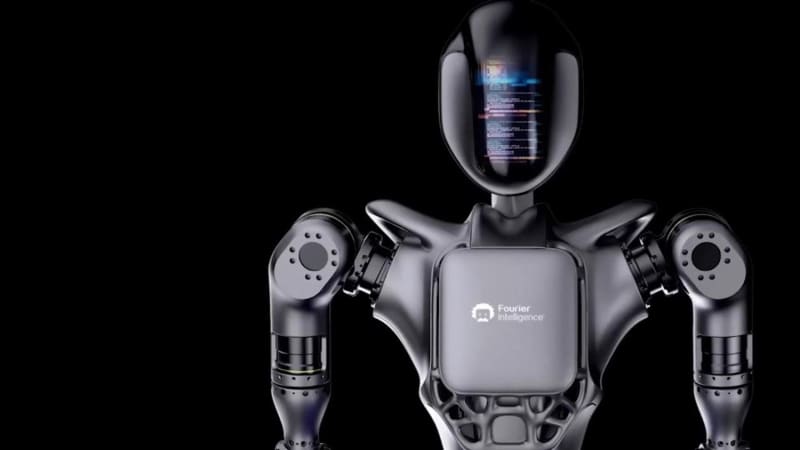
GR-1
AI ChatLast updated:
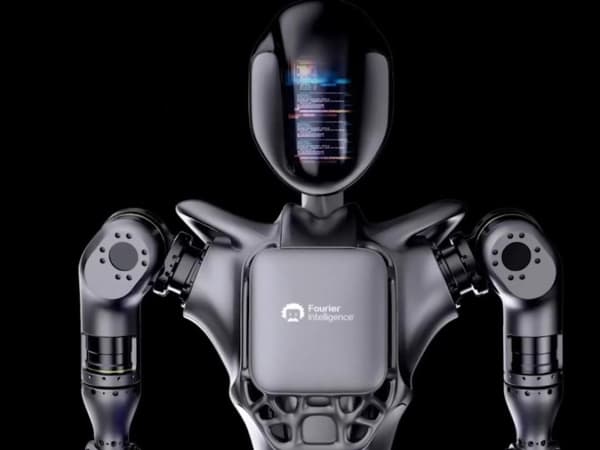
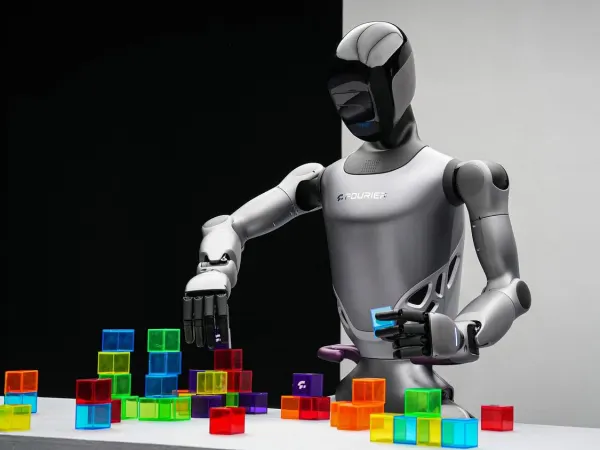
The Fourier GR-1 is a pioneering mass-produced humanoid robot engineered for practical applications in research, healthcare, and industry. Standing at human height with 44 degrees of freedom, it replicates human-like proportions and bipedal locomotion, enabling fluid walking at 5 km/h, running, stair climbing, and obstacle navigation via peak torque of 230 N·m. Equipped with six RGB cameras for pure vision perception using BEV and Transformer models, it generates real-time 3D occupancy grids for precise environmental understanding. GR-1 features dexterous hands with 11 DOF for grasping varied objects, powered by Fourier Smart Actuators (FSA) that integrate motor, driver, and encoder. Advanced AI with large language models supports natural conversations, emotional expressions via high-resolution displays, and task automation. Its lightweight 55 kg frame balances agility and 15-50 kg carrying capacity, ideal for human-robot collaboration in dynamic settings.
Quick Overview & Key Facts
GR-1 is a humanoid robot made by Fourier Intelligence in China, launched in 2023 and built for medical Rehabilitation (RehabHub™), elderly Care/Companionship, and embodied AI Research. Its estimated price is USD 100,000 – 150,000. Featured in “Top 10 Humanoid Robots with the Highest Payload & Heavy-Lifting Capacity in 2026” and “Top 8 Humanoid Robots Designed for Home Automation (2026)”.
- Dimensions
- 165 x 50 x 40 (cm)
- Weight
- 55 kg
- Mobility
- Legged (bipedal walking)
- Top speed
- 5 km/h (1.39 m/s)
- Handles
- Tools, packages, precision instruments, people interaction
- Battery runtime
- 2 hours
- Charging time
- 5.25 Hours (315 minutes)
- Sensors
- RGB cameras (x6), depth cameras, IMU, gyroscope, force sensors
- Operating environment
- Indoor, outdoor, both
What Can GR-1 Do?
Core operational tasks and activities demonstrated or performed by GR-1.
Real-World Applications of GR-1
Industries, working environments, and deployment suitability for GR-1.
GR-1 Capabilities
Inherent physical, perceptual, and cognitive abilities built into GR-1.
Image Gallery
Below images are from Fourier Intelligence's official sources
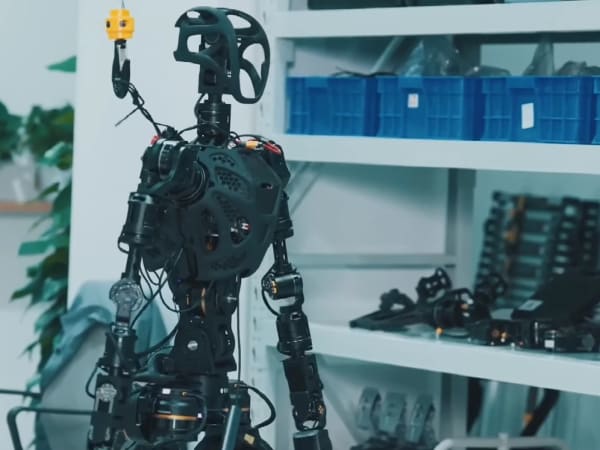
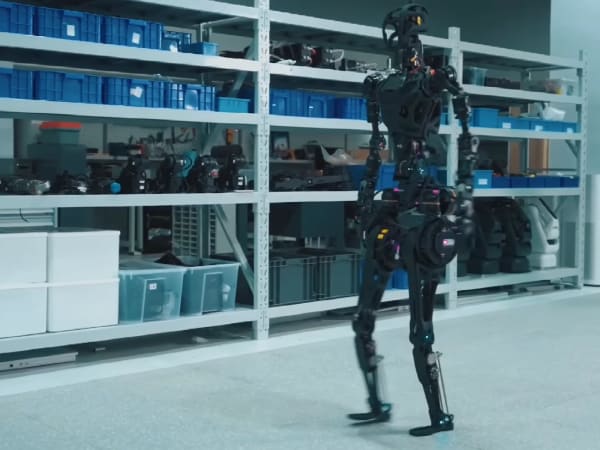
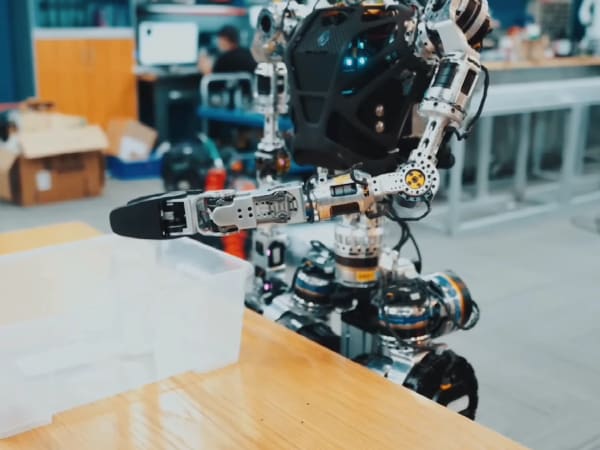


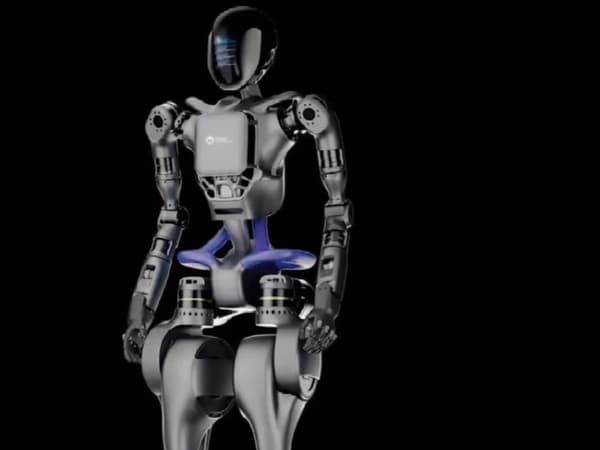
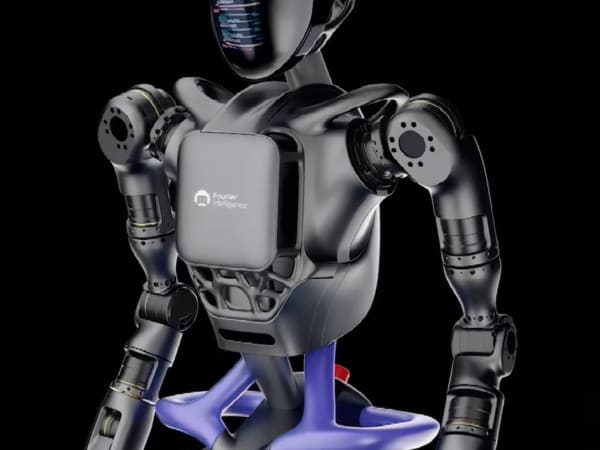
Review Videos
Watch expert reviews and demonstrations of this robot


Robot Specifications
ConfirmedValues marked Confirmed were checked against the manufacturer's official data; select the badge to open the source. Values without a Confirmed badge are compiled from public sources and may not be manufacturer-verified.
Not yet published by Fourier Intelligence: warranty terms, IP rating, noise level, expected lifespan, firmware version, update method, color options, pet safety and 3 more.
Robot Timeline
Key milestones in this robot's development and rollout
Fourier Intelligence unveils the GR-1 humanoid at the World Artificial Intelligence Conference in Shanghai.
Source: WIPO ↗
Fourier launches the production version of the GR-1: 1.65 m, 55 kg, 40 degrees of freedom and a 50 kg carrying capacity.
Source: The Robot Report ↗
Latest News About GR-1
Stay updated with the latest articles and developments

GR-1 vs GR-2, AgiBot A2, AgiBot A1 and GR-3
GR-1 overlaps with these alternatives on Construction and Healthcare. GR-1 leads this group on weight but trails on max speed and runtime.
Industries and capabilities are tags, not scores: a tick means the robot is listed for it. Green marks the best figure in a row (highest max speed and runtime; lowest weight). Ranges are not ranked.
| Spec | GR-1Fourier Intelligence | GR-2Fourier Intelligence | AgiBot A2AgiBot | AgiBot A1AgiBot | GR-3Fourier Intelligence |
|---|---|---|---|---|---|
| Industries | |||||
| Construction | Yes | Yes | Yes | No | Yes |
| Healthcare | Yes | Yes | No | No | Yes |
| Logistics | Yes | Yes | Yes | No | Yes |
| Workplace material transport | Yes | Yes | Yes | No | Yes |
| Capabilities | |||||
| Human-robot interaction | Yes | Yes | Yes | No | Yes |
| Adaptation | Yes | Yes | Yes | Yes | Yes |
| Autonomous task execution | Yes | Yes | Yes | Yes | Yes |
| Balance and stability | Yes | Yes | Yes | Yes | Yes |
| Max Speed | 1.39 m/s | 1.39 m/s | 1.94 m/s | 1.94 m/s | 1.69 m/s |
| Runtime | 120 min | 120 min | 120 min | 120 min | 3 h |
| Weight | 55 kg | 63 kg | 69 kg | 55 kg | 71 kg |
| Released | 2023 | 2024 | 2024 | 2023 | 2025 |
Notes such as conditions or alternate figures are left out and values are shown in common units; open each page for the full specs. Browse all Humanoid Robots
Compare This Robot With Others
See how GR-1 stacks up against other leading robotics models in detailed side-by-side technical comparisons.
GR-1 Also Mentioned in Below Articles
Find out how this model stacks up against the world's best robots

More Robots from Fourier Intelligence
Explore other robots from this manufacturer
More Humanoid Robots
Discover more robots in the same category
Robots From Other Categories
Discover complementary robots from different categories that work well together
Frequently Asked Questions
Get answers to common questions about this robot
Q1. What is GR-1, and what problem is it designed to solve?
GR-1 is a general-purpose humanoid robot developed by Fourier Intelligence. According to the manufacturer, it addresses challenges in human-centric environments through bipedal mobility and dexterous manipulation for tasks in various settings.
Q2. What are the main capabilities and key features of GR-1?
GR-1 features a bionic body structure with human-like motion control, powered by vision-based perception using six RGB cameras and AI for environmental understanding. The manufacturer states it supports navigation, object interaction, and natural language processing.
Q3. Who is GR-1 built for, and which industries can benefit from it?
GR-1 targets applications in healthcare, manufacturing, logistics, education, research, and domestic assistance. Fourier Intelligence positions it for roles like patient mobility aid and industrial tasks, per company descriptions.
Q4. Is GR-1 a commercial product or still a research prototype?
GR-1 is presented by Fourier Intelligence as a commercially mass-producible humanoid robot. It has undergone testing in experimental applications such as reception and manufacturing, according to manufacturer updates.
Q5. Is GR-1 currently available for purchase, and when is it expected to ship?
As of 2026, GR-1 availability follows pre-order fulfillment through distributors. The company has reported early deployments, with shipping timelines dependent on distributor schedules.
Q6. How does GR-1 actually work in real-world environments?
GR-1 operates using pure vision perception to generate 3D occupancy grids for navigation and obstacle avoidance. It has demonstrated real-time detection of vehicles and pedestrians in outdoor tests, as reported by Fourier Intelligence.
Q7. When was GR-1 announced or officially launched?
GR-1 was unveiled by Fourier Intelligence in 2023. The company has since provided updates on its development and testing in real-world scenarios like bank services.
Q8. How is GR-1 different from other robots in the same category?
GR-1 employs a vision-only sensor approach with six RGB cameras, avoiding radar or LiDAR, integrated with AI for perception. Fourier Intelligence emphasizes its bionic structure and whole-body control for human-like dexterity.
Q9. Does GR-1 require additional development or customization after purchase?
According to the manufacturer, GR-1 supports task automation via large language models, but adaptation for specific applications may involve integration with existing systems. Testing indicates compatibility with predefined motions.
Q10. What is the future roadmap or planned upgrades for GR-1?
Fourier Intelligence has announced plans to expand GR-1 deployments from early commercial uses toward broader applications. The company aims to enhance AI capabilities and transition workflows to advanced simulation frameworks.
Rating and Reviews
Share your experience and help others decide!
Loading...
User Reviews
No user reviews. Be the first one to review!
User Comments (No Login needed)
Share your thoughts, experiences, or questions about this robot.
Comments appear after moderator review.