GR-1 vs Unitree H1-2 at a glance
Unitree H1-2 lasts longer on a charge, about 2 hours against 60 minutes for GR-1. GR-1 has more degrees of freedom (44 against 27 for Unitree H1-2), which allows finer movement. Unitree H1-2 is quicker, with a top speed of 2 m/s versus 1.4 m/s for GR-1. GR-1 is lighter at 55 kg, compared with 70 kg for Unitree H1-2.
| Key specs | GR-1 | Unitree H1-2 |
|---|---|---|
| Price | $100,000–$150,000 | $112,000–$150,000 |
| Weight | 55 kg | 70 kg |
| Top speed | 1.4 m/s | 2 m/s (stronger) |
| Runtime | 1 hour | 2 hours (stronger) |
| Degrees of freedom | 44 (stronger) | 27 |
| Payload | 3 kg | 7 kg (stronger) |
| Availability | — | Order via sales quote |
Last updated:
Which one fits your use?
Based on the uses each robot is built and marketed for. Open a use to see the specs that matter for it.
| Comparing for… | GR-1 | Unitree H1-2 |
|---|---|---|
| Suited | Not marketed | |
| Suited | Suited | |
| Suited | Suited | |
| Suited | Not marketed | |
| Suited | Suited | |
| Suited | Not marketed |
- Only GR-1 is marketed for warehouse and logistics work, home help and elder care and healthcare settings.
- Both suit research labs, education and training and hospitality, retail and public-facing roles, so compare the specs for that use.
The GR-1 by Fourier Intelligence is a mass-produced humanoid built for medical rehabilitation, elderly care and embodied AI research. It sees through cameras alone, and its soft-skinned body is shaped for safe contact with people. It is a semi-autonomous platform that suits hospitals and care homes, where patients and carers share the space.
The Unitree H1-2 by Unitree Robotics is a full-size research humanoid focused on movement and AI development. It is driven by high-torque M107 joint motors, and its jointed arms and aluminum frame support dynamic walking on stairs and uneven ground. It adds a 3D LiDAR for mapping a whole site. It targets labs, industrial inspection and robotics teams, not caregiving.
Detailed Analysis
How do GR-1 and Unitree H1-2 compare on bipedal mobility and balance?
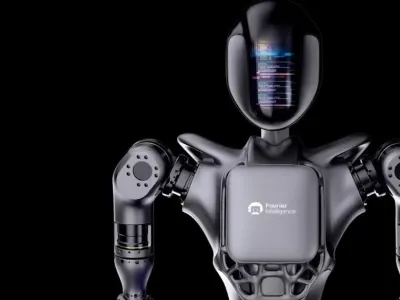
GR-1
For dynamic movement on rough ground, the Unitree H1-2 is the better pick. For steady, careful movement around patients, the GR-1 is the better pick. The GR-1 walks, runs and climbs stairs with smooth gait cycles, and its joints are tuned for balance in care rooms. The H1-2 has strong knee motors and descends from Unitree's H1, a robot known for its speed record. Both are semi-autonomous bipeds, and both stay on their feet over uneven floors. The GR-1 favors a calm, smooth stride, and the H1-2 favors agility.
Which robot is more capable for dexterity and manipulation tasks?
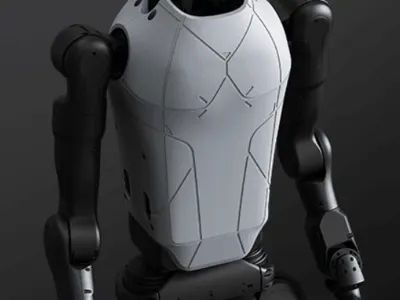
Unitree H1-2
The GR-1 is the stronger choice for fine object handling because its dexterous hands come with the robot. They let it grasp varied objects, which matters in rehabilitation and care. It has 44 degrees of freedom, a count of the separate ways its joints can move, against 27 for the H1-2, and its hands add a large share of that. Both robots give each arm seven joints, so reach is close. The H1-2 arm joints reach a peak torque of 120 N.m, which favors strong, fast arm motion, and it takes optional dexterous hands such as the Dex5-1. For complex handling out of the box, the GR-1 is ahead. For custom arm research, the H1-2 is a flexible base.
How do their computing and perception setups compare for autonomy?
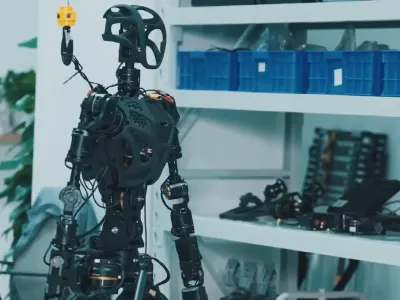
GR-1
Both robots operate at a semi-autonomous level, but they sense the world differently. The GR-1 runs an Intel Core i7-13700H with 16GB RAM and builds a real-time 3D occupancy grid, a map of free and blocked space, from six RGB cameras using Transformer vision models. The H1-2 uses an Intel Core i7-1265U with Iris Xe graphics. It adds a LIVOX MID-360 3D LiDAR and a RealSense depth camera, and its design lets teams plug in up to three extra compute modules, including NVIDIA Orin NX. The GR-1 suits camera-only perception. The H1-2 suits teams that want extra compute.
How do payload and lifting capacity compare between GR-1 and H1-2?
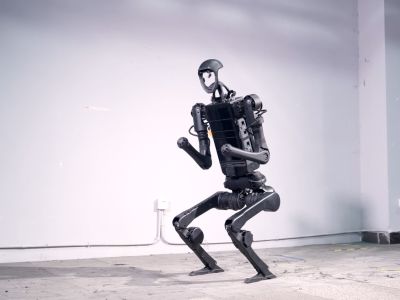
Unitree H1-2
For raw lifting from the floor, the GR-1 is the stronger robot. It has a deadlift of 50 kg, which is the weight it can raise from the floor, and its hands carry 3 kg each, rising to 10 kg when both hands work together. The Unitree H1-2 is rated for 7 kg per arm in steady use, with a peak of 21 kg. Body size shapes these numbers: the GR-1 is 165 cm tall and weighs 55 kg, while the H1-2 is 13 cm taller and 15 kg heavier at 178 cm and 70 kg. Choose the GR-1 for heavy, stationary lifts, and the H1-2 for arm work where each arm moves lighter parts.
Which robot offers better battery runtime and energy efficiency?
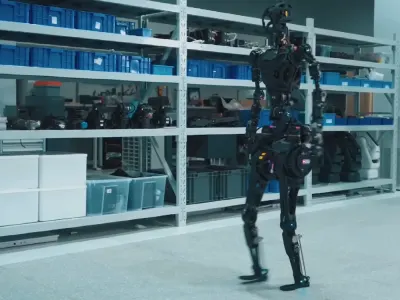
GR-1
Both robots run 2 hours per charge and accept hot-swapped batteries, so runtime itself is a tie. The difference lies in the pack and the charging. The Unitree H1-2 carries an 864 Wh battery and recharges in 0.8 hours, which makes quick turnarounds easy. The GR-1 carries a 483 Wh pack and takes 5.25 hours to recharge fully, so it relies more on a spare battery. The GR-1 averages 500 W, while the H1-2 averages 400 W, even though the H1-2 is the heavier robot. The H1-2 is the better choice for fast recharge.
What real-world use cases suit each robot best?
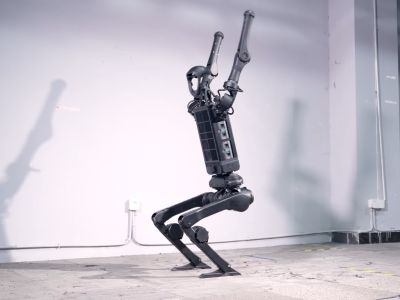
Unitree H1-2
The GR-1 is deployed for medical rehabilitation through its RehabHub system, for elderly care and companionship, for embodied AI research and for industrial inspection. It works in controlled, human-centric facilities and is rated for use from 0 to 45 °C. The Unitree H1-2 targets AI development, humanoid locomotion research, industrial inspection and entertainment demos. It can work in colder conditions, down to -10 °C, and handles rugged, unstructured sites. Research institutions will usually prefer the H1-2 for locomotion studies, while medical and care facilities will adopt the GR-1 for its rehabilitation focus.
Which humanoid robot is better for industrial manufacturing?
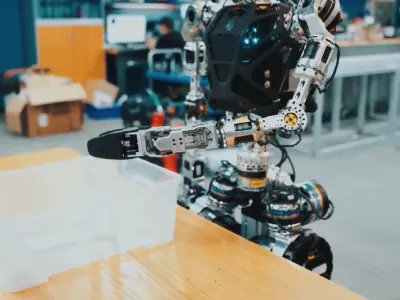
GR-1
For heavy, stationary lifting on a production line, the GR-1 is the better pick. It lifts more from the floor, and its safety package of force limiting, collision detection, an emergency stop and a collaborative mode suits work beside staff. The H1-2 shares those safety features. It is better for site inspection and moving through uneven areas, where its 360° LiDAR gives a wide view of the whole site. If the task is moving heavy parts in one cell, choose the GR-1. If the task is mapping or inspecting a large, changing site, choose the H1-2.
Which robot offers better autonomous learning capabilities?
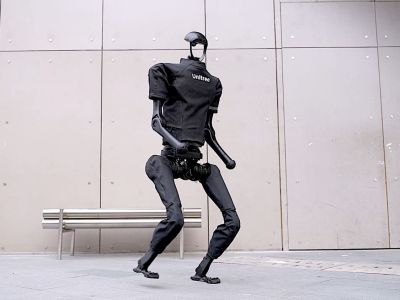
Unitree H1-2
The H1-2 is the better platform for learning locomotion and dynamic movement. Unitree lists reinforcement learning, motion learning and task programming for it, and it receives OTA updates. The GR-1 lists the same learning methods and adds large language models for natural conversation, emotional expression on its display and task automation. On the move, the GR-1 walks at 5 km/h with a peak joint torque of 230 N.m, while the H1-2 moves at under 7.2 km/h with a leg joint torque of 360 N.m, and Unitree's earlier H1 holds an 11.9 km/h speed record. Pick the H1-2 to train walking and balance policies, and the GR-1 to study human-robot dialogue.
Capabilities & Operational Tasks
Head-to-head comparison of what GR-1 and Unitree H1-2 can do, their applications, and capabilities.
What Can GR-1 & Unitree H1-2 Do?
91 tasks listed for both, 4 only for GR-1, 4 only for Unitree H1-2.
Tap a circle area to filter the lists
Only GR-1
Not listed for the other robot
Shared by both
Listed for GR-1 and Unitree H1-2
1 differ in level (highlighted, A = GR-1, B = Unitree H1-2)
Only Unitree H1-2
Not listed for the other robot
Technical Specifications
GR-1 and Unitree H1-2 differ on 28 of the 40 specifications listed for both.
Manipulation & Load Capacity
3 Comparative Metrics
Kinematic Architecture & Dexterity
4 Comparative Metrics
Energy & Power Management
7 Comparative Metrics
Frequently Asked Questions
What is the primary use case for the GR-1 in medical settings?
The GR-1 is mainly used for medical rehabilitation through its RehabHub system, along with elderly care and companionship. Its soft skin, force limiting and collision detection are designed for safe contact in hospitals and care facilities.
Which robot is easier to develop software on?
Both are friendly to developers. The GR-1 uses a proprietary OS with ROS2 compatibility, Python APIs and an SDK guide for an Ubuntu host computer. The Unitree H1-2 supports ROS2, proprietary APIs and Python or C++, and it accepts several compute modules.
Can the batteries be changed without a long shutdown?
Yes, both robots support hot-swap capable batteries. A spare pack lets a crew replace power quickly and keep working. This matters most for the GR-1, which has the longer recharge time.
What safety features do the two robots share?
Both list force limiting, collision detection, an emergency stop and a collaborative mode for working near people. The GR-1 also lists Chinese national safety and electromagnetic standards, which suit its use in healthcare.
Which robot suits university research labs?
The Unitree H1-2 is the usual lab choice. It targets AI development and locomotion research, supports ROS2 and accepts optional NVIDIA Orin NX compute. The GR-1 also supports embodied AI research and adds conversation and rehabilitation studies.
How do operators control and connect to each robot?
The GR-1 takes voice, gesture, app and touch panel commands and connects over Wi-Fi, Ethernet and 5G. The Unitree H1-2 takes app, voice and gesture commands, connects over Wi-Fi, Ethernet and Bluetooth, and receives OTA updates.
Which costs less, GR-1 or Unitree H1-2?
Their prices are close: GR-1 is listed at $100,000–$150,000 and Unitree H1-2 at $112,000–$150,000.
Which is lighter, GR-1 or Unitree H1-2?
GR-1 is lighter at 55 kg, compared with 70 kg for Unitree H1-2.
How much does GR-1 cost?
GR-1 is listed at $100,000–$150,000.
How much does Unitree H1-2 cost?
Unitree H1-2 is listed at $112,000–$150,000.
Where can I buy Unitree H1-2?
Unitree H1-2 is sold through Unitree Robotics's sales team; request a quote.
Related Comparisons
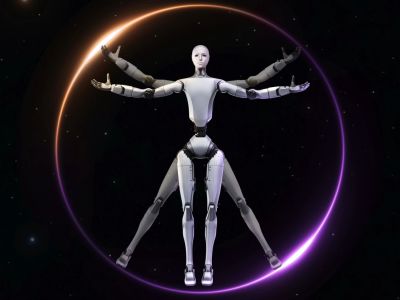
Unitree H2 vs Unitree H1-2
Unitree H2 vs H1-2: the newer H2 adds 4 joints, a larger battery and about 3 hours of runtime; the H1-2 keeps its LiDAR and swappable pack.
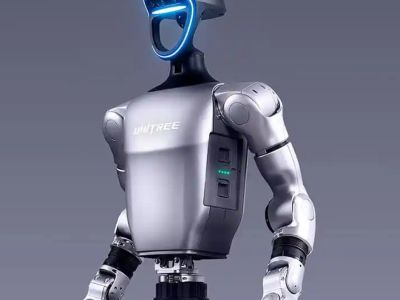
Unitree G1 vs Unitree H1-2
Unitree G1 vs Unitree H1-2: the G1 is the 35 kg lab humanoid with optional hands; the H1-2 is a taller 70 kg robot with stronger arms.
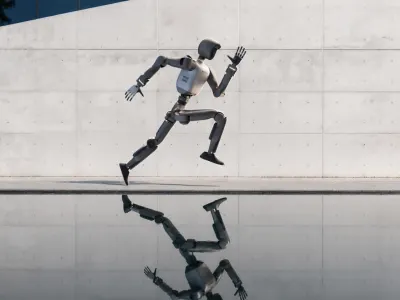
Unitree H2 vs Booster T2
Unitree H2 vs Booster T2: the H2 is the bigger, stronger full-size humanoid, the T2 the lighter research platform. See the specs side by side.
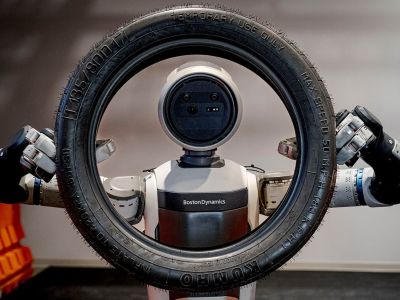
Unitree H2 vs Atlas (Electric 2025)
Unitree H2 vs Boston Dynamics Atlas electric: size, battery, lifting, joints and sensors compared, with a clear pick by need.
Verdicts reflect our research and opinion. Confirm specifications with the manufacturer before buying.