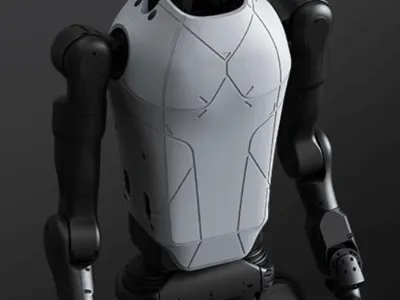
The GR-1 by Fourier Intelligence is positioned as a specialized humanoid for medical rehabilitation, elderly care, and embodied AI research, prioritizing safety and dexterity over raw speed. Standing 165 cm tall with 44 degrees of freedom, it features dual 7-DOF arms and specialized hands capable of 3 kg single-hand payload. Its semi-autonomous operation and force-limiting safety systems make it ideal for collaborative environments like hospitals or care facilities where human interaction is frequent.
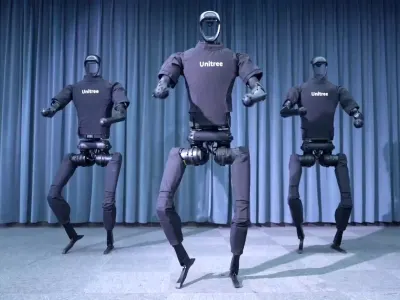
The Unitree H1-2 by Unitree Robotics is engineered as a high-performance research platform for locomotion and AI development, boasting the world-record bipedal speed of 7.2 km/h. At 178 cm and 70 kg, it offers 27 degrees of freedom with 7-DOF arms but lacks dedicated dexterous hands in its base configuration. Its robust aluminum frame and advanced LiDAR sensing support dynamic movement in complex terrains, targeting industrial inspection and advanced robotics research rather than direct caregiving.
Detailed Analysis
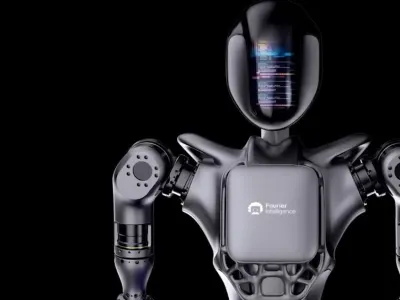
Bipedal Mobility and Balance Comparison
The Unitree H1-2 significantly outperforms the GR-1 in mobility, achieving a maximum speed of 7.2 km/h (2 m/s) compared to the GR-1's 5 km/h (1.39 m/s). Unitree's H1 series holds the world record for bipedal walking speed at 3.3 m/s, with the H1-2 maintaining this high-performance lineage for dynamic locomotion research. The GR-1 prioritizes stable, slower gait cycles suitable for medical and care environments, utilizing 44 DoF for smoother balance adjustments. While both robots are semi-autonomous, the H1-2's advanced powertrain and 3D LiDAR enable operation in complex, unstructured terrains where the GR-1's slower speed would be limiting.
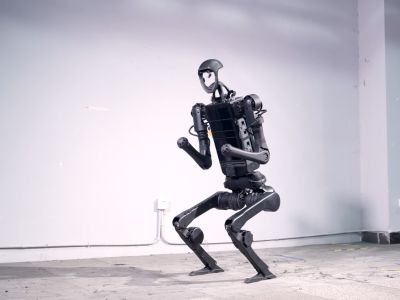
Dexterity and Manipulation Capabilities
The GR-1 excels in dexterity with 44 total degrees of freedom, including dedicated 6-DoF hands that enable a 3 kg single-hand payload and 10 kg bilateral coordinated lift. In contrast, the Unitree H1-2 has 27 DoF total, with 7-DoF arms capable of lifting 7 kg per arm but lacking integrated dexterous hands in its standard configuration. The GR-1's proprietary OS and ROS2 compatibility support precise manipulation tasks required for medical rehabilitation and elderly companionship. For complex manipulation involving fine object handling, the GR-1's hand architecture provides a distinct advantage over the H1-2's arm-focused design.
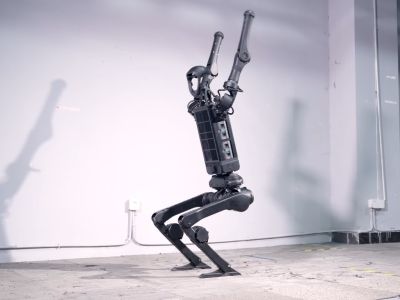
AI Autonomy and Learning Capabilities
Both robots operate at a semi-autonomous level, but the Unitree H1-2 is optimized for high-speed AI development and embodied AI research with its Intel Core i7-1265U and Iris Xe GPU. The GR-1 utilizes an Intel Core i7-13700H with 16GB RAM, offering robust processing for its proprietary OS and ROS2 compatibility tailored to medical and care applications. The H1-2's architecture supports dynamic-locomotion learning and complex terrain navigation, making it a superior platform for locomotion algorithms. The GR-1's software stack is specifically designed for safety-critical domains like rehabilitation, emphasizing collision detection and force limiting over high-speed learning.
Payload and Lifting Capacity Analysis
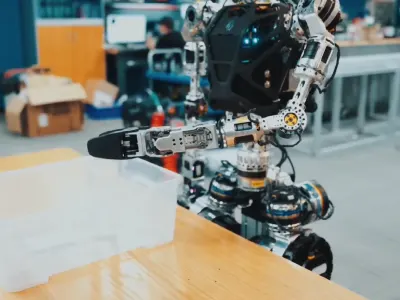
The GR-1 demonstrates superior deadlift capacity at 50 kg, significantly higher than the Unitree H1-2's 21 kg maximum deadlift. However, the H1-2 offers a higher per-arm carrying capacity of 7 kg compared to the GR-1's 3 kg single-hand payload. The GR-1's bilateral coordinated payload reaches 10 kg, whereas the H1-2's arm strength is focused on individual arm manipulation up to 7 kg. For tasks requiring heavy lifting of stationary objects, the GR-1 is the clear choice, while the H1-2 is better suited for lifting lighter items with greater arm reach and speed.
Battery Runtime and Power Efficiency
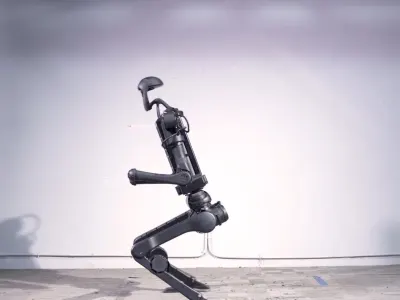
Both the GR-1 and Unitree H1-2 advertise a battery lifespan of 3–5 years, though actual runtime per charge differs significantly based on usage intensity. The Unitree H1-2 contains an 864Wh battery providing approximately 1–2 hours of runtime under high-speed operation, reflecting its focus on dynamic locomotion. The GR-1's battery specifications are optimized for lower-speed, continuous operation in care settings, likely offering longer operational windows per charge due to its 5 km/h speed limit. Power efficiency in the GR-1 is tailored for sustained interaction tasks, while the H1-2 sacrifices runtime for peak mobility performance.
Real-World Use Cases Industrial vs General Purpose
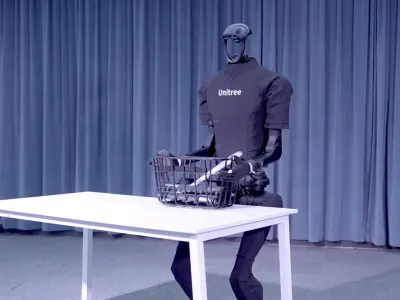
The GR-1 is explicitly deployed for medical rehabilitation (RehabHub™), elderly care, and industrial inspection where safety and interaction are paramount. The Unitree H1-2 targets AI development, humanoid locomotion research, and entertainment demos, leveraging its speed for dynamic testing environments. Industrial inspection is a shared use case, but the GR-1 suits controlled, human-centric facilities, while the H1-2 handles rugged, unstructured industrial sites. Research institutions prefer the H1-2 for locomotion studies, whereas medical and care facilities adopt the GR-1 for its specialized rehabilitation capabilities.
Which humanoid robot is better for industrial manufacturing?
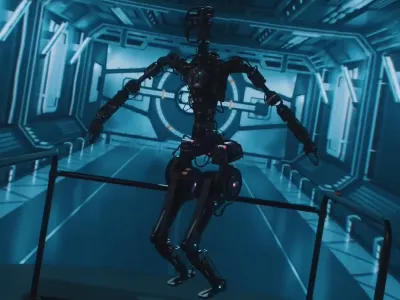
For industrial manufacturing requiring heavy lifting and stable interaction, the GR-1 by Fourier Intelligence is superior due to its 50 kg deadlift capacity and 3 kg single-hand payload with dexterous hands. The Unitree H1-2 offers higher per-arm speed and 7 kg carrying capacity but limits deadlift to 21 kg and lacks integrated hands for fine manipulation. If the task involves moving heavy stationary parts, the GR-1 is the recommended choice; for high-speed logistics or dynamic navigation, the H1-2 is more capable. The GR-1 is better for manufacturing tasks prioritizing payload and safety in human-robot collaboration.
Which robot offers better autonomous learning capabilities?
The Unitree H1-2 by Unitree Robotics offers better autonomous learning capabilities for locomotion and dynamic AI research due to its 7.2 km/h speed and advanced 3D LiDAR sensing. The GR-1 by Fourier Intelligence supports embodied AI research but is limited to 5 km/h and focuses on safety-critical learning in care environments. The H1-2's Intel Core i7-1265U and Iris Xe GPU provide enhanced processing for real-time algorithm training in complex terrains. For researchers prioritizing high-speed bipedal learning, the H1-2 is the neutral recommendation.
Analysis Score Summary
Total Score
10
GR-1
VS
Based on Detailed Analysis
Total Score
6
Unitree H1-2
📊 Win: 2 points | Trade-off: 1 point each
Scores are summed across every insight: a clear winner earns 2 points, while balanced trade-offs give each robot 1 point. The total reflects how often each robot outperforms the other (or shares the spotlight) throughout the detailed analysis sections.
Capabilities & Operational Tasks
Head-to-head comparison of what GR-1 and Unitree H1-2 can do, their applications, and capabilities.
What Can GR-1 & Unitree H1-2 Do?
18Core operational tasks, activities, and physical manipulation duties evaluated side-by-side.
| Task & Description | Model AGR-116 supported | Model BUnitree H1-213 supported |
|---|---|---|
| Assembly | High | High |
| Autonomous task execution | High | High |
| Caregiving | Moderate | — |
| Carrying and transport | High | High |
| Collaborative work | High | High |
| Dancing | — | Moderate |
| Inspection | High | — |
| Loading and unloading | High | — |
| Machine tending | High | High |
| Material handling | High | High |
| Move objects | High | High |
| Navigation | High | High |
| Obstacle traversal | — | High |
| Packaging | High | — |
| Pick and place | High | High |
| Repetitive physical tasks | High | High |
| Sorting | High | — |
| Tool use | High | High |
Technical Specifications
Head-to-head performance data and metrics
| Specification | Model AGR-1 | Model BUnitree H1-2 |
|---|---|---|
Functional Utility & Use Cases4 Comparative Metrics | ||
Control Method | Autonomous, teleoperation, learned behaviors | Teleoperation, autonomous, learned behaviors |
Use Cases | Medical Rehabilitation (RehabHub™), Elderly Care/Companionship, Embodied AI Research, and Industrial Inspection. | AI development, humanoid locomotion research, industrial inspection, entertainment demos |
Multi Robot Coord | Yes | Yes |
Pet Friendly | Yes, with safety protocols | Yes, with safety protocols |
Manipulation & Load Capacity4 Comparative Metrics | ||
Carrying Capacity | 3 kg (Single hand payload) / 10 kg (Bilateral coordinated). | 7 kg per arm |
Deadlift Capacity | 50 kg | 21 kg |
Payload Type | Tools, packages, precision instruments, people interaction | Tools, packages, precision instruments, people interaction |
Modular Attachments | Tool changers, end-effector options | Tool changers, end-effector options |
Kinematic Architecture & Dexterity4 Comparative Metrics | ||
Degrees of Freedom | 44 (Arms: 7x2; Legs: 6x2; Waist: 3; Neck: 3; Hands: 6x2) | 27 |
Material | Aluminum frame, composite, soft skin | Aluminum alloy, composites |
Mobility Type | Legged (bipedal walking) | Legged (bipedal walking) |
Hardware Interface | USB, GPIO, CAN bus | USB, CAN bus, Ethernet |
Functional Utility & Use Cases
4 Comparative Metrics
Manipulation & Load Capacity
4 Comparative Metrics
Kinematic Architecture & Dexterity
4 Comparative Metrics
Frequently Asked Questions
What is the difference in deadlift capacity between the GR-1 and Unitree H1-2?
The GR-1 by Fourier Intelligence has a 50 kg deadlift capacity, while the Unitree H1-2 by Unitree Robotics has a 21 kg deadlift capacity. The GR-1 is significantly better for heavy lifting tasks.
Are the GR-1 and Unitree H1-2 fully autonomous or semi-autonomous?
Both the GR-1 by Fourier Intelligence and the Unitree H1-2 by Unitree Robotics operate at a semi-autonomous level. They require human oversight for complex tasks and safety management.
Which robot has a faster walking speed for locomotion research?
The Unitree H1-2 by Unitree Robotics is faster, reaching 7.2 km/h (2 m/s), compared to the GR-1 by Fourier Intelligence at 5 km/h (1.39 m/s). The H1-2 is ideal for high-speed locomotion studies.
Does the GR-1 have dexterous hands compared to the Unitree H1-2?
Yes, the GR-1 by Fourier Intelligence features 6-DoF hands enabling 3 kg single-hand payload, while the Unitree H1-2 by Unitree Robotics lacks integrated dexterous hands in its base configuration. The GR-1 excels in fine manipulation.
What is the primary use case for the GR-1 in medical settings?
The GR-1 by Fourier Intelligence is primarily used for Medical Rehabilitation via its RehabHub™ system, alongside elderly care and companionship. It is designed for safe interaction in healthcare environments.
For which research field is the Unitree H1-2 best deployed?
The Unitree H1-2 by Unitree Robotics is best deployed for humanoid locomotion research and AI development, leveraging its world-record speed and dynamic terrain navigation capabilities.
Related Comparisons
Discover similar robot matchups to expand your knowledge and find the perfect solution

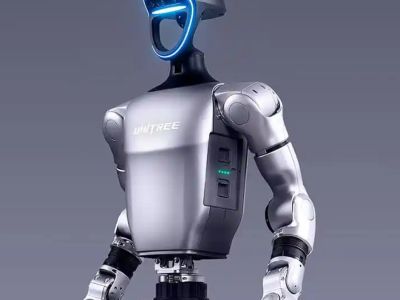
Optimus vs Unitree G1
Compare Optimus vs Unitree G1 for humanoid mobility, dexterity, autonomy, and payload capacity.
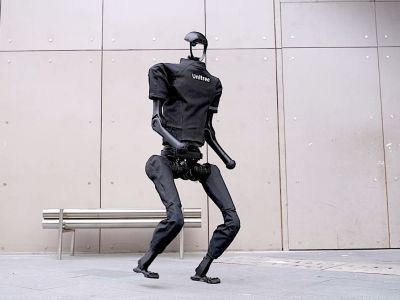
Unitree G1 vs Unitree H1
Head-to-head: Unitree G1 vs Unitree H1 compared on bipedal balance, AI learning, and real-world deployment.
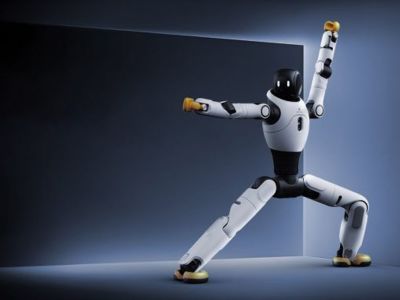
Unitree G1 vs AgiBot X2-N
Compare Unitree G1 vs AgiBot X2 for humanoid mobility, dexterity, autonomy, and payload capacity.
Unitree G1 vs Unitree H2
In-depth comparison of Unitree G1 and Unitree H2, covering hardware capabilities, teleoperation, and enterprise readiness.
Disclaimer
All content, comparisons, and verdicts on this website are based on our research, testing, and opinion. While we strive for accuracy, we do not guarantee the completeness, reliability, or suitability of any information. Performance, specifications, and results may vary depending on usage and conditions. This website and its authors are not responsible for any decisions, actions, or outcomes based on the information provided. Always verify product details with the manufacturer before making purchase or operational decisions.