Unitree G1 is positioned as a lower-cost humanoid for developers, research teams, and early-stage deployments that need compact size, fast bipedal motion, and broad sensing in a lightweight platform. Its 23–43 DoF range, semi-autonomous control stack, and support for small-tool handling make it more flexible for experimentation than for heavy-duty work. Compared with Unitree H1, the G1 emphasizes accessibility, agility, and lighter manipulation workloads. It is the more practical choice when budget, portability, and iterative development matter.
Unitree H1 is positioned as a higher-end humanoid for advanced locomotion, stronger physical capability, and more demanding autonomy goals. Its taller frame, higher top speed, and estimated larger payload and deadlift capacity make it better suited to larger-scale mobility and manipulation tasks. Compared with Unitree G1, the H1 focuses less on compact affordability and more on performance envelope and deployment potential. It is the more capable platform when the priority is industrial-grade motion and stronger load handling.
Detailed Analysis
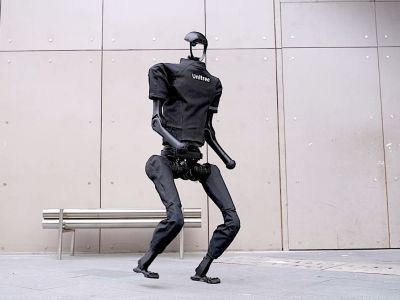
How do Unitree G1 and H1 differ in bipedal mobility and balance?
Unitree G1 is designed for agile bipedal movement with a stated speed of 2 m/s and explicit support for 360° ground recovery and dynamic balancing. Unitree H1 reaches a maximum speed above 3.3 m/s and is described as potentially exceeding 5 m/s, which gives it a larger mobility envelope. G1 appears more focused on compact recovery behaviors and rapid experimentation, while H1 targets higher-speed locomotion and stronger balance recovery under more demanding conditions. For mobility alone, H1 is the stronger locomotion platform, but G1 offers a more accessible balance-oriented system for smaller deployments.
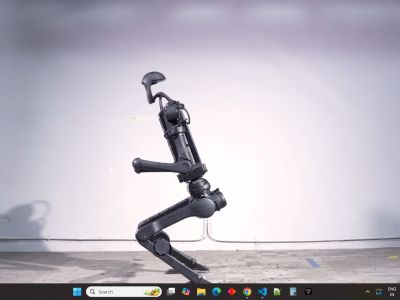
Which robot is more capable for complex manipulation tasks?
Unitree G1 provides 2 kg per hand or arm of carrying capacity and a 3 kg deadlift capacity, which places it in the light manipulation category. Unitree H1 is estimated at 10–15 kg carrying capacity and 20–30 kg deadlift capacity, making it substantially better suited to heavier interaction with objects and tools. G1’s 23–43 DoF range also suggests more configurable articulation for dexterous research, depending on hand and waist options. For manipulation strength and task breadth, H1 is the better option, while G1 is more appropriate for light pick-and-place and demonstration work.
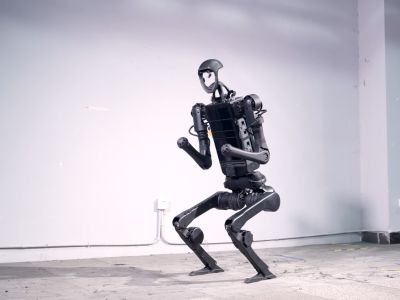
Which humanoid robot offers stronger AI autonomy and learning?
Unitree G1 is explicitly tied to UnifoLM and VLA training, which indicates a development path focused on robot learning and multimodal control. Unitree H1 is described as semi-autonomous to fully autonomous for locomotion and navigation, but the provided specification set does not identify a comparable named learning stack. G1 therefore appears more oriented toward iterative model training and developer-facing AI workflows. H1 appears stronger on autonomous movement maturity, while G1 is more clearly framed around AI experimentation and learning integration.
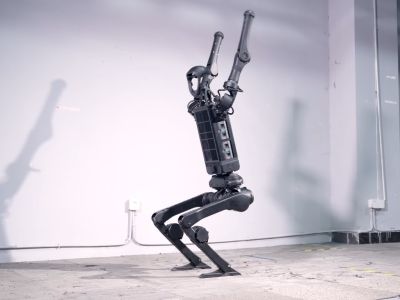
How do payload and lifting capacities compare for enterprise work?
Unitree G1 is limited to light loads, with 2 kg per hand or arm and 3 kg deadlift capacity. Unitree H1 is expected to manage 10–15 kg of carrying capacity and 20–30 kg of deadlift capacity, which is much more relevant for enterprise handling tasks. The difference suggests G1 is aimed at fine motor demos, research, and light service tasks, while H1 is closer to physically useful manipulation in structured environments. For lifting and transport use cases, H1 is the clear leader.
Which humanoid robot has better battery runtime and efficiency?
Unitree G1 is described with an expected 5-year battery lifecycle for its standard smart lithium-ion system, while Unitree H1 is listed at 3–5 years for typical lithium-ion batteries in robotics. These figures describe battery lifespan rather than per-charge runtime, so they mainly indicate long-term battery durability. Both robots appear to use similar battery technology classes, but G1 has the more specific lifecycle estimate. On the provided data, neither platform has a clear runtime advantage, though G1 has a slightly more explicit durability claim.
Which humanoid robot is better for industrial manufacturing?
Unitree H1 is better aligned with industrial manufacturing because it offers higher estimated carrying and deadlift capacity, faster locomotion, and more autonomous navigation capability. Unitree G1 is better matched to lightweight tasks such as small-tool handling, soldering demos, and pick-and-place in development settings. If the work involves heavier objects, larger workspaces, or higher throughput movement, H1 is the stronger fit. If the work is research-led or task-specific and lightweight, G1 is the more economical choice.
Which robot is more suitable for general-purpose research labs?
Unitree G1 is better suited to general-purpose research labs because it combines a lower base price, compact dimensions, a configurable DoF range, and explicit SDK support. Unitree H1 is more capable in physical performance, but its higher cost and heavier-duty orientation make it better for advanced deployment trials than broad lab experimentation. G1 also lists several named use cases, including dynamic balancing and soldering demos, which are useful for research validation. For lab adoption, G1 offers the better balance of cost, flexibility, and experimentation value.
What sensors and perception systems differ most?
Unitree G1 includes an Intel RealSense D435 depth camera, LIVOX MID-360 3D LiDAR, IMU, gyroscope, dual encoders per joint, a 4-microphone array, and a temperature sensor. Unitree H1 includes 3D LiDAR, an Intel RealSense D435i depth camera, IMU, joint encoders, and force sensors. G1’s sensor set is broader in listed components, while H1’s force sensors add value for interaction and contact-aware control. For perception diversity, G1 is more explicitly specified, but H1 appears stronger for force-informed behavior.
Analysis Score Summary
Total Score
8
Unitree G1
VS
Based on Detailed Analysis
Total Score
8
Unitree H1
📊 Win: 2 points | Trade-off: 1 point each
Scores are summed across every insight: a clear winner earns 2 points, while balanced trade-offs give each robot 1 point. The total reflects how often each robot outperforms the other (or shares the spotlight) throughout the detailed analysis sections.
Capabilities & Operational Tasks
Head-to-head comparison of what Unitree G1 and Unitree H1 can do, their applications, and capabilities.
What Can Unitree G1 & Unitree H1 Do?
16Core operational tasks, activities, and physical manipulation duties evaluated side-by-side.
| Task & Description | Model AUnitree G114 supported | Model BUnitree H115 supported |
|---|---|---|
| Assembly | — | High |
| Autonomous task execution | High | High |
| Carrying and transport | High | High |
| Collaborative work | High | High |
| Human interaction | High | — |
| Loading and unloading | High | High |
| Machine operation | High | High |
| Machine tending | — | High |
| Material handling | High | High |
| Move objects | High | High |
| Navigation | High | High |
| Obstacle traversal | High | High |
| Pick and place | High | High |
| Repetitive physical tasks | High | High |
| Sorting | High | High |
| Tool use | High | High |
Technical Specifications
Head-to-head performance data and metrics
| Specification | Model AUnitree G1 | Model BUnitree H1 |
|---|---|---|
Functional Utility & Use Cases4 Comparative Metrics | ||
Control Method | Remote control, AI automation | Remote control, AI autonomous control, app-based interface |
Use Cases | High-speed bipedal running, 360° ground recovery, dynamic balancing, small tool handling, light pick-and-place, soldering demos | - |
Multi Robot Coord | Yes (via network) | Supports multi-robot coordination via networked control systems |
Pet Friendly | Not Applicable / No | Not specifically designed for pet interaction; safety features reduce risk of harm |
Manipulation & Load Capacity4 Comparative Metrics | ||
Carrying Capacity | 2 kg per hand/arm | Estimated 10-15 kg (based on humanoid robot standards and joint torque) |
Deadlift Capacity | 3 kg | Estimated 20-30 kg (based on peak joint torque of 360 N.m and similar robots) |
Payload Type | 2 kg payload per hand/arm (Height: 132 cm, Weight: ~35 kg, 23–43 DoF) | Tools, packages, research equipment (not designed for carrying people) |
Modular Attachments | Supports optional dexterous hands and payload extensions | Supports grippers, arms, and sensor modules for customization |
Kinematic Architecture & Dexterity4 Comparative Metrics | ||
Degrees of Freedom | 23–43 DoF (depending on hand and waist options) | - |
Material | Aluminum, composite, plastic | Aviation-grade aluminum alloys (6061-T6, 7075-T6), carbon fiber composites, plastic covers |
Mobility Type | Legged (Dynamic bipedal locomotion >2.0 m/s, 360° leg flexibility, ground recovery) | Bipedal legged locomotion |
Hardware Interface | USB-C, GPIO (assumed), Ethernet port | USB, Ethernet, GPIO, serial ports for sensor and actuator integration |
Functional Utility & Use Cases
4 Comparative Metrics
Manipulation & Load Capacity
4 Comparative Metrics
Kinematic Architecture & Dexterity
4 Comparative Metrics
Frequently Asked Questions
Which humanoid robot has higher payload and deadlift capacity for enterprise manipulation tasks?
Unitree H1 has higher estimated payload and deadlift capacity, at about 10–15 kg carrying and 20–30 kg deadlift. Unitree G1 is limited to 2 kg per hand or arm and 3 kg deadlift.
Which humanoid robot offers stronger autonomy and teleoperation readiness for development teams?
Unitree G1 is more explicitly tied to developer-focused learning with UnifoLM and VLA training. Unitree H1 supports semi-autonomous to fully autonomous locomotion and navigation, but the provided specs do not list the same learning stack.
Which humanoid robot is faster and more stable during bipedal locomotion?
Unitree H1 is faster, with a maximum speed above 3.3 m/s and potential above 5 m/s. Unitree G1 reaches 2 m/s and emphasizes dynamic balancing and 360° ground recovery.
Which humanoid robot has better hand and arm capabilities for light manipulation tasks?
Unitree G1 is better specified for light manipulation because it supports 2 kg per hand or arm and has 23–43 DoF depending on hand and waist options. Unitree H1 has stronger load capacity, but fewer listed hand details.
Which humanoid robot is more deployment-ready for light industrial pick-and-place and soldering demos?
Unitree G1 is more directly described for light pick-and-place and soldering demos. Unitree H1 is better suited to heavier mobility and manipulation, but those specific light-use cases are not listed.
Which humanoid robot is better suited for research labs needing SDK support and OTA updates?
Unitree G1 is better suited for research labs because it includes SDK support, a custom OS, 8-core CPU, and OTA updates. Unitree H1 is more focused on ROS-based software and APIs for C++ and Python.
Related Comparisons
Discover similar robot matchups to expand your knowledge and find the perfect solution
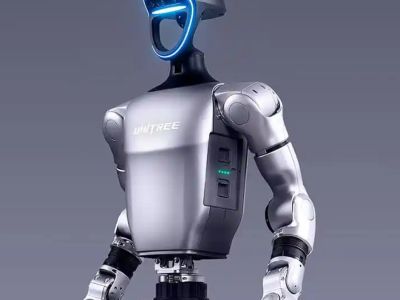
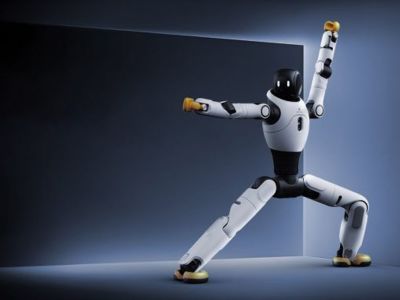
Unitree G1 vs AgiBot X2-N
Compare Unitree G1 vs AgiBot X2 for humanoid mobility, dexterity, autonomy, and payload capacity.
Unitree G1 vs Unitree H2
In-depth comparison of Unitree G1 and Unitree H2, covering hardware capabilities, teleoperation, and enterprise readiness.
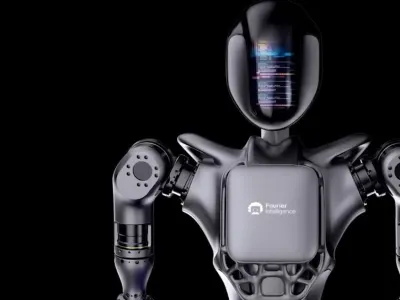
GR-1 vs Unitree H1-2
Head-to-head: GR-1 vs Unitree H1-2 compared on bipedal balance, AI learning, and real-world deployment for research and care.
Unitree H2 vs T800
Which robot wins? Unitree H2 vs T800 compared across navigation, battery, sensors, mobility, and price.
Disclaimer
All content, comparisons, and verdicts on this website are based on our research, testing, and opinion. While we strive for accuracy, we do not guarantee the completeness, reliability, or suitability of any information. Performance, specifications, and results may vary depending on usage and conditions. This website and its authors are not responsible for any decisions, actions, or outcomes based on the information provided. Always verify product details with the manufacturer before making purchase or operational decisions.