Unitree G1 vs AgiBot X2 at a glance
Both Unitree G1 and AgiBot X2 can be bought now. Unitree G1 is the more affordable option at $13,500, while AgiBot X2 costs $25,600. Unitree G1 is quicker, with a top speed of 2 m/s versus 1.8 m/s for AgiBot X2.
| Key specs | Unitree G1 | AgiBot X2 |
|---|---|---|
| Price | $13,500 (stronger) | $25,600 |
| Height | 132 cm | 131 cm |
| Weight | 35 kg | 35 kg |
| Top speed | 2 m/s (stronger) | 1.8 m/s |
| Runtime | 2 hours | 2 hours |
| Degrees of freedom | 23–43 | 25 |
| Payload | 2 kg | 3 kg (stronger) |
| Availability | Available to buy | Available to buy |
Last updated:
Which one fits your use?
Based on the uses each robot is built and marketed for. Open a use to see the specs that matter for it.
| Comparing for… | Unitree G1 | AgiBot X2 |
|---|---|---|
| Suited | Suited | |
| Suited | Suited | |
| Suited | Suited |
- Both are aimed at the same uses (research labs, education and training and hospitality, retail and public-facing roles), so the spec differences decide it.
Unitree G1 is a compact humanoid from Unitree Robotics, first shown at ICRA 2024. It is small enough to move around a lab or workshop. Universities and developers use it to test walking, balance and hand control. The EDU version adds fingered hands and a developer computer. It is semi-autonomous and learns through reinforcement learning and motion imitation, guided by Unitree's own large AI model.
AgiBot X2 was launched in Shanghai in March 2025 under the name Lingxi X2. It is close to the G1 in height and weight, and it walks and runs on two legs. AgiBot shows it riding scooters and bikes and reacting to a person's face and tone of voice. Its body language is built to look friendly, which suits exhibitions, reception desks and classrooms more than workshop research.
Detailed Analysis
How do Unitree G1 and AgiBot X2 balance on two legs?
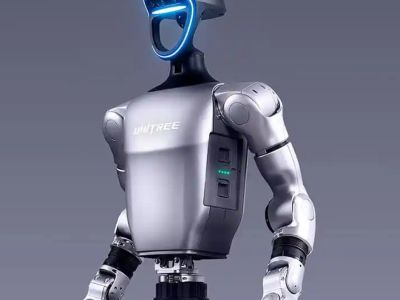
Unitree G1
Pick Unitree G1 if you want a research robot that moves fast and gives developers more to build on. Pick AgiBot X2 if you want a friendly robot for shows, reception desks and classrooms that stays steady around people. Both stay upright with an inertial sensor, the part that tracks tilt and turning. The G1 adds dual encoders in every joint, so it knows each joint's position precisely. The X2 adds real-time balance control and collision detection, so it adjusts when something bumps it. The G1 is the sportier robot, and the X2 is the gentler one.
Which humanoid robot is more capable for complex manipulation tasks?
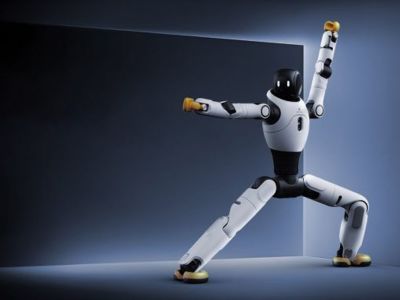
AgiBot X2
Unitree G1 has the stronger hands for research. Its base arms carry 2 kg each and the EDU arms carry 3 kg, with a deadlift of 3 kg. It offers 23 to 43 degrees of freedom (separate ways to move), depending on hand and waist options, and the EDU version adds three-fingered, force-controlled hands with 7 of them each. AgiBot X2 has 25 degrees of freedom: 5 per arm, 3 in the waist and 6 per leg, and its arms hold up to 3 kg in specific poses. Its standard hand is a simple artificial hand, and the X2 Ultra can swap in a dexterous one. For complex manipulation, Unitree G1 is the stronger choice. X2 suits lighter, gesture-style work.
Which robot offers better autonomous learning capabilities?
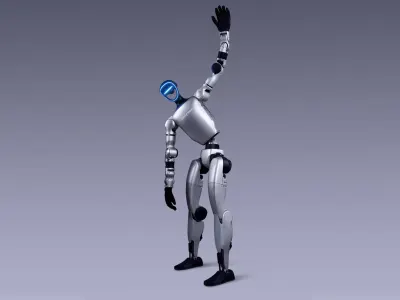
Unitree G1
Both robots are semi-autonomous, but they learn differently. Unitree G1 combines reinforcement learning and motion imitation with UnifoLM, Unitree's own large model that is trained on vision and action. AgiBot X2 uses reinforcement learning, motion learning and zero-shot task generalization, meaning it tries tasks it was never trained on, and it runs the GO-1 foundation model. For heavier onboard AI, the G1-EDU developer computer is a Jetson Orin NX rated at 40 TOPS, a measure of AI speed. The X2 Ultra adds an Orin NX rated at 157 TOPS. Unitree G1 gives developers more to build on, while X2 is simpler to use out of the box.
Which humanoid robot is better for industrial manufacturing?
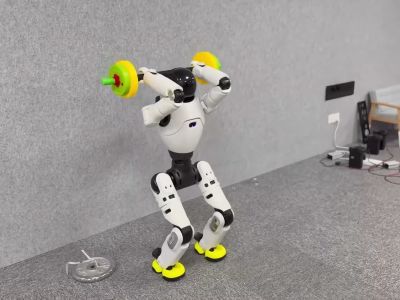
AgiBot X2
Unitree G1 is the better fit for industrial experiments. Its uses include small tool handling, light pick-and-place and soldering demos, and mounting holes on the front and back let engineers bolt on their own payloads. Its developer access also helps teams tune such jobs. AgiBot X2 is aimed at performances, exhibitions, education and interactive services, so it is not a production-line tool. It works as a light helper that greets visitors or carries a small item. For factory trials, Unitree G1 is the recommended option.
Which robot is better for general-purpose service deployment?
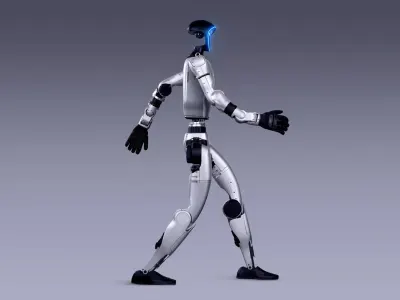
Unitree G1
AgiBot X2 is the more general-purpose service robot. Its uses range from entertainment and reception to education, and the X2 Edu, unveiled in July 2026, targets classrooms. It works indoors and outdoors, from -10 °C to 40 °C, crosses steps up to 50 mm high and slopes up to ±10°, and connects over Wi-Fi, Bluetooth and a 4G/5G module. It runs up to 6.5 km/h and spends everyday work at 2.9 km/h, a calm pace around visitors. Unitree G1 is made for dry indoor floors between 0 °C and 40 °C, connects over Wi-Fi 6 and Bluetooth 5.2, and reaches 7.2 km/h, a light jogging pace. For general service deployment, AgiBot X2 is the recommended option.
How do their sensor suites compare for perception?
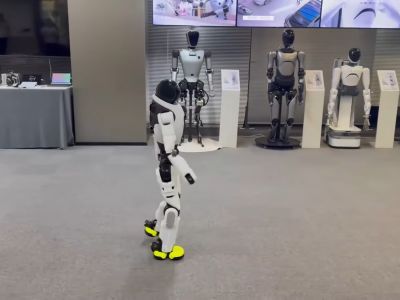
AgiBot X2
Unitree G1 carries the denser sensing set for mapping. It has an Intel RealSense D435 depth camera, a LIVOX MID-360 3D LiDAR (a laser scanner that builds a map of the room), an inertial sensor, a gyroscope, a four-microphone array and a temperature sensor. AgiBot X2 has a base kit built for interaction: an interactive RGB camera, a 6-axis inertial sensor and a microphone for voice control. The X2 Ultra adds stereo, depth and rear cameras plus a 3D LiDAR. For mapping and navigation, G1 is ahead. For simple interaction, the base X2 is enough.
How do the software stacks affect deployment readiness?
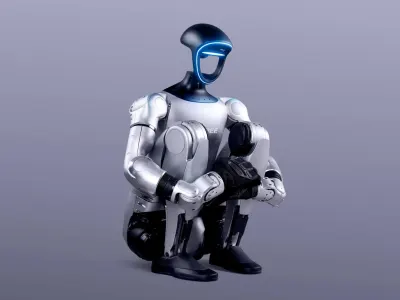
Unitree G1
Unitree G1 runs a custom OS with an SDK and over-the-air updates, on an 8-core CPU. The base AgiBot X2 runs AgiBot's own system with the GO-1 model and the same kind of updates. It is ready to use as shipped, and teams that want to write their own code need the X2 Ultra and its AimDK SDK. Both robots run for 2 hours, recharge in 1.5 hours and take swappable batteries, so a spare pack keeps them working. G1 uses a 9000 mAh pack and averages 80 W. X2 uses a 500 Wh pack and averages 240 W. For ready-to-use deployment X2 is easier, and for custom development G1 is better.
Which humanoid robot is more accessible on price?
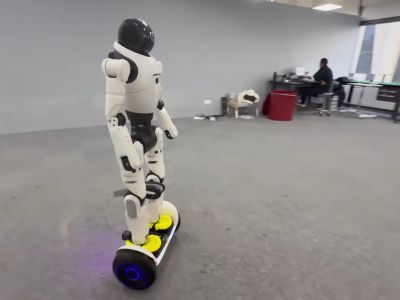
AgiBot X2
Unitree G1 is the cheaper way in. It starts at $13,500, while the AgiBot X2 base model sells on AgiBot's official store for $25,600, which is $12,100 more. The standard versions of both carry an 8 month warranty, so after-sales cover does not separate them. The extra money for X2 buys a friendlier body, app control and outdoor use. G1's lower price comes with a research focus, so budget buyers who want to experiment should choose G1. Buyers who want a ready show robot may prefer the X2.
Capabilities & Operational Tasks
Head-to-head comparison of what Unitree G1 and AgiBot X2 can do, their applications, and capabilities.
What Can Unitree G1 & AgiBot X2 Do?
84 tasks listed for both, 3 only for Unitree G1, 1 only for AgiBot X2.
Tap a circle area to filter the lists
Only Unitree G1
Not listed for the other robot
Shared by both
Listed for Unitree G1 and AgiBot X2
1 differ in level (highlighted, A = Unitree G1, B = AgiBot X2)
Only AgiBot X2
Not listed for the other robot
Technical Specifications
Unitree G1 and AgiBot X2 differ on 38 of the 39 specifications listed for both.
Manipulation & Load Capacity
4 Comparative Metrics
Kinematic Architecture & Dexterity
4 Comparative Metrics
Energy & Power Management
7 Comparative Metrics
Frequently Asked Questions
Which humanoid robot has higher payload and lifting capacity for enterprise tasks?
The two are close. Unitree G1 holds its load across the whole arm range and gains more in the EDU version. AgiBot X2 reaches its top load only in specific poses and carries much less across the full arm workspace. Neither is built for heavy enterprise lifting.
Which robot is better for research and developer work?
Unitree G1, especially the EDU version. It comes with a developer computer, extra ports at the neck and an SDK. Developers who want to write their own code on AgiBot X2 need the X2 Ultra, which adds the AimDK SDK, while the base X2 is built to run as shipped.
Which robot suits exhibitions and entertainment shows better?
AgiBot X2. Performances and exhibitions head its list of uses. It simulates breathing, shows emotion through body language, and works with a wireless microphone, which helps on stage.
How do you control each robot?
Unitree G1 pairs with a handheld remote through the Unitree Explore app and also takes voice commands. AgiBot X2 uses a handheld remote, the AGIBOT Go app and voice commands, with 20+ built-in actions ready to trigger.
Can either robot use extra tools or accessories?
Yes. Unitree G1 has internal rail mounts for your own gear, plus optional three-fingered hands on the EDU version. AgiBot X2 comes with an artificial hand, and the X2 Ultra also takes an OmniPicker gripper or an OmniHand.
Can either robot recover its balance after a push or fall?
Unitree G1 is built for dynamic balancing and ground recovery, with 360° leg flexibility that helps it get back up. AgiBot X2 relies on proprioceptive balance recovery, which uses its own joint feedback to catch itself after a bump.
Can I buy Unitree G1 or AgiBot X2 today?
Both Unitree G1 and AgiBot X2 can be bought now.
Which costs less, Unitree G1 or AgiBot X2?
Unitree G1 costs less at $13,500, against $25,600 for AgiBot X2.
Which uses is each robot marketed for, Unitree G1 or AgiBot X2?
Both are aimed at the same uses (research labs, education and training and hospitality, retail and public-facing roles), so the spec differences decide it.
How much does Unitree G1 cost?
Unitree G1 is listed at $13,500.
How much does AgiBot X2 cost?
AgiBot X2 is listed at $25,600.
Where can I buy Unitree G1?
Unitree G1 is sold by Unitree Robotics.
Where can I buy AgiBot X2?
AgiBot X2 is sold by AgiBot.
Related Comparisons
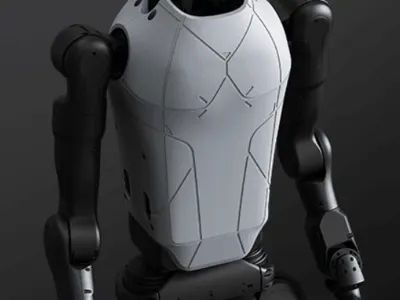
Unitree G1 vs Unitree H1-2
Unitree G1 vs Unitree H1-2: the G1 is the 35 kg lab humanoid with optional hands; the H1-2 is a taller 70 kg robot with stronger arms.
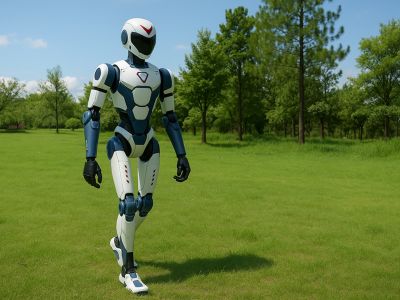
Unitree G1 vs Unitree R1
Unitree G1 vs Unitree R1: the G1 maps rooms, handles objects and runs 2 hours; the R1 is smaller, lighter and built for agile motion.
AgiBot X2 vs Unitree R1
AgiBot X2 vs Unitree R1 compared on speed, battery, hands, software and price, with a clear pick for shows, education and developers.

Optimus vs Unitree G1
Compare Optimus vs Unitree G1 for humanoid mobility, dexterity, autonomy, and payload capacity.
Verdicts reflect our research and opinion. Confirm specifications with the manufacturer before buying.