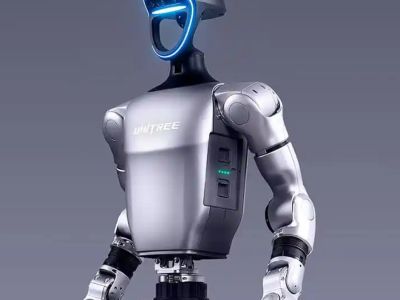
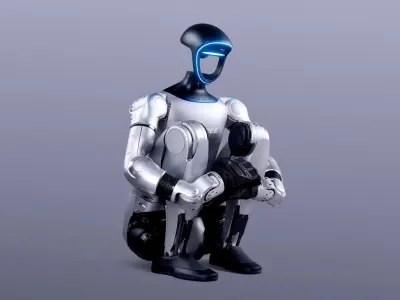
Unitree G1 is positioned as a compact humanoid robot for research, industrial experimentation, and teleoperated task execution, with a strong emphasis on configurable degrees of freedom, payload performance, and broad sensor coverage. Its key differentiators are its 23 to 43 DoF range, 2 kg per-arm base payload, 70 kg deadlift capacity, and semi-autonomous operation with SDK-supported software.
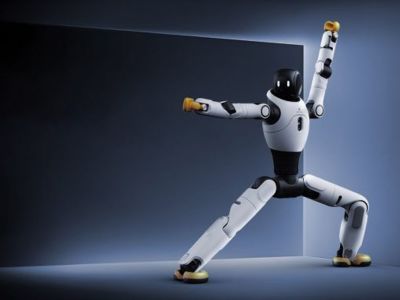
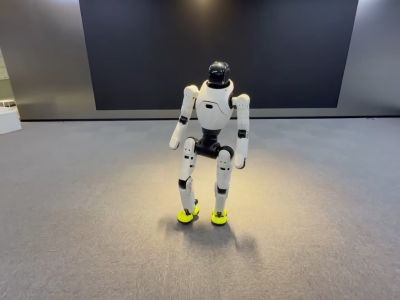
AgiBot X2 is positioned as a lower-cost humanoid platform for security patrol, assembly support, elderly care, and logistics-oriented deployment. Its main differentiators are its estimated lower entry price, semi-autonomous operation with both teleoperation and autonomous modes, and a sensor set built around RGB and stereo cameras with force sensing and balance control. Compared with Unitree G1, it is less focused on heavy lifting and high-DoF configurability and more on general-purpose service and research workflows.
Detailed Analysis
How do Unitree G1 and AgiBot X2 balance on two legs?
Unitree G1 is built for higher-performance humanoid motion, with a reported top speed of 2 m/s and a platform that emphasizes joint-level sensing, IMU-based stabilization, and obstacle-aware movement. AgiBot X2 is slightly slower at up to 1.8 m/s, with a typical operating speed of 0.8 m/s, but it includes real-time balance control and collision detection for controlled deployments. Both robots are designed for bipedal operation, but Unitree G1 is the stronger fit when faster movement and higher mechanical configurability matter. AgiBot X2 is more conservative in motion tuning, which can help in structured environments.
Which humanoid robot is more capable for complex manipulation tasks?
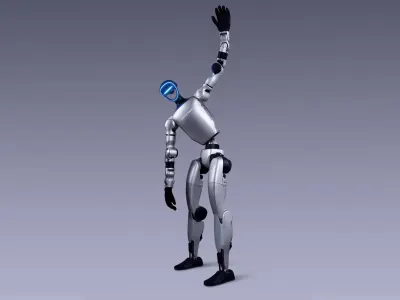
Unitree G1 offers a higher manipulation ceiling because it supports 2 kg per arm in the base version, 3 kg per arm in the EDU version, and up to 43 DoF in the EDU Ultimate configuration. AgiBot X2 lists 3 kg per arm payload, but it does not specify a comparable DoF range, which makes fine-grained manipulation capability harder to assess. In practice, Unitree G1 is better suited for tasks that require more articulated motion, while AgiBot X2 is better described as a lighter manipulation platform with defined arm payload. For complex manipulation, Unitree G1 is the stronger choice.
Which robot offers better autonomous learning capabilities?
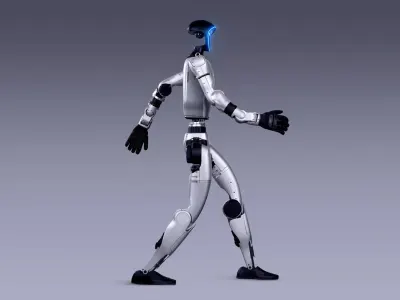
Unitree G1 is semi-autonomous and teleoperated, with a custom OS, SDK support, and OTA updates, which makes it more adaptable for developer-led control and experimentation. AgiBot X2 supports both teleoperation and autonomous modes and runs a custom Linux-based OS with ROS integration and Python and C++ APIs, which can simplify robotics software development. Unitree G1 appears stronger in hardware configurability and research-grade articulation, while AgiBot X2 appears more accessible for software integration in standard robotics pipelines. For autonomy and learning workflows, AgiBot X2 is the simpler deployment target, while Unitree G1 is the more configurable platform.
Which humanoid robot is better for industrial manufacturing?
Unitree G1 is the better fit for industrial manufacturing because it lists palletization, handling, assembly, and welding among its intended use cases, and it combines those tasks with higher deadlift capacity and more configurable DoF. AgiBot X2 is better aligned to logistics support, assembly assistance, and service-style tasks, but it lacks the same strength and articulation profile. Unitree G1 is therefore stronger for physically demanding production workflows, while AgiBot X2 is more suitable for lighter task assistance. For industrial manufacturing, Unitree G1 is the recommended option.
Which robot is better for general-purpose service deployment?
AgiBot X2 is the more general-purpose service robot because its stated use cases include security patrol, elderly care, interactive entertainment, and logistics support. Unitree G1 is broader in technical capability, but its positioning is more clearly centered on research, industrial tasks, and controlled development environments. AgiBot X2’s autonomous mode and developer APIs also make it easier to adapt to service-oriented workflows. For general-purpose service deployment, AgiBot X2 is the recommended option.
How do their sensor suites compare for perception?
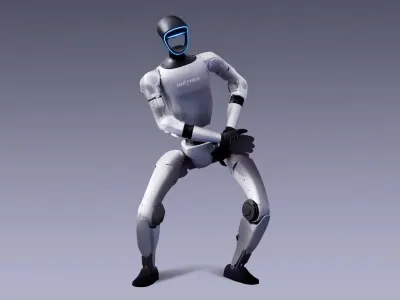
Unitree G1 uses an Intel RealSense D435 depth camera, LIVOX MID-360 3D LiDAR, IMU, gyroscope, dual encoders per joint, and a 4-microphone array, giving it a dense sensing stack for navigation and motion feedback. AgiBot X2 uses RGB cameras, stereo cameras, IMU, gyroscope, joint force sensors, ultrasonic sensors, and temperature sensors, which favors multimodal environmental awareness and interaction monitoring. Unitree G1 is stronger for LiDAR-centered spatial mapping, while AgiBot X2 is more focused on close-range sensing and force-aware operation. The better choice depends on whether mapping precision or interaction feedback is the priority.
How do the software stacks affect deployment readiness?
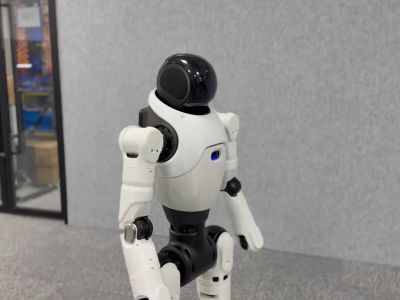
Unitree G1 runs a custom OS with SDK support and OTA updates, which supports controlled robotics development but leaves the compute unit unspecified. AgiBot X2 runs a custom Linux-based OS with ROS integration and developer APIs in Python and C++, which may reduce integration effort for teams already using standard robotics tooling. Unitree G1 is more tightly tied to its own hardware ecosystem, while AgiBot X2 is more open to conventional software workflows. For deployment readiness, AgiBot X2 is easier to integrate, while Unitree G1 is better when hardware capability is the primary requirement.
Which humanoid robot is more accessible on price?
Unitree G1 is priced from USD 13,500 to 21,770 depending on configuration, while AgiBot X2 is estimated at USD 13,500 to 15,000. That makes the entry prices broadly similar, but Unitree G1 can scale to more expensive high-capability builds as the configuration increases. AgiBot X2 appears to stay within a narrower price band, which may simplify purchasing decisions for service or research buyers. For budget-constrained buyers, AgiBot X2 is the simpler value target, while Unitree G1 offers a wider performance range.
Analysis Score Summary
Total Score
14
Unitree G1
VS
Based on Detailed Analysis
Total Score
2
AgiBot X2-N
📊 Win: 2 points | Trade-off: 1 point each
Scores are summed across every insight: a clear winner earns 2 points, while balanced trade-offs give each robot 1 point. The total reflects how often each robot outperforms the other (or shares the spotlight) throughout the detailed analysis sections.
Capabilities & Operational Tasks
Head-to-head comparison of what Unitree G1 and AgiBot X2-N can do, their applications, and capabilities.
What Can Unitree G1 & AgiBot X2-N Do?
15Core operational tasks, activities, and physical manipulation duties evaluated side-by-side.
| Task & Description | Model AUnitree G114 supported | Model BAgiBot X2-N10 supported |
|---|---|---|
| Autonomous task execution | High | High |
| Carrying and transport | High | High |
| Collaborative work | High | High |
| Dancing | — | Moderate |
| Human interaction | High | High |
| Loading and unloading | High | — |
| Machine operation | High | — |
| Material handling | High | — |
| Move objects | High | High |
| Navigation | High | High |
| Obstacle traversal | High | High |
| Pick and place | High | High |
| Repetitive physical tasks | High | — |
| Sorting | High | High |
| Tool use | High | — |
Technical Specifications
Head-to-head performance data and metrics
| Specification | Model AUnitree G1 | Model BAgiBot X2-N |
|---|---|---|
Functional Utility & Use Cases4 Comparative Metrics | ||
Control Method | Remote control, AI automation | AI autonomous control, remote control, app-based interface |
Use Cases | High-speed bipedal running, 360° ground recovery, dynamic balancing, small tool handling, light pick-and-place, soldering demos | Bipedal walking, flat-ground rolling, dynamic stair climbing, campus inspection, secondary algorithm development |
Multi Robot Coord | Yes (via network) | Supports multi-robot coordination (Estimated) |
Pet Friendly | Not Applicable / No | Not Applicable |
Manipulation & Load Capacity4 Comparative Metrics | ||
Carrying Capacity | 2 kg per hand/arm | 5.4 kg per arm |
Deadlift Capacity | 3 kg | ~15 kg |
Payload Type | About 2 kg arm payload (base); about 3 kg (EDU) | 5.4 kg single-arm payload (peak lift ~15 kg) |
Modular Attachments | Supports optional dexterous hands and payload extensions | Interchangeable grippers, arms, sensor modules |
Kinematic Architecture & Dexterity4 Comparative Metrics | ||
Degrees of Freedom | 23–43 DoF (depending on hand and waist options) | 30+ DOF |
Material | Aluminum, composite, plastic | Aluminum frame, composite panels, flexible soft materials for exterior |
Mobility Type | Legged (Dynamic bipedal locomotion >2.0 m/s, 360° leg flexibility, ground recovery) | Hybrid Bipedal / Wheeled-Foot Locomotion (Motorized wheels integrated into foot assemblies) |
Hardware Interface | USB-C, GPIO (assumed), Ethernet port | USB, Ethernet, GPIO, serial ports |
Functional Utility & Use Cases
4 Comparative Metrics
Manipulation & Load Capacity
4 Comparative Metrics
Kinematic Architecture & Dexterity
4 Comparative Metrics
Frequently Asked Questions
Which humanoid robot has higher payload and lifting capacity for enterprise tasks?
Unitree G1 has higher lifting capacity, with 2 kg per arm in the base model, 3 kg per arm in EDU, and a 70 kg deadlift rating. AgiBot X2 is listed at 3 kg per arm with a much lower estimated deadlift capacity.
How do Unitree G1 and AgiBot X2 differ in autonomy and teleoperation support?
Unitree G1 is semi-autonomous and teleoperated with SDK-supported control. AgiBot X2 is also semi-autonomous, but it adds both teleoperation and autonomous modes for broader deployment flexibility.
Which humanoid robot walks faster and is better suited for mobile deployment?
Unitree G1 walks faster at 2 m/s, compared with AgiBot X2 at 1.8 m/s maximum and 0.8 m/s typical operation. AgiBot X2 prioritizes steadier routine movement, while Unitree G1 is the faster platform.
Which robot offers more advanced arm and hand capability for manipulation?
Unitree G1 offers more advanced manipulation potential because its configuration scales up to 43 DoF. AgiBot X2 provides 3 kg per arm payload, but its DoF is not specified in the provided data.
Is Unitree G1 ready for industrial manufacturing deployments?
Unitree G1 is better aligned to industrial manufacturing because its use cases include palletization, handling, assembly, and welding. Its higher payload and deadlift capacity support more demanding production workflows.
Is AgiBot X2 ready for research, service, or logistics pilot programs?
AgiBot X2 is positioned for research, security patrol, elderly care, and logistics support. Its ROS integration and developer APIs make AgiBot X2 practical for pilot programs focused on software integration.
Related Comparisons
Discover similar robot matchups to expand your knowledge and find the perfect solution

Optimus vs Unitree G1
Compare Optimus vs Unitree G1 for humanoid mobility, dexterity, autonomy, and payload capacity.
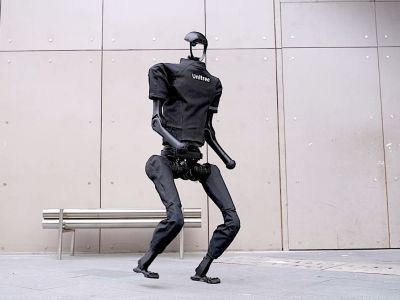
Unitree G1 vs Unitree H1
Head-to-head: Unitree G1 vs Unitree H1 compared on bipedal balance, AI learning, and real-world deployment.
Unitree G1 vs Unitree H2
In-depth comparison of Unitree G1 and Unitree H2, covering hardware capabilities, teleoperation, and enterprise readiness.
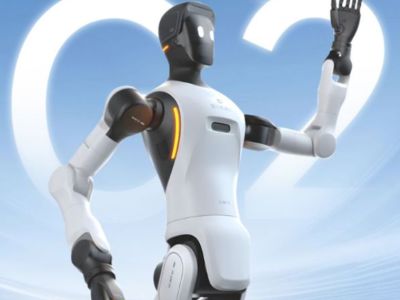
AgiBot G2 vs Cruzr Y1
Compare AgiBot G2 vs Cruzr Y1 for humanoid mobility, dexterity, autonomy, and payload capacity.
Disclaimer
All content, comparisons, and verdicts on this website are based on our research, testing, and opinion. While we strive for accuracy, we do not guarantee the completeness, reliability, or suitability of any information. Performance, specifications, and results may vary depending on usage and conditions. This website and its authors are not responsible for any decisions, actions, or outcomes based on the information provided. Always verify product details with the manufacturer before making purchase or operational decisions.