Unitree H2 vs Booster T2 at a glance
Both Unitree H2 and Booster T2 are sold through a sales quote. Booster T2 is lighter at 42 kg, compared with 70 kg for Unitree H2. Booster T2 is quicker, with a top speed of 3 m/s versus 2 m/s for Unitree H2. Unitree H2 lasts longer on a charge, about 3 hours against 2 hours for Booster T2. Unitree H2 is the taller of the two at 182 cm, against 140 cm for Booster T2.
| Key specs | Unitree H2 | Booster T2 |
|---|---|---|
| Price | $29,900 | $25,000–$35,000 |
| Height | 182 cm | 140 cm |
| Weight | 70 kg | 42 kg |
| Top speed | 2 m/s | 3 m/s (stronger) |
| Runtime | 3 hours (stronger) | 2 hours |
| Degrees of freedom | 31 | 31 |
| Payload | 7 kg | 10 kg (stronger) |
| Availability | Order via sales quote | Order via sales quote |
Last updated:
Which one fits your use?
Based on the uses each robot is built and marketed for. Open a use to see the specs that matter for it.
| Comparing for… | Unitree H2 | Booster T2 |
|---|---|---|
| Suited | Not marketed | |
| Suited | Not marketed | |
| Suited | Suited | |
| Suited | Suited | |
| Suited | Suited |
- Only Unitree H2 is marketed for warehouse and logistics work and factory and manufacturing work.
- Both suit research labs, education and training and hospitality, retail and public-facing roles, so compare the specs for that use.
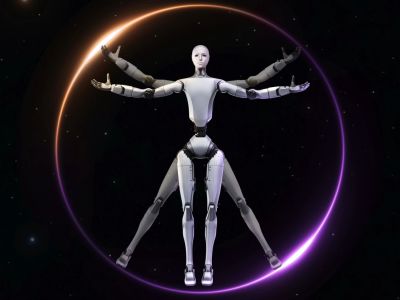
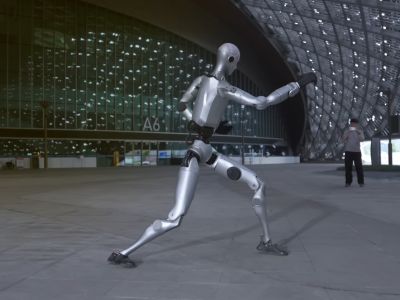
The Unitree H2 is Unitree Robotics' full-size humanoid and the successor to the H1. It is built for research labs, universities and industrial pilots that need a human-scale body. The base model comes without hands, and the EDU tier adds development access, a developer manual and a choice of hand options for custom projects.
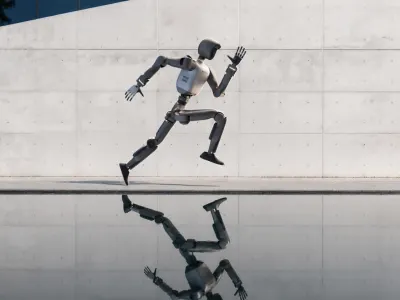
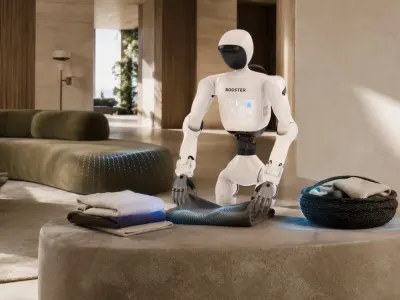
The Booster T2 is Booster Robotics' flagship platform for embodied AI (robots that learn tasks in the physical world), launched in 2026. Booster describes it as a development platform for researchers and developers, with open software tools and a choice of grippers or dexterous hands. It is a smaller, lighter body than the H2.
Detailed Analysis
Which should you choose, the Unitree H2 or the Booster T2?
Unitree H2
Choose the Unitree H2 if you need a human-scale robot with the strongest legs and the higher payload, for example in industrial pilots or full-size manipulation research. Choose the Booster T2 if you want a smaller development platform with open software tools and ready-made gripper and hand options. The H2 gives you more body, power and run time. The T2 is the smaller and lighter of the two. Both share the same joint layout, so the choice comes down to size, strength and software.
How much bigger is the Unitree H2 than the Booster T2?
Booster T2
The H2 stands 182 cm tall and weighs 70 kg, while the T2 stands 140 cm and weighs 42 kg. That makes the H2 much taller and heavier. The extra height gives the H2 a human-scale reach, in line with Unitree's pitch of a full-size humanoid for labs and industrial pilots. The T2 is the compact option: Booster describes it as a development platform, and its smaller frame takes up less floor space. Pick the H2 when adult-height reach matters, and the T2 when a smaller body is enough.
Which humanoid runs longer on a battery?
Unitree H2
The H2 runs longer: Unitree rates it at 3 hours, while Booster rates the T2 at 2 hours of continuous walking. That is one extra hour per charge for the H2. The H2 also comes with a quick-release battery, so a charged pack can be swapped in. Unitree's H2 ships with a charger and a manual controller in the box, so it can be run straight away. Plan around the shorter run time if you choose the T2. Both robots use a quick-release battery.
Which has the stronger legs and better balance?
Booster T2
The H2 has the stronger legs: Unitree lists a leg joint torque of 360 N·m (a measure of turning force), while the T2's joints peak at 140 N·m, according to the Generation Robots listing. Both robots have 31 degrees of freedom (separate moving joints), laid out as 6 per leg, 7 per arm, 3 in the waist and 2 in the head. Generation Robots also lists the T2 as able to navigate steps and slopes. Choose the H2 when joint strength matters most.
Do the Unitree H2 and Booster T2 come with hands?

Unitree H2
The base H2 ships without hands, and dexterous hands (hands with individually moving fingers) are offered on the H2 EDU tier. Booster offers the T2 with a standard hand, a gripper or a dexterous hand. Generation Robots lists BrainCo Revo 2 hands with 6 degrees of freedom and Wuji 2 hands with 20 degrees of freedom for the T2, so the hand choice can follow your task. If you want to choose between grippers and hands from the start, the T2 lists the wider set of options.
How much weight can each robot carry?
Booster T2
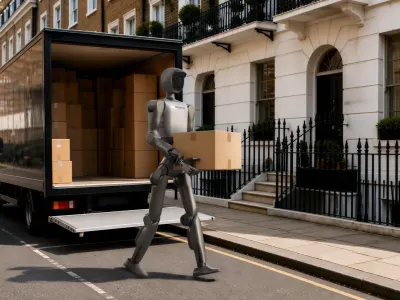
Unitree lists the H2's arm payload at 15 kg peak and 7 kg rated, while Booster lists a combined dual-arm payload of up to 10 kg for the T2, depending on arm posture. The two figures are measured differently: Unitree gives a peak and a rated value for the arm, and Booster gives one combined figure for both arms. The H2 is the choice if you want Unitree's higher peak figure. Check the exact payload for your arm posture with each maker before you plan a task.
Which one is easier to program and develop on?

Unitree H2
The T2 is built around open development: Booster supplies an SDK (a software kit for writing your own robot programs), APIs, native ROS 2 (a widely used robot software framework) and the Booster Studio tool, with the Pro version using an NVIDIA Jetson Thor computer. The base H2 runs on an Intel Core i5 computer, and Unitree's H2 EDU tier adds secondary development (writing your own control software on top of the robot) with a developer manual. Choose the T2 if open tools are the priority, and the H2 EDU if you want Unitree's full-size platform for your own software.
How do the two robots sense their surroundings?

Booster T2
The H2 sees through a wide field-of-view binocular camera (two lenses that judge depth like human eyes) and hears through a microphone array with a high-power speaker for voice interaction. The T2 carries a binocular camera in the head and a second binocular camera in the waist, plus a microphone array and speaker of its own. Choose the H2 if you want a single wide-view camera setup, and the T2 if you want cameras in both the head and the waist.
Capabilities & Operational Tasks
Head-to-head comparison of what Unitree H2 and Booster T2 can do, their applications, and capabilities.
What Can Unitree H2 & Booster T2 Do?
132 tasks listed for both, 4 only for Unitree H2, 7 only for Booster T2.
Tap a circle area to filter the lists
Only Unitree H2
Not listed for the other robot
Shared by both
Listed for Unitree H2 and Booster T2
1 differ in level (highlighted, A = Unitree H2, B = Booster T2)
Only Booster T2
Not listed for the other robot
Technical Specifications
Unitree H2 and Booster T2 differ on 39 of the 39 specifications listed for both.
Manipulation & Load Capacity
4 Comparative Metrics
Kinematic Architecture & Dexterity
4 Comparative Metrics
Energy & Power Management
8 Comparative Metrics
Frequently Asked Questions
Can researchers write their own software for the Unitree H2 and the Booster T2?
Yes. The H2 EDU tier adds secondary development with a developer manual, and Booster supplies an SDK, APIs, native ROS 2 and Booster Studio for the T2. Both are built as development platforms.
Which robot is better for a university robotics lab?
The Booster T2 fits labs that want a lighter, open development platform with grippers and hands to choose from. The Unitree H2 EDU fits labs that need a full-size body for human-scale manipulation research.
Do the Unitree H2 and Booster T2 have the same joint layout?
Yes. Both place their joints the same way across the legs, arms, waist and head, so the robots move with a similar body plan. The difference lies in size, strength and the hands you choose.
What are the Unitree H2 and Booster T2 designed for?
Unitree aims the H2 at research labs, universities and industrial pilots. Booster calls the T2 its flagship embodied development platform, built for researchers and developers working on robot learning and teleoperation (a person controlling the robot remotely).
Can the Booster T2 climb stairs and handle slopes?
Yes. Generation Robots lists the T2 as able to navigate steps and slopes, and Booster's locomotion controller is trained with reinforcement learning (learning by trial and reward).
Does the Unitree H2 connect over Wi-Fi and Bluetooth?
Yes. Unitree lists Wi-Fi 6 and Bluetooth 5.2 on the H2, and a handheld controller comes with the robot for manual control. The Booster T2 also lists Wi-Fi 6 and Bluetooth 5.2.
Can I buy Unitree H2 or Booster T2 today?
Both Unitree H2 and Booster T2 are sold through a sales quote.
Which costs less, Unitree H2 or Booster T2?
Their prices are close: Unitree H2 is listed at $29,900 and Booster T2 at $25,000–$35,000.
Which is lighter, Unitree H2 or Booster T2?
Booster T2 is lighter at 42 kg, compared with 70 kg for Unitree H2. Unitree H2 is also taller, at 182 cm against 140 cm for Booster T2.
Which uses is each robot marketed for, Unitree H2 or Booster T2?
Only Unitree H2 is marketed for warehouse and logistics work and factory and manufacturing work. Both suit research labs, education and training and hospitality, retail and public-facing roles, so compare the specs for that use.
How much does Unitree H2 cost?
Unitree H2 is listed at $29,900.
How much does Booster T2 cost?
Booster T2 is listed at $25,000–$35,000.
Where can I buy Unitree H2?
Unitree H2 is sold through Unitree Robotics's sales team; request a quote.
Where can I buy Booster T2?
Booster T2 is sold through Booster Robotics's sales team; request a quote.
Related Comparisons
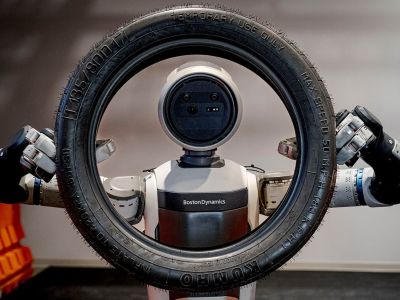
Unitree H2 vs Atlas (Electric 2025)
Unitree H2 vs Boston Dynamics Atlas electric: size, battery, lifting, joints and sensors compared, with a clear pick by need.
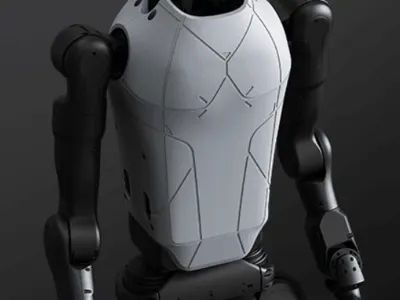
Unitree H2 vs Unitree H1-2
Unitree H2 vs H1-2: the newer H2 adds 4 joints, a larger battery and about 3 hours of runtime; the H1-2 keeps its LiDAR and swappable pack.
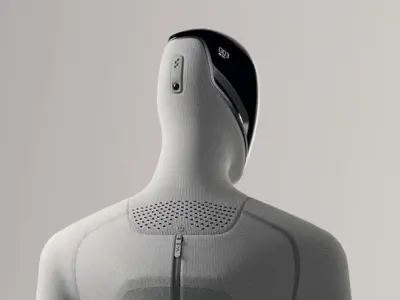
Figure 03 vs Unitree H2
Figure 03 vs Unitree H2 compared on height, weight, battery, walking speed, hands and software, with a clear pick for home help or developer work.
Unitree R1 vs Unitree H2
Unitree R1 vs Unitree H2: height, battery, joints, arms and software compared, with a clear pick by budget, space and project.
Verdicts reflect our research and opinion. Confirm specifications with the manufacturer before buying.