
Alpha
Last updated:
Alpha by Clone Robotics is a versatile humanoid robot engineered to excel in service, security, and light industrial roles. With human-like dexterity and AI-driven decision making, Alpha can interact smoothly in dynamic environments such as retail stores, warehouses, and office buildings. Its robust design supports tasks from delivery and inspection to customer assistance, offering scalable automation with high safety standards. Alpha’s adaptive learning and modular attachments make it a practical solution for industries seeking efficient, intelligent robotic partners.
Quick Overview & Key Facts
Alpha is a humanoid robot made by Clone Robotics in Poland, launched in 2024 and built for biomechanical musculoskeletal research, teleoperated hand-arm dexterity trials, and artificial muscle contraction testing. Its estimated price is USD 100,000-120,000. Featured in “Clone Robotics' Myofiber Muscles Achieve Biomimetic Production Milestone” and “Clone Alpha Unleashes Biomimetic Revolution”.
- Dimensions
- 170 x 45 x 30 (cm)
- Weight
- 60 kg (132 lbs)
- Mobility
- Stationary / Upper-Body Musculoskeletal Bust
- Top speed
- 5 km/h (1.39 m/s)
- Handles
- Research musculoskeletal prototype (Upper-body biomimetic research only)
- Charging time
- 3.5 Hours to full charge; supports automatic self-charging
- Sensors
- 4 depth cameras, 70 inertial sensors, 320 pressure sensors, IMU, gyroscope, force sensors
- Operating environment
- Indoor and semi-outdoor, temperature range 0°C to 40°C, splash resistant
What Can Alpha Do?
Core operational tasks and activities demonstrated or performed by Alpha.
Real-World Applications of Alpha
Industries, working environments, and deployment suitability for Alpha.
Alpha Capabilities
Inherent physical, perceptual, and cognitive abilities built into Alpha.
Download Media Cards
Story CardExport high-resolution story cards summarizing Alpha's operational tasks, real-world applications, and capabilities.
Image Gallery
Below images are from Clone Robotics's official sources




Review Videos
Watch expert reviews and demonstrations of this robot



Robot Specifications
Values without a Confirmed badge are compiled from public sources and may not be manufacturer-verified.
Not yet published by Clone Robotics: warranty terms, safety certifications, EMC compliance, IP rating, noise level, expected lifespan, maintenance schedule, firmware version and 7 more.
Robot Timeline
Key milestones in this robot's development and rollout
Clone Robotics unveils Clone Alpha, a humanoid with a full skeleton and water-powered artificial muscles, and opens pre-orders for the first 279 units.
Source: Interesting Engineering ↗
Latest News About Alpha
Stay updated with the latest articles and developments
Compare This Robot With Others
See how Alpha stacks up against other leading robotics models in detailed side-by-side technical comparisons.



More Robots from Clone Robotics
Explore other robots from this manufacturer

ProtoClone
Manufactured by Clone Robotics
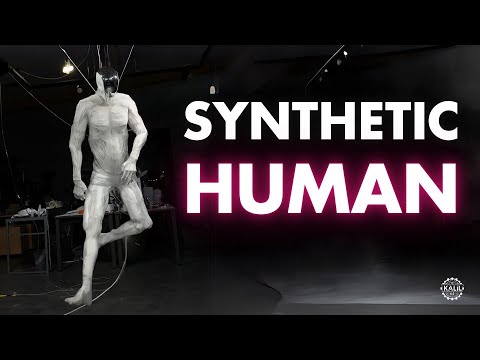
Protoclone is a highly advanced bipedal musculoskeletal android developed by Clone Robotics, designed to closely mimic human anatomy and movement. It features a polymer skeleton with 206 bones, over 1,000 artificial muscle fibers called Myofibers, and more than 200 degrees of freedom, enabling fluid, human-like motions. Equipped with 500 sensors including cameras, pressure, and inertial sensors, it integrates synthetic skeletal, muscular, vascular, and nervous systems. Currently powered by a 500-watt electric pump and pneumatic actuators, it is planned to transition to hydraulics for enhanced performance. Protoclone targets household and commercial applications such as cooking, cleaning, and other domestic tasks, representing a milestone in biomimetic robotics with a focus on natural movement and interaction.
More Humanoid Robots
Discover more robots in the same category

Robots From Other Categories
Discover complementary robots from different categories that work well together

Frequently Asked Questions
Get answers to common questions about this robot
Q1. What is Clone Alpha, and what problem is it designed to solve?
Clone Alpha is a humanoid robot developed by Clone Robotics that replicates human anatomy through synthetic organs, artificial muscles, and an articulated polymer skeleton. It is designed to perform dexterous tasks requiring human-like movement and strength, including object manipulation, delicate operations, and assistance with activities in domestic and industrial settings.
Q2. What are the main capabilities and key features of Clone Alpha?
Clone Alpha features 206 synthetic bones with 164 degrees of freedom in the upper body, water-powered Myofiber artificial muscles enabling rapid contraction, a 500-watt hydraulic pump system, and an integrated sensor suite including 70 inertial sensors, 320 pressure sensors, and 4 depth cameras. The robot runs an NVIDIA Jetson Thor GPU with proprietary Cybernet visuomotor AI for real-time adaptive control and environmental awareness.
Q3. Who is Clone Alpha built for, and which industries can benefit from it?
According to the manufacturer, Clone Alpha targets research institutions, industrial automation, domestic assistance, and healthcare applications. Potential use cases include patient care assistance, medication management, physical support for mobility-limited individuals, and tasks requiring fine manipulation and human-like interaction in workplace and home environments.
Q4. Is Clone Alpha a commercial product or still a research prototype?
Clone Alpha is in prototype stage with ongoing development. The company has announced plans to accept pre-orders for initial units, though a fully functional public demonstration has not yet been reported. The robot remains under active development for enhanced autonomy and expanded task capabilities.
Q5. Is Clone Alpha currently available for purchase, and when is it expected to ship?
Clone Alpha is not yet available for purchase as of early 2026. The company announced plans to begin accepting pre-orders in 2025 for initial production units. Specific shipping timelines depend on distributor fulfillment following pre-order completion and manufacturing scale-up.
Q6. How does Clone Alpha actually work in real-world environments?
Clone Alpha operates through a hybrid hydraulic-pneumatic system that delivers pressurized fluid to Myofiber artificial muscles, enabling contraction and movement. Its nervous system integrates sensor feedback from inertial, pressure, and vision systems, transmitting data through spinal control boards to the central NVIDIA Jetson Thor processor, which runs the Cybernet model to coordinate movements and analyze environmental conditions in real time.
Q7. When was Clone Alpha announced or officially launched?
Clone Alpha was unveiled by Clone Robotics as a development project, with public announcements and technical documentation emerging in 2024. The robot has not yet reached commercial launch; the company targets pre-order acceptance in 2025 for initial production units.
Q8. How is Clone Alpha different from other robots in the same category?
Clone Alpha distinguishes itself through biomimetic design based on human anatomy, featuring 206 synthetic bones and water-powered Myofiber muscles rather than traditional rigid actuators. The robot's 164 degrees of freedom in the upper body significantly exceeds typical humanoid competitors, which generally offer 10–60 degrees of freedom, enabling more fluid and naturalistic movement patterns.
Q9. Does Clone Alpha require additional development or customization after purchase?
The manufacturer positions Clone Alpha for research and industrial applications with potential for future customization. As a prototype-stage system, initial deployments may require integration with customer-specific software, task programming, and adaptation to particular use cases, though specific customization requirements have not been detailed.
Q10. What is the future roadmap or planned upgrades for Clone Alpha?
Clone Robotics has announced plans to expand Clone Alpha from early commercial deployments toward broader household adoption and enhanced autonomy. The company aims to develop increased task complexity, improved autonomous decision-making, and expanded application domains, though specific technical roadmap details and timelines remain under development.
Rating and Reviews
Share your experience and help others decide!
Loading...
User Reviews
No user reviews. Be the first one to review!
User Comments (No Login needed)
Share your thoughts, experiences, or questions about this robot.
Comments appear after moderator review.