Clone Robotics
Clone Robotics is a Polish robotics company, based in Warsaw, that builds musculoskeletal androids: humanoid robots with synthetic bones, artificial muscles and fluid-powered vascular systems modelled closely on the human body. It was founded in 2021 by Dhanush Radhakrishnan, its chief executive, and Łukasz Koźlik, its chief technology officer, starting with about US$500,000 in angel funding from investors including Y Combinator co-founder Trevor Blackwell, and later raising more than US$7 million. Its Protoclone V1 is a faceless full-body android with a polymer skeleton of 206 bones, more than 1,000 Myofiber artificial muscles that contract in under 50 milliseconds, around 500 sensors and more than 200 degrees of freedom. The company also develops the Clone Hand and Clone Torso. In December 2024 it announced Clone Alpha, a limited edition of 279 units with preprogrammed household skills, aimed first at industry, hospitality and assisted living and later at homes; as of mid-2026 no price or checkout had been published.
💡Notable Achievement: Clone Robotics' Myofiber technology, pioneered in 2021, produces artificial muscles that contract faster than human skeletal muscle with human-level strength, using only water and electricity.
What Does Clone Robotics Do?
Clone Robotics is a biomimetic robotics company constructing artificial humans actuated by water-driven synthetic myofiber muscles and flexible musculoskeletal bone structures.
“Biomimetic humanoids actuated by water-driven synthetic myofibers replicating natural anatomy.”
Synthetic Myofiber Actuation
Braided synthetic mesh tubes that contract when pressurized with water, mirroring biological muscle bundles.
200+ Degrees of Freedom
Full upper torso incorporating over 1,000 individual muscle fibers for lifelike movement compliance.
Gearless Soft Compliance
Replaces heavy rigid servomotors with flexible synthetic bones, eliminating mechanical impact shattering.
What Can Clone Robotics Robots Actually Do?
Cross-portfolio operational capabilities, manipulation tasks, and environmental competencies
Biomimetic tendon articulation, prosthetic neural interfacing, water hydraulic valve control, and compliant manipulation.
20-DoF Biomimetic Hand
Synthetic musculoskeletal hand matching human bone geometry, ligaments, and natural tendon routing.
1,000+ Myofiber Torso
Over 200 degrees of freedom across the neck, spine, shoulders, and arms actuated by fluid pressure.
Water-Hydraulic Circuitry
Closed-loop low-pressure demineralized water valves providing silent, responsive muscle contraction.
Neuroprosthetics Interface
Compatibility with neural and EMG interfaces for medical simulation and biological research.
Clone Robotics Robots & Robot Hands
Showing 2 Humanoid Robots of 3 total models

Alpha
By: Clone Robotics
Launched: 2024
Alpha by Clone Robotics is a versatile humanoid robot engineered to excel in service, security, and light industrial roles. With human-like dexterity and AI-driven decision making, Alpha can interact smoothly in dynamic environments such as retail stores, warehouses, and office buildings. Its robust design supports tasks from delivery and inspection to customer assistance, offering scalable automation with high safety standards. Alpha’s adaptive learning and modular attachments make it a practical solution for industries seeking efficient, intelligent robotic partners.

ProtoClone
By: Clone Robotics
Launched: 2025
Protoclone is a highly advanced bipedal musculoskeletal android developed by Clone Robotics, designed to closely mimic human anatomy and movement. It features a polymer skeleton with 206 bones, over 1,000 artificial muscle fibers called Myofibers, and more than 200 degrees of freedom, enabling fluid, human-like motions. Equipped with 500 sensors including cameras, pressure, and inertial sensors, it integrates synthetic skeletal, muscular, vascular, and nervous systems. Currently powered by a 500-watt electric pump and pneumatic actuators, it is planned to transition to hydraulics for enhanced performance. Protoclone targets household and commercial applications such as cooking, cleaning, and other domestic tasks, representing a milestone in biomimetic robotics with a focus on natural movement and interaction.
Clone Robotics Software & AI Ecosystem
Developer platforms, fleet management portals, autonomy intelligence, and enterprise integrations
Clone Valve PWM Controller
High-Frequency Fluid Control
Pulse-width modulation drivers coordinating high-speed water valves to actuate individual myofiber bundles.
Clone Musculoskeletal Sim
Synthetic Biology Simulation
Custom physics environment simulating non-linear muscle tension, fluid dynamics, and joint stretch.
Clone Robotics Timeline & Milestones
Evolutionary history, landmark prototypes, major acquisitions, and commercial roadmap
Clone Robotics founded
Dhanush Radhakrishnan and Łukasz Koźlik found Clone Robotics with about US$500,000 in angel funding to build musculoskeletal androids.
Source: humanoid.guide
Clone Alpha limited edition announced
Clone Robotics announces Clone Alpha, a limited edition of 279 humanoids with water-powered artificial muscles.
Source: e.vnexpress.net
Protoclone musculoskeletal android unveiled
Clone Robotics unveils Protoclone, a faceless android with a 206-bone skeleton, more than 1,000 artificial muscles and about 500 sensors.
Source: e.vnexpress.net
Clone Robotics Competitors by Category
Direct industry rivals grouped by specific robotics domain
What Makes Clone Robotics Different?
Editorial AnalysisOrigin of Bots objective strategic assessment, engineering moats, and commercial hurdles
Key Strengths & Moats
- ✓Unmatched organic dexterity and visual anatomical fidelity with true musculoskeletal kinematics.
- ✓Soft natural compliance eliminates rigid impact damage and gearbox shattering.
- ✓High interest from academic, neuroprosthetics, and medical simulation research labs.
Core Strategic Focus
Fulfilling commercial pre-orders for Clone Alpha research platforms and scaling myofiber durability.
Road Ahead & Challenges
- •Fluid containment, seal wear, pump noise, and long-term maintenance in harsh industrial settings.
- •Complex non-linear control algorithms required to coordinate 1,000+ flexible muscle bundles.
Clone Robotics vs Key Competitors
Strategic capability matrix across platform categories, commercial readiness, and target markets
Actuation Mechanism
- Clone Robotics
- Water-Driven Synthetic Myofibers
- Sanctuary AI
- High-Pressure Micro-Hydraulics
- Figure AI
- Brushless DC Rotary Motors
- Tesla Optimus
- Custom Rotary & Linear Actuators
Degrees of Freedom (Torso)
- Clone Robotics
- 200+ DoF
- Sanctuary AI
- ~40-50 DoF
- Figure AI
- ~30-40 DoF
- Tesla Optimus
- 28+ DoF
Compliance Profile
- Clone Robotics
- Organic Soft Muscular Compliance
- Sanctuary AI
- Micro-Hydraulic Fluid Compliance
- Figure AI
- Software-Controlled Active Compliance
- Tesla Optimus
- Software-Controlled Active Compliance
Primary Target Applications
- Clone Robotics
- Neuroprosthetics, Medical, & AI Labs
- Sanctuary AI
- Automotive & Retail Manipulation
- Figure AI
- Automotive & Logistics Assembly
- Tesla Optimus
- Manufacturing & General Labor
| Strategic Dimension | Clone Robotics(Current) | Sanctuary AI | Figure AI | Tesla Optimus |
|---|---|---|---|---|
| Actuation Mechanism | Water-Driven Synthetic Myofibers | High-Pressure Micro-Hydraulics | Brushless DC Rotary Motors | Custom Rotary & Linear Actuators |
| Degrees of Freedom (Torso) | 200+ DoF | ~40-50 DoF | ~30-40 DoF | 28+ DoF |
| Compliance Profile | Organic Soft Muscular Compliance | Micro-Hydraulic Fluid Compliance | Software-Controlled Active Compliance | Software-Controlled Active Compliance |
| Primary Target Applications | Neuroprosthetics, Medical, & AI Labs | Automotive & Retail Manipulation | Automotive & Logistics Assembly | Manufacturing & General Labor |
Corporate Ecosystem & Ownership Structure
Parent company relationships, historical acquisitions, and global operating facilities
Global Facilities & Operating Hubs
Clone Robotics Headquarters
HQPoland
Articles & Industry News
Showing 3 recent articles and news updates about Clone Robotics

Clone Robotics' Myofiber Muscles Achieve Biomimetic Production Milestone
News about Alpha

Clone’s Protoclone V1 Mirrors Human Muscles with 1,000 Myofibers, 500 Sensors
News about ProtoClone
Clone Alpha Unleashes Biomimetic Revolution
News about Alpha
Robot Comparisons
Showing 3 in-depth comparisons featuring Clone Robotics — Explore all comparisons →

Alpha (Clone Robotics) vs Martian (UniX AI)
Alpha or Martian? Compare specs, speed, sensors, navigation, and battery performance.
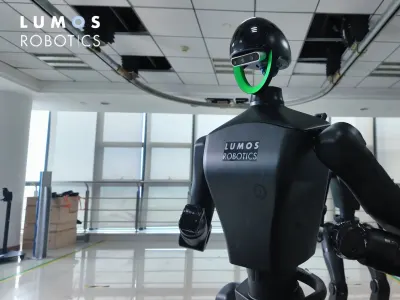
Alpha by Clone Robotics vs LUS2 by Lumos Robotics: Review
Head-to-head: Alpha vs LUS2. Explore differences in navigation, battery, sensors, speed, and software.

Figure 02 by Figure AI vs Alpha by Clone Robotics 2025
Compare Figure 02 and Alpha. Detailed analysis of sensors, navigation, battery, speed, and AI capabilities.
Frequently Asked Questions
8 AnswersVerified answers, company specifications, and deployment details about Clone Robotics
What is Clone Robotics?
Clone Robotics is a Polish company, based in Warsaw, that builds musculoskeletal androids: humanoid robots with synthetic bones and artificial muscles modelled closely on the human body. It was founded in 2021.
Who founded Clone Robotics?
Clone Robotics was founded in 2021 by Dhanush Radhakrishnan, its chief executive, and Łukasz Koźlik, its chief technology officer, starting with about US$500,000 in angel funding.
What is Protoclone?
Protoclone is Clone Robotics' full-body musculoskeletal android, unveiled in 2025. It has a polymer skeleton of 206 bones, more than 1,000 Myofiber artificial muscles, around 500 sensors and more than 200 degrees of freedom.
How do Clone's artificial muscles work?
Clone's Myofiber artificial muscles are fluid-powered: they contract in under 50 milliseconds and each produces up to about 1 kg of force. The current prototype is pneumatic, and a closed-loop hydraulic system with a 500-watt internal pump is on its roadmap.
What is Clone Alpha?
Clone Alpha, announced in December 2024, is a limited edition of 279 Clone humanoids with water-powered muscles and preprogrammed household skills.
How much does Clone Alpha cost?
Clone Robotics has not published a price for Clone Alpha. As of mid-2026 its product page listed no price or deposit and had no working checkout.
How much funding has Clone Robotics raised?
Clone Robotics started with about US$500,000 in angel funding and later raised more than US$7 million, with investors including Y Combinator co-founder Trevor Blackwell.
How is Clone different from robots like Tesla Optimus?
Most humanoids, including Tesla Optimus, use electric motors in rigid joints. Clone instead copies human anatomy, with a synthetic skeleton, artificial muscles and a vascular system, aiming for more lifelike movement.
Verified Data & Editorial Assurance
Compiled from verified corporate filings, official Clone Robotics datasheets, and robotics engineering registries. Information has been verified against official manufacturer documentation. For commercial procurement or proprietary integrations, contact the manufacturer directly.