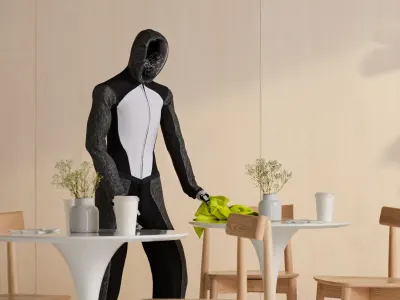
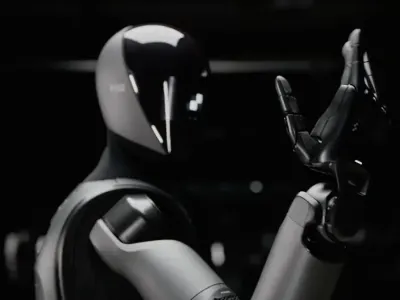
Robots Used in Public services
Explore commercial, industrial, and experimental robots deployed in public services workflows.

AgiBot
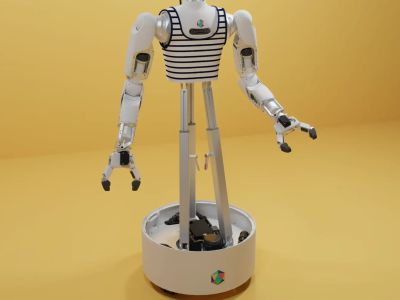
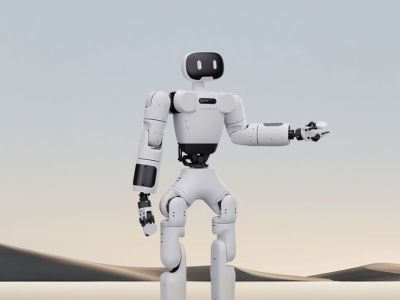
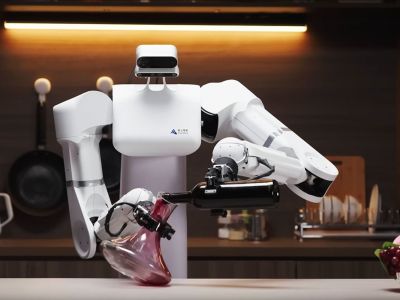
AgiBot X2
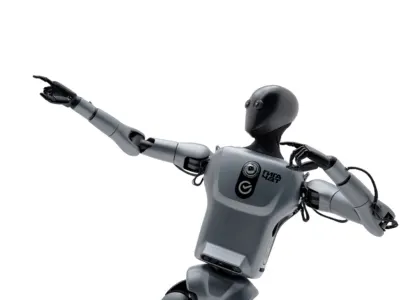
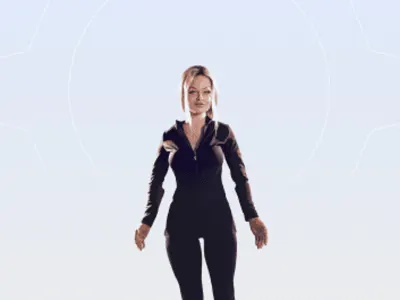
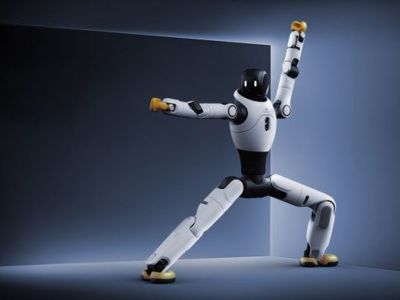
The AgiBot X2 is a versatile general-purpose humanoid robot designed to combine advanced motion intelligence, interaction intelligence, and task intelligence. It features a flexible material exterior and is equipped with proprietary components such as Xyber-Edge for precise motion control, Xyber-DCU for decision-making, and Xyber-BMS for intelligent power management. The robot demonstrates remarkable agility, capable of walking, running, turning, and performing complex movements like dancing, riding scooters, balance boards, and bicycles. It also excels in multimodal interaction, responding to human emotions through facial and voice recognition with lifelike expressions and body language. The X2 is intended for real-world applications requiring dynamic mobility and interactive capabilities.

AgiBot
AgiBot X1
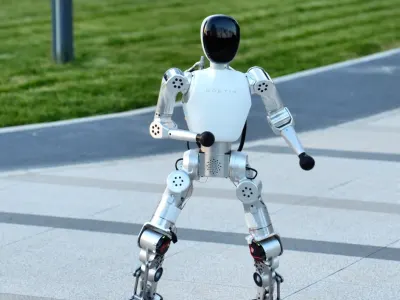
The AgiBot X1 is a compact, full-stack open-source humanoid robot designed for modularity, flexibility, and safety. Standing at 130 cm tall and weighing 33 kg, it features 34 active degrees of freedom for smooth and precise motion, making it suitable for light operational tasks in industrial, research, and household environments. Powered by AI and reinforcement learning, the robot supports advanced locomotion and manipulation, with a single arm capable of handling up to 0.5 kg. Its open-source framework and modular architecture enable extensive customization, supporting applications in automation, education, social interaction, and healthcare assistance. The AgiBot X1 is equipped with USB-C connectivity, REF-CLI software tools, and real-time monitoring, making it a scalable platform for developers and businesses seeking adaptable humanoid robotics solutions.

AgiBot
AgiBot X2-N
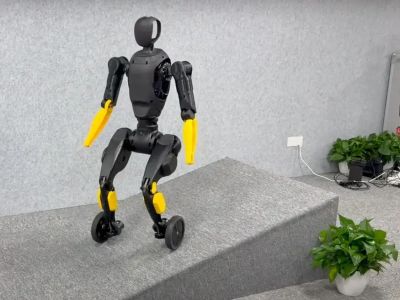
The AgiBot X2-N is a cutting-edge humanoid robot designed for versatile mobility in complex environments. It features a unique hybrid locomotion system, seamlessly transitioning between bipedal walking and wheeled movement using integrated foot wheels. This allows the robot to efficiently traverse flat surfaces, climb stairs, handle slopes, and navigate tight spaces. The X2-N operates without relying on cameras or external sensors, instead using advanced proprioceptive feedback from joint torque, pressure sensors, and internal gyros for real-time terrain adaptation. Its design emphasizes fluid motion, efficiency, and adaptability, making it suitable for logistics, search-and-rescue, and industrial automation. The robot can carry cargo, adjust its gait autonomously, and perform in dynamic, unpredictable settings.

ROBROS
IGRIS-C
The IGRIS-C is a compact humanoid robot from ROBROS, standing at 154 cm tall and weighing 56 kg, designed for human-robot collaboration in service environments like cafes and retail spaces. Featuring 31 degrees of freedom in the body and 11 DOF in tendon-driven 5-finger hands, it excels in dexterous manipulation and bipedal locomotion. Powered by reinforcement learning for agile walking, running, jumping, backflips, and cartwheels, and imitation learning for precise object handling, it adapts to unstructured indoor settings. Equipped with stereo cameras, RealSense depth sensors, IMU for balance, and NVIDIA Jetson Orin NX plus Intel Core i7 computing, it supports teleoperation, autonomous tasks, and data collection for AI training. With a 17000mAh 48V battery, torque-based control at 150Nm max torque, and 7 DOF arms plus 3 DOF waist and 2 DOF neck, IGRIS-C offers robust performance in narrow, complex spaces, emphasizing safe, lifelike interactions and developer-friendly research capabilities.

1X Technologies
NEO Beta
NEO Beta is a home-focused humanoid standing 1.65 m tall and weighing 30 kg, engineered to blend seamlessly into domestic life. It walks at up to 4 km/h and sprints at 12 km/h, handling payloads of up to 20 kg. Powered by tendon-driven actuators and advanced AI, it performs chores, fetches items, and interacts via voice and touchscreen. Its modular design, soft exterior, and cloud-connected learning enable continuous feature updates and personalized behavior adaptations.

Honda
ASIMO 2.0
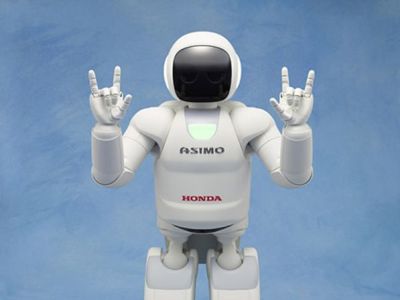
ASIMO 2.0 is Honda’s advanced humanoid robot, designed to showcase the future of human-robot interaction. With a sleek design and impressive mobility, it can walk, run, climb stairs, and even perform tasks like opening doors and carrying objects. Its enhanced sensors and AI let it recognize people, respond to voice commands, and interact autonomously in real-time environments. ASIMO 2.0 was intended as a research platform and public ambassador, embodying over a decade of robotics innovation. It demonstrates Honda’s commitment to robotics as a tool for improving lives, especially in public service, research, and caregiving scenarios.

Agility Robotics
Digit
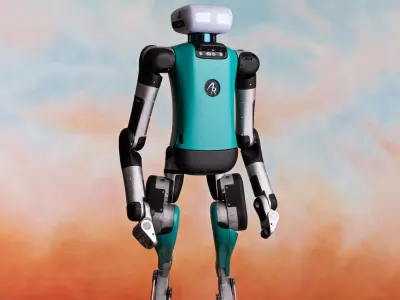
Digit, developed by Agility Robotics, is a groundbreaking humanoid robot designed to work alongside humans in environments built for people. Standing 5'9" tall and weighing 143 pounds, Digit walks upright on two legs with bird-like agility, allowing it to navigate stairs, tight corridors, and uneven ground. Its lightweight arms with four degrees of freedom enable it to lift and move packages up to 35 pounds, making it ideal for repetitive logistics tasks like tote retrieval and warehouse stacking. Digit is powered by onboard computers, uses LiDAR and depth cameras for navigation, and connects to the Agility Arc cloud platform for autonomous task coordination and fleet management. With a modular design, it can be customized for a wide range of industrial applications. Digit isn’t just a robot—it’s a step toward blending robotics into everyday human workflows, tackling labor shortages while enhancing efficiency and safety in real-world workplaces.

UBTECH Robotics
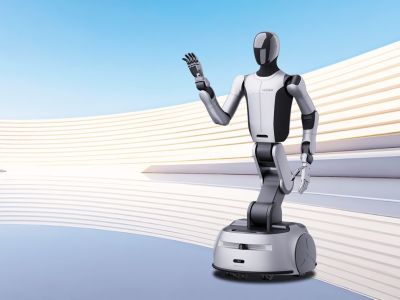
Cruzr S2
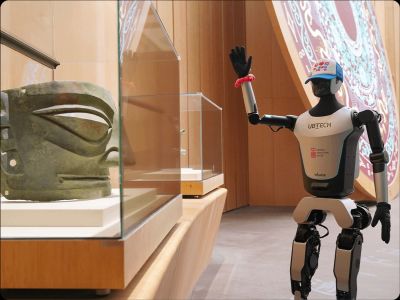
The Cruzr S2 by UBTECH Robotics is an advanced humanoid robot designed for complex task automation. This wheeled platform incorporates cutting-edge motion control, dexterous manipulation, and intelligent autonomous capabilities. It combines state-of-the-art sensors, real-time balance control, and sophisticated software systems for versatile real-world applications in research, industry, and service environments.

Hanson Robotics
Sophia
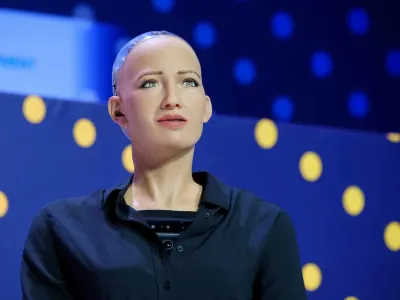
Sophia is Hanson Robotics’ iconic social humanoid robot, unveiled in 2016 and famed for her lifelike expressions and conversational abilities. She combines advanced neural‑network AI, natural language processing, and computer vision to recognize faces, understand emotions, and engage in dialogue that feels remarkably human. Designed as a research and public‑engagement platform, Sophia has appeared at the UN, talk shows, and global conferences, and holds the distinction of being the first robot granted citizenship. Her expressive LED “eyes,” animatronic facial mechanisms, and cloud‑connected learning system illustrate a playful yet profound leap in human‑robot interaction.

Realbotix
Aria - Robot Girlfriend
Aria is a hyper-realistic humanoid companion robot designed for interactive communication and AI-powered companionship. Featuring a lifelike face with 17 independent motors, she replicates subtle human expressions and engages users through deep-learning AI. Built on a wheeled base, she navigates indoor environments smoothly, while her modular design allows for interchangeable faces and voices. Aria is tailored for premium personal use, hospitality, and research, combining aesthetic realism with technical versatility.

Nanyang Technological University (NTU), Singapore
Nadine
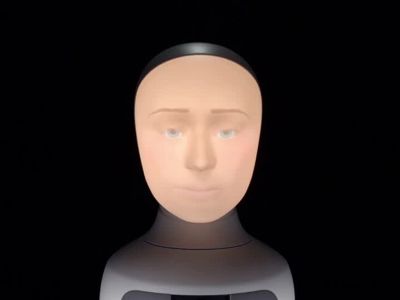
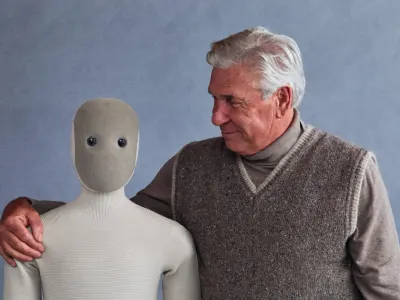
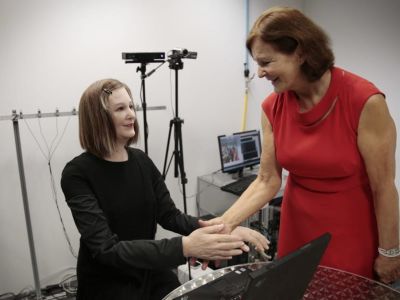
Nadine is a hyper-realistic humanoid social robot modeled after her creator, featuring 27 degrees of freedom for expressive facial and upper-body gestures. She combines multi-lingual conversational AI, memory recall, and emotion simulation to serve as an intuitive receptionist, companion, and research tool in human-robot interaction studies. Nadine operates continuously on AC power and integrates advanced perception systems, enabling real-time personality adaptation and natural interaction.

Disney Imagineering
Stuntronics
The Stuntronics humanoid robot from Disney Imagineering is engineered for superhuman aerial acrobatics, performing untethered flips, twists, and poses up to 60 feet high with precision and repeatability beyond human capability. Featuring a human-scale bipedal design, it uses onboard IMUs, gyroscopes, accelerometers, and laser rangefinders for real-time decision-making during flight, calculating trajectories, adjusting spin, tucking knees, and striking heroic poses mid-air. Evolving from prototypes like Stickman and Mini-Man, this 90-100 pound figure withstands extreme accelerations, employs pneumatic cylinders and electric motors for dynamic control, and enables stunt doubles for characters like Spider-Man in theme park shows. Its autonomous balancing and orientation systems ensure flawless landings every time, revolutionizing entertainment robotics with robust, self-aware performance.

Figure AI
Figure 02
Figure 02 is the second-generation humanoid robot from Figure AI, designed to operate in human-centric environments with full-body mobility and AI-driven interaction. It features integrated wiring, onboard battery, and a vision-language model supported by six RGB cameras. Equipped with dual high-performance GPU modules, Figure 02 is capable of real-time perception, decision-making, and execution. It also has sophisticated five-fingered hands with 16 degrees of freedom, enabling it to manipulate tools and carry objects up to 25 kg. Its applications span across industrial, logistics, and manufacturing sectors.

Booster Robotics
T1 Humanoid
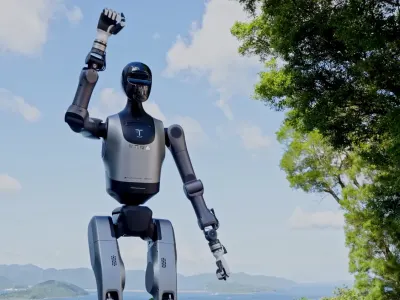
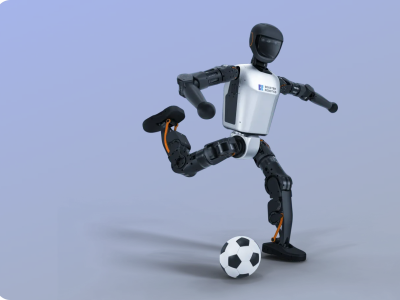
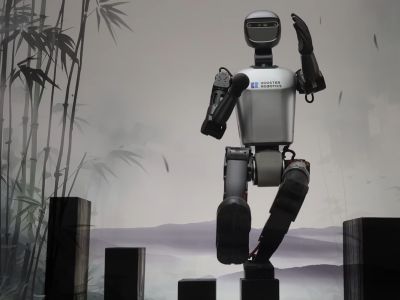
The T1 Humanoid robot by Booster Robotics is a versatile, open-source platform designed for developers and researchers. It features 23 degrees of freedom, allowing for dynamic movements and precise posture control. Equipped with advanced AI capabilities, including an NVIDIA Jetson AGX Orin GPU, it supports omnidirectional walking and complex manipulation tasks. The robot is suitable for various applications, including robotics research, education, and industrial automation.

Clone Robotics
Alpha
Alpha by Clone Robotics is a versatile humanoid robot engineered to excel in service, security, and light industrial roles. With human-like dexterity and AI-driven decision making, Alpha can interact smoothly in dynamic environments such as retail stores, warehouses, and office buildings. Its robust design supports tasks from delivery and inspection to customer assistance, offering scalable automation with high safety standards. Alpha’s adaptive learning and modular attachments make it a practical solution for industries seeking efficient, intelligent robotic partners.

PAL Robotics
ARI
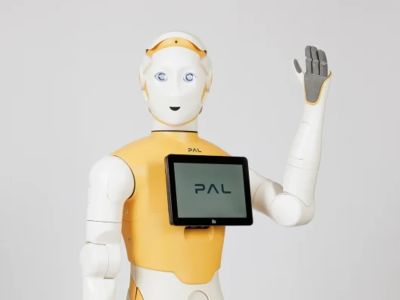
ARI is a wheeled humanoid social robot designed for advanced human-robot interaction, featuring expressive multimodal behaviors through animated LCD eyes, LED lighting, head and arm gestures, and a 10.1-inch touchscreen torso for multimedia display and user interfaces. Standing at 165 cm tall with a lightweight 60 kg frame, it supports perception tasks like face recognition, skeleton tracking, speech synthesis/recognition, and 3D gaze estimation. Equipped with ROS Noetic for seamless integration, ARI navigates indoor environments using Visual SLAM, RGBD cameras, and optional LIDAR, enabling autonomous mapping and obstacle avoidance. Its dual arms offer up to 5 DOF each for gesturing and light manipulation (0.5 kg payload per arm), complemented by a differential drive base for mobility up to 1.5 m/s on flat surfaces. Ideal for research, healthcare, retail, and education, ARI facilitates cognitive AI development with NVIDIA GPU processing, fostering engaging social cues like turn-taking and emotional expression in collaborative settings.

Engineered Arts
Ameca
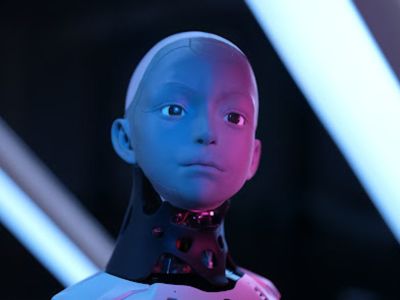
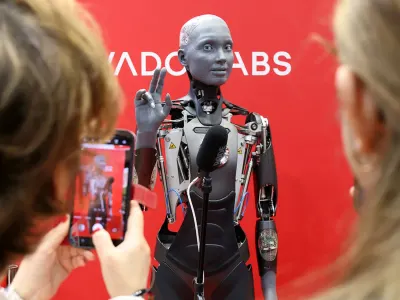
Ameca is a humanoid robot platform by Engineered Arts designed for advanced automation and task execution across industrial applications. The system integrates bipedal locomotion, dexterous manipulation, and autonomous perception capabilities. Built for deployment in manufacturing, research, and service environments, the platform provides autonomous task learning and operational flexibility for diverse real-world applications.

PAL Robotics
REEM-C
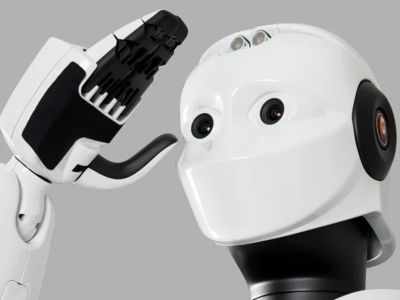
The REEM-C is a full-size bipedal humanoid robot designed for advanced research in robotics, featuring 68 degrees of freedom for human-like mobility and manipulation. Standing at 165 cm tall, it excels in dynamic walking, stair climbing, and autonomous navigation using ROS-based software. Equipped with dual Intel Core i7 processors, stereo cameras, force/torque sensors in ankles, IMUs, and microphone arrays, it supports visual recognition, speech interaction, and whole-body control algorithms. Each arm offers 7 DOF with 1 kg hand payload (stretched) or up to 10 kg total lift capacity, complemented by 19-DOF hands for dexterous grasping. Powered by a 48V 1225 Wh lithium-ion battery, it operates 3 hours walking or 6 hours standby. Customizable and modular, REEM-C enables studies in human-robot interaction, AI, balancing via ZMP control, and complex tasks like dancing or object handling in indoor environments.

AEI Robot
ALICE 3
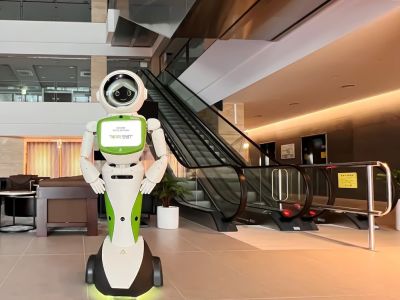
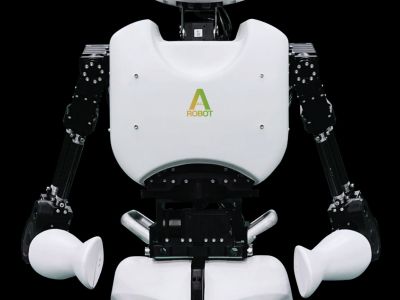
ALICE 3 is a humanoid robot developed by AEI Robot, designed for advanced human-robot interaction and autonomous operation in industrial and service environments. It features AI-powered vision and voice recognition, enabling it to perform face recognition, intelligent voice interaction, and autonomous navigation using LiDAR and advanced mapping. ALICE 3 supports bipedal walking, allowing it to move naturally in human spaces. The robot can guide visitors, conduct security patrols, answer queries, and provide entertainment. With an open SDK and API, ALICE 3 is highly customizable for various business scenarios, including manufacturing, logistics, and customer service. Its modular design and robust sensor suite make it suitable for complex, dynamic environments.

NEURA Robotics
MiPA
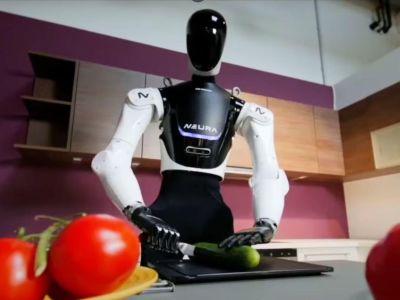
MiPA by NEURA Robotics is an AI-powered personal assistant robot designed for home, care, and workplace environments. It features advanced sensors including force-torque, LiDAR, cameras, and ultrasonic sensors, enabling safe, touchless human detection and real-time obstacle avoidance. MiPA supports multi-language voice commands, gesture control, and customizable touch interfaces. Its modular design allows for flexible expansion with add-ons tailored to specific tasks such as light logistics, item transport, and care assistance. Optimized primarily for indoor use, MiPA adapts to dynamic environments and learns new tasks autonomously, making it suitable for both personal and commercial applications.

Kenan Robotics
X-Man F1
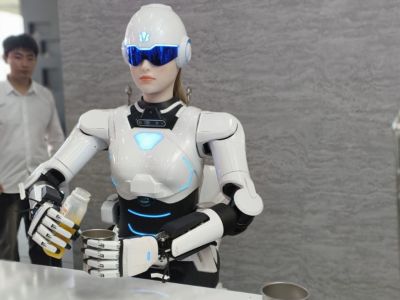
The X-Man F1 is a bipedal humanoid service robot developed by Kenan Robotics, designed to perform human-like mobility and dexterous service tasks in hospitality, healthcare, and entertainment environments. It features fluid, naturalistic gestures and can autonomously execute complex tasks such as preparing beverages, delivering presentations, and interacting with people using multimodal AI and large language models. The robot operates as part of a modular ecosystem, collaborating with specialized robots like the M104 logistics unit and T10 delivery robot to extend its capabilities. Its design emphasizes practical task execution over hype, aiming to integrate seamlessly into real-world service scenarios.

Haier
Hiva Haiwa
The Hiva Humanoid by Haier is a wheeled-base domestic assistant robot standing 165 cm tall and weighing 70 kg, engineered for smart home integration and household chores. With 44 degrees of freedom, it achieves human-like dexterity to reach objects up to 2 meters high, performing tasks like cleaning floors, cooking, ironing clothes, folding laundry, operating washing machines, and managing appliances. Its dexterous hands grip tools and fabrics precisely, while the wheeled mobility ensures smooth navigation in indoor environments. Currently remote-operated for AI training, it connects seamlessly to Haier's smart home ecosystem via wireless networks, enabling coordinated control of IoT devices. Designed as a "housework terminator," Hiva combines advanced manipulation, adaptive task execution, and future autonomy potential, transforming daily living by handling repetitive chores efficiently and safely within human-scale spaces.

Dobot Corp Ltd
Atom
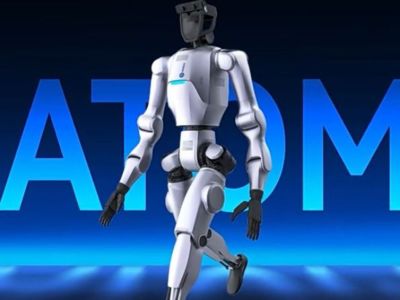
Meet Atom, Dobot's groundbreaking humanoid robot that seamlessly blends precision engineering with intelligent adaptability. Standing at 1.53 meters, Atom boasts 28 degrees of freedom and achieves an impressive ±0.05mm precision, making it adept at delicate tasks. Its innovative straight-knee walking mechanism reduces energy consumption by 42%, enhancing operational efficiency. Powered by Dobot's proprietary ROM-1 AI system and edge computing capabilities, Atom can autonomously adapt to unstructured environments, making it suitable for tasks ranging from industrial automation to customer service. Whether it's preparing meals, delivering documents, or collaborating on assembly lines, Atom is poised to redefine human-robot interaction.

Fourier Intelligence
GR-2
The GR-2 by Fourier Intelligence is a cutting-edge humanoid robot designed to revolutionize human-robot interaction. Standing at 175 cm and weighing 63 kg, it boasts 53 degrees of freedom and 12-DoF dexterous hands equipped with tactile sensors. Powered by seven distinct FSA 2.0 actuators, each joint delivers up to 380 Nm of torque, enabling GR-2 to perform complex tasks with precision. Its swappable battery offers up to 2 hours of runtime, and the robot supports various programming methods, including VR remote control and lead-through programming. GR-2 is ideal for applications in healthcare, research, and industrial automation.

Salesforce
Henry
Henry is an AI-powered physical service robot developed by Salesforce designed to augment enterprise field service operations. It integrates advanced sensors and AI to perform repetitive, dangerous, or hard-to-reach tasks such as infrastructure inspection, inventory management, and remote maintenance. Henry operates autonomously or under remote supervision, leveraging Salesforce’s Agentforce platform for task dispatch and coordination. It enhances workforce efficiency by automating routine physical tasks while seamlessly integrating with enterprise software like Slack and Field Service. Henry’s modular design supports various attachments for specialized tasks, making it adaptable across industries including healthcare, logistics, and manufacturing.

AheadForm
Elf V1 Series
The Elf V1 Series by AheadForm is a highly advanced humanoid robot head designed for emotional intelligence and lifelike human-robot interaction. Featuring 30 artificial facial muscles powered by brushless micro-motors, it delivers smooth, realistic facial expressions and mannerisms. The robot uses a high-precision control system to animate its bionic skin, enabling it to detect and respond to human emotions with low latency. It integrates Large Language Models (LLMs) and Vision-Language Models (VLMs) for real-time learning and adaptive communication. The design emphasizes non-verbal cues, making it suitable for applications such as companionship, customer service, and healthcare. Its modular silicone skin is magnetically attached for easy customization and maintenance.

Xiaomi Robotics Lab
CyberOne
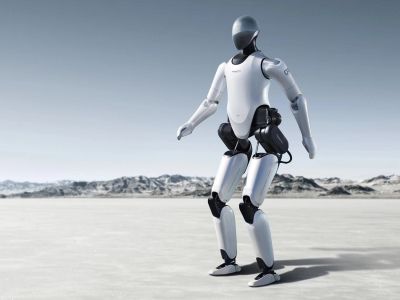
CyberOne is Xiaomi’s inaugural humanoid robot, unveiled in August 2022 as part of its Cyber series, following the quadruped CyberDog. Standing 177 cm tall and weighing 52 kg, CyberOne features a 168 cm arm span and supports 21 degrees of freedom in motion, achieving real-time response speeds of 0.5 milliseconds per degree. Its upper limb joints utilize high-efficiency motors weighing 500 grams, delivering up to 30 Nm of torque, while the hip joints can reach peak torques of 300 Nm. These capabilities enable CyberOne to perform complex, human-like movements with stability and precision. Equipped with Xiaomi's self-developed Mi-Sense depth vision module and AI interaction algorithms, CyberOne can perceive 3D space and recognize individuals, gestures, and expressions. Its MiAI environment semantics recognition engine and vocal emotion identification engine allow it to detect 85 types of environmental sounds and classify 45 human emotions, such as happiness or sadness. This emotional awareness is displayed in real-time on a curved OLED module integrated into its face.

Ant Group
Robbyant R1 (Humanoid Robot Chef)
The Robbyant R1 a Humanoid Robot Chef, part of the R1 series, is designed to perform various tasks such as cooking, serving as a tour guide, sorting medicine, and providing medical consultations. It is equipped with advanced AI capabilities, allowing it to adapt to different environments and tasks. Demonstrations include cooking shrimp and assisting in pharmacies.

Booster Robotics
K1 Humanoid
The K1 Humanoid robot is designed for education, research, and exhibitions. It features a compact body with 22 dynamically controlled joints, enabling precise motion control. The robot is equipped with a 3D depth camera, 9-axis IMU, microphone array, and touch sensors. It supports AI-based vision and voice command processing, obstacle avoidance, and real-time autonomous navigation. The K1 is programmable via ROS and Python.

Unitree Robotics
Unitree H1
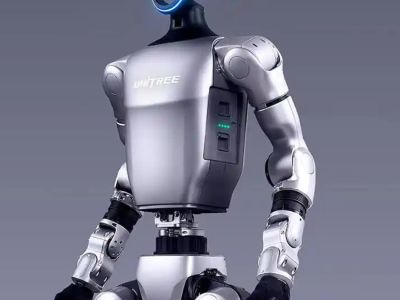
The Unitree H1 is a full-size universal humanoid robot standing about 180 cm tall and weighing approximately 47 kg. It features advanced powertrain technology enabling high agility, speed, and load capacity, with a peak torque density of 189 N.m/kg. The robot can achieve speeds exceeding 3.3 m/s, with potential mobility over 5 m/s. It is equipped with 360° depth sensing through integrated 3D LiDAR and depth cameras, allowing precise environmental perception and autonomous navigation in complex terrains. Designed for industrial, research, and interactive applications, the H1 combines robust construction with flexible bipedal locomotion and human-like articulated arms. Its battery is quickly replaceable, supporting extended operational endurance.

Unitree Robotics
Unitree R1
The Unitree R1 is a developer‑focused humanoid robot standing 121 cm tall and weighing 25 kg. It offers 26 degrees of freedom enabling dynamic motions such as running, cartwheels, handstands, and spin‑kicks. Outfitted with binocular vision, a 4‑mic array, stereo speakers, and an 8‑core CPU/GPU, it supports voice and image recognition via onboard AI. A removable quick‑swap battery delivers about one hour of operation, and OTA firmware updates plus an open SDK make it ideal for research, education, entertainment, and prototyping. Offered at an unprecedented sub‑$6K entry price, it aims to democratize humanoid robotics.

Realbotix
B Series Robot
The B Series Robot is a robotic AI-enabled bust designed for companionship and entertainment. It features 17 motors and 17 degrees of freedom, allowing it to capture subtle expressions with incredible accuracy. Users can choose from pre-designed faces or create fully customized designs. The robot is compatible with various AI platforms and offers multiple facial expressions.

Anywit Robotics
Annie
Annie is a first-generation humanoid robot developed by Anywit Robotics featuring a highly expressive animatronic face with 34 degrees of freedom, surpassing many competitors in facial expressiveness. It supports advanced AI-driven interaction capabilities including gaze tracking, user identity recognition, emotion perception, and autonomous emotional response generation. Annie’s dialogue system is backed by a large language model enabling multilingual speech interaction with voice recognition, semantic understanding, and voice-lip synchronization for realistic conversations. The robot integrates multimodal interaction technology from iFlytek, enhancing speech recognition and cloud-based Q&A. Designed for standardized mass production, Annie is aimed at applications requiring human-like social interaction and expressive communication.

Realbotix
F-Series Robot
The F-Series Robot by Realbotix is a full-bodied humanoid robot designed for advanced human interaction. It features a motorized base and advanced torso mechanics with four additional motors, allowing for realistic human-like movements such as twisting, side-to-side, and forward-to-backward motions. The robot includes a driveable base, enabling it to move within its environment. It also offers 15 facial movements and customizable faces and bodies. The robot is equipped with AI capabilities for personalized interactions and can integrate with various AI platforms.

Galbot Robotics
Galbot G1
Galbot G1 is a cutting-edge humanoid robot designed for commercial and home service applications, featuring advanced embodied artificial general intelligence. It combines high mobility with dexterous dual-arm manipulation, enabling complex tasks such as object grasping with a 95–97% success rate across diverse materials and configurations. The robot is capable of multi-tasking in dynamic environments, interacting with humans, and adapting to various service scenarios. Its AI-driven platform supports continuous learning and real-world deployment in retail, tourism, healthcare, and industrial settings, aiming to set new benchmarks for general-purpose robotics.

AiMOGA Robotics
Mornine
Mornine is a highly advanced humanoid robot developed by AiMOGA Robotics, designed for real-world autonomous operation in dynamic environments such as automotive dealerships and public service venues. It features bipedal locomotion, high-precision autonomous navigation with ±5 cm accuracy, and dynamic obstacle avoidance. Mornine integrates AI-powered 3D vision, reinforcement learning, and multi-language interaction (11 languages) to perform complex tasks like opening car doors autonomously, greeting customers, and delivering presentations. Its design emphasizes human-robot collaboration, safety, and adaptability, making it suitable for retail, logistics, healthcare, and entertainment applications. The robot is fully CE certified for hardware and software safety and cybersecurity, setting a global benchmark in humanoid robotics.

Noetix Robotics
Bumi
Bumi is a compact humanoid robot designed for mass consumer use, focusing on education, family interaction, and programming learning. Standing 94 cm tall and weighing 12 kg, it features bipedal locomotion with stable walking and flexible movements enabled by proprietary algorithms combining imitation and reinforcement learning. Constructed from lightweight composite materials and powered by a self-developed domain controller, Bumi aims to make humanoid robotics accessible and affordable for students, developers, and families. It supports interactive learning and companionship, leveraging a highly localized supply chain for scalability.

LimX Dynamics
Oli
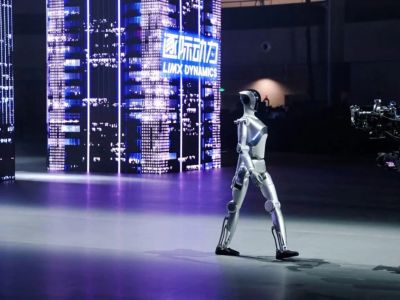
LimX Oli is a full-size humanoid robot built for embodied AI research and real-world applications. Standing about 1.65 m tall and weighing 55 kg, it features 31 degrees of freedom, allowing smooth, human-like motion for walking, bending, and handling objects. Oli’s modular design supports interchangeable grippers, LiDAR, depth cameras, and IMU sensors, making it adaptable for various tasks. With an open SDK and cloud-based software updates, developers can customize control algorithms and integrate AI models for advanced operation. Designed for both research and industry, Oli can perform object manipulation, payload carrying, and tool operations, making it suitable for logistics, manufacturing, and service robotics while advancing human-robot collaboration and embodied intelligence studies.

Enchanted Tools
Mirokaï
Mirokai is a next-generation humanoid robot designed for natural human-robot interaction and social logistics. It features advanced AI with multi-large language model integration for fluid, context-aware conversations and GDPR-compliant face tracking. The robot uses high-speed, torque-controlled actuators for precise and fast manipulation, achieving a 97% grasping success rate. It moves on a patented omnidirectional ball-based mobile platform, enabling smooth navigation in human environments like hotels, airports, and restaurants. Mirokai’s expressive animated face uses a projector and 3D engine for dynamic facial expressions, enhancing emotional connection. It is designed to assist with repetitive tasks, carry loads, and interact safely and intuitively with people.

Leju Robotics
KUAVO-MY
KUAVO-MY is a full-size humanoid robot developed by Leju Robotics for research, industrial experimentation, and advanced service applications. The bipedal platform focuses on dynamic locomotion, whole-body motion control, and intelligent task execution. KUAVO-MY integrates high-precision joint actuators, real-time balance control, and multimodal perception systems to enable stable walking, manipulation, and human-environment interaction. Designed primarily for laboratories, enterprises, and innovation centers, the robot supports autonomous behaviors, teleoperation, and learning-based control through modern robotics software frameworks, making it suitable for robotics research, industrial testing, and intelligent service deployment.

Macco Robotics
Kime v5
Kime v5 is a charismatic, humanoid barista and waiter robot that mixes the charm of a seasoned bartender with the precision of industrial automation. Standing two meters tall, its dual articulating arms pour beer in under 8 seconds and craft cocktails in 30 seconds flat, all while engaging customers in their preferred language. With an antimicrobial exterior and “plug‑and‑play” integration into existing bar equipment, Kime v5 transforms hospitality with speed, hygiene, and theatrical flair.

UBTECH Robotics
Walker X
Walker X by UBTECH Robotics is a next-generation bipedal humanoid engineered for agile, autonomous service and research applications. With 41 degrees of freedom and advanced self-balancing locomotion, Walker X walks steadily across varied indoor surfaces while perceiving its environment through multi-modal sensors. It supports autonomous navigation with U-SLAM and visual intelligence, enabling precise human-robot interaction, object manipulation, and dynamic decision making. Powered by a lithium iron phosphate rechargeable battery with removable packs, Walker X delivers hands-on research value and real-world capability. Its combination of robust hardware and intelligent control makes it a leading humanoid platform for enterprise and innovation.

Pudu Robotics
D9
The PUDU D9 is a full-sized bipedal humanoid robot designed to replicate adult human proportions with a height of 170 cm and weight of 65 kg. It features 42 degrees of freedom enabling fluid, human-like motion, including dual 7-DoF arms equipped with the PUDU DH11 dexterous hand offering 11 degrees of freedom for precise manipulation. The robot can walk at speeds up to 2 m/s, navigate stairs and slopes, and perform complex tasks requiring both strength and delicacy with a payload capacity exceeding 20 kg. Advanced sensors including RGB, RGBD cameras, tactile sensors, and IMU support real-time 3D semantic mapping and autonomous navigation. Powered by AI and reinforcement learning, the D9 adapts quickly to diverse commercial and research applications, making it suitable for service, industrial automation, and exploration in unstructured environments.

Hanson Robotics
Little Sophia
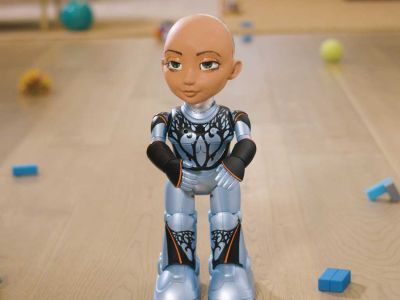
Little Sophia is a 14-inch tall programmable humanoid robot designed as an educational companion for children aged 8 and above to learn STEM, coding, AI, and robotics through interactive play. Developed by Hanson Robotics as the little sister to Sophia, it features a human-like face with skin-like surface, dozens of facial expressions, facial tracking and recognition, voice interaction, and programmability via Blockly and Python on an open-source platform with Raspberry Pi integration. Public specs from manufacturer site and Kickstarter reveal capabilities in walking, talking, singing, games, jokes, and AR selfies via companion app, targeting home education and diversity in STEM. Commercial availability confirmed post-2019 launch with deliveries starting 2022 per Hanson Robotics announcements.

Unitree Robotics
Unitree G1
The Unitree G1 is a game-changer in affordable humanoid robotics. With 23 degrees of freedom and cutting-edge AI, it mimics human motion with surprising fluidity. This compact robot is equipped for dynamic environments—ideal for research labs, educational institutions, and light industrial automation. Whether it’s performing tasks, interacting with people, or exploring tight spaces, the G1 delivers high performance in a sleek, legged package. It's a prime tool for those developing next-gen human-robot collaboration solutions.

AgiBot
AgiBot A2
The AgiBot A2 is a humanoid robot that blends advanced AI with human-like dexterity. Standing at 1.75 meters and weighing 55 kg, it boasts 49+ degrees of freedom, enabling agile and precise movements. Equipped with a 200 TOPS AI computing system, it processes data in real-time, making it adept at tasks ranging from industrial automation to customer service. Its sensor suite includes a microphone array, LiDAR, and RGB-D cameras, allowing it to perceive and interact with its environment effectively. The A2's modular design and advanced capabilities make it a versatile solution for various applications.

AheadForm
Elf-Xuan 2.0
The Elf-Xuan 2.0 by AheadForm is an advanced humanoid robot designed for complex task automation and research deployment. This bipedal platform integrates high precision motion control, dexterous manipulation, and intelligent autonomous behavior. It combines state of the art sensors, real time balance stabilization, and tightly coupled software architectures to operate safely in dynamic environments. Built for versatility, Elf-Xuan 2.0 supports experimentation, industrial workflows, and service scenarios, enabling perception driven interaction, coordinated locomotion, and adaptive task execution across laboratories, factories, and real world settings requiring reliability, flexibility, and scalable humanoid performance for future commercial adoption globally

NEURA Robotics
4NE‑1
4NE‑1 is a next-generation humanoid robot built by Neura Robotics to seamlessly collaborate with humans in industrial and assistive roles. It features full-body sensor coverage, human-like bipedal mobility, AI-based perception, and modular limbs for flexible tasks. The robot uses Neura’s fusion of visual, auditory, and tactile inputs, allowing it to learn, adapt, and safely operate in dynamic environments. It’s engineered for long-term autonomous use and is intended to support workflows in manufacturing, logistics, caregiving, and research.

AEI Robot
AIMY
AIMY is a 150 cm tall autonomous humanoid welcome robot designed for indoor commercial environments. Weighing 44 kg, it offers AI-powered multimodal communication with natural language dialogue driven by large language models such as ChatGPT. The robot integrates an AMD Ryzen 5 7600 CPU and NVIDIA RTX 4060 Ti GPU to handle complex AI workloads. Featuring 23 degrees of freedom, AIMY delivers expressive head and hand gestures. It navigates autonomously using depth, infrared, tracking cameras, and laser sensors, and includes an 8-inch head display and 13.3-inch touchscreen for delivery across hospitality, retail, and healthcare settings.

Promobot
Robo-C2
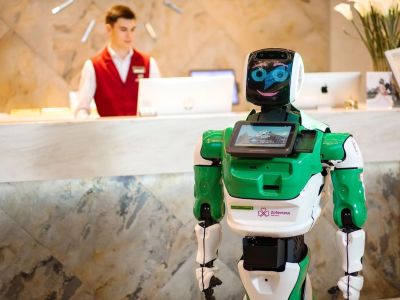
The Robo-C2 by Promobot is an advanced humanoid robot designed for human-like interaction in service environments. Featuring a customizable silicone skin that replicates human facial features, it expresses over 600 microexpressions, including eye movements, blinking, eyebrow raises, and lip articulations for realistic emotions. Mobile arms with 12 degrees of freedom per arm enable gesturing, object manipulation up to 1kg, handshakes, and pointing. Equipped with a 10.1-inch touchscreen, RGB camera, omnidirectional microphone, and dual speakers, it engages in natural conversations, greets visitors, provides product information, and answers FAQs autonomously. Powered by AI voice modules supporting 600+ pronunciations, it remembers individuals and delivers personalized marketing. Ideal for business, museums, banks, expos, and education, Robo-C2 enhances customer engagement, automates routine tasks, and boosts loyalty with its lifelike presence and dynamic stabilization for future bipedal upgrades.

Zhejiang Humanoid Robot Innovation Center
NAVAI Navigator 2
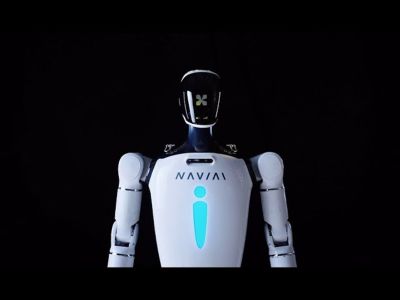
The NAVAI Navigator 2 is a next-generation humanoid robot developed by the Zhejiang Humanoid Robot Innovation Center for interactive and service-oriented tasks. Standing 1.65 meters tall with 41 degrees of freedom, it delivers smooth, human-like motion and precise manipulation. Powered by 275 TOPS of AI computing, it supports semantic navigation, real-time environment processing, and adaptive learning. Its multimodal perception system includes surround-view cameras, depth sensors, force-torque sensing, and touch feedback. Navigator 2 walks stably up to 6 km/h, operates for two hours continuously, and serves applications in healthcare, education, exhibitions, and customer service.

UniX AI
Wanda 2.0
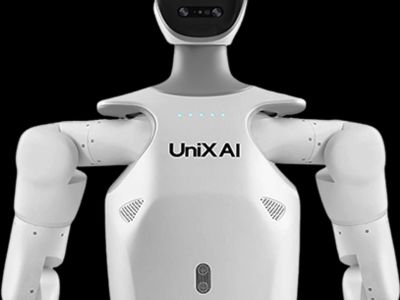
The Wanda 2.0 is an advanced bipedal humanoid robot designed for interactive experiences, research, and intelligent automation in education, commercial, and technological environments. It features a modular architecture with a programmable AI framework, enabling adaptive learning, voice recognition, and realistic gestures. Equipped with UniX AI’s proprietary UniTouch tactile model, Wanda 2.0 can perceive and manipulate diverse objects safely and precisely, from fragile glassware to household items. Its robust hardware includes an 8-DOF bionic arm with harmonic reducers and brushless DC servo motors, supporting complex manipulation tasks. Wanda 2.0 excels in human-robot interaction, offering applications in family education, medical monitoring, customer engagement, and smart automation, making it suitable for universities, robotics labs, and enterprises seeking cutting-edge humanoid robotics solutions.

IntBot
Nylo
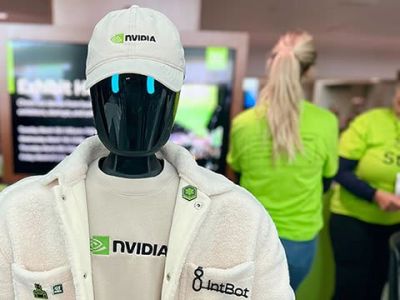
Nylo is a humanoid robot developed by IntBot for service industry applications, featuring advanced AI and an expressive personality to enhance human-robot interaction. Designed for environments such as hospitality, retail, and customer service, Nylo leverages NVIDIA Cosmos for synthetic motion generation and embodied AI, enabling fluid movement, adaptive decision-making, and engaging conversation. The robot supports customizable applications, including order taking, item delivery, and interactive customer engagement. With a focus on embodied AI, Nylo bridges the gap between academic research and real-world deployment, offering a robust platform for developers and enterprises seeking to innovate in service robotics.

UBTECH Robotics
Walker C
Walker C is a full-sized humanoid service robot standing 163 cm tall, built for guiding, reception, and visitor engagement in commercial and public spaces such as malls, airports, and exhibitions. It offers 20 degrees of freedom for fluid human-like motion, including walking, jogging up to 6 km/h, and obstacle avoidance. With AI-powered autonomous navigation using U-SLAM, dual RGB-D and structured-light 3D cameras, and a high-precision IMU, Walker C localizes and interacts via multilingual dialogue and body language. Its lightweight 43 kg build and whole-body motion control ensure safe, efficient operation, easing staff workload globally.

AgiBot
Agibot A2 Lite
The Agibot A2 Lite by AgiBot is an advanced humanoid robot designed for complex task automation. This bipedal platform incorporates cutting-edge motion control, dexterous manipulation, and intelligent autonomous capabilities. It combines state-of-the-art sensors, real-time balance control, and sophisticated software systems for versatile real-world applications in research, industry, and service environments.

Pollen Robotics
Reachy 2
Reachy 2 is an advanced open-source humanoid robot designed for research, education, and AI development. It features dual 7-DoF bio-inspired arms with human-like proportions, enabling precise manipulation and lifting up to 3 kg per arm. Equipped with multiple RGB-D cameras and a Time-of-Flight sensor, it provides stereo vision and depth perception. Reachy 2 supports immersive teleoperation with spatialized audio. Its modular architecture allows alternative grippers and mobile bases, making it adaptable for human-robot interaction, telepresence, and embodied AI research. The robot runs on ROS 2 with Python APIs, supports OTA updates, and enables flexible programming.

Disney Imagineering
Olaf
Olaf is a next-generation humanoid robotic character developed by Walt Disney Imagineering, designed to bring the animated snowman from Frozen to life with unprecedented realism. Utilizing advanced AI, deep reinforcement learning, and a proprietary simulation framework, Olaf moves with fluid, expressive motions that mimic squash-and-stretch animation principles. The robot features a deformable "snow costume" that shifts with movement, fully articulated facial features, and real-time environmental awareness via stereoscopic cameras and spatial AI. Olaf can walk, gesture, interact with guests, and perform complex, stylized movements like the moonwalk, all while maintaining narrative consistency through supervised autonomy. This blend of artistry and engineering sets a new benchmark for emotive, interactive humanoid robots in entertainment.

PAL Robotics
TIAGo Pro
TIAGo Pro is a versatile humanoid mobile manipulator designed for advanced research and industrial applications, featuring bipedal-inspired human-like proportions with a compact, modular design. It integrates 7-DoF torque-controlled arms with Series Elastic Actuators and safety brakes for precise, compliant manipulation. The robot excels in human-robot interaction with expressive facial displays, RGB-D vision, and advanced speech recognition supporting over 20 languages. Its omnidirectional mecanum wheeled base enables agile indoor navigation with 360º LiDAR mapping and SLAM. TIAGo Pro supports ROS 2 for flexible programming and autonomous operation, making it ideal for manufacturing, healthcare, and service robotics where dexterity, safety, and collaboration are critical.

UBTECH Robotics
Walker Tienkung
Walker Tienkung is a full-size, high-performance humanoid robot designed for research, education, and advanced proof-of-concept development. Standing at 172 cm, it features 42 degrees of freedom, enabling fluid, human-like motion and complex manipulation tasks. The robot supports high-speed locomotion up to 10 km/h, with advanced balancing and terrain adaptation for stairs, slopes, and uneven surfaces. Equipped with dexterous five-fingered hands, integrated AI, and multimodal sensors, Walker Tienkung excels in object manipulation, autonomous navigation, and interactive human-robot collaboration. Its open-source architecture and modular design make it ideal for scenario innovation, scientific research, and industrial automation.

Fauna Robotics
Sprout
Sprout by Fauna Robotics is a compact, lightweight humanoid robot designed for safe human interaction and developer-friendly applications in research, education, and commercial development. Standing at 107 cm tall and weighing 22.7 kg, it features 29 degrees of freedom for full-body articulation, including 6 DoF arms with floor-to-countertop reach, 5 DoF compliant legs for low-impact bipedal locomotion, and a 2 DoF neck for expressive gaze. Equipped with NVIDIA Jetson AGX Orin compute, ZED 2i stereoscopic vision, time-of-flight sensors, IMU, microphone array, and a full-color 360-degree facial LED array with motorized eyebrows, Sprout enables out-of-the-box mapping, navigation, voice interaction, walking, kneeling, crawling, jumping, dancing, and fall recovery. Its soft deformable exterior, back-drivable motors, and dedicated safety subsystem ensure collaborative operation in shared human spaces, while swappable batteries provide 3-3.5 hours runtime and LEGO-compatible customization fosters modular innovation in manipulation, task planning, and human-robot interaction.

Realbotix
Melody (M-Series Robot)
The M-Series Robot is a modular upper-body humanoid platform built for conversational interaction, customer service, and experiential installations, featuring interchangeable faces and body panels for rapid customization. It delivers articulated head, neck, torso, and arm motion, with integrated cameras and microphones supporting perception and conversational AI integration. Designed for retail, hospitality, telepresence, and companion use, the platform emphasizes flexibility and scalability. Realbotix positions the M-Series as an AI-agnostic social robot, offered for commercial orders with configurable options, deployment support, and defined delivery timelines to meet diverse business requirements across global markets, industries, environments, partners, worldwide

APLUX
Ultra Magnus
Ultra Magnus is a cutting-edge bipedal humanoid robot developed by APLUX in collaboration with Ti5 Robot and Qualcomm, debuting at CES 2025. Powered by the Qualcomm QCS8550 processor, it enables on-device generative AI for real-time perception, decision-making, and interaction in complex environments. Key features include advanced motion control for human-like gait, visual perception for navigation and manipulation, and natural voice interaction via large language models. Designed for commercial applications, it excels in urban management, logistics, and human-robot collaboration with seamless embodied intelligence. The robot's fusion architecture operating system integrates edge AI for efficient task execution, such as object handling, path planning, and user intent recognition, making it versatile for indoor and outdoor settings with stable bipedal locomotion on varied terrain.

Zeroth
Jupiter
Zeroth Jupiter is a full-size bipedal humanoid robot engineered for real-world task execution in dynamic human environments. Standing at 1.65 meters, it combines autonomous navigation with teleoperation capabilities, enabling seamless transitions between independent operation and remote control for precision tasks. Key features include advanced motion control for natural bipedal walking, stair climbing, and obstacle avoidance; multimodal perception for environmental understanding; and dexterous manipulation for household chores like fetching items, surface wiping, and light assembly. Its integrated safety stack ensures collaborative human-robot interaction with collision detection and emergency stops. Powered by a unified AI stack with dynamic learning in 'Zeroth World' simulation, Jupiter adapts to cluttered indoor spaces, supports voice interaction, and scales via software updates. Designed for homes, research, and light commercial use, it prioritizes reliability, balance recovery, and modular end-effectors for versatile applications from companionship to logistics assistance.

Realbotix
David
David is Realbotix's newest fully modular humanoid companion robot, unveiled at CES 2026, designed for emotional interaction and customization like building blocks. Featuring a magnetically swappable face for quick expression changes, advanced AI vision for face recognition and human emotion interpretation, and conversational AI powered by models like Gemini and ChatGPT, David creates personalized emotional connections with memory systems. Mounted on a remote-controlled wheeled base for mobility without bipedal walking, it emphasizes stationary utility for 24/7 operation in homes, events, or workplaces. Customizable with extra heads, voices, and user AI integration, David's lifelike expressions—joy, surprise, neutral—and social capabilities make it ideal for companionship, greeter roles, training, and engagement, prioritizing reliability over dynamic locomotion.

SoftBank Robotics
NAO
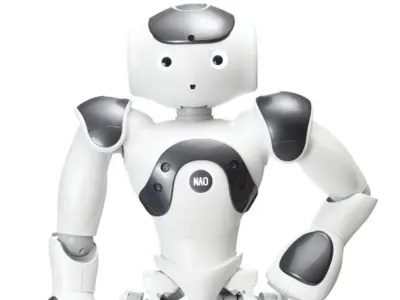
NAO is a compact bipedal humanoid robot renowned for its interactive capabilities in education, research, and healthcare. Standing at 58 cm with 25 degrees of freedom, it features human-like proportions enabling fluid walking, waving, dancing, and sitting motions. Equipped with dual HD cameras for face and object recognition, four directional microphones for speech interaction in 20+ languages, and an array of sensors including sonars, inertial units, force-sensitive resistors, and tactile sensors, NAO perceives its environment intuitively. Powered by NAOqi OS on an Intel Atom processor, it supports programmable behaviors via Choregraphe suite, including fall detection/recovery and balancing. Its LED eyes and expressive gestures foster engaging human-robot interaction, making it ideal for STEM teaching, autism therapy, RoboCup competitions, and social robotics studies. Robust polycarbonate construction ensures durability for repeated use in dynamic settings.

Noetix Robotics
Hobbs W1(Guidance Expert)
The Hobbs W1 (Guidance Expert) by Noetix Robotics is a compact wheeled humanoid service robot optimized for professional environments like reception, retail, education, and corporate spaces. Featuring a lifelike bionic head with expressive facial movements and an interactive chest screen, it delivers immersive human-like interactions through natural gestures, speech recognition, and emotion detection. Equipped with dual 5-DoF robotic arms and 6-DoF dexterous hands, it performs light manipulation tasks such as handing items, pressing buttons, and pick-and-place operations. Autonomous navigation enables mapping and movement in complex indoor spaces for guidance and support duties. Powered by onboard dual GPUs for AI processing, it supports low-latency dialogue and reinforcement learning, blending social engagement with functional utility to assist humans without replacing them, ideal for customer-facing roles requiring safety and reliability.

Noetix Robotics
Hobbs 3 (A Bosom Friend)
Hobbs 3, also known as "A Bosom Friend," is a hyper-realistic bionic humanoid robot specialized in emotional interaction and expressive communication. It is distinguished by its industry-leading bionic head featuring 32 active and 8 passive degrees of freedom, allowing it to replicate over 200 human micro-expressions with "waxwork-level" realism. The skin is crafted from high-polymer platinum silicone to enhance durability and lifelike texture. While the Hobbs series includes wheeled variants (W1), the Hobbs 3 platform is designed for high-fidelity social engagement in reception, elderly care, and education. It utilizes a multimodal collaborative model to synchronize facial expressions, lip movements, and breathing rhythms with conversational context

Osaka University and MIXI
Alter 3
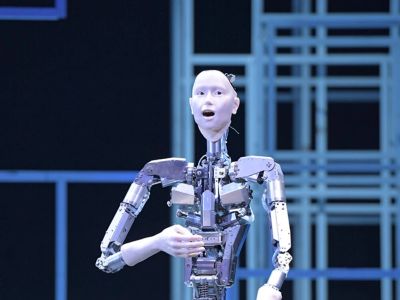
Alter 3 is an advanced humanoid robot engineered for exploring artificial life, expression, and human-robot interaction through dynamic, autonomous movements. Featuring 43 pneumatic actuators, it generates spontaneous gestures, facial expressions, and simulated locomotion like walking or running without bipedal mobility. Integrated with GPT-4 for interpreting verbal instructions into physical actions, it mimics human behaviors, emotions, and even non-human entities such as ghosts or animals. Equipped with eye cameras for visual learning and a vocal mouth for sound production, Alter 3 excels in artistic performances, including orchestra conducting and opera participation. Its exposed mechanical structure emphasizes minimalism, using central pattern generators and neural networks for unpredictable, evolving interactions that challenge perceptions of life and creativity in robotics.

SoftBank Robotics
Pepper
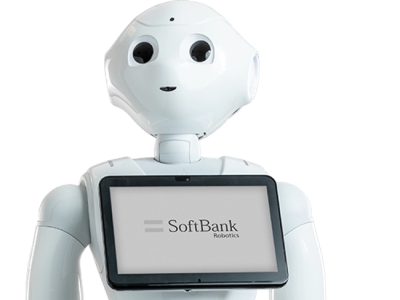
Pepper is a humanoid social robot engineered for human interaction, featuring expressive facial animations via LED eyes and gestures powered by 20 DC motors. Standing at 120 cm with omnidirectional wheeled mobility reaching 3 km/h, it navigates indoor spaces using laser scanners, sonars, and cameras for obstacle avoidance and people detection. Equipped with dual 5MP HD cameras, a 3D depth sensor, four microphones, and touch sensors, Pepper recognizes faces, emotions, and voices in over 20 languages. Its chest-mounted 10.1-inch tablet enables touch interactions, while NAOqi OS supports Python, C++, Java, and Choregraphe for custom behaviors. Ideal for retail, education, healthcare, and hospitality, Pepper engages users through speech synthesis, dialogue engines, and emotional responses, fostering natural collaboration without true bipedal walking but mimicking humanoid proportions for approachability.

AheadForm
Origin M1
The Origin M1 by AheadForm is a hyper-realistic half-body humanoid robot engineered for advanced human-robot interaction research, AI embodiment studies, and premium character installations. Featuring a lifelike face powered by up to 25 brushless micro-motors, it delivers subtle facial micro-expressions, blinking, eye movements, and real-time lip-synchronization for emotionally expressive interactions. Embedded RGB cameras in the pupils enable visual perception and natural head-eye coordination, while integrated microphones and speakers support seamless audio engagement. Mounted on a precision torso with naturalistic upper-body movements, the platform integrates multimodal AI like LLMs and VLMs for authentic emotional presence and environmental responsiveness. Designed as a modular head system, it bridges virtual characters with physical embodiment, ideal for education, healthcare, customer service, and emotional AI development, emphasizing hyper-realism over full mobility.

AheadForm
Origin F1
The Origin F1 by AheadForm is an advanced bionic humanoid robot head specializing in hyper-realistic human-robot interaction. Featuring high-DOF actuation for lifelike facial expressions, moving eyes, blinking, nodding, and synchronized speech, it integrates self-supervised AI algorithms with LLMs and VLMs for real-time perception and emotional conveyance. Constructed with multi-layer soft skin including platinum cure silicone or medical-grade thermoplastic elastomer over compliant foam, it hides mechanical edges for a disturbingly natural appearance. Designed as AI embodiment, it holds eye contact, parses human intentions, and responds conversationally, bridging virtual characters to physical reality. Focused on head-only biomimicry, it empowers AGI with authentic emotions, non-verbal cue understanding, and seamless integration into daily assistance, companionship, and industry applications like research and telepresence

LimX Dynamics
Luna
Luna is a high-performance, general-purpose humanoid robot developed by LimX Dynamics as a refined, performance-oriented evolution of the Oli platform. Standing 165 cm tall, Luna features a sleek, organic "lifestyle" aesthetic with a rounded head and curved silhouette, moving away from the rugged industrial look of its predecessors. It is engineered for social interaction, performance, and high-difficulty tasks, demonstrated by its ability to perform gymnastics-level "illusion turns" and catwalk walks. Luna integrates the COSA Operating System and LimX’s VideoGenMotion (VGM) framework, allowing it to imitate complex human movements directly from video inputs. It is designed for researchers and luxury service sectors requiring an agile, lifelike gait combined with advanced embodied AI reasoning

Sberbank
Green
The Green by Sberbank (Russia) is an advanced humanoid robot designed for complex task automation. This bipedal platform incorporates cutting-edge motion control, dexterous manipulation, and intelligent autonomous capabilities. It combines state-of-the-art sensors, real-time balance control, and sophisticated software systems for versatile real-world applications in research, industry, and service environments. It is powered by Sberbank’s GigaChat AI system, enabling natural language interaction and continuous learning. The robot was publicly demonstrated during Sberbank’s AI Journey conference, where it introduced itself as Russia’s first humanoid robot with embedded artificial intelligence.

Furhat Robotics
Furhat
The Furhat humanoid robot by Furhat Robotics is a social robotics platform optimized for human-robot interaction, featuring a highly expressive back-projected face with customizable masks for lifelike facial animations including smiling, nodding, frowning, and blinking. Mounted on a dynamic 3-DOF head with pan/tilt/roll motion driven by high-speed servos, it supports natural conversations through advanced speech recognition in over 40 languages, text-to-speech synthesis with lip-syncing, and multimodal sensing via RGB camera for user tracking up to 10 people and microphone arrays for far-field audio up to 5m. Designed for stationary desk-top use, Furhat excels in customer service, education, healthcare, and research, enabling experiments in conversational AI, proxemics, and nonverbal cues with low-latency responses under 200ms. Its modular design includes Intel Core i5 compute, WiFi/Ethernet connectivity, and gesture libraries for immersive, human-like engagement without bipedal mobility.

Promobot
Promobot V.4
Promobot V.4 is an advanced service humanoid robot designed for customer interaction and business automation. Standing at human height with expressive robotic arms, a rotating head and torso, and an RGB LED face matrix for lifelike expressions, it communicates via speech synthesis, face recognition, and multilingual voice interaction. Equipped with a 10.1-inch touchscreen, it displays information, scans documents, prints receipts, accepts payments, and issues keycards. Autonomous navigation uses ultrasonic sensors, 3D sensors, LiDAR, and cameras for obstacle avoidance and charging station docking. Dual 7-DOF arms enable gesturing and light manipulation, while the wheeled base supports indoor mobility at 0.3 km/h. Ideal for retail, hospitality, and events, it integrates with third-party software for personalized scripts, promotions, and data collection, operating up to 8 hours per charge without human intervention.

AheadForm
Elf-Eridium
The Elf-Eridium by AheadForm is an advanced bipedal humanoid robot featuring hyper-realistic facial expressions driven by 30+ brushless micro-motors for lifelike eye movements, eyebrow raises, and lip synchronization. Its bionic silicone skin stretches naturally over a high-DOF skeleton, enabling emotional perception via integrated eye cameras and microphones that detect human cues like smiles. Powered by self-supervised AI algorithms, it processes visual, audio, and motion data for intelligent interaction, communication, and learning. With human-like proportions, it supports bipedal walking, precise manipulation, and natural gestures, ideal for human-robot collaboration in service, entertainment, and research. Enhanced head mobility integrates LLMs and VLMs for real-time adaptation, while quiet operation and energy-efficient design ensure seamless indoor use, bridging animatronics and full mobility.

Engineered Arts
Mesmer
Mesmer by Engineering Arts is an advanced animatronic humanoid robot system designed for entertainment, exhibitions, and interactive experiences, featuring lifelike facial expressions, micro-movements, and natural gestures powered by silent, precision motors with individual torque and acceleration control. It includes a modular hardware kit with sensors like cameras, depth sensors, LiDAR, and microphones, integrated with TinMan telepresence software for remote cloud-based control, monitoring, and updates. Users employ intuitive drag-and-drop animation tools on 3D models to create realistic behaviors without coding expertise, supported by photogrammetry rigs for high-fidelity facial replication using soft, durable silicone skin. The 5-axis articulated neck mimics human vertebrae for fluid head movements, full eye tracking with realistic blinks, and embedded cameras enable face tracking and environmental interaction. Emphasizing human safety, non-invasive hardware access protects artificial skin, making Mesmer ideal for creating personalized robotic characters in research, attractions, and telepresence applications with seamless internet connectivity and end-to-end encryption.

Engineered Arts
Ai-Da
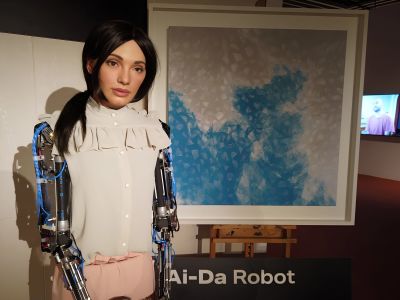
Ai-Da is the world's first ultra-realistic humanoid robot artist, engineered for creative expression through drawing, painting, and performance art. Featuring cameras in her eyes for visual input, advanced AI algorithms process images into coordinates for precise robotic arm movements, enabling pencil sketches, palette-based paintings, and even font design. Her lifelike silicone face supports expressive gestures, fostering human-like interactions that provoke discourse on AI's role in creativity and identity. Collaborating with human teams, Ai-Da embodies trans-humanism, blending machine precision with artistic intuition in exhibitions at venues like the Design Museum and Venice Biennale. With bionic hands and dynamic head movements, she challenges traditional artistry, reflecting technology's integration into society through poetry, sculptures, and architectural concepts for human-robot coexistence.

Xiaomi Robotics Lab
CyberOne 2026 Version
The Xiaomi CyberOne 2026 Version is an advanced bipedal humanoid robot engineered for industrial precision, emotional interaction, and dynamic human environments. Standing at 177 cm with human-like proportions, it features upgraded bionic arms with 83% increased degrees of freedom for complex manipulations, including a thermal sweating system using 3D-printed metal channels for continuous high-load operation without overheating. Equipped with 3D depth vision, it recognizes 85 environmental sounds and 45 human emotions, enabling contextual responses via voice and gesture processing. The robot achieves 3.6 km/h walking and 7.2 km/h running speeds, handles 1.5 kg per arm payloads, and demonstrates exceptional durability with over 150,000 gripping cycles on an 8,200 square mm tactile surface. Powered by custom AI compute and open-source Xiaomi-Robotics-0 model, it excels in factory tasks, research, and collaborative service robotics, balancing stability on uneven terrain with safe human proximity interaction.

1X Technologies
NEO Home Robot
NEO Gamma is 1X Technologies’ latest home-focused humanoid, blending a sleek 3D-printed nylon-knit exterior with advanced AI for natural interaction. At 1.65 m tall, it walks with a realistic gait, squats to pick up objects, and even sits on chairs. Its custom language model enables fluid conversation and task learning, while “Emotive Ear Rings” provide intuitive visual feedback. Whether providing elderly care, handling daily chores, or offering companionship, NEO Gamma adapts to household routines with surprising dexterity and warmth.

DroidUp
Ruina
Ruina by DroidUp is a cutting-edge biomimetic humanoid robot engineered for seamless human-like interactions and versatile applications in healthcare, education, and commercial environments. Standing at human proportions, it features a 92% accurate bipedal gait powered by the Zhuoyide cerebellar motor control model, enabling smooth walking, turning, and stable posture on flat surfaces. Ruina's customizable bionic head delivers micro-expressions like smiling, winking, nodding, and eye contact, complemented by soft, warm skin maintaining 32-36°C body temperature for realistic touch. Equipped with advanced sensors including RGB and stereo cameras, LiDAR, IMU, gyroscope, force, and temperature sensors, it supports autonomous navigation, obstacle avoidance, and embodied AI for perception, reasoning, and action. With modular design for gender and appearance variations, high dexterity hands, and cloud-integrated teleoperation, Ruina excels in collaborative tasks, emotional engagement, and natural gestures, bridging the gap between machines and humans in dynamic settings.

Booster Robotics
K1 Professional Humanoid
The Booster K1 Professional Humanoid is a compact, research-grade bipedal robot standing 95 cm tall with 22 degrees of freedom, enabling dynamic walking, balancing, and whole-body manipulation. Powered by up to 200 TOPS NVIDIA Jetson AGX Orin compute, it supports advanced AI tasks like object recognition, voice interaction, and reinforcement learning via stereo depth cameras, 9-axis IMU, and 6-mic array. Designed for education, embodied AI development, and competitions, it offers full-force-controlled joints with 60N·m peak torque, ROS2 integration, Python SDK, and multimodal control modes including DAMP, PREP, WALK, and CUSTOM. Lightweight at 19.5 kg with aluminum alloy and engineering plastics construction, it provides smooth human-like motions, low-latency edge processing, and portable deployment in a suitcase, ideal for labs, classrooms, and prototyping interactive robotics applications.

Hanson Robotics
Philip K. Dick Android
The Philip K. Dick Android by Hanson Robotics is an advanced humanoid robot designed for complex task automation. This bipedal platform incorporates cutting-edge motion control, dexterous manipulation, and intelligent autonomous capabilities. It combines state-of-the-art sensors, real-time balance control, and sophisticated software systems for versatile real-world applications in research, industry, and service environments.

Hanson Robotics
Professor Einstein
Professor Einstein is a compact, expressive humanoid robot from Hanson Robotics designed for educational entertainment, mimicking Albert Einstein with lifelike facial expressions, gestures, and voice interactions. Standing at 35 cm tall, it features wheeled feet for shuffling movement, 5 motors enabling over 50 facial and body gestures like smiling, frowning, and tongue-sticking, plus arm movements with an articulated pointing finger. Paired with the Stein-O-Matic app for iOS and Android, it delivers interactive science lessons, brain teasers, math quizzes, thought experiments, and games that adapt to user learning styles, rewarding progress with IQ points for unlocks. It supports voice recognition, speech synthesis for casual chats, weather queries, calendar management, and basic Q&A via cloud AI. Portable and rechargeable, it serves as a personal assistant with quirky personality, ideal for children and science enthusiasts to foster curiosity through engaging, humanoid-like interactions without advanced bipedal mobility.

Hanson Robotics
Bina48
Bina48 is a pioneering social humanoid robot developed by Hanson Robotics, modeled after Bina Rothblatt using a digital mindfile compiled from her interviews, memories, values, and beliefs. Featuring lifelike silicone skin, expressive facial movements, and advanced conversational AI, she engages in natural dialogues, recognizes faces and voices, and tracks motion. As an ambassador for mind uploading and cyber-consciousness, Bina48 demonstrates head and eye movements, internet connectivity, and a personality infused with philosophical insights on life, immortality, and superintelligent machines. Though stationary without bipedal locomotion, her upper-body humanoid design emphasizes human-like interaction, blending AI with realistic expressions to explore the boundaries between human and machine sentience in research, entertainment, and transhumanist applications.

Toyota
CUE7
CUE7 is Toyota's advanced research humanoid robot designed to demonstrate precision motion, perception, and AI-driven athletic performance through basketball tasks. Standing 7 feet 2 inches tall and weighing 163 pounds, the robot represents a complete redesign philosophy emphasizing embodied AI over pre-programmed instructions. CUE7 integrates reinforcement learning with model predictive control, enabling dynamic movements including dribbling, shooting, and natural posture transitions. The platform combines real-time visual recognition, distance calculation, and trajectory optimization to execute complex athletic maneuvers with high repeatability. Its lightweight construction, dual-wheel inverted base, and human motion-trained behaviors create surprisingly natural movement patterns that mirror human athletes rather than mechanical systems.

Muks Robotics
Spaceo M1
The Spaceo M1 by Muks Robotics is India's pioneering mass-market social humanoid robot, standing at 167 cm tall with a lightweight 65 kg aluminum frame and polymer covers for durability and approachable aesthetics. Engineered for real-world deployment, it achieves a top speed of 2 m/s (7.2 km/h) via wheeled mobility, enabling smooth navigation in crowded environments like airports, retail spaces, and healthcare facilities. Powered by FusionMax Omni-Modal AI with 275 TOPS (INT8) on a 2048-core NVIDIA Ampere GPU, it supports multilingual conversations, emotion recognition, and domain-specific expertise. Key capabilities include carrying up to 60 kg payloads (100 kg peak) for deliveries, lifelike gestures with 10-fingered hands, advanced perception via RGB-D cameras, 3D LiDAR, and microphone arrays, plus autonomous obstacle avoidance and guided navigation. Ideal for visitor greeting, product demonstrations, queue management, and assistive tasks, it offers 4+ hours of runtime, OTA updates, and open APIs for customization, bridging human-robot interaction gaps affordably.

UBTECH Robotics
Walker C1
Walker C1 is a full-size bipedal humanoid service robot from UBTECH Robotics designed for public-facing interaction, autonomous mobility, and expressive whole-body motion. It combines human-like proportions, stable walking, and spoken communication to operate safely around people in indoor environments such as hospitality, exhibitions, visitor centers, and commercial venues. The platform emphasizes navigation, route following, and obstacle avoidance over heavy-duty manipulation. With a lightweight yet tall frame, multiple degrees of freedom, and integrated vision sensing, Walker C1 is positioned as a demonstration of embodied AI and service robotics. Its design supports natural gestures, approachable interaction, and controlled mobility in crowded spaces where reliability and social presence matter. | (Inferred · Medium confidence · Based on user-provided and third-party references)

Lumos Robotics
NIX
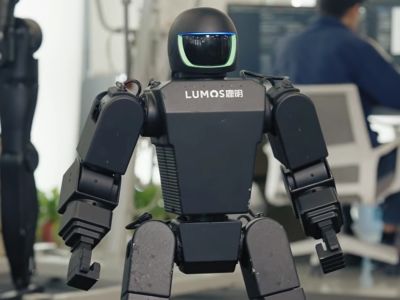
NIX is a compact bipedal humanoid robot designed for expressive motion, research, entertainment, and light interaction tasks. It is listed at 89 cm tall with 21 degrees of freedom, a 331 Wh quick-release battery, and up to 2 hours of runtime, making it a small but capable platform for walking, fast running, dances, and in the higher-end configuration, getting up, push-ups, and pull-ups. The robot’s design emphasizes biomimetic movement, voice interaction through a 4-microphone array, and optional vision hardware such as an RGB camera on the flagship model. With Ethernet and wireless connectivity, plus optional 4G/5G support, NIX appears targeted at developers, enthusiasts, and demo environments needing an agile humanoid form factor.

XPENG
Next‑Gen IRON
Next‑Gen IRON is XPENG’s second-generation full-size humanoid robot, designed to operate in human-centered environments with lifelike motion and high dexterity. It features a human-like spine, bionic muscles, flexible synthetic skin, and a 3D curved head display, giving it a more natural appearance and expressive interaction than earlier industrial robots. The robot is powered by XPENG’s in-house AI stack, including multiple Turing AI chips and a vision-language-action model, enabling conversation, walking, and task-oriented behavior. Its dexterous hand design and advanced perception make it suitable for reception, guidance, inspection, and service scenarios.

Leju Robotics
KUAVO 5
KUAVO 5 is a full-sized modular humanoid robot from Leju Robotics designed for industrial, service, and research use. It emphasizes practical deployment through interchangeable locomotion and end-effector options, including bipedal walking and a wheel-leg variant for smoother indoor mobility. Reported specifications place it around 173 cm tall and 63.5 kg, with a one-hour walking endurance and rapid recharge. The platform is built for dexterous manipulation, multi-terrain movement, and remote or autonomous operation, making it suitable for logistics, factory handling, demonstration, and human-facing service tasks. Its modular architecture and embodied-AI orientation suggest a focus on flexibility, maintainability, and scenario-specific customization rather than a single fixed task.

Figure AI
Figure 03
Figure 03 is a general-purpose humanoid robot designed specifically for home environments, capable of performing household tasks such as laundry, cleaning, and dishwashing autonomously. It features advanced tactile fingertip sensors that detect forces as small as three grams, enabling delicate manipulation of fragile and irregular objects. The robot is equipped with a palm camera and soft textiles covering to enhance safety and maneuverability in tight spaces. It uses the Helix AI system for pixel-to-action learning, allowing it to adapt to unpredictable, ever-changing home layouts. Figure 03 is lighter and smaller than its predecessor, with improved battery safety and wireless charging capabilities, making it a practical assistant for everyday living.

UBTECH Robotics
Cruzr Y1
The Cruzr Y1 is UBTECH Robotics' advanced industrial wheeled humanoid robot engineered for high-load tasks in dense workshop environments. It features a symmetrical body with bidirectional bending capabilities, allowing rotation within tight 0.8m passages. Equipped with harmonic joint arms, the robot delivers sub-millimeter precision and handles payloads up to 15kg across a 1.8m workspace. Its safety perception system integrates LiDAR, depth cameras, ToF sensors, and IMUs across the head, wrists, and chassis for 360° obstacle avoidance. Powered by D-Robotic's S100P & S600 ADAS chips, the Y1 sustains over 4 hours of full-load operation with auto-charging and quick battery swap support for continuous 24-hour shift work.

Zeroth
Sean
Sean is a compact, functional humanoid robot engineered by Zeroth Robotics for consistent and stable handling in regulated environments. Standing at 155cm tall, it prioritizes practical utility over anatomical resemblance, featuring streamlined three-finger grippers optimized for safe human interaction and effective grabbing of everyday objects. Sean operates with a maximum speed of 3km/h and can handle payloads up to 3kg per arm. Its reliability stems from an HD-4K vision system paired with onboard edge AI computing, enabling autonomous decision-making. The robot’s structure combines aluminum alloy with composite panels for durability. Designed for research, AI development, home assistance, and retail applications, Sean represents a pragmatic step toward scalable humanoid structures, though it is not yet available for commercial purchase.

AKIN Robotics
AKINCI-5
AKINCI-5 is Turkey’s first industrial humanoid robot, engineered by AKIN Robotics under AKINSOFT to operate in demanding environments like factories, warehouses, and mining sites. Built on years of iteration from prototypes AKINCI-2 and AKINCI-P, it features AI-supported walking, dynamic balance, and human-like interaction capabilities. The robot showcases remarkably fluid and balanced locomotion, a critical engineering milestone for bipedal systems. Currently in testing and demonstration phases, AKINCI-5 targets manufacturing, logistics, and heavy industry applications. Its design emphasizes robustness, adaptability, and autonomous navigation, positioning it as a competitive entry in the global humanoid robotics race for industrial automation.

ROTAKU
Domo
Domo is a compact, developer-focused humanoid robot engineered by ROTAKU for embodied AI research, locomotion policy training, and whole-body control experiments. Standing approximately 90 cm tall with a weight of 20 kg, it features 23 degrees of freedom and delivers 70 Nm of motor torque, enabling dynamic bipedal walking and manipulation tasks. The platform supports reinforcement learning, imitation learning, and sim-to-real workflows, with optional NVIDIA Jetson Orin NX compute, VR-based teleoperation, and dexterous hand attachments. Designed for labs, universities, and startups, Domo is not a consumer home robot but a scalable research platform for testing AI-driven physical behaviors in real-world environments.

Faraday Future
FF Master
The FF Master is an athletic, human-scale embodied AI humanoid robot designed for adaptive interaction, educational support, and assistance in indoor environments. Standing compact at 131 cm, it features 25 to 30 degrees of freedom (excluding hands) and a peak torque of 120 N·m, enabling dynamic motion for walking, climbing stairs, and navigating uneven terrain. Powered by a swappable 500 Wh battery, it offers approximately 2 hours of runtime per charge with a rapid 1.5-hour charging time. The robot integrates expressive AI with visual SLAM navigation, Wi-Fi/Bluetooth connectivity, and a magnesium-aluminum-polyurethane composite body. Tailored for family fun to professional development, the FF Master supports teleoperation and learned behaviors, making it a versatile companion for research, entertainment, and interactive learning.