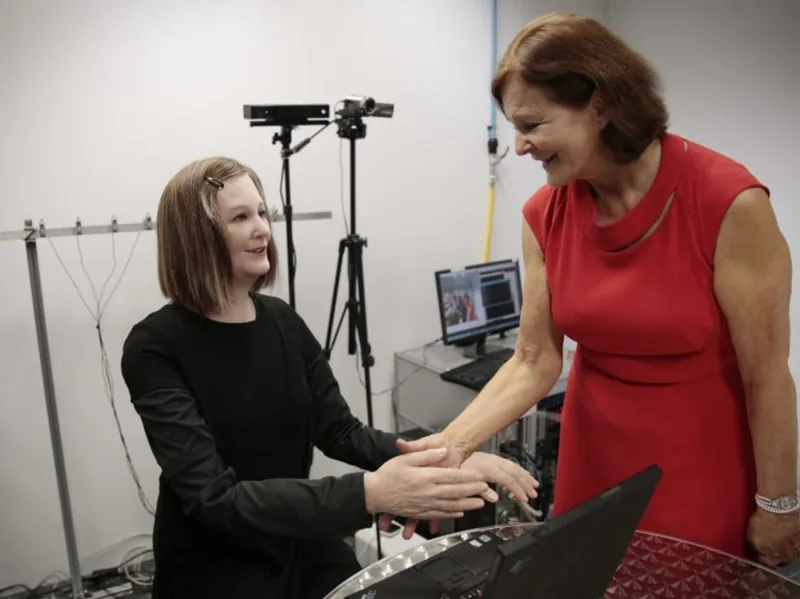
Nadine
Last updated:
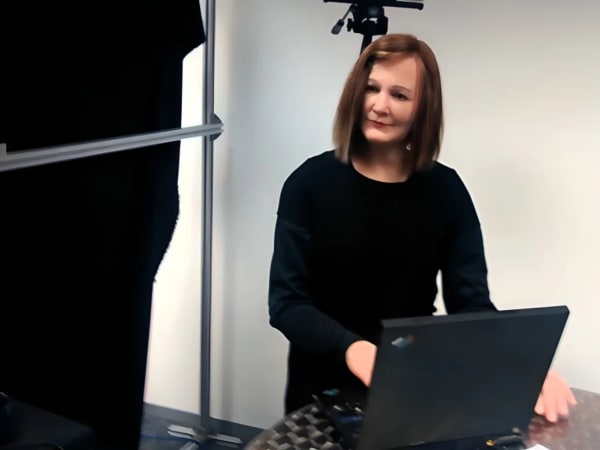
Nadine is a hyper-realistic humanoid social robot modeled after her creator, featuring 27 degrees of freedom for expressive facial and upper-body gestures. She combines multi-lingual conversational AI, memory recall, and emotion simulation to serve as an intuitive receptionist, companion, and research tool in human-robot interaction studies. Nadine operates continuously on AC power and integrates advanced perception systems, enabling real-time personality adaptation and natural interaction.
Quick Overview & Key Facts
Nadine is a humanoid robot made by Nanyang Technological University (NTU), Singapore in Singapore, launched in 2015 and built for conversational AI dialogue, facial affective expression, and visitor recognition. Its estimated price is Not publicly disclosed (Research-only platform; approx. value exceeds USD 250,000 including proprietary cognitive software and bionic skin). Featured in “Nadine Social Robot Integrates Large Language Models 2026” and “NTU Unveils Nadine, Revolutionizing Social Robotics Interaction”.
- Dimensions
- 170 cm (Height) x 55.1 cm (Width) x 88.6 cm (Depth) (for seated/standing assembly)
- Weight
- 35 kg
- Mobility
- Stationary / Seated (Social android)
- Operating environment
- Indoor only; 18–30 °C; 45–60% relative humidity
What Can Nadine Do?
Core operational tasks and activities demonstrated or performed by Nadine.
Real-World Applications of Nadine
Industries, working environments, and deployment suitability for Nadine.
Nadine Capabilities
Inherent physical, perceptual, and cognitive abilities built into Nadine.
Download Media Cards
Story CardExport high-resolution story cards summarizing Nadine's operational tasks, real-world applications, and capabilities.
Image Gallery
Below images are from Nanyang Technological University (NTU), Singapore's official sources
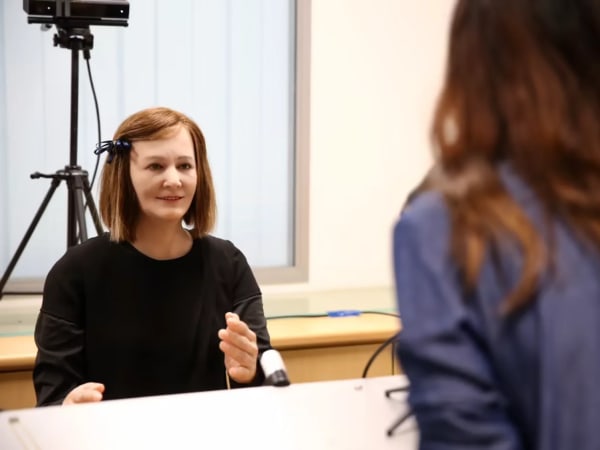
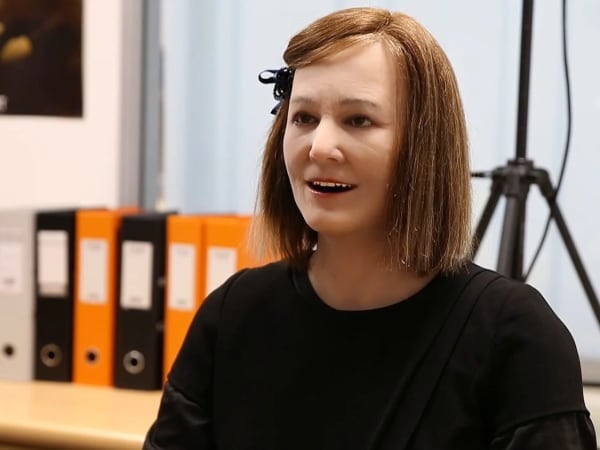
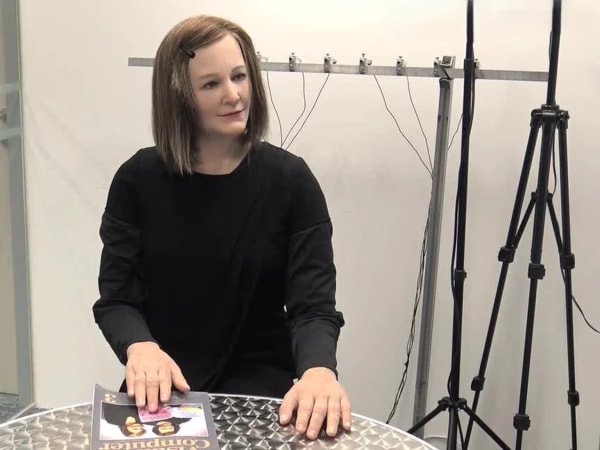
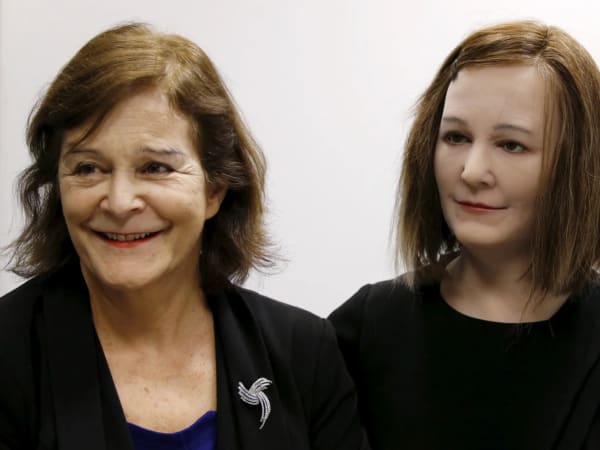
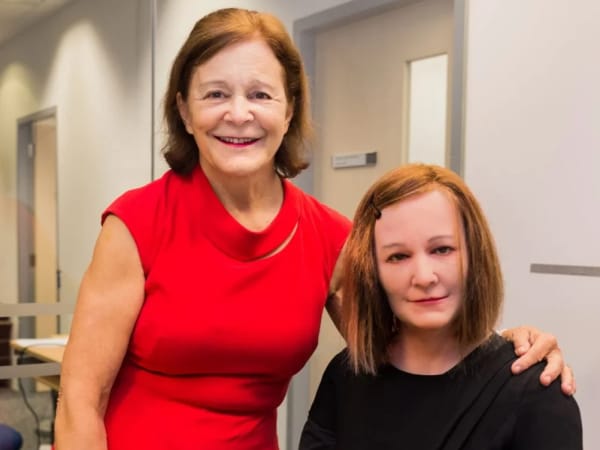
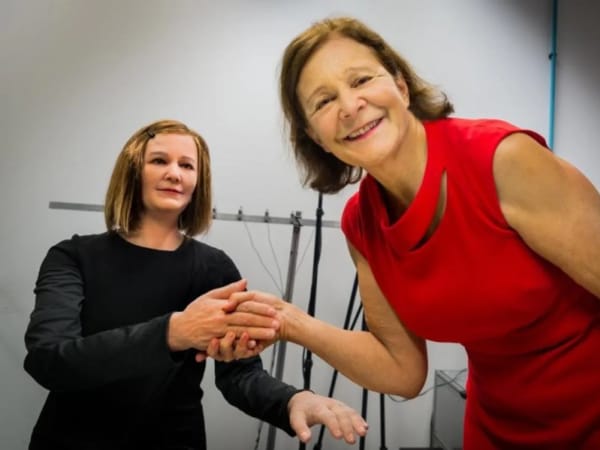
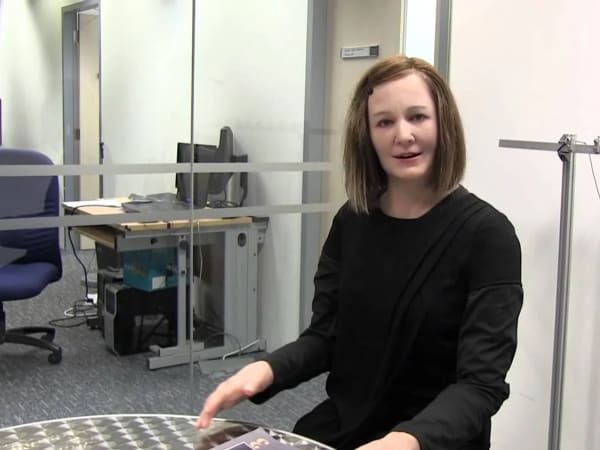
Review Videos
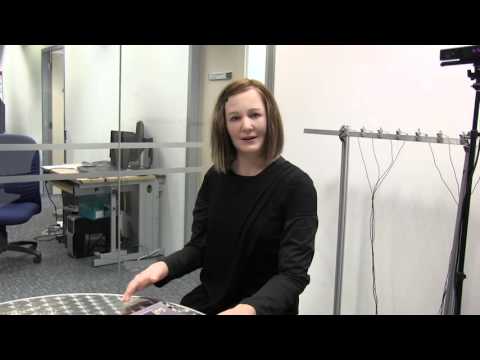
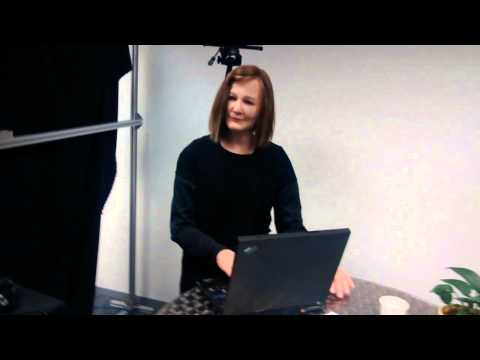
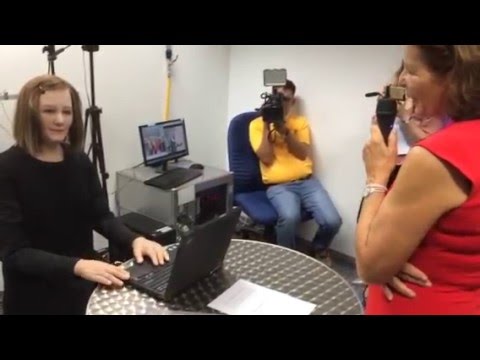
Watch expert reviews and demonstrations of this robot

Robot Specifications
Values without a Confirmed badge are compiled from public sources and may not be manufacturer-verified.
Not yet published by Nanyang Technological University (NTU), Singapore: warranty terms, safety certifications, EMC compliance, IP rating, noise level, expected lifespan, maintenance schedule, firmware version and 7 more.
Robot Timeline
Key milestones in this robot's development and rollout
NTU Singapore unveils Nadine, a social humanoid modelled on Professor Nadia Magnenat Thalmann, working as a receptionist at the university.
Source: UPI ↗
Nadine is exhibited at the ArtScience Museum in Singapore and interacts with more than 100,000 visitors.
Source: Wikipedia ↗
Nadine begins work as a customer service agent at AIA Insurance in Singapore.
Source: Wikipedia ↗
Nadine spends six months at the Bright Hill Evergreen Home in a study of humanoid robot interaction with elderly residents, including people with dementia.
Source: Wikipedia ↗
Latest News About Nadine
Stay updated with the latest articles and developments
More Humanoid Robots
Discover more robots in the same category


Robots From Other Categories
Discover complementary robots from different categories that work well together


Frequently Asked Questions
Get answers to common questions about this robot
Q1. What is Nadine, and what problem is it designed to solve?
Nadine is a humanoid social robot developed at Nanyang Technological University (NTU), Singapore, modeled after Professor Nadia Magnenat Thalmann. It is designed to provide companionship and assistive interactions for individuals with special needs, such as the elderly or those requiring social support.
Q2. What are the main capabilities and key features of Nadine?
Nadine features facial recognition, natural language processing in multiple languages, emotion simulation through gestures and expressions, and memory of prior interactions. Its architecture includes perception, processing, and interaction layers for context-aware responses.
Q3. Who is Nadine built for, and which industries can benefit from it?
Nadine is built for users needing social assistance, including people with special needs, the elderly, and office environments. It applies to healthcare, education, customer service, and assistive roles like reception or personal coaching.
Q4. Is Nadine a commercial product or still a research prototype?
Nadine originated as a research platform developed at NTU, with hardware from Kokoro in Japan since 2013. Software development continues at institutions including the University of Geneva, positioning it as an advanced research prototype.
Q5. Is Nadine currently available for purchase, and when is it expected to ship?
As of 2026, Nadine remains a research and demonstration platform, not listed for commercial purchase. No public shipping timelines have been announced by developers.
Q6. How does Nadine actually work in real-world environments?
Nadine uses cameras, microphones, and sensors for perceiving users' faces, emotions, gestures, and speech. It processes inputs via dialog, affective, and memory modules to generate verbal and nonverbal responses, maintaining eye contact and context.
Q7. When was Nadine announced or officially launched?
Nadine's hardware was created by Kokoro, Japan, in 2013, with software developed at NTU, Singapore. It has been presented in research contexts and events, including the UNDRR Global Platform in June 2025.
Q8. How is Nadine different from other robots in the same category?
Nadine emphasizes social intelligence with human-like skin, hair, realistic hands, and a programmable personality that adapts demeanor based on interactions. It remembers personal facts and simulates emotions, distinguishing it in companion robotics.
Q9. Does Nadine require additional development or customization after purchase?
As a research platform, Nadine's generic architecture supports scenario-specific customization through its modular perception, processing, and interaction layers. Developers at NTU have designed it for adaptation to various applications.
Q10. What is the future roadmap or planned upgrades for Nadine?
Developers have integrated large language models and continue software enhancements at the University of Geneva. Plans include expanded demonstrations in assistive and social scenarios, with ongoing research into improved interaction capabilities.
Rating and Reviews
Share your experience and help others decide!
Loading...
User Reviews
No user reviews. Be the first one to review!
User Comments (No Login needed)
Share your thoughts, experiences, or questions about this robot.
Comments appear after moderator review.