🏭 Application Directory

Robots Used in Elder care

Explore commercial, industrial, and experimental robots deployed in elder care workflows.

Showing 54 of 54 robots in this application field
🔍
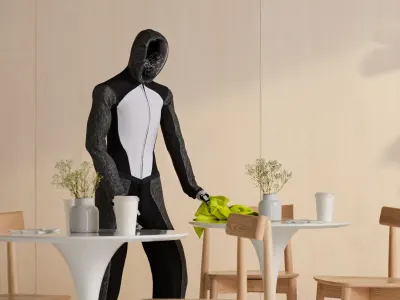
NEO Beta
humanoid

1X Technologies

NEO Beta

(3.0)

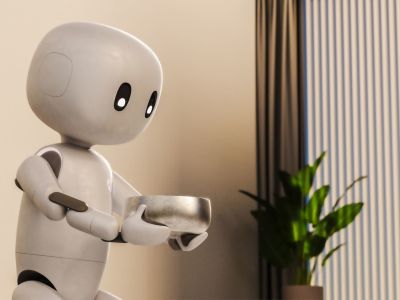
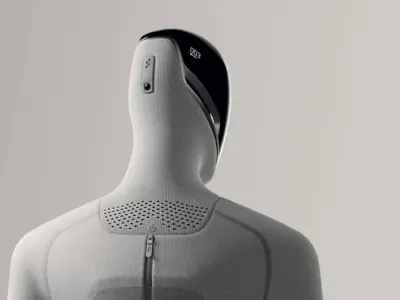
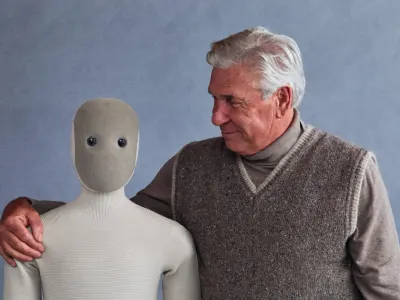
NEO Beta is a home-focused humanoid standing 1.65 m tall and weighing 30 kg, engineered to blend seamlessly into domestic life. It walks at up to 4 km/h and sprints at 12 km/h, handling payloads of up to 20 kg. Powered by tendon-driven actuators and advanced AI, it performs chores, fetches items, and interacts via voice and touchscreen. Its modular design, soft exterior, and cloud-connected learning enable continuous feature updates and personalized behavior adaptations.

$20,000View Specs →
Sophia
humanoid

Hanson Robotics

Sophia

(4.0)

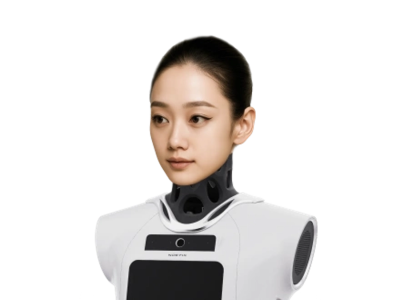
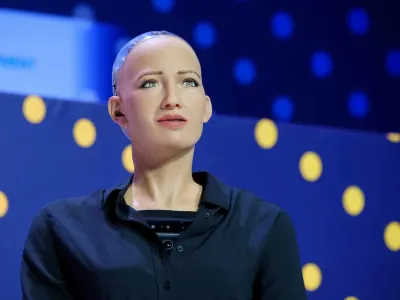
Sophia is Hanson Robotics’ iconic social humanoid robot, unveiled in 2016 and famed for her lifelike expressions and conversational abilities. She combines advanced neural‑network AI, natural language processing, and computer vision to recognize faces, understand emotions, and engage in dialogue that feels remarkably human. Designed as a research and public‑engagement platform, Sophia has appeared at the UN, talk shows, and global conferences, and holds the distinction of being the first robot granted citizenship. Her expressive LED “eyes,” animatronic facial mechanisms, and cloud‑connected learning system illustrate a playful yet profound leap in human‑robot interaction.

$50,000 - $100,000 (Based on Hanson Robotics Pricing Structure)View Specs →
Aria - Robot Girlfriend
humanoid

Realbotix

Aria - Robot Girlfriend

(4.0)

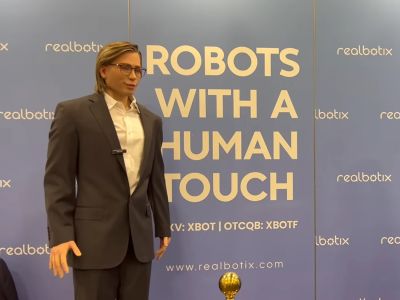
Aria is a hyper-realistic humanoid companion robot designed for interactive communication and AI-powered companionship. Featuring a lifelike face with 17 independent motors, she replicates subtle human expressions and engages users through deep-learning AI. Built on a wheeled base, she navigates indoor environments smoothly, while her modular design allows for interchangeable faces and voices. Aria is tailored for premium personal use, hospitality, and research, combining aesthetic realism with technical versatility.

USD 135,000 (modular) to USD 175,000+ (full-body)View Specs →
Nadine
humanoid

Nanyang Technological University (NTU), Singapore

Nadine

(4.0)

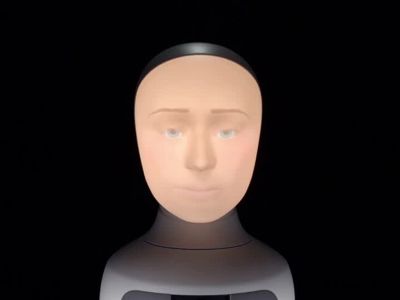
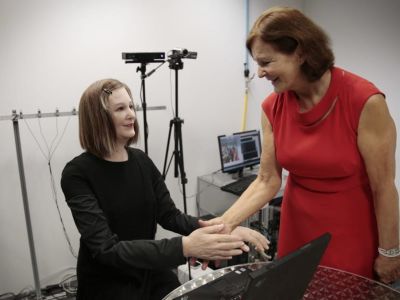
Nadine is a hyper-realistic humanoid social robot modeled after her creator, featuring 27 degrees of freedom for expressive facial and upper-body gestures. She combines multi-lingual conversational AI, memory recall, and emotion simulation to serve as an intuitive receptionist, companion, and research tool in human-robot interaction studies. Nadine operates continuously on AC power and integrates advanced perception systems, enabling real-time personality adaptation and natural interaction.

Not publicly disclosed (Research-only platform; approx. value exceeds USD 250,000 including proprietary cognitive software and bionic skin)View Specs →
Ameca
humanoid

Engineered Arts

Ameca

(4.0)

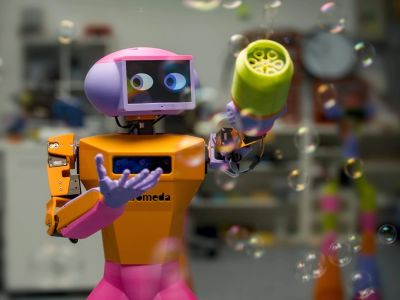
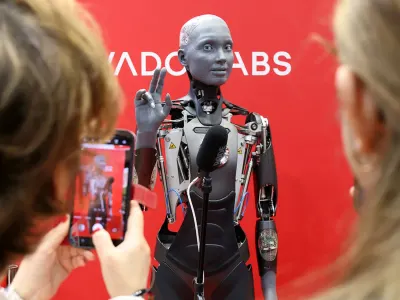
Ameca is a humanoid robot platform by Engineered Arts designed for advanced automation and task execution across industrial applications. The system integrates bipedal locomotion, dexterous manipulation, and autonomous perception capabilities. Built for deployment in manufacturing, research, and service environments, the platform provides autonomous task learning and operational flexibility for diverse real-world applications.

US$250000-500000View Specs →
MiPA
humanoid

NEURA Robotics

MiPA

(4.0)

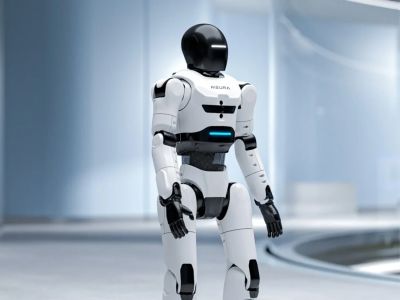
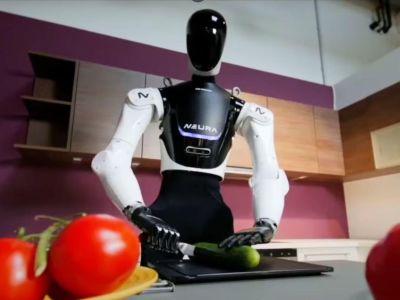
MiPA by NEURA Robotics is an AI-powered personal assistant robot designed for home, care, and workplace environments. It features advanced sensors including force-torque, LiDAR, cameras, and ultrasonic sensors, enabling safe, touchless human detection and real-time obstacle avoidance. MiPA supports multi-language voice commands, gesture control, and customizable touch interfaces. Its modular design allows for flexible expansion with add-ons tailored to specific tasks such as light logistics, item transport, and care assistance. Optimized primarily for indoor use, MiPA adapts to dynamic environments and learns new tasks autonomously, making it suitable for both personal and commercial applications.

USD 15,000 - 25,000 for the base Home modelView Specs →
CloiD
humanoid

LG Electronics

CloiD

(4.0)

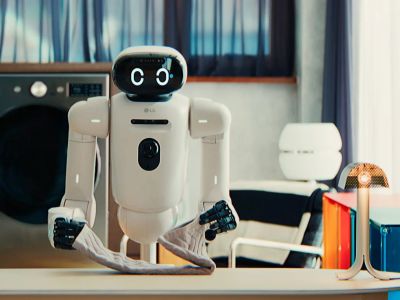
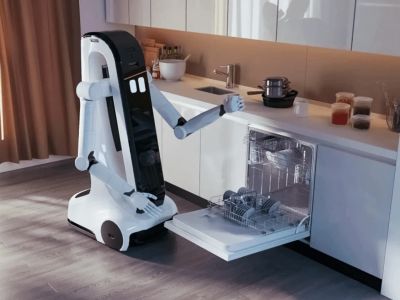
LG CLOiD is an AI-powered humanoid robot designed for household automation, featuring a wheeled base for stable indoor navigation, adjustable torso, and dual articulated arms with 7 degrees of freedom each for precise manipulation. Equipped with a head unit serving as an AI hub, it integrates cameras, sensors, display, speakers, and voice-based generative AI to enable natural human interaction via speech, gestures, and facial expressions. Core technologies include Vision Language Model (VLM) for interpreting images into language and Vision Language Action (VLA) for converting visuals into physical tasks like folding laundry, loading dishwashers, organizing refrigerators, and assisting with cooking. It learns user patterns through LG ThinQ platform connectivity, proactively handling chores to create a zero-labor home environment. With 5-finger hands for dexterous gripping, low center of gravity for safety around families, and self-driving tech from LG vacuums, CLOiD adapts to kitchens, laundry rooms, and living spaces, reducing daily effort while providing emotional comfort.

Likely $20,000–$40,000 based on the pricing of other LG modelsView Specs →
Hiva Haiwa
humanoid

Haier

Hiva Haiwa

(4.0)

The Hiva Humanoid by Haier is a wheeled-base domestic assistant robot standing 165 cm tall and weighing 70 kg, engineered for smart home integration and household chores. With 44 degrees of freedom, it achieves human-like dexterity to reach objects up to 2 meters high, performing tasks like cleaning floors, cooking, ironing clothes, folding laundry, operating washing machines, and managing appliances. Its dexterous hands grip tools and fabrics precisely, while the wheeled mobility ensures smooth navigation in indoor environments. Currently remote-operated for AI training, it connects seamlessly to Haier's smart home ecosystem via wireless networks, enabling coordinated control of IoT devices. Designed as a "housework terminator," Hiva combines advanced manipulation, adaptive task execution, and future autonomy potential, transforming daily living by handling repetitive chores efficiently and safely within human-scale spaces.

USD 50,000 - 70,000- Based on the pricing of similar modelsView Specs →
Elf V1 Series
humanoid

AheadForm

Elf V1 Series

(4.0)

The Elf V1 Series by AheadForm is a highly advanced humanoid robot head designed for emotional intelligence and lifelike human-robot interaction. Featuring 30 artificial facial muscles powered by brushless micro-motors, it delivers smooth, realistic facial expressions and mannerisms. The robot uses a high-precision control system to animate its bionic skin, enabling it to detect and respond to human emotions with low latency. It integrates Large Language Models (LLMs) and Vision-Language Models (VLMs) for real-time learning and adaptive communication. The design emphasizes non-verbal cues, making it suitable for applications such as companionship, customer service, and healthcare. Its modular silicone skin is magnetically attached for easy customization and maintenance.

$50,000 - $80,000 (Estimated based on similar advanced humanoid robots)View Specs →
Robbyant R1 (Humanoid Robot Chef)
humanoid

Ant Group

Robbyant R1 (Humanoid Robot Chef)

(4.0)

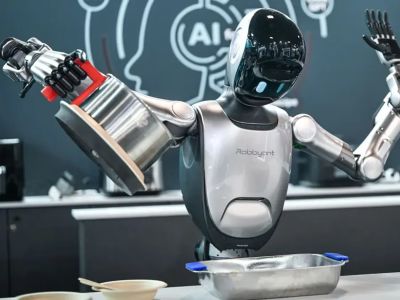
The Robbyant R1 a Humanoid Robot Chef, part of the R1 series, is designed to perform various tasks such as cooking, serving as a tour guide, sorting medicine, and providing medical consultations. It is equipped with advanced AI capabilities, allowing it to adapt to different environments and tasks. Demonstrations include cooking shrimp and assisting in pharmacies.

Not disclosedView Specs →
B Series Robot
humanoid

Realbotix

B Series Robot

(4.0)

The B Series Robot is a robotic AI-enabled bust designed for companionship and entertainment. It features 17 motors and 17 degrees of freedom, allowing it to capture subtle expressions with incredible accuracy. Users can choose from pre-designed faces or create fully customized designs. The robot is compatible with various AI platforms and offers multiple facial expressions.

USD 10,000 – 20,000+ (Varies based on custom face sculpting and features)View Specs →
F-Series Robot
humanoid

Realbotix

F-Series Robot

(4.0)

The F-Series Robot by Realbotix is a full-bodied humanoid robot designed for advanced human interaction. It features a motorized base and advanced torso mechanics with four additional motors, allowing for realistic human-like movements such as twisting, side-to-side, and forward-to-backward motions. The robot includes a driveable base, enabling it to move within its environment. It also offers 15 facial movements and customizable faces and bodies. The robot is equipped with AI capabilities for personalized interactions and can integrate with various AI platforms.

USD125,000 (starting price; configuration-dependent)View Specs →
Moxi
humanoid

Diligent Robotics

Moxi

(4.0)

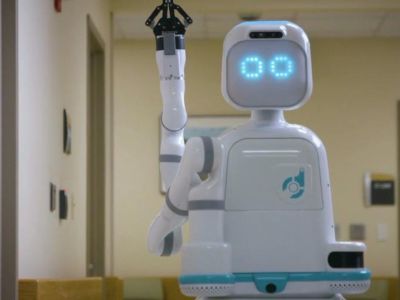
Moxi is a humanoid robot designed specifically for hospital environments to assist clinical staff by automating non-patient-facing tasks. It features a robotic arm with a gripper capable of picking up and delivering medical supplies, lab samples, medications, and personal belongings. Moxi autonomously navigates hospital hallways using advanced sensors and AI, avoiding obstacles and interacting safely with people. It supports workflow automation, reducing nurses’ time spent on menial tasks and improving operational efficiency. Moxi’s social intelligence includes LED eyes for communication and voice lines to alert staff, making it a collaborative and friendly teammate in healthcare settings. Its software is adaptable to evolving hospital needs, enabling dynamic task additions.

Robot-as-a-service subscription modelView Specs →
Punyo
humanoid

Toyota

Punyo

(4.0)

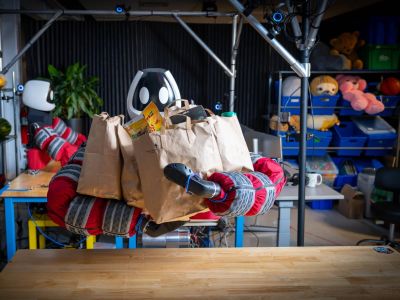
Punyo is a soft humanoid robot developed by Toyota Research Institute for whole-body manipulation research, emphasizing safe human-robot interaction in assistive scenarios like aging in place. Its upper body features compliant materials covering hands, arms, and chest, integrated with tactile sensors and air-filled bladders for adaptive stiffness and force sensing during contact-rich tasks. Underneath lies a rigid structure with two precise robot arms, torso frame, and waist actuator, enabling hybrid precision and compliance. Punyo's "paws"—inflatable latex bubbles with internal cameras detecting dot pattern deformations—facilitate gripperless grasping of bulky objects by hugging to the torso or slinging onto shoulders. Trained via teleoperation, diffusion policy learning from demonstrations, and example-guided reinforcement learning, it handles groceries, furniture, dishwashers, and doors. With a wheeled base for mobility, ROS2 support, and focus on household chores, Punyo prioritizes safety, dexterity, and natural movements over rigid manipulation.

Request Quote (Currently a Research Platform; not for commercial retail)View Specs →
Mirokaï
humanoid

Enchanted Tools

Mirokaï

(4.0)

Mirokai is a next-generation humanoid robot designed for natural human-robot interaction and social logistics. It features advanced AI with multi-large language model integration for fluid, context-aware conversations and GDPR-compliant face tracking. The robot uses high-speed, torque-controlled actuators for precise and fast manipulation, achieving a 97% grasping success rate. It moves on a patented omnidirectional ball-based mobile platform, enabling smooth navigation in human environments like hotels, airports, and restaurants. Mirokai’s expressive animated face uses a projector and 3D engine for dynamic facial expressions, enhancing emotional connection. It is designed to assist with repetitive tasks, carry loads, and interact safely and intuitively with people.

US $30,000+ monthly maintenance feesView Specs →
Walker X
humanoid

UBTECH Robotics

Walker X

(4.0)

Walker X by UBTECH Robotics is a next-generation bipedal humanoid engineered for agile, autonomous service and research applications. With 41 degrees of freedom and advanced self-balancing locomotion, Walker X walks steadily across varied indoor surfaces while perceiving its environment through multi-modal sensors. It supports autonomous navigation with U-SLAM and visual intelligence, enabling precise human-robot interaction, object manipulation, and dynamic decision making. Powered by a lithium iron phosphate rechargeable battery with removable packs, Walker X delivers hands-on research value and real-world capability. Its combination of robust hardware and intelligent control makes it a leading humanoid platform for enterprise and innovation.

USD 960000 View Specs →
Yogi
humanoid

Cartwheel Robotics

Yogi

(4.0)

Yogi by Cartwheel Robotics is a mid-size bipedal humanoid robot designed for safe, autonomous interaction in human environments. It combines advanced locomotion, expressive motion, and AI-driven perception to navigate indoor spaces, communicate naturally, and assist with tasks requiring physical engagement. Yogi’s design emphasizes safety with soft exteriors and responsive control systems. Its capabilities include dynamic walking balance, autonomous path planning, and gesture recognition. Yogi supports research, service automation, and human-robot collaboration, blending mobility, manipulation, and interactive intelligence for real-world robotics applications.

Not publicly disclosedView Specs →
Matrix 3
humanoid

Matrix Robotics

Matrix 3

(4.0)

MATRIX-3 is a next-generation humanoid robot that integrates biomimetic design with advanced AI for autonomous task execution in commercial, industrial, and domestic environments. The robot features a 3D woven bionic skin with distributed tactile sensors capable of detecting micro-forces as low as 0.1 newtons, enabling safe human-robot interaction and delicate object manipulation. Its 27-degree-of-freedom Lingxi Hand uses cable-driven actuation to perform complex tasks including tool operation and fabric handling. Full-body motion is powered by algorithms trained on human motion capture data, allowing natural gait patterns across uneven terrain. The cognitive core enables zero-shot generalization, allowing the robot to adapt to new tasks without extensive retraining.

Not publicly disclosedView Specs →
Elf-Xuan 2.0
humanoid

AheadForm

Elf-Xuan 2.0

(4.0)

The Elf-Xuan 2.0 by AheadForm is an advanced humanoid robot designed for complex task automation and research deployment. This bipedal platform integrates high precision motion control, dexterous manipulation, and intelligent autonomous behavior. It combines state of the art sensors, real time balance stabilization, and tightly coupled software architectures to operate safely in dynamic environments. Built for versatility, Elf-Xuan 2.0 supports experimentation, industrial workflows, and service scenarios, enabling perception driven interaction, coordinated locomotion, and adaptive task execution across laboratories, factories, and real world settings requiring reliability, flexibility, and scalable humanoid performance for future commercial adoption globally

USD 50,000 - 150,000View Specs →
Zerith H1
humanoid

Zerith

Zerith H1

(4.0)

The Zerith H1 is a humanoid robot engineered for hotel housekeeping and service operations. It features a height adjustable body mounted on flexible universal wheels, enabling smooth navigation through narrow corridors and complex room layouts. The robot works across multiple vertical planes, allowing it to stoop to pick items from floors, restock toiletries, organize shoes, and clean bathrooms precisely. Powered by advanced AI with multi sensor fusion, H1 autonomously handles repetitive, labor intensive chores, improving efficiency, safety, and consistency while reducing human workload and integrating seamlessly into dynamic hospitality workflows for modern hotels worldwide operations.

USD 13,000 - USD 14,000View Specs →
4NE‑1
humanoid

NEURA Robotics

4NE‑1

(4.0)

4NE‑1 is a next-generation humanoid robot built by Neura Robotics to seamlessly collaborate with humans in industrial and assistive roles. It features full-body sensor coverage, human-like bipedal mobility, AI-based perception, and modular limbs for flexible tasks. The robot uses Neura’s fusion of visual, auditory, and tactile inputs, allowing it to learn, adapt, and safely operate in dynamic environments. It’s engineered for long-term autonomous use and is intended to support workflows in manufacturing, logistics, caregiving, and research.

USD 65,000 – 107,000View Specs →
Robo-C2
humanoid

Promobot

Robo-C2

(4.0)

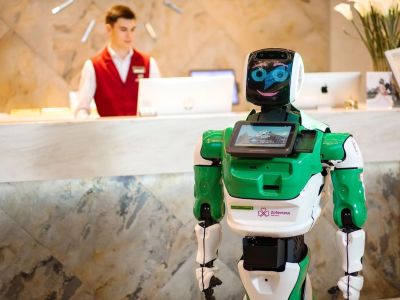
The Robo-C2 by Promobot is an advanced humanoid robot designed for human-like interaction in service environments. Featuring a customizable silicone skin that replicates human facial features, it expresses over 600 microexpressions, including eye movements, blinking, eyebrow raises, and lip articulations for realistic emotions. Mobile arms with 12 degrees of freedom per arm enable gesturing, object manipulation up to 1kg, handshakes, and pointing. Equipped with a 10.1-inch touchscreen, RGB camera, omnidirectional microphone, and dual speakers, it engages in natural conversations, greets visitors, provides product information, and answers FAQs autonomously. Powered by AI voice modules supporting 600+ pronunciations, it remembers individuals and delivers personalized marketing. Ideal for business, museums, banks, expos, and education, Robo-C2 enhances customer engagement, automates routine tasks, and boosts loyalty with its lifelike presence and dynamic stabilization for future bipedal upgrades.

USD 35,000 – 60,000 (Standard retail configurations)View Specs →
W1 Pro
humanoid

Dex Force

W1 Pro

(4.0)

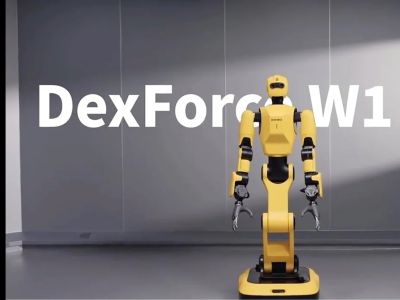
The W1 Pro is a wheeled humanoid robot from Dex Force, featuring a highly humanoid upper body with advanced arms and hands mounted on a stable mobile chassis for efficient navigation and manipulation. It excels in high-precision tasks with sub-millimeter accuracy, powered by Sim2Real technology and Visual Language Action (VLA) models that enable rapid skill transfer from simulation to real-world applications. Equipped with 34-40 degrees of freedom, binocular vision sensors, and automatic hand-eye calibration, it handles complex operations like parts assembly, factory inspections, and delicate interactions such as operating a coffee machine. Designed for multi-scenario versatility in industrial and service environments, the W1 Pro prioritizes endurance with up to 8 hours of runtime, low power consumption, and modular end effectors for adaptability. Its hybrid architecture trades bipedal complexity for reliability, focusing on sustained commercial utility in unstructured settings.

USD 50,000 – 150,000 (based on 2025 release cycle for industrial/research variants)View Specs →
Memo
humanoid

Sunday Robotics

Memo

(4.0)

Memo is a home-focused humanoid-style robot developed by Sunday Robotics to autonomously perform domestic chores such as dishwashing, laundry folding, tidying, and espresso preparation. Standing 1.7 meters tall on a wheeled base, it features a torso with two multi-DoF arms and dual grippers, capable of reaching from floor level up to around 2.1 meters (7 feet). Designed for family environments, Memo emphasizes safety and stability through a low center of gravity, compliant control, and a soft silicone exterior. It learns from real household data via Sunday’s Skill Capture Glove, mastering long-horizon tasks in unstructured homes.

Expected Pricing: USD 10,000–20,000 View Specs →
Miro U
humanoid

Midea

Miro U

(4.0)

Miro U is a cutting-edge humanoid robot designed by Midea for complex industrial automation tasks. It features a unique six-arm bionic mechanical design combined with a wheeled leg chassis, enabling multitasking and high-precision control in factory environments. The robot supports vertical lifting and 360-degree in-place rotation, allowing it to perform multi-dimensional operations efficiently. Miro U is intended to enhance production line flexibility and efficiency, particularly in high-end manufacturing such as washing machine assembly. It integrates fast end-effector switching for diverse tasks and is part of Midea’s broader AI-driven smart factory ecosystem, aiming to boost operational efficiency by up to 30%. The robot represents the third generation in Midea’s humanoid lineup, combining advanced robotics with AI for industrial applications.

USD 150,000–250,000 Industry-aligned depending on configurationView Specs →
ARMAR-7
humanoid

Karlsruhe Institute of Technology (KIT)

ARMAR-7

(4.0)

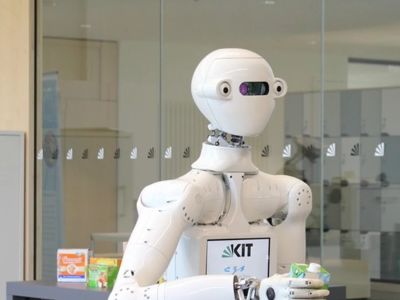
ARMAR-7 is the latest humanoid robot from KIT's ARMAR family, engineered for assistance in human environments like households and care facilities. Featuring dual torque-controlled 8-DoF arms, underactuated five-finger humanoid hands, a head with stereo vision, a torso, and a holonomic mobile platform, it stands at anthropomorphic dimensions for seamless interaction. With 32 controllable degrees of freedom driven by EtherCAT, it integrates torque sensors in joints, force-torque sensors in wrists, and absolute encoders for precise manipulation. ARMAR-7 excels in tasks such as opening doors, loading dishwashers, handing over objects, and recognizing speech commands like "Bring me the milk." It learns from human demonstrations via imitation learning, processes visual data for object recognition, interprets gestures and intentions, and employs cognitive architecture for contextual understanding, error recovery, and autonomous adaptation in daily activities.

Research prototype, not commercially availableView Specs →
Moya
humanoid

DroidUp

Moya

(4.0)

Moya is a pioneering biomimetic humanoid robot from DroidUp, designed with human-like proportions at 1.65 meters tall and 32 kg, featuring a 92% accurate walking gait, micro-expressions like smiling and winking, and body temperature of 32-36°C for realistic interactions. Built on embodied AI, it perceives, reasons, and acts in physical environments, excelling in natural bipedal locomotion on flat surfaces with stable posture. Its modular head supports eye contact and facial nuances, targeting healthcare for elder care, education, and commercial settings requiring prolonged human-robot collaboration. Unlike industrial humanoids, Moya prioritizes lifelike presence over heavy labor, with fluid arm movements, gesture replication, and warm skin-like materials to foster trust and companionship. Advanced sensors enable visual perception, while its Walker 3 chassis ensures balanced, human-mimicking mobility, positioning it as a breakthrough in interactive robotics for daily human-centric applications.

USD 173,000View Specs →
Melody (M-Series Robot)
humanoid

Realbotix

Melody (M-Series Robot)

(4.0)

The M-Series Robot is a modular upper-body humanoid platform built for conversational interaction, customer service, and experiential installations, featuring interchangeable faces and body panels for rapid customization. It delivers articulated head, neck, torso, and arm motion, with integrated cameras and microphones supporting perception and conversational AI integration. Designed for retail, hospitality, telepresence, and companion use, the platform emphasizes flexibility and scalability. Realbotix positions the M-Series as an AI-agnostic social robot, offered for commercial orders with configurable options, deployment support, and defined delivery timelines to meet diverse business requirements across global markets, industries, environments, partners, worldwide

USD 95,000View Specs →
David
humanoid

Realbotix

David

(4.0)

David is Realbotix's newest fully modular humanoid companion robot, unveiled at CES 2026, designed for emotional interaction and customization like building blocks. Featuring a magnetically swappable face for quick expression changes, advanced AI vision for face recognition and human emotion interpretation, and conversational AI powered by models like Gemini and ChatGPT, David creates personalized emotional connections with memory systems. Mounted on a remote-controlled wheeled base for mobility without bipedal walking, it emphasizes stationary utility for 24/7 operation in homes, events, or workplaces. Customizable with extra heads, voices, and user AI integration, David's lifelike expressions—joy, surprise, neutral—and social capabilities make it ideal for companionship, greeter roles, training, and engagement, prioritizing reliability over dynamic locomotion.

USD 95,000 (Modular M-Series configuration)View Specs →
Onero H1
humanoid

SwitchBot

Onero H1

(4.0)

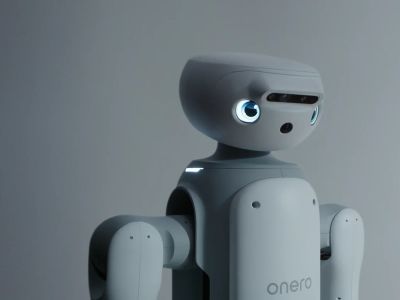
The Onero H1 is SwitchBot's pioneering household humanoid robot, unveiled at CES 2026 as a cornerstone of Smart Home 2.0. Featuring 22 degrees of freedom in its actuated arms and dexterous hands, it excels in manipulation tasks like grasping objects, serving coffee, washing dishes, folding laundry, and organizing items. Powered by the on-device OmniSense Vision-Language-Action (VLA) model, it fuses visual perception from multiple Intel RealSense cameras, depth sensing, tactile feedback, and language understanding for adaptive, learning-based performance in dynamic home settings. Mounted on a wheeled base for efficient indoor navigation on flat surfaces, the robot avoids traditional bipedal complexity while delivering human-like arm precision comparable to advanced humanoids. It learns from real-world interactions and simulation data, evolving skills for chores like pushing doors or cleaning windows, integrating seamlessly into smart homes via WiFi and Bluetooth for versatile, autonomous assistance.

Under USD 10,000 (Targeted retail price for late 2026 launch)View Specs →
NAO
humanoid

SoftBank Robotics

NAO

(4.0)

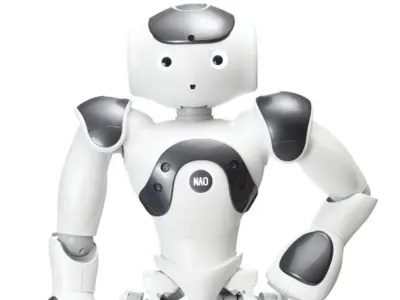
NAO is a compact bipedal humanoid robot renowned for its interactive capabilities in education, research, and healthcare. Standing at 58 cm with 25 degrees of freedom, it features human-like proportions enabling fluid walking, waving, dancing, and sitting motions. Equipped with dual HD cameras for face and object recognition, four directional microphones for speech interaction in 20+ languages, and an array of sensors including sonars, inertial units, force-sensitive resistors, and tactile sensors, NAO perceives its environment intuitively. Powered by NAOqi OS on an Intel Atom processor, it supports programmable behaviors via Choregraphe suite, including fall detection/recovery and balancing. Its LED eyes and expressive gestures foster engaging human-robot interaction, making it ideal for STEM teaching, autism therapy, RoboCup competitions, and social robotics studies. Robust polycarbonate construction ensures durability for repeated use in dynamic settings.

USD 7,000 - 15,000View Specs →
Hobbs 3 (A Bosom Friend)
humanoid

Noetix Robotics

Hobbs 3 (A Bosom Friend)

(4.0)

Hobbs 3, also known as "A Bosom Friend," is a hyper-realistic bionic humanoid robot specialized in emotional interaction and expressive communication. It is distinguished by its industry-leading bionic head featuring 32 active and 8 passive degrees of freedom, allowing it to replicate over 200 human micro-expressions with "waxwork-level" realism. The skin is crafted from high-polymer platinum silicone to enhance durability and lifelike texture. While the Hobbs series includes wheeled variants (W1), the Hobbs 3 platform is designed for high-fidelity social engagement in reception, elderly care, and education. It utilizes a multimodal collaborative model to synchronize facial expressions, lip movements, and breathing rhythms with conversational context

USD 105,000View Specs →
Pepper
humanoid

SoftBank Robotics

Pepper

(4.0)

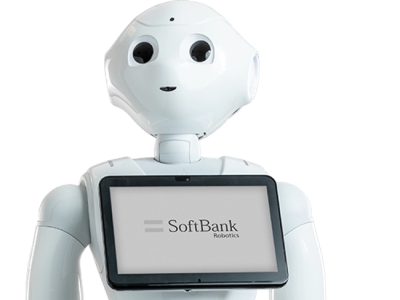
Pepper is a humanoid social robot engineered for human interaction, featuring expressive facial animations via LED eyes and gestures powered by 20 DC motors. Standing at 120 cm with omnidirectional wheeled mobility reaching 3 km/h, it navigates indoor spaces using laser scanners, sonars, and cameras for obstacle avoidance and people detection. Equipped with dual 5MP HD cameras, a 3D depth sensor, four microphones, and touch sensors, Pepper recognizes faces, emotions, and voices in over 20 languages. Its chest-mounted 10.1-inch tablet enables touch interactions, while NAOqi OS supports Python, C++, Java, and Choregraphe for custom behaviors. Ideal for retail, education, healthcare, and hospitality, Pepper engages users through speech synthesis, dialogue engines, and emotional responses, fostering natural collaboration without true bipedal walking but mimicking humanoid proportions for approachability.

USD 20,000 – 30,000View Specs →
Furhat
humanoid

Furhat Robotics

Furhat

(4.0)

The Furhat humanoid robot by Furhat Robotics is a social robotics platform optimized for human-robot interaction, featuring a highly expressive back-projected face with customizable masks for lifelike facial animations including smiling, nodding, frowning, and blinking. Mounted on a dynamic 3-DOF head with pan/tilt/roll motion driven by high-speed servos, it supports natural conversations through advanced speech recognition in over 40 languages, text-to-speech synthesis with lip-syncing, and multimodal sensing via RGB camera for user tracking up to 10 people and microphone arrays for far-field audio up to 5m. Designed for stationary desk-top use, Furhat excels in customer service, education, healthcare, and research, enabling experiments in conversational AI, proxemics, and nonverbal cues with low-latency responses under 200ms. Its modular design includes Intel Core i5 compute, WiFi/Ethernet connectivity, and gesture libraries for immersive, human-like engagement without bipedal mobility.

USD 20,000 - 50,000 View Specs →
Promobot V.4
humanoid

Promobot

Promobot V.4

(4.0)

Promobot V.4 is an advanced service humanoid robot designed for customer interaction and business automation. Standing at human height with expressive robotic arms, a rotating head and torso, and an RGB LED face matrix for lifelike expressions, it communicates via speech synthesis, face recognition, and multilingual voice interaction. Equipped with a 10.1-inch touchscreen, it displays information, scans documents, prints receipts, accepts payments, and issues keycards. Autonomous navigation uses ultrasonic sensors, 3D sensors, LiDAR, and cameras for obstacle avoidance and charging station docking. Dual 7-DOF arms enable gesturing and light manipulation, while the wheeled base supports indoor mobility at 0.3 km/h. Ideal for retail, hospitality, and events, it integrates with third-party software for personalized scripts, promotions, and data collection, operating up to 8 hours per charge without human intervention.

USD 50,000 - 100,000View Specs →
Beomni 1.0
humanoid

Beyond Imagination

Beomni 1.0

(4.0)

Beomni 1.0 is a wheeled humanoid robot designed for versatile remote operation and AI-assisted tasks across industries like healthcare, manufacturing, agriculture, and eldercare. Featuring human-like upper body with articulated head, shoulders, waist, arms, and dexterous hands with opposable thumbs, it lifts up to 15.88 kg per arm for heavy loads while performing delicate actions like pinching salt or opening bottles. Four-wheel base enables traversal over mud, sand, snow, and rough terrain. Initially teleoperated via VR headset and gloves with low-latency stereo vision, haptic feedback, and 3D audio, its evolving AI brain learns from demonstrations to achieve semi-autonomy and full autonomy. Advanced sensors support object recognition, navigation, and multitasking, promoting safer, more productive human-robot collaboration without physical presence requirements.

USD 67,000 – 140,000View Specs →
Mesmer
humanoid

Engineered Arts

Mesmer

(4.0)

Mesmer by Engineering Arts is an advanced animatronic humanoid robot system designed for entertainment, exhibitions, and interactive experiences, featuring lifelike facial expressions, micro-movements, and natural gestures powered by silent, precision motors with individual torque and acceleration control. It includes a modular hardware kit with sensors like cameras, depth sensors, LiDAR, and microphones, integrated with TinMan telepresence software for remote cloud-based control, monitoring, and updates. Users employ intuitive drag-and-drop animation tools on 3D models to create realistic behaviors without coding expertise, supported by photogrammetry rigs for high-fidelity facial replication using soft, durable silicone skin. The 5-axis articulated neck mimics human vertebrae for fluid head movements, full eye tracking with realistic blinks, and embedded cameras enable face tracking and environmental interaction. Emphasizing human safety, non-invasive hardware access protects artificial skin, making Mesmer ideal for creating personalized robotic characters in research, attractions, and telepresence applications with seamless internet connectivity and end-to-end encryption.

Custom pricing, typically 100,000-500,000 USDView Specs →
NEO Home Robot
humanoid

1X Technologies

NEO Home Robot

(4.0)

NEO Gamma is 1X Technologies’ latest home-focused humanoid, blending a sleek 3D-printed nylon-knit exterior with advanced AI for natural interaction. At 1.65 m tall, it walks with a realistic gait, squats to pick up objects, and even sits on chairs. Its custom language model enables fluid conversation and task learning, while “Emotive Ear Rings” provide intuitive visual feedback. Whether providing elderly care, handling daily chores, or offering companionship, NEO Gamma adapts to household routines with surprising dexterity and warmth.

$20,000–$30,000View Specs →
Zeno
humanoid

Hanson Robotics

Zeno

(4.0)

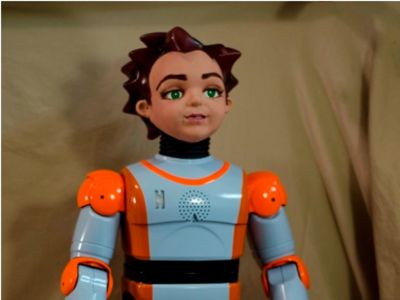
Zeno is a compact humanoid robot engineered by Hanson Robotics for human-robot interaction research, especially autism therapy and education. Standing at child-like proportions around 43-56 cm tall, it features advanced **Frubber** skin for lifelike facial expressions driven by 32 simulated muscles, enabling emotional responses like smiling and frowning. Equipped with binocular 720p stereo vision at 30 fps for face recognition and tracking, plus 8 microphones for speech recognition across 26 languages, Zeno engages in natural conversations using AI-driven speech synthesis. Its 37 degrees of freedom allow arm movements, walking, head gestures, and eye expressions with moving eyelids. Powered by Dynamixel RX-28 servos and an open-source platform with Massive Software AI for navigation and autonomous behaviors, Zeno responds organically to its environment, making it ideal for social skill development, therapy sessions, and interactive learning in controlled indoor settings.

USD 4000-16000View Specs →
AIREC
humanoid

Waseda University

AIREC

(4.0)

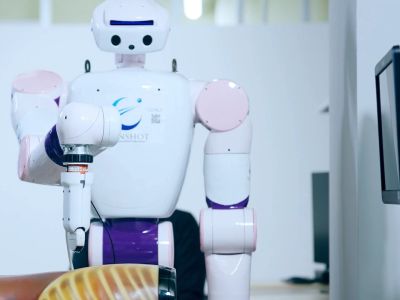
AIREC is a humanoid robot developed by Waseda University under Japan's JST Moonshot Program, specializing in elderly care and medical assistance. Standing 154 cm tall and weighing 150 kg, it features bipedal design with advanced AI for real-time human movement recognition, force adjustment, and adaptive behaviors. Key capabilities include patient repositioning to prevent bedsores, assisting with dressing like putting on socks, joint rehabilitation, biometric data acquisition (heart rate, blood pressure, body temperature), ultrasound examinations, and basic cooking motions. Powered by deep neural networks for predictive joint movements and embodied intelligence, AIREC integrates multimodal learning from human demonstrations, enabling natural physical interactions, emotional expression, and semi-autonomous caregiving tasks in nursing environments. Variants like Dry-AIREC emphasize safe, pain-free support for daily activities, bridging the gap in Japan's aging society.

Research prototype | (Inferred · Medium confidence · Typical for university-developed humanoids like Waseda WL series)View Specs →
Grace
humanoid

Hanson Robotics

Grace

(4.0)

Grace is a healthcare-focused humanoid robot developed by Hanson Robotics in partnership with Awakening Health and SingularityNET, designed as a clinical companion for elderly care and patient support during crises like COVID-19. Featuring a hyper-realistic human-like face with lifelike skin, expressive eyes, and natural gestures, she builds trust through empathetic interactions, conversational AI, and emotional support to combat isolation. Equipped with a chest-mounted thermal camera for contactless temperature readings and responsiveness assessments, Grace conducts basic diagnostics, guides exercises, delivers talk therapy, and assists medical staff. Her stationary or optional mobile base enables safe navigation in clinical settings, prioritizing patient comfort with a soft aesthetic. While not fully bipedal, her upper-body humanoid design facilitates natural engagement, blending advanced AI for multilingual speech (English, Mandarin, Cantonese) with social stimulation to enhance healthcare efficiency and human-robot bonding.

USD 35,000 | (Inferred · Medium confidence · Based on early production cost from developer statements)View Specs →
Qijia Q1
humanoid

RobotGym

Qijia Q1

(4.0)

The Qijia Q1 is a versatile eldercare humanoid robot from RobotGym, designed for daily assistance to semi-disabled and elderly users. It operates in dual modes: as a mobile assistant for feeding, cleaning, fetching items, and companionship, or as a wheelchair for seamless indoor-outdoor transfers with one-click switching via voice or touch. Featuring an omnidirectional chassis, it navigates door sills, carpets, and narrow passages with over 95% success rate, supports 15° climbing, and reaches 1.5 m/s speed. With 22 DOF, 1.1m arm reach, and 10kg payload, it handles rehabilitation, health monitoring, emotional support, and emergency responses. Hybrid AI-remote control ensures precise force-aware interactions, promoting independent living through multimodal sensing, obstacle avoidance, and safety mechanisms like real-time gravity adjustment and emergency stops.

$50,000 - $100,000 | (Inferred · Medium confidence · Typical range for eldercare humanoid robots with advanced mobility)View Specs →
Abi
humanoid

Andromeda Robotics

Abi

(4.0)

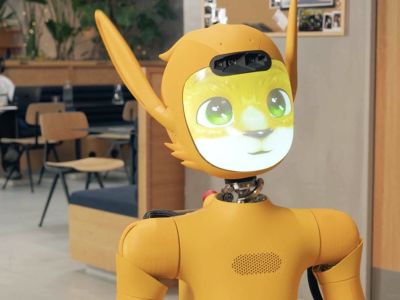
Abi is a compact social humanoid robot engineered for companionship in aged care and assisted living, standing at 110-120 cm to evoke approachability without uncanny valley effects. Featuring expressive digital eyes, animated facial expressions, and gesture-capable arms with 15 degrees of freedom in the upper body, Abi excels in emotional recognition, facial identification, and multilingual conversation across 90+ languages. Powered by Andromeda OS with generative AI and large language models, it processes non-verbal cues, vocal sentiment, and personalized memories to deliver empathetic interactions, mood-adaptive responses, and group activities like singing or games. Designed for stationary or wheeled mobility on a soft-edged, colorful frame, Abi fosters trust, reduces loneliness, and supports care teams by providing 1:1 engagement, cognitive stimulation, and long-shift runtime, prioritizing human connection over physical tasks

Subscription (Robots-as-a-Service model)View Specs →
GARMI
humanoid

German Aerospace Center (DLR)

GARMI

(4.0)

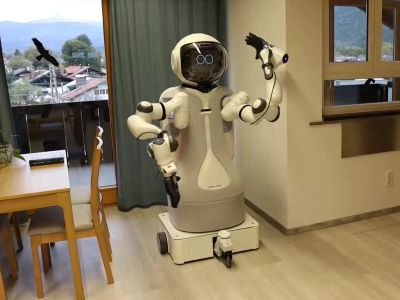
GARMI is a humanoid assistance robot engineered for elderly care, featuring a wheeled mobile base for efficient indoor navigation and upper-body humanoid design for natural human interaction. It supports activities of daily living such as fetching objects, serving meals, clearing dishes, and physical rehabilitation exercises with safe torque-controlled arms. Equipped with a multimodal head including screens and sensors, GARMI enables intuitive voice commands via ChatGPT integration for multilingual communication, internet searches, and telemedical support like ECG monitoring, blood pressure checks, and ultrasound assistance. Full-body torque control ensures collision-free operation, slowing or stopping upon detecting humans or obstacles. A digital twin simulates safe movements beforehand, while AI enhances precise grasping without spills. Deployed in test apartments, it manages full-day assistance from morning routines to emergency doctor bookings, bridging physical, audiovisual, and haptic interactions to su

Not commercially available | (Inferred · Medium confidence · Typical range for humanoid robots in this class)View Specs →
Futuring F2
humanoid

Futuring Robot

Futuring F2

(4.0)

The Futuring F2 is a cutting-edge bipedal humanoid robot engineered for versatile industrial and collaborative applications. Standing at human scale, it features 28 degrees of freedom for fluid, human-like movements, including dexterous 5-fingered hands capable of precise manipulation. Powered by a 2.25 kWh torso-mounted battery, it delivers up to 5 hours of continuous operation at speeds reaching 1.2 m/s. Advanced AI integration includes onboard vision-language models for real-time perception via six RGB cameras, enabling autonomous navigation, object recognition, and speech-to-speech interaction powered by custom LLMs. With integrated cabling, matte-black durable exterior, and 20 kg payload capacity, the F2 excels in warehouses, manufacturing, and logistics, performing tasks like picking, assembly, and human handoff. Its electric actuators ensure quiet, reliable performance in human environments, bridging the gap between automation and seamless collaboration.

$50,000 - $100,000 | (Inferred · Medium confidence · Typical range for commercial humanoid robots like Figure 02 and Tesla Optimus)View Specs →
Futuring F1
humanoid

Futuring Robot

Futuring F1

(4.0)

The Futuring F1 humanoid robot from Futuring Robot advances practical bipedal mobility and human-like interaction for real-world applications. Standing around 155 cm tall with 26 degrees of freedom, it achieves a top speed of 4 km/h and can carry up to 6 kg per arm, making it suitable for dynamic environments like homes, labs, and service areas. Powered by an AI edge computing unit, likely NVIDIA-based, it integrates HD stereo vision, IMU sensors, and Linux-based ROS2 for seamless navigation and obstacle avoidance. Its 12-DOF hands with 2-finger grippers enable precise manipulation, while safe human collaboration features ensure reliable operation alongside people. With 3 hours of runtime per charge, the F1 excels in companion robotics, education, healthcare assistance, and public services, offering smooth gait patterns, adaptive behaviors, and potential LLM integration for intuitive task execution in unstructured settings.

$50,000 - $150,000 | (Inferred · Medium confidence · Typical range for prototype humanoid robots in this class)View Specs →
U1 Series
humanoid

UBTECH Robotics

U1 Series

(4.0)

U1 Series is a full-size, hyper-realistic humanoid platform positioned for human-centered interaction, embodied AI research, and service-oriented deployments. It combines an emotional growth-based large model, locally encrypted memory storage, and multi-dimensional appearance customization to support personalized interaction and long-term engagement. As a humanoid robot, it is expected to emphasize bipedal mobility, expressive motion, and a human-like form factor for social presence and task execution.

Not officially disclosed publicly View Specs →
4NE-1 Mini
humanoid

NEURA Robotics

4NE-1 Mini

(4.0)

The 4NE-1 Mini by NEURA Robotics is a compact, child-sized cognitive humanoid robot standing at 132 cm tall and weighing 36 kg, optimized for education, research, and interactive environments. Featuring 25 degrees of freedom for natural human-like movements, it supports bipedal locomotion, precise manipulation with 3 kg payload capacity per arm, and advanced multi-sensor fusion including computer vision cameras and human detection safety sensors. Powered by Neuraverse OS, it enables shared learning across robot networks, natural language interaction with multi-language voice recognition, and reinforcement learning for task adaptation. Its Studio F.A. Porsche design emphasizes aesthetic appeal and safety, with capabilities for skills marketplace integration allowing developers to download, publish, and monetize behaviors. Ideal for classrooms and labs, the Mini excels in demonstrations, collaborative experiments, and human-robot interaction while maintaining agility in confined spaces.

USD 19,999 - 29,999 (Standard to Pro tiers)View Specs →
Figure 03
humanoid

Figure AI

Figure 03

(4.0)

Figure 03 is a general-purpose humanoid robot designed specifically for home environments, capable of performing household tasks such as laundry, cleaning, and dishwashing autonomously. It features advanced tactile fingertip sensors that detect forces as small as three grams, enabling delicate manipulation of fragile and irregular objects. The robot is equipped with a palm camera and soft textiles covering to enhance safety and maneuverability in tight spaces. It uses the Helix AI system for pixel-to-action learning, allowing it to adapt to unpredictable, ever-changing home layouts. Figure 03 is lighter and smaller than its predecessor, with improved battery safety and wireless charging capabilities, making it a practical assistant for everyday living.

$50,000 - $70,000View Specs →
Isssac 1
humanoid

Weave Robotics

Isssac 1

(4.0)

Isaac 1 is a practical mobile home service robot designed from the ground up for residential use, featuring dual humanoid arms mounted on a wheeled base. Unlike traditional humanoid robots that rely on bipedal locomotion, Isaac 1 utilizes a motorized wheeled platform for autonomous navigation between rooms, ensuring stability and efficiency in home environments. It autonomously performs household chores such as folding laundry, making beds, sorting clutter, and straightening cushions, with remote human teleoperation available as a backup for complex tasks. The robot offers an 8-hour battery life, charges in approximately 2 hours, and connects via Wi-Fi for seamless operation. Its design includes soft, swappable fabric shells in five pastel colors, providing a friendly aesthetic and passive safety for children and pets while blending into home decor.

$7,999 upfront or $449/month subscriptionView Specs →
Eden-1
humanoid

Eden Robotics

Eden-1

(4.0)

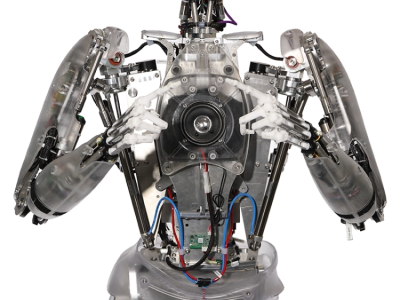
Eden-1 is a semi-humanoid robotic platform engineered for manufacturing and logistics environments, designed to fill human-designed workstations without complex integration. It features a distinctive translucent torso that reveals internal mechanics, emphasizing its plug-and-play architecture for rapid deployment. The robot stands 5'6" tall and supports a maximum load of 30 lb, with each arm capable of carrying 3–5 kg for dual-arm manipulation tasks. Eden-1 operates for 4–6 hours on a single charge, balancing runtime with industrial shift demands, and leverages autonomous navigation to perform tasks requiring less than five minutes of human effort. Its design prioritizes reliability and scalability, enabling companies to hire physical agents by hourly usage rather than purchasing hardware outright.

$25,000–$35,000 per unit (or $15–$25/hour usage-based hire)View Specs →
UWORLD U1 Lite
humanoid

UBTECH Robotics

UWORLD U1 Lite

(4.0)

The UWORLD U1 Lite is UBTECH Robotics’ lowest-cost, semi-torso humanoid designed primarily for emotional conversation, education, and reception duties where walking is unnecessary. It features a compact upper-body design with lifelike silicone skin, 19 facial degrees of freedom, and over 30 micro-expressions to enable natural emotional interaction. Powered by local AI processing with encrypted memory, it recognizes 20+ emotional states and responds within 500ms, supporting roles as home companions, educational assistants, or greeters. The Lite model omits legs and full-body locomotion, focusing on expressive head, arm, and hand movements with 30+ total degrees of freedom in the upper body. It connects via Wi-Fi, operates for 2–4 hours per charge, and allows extensive customization of appearance, clothing, and personality.

119,800 RMB (~$17,650 USD)View Specs →
UWORLD U1 Pro
humanoid

UBTECH Robotics

UWORLD U1 Pro

(4.0)

The UWORLD U1 Pro is UBTECH Robotics' flagship full-size, hyper-bionic humanoid designed primarily for emotional companionship, social assistance, and customer-facing roles rather than heavy industrial labor. Standing at 168 cm (female) or 183 cm (male), it features 88 degrees of freedom, realistic silicone skin with detailed hair and facial features, and an emotion-aware AI capable of recognizing over 20 human emotional states. The Pro model offers superior locomotion and manipulation compared to the Lite version, enabling smoother walking and better object handling in homes, commercial spaces, and exhibitions. With a battery life of 2–4 hours and Wi-Fi connectivity, it serves as a home companion, educational assistant, reception greeter, or elder care supporter, emphasizing natural conversation and interactive presence over third-party programming or complex terrain navigation.

US$35,000 (approx. 169,800 RMB)View Specs →
UWORLD U1 Ultra
humanoid

UBTECH Robotics

UWORLD U1 Ultra

(4.0)

The UWORLD U1 Ultra is UBTECH Robotics’ flagship hyper-bionic humanoid, designed for premium companionship, hospitality, and research. It features biomimetic silicone skin, an emotion-driven AI capable of recognizing over 20 emotional states with 500ms response latency, and 88 degrees of freedom for fluid, human-like motion. The robot stands 168 cm (female) or 183 cm (male) tall, weighs 35.2 kg or 42 kg respectively, and excels in autonomous walking, dancing, and expressive gestures. Targeted at high-end applications, it prioritizes emotional connection over heavy labor, with a runtime of 2–4 hours and Wi-Fi connectivity for home companions, educational assistants, and elderly care support.

990,000 RMB (approx. USD $137,000–$180,000 depending on gender configuration)View Specs →