
Plim
AI ChatLast updated:
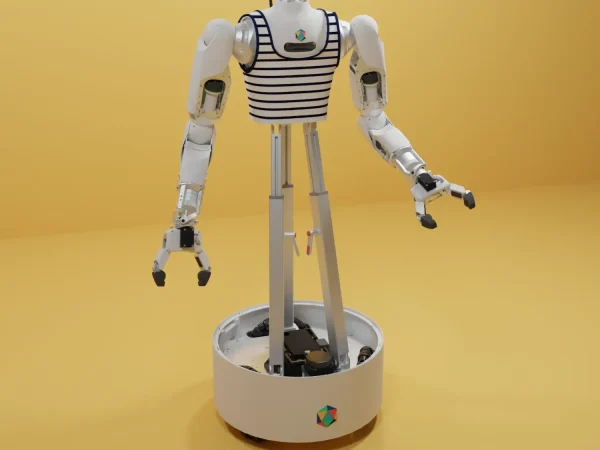
Plim is a humanoid home robot from Munich-based Plim Robotics (formerly Devanthro); it was called Robody until October 2026. It works in two modes: an autonomous mode that learns the rhythm of a household and handles chores, and a step-in mode in which a family member or caregiver appears in the home through the robot with their own voice, face and movement, from up to 9,000 km away. It stands 1.65 m tall on a three-wheel omnidirectional base, with 7-DoF arms, two-finger grippers, a soft covering and an expressive face display. An NVIDIA Jetson Thor runs edge AI, with cloud processing over 5G and Wi-Fi 6. It has been working in real homes since 2024.
Quick Overview & Key Facts
Plim is a humanoid robot made by Plim Robotics in Germany, launched in 2024 and built for household chores, opening doors, and fetching items. Its estimated price is Approx. $25,000 – $50,000 per robot, or a monthly care-service subscription. Featured in “Which Humanoid Robots Are Built in Germany? 8 Models Compared for 2026” and “Teleoperated Humanoid Robots in 2026: Which Ones a Person Can Drive Remotely”.
- Dimensions
- Height: 1.65 m
- Weight
- 80 kg
- Mobility
- Wheeled humanoid
- Top speed
- Approx. 1.0 m/s (3.6 km/h) walking-pace base speed
- Payload capacity
- Light household items up to 3 kg, such as cups, medication boxes, clothing and food packaging
- Battery runtime
- 2 hours
- Sensors
- 4K fisheye RGB camera, stereo RGB and depth sensing, mm-wave radar, stereo microphones, plus joint sensing from QDD actuators
- Operating environment
- Unmodified private homes and care facilities, including carpets and narrow hallways
What Can Plim Do?
Core operational tasks and activities demonstrated or performed by Plim.
Real-World Applications of Plim
Industries, working environments, and deployment suitability for Plim.
Plim Capabilities
Inherent physical, perceptual, and cognitive abilities built into Plim.
Image Gallery
Below images are from Plim Robotics's official sources


Review Videos
Watch expert reviews and demonstrations of this robot


Robot Specifications
ConfirmedValues marked Confirmed were checked against the manufacturer's official data; select the badge to open the source. Values without a Confirmed badge are compiled from public sources and may not be manufacturer-verified.
Not yet published by Plim Robotics: warranty terms, safety certifications, EMC compliance, IP rating, noise level, expected lifespan, maintenance schedule, firmware version and 5 more.
Robot Timeline
Key milestones in this robot's development and rollout
Latest Robody unveiled with redesigned torso and arms, soft skin and haptics
Robody in Action showcase of home-care tasks
Expanded home and care-facility pilots
Devanthro rebrands as Plim Robotics and the robot formerly called Robody is renamed Plim, with an autonomous mode and a remote step-in mode
Source: Plim Robotics ↗
Plim vs Ena, Punyo, Dual-Arm Lift and VersaBot VB-1
Plim overlaps with these alternatives on Elder care and Household help. Plim trails the closest alternatives on max speed, payload, runtime and weight.
Industries and capabilities are tags, not scores: a tick means the robot is listed for it. Green marks the best figure in a row (highest max speed, payload and runtime; lowest weight). Ranges are not ranked.
| Spec | PlimPlim Robotics | EnaEnactic | PunyoToyota | Dual-Arm LiftRealMan Robotics | VersaBot VB-1Lanxin Robotics |
|---|---|---|---|---|---|
| Industries | |||||
| Elder care | Yes | Yes | Yes | No | No |
| Household help | Yes | Yes | Yes | Yes | No |
| Companion | Yes | Yes | No | No | No |
| Healthcare | Yes | No | Yes | No | No |
| Capabilities | |||||
| Human-robot interaction | Yes | No | Yes | No | No |
| Remote control (teleoperation) | Yes | Yes | No | Yes | No |
| Safe around people | Yes | Yes | No | No | No |
| Learning | Yes | Yes | Yes | No | No |
| Max Speed | 1 m/s | 1.1 m/s | 0.56 m/s | 1.5 m/s | 0–1.2 m/s |
| Payload | 3 kg | — | — | 5 kg | 2 kg |
| Runtime | 120 min | 5–6.5 h | 4 h | 3–4 h | 2–3 h |
| Weight | 80 kg | 52 kg | 47 kg | 157 kg | — |
| Released | 2024 | 2026 | 2024 | 2025 | 2024 |
Notes such as conditions or alternate figures are left out and values are shown in common units; open each page for the full specs. Browse all Humanoid Robots
Plim Also Mentioned in Below Articles
Find out how this model stacks up against the world's best robots

More Humanoid Robots
Discover more robots in the same category



Robots From Other Categories
Discover complementary robots from different categories that work well together

Frequently Asked Questions
Get answers to common questions about this robot
Q1. What is Plim, and what problem is it designed to solve?
Plim is a humanoid home robot from Munich-based Plim Robotics (formerly Devanthro); it was called Robody until October 2026. It helps around the house on its own and lets a family member or caregiver appear in the home remotely, easing the shortage of care workers and the distance between families.
Q2. What are the main capabilities and key features of Plim?
Plim has two modes. In autonomous mode it learns the rhythm of a household and supports it day and night. In step-in mode a remote person appears in the home with their own voice, face and movement. It has 7-DoF arms with two-finger grippers, a 4K fisheye camera, stereo RGB and depth sensing, mm-wave radar and stereo microphones, and it docks itself to charge.
Q3. Who is Plim built for, and which industries can benefit from it?
It is built for families who want help at home, older adults who want to stay in their own homes, and care providers. Relatives and caregivers can join from far away through step-in mode.
Q4. Is Plim a commercial product or still a research prototype?
It is still being rolled out. Plim Robotics has had the robot in real homes since 2024, and families and care organizations can register their interest, but it is not a mass-market product yet.
Q5. Is Plim currently available for purchase, and when is it expected to ship?
Plim Robotics has not published a price or a delivery date. Interested families and care organizations can register interest on plim.com.
Q6. How does Plim actually work in real-world environments?
In autonomous mode, onboard AI on an NVIDIA Jetson Thor, backed by edge processing and the cloud over 5G and Wi-Fi 6, handles routine household tasks. In step-in mode a remote user takes over and appears through the robot, from up to 9,000 km away.
Q7. When was Plim announced or officially launched?
Plim Robotics, then called Devanthro, unveiled the latest Robody generation in autumn 2024 and showed it in a November 2024 video. In October 2026 the company rebranded as Plim Robotics and renamed the robot Plim.
Q8. How is Plim different from other robots in the same category?
Many home robots are either fully autonomous or fully remote. Plim combines an autonomous mode with a step-in mode, so a real person can take over when judgment or a familiar face matters. Its soft covering and expressive face display are designed for the home.
Q9. Does Plim require additional development or customization after purchase?
Households and care providers should expect onboarding and home setup. Plim Robotics has not published details of customization options or integrations.
Q10. What is the future roadmap or planned upgrades for Plim?
Plim Robotics plans to grow from elderly care into more homes, with an AI that keeps learning and improving. A dated public roadmap has not been released.
Rating and Reviews
Share your experience and help others decide!
Loading...
User Reviews
No user reviews. Be the first one to review!
User Comments (No Login needed)
Share your thoughts, experiences, or questions about this robot.
Comments appear after moderator review.