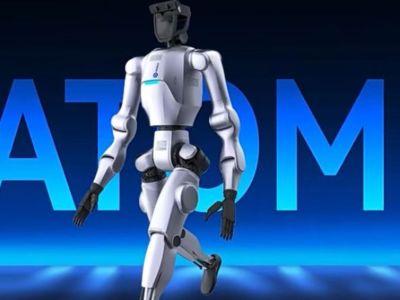
Atom by Dobot Corp Ltd is presented as a compact humanoid aimed at precision industrial and laboratory tasks; it is included in this comparison because its specification emphasizes delicate handling, biomedical and micro-assembly use cases that differentiate it within manufacturing and research segments. Atom’s shorter height (153cm) and heavier build (62 kg) position it for stability during tasks such as microsurgery assistance, watchmaking, and pharmaceutical automation, and its software stack (ROS 2, Linux-based) targets integrators seeking open robotics tooling.
RAISE A1 by AgiBot is included as a competitor because it targets humanoid applications across industrial pick-and-place, sorting, and repetitive service tasks where speed and reach matter. With a taller estimated height (175 cm), lighter weight (55 kg), and a faster top speed (7 km/h), RAISE A1 is positioned for material handling and industrial throughput, and its proprietary OS with ROS2 integration targets users who require both vendor-managed software and third-party development in Python/C++.
Detailed Analysis
Design & Build Quality
Atom is specified at 153 cm height, 50 cm shoulder width, 30 cm depth and 62 kg weight, indicating a denser, more compact chassis intended for precision and stability in stationary or semi-mobile tasks. RAISE A1 is taller at an estimated 175 cm with a narrower 45 cm shoulder width and lighter 55 kg mass, reflecting a design trade-off favoring reach and reduced weight for mobility and general-purpose service tasks. The dimensional differences imply Atom prioritizes a lower center of gravity for fine manipulation whereas RAISE A1 prioritizes vertical reach and lower mass for agile movement.
Mobility & Navigation
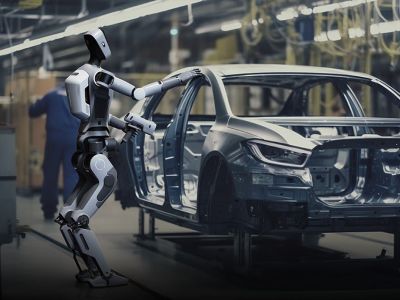
Atom’s mobility is rated at 5 km/h and lists SLAM with optional LiDAR and IMU for navigation, supporting precise positioning in constrained workspaces. RAISE A1 offers higher mobility at 7 km/h and combines LiDAR-based SLAM with visual odometry for improved dead-reckoning and robustness in dynamic industrial environments. The higher top speed and explicit visual odometry in RAISE A1 suggest better throughput for tasks requiring transit between stations, while Atom emphasizes controlled motion for delicate operations.
Sensors & Perception
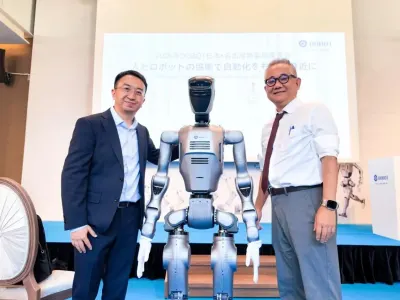
Atom includes an Intel RealSense D455 depth camera, a 60FPS Full HD RGB vision system, multi-array microphones, and optional LiDAR plus ultrasonic radar and force sensors, indicating a sensor suite tuned for high-resolution depth perception and audio awareness. RAISE A1 lists an RGB-D camera, LiDAR, microphone array, IMU, gyroscope, force/torque and proximity sensors, representing a broadly similar multi-modal sensor set with explicit force/torque sensing for manipulation and proximity sensing for dynamic collision avoidance. Both platforms provide comparable perception capabilities, with Atom specifying a named depth camera (RealSense D455) and RAISE A1 emphasizing integrated LiDAR plus visual odometry.

AI Capabilities
Atom offers AI automation along with remote control and manual override and ships with ROS 2 and SDK/API support, enabling custom AI stacks and integration with community tooling. RAISE A1 supports autonomous operation, teleoperation and learned behaviors with a proprietary OS that integrates ROS2 and provides Python and C++ support, enabling vendor-managed features alongside user-developed models. The two differ in software openness: Atom’s Linux/ROS2-native stack favors open development, while RAISE A1’s proprietary OS plus ROS2 integration favors a hybrid vendor-controlled approach.

Battery & Power Efficiency
Atom lists a 5-year battery (presumably lifecycle or warranty specification) which implies long-term battery longevity expectations for continuous deployment. RAISE A1 specifies a 3–5 year estimated battery life range, indicating similar multi-year service life but with less precise specification. Differences are primarily in stated lifetime estimates rather than per-charge runtime metrics, so operational endurance comparisons require additional runtime data not provided in the specs.
Use-Case Suitability
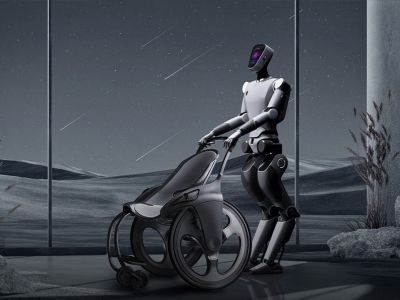
Atom’s documented use cases include micro-component assembly, meal preparation, document delivery, delicate lab handling, biomedical research, microsurgery assistance, automated watchmaking, pharmaceutical automation, café robotics and automotive assembly line support, signaling a focus on precision, hygiene and controlled-environment tasks. RAISE A1 targets pick-and-place, sorting, precision assembly, material handling and repetitive industrial and service tasks, indicating a focus on throughput, handling and general industrial automation. Choice between them depends on required task precision (Atom) versus transit speed and throughput (RAISE A1).
Software Ecosystem
Atom runs ROS 2 on a Linux-based platform with SDK/API support, facilitating open-source integrations, community packages and custom algorithm deployment. RAISE A1 uses a proprietary OS with ROS2 integration and explicit Python/C++ support, enabling both vendor-provided capabilities and third-party development while retaining platform-specific controls. Integrators prioritizing native open-source toolchains may prefer Atom, whereas teams seeking vendor-managed features with ROS2 compatibility may opt for RAISE A1.
Safety Features
Atom includes emergency stop, obstacle detection and fall recovery as documented safety measures geared toward protecting delicate operations and recovering from instability. RAISE A1 provides force limiting, real-time proximity detection, collision avoidance and emergency stop, emphasizing active collision mitigation and safe interaction during manipulation and transit. Both platforms include emergency stop and perception-based safety, with RAISE A1 explicitly listing force limiting and real-time proximity systems suitable for human-shared industrial floors.
Pricing & Value
Atom is priced between USD 27,500 and 30,000, positioning it slightly below or overlapping RAISE A1’s listed price of $30,000 and reflecting its emphasis on precision capabilities within that price band. RAISE A1’s fixed $30,000 price aligns it with Atom’s upper range while offering higher mobility and LiDAR-based navigation; total value will depend on required sensors, software licensing and optional LiDAR for Atom. Buyers should compare included sensor packages and software licensing to evaluate net value within the overlapping price range.
Analysis Score Summary
Total Score
9
Atom
VS
Based on Detailed Analysis
Total Score
9
RAISE A1
📊 Win: 2 points | Trade-off: 1 point each
Scores are summed across every insight: a clear winner earns 2 points, while balanced trade-offs give each robot 1 point. The total reflects how often each robot outperforms the other (or shares the spotlight) throughout the detailed analysis sections.
Capabilities & Operational Tasks
Head-to-head comparison of what Atom and RAISE A1 can do, their applications, and capabilities.
What Can Atom & RAISE A1 Do?
18Core operational tasks, activities, and physical manipulation duties evaluated side-by-side.
| Task & Description | Model AAtom11 supported | Model BRAISE A117 supported |
|---|---|---|
| Assembly | — | High |
| Autonomous task execution | High | High |
| Carrying and transport | High | High |
| Collaborative work | High | High |
| Human interaction | High | — |
| Inspection | — | High |
| Loading and unloading | — | High |
| Machine operation | High | High |
| Machine tending | — | High |
| Material handling | — | High |
| Move objects | High | High |
| Navigation | High | High |
| Packaging | — | High |
| Pick and place | High | High |
| Quality control | — | High |
| Repetitive physical tasks | High | High |
| Sorting | High | High |
| Tool use | High | High |
Technical Specifications
Head-to-head performance data and metrics
| Specification | Model AAtom | Model BRAISE A1 |
|---|---|---|
Functional Utility & Use Cases4 Comparative Metrics | ||
Control Method | AI automation, remote control, manual override | Autonomous, teleoperation, learned behaviors |
Use Cases | Micro-component electronics assembly, biomedical lab handling, delicate specimen kitting, collaborative workstation support | Pick-and-place operations, sorting, precision assembly, material handling, repetitive industrial tasks, service robotics |
Multi Robot Coord | Yes, cross-scenario and multi-robot collaboration support | Multi-robot coordination capable (Estimated) |
Pet Friendly | Not Applicable | Yes, with safety protocols |
Manipulation & Load Capacity4 Comparative Metrics | ||
Carrying Capacity | 3.5 kg per arm | 5 kg per arm |
Deadlift Capacity | 7 kg total | 80 kg |
Payload Type | 3.5 kg per arm rated payload (±0.05 mm repeatability) | Tools, packages, precision instruments, human interaction |
Modular Attachments | Yes; arms, sensors, grippers | Tool changer interface, end-effector options |
Kinematic Architecture & Dexterity4 Comparative Metrics | ||
Degrees of Freedom | 41 DoF full body (29 DoF Trainer model) | - |
Material | Aluminum frame, composite materials, soft materials for safety | Aluminum frame, composite joints, lightweight structural materials |
Mobility Type | Legged (Straight-knee bipedal walking) | Legged (bipedal walking) |
Hardware Interface | USB, RJ45 | USB, CAN bus, GPIO, serial communication |
Functional Utility & Use Cases
4 Comparative Metrics
Manipulation & Load Capacity
4 Comparative Metrics
Kinematic Architecture & Dexterity
4 Comparative Metrics
Related Comparisons
Discover similar robot matchups to expand your knowledge and find the perfect solution
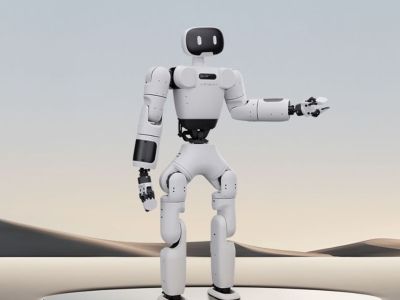
AgiBot X1 vs RAISE A1
Compare AgiBot X1 vs RAISE A1 for humanoid mobility, dexterity, autonomy, and payload capacity across manufacturing and logistics applications.
SA01 vs Atom
Head-to-head: SA01 vs Atom. Explore differences in sensors, speed, navigation, and price.
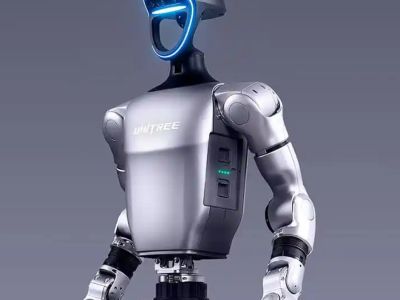
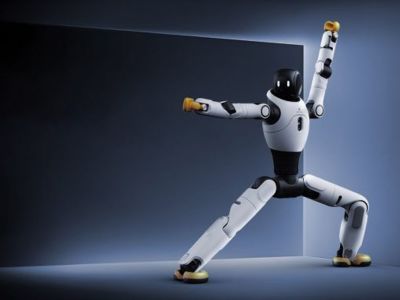
Unitree G1 vs AgiBot X2-N
Compare Unitree G1 vs AgiBot X2 for humanoid mobility, dexterity, autonomy, and payload capacity.
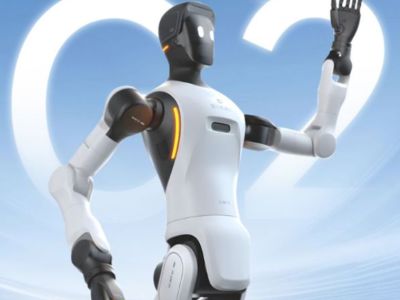
AgiBot G2 vs Cruzr Y1
Compare AgiBot G2 vs Cruzr Y1 for humanoid mobility, dexterity, autonomy, and payload capacity.
Disclaimer
All content, comparisons, and verdicts on this website are based on our research, testing, and opinion. While we strive for accuracy, we do not guarantee the completeness, reliability, or suitability of any information. Performance, specifications, and results may vary depending on usage and conditions. This website and its authors are not responsible for any decisions, actions, or outcomes based on the information provided. Always verify product details with the manufacturer before making purchase or operational decisions.