Elf-Xuan 2.0 by AheadForm is a humanoid robot positioned for research, manufacturing, logistics, infrastructure inspection, and remote operations. It emphasizes ultra-realistic facial expressions with 30 DoF in the head, neck, and upper body, enabling natural human-robot communication. Unlike mobile platforms, it functions as a stationary interaction platform with advanced sensors including LiDAR and depth cameras for environmental perception. Its semi-autonomous to fully autonomous operation supports complex task automation in controlled settings.
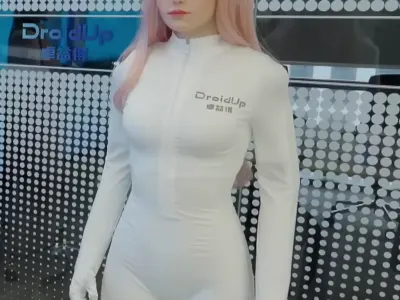
Moya by DroidUp targets elder care, education, customer service, and healthcare assistance as a highly autonomous humanoid with teleoperation support. It features a lighter 32 kg frame and 40+ DoF, including head micro-expressions, optimized for social walking at 3 km/h. With capabilities like 2 kg per arm carrying and 10 kg deadlift, it prioritizes dexterity and stability in human-centric environments. Its sensor suite supports collaborative interactions without full bipedal industrial specs.
Detailed Analysis

Bipedal Mobility & Balance
Elf-Xuan 2.0 operates as a stationary interaction platform, lacking specified walking speed and focusing on balance control for upper-body tasks via IMU, gyroscope, and joint encoders. Moya achieves 3 km/h walking speed with optimized stability for social environments, supported by stereo cameras and force sensors. Elf-Xuan's design prioritizes seated or fixed positioning for research and inspection, reducing mobility demands. Moya's lighter weight aids agile navigation in care settings. Both use similar navigation aids like visual SLAM where applicable.

Dexterity & Manipulation (Focus on hands/arms)
Elf-Xuan 2.0 concentrates 30 DoF in facial, head, neck, and upper-body actuation, with limited arm manipulation estimated at 1-2 kg deadlift and no specified carrying capacity. Moya offers 40+ DoF with 2 kg per arm carrying and 10 kg deadlift, enabling precise object handling. Elf-Xuan suits expressive interactions over physical tasks, using force/torque sensors for control. Moya's design supports healthcare assistance requiring fine motor skills. Neither emphasizes industrial-grade grippers.

AI, Autonomy & Learning Capabilities
Elf-Xuan 2.0 provides semi-autonomous to fully autonomous operation with Linux-based OS, ROS 2, and Python SDK for learned behaviors in research and logistics. Moya delivers highly autonomous performance with teleoperation, using proprietary OS and ROS2-compatible Python APIs. Both integrate self-supervised AI for interaction, but Elf-Xuan focuses on emotional expression algorithms. Moya emphasizes learning for companionship tasks. Compute units are unspecified for both.

Payload & Lifting Capacity
Elf-Xuan 2.0 has N/A carrying capacity and 1-2 kg deadlift, suitable for light interaction tasks. Moya supports 2 kg per arm carrying and 10 kg maximum deadlift, better for assistive lifting in care scenarios. Elf-Xuan's upper-body focus limits heavy manipulation. Moya's design accommodates practical payload in service roles. Both incorporate force-limiting safety for loads.
Battery Runtime & Power Efficiency
Both Elf-Xuan 2.0 and Moya claim 3-5 years battery life, likely indicating design longevity rather than continuous runtime. Search data suggests Elf-Xuan matches competitors at 3-5 hours runtime with 3-5 kWh packs. Moya's lighter build may enhance efficiency for social walking. Charging details are unspecified for Moya but align with industry 2-4 hours. Long-term estimates position both for extended deployments.

Real-World Use Cases (Industrial vs General Purpose)
Elf-Xuan 2.0 targets manufacturing, logistics, research, infrastructure inspection, and remote operations with robust sensors for industrial environments. Moya focuses on elder care, tutoring, customer service, and healthcare assistance, leveraging mobility for human-centric settings. Elf-Xuan excels in stationary automation and inspection. Moya prioritizes companionship and light assistance. Overlap exists in research applications.

Human-Robot Interaction Capabilities
Elf-Xuan 2.0 features ultra-realistic facial expressions with 30 DoF for microexpressions, gaze, and emotional AI, ideal for engaging communication. Moya includes head micro-expressions within 40+ DoF, optimized for social walking and care interactions. Elf-Xuan's design blends artistry with advanced perception. Moya supports collaborative modes in service roles. Both enhance natural engagement via AI algorithms.
Which robot is better for industrial manufacturing?
Elf-Xuan 2.0 outperforms Moya in industrial manufacturing due to its sensor suite including LiDAR for inspection and Linux/ROS 2 for integration in logistics. Moya's 3 km/h speed and 10 kg lift suit lighter tasks but lack industrial focus. Elf-Xuan's stationary platform handles remote operations effectively. For manufacturing, Elf-Xuan 2.0 is the recommended choice.
Which robot offers superior dexterity for manipulation?
Moya provides better dexterity with 40+ DoF, 2 kg per arm carrying, and 10 kg deadlift compared to Elf-Xuan 2.0's 30 DoF upper-body focus and 1-2 kg lift. Elf-Xuan prioritizes facial interaction over arm manipulation. Moya handles assistive tasks requiring precision. For complex manipulation, Moya is the recommended option.
Analysis Score Summary
Total Score
9
Elf-Xuan 2.0
VS
Based on Detailed Analysis
Total Score
9
Moya
📊 Win: 2 points | Trade-off: 1 point each
Scores are summed across every insight: a clear winner earns 2 points, while balanced trade-offs give each robot 1 point. The total reflects how often each robot outperforms the other (or shares the spotlight) throughout the detailed analysis sections.
Capabilities & Operational Tasks
Head-to-head comparison of what Elf-Xuan 2.0 and Moya can do, their applications, and capabilities.
What Can Elf-Xuan 2.0 & Moya Do?
4Core operational tasks, activities, and physical manipulation duties evaluated side-by-side.
| Task & Description | Model AElf-Xuan 2.03 supported | Model BMoya4 supported |
|---|---|---|
| Autonomous task execution | High | High |
| Collaborative work | High | High |
| Human interaction | High | High |
| Navigation | — | High |
Technical Specifications
Head-to-head performance data and metrics
| Specification | Model AElf-Xuan 2.0 | Model BMoya |
|---|---|---|
Functional Utility & Use Cases4 Comparative Metrics | ||
Control Method | Teleoperation, autonomous, learned behaviors | autonomous, teleoperation, learned behaviors |
Use Cases | Manufacturing, research, logistics, infrastructure inspection, remote operations | elder care companionship, educational tutoring, commercial customer service, healthcare assistance |
Multi Robot Coord | Multi-robot coordination via network | Yes |
Pet Friendly | Yes, with safety protocols | Yes, with safety protocols |
Manipulation & Load Capacity4 Comparative Metrics | ||
Carrying Capacity | - | 2 kg per arm |
Deadlift Capacity | 1-2 Kg | 10 kg maximum |
Payload Type | Tools, sensors, industrial equipment | people interaction, precision instruments, packages |
Modular Attachments | Tool changers, gripper interfaces, sensor mounts | tool changers, end-effector options |
Kinematic Architecture & Dexterity4 Comparative Metrics | ||
Degrees of Freedom | 30 DOF concentrated in facial expression, head, neck, and upper-body actuation | 40+ DOF (including head micro-expressions) |
Material | Aluminum frame, composite joints, polymer covers | aluminum frame, soft skin composites |
Mobility Type | Stationary humanoid platform focused on upper-body and facial interaction | Legged (Biomimetic Bipedal walking). |
Hardware Interface | USB-C, Ethernet, GPIO, CAN bus | USB, CAN bus, GPIO |
Functional Utility & Use Cases
4 Comparative Metrics
Manipulation & Load Capacity
4 Comparative Metrics
Kinematic Architecture & Dexterity
4 Comparative Metrics
Frequently Asked Questions
What is the deadlift capacity of Elf-Xuan 2.0 versus Moya?
Elf-Xuan 2.0 by AheadForm has 1-2 kg deadlift capacity, while Moya by DroidUp reaches 10 kg maximum.
How does autonomy level compare between Elf-Xuan 2.0 and Moya?
Elf-Xuan 2.0 by AheadForm is semi-autonomous to fully autonomous; Moya by DroidUp is highly autonomous with teleoperation support.
What is the walking speed and stability of Moya compared to Elf-Xuan 2.0?
Moya by DroidUp walks at 3 km/h with social stability; Elf-Xuan 2.0 by AheadForm is a stationary platform without walking speed.
What are the dexterity and DoF capabilities of these humanoid robots?
Moya by DroidUp has 40+ DoF with arm carrying; Elf-Xuan 2.0 by AheadForm has 30 DoF focused on facial and upper-body expressions.
Which robot is suitable for manufacturing and logistics deployments?
Elf-Xuan 2.0 by AheadForm targets manufacturing, logistics, and inspection with industrial sensors.
Which humanoid is ready for elder care and healthcare assistance?
Moya by DroidUp is designed for elder care companionship and healthcare assistance with mobility.
Related Comparisons
Discover similar robot matchups to expand your knowledge and find the perfect solution
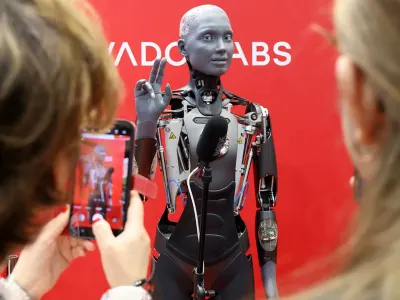
Ameca vs Moya
Which humanoid robot is better? Ameca vs Moya compared for dexterity, AI capabilities, and price.
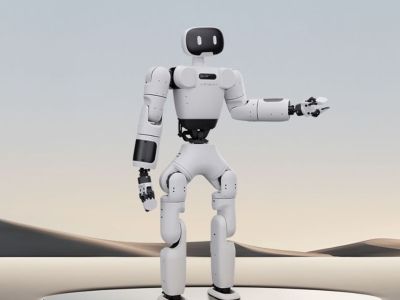
AgiBot X1 vs Moya
In-depth comparison of AgiBot X1 and Moya, covering hardware capabilities, teleoperation, autonomy levels, and enterprise readiness for industrial and social robotics deployment.

Aria - Robot Girlfriend vs Moya
In-depth comparison of Aria - Robot Girlfriend and Moya, covering hardware capabilities, teleoperation, and enterprise readiness for companionship and service applications.
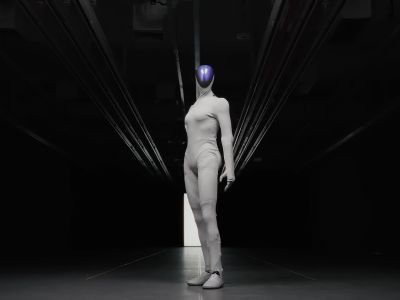
Next‑Gen IRON vs Moya
In-depth comparison of Next-Gen IRON by XPENG and Moya by DroidUp, covering hardware capabilities, teleoperation, and enterprise readiness.
Disclaimer
All content, comparisons, and verdicts on this website are based on our research, testing, and opinion. While we strive for accuracy, we do not guarantee the completeness, reliability, or suitability of any information. Performance, specifications, and results may vary depending on usage and conditions. This website and its authors are not responsible for any decisions, actions, or outcomes based on the information provided. Always verify product details with the manufacturer before making purchase or operational decisions.