Ameca vs Moya at a glance
Both Ameca and Moya are sold through a sales quote. Moya is the more affordable option at $173,000, while Ameca costs $250,000–$500,000. Moya is lighter at 32 kg, compared with 62 kg for Ameca. Ameca has more degrees of freedom (61 against 40 for Moya), which allows finer movement. Ameca is the taller of the two at 187 cm, against 165 cm for Moya.
| Key specs | Ameca | Moya |
|---|---|---|
| Price | $250,000–$500,000 | $173,000 (stronger) |
| Height | 187 cm | 165 cm |
| Weight | 62 kg | 32 kg |
| Top speed | — | 0.8 m/s |
| Runtime | — | 4 hours |
| Degrees of freedom | 61 (stronger) | 40 |
| Payload | 2 kg | 2 kg |
| Availability | Order via sales quote | Order via sales quote |
Last updated:
Which one fits your use?
Based on the uses each robot is built and marketed for. Open a use to see the specs that matter for it.
| Comparing for… | Ameca | Moya |
|---|---|---|
| Suited | Suited | |
| Suited | Suited | |
| Suited | Suited | |
| Suited | Not marketed | |
| Suited | Suited |
- Only Ameca is marketed for hospitality, retail and public-facing roles.
- Both suit research labs, education and training, home help and elder care and healthcare settings, so compare the specs for that use.
Ameca is positioned as a social humanoid platform for embodied AI, public demonstrations, and human-robot interaction research, making it a strong reference point for face-to-face interaction and expressive upper-body motion. Its larger footprint, high apparent facial articulation, and Tritium OS integration emphasize communication and testing scenarios over physical labor. Compared with Moya, Ameca is less focused on mobility and task execution, but stronger as an interaction-centric humanoid with extensive demo and research utility.
Moya is positioned as a humanoid for elder care companionship, education, customer service, and healthcare assistance, which makes it more deployment-oriented than a pure demo robot. Its lighter body, walking speed, teleoperation support, and broader practical use-case set differentiate it from Ameca's interaction and AI showcase profile. Compared with Ameca, Moya is designed to cover more everyday service contexts while still retaining humanoid form and social engagement features.
Detailed Analysis
How do both humanoids balance while walking?
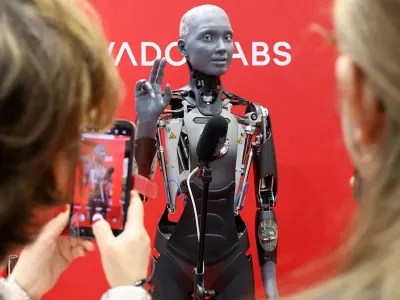
Ameca
Ameca is best understood as an interaction-focused humanoid rather than a walking platform, so mobility is not its main advantage. Moya is explicitly optimized for stable social walking at 3 km/h, giving it a clear lead in locomotion and balance for moving through human environments. That makes Moya more suitable for deployments where continuous movement matters, while Ameca is better suited to stationary or limited-mobility interaction settings. For buyers prioritizing walking behavior, Moya is the stronger choice. Moya reaches 0.83 m/s. Ameca's mobility type is stationary upper‑body only. Moya's mobility type is legged.
Which robot is better for complex manipulation tasks?

Moya
Ameca and Moya both list 2 kg per arm carrying capacity, but Moya has a higher deadlift capacity at 10 kg versus Ameca's 5 kg. Ameca offsets that with a larger 52-DOF configuration in public demos, which supports more expressive upper-body and hand motion. Moya's 40+ DOF includes head micro-expressions, suggesting a practical but less expansive manipulation setup. For high-expression manipulation and human-facing tasks, Ameca is stronger; for heavier lifting within similar arm payload limits, Moya is more capable. Ameca stands 187 cm tall and weighs 62 kg. Moya stands 165 cm tall and weighs 32 kg.
Which humanoid robot offers stronger autonomy?
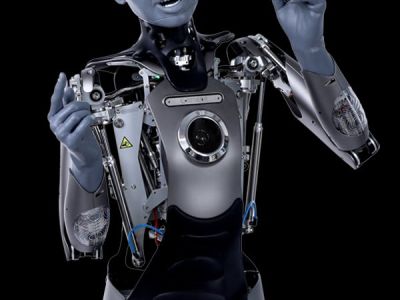
Ameca
Ameca is described as semi-autonomous, with emphasis on AI testing, public demos, and API-enabled interaction workflows. Moya is described as highly autonomous with teleoperation support, which indicates a broader operational model for real-world task execution. That difference matters for buyers comparing a research platform against a service robot architecture. For autonomy and deployment flexibility, Moya has the edge; for controlled AI experimentation, Ameca remains highly relevant. Ameca's control method is listed as telepresence control, AI automation via SDK/API. Moya's control method is listed as autonomous, teleoperation, learned behaviors.
How do payload and lifting specs compare?

Moya
Both robots share the same 2 kg per arm carrying capacity, so their arm payload envelope is effectively aligned for light-object handling. The important difference is in deadlift capacity, where Moya is rated at 10 kg and Ameca at 5 kg. That means Moya has more reserve strength for lifting tasks that go beyond simple arm carriage. Buyers needing greater load tolerance should favor Moya, while Ameca is sufficient for lighter demonstration and interaction workloads. Moya runs for 4 hours per charge and recharges in 3 hours.
Which robot lasts longer on battery power?
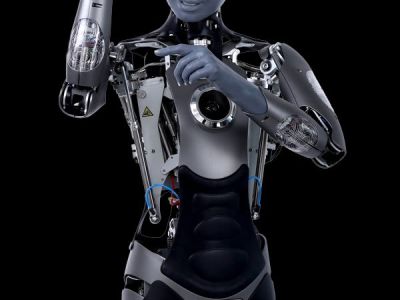
Ameca
Ameca runs on mains power with no battery, so it can work continuously while plugged in. Because the specs are not directly comparable in the same units, Moya still appears easier to plan around for extended deployment. For runtime visibility and operational planning, Moya is the more practical option. Ameca has 61 degrees of freedom, carries 2 kg per arm and can deadlift 5 kg. Moya has 40 degrees of freedom, carries 2 kg per arm and can deadlift 10 kg. Ameca's safety features include emergency‑stop button and power‑disconnect interlocks. Moya's safety features include force limiting, collision detection, emergency stop and collaborative mode.
Which humanoid fits general purpose services better?

Moya
Ameca is best aligned with human-robot interaction studies, public demonstrations, and AI testing, which makes it a specialized platform for social embodiment and research. Moya targets elder care companionship, educational tutoring, commercial customer service, and healthcare assistance, which gives it a wider general-purpose service profile. That positioning makes Moya more deployment-ready across service sectors, while Ameca remains more specialized for research and showcase use. For general-purpose service work, Moya is the better fit. Ameca's sensors include 2 × 8 MP cameras, 2 × microphones, 4-channel chest microphone and 20 W chest speaker. Moya's sensors include RGB cameras, stereo cameras and force sensors.
Which humanoid robot is better for industrial manufacturing?

Ameca
Ameca is not positioned as an industrial work robot, and its published use cases center on interaction studies and demonstrations. Moya is also not a manufacturing robot, but its higher deadlift capacity, teleoperation support, and autonomous operation make it more adaptable to structured service environments. Neither platform is ideal for heavy industrial manufacturing, but Moya is closer to practical task deployment than Ameca. For enterprise operations with physical tasks, Moya is the more suitable starting point. Ameca's listed uses include human-robot interaction studies, public demonstrations and AI testing. Moya's listed uses include elder care companionship, educational tutoring, commercial customer service and healthcare assistance.
How do sensors and software affect deployment?

Moya
Ameca exposes a broad interaction stack through Tritium OS, APIs, SDK support, and GPT-style integration support, which is useful for conversational and embodied AI experiments. Moya uses a proprietary OS, ROS2 compatibility, and Python APIs, which can be more practical for robotics integration and development workflows. Ameca's sensor emphasis is optimized around rich human interaction, while Moya's set includes stereo cameras, force sensing, and temperature data for service contexts. For software extensibility and field integration, Moya is more deployment-oriented, while Ameca is more specialized for interaction research.
Which robot is safer around people?
Ameca
Ameca includes an emergency-stop button, power-disconnect interlocks, and software collision-avoidance thresholds, which are appropriate for supervised human-facing demos. Moya adds force limiting, collision detection, emergency stop, and collaborative mode, which better support close-proximity operation around people. Both are designed with safety in mind, but Moya's collaborative operation framing is more directly aligned with everyday mixed human-robot environments. For repeated operation around people, Moya has the more deployment-ready safety profile. Moya navigates with visual SLAM and indoor SLAM. Ameca runs tritium OS. Moya runs proprietary OS, ROS2 compatible, Python APIs.
Capabilities & Operational Tasks
Head-to-head comparison of what Ameca and Moya can do, their applications, and capabilities.
What Can Ameca & Moya Do?
94 tasks listed for both, 3 only for Ameca, 2 only for Moya.
Both Ameca and Moya
4Only Ameca
3Only Moya
2Technical Specifications
Ameca and Moya differ on 36 of the 38 specifications listed for both.
Manipulation & Load Capacity
3 Comparative Metrics
Kinematic Architecture & Dexterity
4 Comparative Metrics
Energy & Power Management
7 Comparative Metrics
Frequently Asked Questions
Which robot has better hands and upper-body dexterity for manipulation research?
Ameca by Engineered Arts has the higher published DoF profile at 61 DOF, supporting richer expressive motion. Moya by DroidUp offers 40+ DOF, which is capable but less expansive.
Which humanoid robot is more ready for elder care or customer service deployment?
Moya by DroidUp is more deployment-ready for elder care and customer service because those are core use cases. Ameca by Engineered Arts is aimed more at demos, HRI studies, and AI testing.
Which humanoid robot is better for human-robot interaction studies and public demonstrations?
Ameca by Engineered Arts is better for human-robot interaction studies and public demonstrations. Its social-humanoid design, Tritium OS, and GPT-style integration support are built around interaction testing.
Can I buy Ameca or Moya today?
Both Ameca and Moya are sold through a sales quote.
Which costs less, Ameca or Moya?
Moya costs less at $173,000, against $250,000–$500,000 for Ameca.
Which is lighter, Ameca or Moya?
Moya is lighter at 32 kg, compared with 62 kg for Ameca. Ameca is also taller, at 187 cm against 165 cm for Moya.
Which uses is each robot marketed for, Ameca or Moya?
Only Ameca is marketed for hospitality, retail and public-facing roles. Both suit research labs, education and training, home help and elder care and healthcare settings, so compare the specs for that use.
How much does Ameca cost?
Ameca is listed at $250,000–$500,000.
How much does Moya cost?
Moya is listed at $173,000.
Where can I buy Ameca?
Ameca is sold through Engineered Arts's sales team; request a quote.
Where can I buy Moya?
Moya is sold through DroidUp's sales team; request a quote.
Related Comparisons
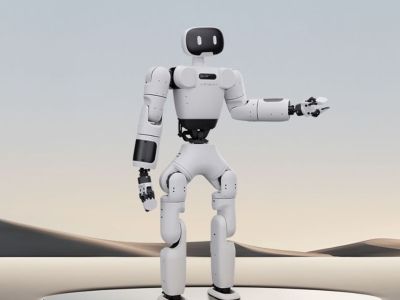
AgiBot X1 vs Moya
In-depth comparison of AgiBot X1 and Moya, covering hardware capabilities, teleoperation, autonomy levels, and enterprise readiness for industrial and social robotics deployment.

Elf-Xuan 2.0 vs Moya
Elf-Xuan 2.0 vs Moya: AheadForm's stationary lifelike-face robot against DroidUp's walking companion humanoid, compared on faces, hands and uses.

Aria - Robot Girlfriend vs Moya
In-depth comparison of Aria - Robot Girlfriend and Moya, covering hardware capabilities, teleoperation, and enterprise readiness for companionship and service applications.
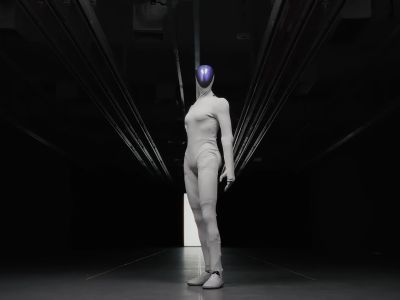
Next-Gen IRON vs Moya
In-depth comparison of Next-Gen IRON by XPENG and Moya by DroidUp, covering hardware capabilities, teleoperation, and enterprise readiness.
Verdicts reflect our research and opinion. Confirm specifications with the manufacturer before buying.