Robots Capable of Maintenance
Browse every robot and robotic system verified for maintenance operations across industrial, commercial, and research deployments.
Orano And Capgemini
Hoxo Robot
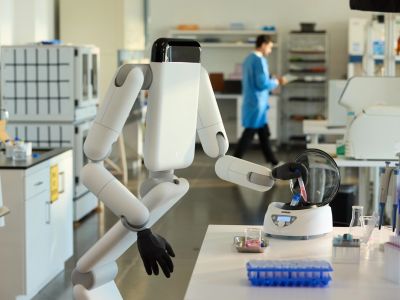
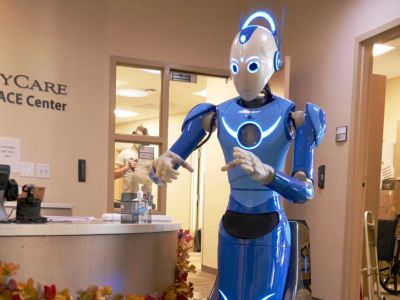
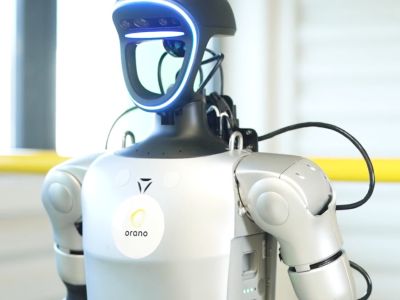
Hoxo is an intelligent humanoid robot designed specifically for the nuclear industry, combining advanced AI, real-time perception, and autonomous navigation to operate safely alongside human teams in hazardous environments. It replicates human movements and performs technical gestures with precision, enhancing safety by reducing human exposure to risky zones. Hoxo integrates robotics, computer vision, digital twins, and AI to deliver scalable robotic assistance, redefining human-machine collaboration in sensitive industrial settings. Its deployment at Orano’s Melox site marks a pioneering step in using humanoid robots as “Non-Human Workers” in high-stakes sectors.

Zerith
Zerith H1
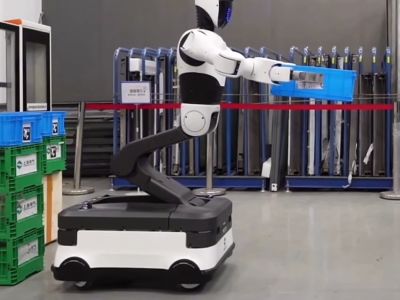
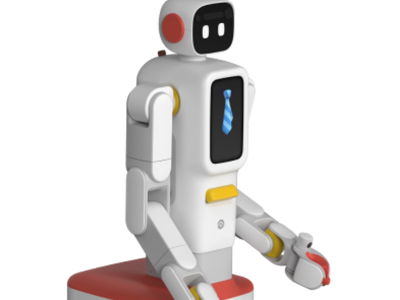
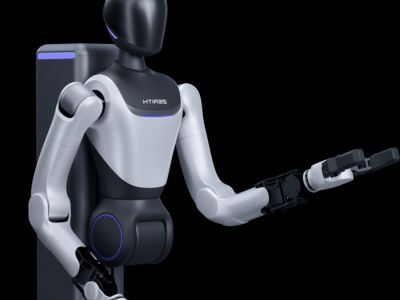
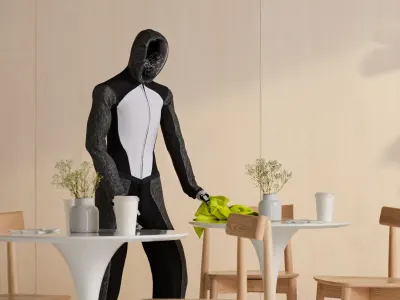
The Zerith H1 is a humanoid robot engineered for hotel housekeeping and service operations. It features a height adjustable body mounted on flexible universal wheels, enabling smooth navigation through narrow corridors and complex room layouts. The robot works across multiple vertical planes, allowing it to stoop to pick items from floors, restock toiletries, organize shoes, and clean bathrooms precisely. Powered by advanced AI with multi sensor fusion, H1 autonomously handles repetitive, labor intensive chores, improving efficiency, safety, and consistency while reducing human workload and integrating seamlessly into dynamic hospitality workflows for modern hotels worldwide operations.

Sunday Robotics
Memo
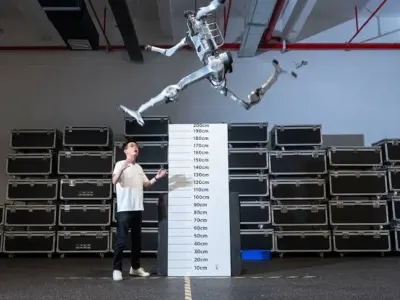
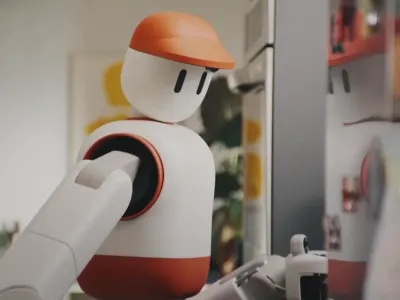
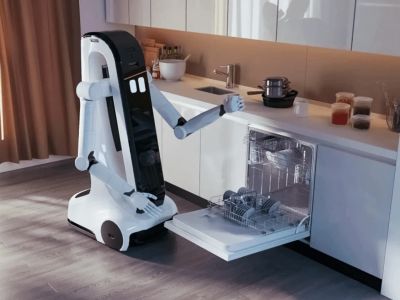
Memo is a home-focused humanoid-style robot developed by Sunday Robotics to autonomously perform domestic chores such as dishwashing, laundry folding, tidying, and espresso preparation. Standing 1.7 meters tall on a wheeled base, it features a torso with two multi-DoF arms and dual grippers, capable of reaching from floor level up to around 2.1 meters (7 feet). Designed for family environments, Memo emphasizes safety and stability through a low center of gravity, compliant control, and a soft silicone exterior. It learns from real household data via Sunday’s Skill Capture Glove, mastering long-horizon tasks in unstructured homes.

LG Electronics
CloiD
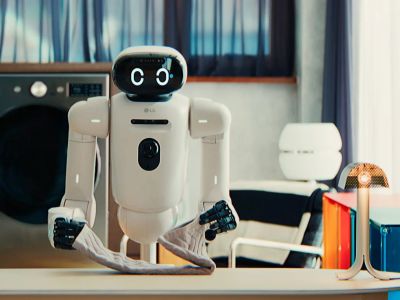
LG CLOiD is an AI-powered humanoid robot designed for household automation, featuring a wheeled base for stable indoor navigation, adjustable torso, and dual articulated arms with 7 degrees of freedom each for precise manipulation. Equipped with a head unit serving as an AI hub, it integrates cameras, sensors, display, speakers, and voice-based generative AI to enable natural human interaction via speech, gestures, and facial expressions. Core technologies include Vision Language Model (VLM) for interpreting images into language and Vision Language Action (VLA) for converting visuals into physical tasks like folding laundry, loading dishwashers, organizing refrigerators, and assisting with cooking. It learns user patterns through LG ThinQ platform connectivity, proactively handling chores to create a zero-labor home environment. With 5-finger hands for dexterous gripping, low center of gravity for safety around families, and self-driving tech from LG vacuums, CLOiD adapts to kitchens, laundry rooms, and living spaces, reducing daily effort while providing emotional comfort.

1X Technologies
NEO Home Robot
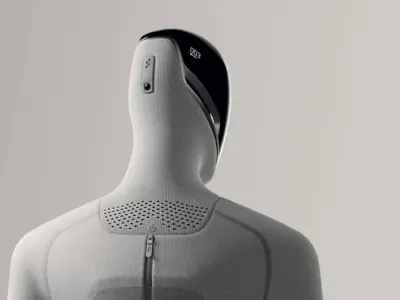
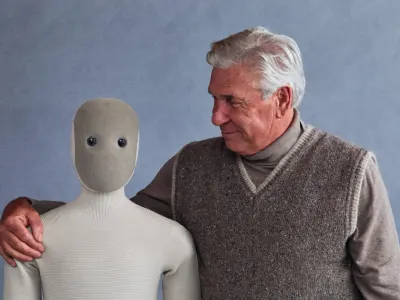
NEO Gamma is 1X Technologies’ latest home-focused humanoid, blending a sleek 3D-printed nylon-knit exterior with advanced AI for natural interaction. At 1.65 m tall, it walks with a realistic gait, squats to pick up objects, and even sits on chairs. Its custom language model enables fluid conversation and task learning, while “Emotive Ear Rings” provide intuitive visual feedback. Whether providing elderly care, handling daily chores, or offering companionship, NEO Gamma adapts to household routines with surprising dexterity and warmth.

NEURA Robotics
MiPA
MiPA by NEURA Robotics is an AI-powered personal assistant robot designed for home, care, and workplace environments. It features advanced sensors including force-torque, LiDAR, cameras, and ultrasonic sensors, enabling safe, touchless human detection and real-time obstacle avoidance. MiPA supports multi-language voice commands, gesture control, and customizable touch interfaces. Its modular design allows for flexible expansion with add-ons tailored to specific tasks such as light logistics, item transport, and care assistance. Optimized primarily for indoor use, MiPA adapts to dynamic environments and learns new tasks autonomously, making it suitable for both personal and commercial applications.

Figure AI
Figure 03
Figure 03 is a general-purpose humanoid robot designed specifically for home environments, capable of performing household tasks such as laundry, cleaning, and dishwashing autonomously. It features advanced tactile fingertip sensors that detect forces as small as three grams, enabling delicate manipulation of fragile and irregular objects. The robot is equipped with a palm camera and soft textiles covering to enhance safety and maneuverability in tight spaces. It uses the Helix AI system for pixel-to-action learning, allowing it to adapt to unpredictable, ever-changing home layouts. Figure 03 is lighter and smaller than its predecessor, with improved battery safety and wireless charging capabilities, making it a practical assistant for everyday living.

Matrix Robotics
Matrix 3
MATRIX-3 is a next-generation humanoid robot that integrates biomimetic design with advanced AI for autonomous task execution in commercial, industrial, and domestic environments. The robot features a 3D woven bionic skin with distributed tactile sensors capable of detecting micro-forces as low as 0.1 newtons, enabling safe human-robot interaction and delicate object manipulation. Its 27-degree-of-freedom Lingxi Hand uses cable-driven actuation to perform complex tasks including tool operation and fabric handling. Full-body motion is powered by algorithms trained on human motion capture data, allowing natural gait patterns across uneven terrain. The cognitive core enables zero-shot generalization, allowing the robot to adapt to new tasks without extensive retraining.

Karlsruhe Institute of Technology (KIT)
ARMAR-7
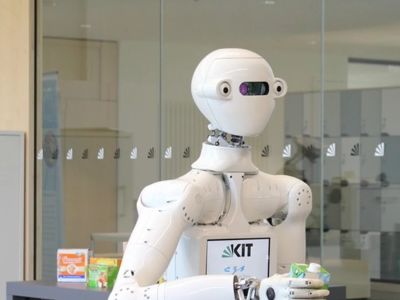
ARMAR-7 is the latest humanoid robot from KIT's ARMAR family, engineered for assistance in human environments like households and care facilities. Featuring dual torque-controlled 8-DoF arms, underactuated five-finger humanoid hands, a head with stereo vision, a torso, and a holonomic mobile platform, it stands at anthropomorphic dimensions for seamless interaction. With 32 controllable degrees of freedom driven by EtherCAT, it integrates torque sensors in joints, force-torque sensors in wrists, and absolute encoders for precise manipulation. ARMAR-7 excels in tasks such as opening doors, loading dishwashers, handing over objects, and recognizing speech commands like "Bring me the milk." It learns from human demonstrations via imitation learning, processes visual data for object recognition, interprets gestures and intentions, and employs cognitive architecture for contextual understanding, error recovery, and autonomous adaptation in daily activities.

Genesis AI
Eno
Eno is Genesis AI’s first general-purpose robot, designed as a bi-dexterous mobile manipulator rather than a classic legged humanoid. It combines a wheeled base, an adjustable torso, and highly dexterous arms and hands to perform multi-step tasks in factories, laboratories, logistics sites, and later service environments. Genesis says Eno is built around its GENE robotics foundation model, which is intended to give the robot memory, reasoning, and task adaptation across changing conditions. Public reporting indicates the robot emphasizes practical work over humanoid appearance, with an optional chest display for status and reasoning transparency, and hand hardware focused on manipulation, touch, and safety.

Kawada Robotics
HRP-3
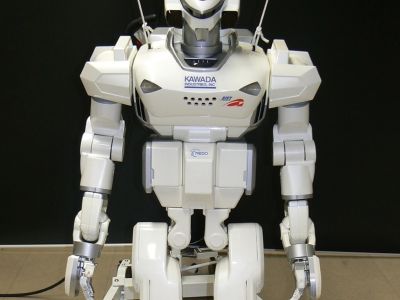
The HRP-3 humanoid robot, developed by Kawada Industries in collaboration with AIST and Kawasaki Heavy Industries, represents a significant advancement in bipedal robotics for harsh environments. Standing at 160 cm tall and weighing 68 kg, it features 36-42 degrees of freedom, enabling complex manipulations and stable locomotion on slippery or uneven surfaces. Designed for disaster relief, construction, and industrial tasks, HRP-3 boasts dustproof and water-resistant construction, allowing operation under heavy rain or dust. Enhanced leg-arm coordination supports carrying heavy loads, while autonomous/remote hybrid control improves task efficiency. Equipped with stereo cameras, gyroscopes, accelerometers, and force sensors, it navigates challenging terrains, recovers from falls, and performs collaborative work with humans. Its robust hardware and advanced software make it a pioneer in practical humanoid applications beyond laboratories.

Persona AI
Persona Humanoid
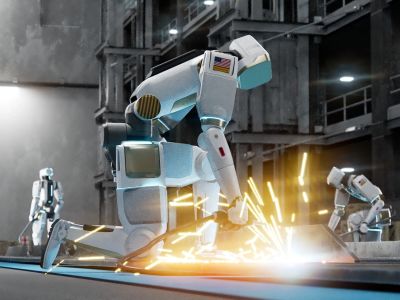
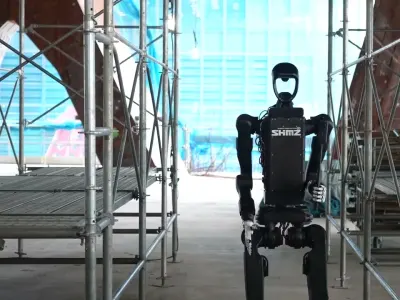
Persona Humanoid is an industrial-grade bipedal robot engineered for heavy-duty applications in shipyards, construction sites, and manufacturing facilities. Built on a modular platform, it performs skilled physical tasks including welding, grinding, inspection, and material handling with extreme dexterity. The robot operates autonomously in complex, uneven environments, adapting to dynamic conditions while supporting human workers. Powered by advanced embodied AI and trained on extensive datasets, it features robust navigation, force-sensitive manipulation, and long runtime for multi-shift operations. Designed for safety and endurance, Persona Humanoid integrates seamlessly into industrial workflows, offering a transformative solution for repetitive, high-value labor where precision and reliability are critical.

UBTECH Robotics
UWORLD U1 Ultra
The UWORLD U1 Ultra is UBTECH Robotics’ flagship hyper-bionic humanoid, designed for premium companionship, hospitality, and research. It features biomimetic silicone skin, an emotion-driven AI capable of recognizing over 20 emotional states with 500ms response latency, and 88 degrees of freedom for fluid, human-like motion. The robot stands 168 cm (female) or 183 cm (male) tall, weighs 35.2 kg or 42 kg respectively, and excels in autonomous walking, dancing, and expressive gestures. Targeted at high-end applications, it prioritizes emotional connection over heavy labor, with a runtime of 2–4 hours and Wi-Fi connectivity for home companions, educational assistants, and elderly care support.

Beyond Imagination
Beomni 1.0
Beomni 1.0 is a wheeled humanoid robot designed for versatile remote operation and AI-assisted tasks across industries like healthcare, manufacturing, agriculture, and eldercare. Featuring human-like upper body with articulated head, shoulders, waist, arms, and dexterous hands with opposable thumbs, it lifts up to 15.88 kg per arm for heavy loads while performing delicate actions like pinching salt or opening bottles. Four-wheel base enables traversal over mud, sand, snow, and rough terrain. Initially teleoperated via VR headset and gloves with low-latency stereo vision, haptic feedback, and 3D audio, its evolving AI brain learns from demonstrations to achieve semi-autonomy and full autonomy. Advanced sensors support object recognition, navigation, and multitasking, promoting safer, more productive human-robot collaboration without physical presence requirements.

Waseda University
AIREC
AIREC is a humanoid robot developed by Waseda University under Japan's JST Moonshot Program, specializing in elderly care and medical assistance. Standing 154 cm tall and weighing 150 kg, it features bipedal design with advanced AI for real-time human movement recognition, force adjustment, and adaptive behaviors. Key capabilities include patient repositioning to prevent bedsores, assisting with dressing like putting on socks, joint rehabilitation, biometric data acquisition (heart rate, blood pressure, body temperature), ultrasound examinations, and basic cooking motions. Powered by deep neural networks for predictive joint movements and embodied intelligence, AIREC integrates multimodal learning from human demonstrations, enabling natural physical interactions, emotional expression, and semi-autonomous caregiving tasks in nursing environments. Variants like Dry-AIREC emphasize safe, pain-free support for daily activities, bridging the gap in Japan's aging society.

German Aerospace Center (DLR)
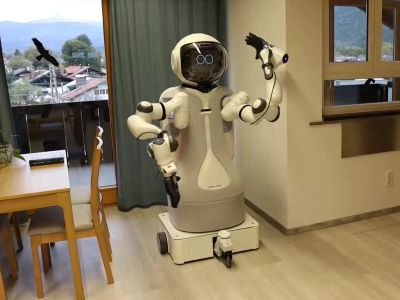
GARMI
GARMI is a humanoid assistance robot engineered for elderly care, featuring a wheeled mobile base for efficient indoor navigation and upper-body humanoid design for natural human interaction. It supports activities of daily living such as fetching objects, serving meals, clearing dishes, and physical rehabilitation exercises with safe torque-controlled arms. Equipped with a multimodal head including screens and sensors, GARMI enables intuitive voice commands via ChatGPT integration for multilingual communication, internet searches, and telemedical support like ECG monitoring, blood pressure checks, and ultrasound assistance. Full-body torque control ensures collision-free operation, slowing or stopping upon detecting humans or obstacles. A digital twin simulates safe movements beforehand, while AI enhances precise grasping without spills. Deployed in test apartments, it manages full-day assistance from morning routines to emergency doctor bookings, bridging physical, audiovisual, and haptic interactions to su

Futuring Robot
Futuring F2
The Futuring F2 is a cutting-edge bipedal humanoid robot engineered for versatile industrial and collaborative applications. Standing at human scale, it features 28 degrees of freedom for fluid, human-like movements, including dexterous 5-fingered hands capable of precise manipulation. Powered by a 2.25 kWh torso-mounted battery, it delivers up to 5 hours of continuous operation at speeds reaching 1.2 m/s. Advanced AI integration includes onboard vision-language models for real-time perception via six RGB cameras, enabling autonomous navigation, object recognition, and speech-to-speech interaction powered by custom LLMs. With integrated cabling, matte-black durable exterior, and 20 kg payload capacity, the F2 excels in warehouses, manufacturing, and logistics, performing tasks like picking, assembly, and human handoff. Its electric actuators ensure quiet, reliable performance in human environments, bridging the gap between automation and seamless collaboration.

Agility Robotics
Digit
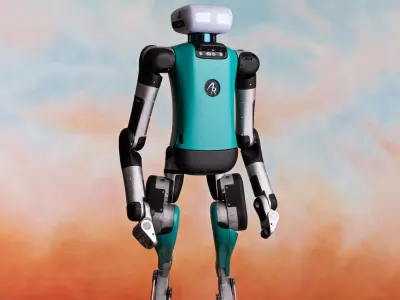
Digit, developed by Agility Robotics, is a groundbreaking humanoid robot designed to work alongside humans in environments built for people. Standing 5'9" tall and weighing 143 pounds, Digit walks upright on two legs with bird-like agility, allowing it to navigate stairs, tight corridors, and uneven ground. Its lightweight arms with four degrees of freedom enable it to lift and move packages up to 35 pounds, making it ideal for repetitive logistics tasks like tote retrieval and warehouse stacking. Digit is powered by onboard computers, uses LiDAR and depth cameras for navigation, and connects to the Agility Arc cloud platform for autonomous task coordination and fleet management. With a modular design, it can be customized for a wide range of industrial applications. Digit isn’t just a robot—it’s a step toward blending robotics into everyday human workflows, tackling labor shortages while enhancing efficiency and safety in real-world workplaces.

1X Technologies
NEO Beta
NEO Beta is a home-focused humanoid standing 1.65 m tall and weighing 30 kg, engineered to blend seamlessly into domestic life. It walks at up to 4 km/h and sprints at 12 km/h, handling payloads of up to 20 kg. Powered by tendon-driven actuators and advanced AI, it performs chores, fetches items, and interacts via voice and touchscreen. Its modular design, soft exterior, and cloud-connected learning enable continuous feature updates and personalized behavior adaptations.

Hanson Robotics
Sophia
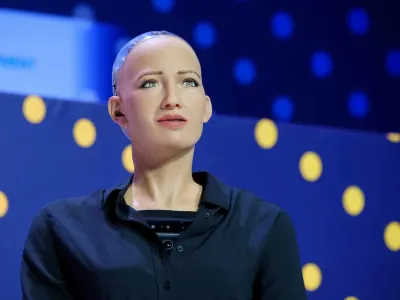
Sophia is Hanson Robotics’ iconic social humanoid robot, unveiled in 2016 and famed for her lifelike expressions and conversational abilities. She combines advanced neural‑network AI, natural language processing, and computer vision to recognize faces, understand emotions, and engage in dialogue that feels remarkably human. Designed as a research and public‑engagement platform, Sophia has appeared at the UN, talk shows, and global conferences, and holds the distinction of being the first robot granted citizenship. Her expressive LED “eyes,” animatronic facial mechanisms, and cloud‑connected learning system illustrate a playful yet profound leap in human‑robot interaction.

Engineered Arts
Ameca
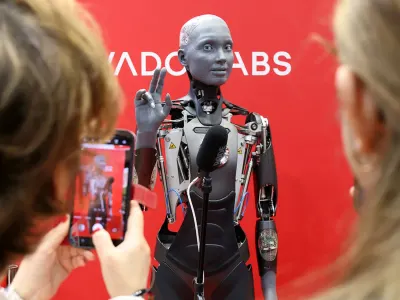
Ameca is a humanoid robot platform by Engineered Arts designed for advanced automation and task execution across industrial applications. The system integrates bipedal locomotion, dexterous manipulation, and autonomous perception capabilities. Built for deployment in manufacturing, research, and service environments, the platform provides autonomous task learning and operational flexibility for diverse real-world applications.

Honda
ASIMO 2.0
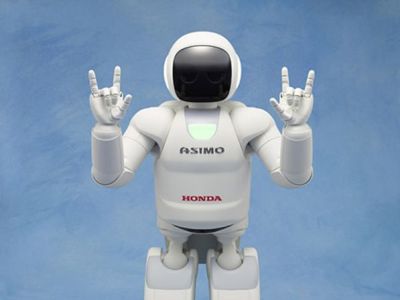
ASIMO 2.0 is Honda’s advanced humanoid robot, designed to showcase the future of human-robot interaction. With a sleek design and impressive mobility, it can walk, run, climb stairs, and even perform tasks like opening doors and carrying objects. Its enhanced sensors and AI let it recognize people, respond to voice commands, and interact autonomously in real-time environments. ASIMO 2.0 was intended as a research platform and public ambassador, embodying over a decade of robotics innovation. It demonstrates Honda’s commitment to robotics as a tool for improving lives, especially in public service, research, and caregiving scenarios.