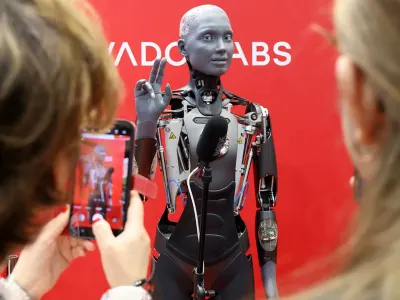
Ameca is positioned as a social humanoid platform for embodied AI, public demonstrations, and human-robot interaction research, making it a strong reference point for face-to-face interaction and expressive upper-body motion. Its larger footprint, high apparent facial articulation, and Tritium OS integration emphasize communication and testing scenarios over physical labor. Compared with Moya, Ameca is less focused on mobility and task execution, but stronger as an interaction-centric humanoid with extensive demo and research utility.
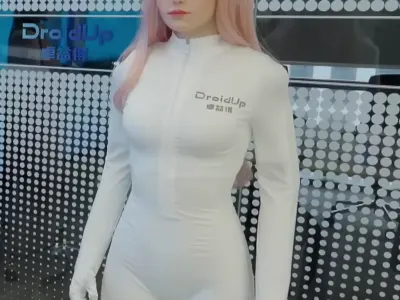
Moya is positioned as a humanoid for elder care companionship, education, customer service, and healthcare assistance, which makes it more deployment-oriented than a pure demo robot. Its lighter body, walking speed, teleoperation support, and broader practical use-case set differentiate it from Ameca's interaction and AI showcase profile. Compared with Ameca, Moya is designed to cover more everyday service contexts while still retaining humanoid form and social engagement features.
Detailed Analysis

How do both humanoids balance while walking?
Ameca is best understood as an interaction-focused humanoid rather than a walking platform, so mobility is not its main advantage. Moya is explicitly optimized for stable social walking at 3 km/h, giving it a clear lead in locomotion and balance for moving through human environments. That makes Moya more suitable for deployments where continuous movement matters, while Ameca is better suited to stationary or limited-mobility interaction settings. For buyers prioritizing walking behavior, Moya is the stronger choice.
Which robot is better for complex manipulation tasks?
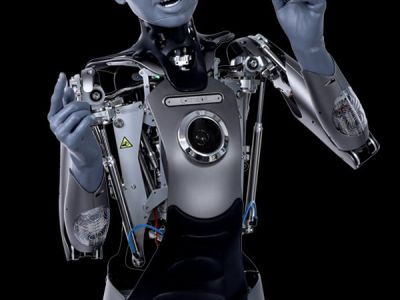
Ameca and Moya both list 2 kg per arm carrying capacity, but Moya has a higher deadlift capacity at 10 kg versus Ameca's 5 kg. Ameca offsets that with a larger 52-DOF configuration in public demos, which supports more expressive upper-body and hand motion. Moya's 40+ DOF includes head micro-expressions, suggesting a practical but less expansive manipulation setup. For high-expression manipulation and human-facing tasks, Ameca is stronger; for heavier lifting within similar arm payload limits, Moya is more capable.
Which humanoid robot offers stronger autonomy?
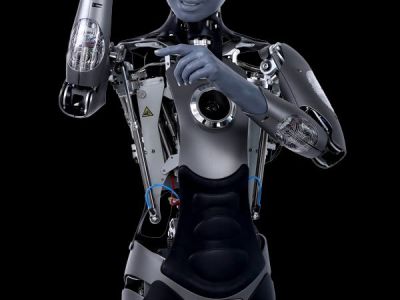
Ameca is described as semi-autonomous, with emphasis on AI testing, public demos, and API-enabled interaction workflows. Moya is described as highly autonomous with teleoperation support, which indicates a broader operational model for real-world task execution. That difference matters for buyers comparing a research platform against a service robot architecture. For autonomy and deployment flexibility, Moya has the edge; for controlled AI experimentation, Ameca remains highly relevant.

How do payload and lifting specs compare?
Both robots share the same 2 kg per arm carrying capacity, so their arm payload envelope is effectively aligned for light-object handling. The important difference is in deadlift capacity, where Moya is rated at 10 kg and Ameca at 5 kg. That means Moya has more reserve strength for lifting tasks that go beyond simple arm carriage. Buyers needing greater load tolerance should favor Moya, while Ameca is sufficient for lighter demonstration and interaction workloads.
Which robot lasts longer on battery power?
Ameca does not publicly disclose battery runtime, so endurance planning is limited by available published information. Moya lists a 3-5 year battery figure, which suggests a much stronger focus on long service life or battery system longevity. Because the specs are not directly comparable in the same units, Moya still appears easier to plan around for extended deployment. For runtime visibility and operational planning, Moya is the more practical option.
Which humanoid fits general purpose services better?
Ameca is best aligned with human-robot interaction studies, public demonstrations, and AI testing, which makes it a specialized platform for social embodiment and research. Moya targets elder care companionship, educational tutoring, commercial customer service, and healthcare assistance, which gives it a wider general-purpose service profile. That positioning makes Moya more deployment-ready across service sectors, while Ameca remains more specialized for research and showcase use. For general-purpose service work, Moya is the better fit.

Which humanoid robot is better for industrial manufacturing?
Ameca is not positioned as an industrial work robot, and its published use cases center on interaction studies and demonstrations. Moya is also not a manufacturing robot, but its higher deadlift capacity, teleoperation support, and autonomous operation make it more adaptable to structured service environments. Neither platform is ideal for heavy industrial manufacturing, but Moya is closer to practical task deployment than Ameca. For enterprise operations with physical tasks, Moya is the more suitable starting point.

How do sensors and software affect deployment?
Ameca exposes a broad interaction stack through Tritium OS, APIs, SDK support, and GPT-style integration support, which is useful for conversational and embodied AI experiments. Moya uses a proprietary OS, ROS2 compatibility, and Python APIs, which can be more practical for robotics integration and development workflows. Ameca's sensor emphasis is optimized around rich human interaction, while Moya's set includes stereo cameras, force sensing, and temperature data for service contexts. For software extensibility and field integration, Moya is more deployment-oriented, while Ameca is more specialized for interaction research.
Which robot is safer around people?
Ameca includes an emergency-stop button, power-disconnect interlocks, and software collision-avoidance thresholds, which are appropriate for supervised human-facing demos. Moya adds force limiting, collision detection, emergency stop, and collaborative mode, which better support close-proximity operation around people. Both are designed with safety in mind, but Moya's collaborative operation framing is more directly aligned with everyday mixed human-robot environments. For repeated operation around people, Moya has the more deployment-ready safety profile.
Analysis Score Summary
Total Score
8
Ameca
VS
Based on Detailed Analysis
Total Score
10
Moya
📊 Win: 2 points | Trade-off: 1 point each
Scores are summed across every insight: a clear winner earns 2 points, while balanced trade-offs give each robot 1 point. The total reflects how often each robot outperforms the other (or shares the spotlight) throughout the detailed analysis sections.
Capabilities & Operational Tasks
Head-to-head comparison of what Ameca and Moya can do, their applications, and capabilities.
What Can Ameca & Moya Do?
7Core operational tasks, activities, and physical manipulation duties evaluated side-by-side.
| Task & Description | Model AAmeca7 supported | Model BMoya4 supported |
|---|---|---|
| Autonomous task execution | High | High |
| Collaborative work | High | High |
| Human interaction | High | High |
| Machine operation | Moderate | — |
| Maintenance | Low | — |
| Navigation | High | High |
| Repetitive physical tasks | Low | — |
Technical Specifications
Head-to-head performance data and metrics
| Specification | Model AAmeca | Model BMoya |
|---|---|---|
Functional Utility & Use Cases4 Comparative Metrics | ||
Control Method | Telepresence control; AI automation via SDK/API | autonomous, teleoperation, learned behaviors |
Use Cases | Human-robot interaction studies, public demonstrations, AI testing | elder care companionship, educational tutoring, commercial customer service, healthcare assistance |
Multi Robot Coord | Multi-robot coordination via network | Yes |
Pet Friendly | Yes (non‑mobile; safe for animals) | Yes, with safety protocols |
Manipulation & Load Capacity4 Comparative Metrics | ||
Carrying Capacity | 2 kg per arm | 2 kg per arm |
Deadlift Capacity | 5 kg | 10 kg maximum |
Payload Type | Not specified | people interaction, precision instruments, packages |
Modular Attachments | Upgradeable arm and head modules; plug‑and‑play sensor bays | tool changers, end-effector options |
Kinematic Architecture & Dexterity4 Comparative Metrics | ||
Degrees of Freedom | 52 DOF (based on public demos) | 40+ DOF (including head micro-expressions) |
Material | Grey rubber skin, aluminum frame, composites | aluminum frame, soft skin composites |
Mobility Type | Stationary upper‑body only | Legged (Biomimetic Bipedal walking). |
Hardware Interface | 2× USB‑A; 1× USB‑C; GigE port; HDMI out | USB, CAN bus, GPIO |
Functional Utility & Use Cases
4 Comparative Metrics
Manipulation & Load Capacity
4 Comparative Metrics
Kinematic Architecture & Dexterity
4 Comparative Metrics
Frequently Asked Questions
Which humanoid robot has the higher payload and deadlift capacity for light lifting tasks?
Moya by DroidUp has the higher deadlift capacity at 10 kg versus Ameca by Engineered Arts at 5 kg. Both robots carry 2 kg per arm, so Moya has the stronger lifting margin.
Is Ameca by Engineered Arts more autonomous than Moya by DroidUp for enterprise deployment?
Moya by DroidUp is more autonomous because it is described as highly autonomous with teleoperation support. Ameca by Engineered Arts is semi-autonomous and better suited to controlled interaction workflows.
Which humanoid robot walks more stably in human environments, Ameca by Engineered Arts or Moya by DroidUp?
Moya by DroidUp is better for stable walking, with a speed of 3 km/h. Ameca by Engineered Arts is more interaction-focused and does not emphasize comparable locomotion performance.
Which robot has better hands and upper-body dexterity for manipulation research?
Ameca by Engineered Arts has the higher published DoF profile at 52 DOF in public demos, supporting richer expressive motion. Moya by DroidUp offers 40+ DOF, which is capable but less expansive.
Which humanoid robot is more ready for elder care or customer service deployment?
Moya by DroidUp is more deployment-ready for elder care and customer service because those are core use cases. Ameca by Engineered Arts is aimed more at demos, HRI studies, and AI testing.
Which humanoid robot is better for human-robot interaction studies and public demonstrations?
Ameca by Engineered Arts is better for human-robot interaction studies and public demonstrations. Its social-humanoid design, Tritium OS, and GPT-style integration support are built around interaction testing.
Related Comparisons
Discover similar robot matchups to expand your knowledge and find the perfect solution
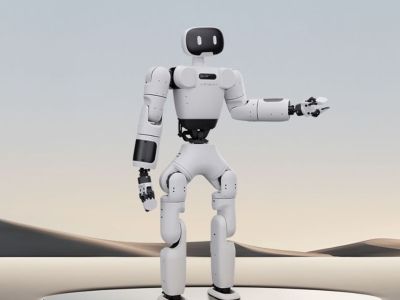
AgiBot X1 vs Moya
In-depth comparison of AgiBot X1 and Moya, covering hardware capabilities, teleoperation, autonomy levels, and enterprise readiness for industrial and social robotics deployment.

Elf-Xuan 2.0 vs Moya
In-depth comparison of Elf-Xuan 2.0 and Moya, covering hardware capabilities, teleoperation, and enterprise readiness.

Aria - Robot Girlfriend vs Moya
In-depth comparison of Aria - Robot Girlfriend and Moya, covering hardware capabilities, teleoperation, and enterprise readiness for companionship and service applications.
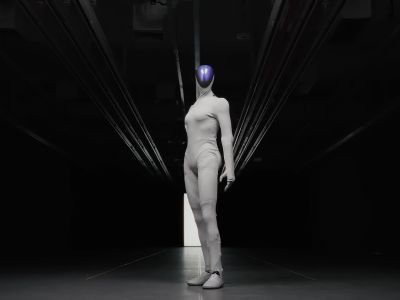
Next‑Gen IRON vs Moya
In-depth comparison of Next-Gen IRON by XPENG and Moya by DroidUp, covering hardware capabilities, teleoperation, and enterprise readiness.
Disclaimer
All content, comparisons, and verdicts on this website are based on our research, testing, and opinion. While we strive for accuracy, we do not guarantee the completeness, reliability, or suitability of any information. Performance, specifications, and results may vary depending on usage and conditions. This website and its authors are not responsible for any decisions, actions, or outcomes based on the information provided. Always verify product details with the manufacturer before making purchase or operational decisions.