The Unitree H2 is a full-sized humanoid robot positioned as an advanced platform for service, collaboration, and research applications. With a height of approximately 180 cm and weight around 70 kg, it focuses on dexterity and sophisticated manipulation enabled by its 31 degrees of freedom and enhanced joint torque. Its software foundation on ROS and Linux supports flexibility for developers, while its design emphasizes human-like articulation and potential use in factory and logistics environments.
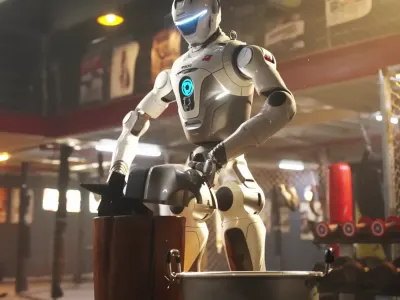
The EngineAI T800 is a humanoid robot designed for heavy-duty industrial and human-interactive tasks, with a slightly bulkier build at 185 cm tall and 85 kg. It features extensive sensor arrays including LiDAR and force sensors, and robust hardware enabling powerful and endurance-oriented performance with a four-year battery lifespan. Its control systems combine autonomous operation, learned behaviors, and teleoperation, geared toward applications like robot boxing, logistics, and retail assistance.
Detailed Analysis
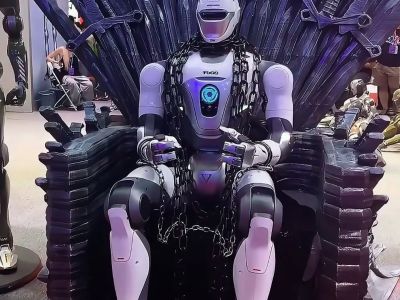
Design & Build Quality
The Unitree H2 stands 180 cm tall and weighs 70 kg, prioritizing dexterity with 31 degrees of freedom and a payload capacity of up to 21 kg on its arms. It utilizes a new hip configuration (F-A-R) and a serial stack waist for enhanced articulation. The T800 is slightly taller and heavier at 185 cm and 85 kg, respectively, built with an aerospace-grade aluminum alloy exoskeleton. It features 29 degrees of freedom and emphasizes strength, stability, and thermal management for continuous operations.
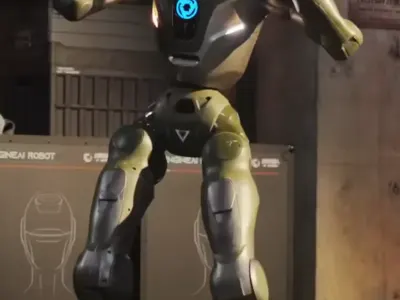
Mobility & Navigation
The H2 achieves speeds under 2 m/s, focusing on controlled, human-like motion with SLAM-based navigation suitable for collaborative and service tasks. The T800 moves at approximately 1.4 m/s and integrates visual SLAM with LiDAR mapping for robust environmental awareness. Its unique straight-leg walking and real-time micro-adjustments support stable motion over extended periods and demanding physical activities.
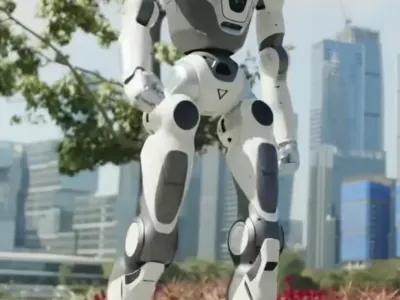
Sensors & Perception
Unitree H2 includes cameras and balance/motion sensors typical for humanoid robots, supporting standard SLAM capabilities. In contrast, the T800 incorporates a wide array of sensors such as RGB and stereo cameras, LiDAR, ultrasonic sensors, IMU, gyroscope, force, and temperature sensors, creating a comprehensive 360° omnidirectional perception system for high situational awareness and safety.
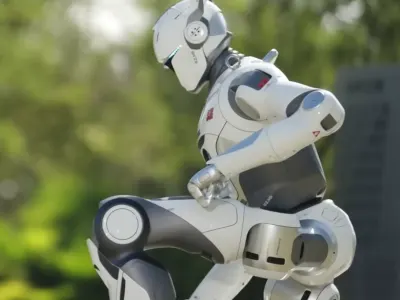
AI Capabilities
The H2 uses AI combined with remote control running on ROS and Linux, enabling flexible integration and research applications. Its control supports sophisticated motion control algorithms to replicate complex dynamic movements. The T800 employs autonomous operation, learned behaviors, and teleoperation using proprietary OS alongside ROS2, Python, and C++, targeting execution of heavy-duty and interactive tasks with adaptive AI.
Battery & Power Efficiency
Unitree has not disclosed detailed battery specifications for the H2, but it likely supports moderate operation times suitable for research and service tasks. The T800 features a solid-state lithium battery designed for 4 years of lifespan with active cooling systems in leg joints, enabling continuous high-intensity activity for 4 to 5 hours per session, ideal for industrial and endurance applications.
Use-Case Suitability
The H2 is tailored for service, collaboration, research, and dexterous manipulation in controlled environments such as factories and logistics. Its design favors precision and flexibility over raw strength. The T800 targets heavy-duty industrial operations, robot boxing competitions, human-robot interaction, and logistics automation, emphasizing power, endurance, and multi-modal control for dynamic and demanding tasks.
Software Ecosystem
Unitree H2 operates primarily on ROS and Linux platforms, giving developers open-source tools to customize and extend robot capabilities. It supports software modules for advanced motion control and AI integration. T800 utilizes a mix of proprietary OS, ROS2, and programming languages like Python and C++, reflecting its industrial focus on robust, scalable AI software suited for autonomous and teleoperated tasks.
Safety Features
Both robots incorporate emergency stop functions and obstacle avoidance systems. The T800 additionally includes force limiting, collision detection, and a collaborative mode, reflecting its heavier physical build and operational environments that demand higher safety assurance for close human interaction. The H2 focuses on standard humanoid safety protocols appropriate for research and service settings.
Pricing & Value
Unitree H2 is estimated to cost between $80,000 and $120,000 USD, positioning it as a mid-range humanoid for research and light industrial use. The T800 is higher priced at $150,000 to $200,000 USD, reflecting its advanced sensors, stronger build, longer battery life, and multi-purpose industrial capabilities.
Analysis Score Summary
Total Score
4
Unitree H2
VS
Based on Detailed Analysis
Total Score
14
T800
📊 Win: 2 points | Trade-off: 1 point each
Scores are summed across every insight: a clear winner earns 2 points, while balanced trade-offs give each robot 1 point. The total reflects how often each robot outperforms the other (or shares the spotlight) throughout the detailed analysis sections.
Capabilities & Operational Tasks
Head-to-head comparison of what Unitree H2 and T800 can do, their applications, and capabilities.
What Can Unitree H2 & T800 Do?
15Core operational tasks, activities, and physical manipulation duties evaluated side-by-side.
| Task & Description | Model AUnitree H215 supported | Model BT8006 supported |
|---|---|---|
| Assembly | High | — |
| Autonomous task execution | High | High |
| Carrying and transport | High | High |
| Collaborative work | High | High |
| Loading and unloading | High | — |
| Machine operation | High | — |
| Machine tending | High | — |
| Material handling | High | — |
| Move objects | High | — |
| Navigation | High | High |
| Obstacle traversal | High | High |
| Pick and place | High | — |
| Repetitive physical tasks | High | High |
| Sorting | High | — |
| Tool use | High | — |
Technical Specifications
Head-to-head performance data and metrics
| Specification | Model AUnitree H2 | Model BT800 |
|---|---|---|
Functional Utility & Use Cases4 Comparative Metrics | ||
Control Method | AI, remote control | Autonomous, learned behaviors, teleoperation |
Use Cases | Service, collaboration, research | Heavy-duty industrial tasks, robot boxing, retail assistance, human-robot interaction, logistics automation |
Multi Robot Coord | Possible with software updates | Yes (swarm capable) |
Pet Friendly | Yes (with precautions) | Yes, with safety protocols |
Manipulation & Load Capacity4 Comparative Metrics | ||
Carrying Capacity | 7 kg (normal), 21 kg (peak) | 20 Kg |
Deadlift Capacity | Not specified | 100 Kg |
Payload Type | Tools, packages | Tools, packages, precision instruments, people interaction |
Modular Attachments | Grippers, robotic hands | Tool changers, end-effector options |
Kinematic Architecture & Dexterity4 Comparative Metrics | ||
Degrees of Freedom | - | 41 |
Material | Metal, plastic | Aluminum alloy, composite, soft materials |
Mobility Type | Legged | Legged (bipedal walking) |
Hardware Interface | USB, GPIO | USB, GPIO, CAN bus, serial |
Functional Utility & Use Cases
4 Comparative Metrics
Manipulation & Load Capacity
4 Comparative Metrics
Kinematic Architecture & Dexterity
4 Comparative Metrics
Related Comparisons
Discover similar robot matchups to expand your knowledge and find the perfect solution
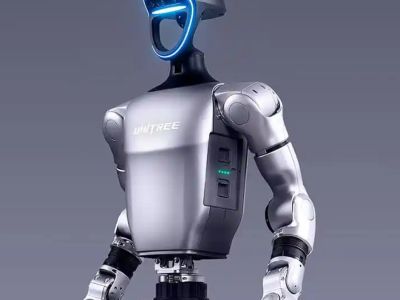
Unitree G1 vs Unitree H2
In-depth comparison of Unitree G1 and Unitree H2, covering hardware capabilities, teleoperation, and enterprise readiness.
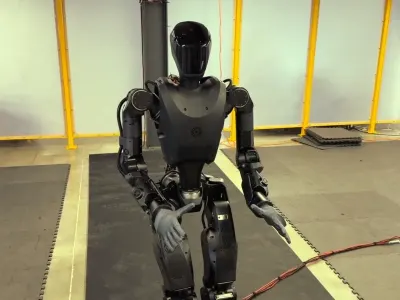
T800 vs Phantom MK1
Compare T800 by EngineAI vs Phantom MK1 by Foundation for humanoid mobility, dexterity, autonomy, payload, and industrial vs defense use cases.
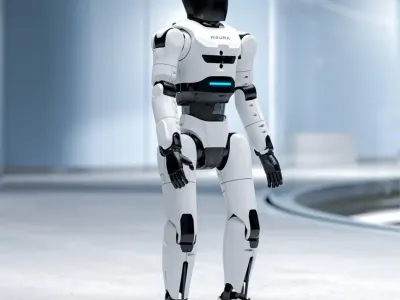
T800 vs 4NE-1 Mini
T800 or 4NE-1 Mini? See which humanoid robot performs better for manufacturing, logistics, and research with comparisons on dexterity, autonomy, and payload.
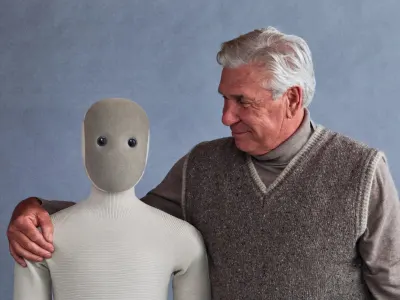
NEO Home Robot vs T800
In-depth comparison of NEO Gamma by 1X Technologies and T800 by EngineAI. Analyze navigation, sensors, and battery performance.
Disclaimer
All content, comparisons, and verdicts on this website are based on our research, testing, and opinion. While we strive for accuracy, we do not guarantee the completeness, reliability, or suitability of any information. Performance, specifications, and results may vary depending on usage and conditions. This website and its authors are not responsible for any decisions, actions, or outcomes based on the information provided. Always verify product details with the manufacturer before making purchase or operational decisions.