The K2 Bumblebee by Kepler Robotics targets industrial automation, warehouse operations, and research platforms with its hybrid architecture combining planetary roller screw linear actuators and rotary actuators for precise control. Positioned as a commercially available humanoid at $34,000-$40,000, it stands at 175 cm tall and weighs 75 kg, enabling 3 km/h speed and up to 30 kg dual-arm payload. Key differentiators include over 80 sensors, 52 degrees of freedom, and Kepler OS for autonomous navigation via LiDAR and SLAM in structured environments.
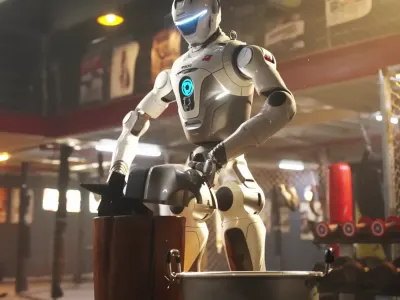
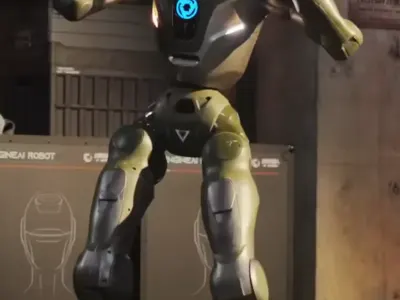
The T800 by EngineAI serves heavy-duty industrial tasks, logistics, and human-robot interaction, with pricing from $25,000 base to $80,000 high-end models. Measuring 185 x 60 x 40 cm and weighing 85 kg, it achieves higher speed of 10 km/h suitable for dynamic settings. Distinct features encompass visual SLAM navigation, learned behaviors for teleoperation, and a range of sensors including stereo cameras and LiDAR for robust perception.
Detailed Analysis
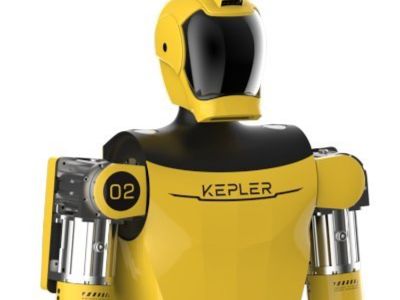
Design & Build Quality
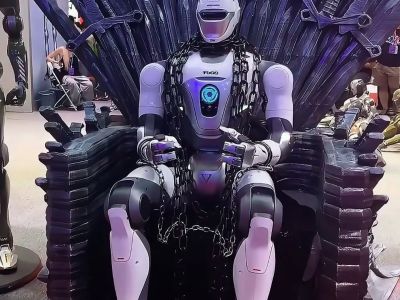
K2 Bumblebee employs a hybrid serial-parallel design with 52 degrees of freedom, 175 cm height, 75 kg weight, and proprietary planetary roller screw actuators for millimeter precision and 81.3% energy efficiency. T800 measures 185 x 60 x 40 cm, weighs 85 kg, and supports configurations up to high-end models with force sensors integrated for industrial durability. Both humanoid types prioritize stability, but K2 emphasizes in-house hardware for supply chain resilience while T800 focuses on scalable model variants.
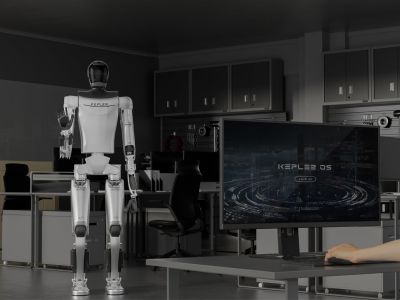
Mobility & Navigation
K2 Bumblebee reaches 3 km/h with LiDAR, SLAM, and GPS for autonomous navigation, featuring disturbance-resistant gait and straight-knee walking for warehouse and factory floors. T800 attains 10 km/h using visual SLAM and LiDAR mapping, enabling faster movement in logistics and retail environments. K2 suits structured spaces with GPS integration, whereas T800 prioritizes speed for dynamic heavy-duty tasks.
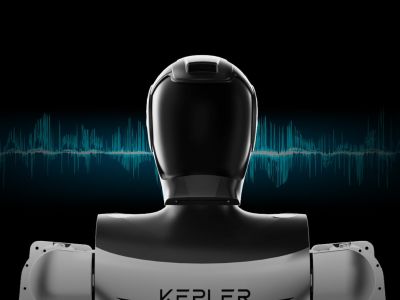
Sensors & Perception
K2 Bumblebee integrates over 80 sensors including 3D cameras, fisheye vision, tactile sensors up to 25 per finger, six-axis force-torque in wrists, IMUs, and ultrasonic sensors for fine manipulation. T800 uses RGB cameras, stereo cameras, LiDAR, ultrasonic sensors, IMU, gyroscope, force, and temperature sensors for comprehensive environmental perception. K2 provides advanced tactile feedback for precise handling, while T800 emphasizes stereo vision for depth in varied operations.
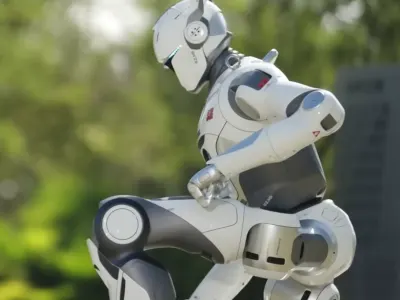
AI Capabilities
K2 Bumblebee supports AI autonomous control, natural language processing, and onboard computing up to 100 TOPS with Kepler OS, ROS compatibility, and APIs for vision and voice integration. T800 features autonomous operation, learned behaviors, and teleoperation using proprietary OS, ROS2, Python, and C++ for task execution. Both enable independent functioning, but K2 adds app control and NLP for guided tours, contrasting T800's focus on behavioral learning.
Battery & Power Efficiency
Both robots offer 4-year battery life, with K2 Bumblebee providing up to 8 hours per charge via high-efficiency hybrid actuators. T800 matches the extended lifespan without specified runtime per charge details. Shared longevity supports prolonged industrial shifts, with K2's efficiency validated at 81.3%.
Use-Case Suitability
K2 Bumblebee excels in warehouse automation, assembly assistance, hazardous operations, guided tours, and research with 30 kg payload capacity. T800 handles heavy-duty tasks, robot boxing, retail assistance, human interaction, and logistics. K2 targets precision manufacturing and R&D, while T800 fits high-speed, collaborative industrial roles.
Software Ecosystem
K2 Bumblebee runs Linux-based Kepler OS, ROS compatible with APIs for integration and developer tools like simulation platforms. T800 utilizes proprietary OS alongside ROS2, Python, and C++ for custom programming. Both support open frameworks, enabling motion and perception customization.

Pricing & Value
K2 Bumblebee prices at $34,000-$40,000 for industrial-grade features including hybrid actuators and extensive sensors. T800 ranges from $25,000 base to $80,000 high-end, offering entry-level access with scalable upgrades. Base T800 undercuts K2, but high-end models exceed for advanced configurations.
Safety Features
K2 Bumblebee includes emergency stop, obstacle avoidance, disturbance-resistant gait, and force feedback for interaction. T800 provides force limiting, collision detection, emergency stop, and collaborative mode. Both ensure safe human proximity with layered protective measures.
Analysis Score Summary
Total Score
11
K2 Bumblebee
VS
Based on Detailed Analysis
Total Score
7
T800
📊 Win: 2 points | Trade-off: 1 point each
Scores are summed across every insight: a clear winner earns 2 points, while balanced trade-offs give each robot 1 point. The total reflects how often each robot outperforms the other (or shares the spotlight) throughout the detailed analysis sections.
Capabilities & Operational Tasks
Head-to-head comparison of what K2 Bumblebee and T800 can do, their applications, and capabilities.
What Can K2 Bumblebee & T800 Do?
9Core operational tasks, activities, and physical manipulation duties evaluated side-by-side.
| Task & Description | Model AK2 Bumblebee9 supported | Model BT8006 supported |
|---|---|---|
| Autonomous task execution | High | High |
| Carrying and transport | High | High |
| Collaborative work | High | High |
| Material handling | High | — |
| Move objects | High | — |
| Navigation | High | High |
| Obstacle traversal | High | High |
| Pick and place | High | — |
| Repetitive physical tasks | High | High |
Technical Specifications
Head-to-head performance data and metrics
| Specification | Model AK2 Bumblebee | Model BT800 |
|---|---|---|
Functional Utility & Use Cases4 Comparative Metrics | ||
Control Method | AI autonomous, remote control, natural language processing, app control | Autonomous, learned behaviors, teleoperation |
Use Cases | Sorting, assembly, loading/unloading, guided tours, factory inspections | Heavy-duty industrial tasks, robot boxing, retail assistance, human-robot interaction, logistics automation |
Multi Robot Coord | Yes, swarm capabilities via Nebula | Yes (swarm capable) |
Pet Friendly | Yes, designed with safe force limits and tactile sensing to avoid harm | Yes, with safety protocols |
Manipulation & Load Capacity4 Comparative Metrics | ||
Carrying Capacity | 15 kg per arm | 20 Kg |
Deadlift Capacity | 30 kg maximum (dual-arm) | 100 Kg |
Payload Type | Packages, tools, assembly parts | Tools, packages, precision instruments, people interaction |
Modular Attachments | Interchangeable grippers, robotic arms, sensor modules | Tool changers, end-effector options |
Kinematic Architecture & Dexterity4 Comparative Metrics | ||
Degrees of Freedom | 52 | 41 |
Material | Aluminum + plastic composites | Aluminum alloy, composite, soft materials |
Mobility Type | Bipedal humanoid with wheeled base option (optional) | Legged (bipedal walking) |
Hardware Interface | USB-C, GPIO, Ethernet, serial ports | USB, GPIO, CAN bus, serial |
Functional Utility & Use Cases
4 Comparative Metrics
Manipulation & Load Capacity
4 Comparative Metrics
Kinematic Architecture & Dexterity
4 Comparative Metrics
Related Comparisons
Discover similar robot matchups to expand your knowledge and find the perfect solution
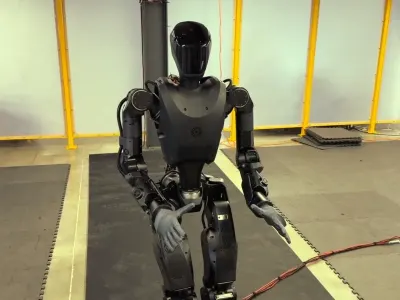
T800 vs Phantom MK1
Compare T800 by EngineAI vs Phantom MK1 by Foundation for humanoid mobility, dexterity, autonomy, payload, and industrial vs defense use cases.
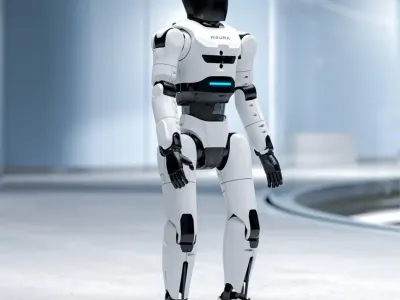
T800 vs 4NE-1 Mini
T800 or 4NE-1 Mini? See which humanoid robot performs better for manufacturing, logistics, and research with comparisons on dexterity, autonomy, and payload.
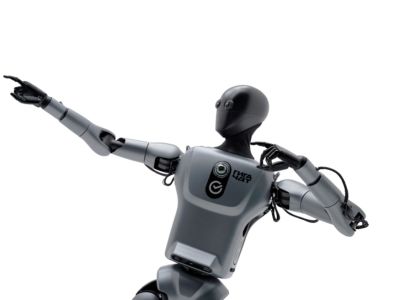
K2 Bumblebee vs Green
K2 Bumblebee or Green? Compare specs, sensors, navigation, speed, and battery performance.

NEO Home Robot vs T800
In-depth comparison of NEO Gamma by 1X Technologies and T800 by EngineAI. Analyze navigation, sensors, and battery performance.
Disclaimer
All content, comparisons, and verdicts on this website are based on our research, testing, and opinion. While we strive for accuracy, we do not guarantee the completeness, reliability, or suitability of any information. Performance, specifications, and results may vary depending on usage and conditions. This website and its authors are not responsible for any decisions, actions, or outcomes based on the information provided. Always verify product details with the manufacturer before making purchase or operational decisions.