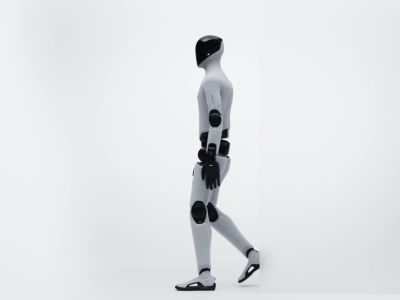
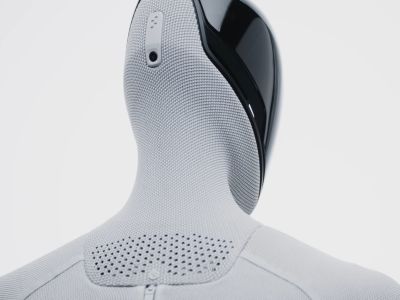
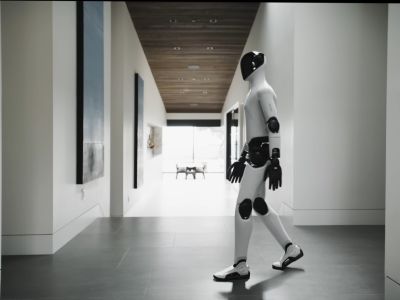
Figure 03 by Figure AI is being compared to evaluate its market positioning as a next-generation humanoid designed for home and light commercial use. Unlike industrial models, it features soft textile coverings, tactile fingertip sensors, and an embedded palm camera for precise grasping. Its Helix AI system learns tasks from demonstration videos rather than explicit programming, enabling rapid adaptation to household chores. The robot targets consumer affordability with a projected price of $20,000 to $70,000, positioning it far below heavy-duty industrial humanoids.
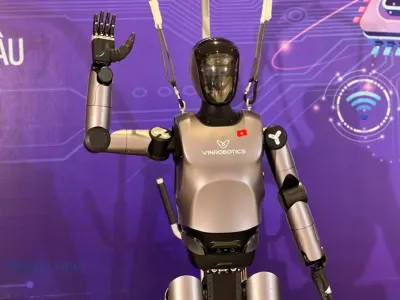
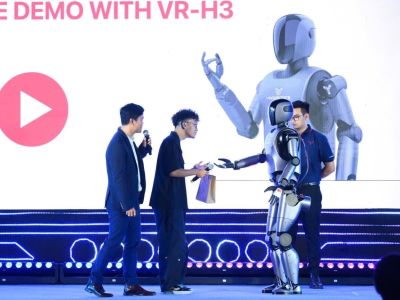
VR-H3 by VinRobotics is compared to assess its role as an industrial-grade humanoid built for factory assistance and hazardous environments. It features a reinforced industrial chassis, higher deadlift capacity of 15 kg, and 31–40 controllable degrees of freedom for complex manipulation. Its autonomy level integrates Physical AI for high-level decision-making in collaborative human-robot settings. Targeted at early commercial pilots and research institutions, it carries a premium price of $150,000 to $300,000, reflecting its durability and specialized use cases.
Detailed Analysis
How does bipedal mobility and balance compare?
Figure 03 achieves a walking speed of 4.2 km/h with multi-density foam padding for safe home navigation, while VR-H3 moves faster at 5.4 km/h with an IMU and gyroscope for industrial stability. The Figure 03 prioritizes soft failure modes and obstacle avoidance in dynamic household settings, whereas VR-H3 uses force limiting and collision detection for rigorous factory floors. Both robots leverage advanced sensor suites for balance, but VR-H3’s heavier 85 kg chassis provides more inertia in high-vibration environments. Figure 03’s 40+ DOFbase motion enables smoother transitions over uneven domestic surfaces compared to the more rigid VR-H3 design.
What differences exist in dexterity and manipulation?
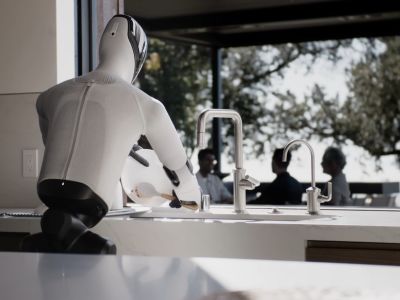
Figure 03 excels in fine manipulation with tactile fingertip sensors detecting forces as small as 3 grams and an embedded palm camera for close-range visual feedback. It supports 5 kg carrying capacity per arm and 40+ DOF including hands, enabling tasks like folding towels and loading dishwashers. VR-H3 offers 3 kg per arm carrying capacity and 31–40 DOF, optimized for static deadlifts of 15 kg rather than delicate handling. While Figure 03 prioritizes human-like dexterity for household chores, VR-H3 focuses on robust arm strength for lifting sheet-metal parts in factories. The tactile intelligence of Figure 03 is significantly more advanced for complex object manipulation.
Which humanoid robot has better AI and autonomy learning?
Figure 03 utilizes Helix AI, a vision-language-action model that learns tasks from 80 hours of demo footage without explicit programming, enabling rapid adaptation to new household chores. VR-H3 features a highly autonomous Physical AI integration for decision-making in hazardous environments but relies on pre-programmed ROS2 frameworks. Figure 03’s autonomy includes a human oversight option, making it suitable for unstructured home settings where learning from humans is critical. VR-H3’s autonomy is optimized for structured industrial workflows with collaborative mode capabilities. Figure 03 clearly offers superior autonomous learning capabilities for dynamic, unstructured environments.
How do payload and lifting capacities differ?
VR-H3 has a higher deadlift capacity of 15 kg (static) and reinforced chassis, making it ideal for lifting heavy industrial parts like sheet-metal components. Figure 03 offers a 5 kg carrying capacity and 10 kg deadlift, sufficient for light object manipulation and household chores like laundry. The 85 kg weight of VR-H3 supports its industrial payload, while Figure 03’s 45 kg design prioritizes agility and safety in home environments. VR-H3 is the superior choice for heavy payload tasks, whereas Figure 03 is better suited for light, repetitive manipulation. For industrial manufacturing requiring high payload, VR-H3 is the definitive option.
What is the battery runtime and power efficiency?
Both robots feature a battery life of 3–5 years, though operational runtime per charge differs based on use case intensity. Figure 03 includes wireless charging and battery safety advancements for seamless home integration, while VR-H3 focuses on durability for continuous industrial shifts. The 2.3 kWh battery in Figure 03 lasts up to five hours of active operation, supporting household tasks efficiently. VR-H3’s power system is optimized for high-load industrial operations with force limiting to conserve energy. Power efficiency is comparable, but Figure 03’s wireless charging offers better convenience for general-purpose deployment.
Which robot is better for industrial manufacturing?
VR-H3 is unequivocally better for industrial manufacturing due to its 15 kg deadlift capacity, reinforced chassis, and ROS2-based software for factory automation. Figure 03 is designed for light object manipulation and household chores, lacking the payload strength and ruggedness required for heavy industrial lines. VR-H3’s 5.4 km/h speed and collision detection make it ideal for high-speed factory environments with human-robot collaboration. While Figure 03 excels in home assistance, it cannot match the industrial durability of VR-H3. For manufacturing tasks requiring heavy lifting and ruggedness, VR-H3 is the clear recommendation.
Which robot offers better autonomous learning capabilities?
Figure 03 offers superior autonomous learning capabilities through its Helix AI, which learns from video demonstrations rather than explicit programming, enabling rapid adaptation to new tasks. VR-H3 relies on pre-defined ROS2 frameworks and proprietary APIs, limiting its ability to learn from unstructured human demonstrations. Figure 03’s 90% component cost cut and 2x actuator speed further enhance its learning efficiency in dynamic environments. VR-H3’s autonomy is optimized for structured workflows, not adaptive learning from human behavior. For enterprises prioritizing adaptive AI and learning from humans, Figure 03 is the recommended choice.

How do safety features compare around humans?
Figure 03 prioritizes human safety with multi-density foam padding, soft textile coverings, and pinch point protection, making it safe for home environments with children and elderly. VR-H3 uses force limiting and collision detection for industrial safety, focusing on preventing damage to equipment rather than human injury. Figure 03’s tactile sensors detect forces as small as 3 grams, ensuring gentle interaction with delicate objects and humans. VR-H3’s safety features are designed for high-load scenarios where human interaction is limited to collaborative zones. For deployments requiring close human interaction, Figure 03’s safety design is significantly more advanced.
Analysis Score Summary
Total Score
11
Figure 03
VS
Based on Detailed Analysis
Total Score
5
VR-H3
📊 Win: 2 points | Trade-off: 1 point each
Scores are summed across every insight: a clear winner earns 2 points, while balanced trade-offs give each robot 1 point. The total reflects how often each robot outperforms the other (or shares the spotlight) throughout the detailed analysis sections.
Capabilities & Operational Tasks
Head-to-head comparison of what Figure 03 and VR-H3 can do, their applications, and capabilities.
What Can Figure 03 & VR-H3 Do?
19Core operational tasks, activities, and physical manipulation duties evaluated side-by-side.
| Task & Description | Model AFigure 0316 supported | Model BVR-H310 supported |
|---|---|---|
| Assembly | — | High |
| Autonomous task execution | High | High |
| Carrying and transport | High | High |
| Cleaning | High | — |
| Collaborative work | High | High |
| Human interaction | High | — |
| Loading and unloading | High | — |
| Machine operation | High | — |
| Machine tending | — | High |
| Maintenance | High | — |
| Material handling | — | High |
| Move objects | High | High |
| Navigation | High | High |
| Obstacle traversal | High | — |
| Packaging | High | — |
| Pick and place | High | High |
| Repetitive physical tasks | High | High |
| Sorting | High | — |
| Tool use | High | — |
Technical Specifications
Head-to-head performance data and metrics
| Specification | Model AFigure 03 | Model BVR-H3 |
|---|---|---|
Functional Utility & Use Cases4 Comparative Metrics | ||
Control Method | AI autonomous control with voice command, remote monitoring, app integration | Teleoperation, autonomous, learned behaviors |
Use Cases | Laundry handling, dish handling, cleaning, household fetching/carrying, general domestic assistance | Factory assistance, hazardous environment tasks, human-robot collaboration |
Multi Robot Coord | Yes; fleet data sharing and multi-robot learning supported | Yes |
Pet Friendly | Yes, designed with safety padding and slow movement to avoid harm | Yes, with safety protocols |
Manipulation & Load Capacity4 Comparative Metrics | ||
Carrying Capacity | 20 kg per arm | (Inferred · High confidence · Based on Figure AI’s public 20 kg payload claim and humanoid arm-load distribution) | 3 kg per arm |
Deadlift Capacity | 20 kg | (Inferred · Medium confidence · Typical conservative lift capacity aligned with published payload) | 15 kg (Static) |
Payload Type | Household items, tools, laundry, dishes | Tools, packages, precision instruments, people interaction |
Modular Attachments | Interchangeable grippers, sensor modules | Tool changers, end-effector options |
Kinematic Architecture & Dexterity4 Comparative Metrics | ||
Degrees of Freedom | 60 | 31–40 controllable Degrees of Freedom (DOF) |
Material | Aluminum, steel, composites, soft polymer coverings, foam, textiles | Aluminum, composite, plastic |
Mobility Type | Bipedal legged humanoid | Legged (bipedal walking) |
Hardware Interface | USB-C, Ethernet, GPIO for diagnostics | USB, CAN bus, Ethernet |
Functional Utility & Use Cases
4 Comparative Metrics
Manipulation & Load Capacity
4 Comparative Metrics
Kinematic Architecture & Dexterity
4 Comparative Metrics
Frequently Asked Questions
Which humanoid robot has a higher deadlift capacity for industrial tasks?
VR-H3 by VinRobotics has a higher deadlift capacity of 15 kg (static), making it suitable for heavy industrial lifting. Figure 03 by Figure AI has a 10 kg deadlift, optimized for light household tasks.
What is the autonomy level of Figure 03 compared to VR-H3?
Figure 03 by Figure AI is fully autonomous with human oversight, learning tasks via Helix AI from video demos. VR-H3 by VinRobotics is highly autonomous with Physical AI integration for structured industrial workflows.
How does walking speed and stability compare between the two robots?
VR-H3 by VinRobotics walks faster at 5.4 km/h with IMU and gyroscope for industrial stability. Figure 03 by Figure AI moves at 4.2 km/h with foam padding for safe home navigation.
Which robot has better tactile sensors for delicate manipulation?
Figure 03 by Figure AI has superior tactile sensors detecting forces as small as 3 grams with an embedded palm camera. VR-H3 by VinRobotics uses force sensors optimized for industrial strength, not delicate handling.
Which humanoid is better for elderly care and home assistance?
Figure 03 by Figure AI is designed for elderly care and home assistance with soft textile coverings and wireless charging. VR-H3 by VinRobotics targets factory assistance and hazardous environments, not home use.
Which robot is more suitable for research institutions and early commercial pilots?
VR-H3 by VinRobotics is targeted for early commercial pilots and research institutions with its industrial-grade chassis and ROS2 software. Figure 03 by Figure AI is positioned for consumer home use, not research pilots.
Related Comparisons
Discover similar robot matchups to expand your knowledge and find the perfect solution
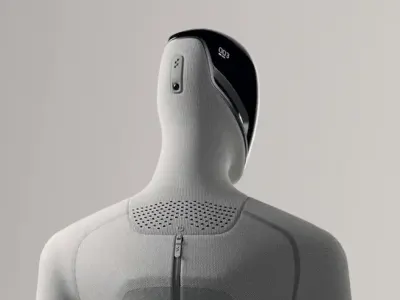
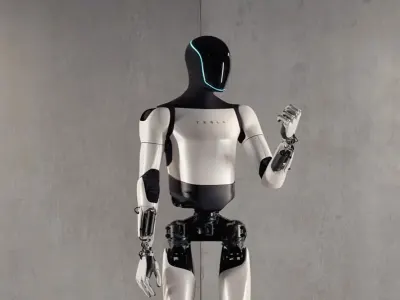
Figure 03 vs Optimus Gen 3
In-depth comparison of Figure 03 and Optimus Gen 3, covering hardware capabilities, teleoperation, and enterprise readiness.
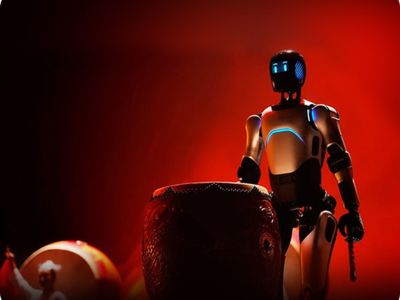
AgiBot A2 Ultra vs VR-H3
Which humanoid robot is better? AgiBot A2 Ultra vs VR-H3 compared for dexterity, AI autonomy, payload capacity, and industrial deployment readiness.
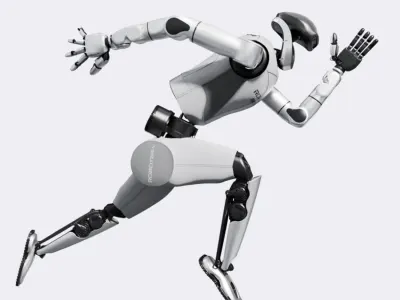
L7 vs VR-H3
Compare L7 by Robot Era vs VR-H3 by VinRobotics for humanoid mobility, dexterity, autonomy, and payload capacity in industrial applications.
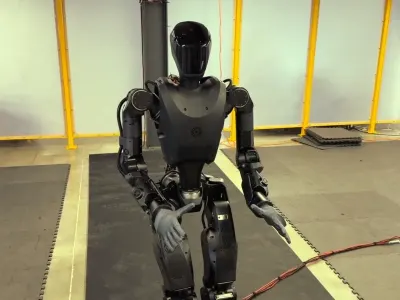
VR-H3 vs Phantom MK1
Head-to-head: VR-H3 vs Phantom MK1 compared on bipedal balance, AI learning, payload strength, and real-world deployment for enterprise robotics.
Disclaimer
All content, comparisons, and verdicts on this website are based on our research, testing, and opinion. While we strive for accuracy, we do not guarantee the completeness, reliability, or suitability of any information. Performance, specifications, and results may vary depending on usage and conditions. This website and its authors are not responsible for any decisions, actions, or outcomes based on the information provided. Always verify product details with the manufacturer before making purchase or operational decisions.