Figure 03 by Figure AI is positioned as a home-oriented humanoid robot with a compact form factor, soft safety materials, and a sensor suite designed for close-range interaction. Its key differentiators are palm cameras, tactile fingertip sensing, and Helix AI, which together emphasize safe manipulation and household task execution. Compared with Tesla’s Optimus Gen 3, Figure 03 is the more environment-specific platform, with a stronger tilt toward domestic assistance and fine object handling.
Optimus Gen 3 by Tesla is positioned as a general-purpose humanoid aimed at high-volume industrial and commercial deployment. Its main differentiators are higher carrying capacity, higher deadlift capacity, and Tesla’s integrated AI4/AI5 compute stack for onboard autonomy. Compared with Figure 03, Optimus Gen 3 is built more around factory-scale utility, broader task coverage, and stronger lifting performance.
Detailed Analysis
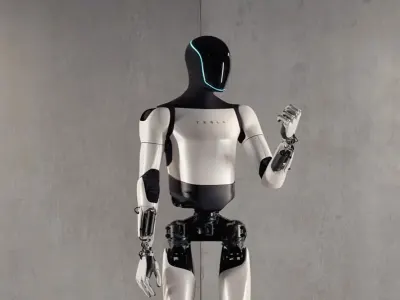
How do Figure 03 and Optimus Gen 3 differ in bipedal mobility and balance?
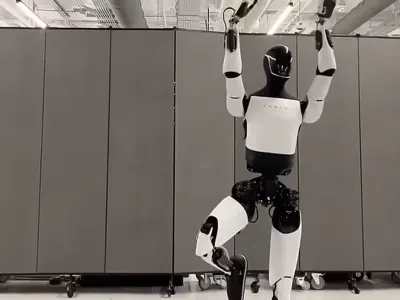
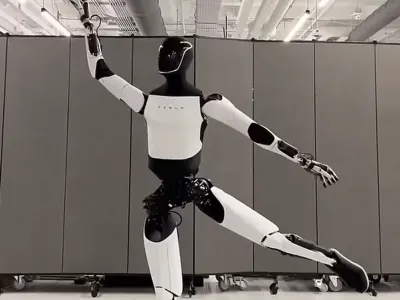
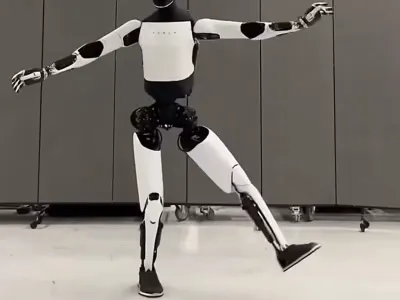
Figure 03 is specified at 4.2 km/h and is built around a humanoid walking platform intended for home and light-task navigation. Optimus Gen 3 is listed at 5–8 km/h, which gives it the higher top walking speed and a stronger case for moving through larger workspaces. Both are bipedal humanoids, but Tesla’s robot appears more optimized for throughput and transit across industrial environments. Figure 03’s lower speed is consistent with its emphasis on controlled indoor interaction and safer close-proximity operation.
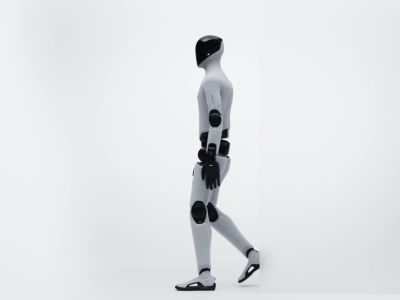
Which robot is more capable for complex manipulation tasks?
Figure 03 emphasizes manipulation through palm cameras, tactile fingertip sensors, and a hand-centric design intended for delicate handling. Optimus Gen 3 also targets manipulation, but its published payload and deadlift figures indicate a stronger bias toward heavier physical work. Figure 03 is better aligned with light, precise household manipulation, while Optimus Gen 3 is better aligned with industrial handling that benefits from strength. For buyers prioritizing fine manipulation over force, Figure 03 is the more specialized platform.
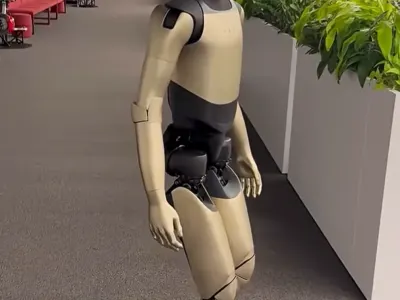
Which humanoid robot offers stronger autonomous learning capabilities?
Figure 03 uses Helix AI on ROS and Linux with Python and C++ APIs, which suggests an accessible development and integration stack for robotics workflows. Optimus Gen 3 uses Tesla’s FSD Robot OS and AI4/AI5 compute, which points to a vertically integrated autonomy architecture. Both are described as fully autonomous, but Tesla’s in-house compute and robot OS suggest a more tightly coupled production stack. For enterprise teams seeking software openness, Figure 03 is more developer-oriented; for vertically integrated deployment, Optimus Gen 3 is the stronger systems play.
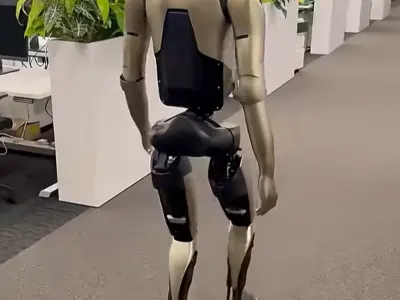
How do payload and lifting capacities compare between the two robots?
Figure 03 is specified to carry 5 kg and deadlift 10 kg, which places it in a light-duty class. Optimus Gen 3 is specified to carry 20 kg and deadlift 68 kg, giving it a much larger margin for industrial transport and material handling. This is one of the clearest differences between the two platforms. If the primary requirement is lifting or carrying heavier items, Optimus Gen 3 is the better choice.
Is Figure 03 or Optimus Gen 3 more power efficient?
Figure 03 and Optimus Gen 3 are both listed with 3–5 years battery life, so the provided data does not separate them on long-term battery replacement cadence. Figure 03 is lighter at 45 kg and slower at 4.2 km/h, which may support lower energy demand in typical use. Optimus Gen 3 is heavier at 57 kg but moves faster and carries more, so its efficiency will depend more on task load than the published battery horizon. Based on the provided specs, neither robot has a decisive advantage in battery lifetime alone.
Which humanoid robot is better for industrial manufacturing?
Optimus Gen 3 is better matched to industrial manufacturing because it has the higher payload, far higher deadlift capacity, and a compute stack designed around Tesla’s autonomy architecture. Figure 03 is more suitable for light-duty assistance, inspection, and domestic environments where safety and delicate manipulation matter more than raw strength. Optimus Gen 3 therefore fits factory tasks such as sorting, moving parts, and handling heavier materials more directly. For industrial manufacturing deployments, Optimus Gen 3 is the recommended option.
Which robot is better for general-purpose home assistance?
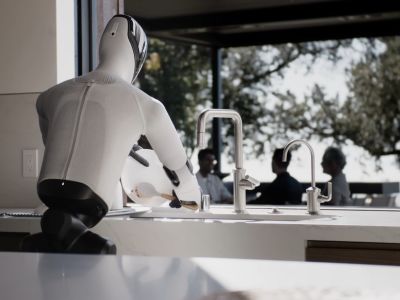
Figure 03 is better matched to home assistance because it combines a smaller carrying load with tactile fingertips, palm cameras, and safety-focused construction. Optimus Gen 3 is more capable physically, but its published use cases and higher strength profile point more toward industrial and structured commercial work. Figure 03’s sensor layout and soft exterior are more aligned with close human interaction and household chores. For residential or care-oriented deployments, Figure 03 is the recommended option.
What do the sensor suites reveal about real-world deployment?
Figure 03 includes cameras with a palm camera, tactile fingertip sensors, mmWave data offload, multi-density foam, and an audio system, which supports safe close-range interaction and frequent data transfer. Optimus Gen 3 uses RGB cameras, stereo cameras, IMU, gyroscope, force sensors, and ultrasonic sensing, which is a broader navigation-and-manipulation stack. Figure 03 appears more tuned for tactile household contact, while Optimus Gen 3 is more broadly instrumented for industrial autonomy. The choice depends on whether the deployment values touch sensitivity or workspace-scale navigation.
Analysis Score Summary
Total Score
6
Figure 03
VS
Based on Detailed Analysis
Total Score
10
Optimus Gen 3
📊 Win: 2 points | Trade-off: 1 point each
Scores are summed across every insight: a clear winner earns 2 points, while balanced trade-offs give each robot 1 point. The total reflects how often each robot outperforms the other (or shares the spotlight) throughout the detailed analysis sections.
Capabilities & Operational Tasks
Head-to-head comparison of what Figure 03 and Optimus Gen 3 can do, their applications, and capabilities.
What Can Figure 03 & Optimus Gen 3 Do?
20Core operational tasks, activities, and physical manipulation duties evaluated side-by-side.
| Task & Description | Model AFigure 0316 supported | Model BOptimus Gen 314 supported |
|---|---|---|
| Assembly | — | High |
| Autonomous task execution | High | High |
| Carrying and transport | High | High |
| Cleaning | High | — |
| Collaborative work | High | High |
| Human interaction | High | — |
| Inspection | — | High |
| Loading and unloading | High | High |
| Machine operation | High | High |
| Machine tending | — | High |
| Maintenance | High | — |
| Material handling | — | High |
| Move objects | High | High |
| Navigation | High | High |
| Obstacle traversal | High | High |
| Packaging | High | — |
| Pick and place | High | High |
| Repetitive physical tasks | High | High |
| Sorting | High | — |
| Tool use | High | — |
Technical Specifications
Head-to-head performance data and metrics
| Specification | Model AFigure 03 | Model BOptimus Gen 3 |
|---|---|---|
Functional Utility & Use Cases4 Comparative Metrics | ||
Control Method | AI autonomous control with voice command, remote monitoring, app integration | Autonomous, learned behaviors, teleoperation |
Use Cases | Laundry handling, dish handling, cleaning, household fetching/carrying, general domestic assistance | Sorting battery cells, moving items, handling fragile objects |
Multi Robot Coord | Yes; fleet data sharing and multi-robot learning supported | Yes (swarm capabilities) | (Inferred · Medium confidence · Typical range for humanoid robots in this class) |
Pet Friendly | Yes, designed with safety padding and slow movement to avoid harm | Yes, with safety protocols |
Manipulation & Load Capacity4 Comparative Metrics | ||
Carrying Capacity | 20 kg per arm | (Inferred · High confidence · Based on Figure AI’s public 20 kg payload claim and humanoid arm-load distribution) | 20 kg | (Inferred · High confidence · Based on Tesla's confirmed payload capacity of 20 kg) |
Deadlift Capacity | 20 kg | (Inferred · Medium confidence · Typical conservative lift capacity aligned with published payload) | 68 kg | (Inferred · High confidence · Based on Tesla's original AI Day 2021 specification for deadlift) |
Payload Type | Household items, tools, laundry, dishes | Tools, packages, precision instruments, people interaction |
Modular Attachments | Interchangeable grippers, sensor modules | Tool changers, end-effector options |
Kinematic Architecture & Dexterity4 Comparative Metrics | ||
Degrees of Freedom | 60 | 40+ DOF | (Inferred · High confidence · Based on 28 structural actuators + 50 hand actuators + head/legs/torso) |
Material | Aluminum, steel, composites, soft polymer coverings, foam, textiles | Aluminum, composite | (Inferred · High confidence · Based on lightweight materials construction) |
Mobility Type | Bipedal legged humanoid | Legged (bipedal walking) |
Hardware Interface | USB-C, Ethernet, GPIO for diagnostics | CAN bus, USB, GPIO |
Functional Utility & Use Cases
4 Comparative Metrics
Manipulation & Load Capacity
4 Comparative Metrics
Kinematic Architecture & Dexterity
4 Comparative Metrics
Frequently Asked Questions
Which humanoid robot has higher payload capacity for enterprise tasks?
Optimus Gen 3 has higher payload capacity, at 20 kg versus Figure 03’s 5 kg. Optimus Gen 3 is better for enterprise handling tasks that require moving heavier objects.
Which humanoid robot supports a higher autonomy level with less operator involvement?
Figure 03 and Optimus Gen 3 are both described as fully autonomous. Figure 03 also offers a human-oversight option, while Optimus Gen 3 is presented as fully autonomous.
Which humanoid robot walks faster and is better for larger workspaces?
Optimus Gen 3 walks faster, at 5–8 km/h versus Figure 03’s 4.2 km/h. Optimus Gen 3 is better suited to moving across larger industrial spaces.
Which humanoid robot has stronger hand and fingertip dexterity?
Figure 03 has the more explicit dexterity focus, with palm cameras and tactile fingertip sensors. Figure 03 is better suited to precise, light object manipulation.
Which humanoid robot is more deployment-ready for home assistance?
Figure 03 is more deployment-ready for home assistance because it emphasizes soft safety materials, tactile sensing, and household use cases. Figure 03 is the better fit for domestic environments.
Which humanoid robot is more deployment-ready for industrial manufacturing?
Optimus Gen 3 is more deployment-ready for industrial manufacturing because it offers higher payload, higher deadlift capacity, and a faster walking speed. Optimus Gen 3 is the better fit for factory workflows.
Related Comparisons
Discover similar robot matchups to expand your knowledge and find the perfect solution
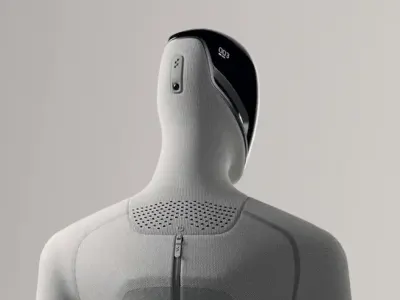
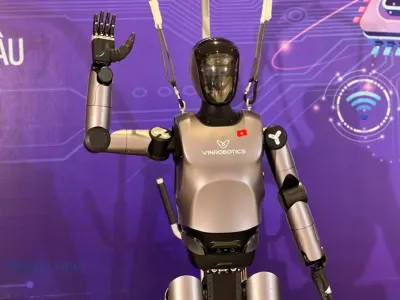
Figure 03 vs VR-H3
Which humanoid robot is better? Figure 03 vs VR-H3 compared for dexterity, AI capabilities, and price.
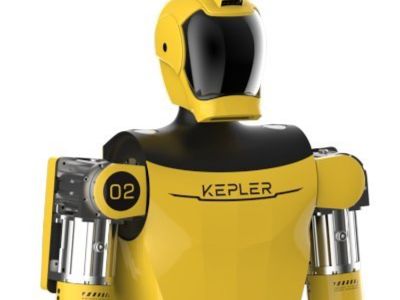
Figure 03 vs K2 Bumblebee
Compare Figure 03 and K2 Bumblebee. Detailed analysis of navigation, battery, and sensors.
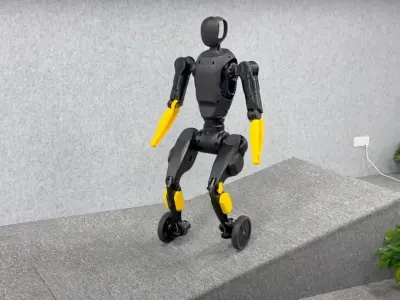
Figure 03 vs AgiBot X2-N
Compare Figure 03 and AgiBot X2-N. Detailed analysis of sensors, navigation, speed, and AI capabilities.
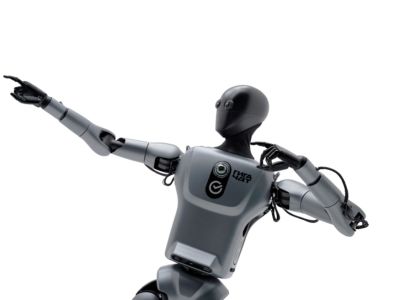
Figure 03 vs Green
Compare Figure 03 and Green. Detailed analysis of sensors, navigation, and AI capabilities.
Disclaimer
All content, comparisons, and verdicts on this website are based on our research, testing, and opinion. While we strive for accuracy, we do not guarantee the completeness, reliability, or suitability of any information. Performance, specifications, and results may vary depending on usage and conditions. This website and its authors are not responsible for any decisions, actions, or outcomes based on the information provided. Always verify product details with the manufacturer before making purchase or operational decisions.