Figure 03 by Figure AI is presented as a compact, home-focused humanoid with design and software tailored for vision-language-action tasks, positioned between consumer home assistance and scaled fleet learning; it is compared here to assess suitability for domestic deployment and multi-robot learning workflows. Figure 03’s distinguishing points include a lighter, narrower chassis, Helix vision-language-action AI, mmWave data offload for fleet learning, and safety-focused soft coverings and multi-density foam. The comparison clarifies how those design and software choices trade off against heavier industrial humanoids in mobility, sensing, and application scope.
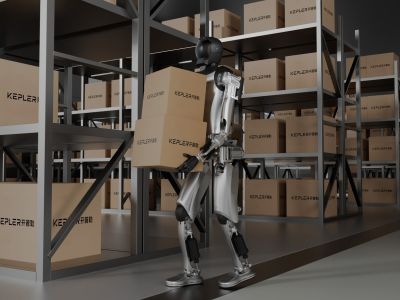
K2 Bumblebee by Kepler Robotics is a larger, heavier humanoid intended for industrial and research roles where payload, robust sensing, and force-aware interaction matter, and it is compared here to show contrasts in durability, sensor density, and use-case focus. K2 Bumblebee’s differentiators include greater mass and height, extensive tactile and force sensing (including six-axis wrist sensors and many fingertip sensors), LiDAR-enabled navigation, and a software stack oriented to warehouse, assembly-line, and hazardous-environment operations. The comparison highlights how Kepler’s platform targets industrial reliability and load-capable tasks versus Figure 03’s home-centered, fleet-learning approach.
Detailed Analysis
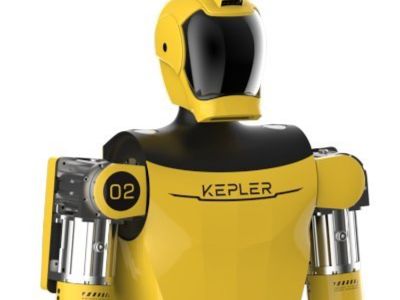
Design & Build Quality
Figure 03 is compact and relatively light at 167 cm and 45 kg with soft textile covering and multi-density foam for home safety, optimized for domestic form factors and gentle interactions. K2 Bumblebee measures 175 cm and weighs 75 kg, indicating a heavier, more robust frame suited to industrial stability and payload resilience. Figure 03 emphasizes softer external materials and pinch-point protection for close human contact, while K2 Bumblebee prioritizes structural robustness and disturbance-resistant gait for operational reliability in demanding environments.
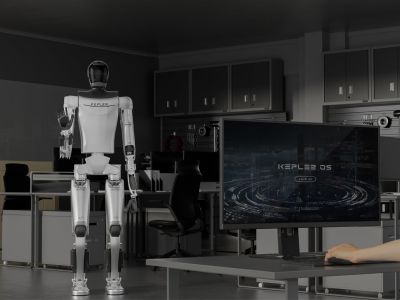
Mobility & Navigation
Figure 03 achieves higher top speed at 4.2 km/h and uses vision-language-action Helix combined with SLAM and mmWave data offload to improve fleet-level navigation learning in cluttered home spaces. K2 Bumblebee has a lower top speed of 3 km/h and relies on LiDAR, SLAM, and GPS for navigation, reflecting a focus on precise pathing in warehouses and outdoor/large indoor facilities. Both systems support autonomous AI control and remote operation, but Figure 03’s stack emphasizes vision and language integration while K2 Bumblebee emphasizes LiDAR-based spatial mapping and industrial localization.
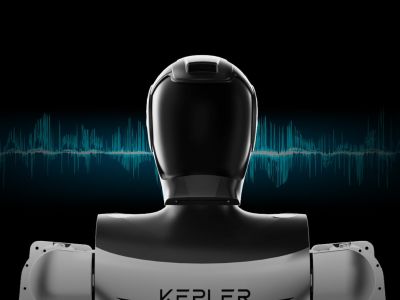
Sensors & Perception
Figure 03’s sensor suite includes cameras (notably a palm camera), tactile fingertip sensors, audio system upgrades, and 10 Gbps mmWave data offload for fleet learning, prioritizing fine manipulation and audio-driven interaction. K2 Bumblebee offers 3D and fisheye cameras, up to 25 tactile sensors per finger, six-axis force-torque wrist sensors, IMUs, pressure and torque sensors, and estimated ultrasonic sensors, designed for force-aware manipulation and rich proprioception. The two platforms reflect different sensing trade-offs: Figure 03 for lightweight, manipulable home tasks and large-scale data collection; K2 Bumblebee for dense force sensing and task resilience in industrial settings.
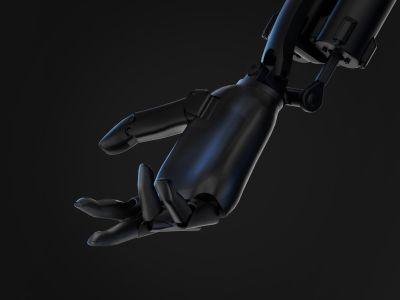
AI Capabilities
Figure 03 runs the Helix vision-language-action AI on a ROS/Linux basis with Python and C++ APIs, enabling natural-language delegation and pixels-to-action learning across a fleet via mmWave offload. K2 Bumblebee uses Kepler OS (Linux-based), is ROS compatible, and exposes APIs for vision, motion, and voice, supporting autonomous behaviors and remote or app-based control. Figure 03 emphasizes integrated language-driven autonomy and fleet learning, whereas K2 Bumblebee emphasizes modular, ROS-compatible control with strong motion and force-feedback capabilities for industrial tasks.
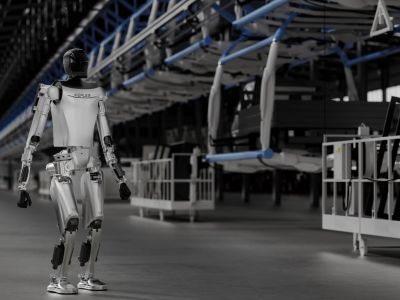
Battery & Power Efficiency
Figure 03 lists battery life in a multi-year replacement expectancy of 3–5 years and design features like wireless charging and battery safety improvements, reflecting user-focused maintenance intervals for home deployments. K2 Bumblebee specifies a 4-year battery expectancy, consistent with industrial replacement cycles where predictable longevity is prioritized. Runtime and energy-per-task trade-offs differ: Figure 03’s documentation stresses home-safety and charge convenience while K2 Bumblebee emphasizes consistent operational availability for extended industrial use.
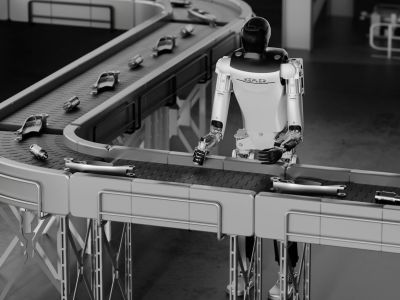
Use-Case Suitability
Figure 03 targets home assistance, household chores, elderly care support, light object manipulation, and cleaning tasks, aligning hardware and software around safe, human-centric interactions and fleet learning. K2 Bumblebee targets warehouse automation, assembly-line assistance, hazardous environment operations, guided tours, and research, aligning sensors and force-sensing hardware to handle heavier, higher-risk tasks. Choice depends on deployment context: homes and human-adjacent services favor Figure 03’s soft safety and Helix language integration, while industrial environments favor K2 Bumblebee’s sensing density and structural robustness.
Software Ecosystem
Figure 03’s Helix system is described as vision-language-action AI built on ROS and Linux with Python and C++ APIs, and includes mmWave data offload for fleet-wide model updates and continuous learning. K2 Bumblebee runs Kepler OS (Linux-based), is ROS compatible, and provides APIs for vision, motion, and voice integration, supporting research customization and industrial integration. Both platforms support remote monitoring and app control, but Figure 03’s ecosystem is tailored to language-driven, fleet-scale learning while Kepler’s emphasizes modular industrial integration and force-aware control hooks.
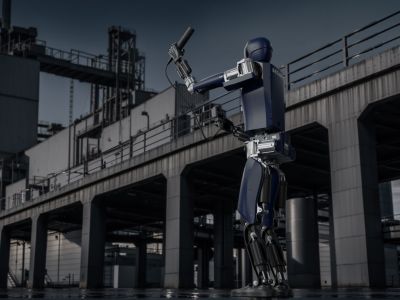
Safety Features
Figure 03 incorporates multi-density foam, soft textile coverings, emergency stop, obstacle avoidance, and pinch-point protections designed specifically for frequent close contact with non-expert users. K2 Bumblebee includes emergency stop, obstacle avoidance, disturbance-resistant gait, and force feedback to enable safe operation in dynamic industrial environments. Both systems provide standard emergency-stop and obstacle-avoidance features, but Figure 03’s listed measures focus on mitigating harm in home interactions while K2 Bumblebee emphasizes operational stability and safe force-limited interactions.
Pricing & Value
Figure 03 is priced between $50,000 and $70,000, reflecting its home-oriented design, fleet-learning capability, and sensor/AI package aimed at early consumer/commercial deployments. K2 Bumblebee is offered at $34,000–$40,000, representing a lower entry price for an industrial-class humanoid with dense tactile and force sensing. The pricing trade-off presents Figure 03 as a higher-cost, software-driven home platform versus K2 Bumblebee as a lower-cost, sensor- and payload-oriented industrial platform.
Analysis Score Summary
Total Score
5
Figure 03
VS
Based on Detailed Analysis
Total Score
13
K2 Bumblebee
📊 Win: 2 points | Trade-off: 1 point each
Scores are summed across every insight: a clear winner earns 2 points, while balanced trade-offs give each robot 1 point. The total reflects how often each robot outperforms the other (or shares the spotlight) throughout the detailed analysis sections.
Capabilities & Operational Tasks
Head-to-head comparison of what Figure 03 and K2 Bumblebee can do, their applications, and capabilities.
What Can Figure 03 & K2 Bumblebee Do?
17Core operational tasks, activities, and physical manipulation duties evaluated side-by-side.
| Task & Description | Model AFigure 0316 supported | Model BK2 Bumblebee9 supported |
|---|---|---|
| Autonomous task execution | High | High |
| Carrying and transport | High | High |
| Cleaning | High | — |
| Collaborative work | High | High |
| Human interaction | High | — |
| Loading and unloading | High | — |
| Machine operation | High | — |
| Maintenance | High | — |
| Material handling | — | High |
| Move objects | High | High |
| Navigation | High | High |
| Obstacle traversal | High | High |
| Packaging | High | — |
| Pick and place | High | High |
| Repetitive physical tasks | High | High |
| Sorting | High | — |
| Tool use | High | — |
Technical Specifications
Head-to-head performance data and metrics
| Specification | Model AFigure 03 | Model BK2 Bumblebee |
|---|---|---|
Functional Utility & Use Cases4 Comparative Metrics | ||
Control Method | AI autonomous control with voice command, remote monitoring, app integration | AI autonomous, remote control, natural language processing, app control |
Use Cases | Laundry handling, dish handling, cleaning, household fetching/carrying, general domestic assistance | Sorting, assembly, loading/unloading, guided tours, factory inspections |
Multi Robot Coord | Yes; fleet data sharing and multi-robot learning supported | Yes, swarm capabilities via Nebula |
Pet Friendly | Yes, designed with safety padding and slow movement to avoid harm | Yes, designed with safe force limits and tactile sensing to avoid harm |
Manipulation & Load Capacity4 Comparative Metrics | ||
Carrying Capacity | 20 kg per arm | (Inferred · High confidence · Based on Figure AI’s public 20 kg payload claim and humanoid arm-load distribution) | 15 kg per arm |
Deadlift Capacity | 20 kg | (Inferred · Medium confidence · Typical conservative lift capacity aligned with published payload) | 30 kg maximum (dual-arm) |
Payload Type | Household items, tools, laundry, dishes | Packages, tools, assembly parts |
Modular Attachments | Interchangeable grippers, sensor modules | Interchangeable grippers, robotic arms, sensor modules |
Kinematic Architecture & Dexterity4 Comparative Metrics | ||
Degrees of Freedom | 60 | 52 |
Material | Aluminum, steel, composites, soft polymer coverings, foam, textiles | Aluminum + plastic composites |
Mobility Type | Bipedal legged humanoid | Bipedal humanoid with wheeled base option (optional) |
Hardware Interface | USB-C, Ethernet, GPIO for diagnostics | USB-C, GPIO, Ethernet, serial ports |
Functional Utility & Use Cases
4 Comparative Metrics
Manipulation & Load Capacity
4 Comparative Metrics
Kinematic Architecture & Dexterity
4 Comparative Metrics
Related Comparisons
Discover similar robot matchups to expand your knowledge and find the perfect solution
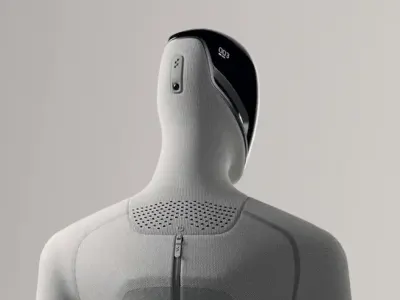
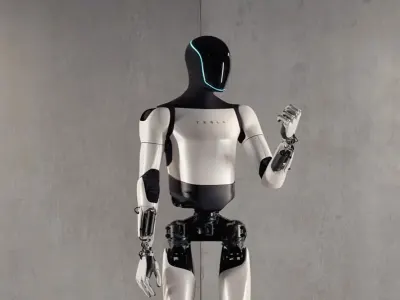
Figure 03 vs Optimus Gen 3
In-depth comparison of Figure 03 and Optimus Gen 3, covering hardware capabilities, teleoperation, and enterprise readiness.
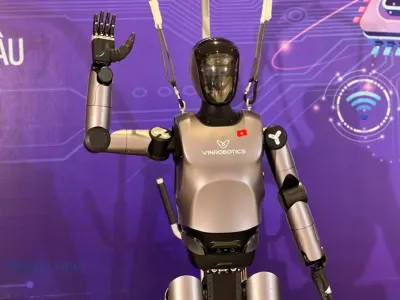
Figure 03 vs VR-H3
Which humanoid robot is better? Figure 03 vs VR-H3 compared for dexterity, AI capabilities, and price.
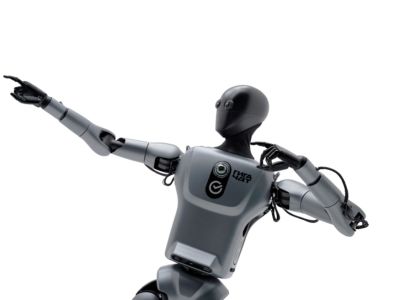
K2 Bumblebee vs Green
K2 Bumblebee or Green? Compare specs, sensors, navigation, speed, and battery performance.
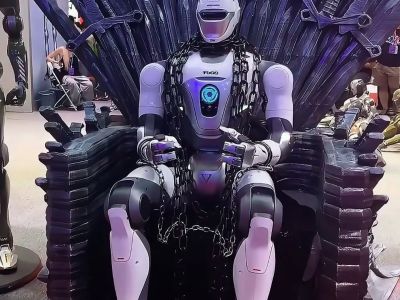
K2 Bumblebee vs T800
Which robot wins? K2 Bumblebee vs T800 compared across speed, sensors, navigation, and price for industrial humanoid selection.
Disclaimer
All content, comparisons, and verdicts on this website are based on our research, testing, and opinion. While we strive for accuracy, we do not guarantee the completeness, reliability, or suitability of any information. Performance, specifications, and results may vary depending on usage and conditions. This website and its authors are not responsible for any decisions, actions, or outcomes based on the information provided. Always verify product details with the manufacturer before making purchase or operational decisions.