Waseda’s AIREC pushes humanoid care robots toward teleoperation-first nursing tasks
Robot Details
AIREC • Waseda UniversityPublished
May 17, 2026
Reading Time
3 min read
Author
Origin Of Bots Editorial Team
Care Work Meets Automation
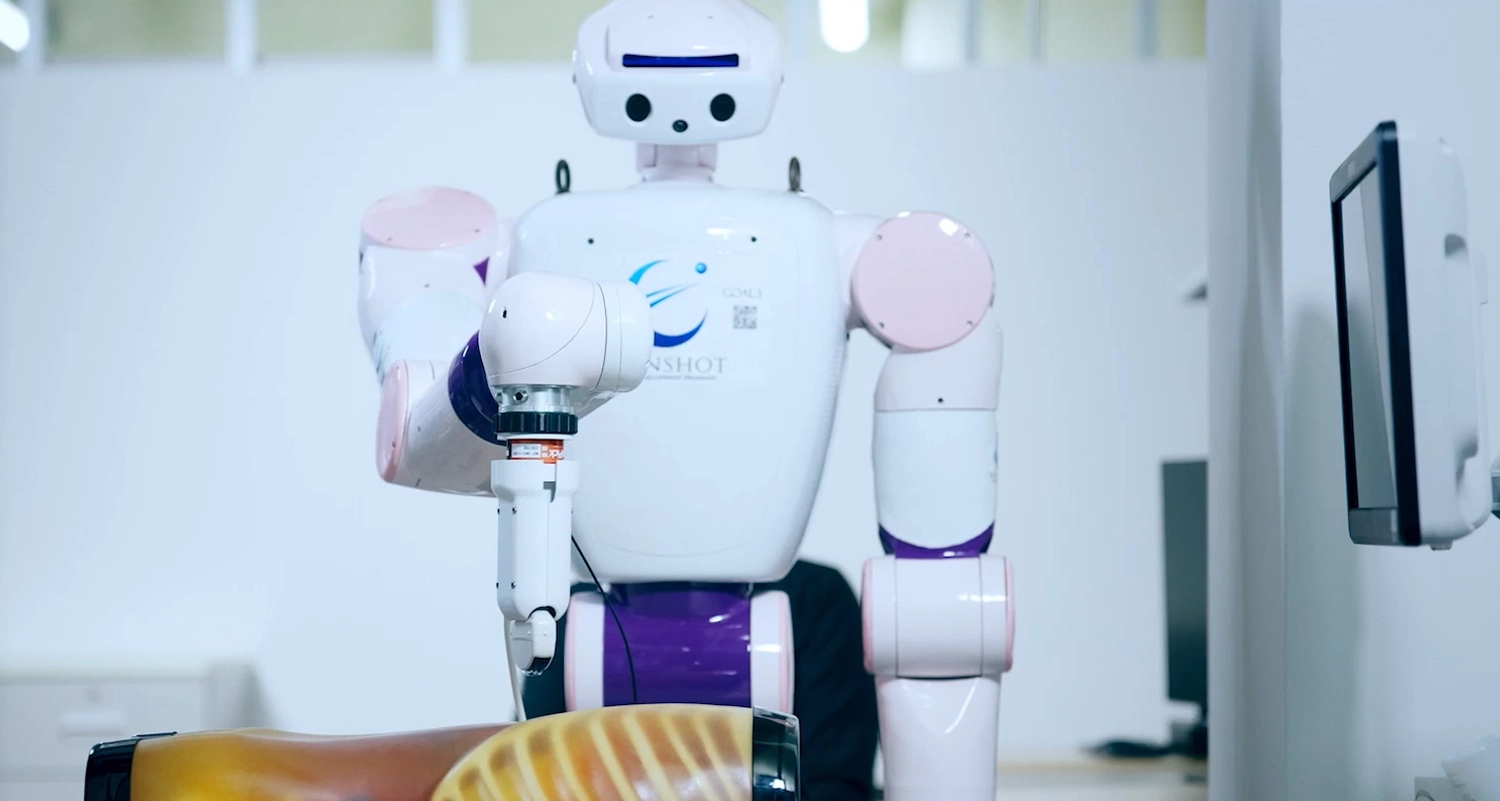
Japan’s aging population is driving demand for robots that can support hands-on care without replacing human judgment, and Waseda University’s AIREC project is one of the clearest attempts to answer that need. The team has publicly shown AIREC and its Dry-AIREC systems performing tasks such as repositioning a person, assisting with dressing, getting someone out of bed, acquiring biometric information, and demonstrating ultrasonic examination support.
Why This Robot Matters
AIREC stands out because it is not framed as a single-purpose machine but as a humanoid platform built for full-body coordination in human spaces, where balance, force control, and natural interaction matter as much as motion. The project also reflects a broader shift in robotics: instead of relying mainly on pre-programmed motion libraries, the system emphasizes learning from skilled human movement and adapting force in real time. That matters in care settings, where a robot must be precise enough to help, yet gentle enough to avoid causing pain or distress. AIREC’s real value is in turning human caregiving motions into teachable robot behavior.
How It Works
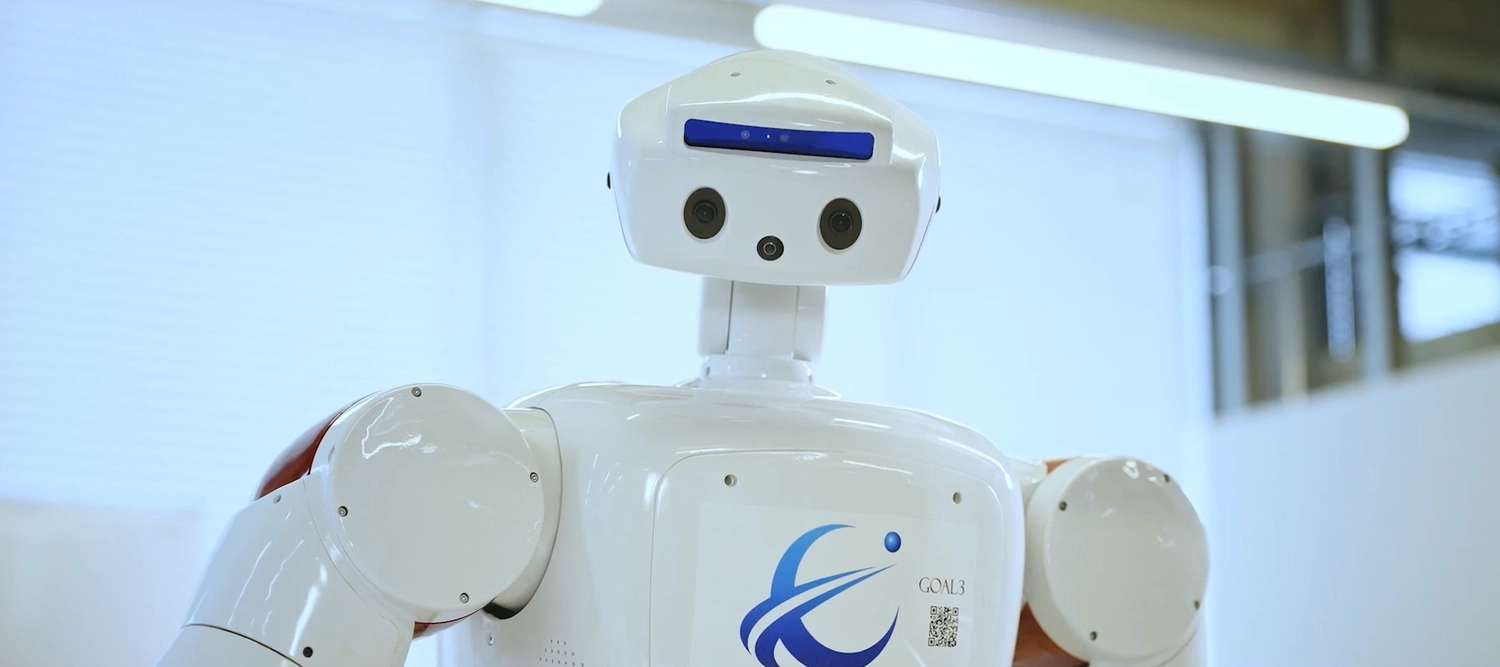
The basic flow is human motion input, then AI processing, then joint actuation with balance correction. In the demos and project materials, cameras and tactile sensing help the robot observe posture, limb position, and contact conditions, while the proprietary DNN and related control software estimate movement and force so the robot can adjust its actions during the task. The output is not just a scripted gesture, but coordinated whole-body assistance that can be adapted for tasks like repositioning, dressing, or supporting a standing motion.
Bedside Assistance First
The most concrete deployment scenario is bedside care, especially repositioning a patient to reduce strain on caregivers and help prevent pressure injuries. Waseda’s demonstrations suggest the robot is being tuned to learn how much force to apply while handling shoulders, knees, and hand placement, which is exactly where humanoids face their hardest safety problem: physical contact with a person who cannot be treated like a static object. In that setting, the value of AIREC is not autonomy for its own sake, but repeatable, monitored assistance that can work alongside staff.
What The Platform Offers
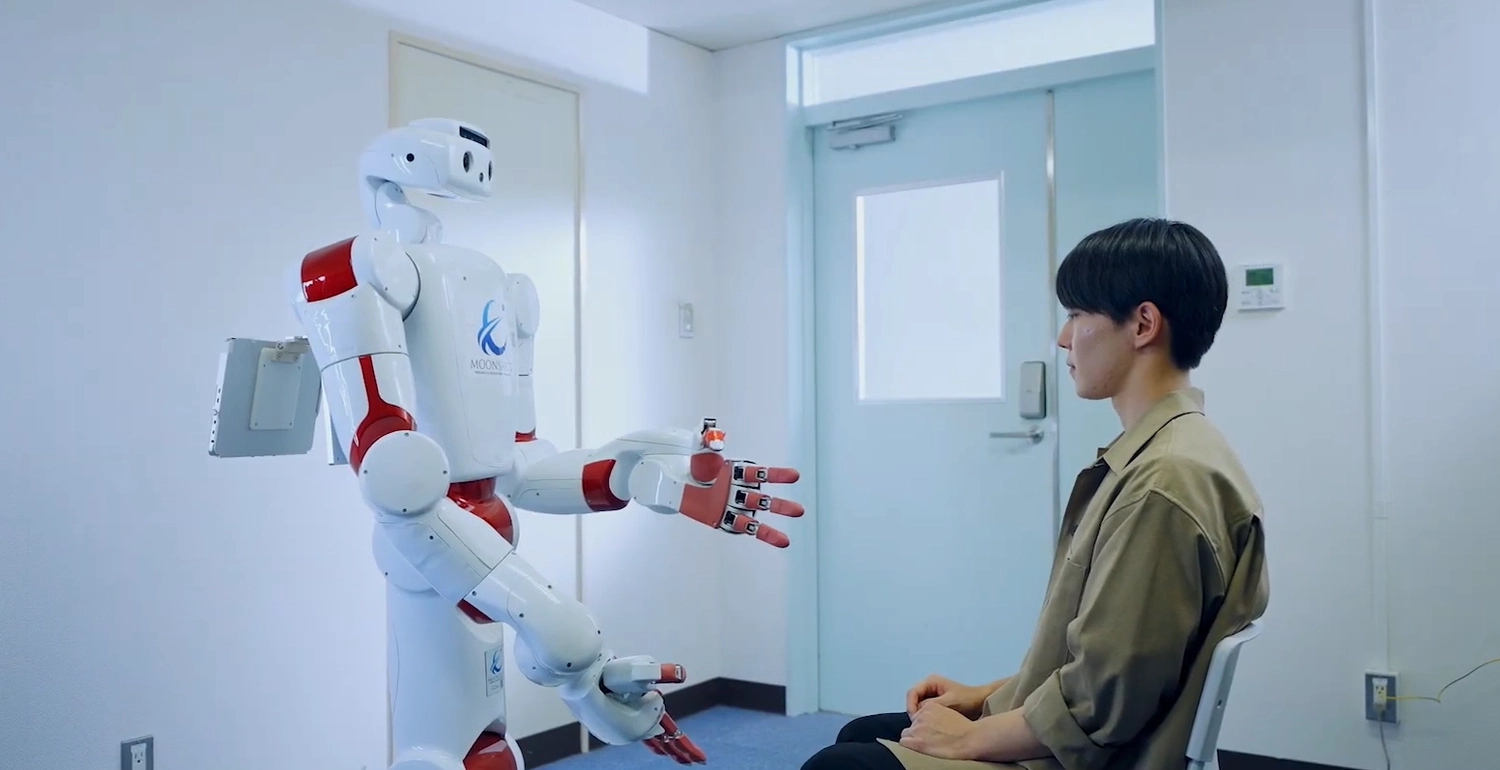
Official project materials describe AIREC as a humanoid built for domestic, nursing, and medical support, with reported use cases including repositioning, bathing, feeding, ultrasound support, biometrics, and cooking assistance. The robot is described as standing 154 cm tall, weighing 150 kg, and using RGB, fisheye, depth, tactile, force, IMU, and gyroscope sensors, which together support perception, contact control, and balance. Reported software support includes ROS2, a proprietary DNN, and Python APIs, while visual SLAM is presented as the navigation approach for moving through human-centric spaces.
Rivals Edge Check
| Robot | Key Advantage | Where AIREC Wins | Target Use |
|---|---|---|---|
| MH1 | Compact humanoid design for controlled lab and service tasks | AIREC is more explicitly focused on caregiving motions and bedside assistance | Assisted service and human interaction |
| Walker X | Strong general-purpose humanoid mobility and manipulation | AIREC’s care demos are more specific and clinically relevant | Service robotics and manipulation |
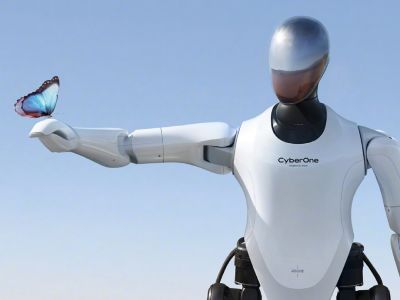
| CyberOne | Expressive human-robot interaction and social presence | AIREC shows more concrete physical-care applications | Social interaction and light assistance |
| Robo-C2 | Modular humanoid platform for research tasks | AIREC has clearer links to nursing and medical support workflows | Research and human-facing tasks |
Industry Direction Shifts
AIREC also signals that the humanoid market is moving toward teleoperation-first systems, where human expertise is captured, guided, and extended rather than fully automated on day one. That is a more practical path for care and inspection work, because it lets engineers validate balance, force control, and physical interaction in stages while keeping a human operator in the loop. For the sector, the bigger message is that useful humanoids may arrive first as trusted assistants in tightly defined human spaces, not as fully independent general workers.
Explore Humanoids

Sources
Related Articles
Booster T1 Dexterous Humanoid Wins RoboCup 2025, Signals Shift Toward Research-Grade Teleoperation Platforms

Hanson Robotics’ Philip K. Dick Android shows how teleoperated humanoids can turn author likeness into a conversational machine
Hanson Robotics’ Zeno returns as a social humanoid built for interaction, therapy studies and classroom use

Hanson Robotics’ Professor Einstein shows how desktop humanoids are being packaged for education and interaction
Related Comparisons
Compare AIREC with similar robots

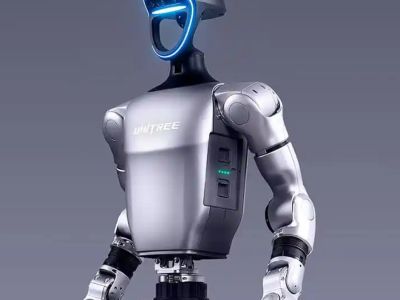
Optimus vs Unitree G1
Compare Optimus vs Unitree G1 for humanoid mobility, dexterity, autonomy, and payload capacity.
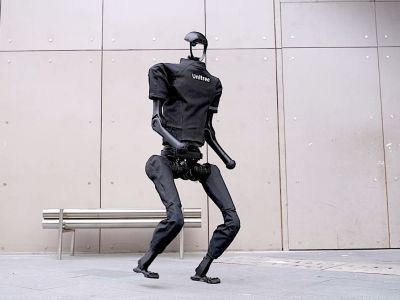
Unitree G1 vs Unitree H1
Head-to-head: Unitree G1 vs Unitree H1 compared on bipedal balance, AI learning, and real-world deployment.
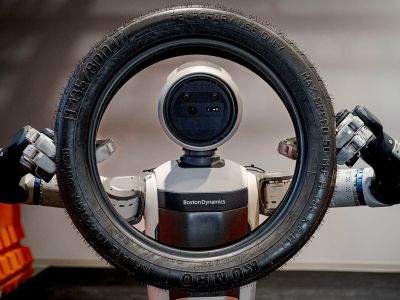
Optimus vs Atlas (Electric Atlas, 2025)
In-depth comparison of Optimus and Atlas (Electric Atlas, 2025), covering hardware capabilities, teleoperation, and enterprise readiness.
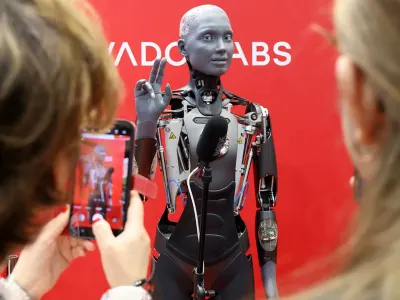

Ameca vs Moya
Which humanoid robot is better? Ameca vs Moya compared for dexterity, AI capabilities, and price.
Learn More About This Robot
Discover detailed specifications, reviews, and comparisons for AIREC.
View Robot Details →